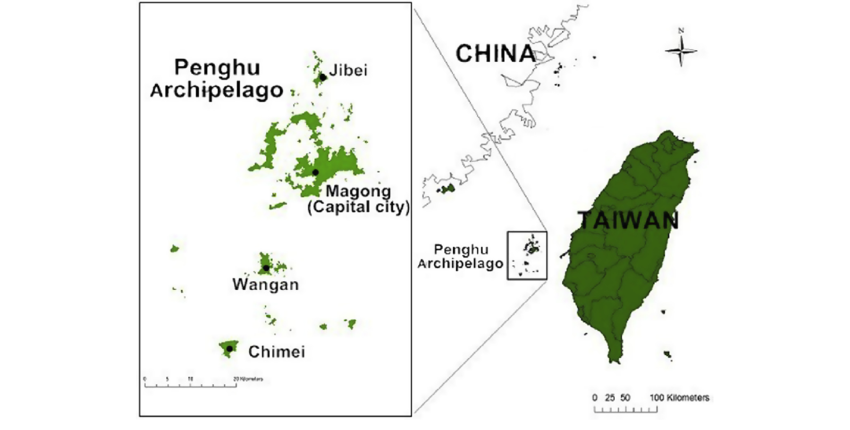
In September, I went on a 3 day, 2 night field trip with my school to a beautiful archipelago in the south of Taiwan called Penghu. We flew from Taipei’s Songshan Airport to Penghu, which took less than an hour.
Penghu was extremely hot! Luckily, whenever you are sweaty a gust of wind will cool you down. An interesting fact is that Penghu is made up of 90 islands and only 19 islands have people living on them. Also, Penghu doesn’t get that many tourists so it’s mostly locals who live here. Three popular islands are Qimei, Huxi, and Xiyu.
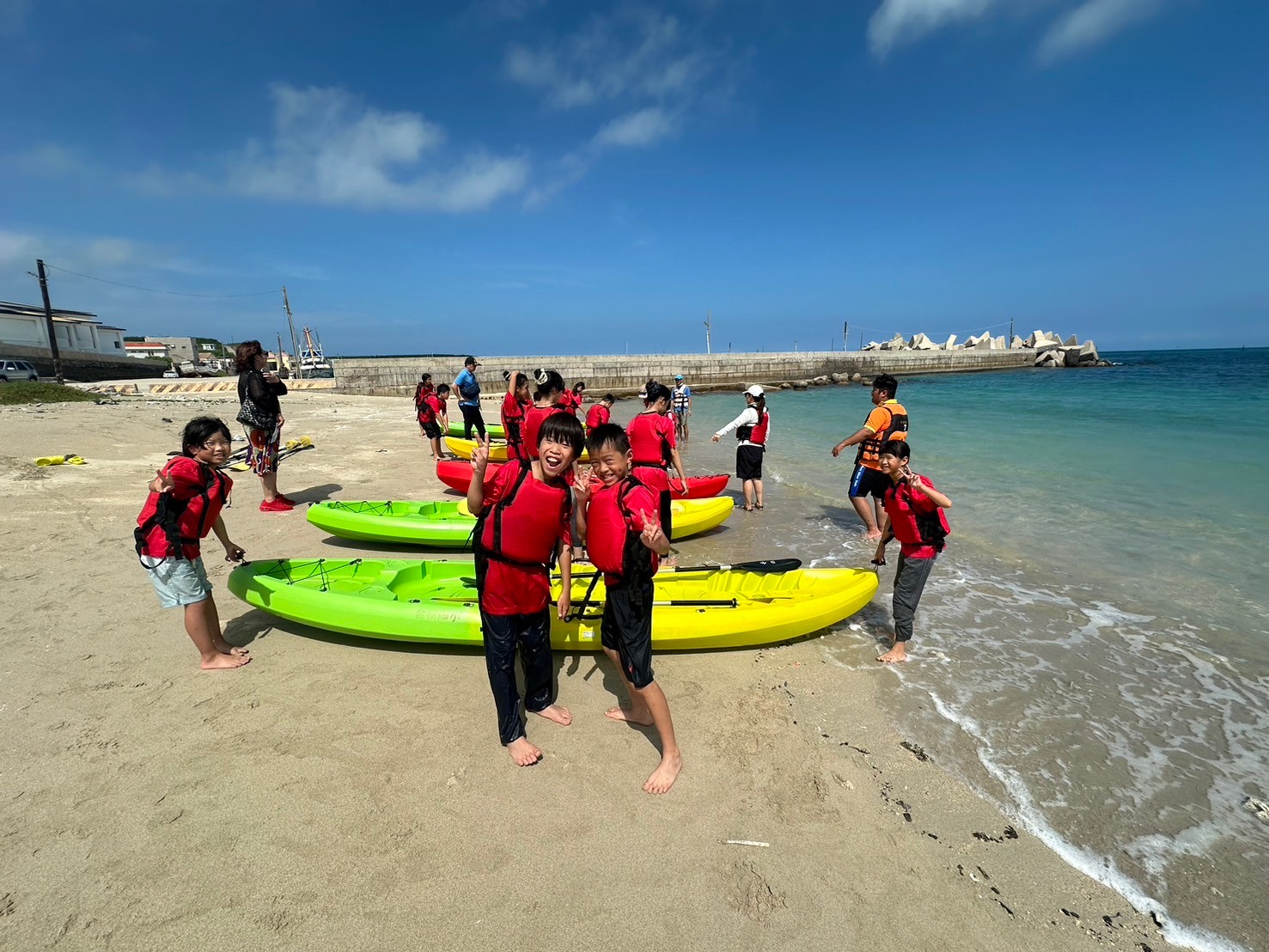
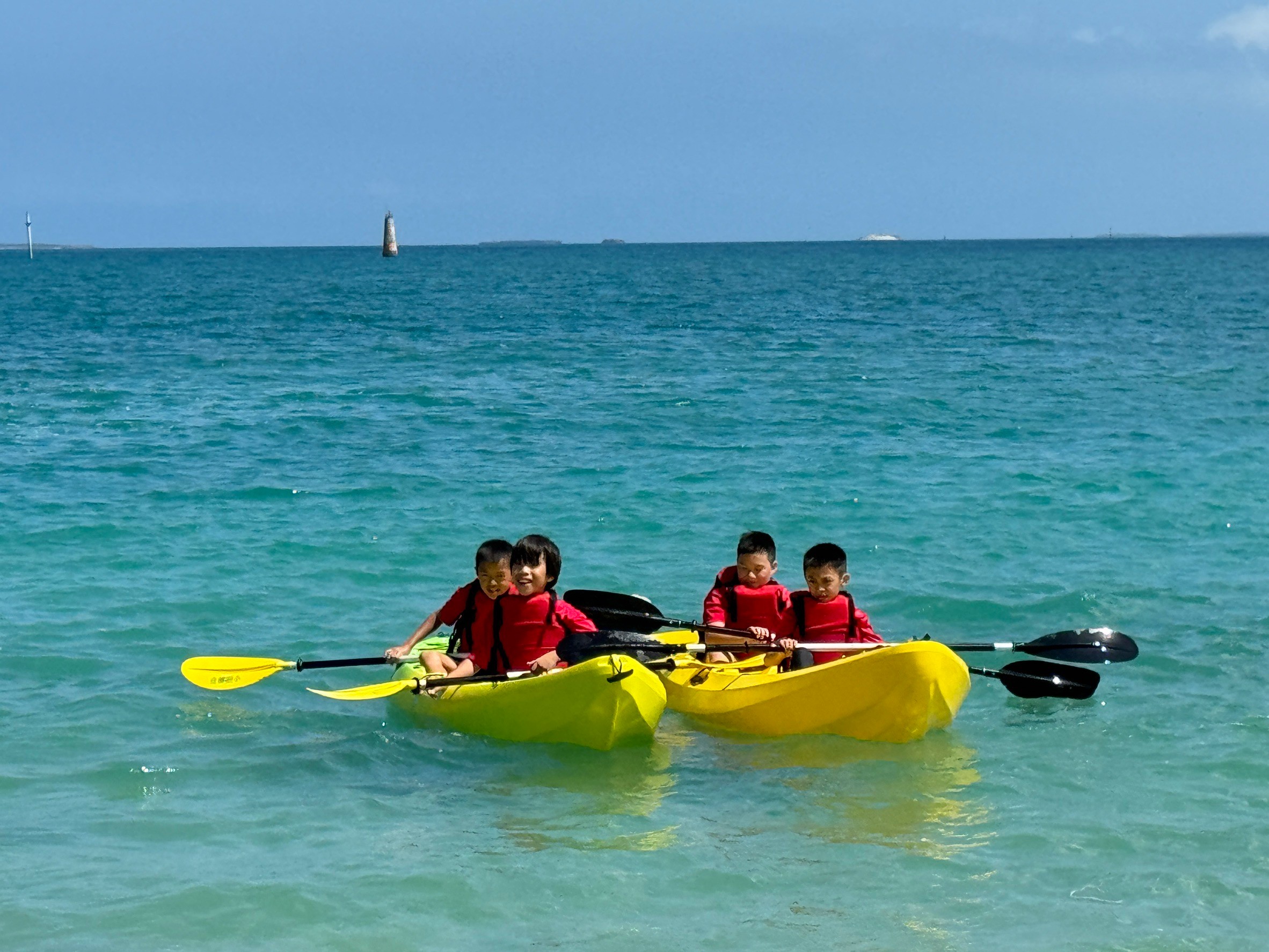
At Penghu, my classmates and I visited a local school, the old street, and we even went kayaking! This was my first time kayaking.
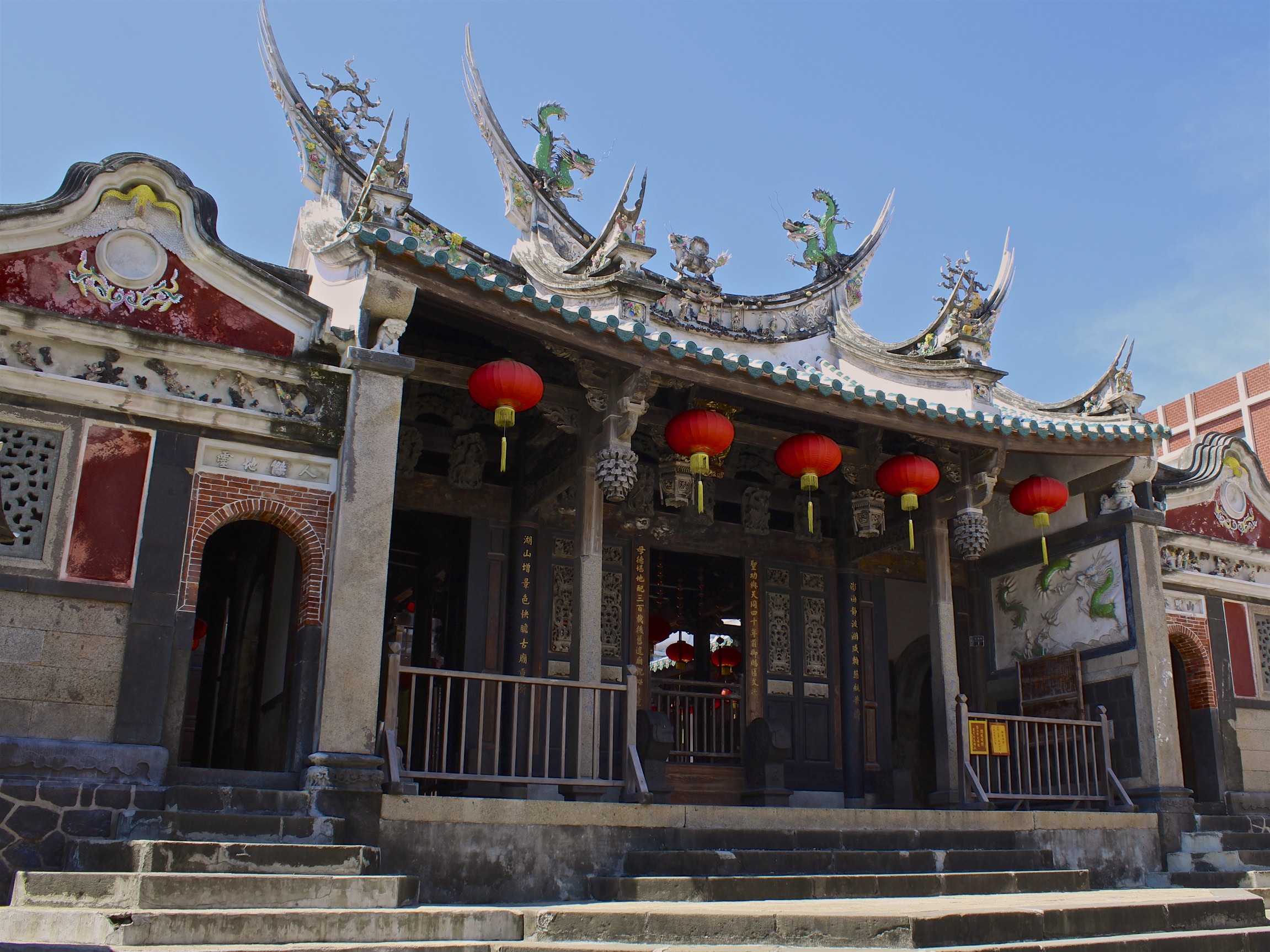
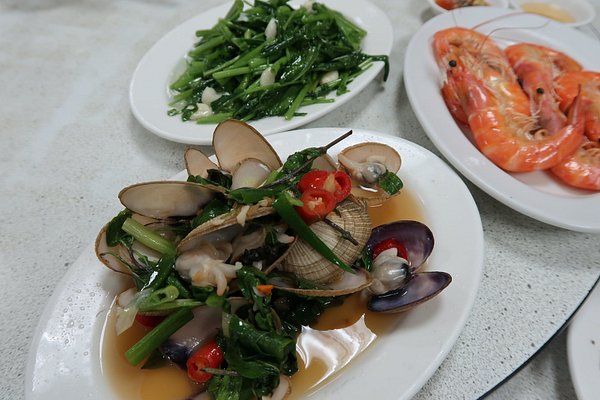
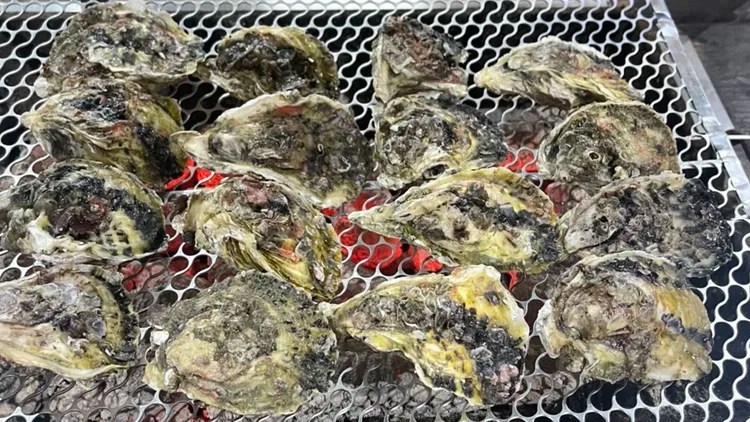
Penghu is famous for its salty seafood and its old temples. Most of their vegetables are imported from the main island. In Penghu, they grow a type cactus where it can be made into drinks, ice cream, and jelly. Penghu is the only place in Taiwan where they grow it. I liked it so much bought some for my family back home. I also brought home a peanut candy.
In conclusion, I think that this trip was a great experience for me to learn about Penghu traditions and its cultures. Maybe one day you can go there and check it out yourself. Remember to put on sunscreen though!
Bali is one of the most popular destinations in Asia. It’s so popular that it has sort of become synonymous with Indonesia. But it’s easy to see why. Bali has a rich culture and natural beauty, but also tourist-friendly features like 5-star resorts, electric nightlife and plenty of restaurants.
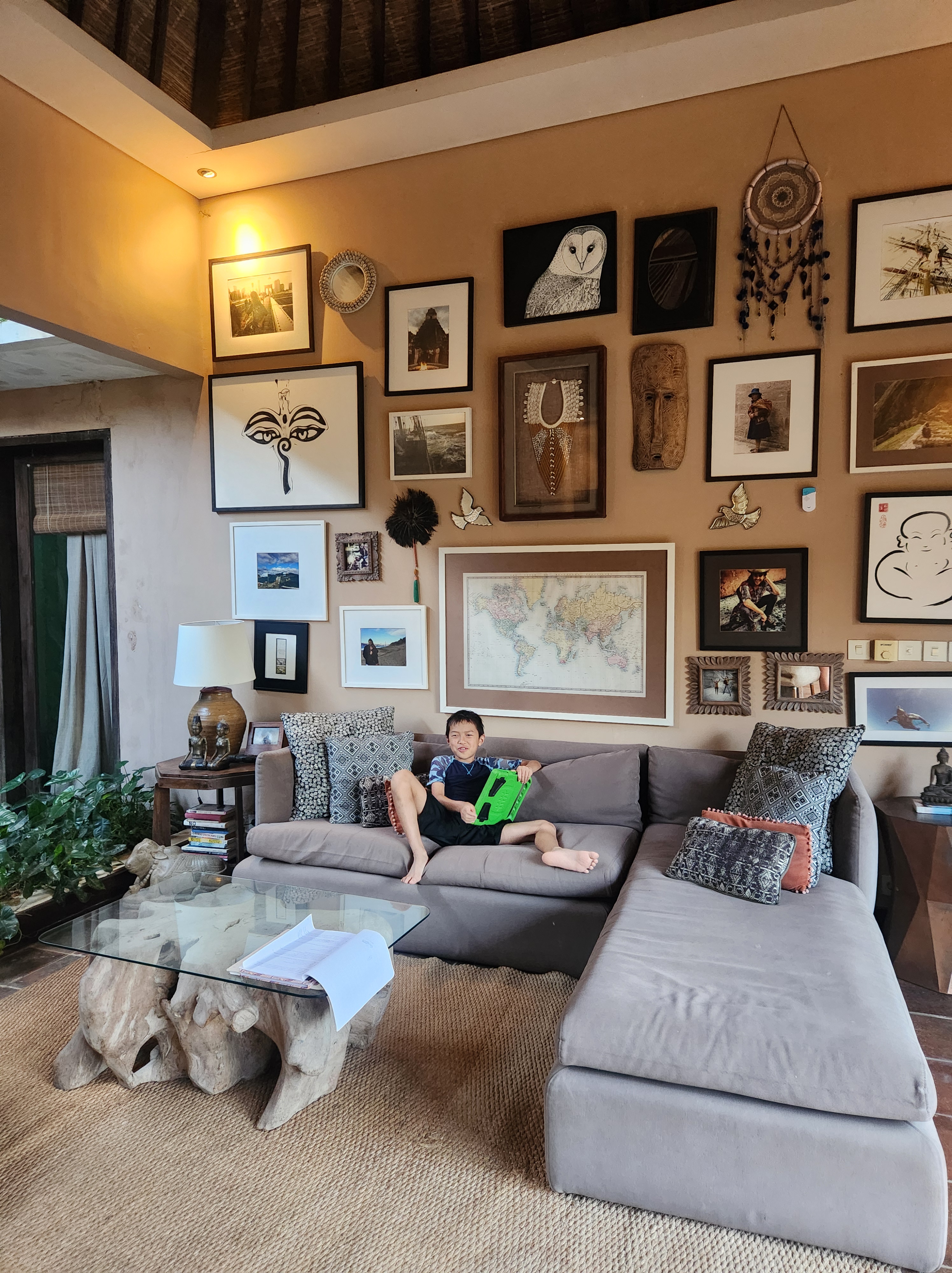
We chose to stay in Ubud, the cultural center of Bali that’s also very family-friendly. I decided to “splurge” on our accommodations (but it was still relatively affordable!). Our villa had a swimming pool, 3 large rooms, and included 2 helpers who came each morning to prepare breakfast for us. What a treat!
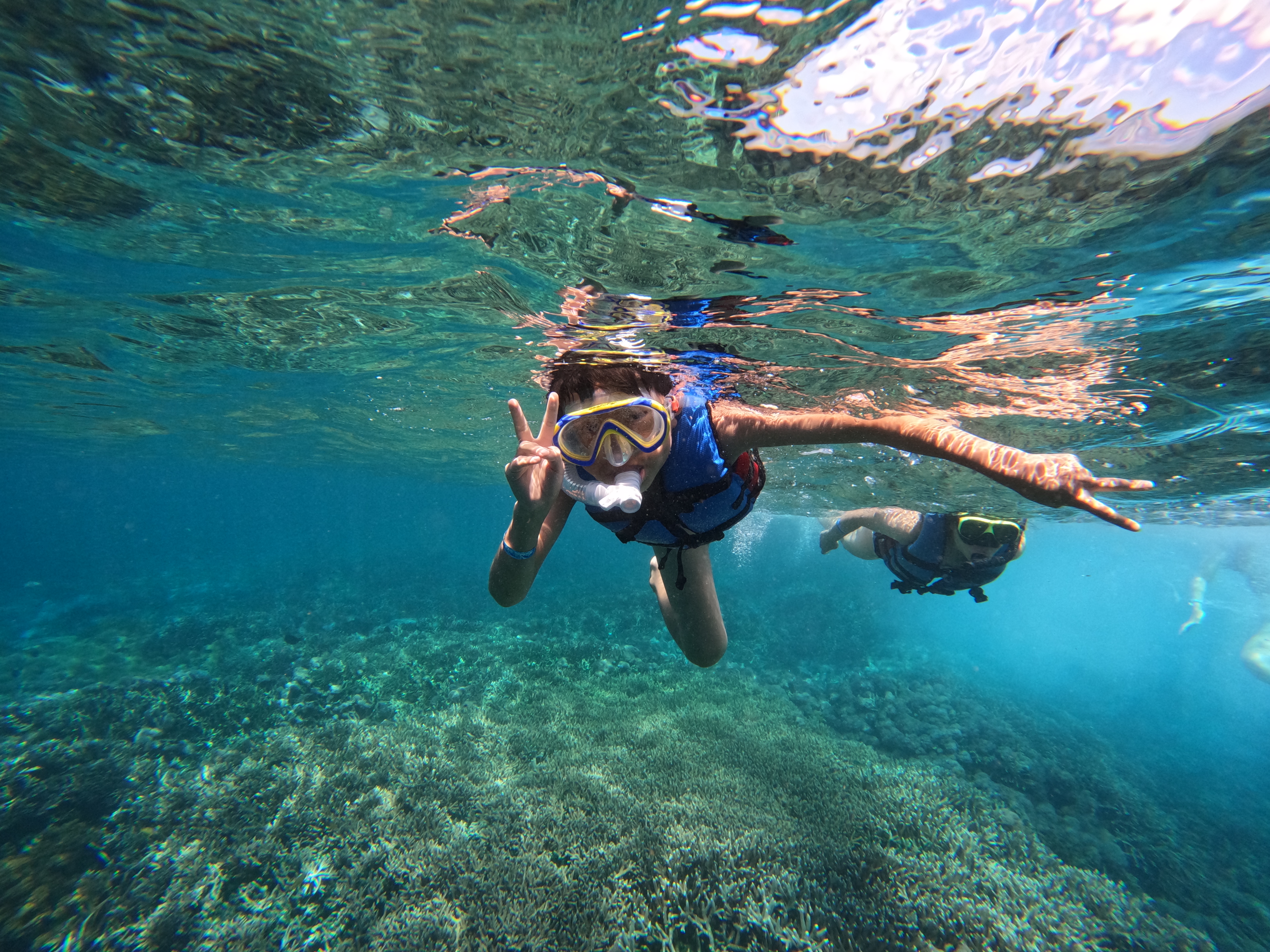
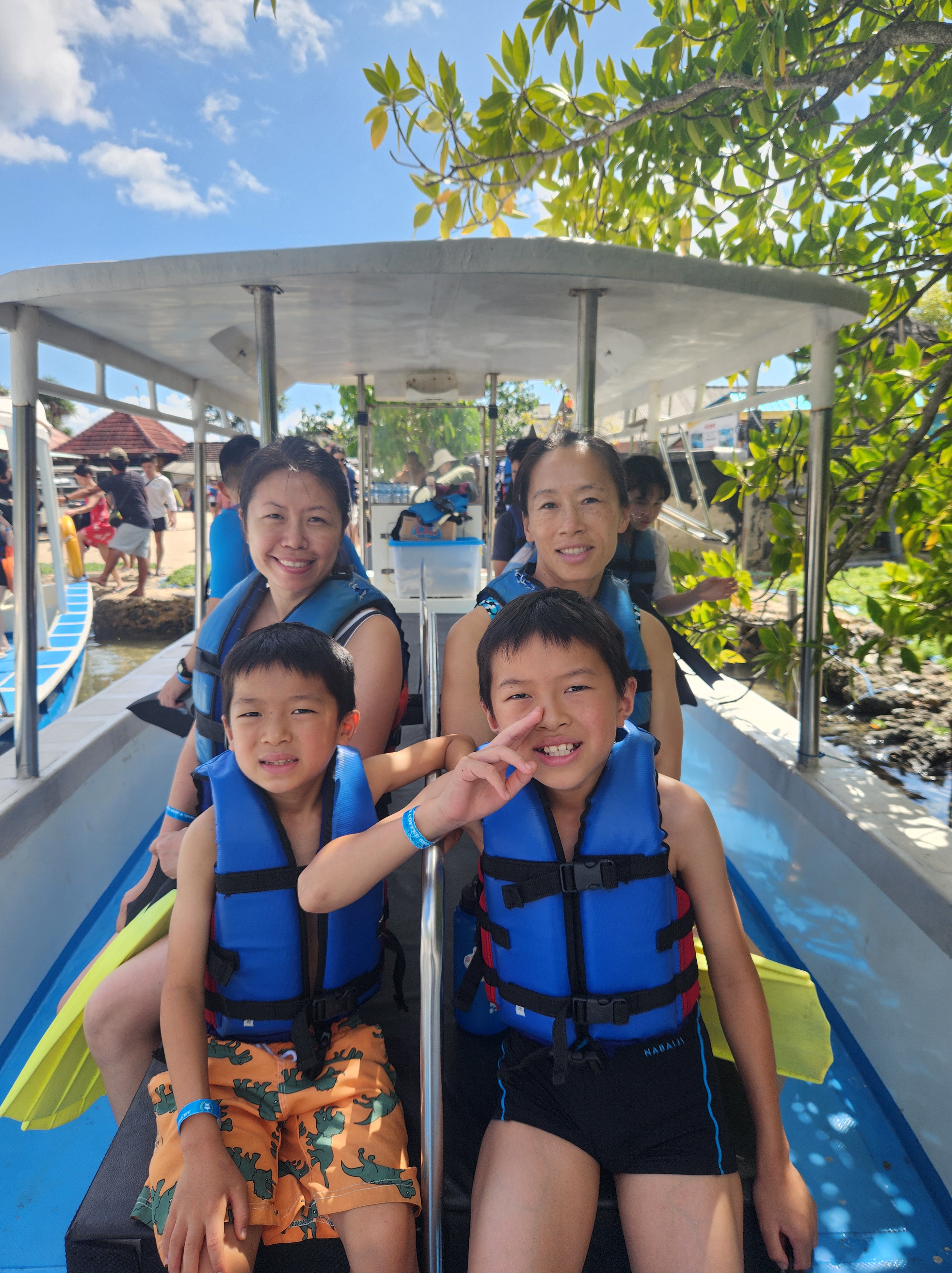
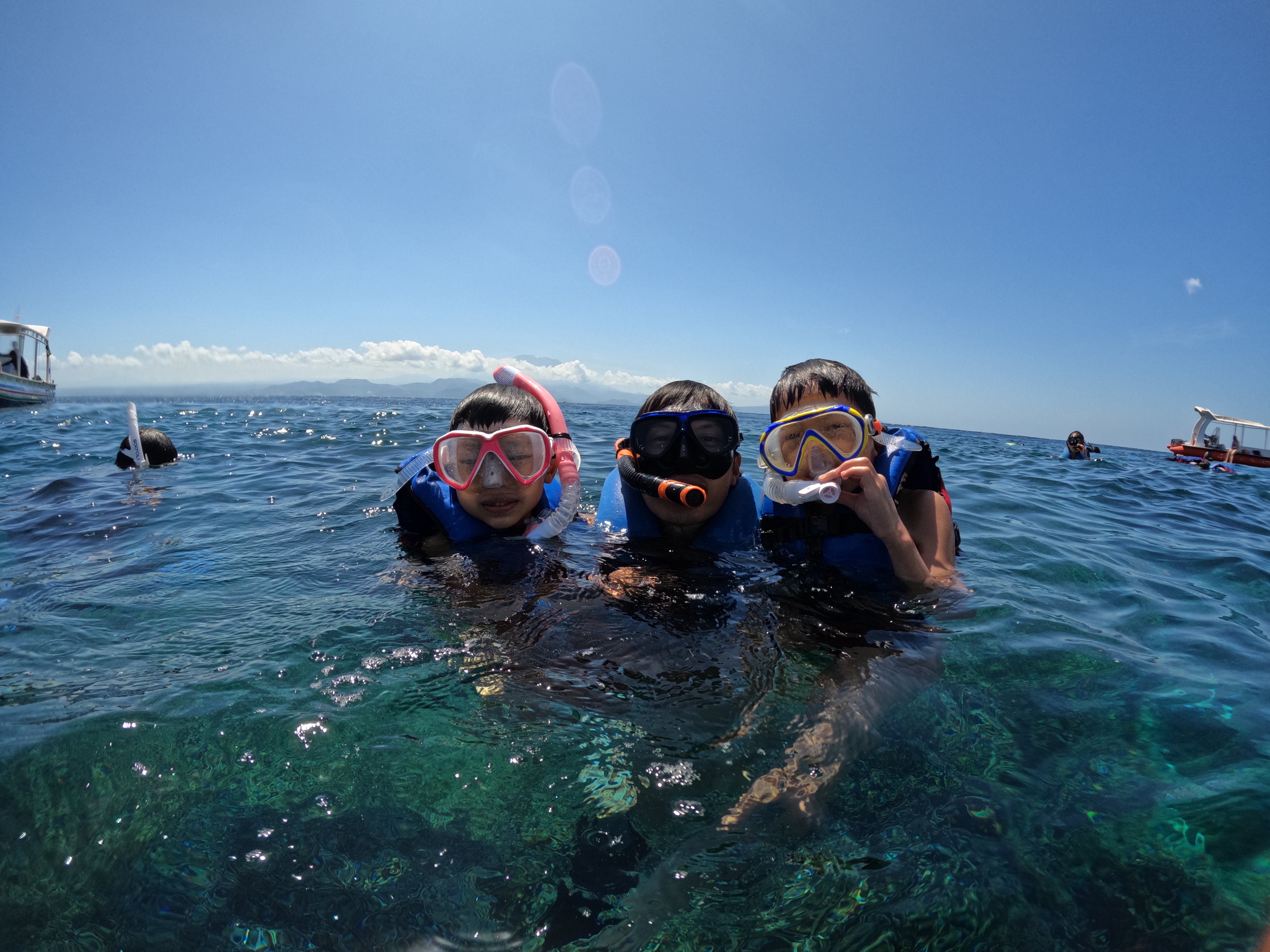
On our first full day in Bali, we went snorkeling at 3 locations. The first location had super choppy and deep waters, but we were there to see the giant manta ray – and we did! Unfortunately we weren’t able to get any pictures. The next two locations had calmer waters, and the boys had a much more pleasant experience. This was their first time snorkeling and I’m amazed by how brave they were! This is the tour we booked.
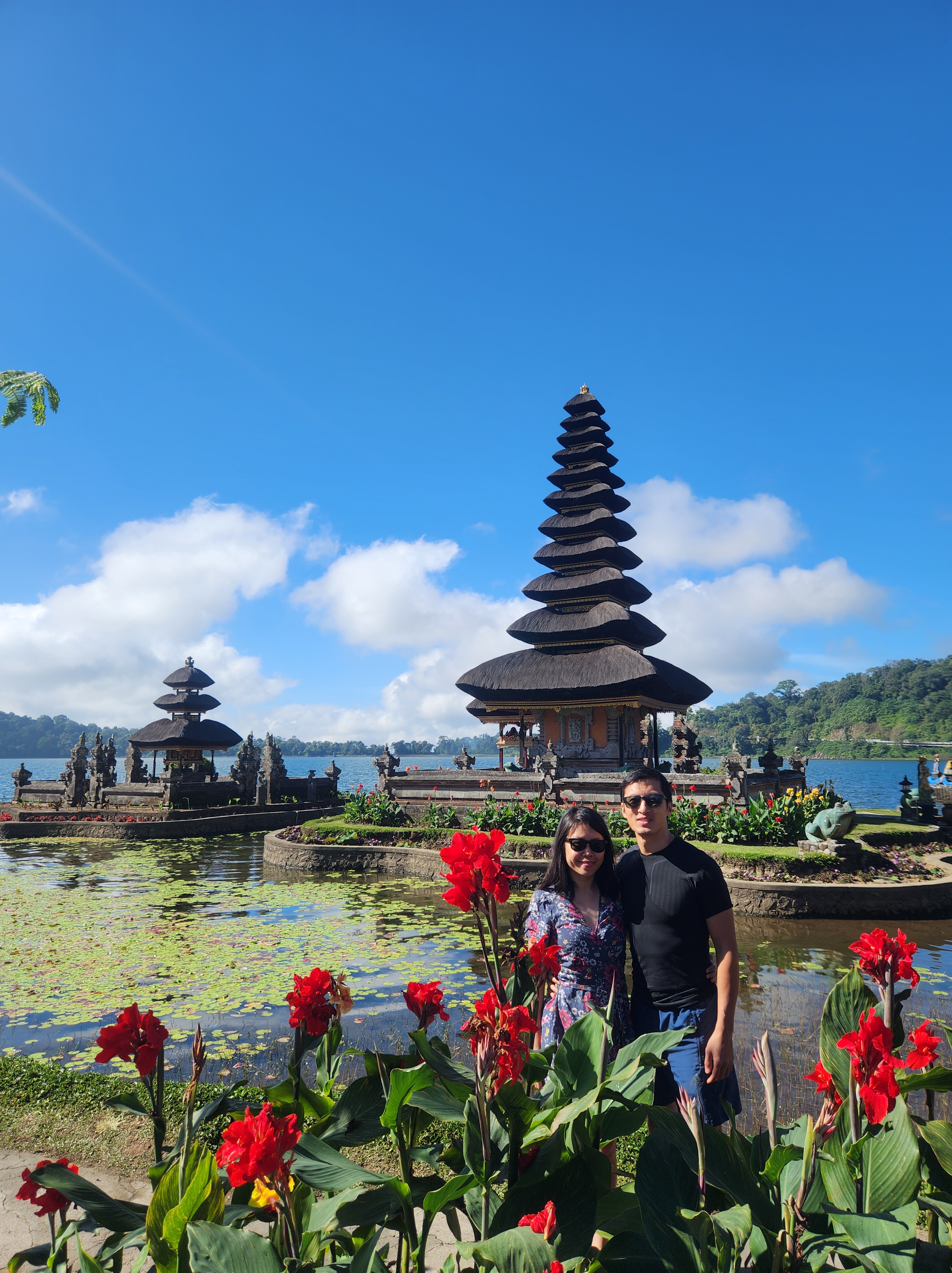
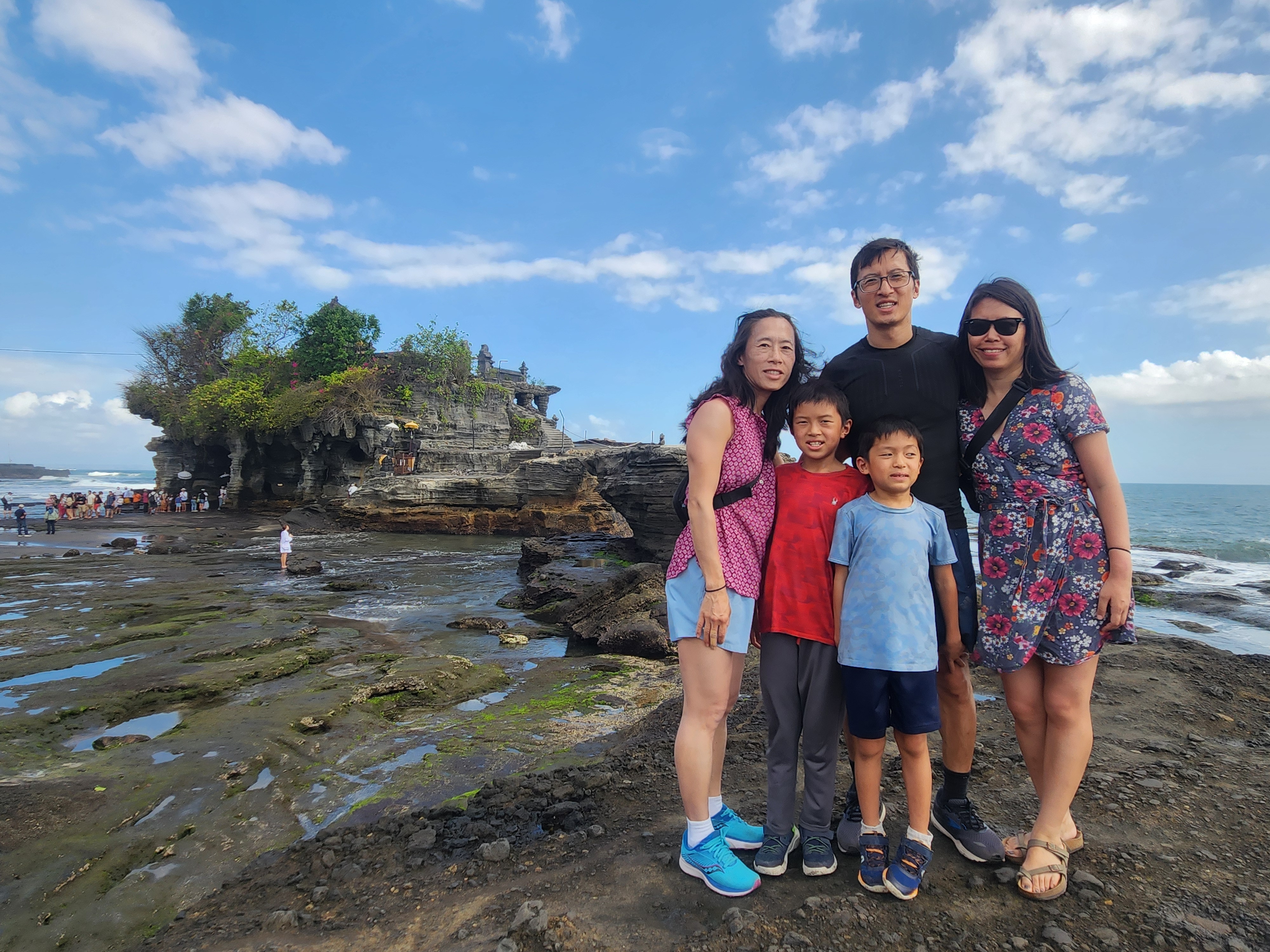
After a day of adventure, we booked a more low-key tour the next day and visited some of Bali’s most famous temples: Ulun Danu Beratan (left) and Tanah Lot (right). No tourists were allowed inside.
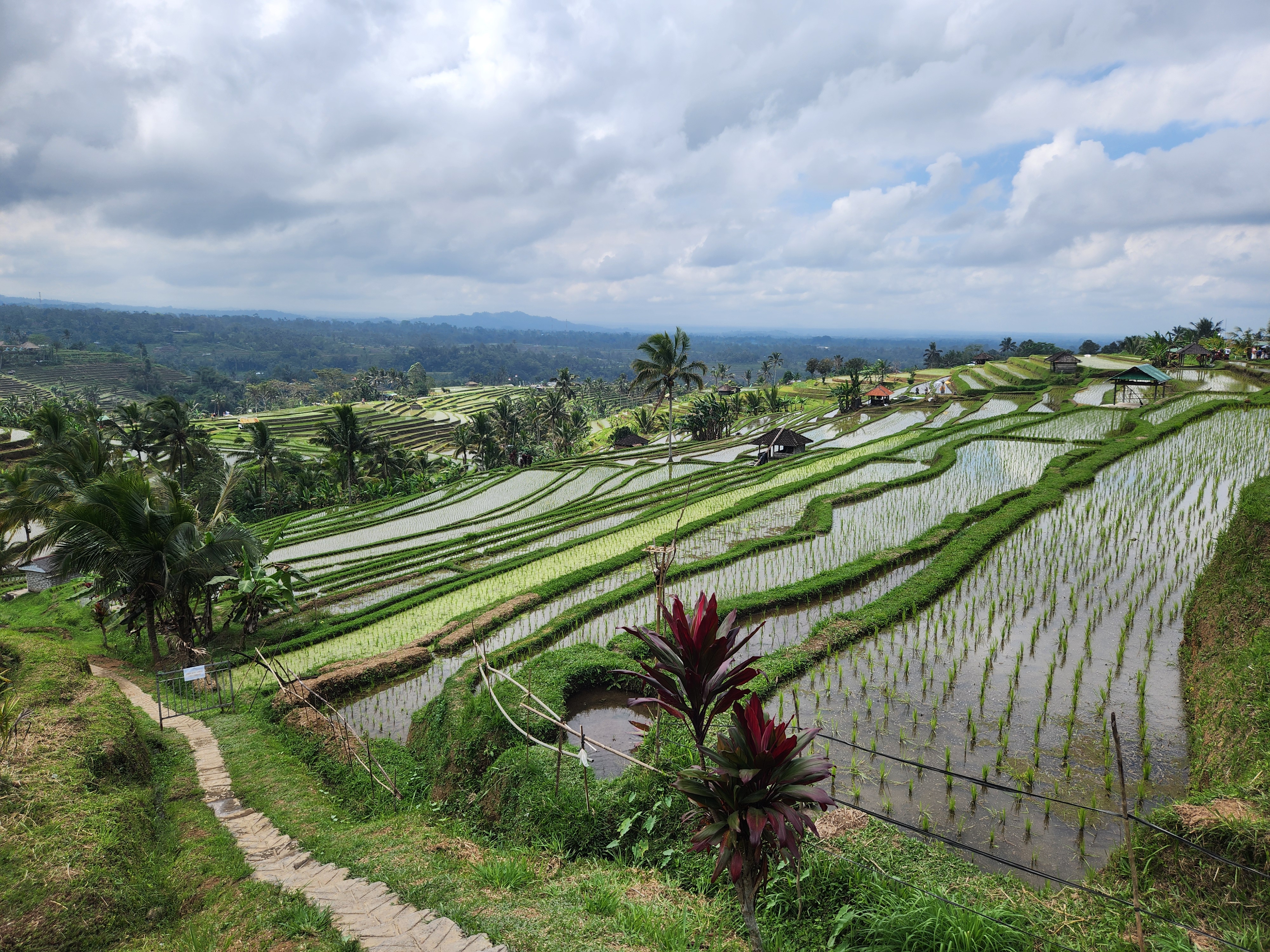
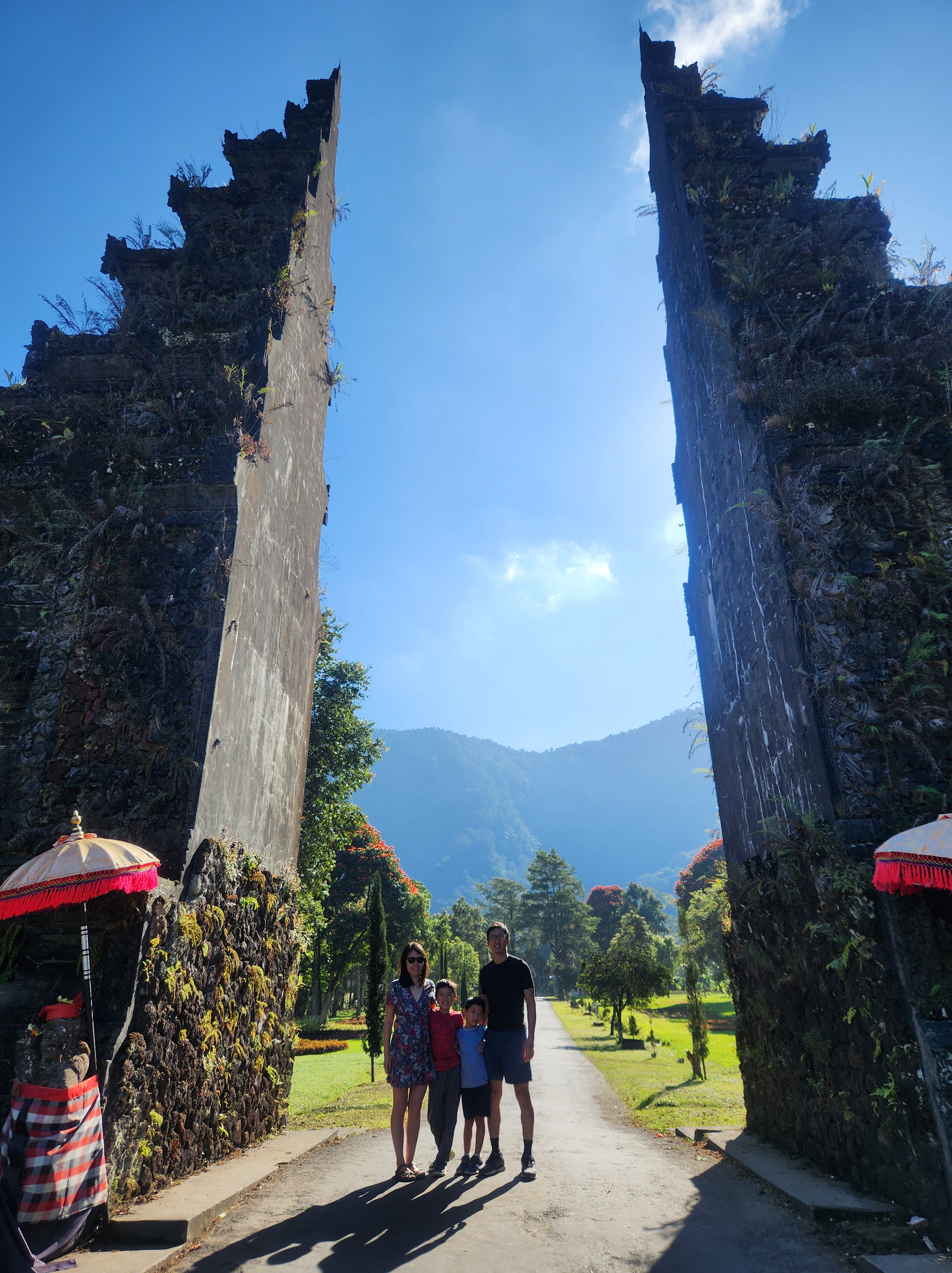
We also visited the Jatiluwih Rice Terrace and Handara Gate. Honestly, not much to do in these places except to look around and take pictures.
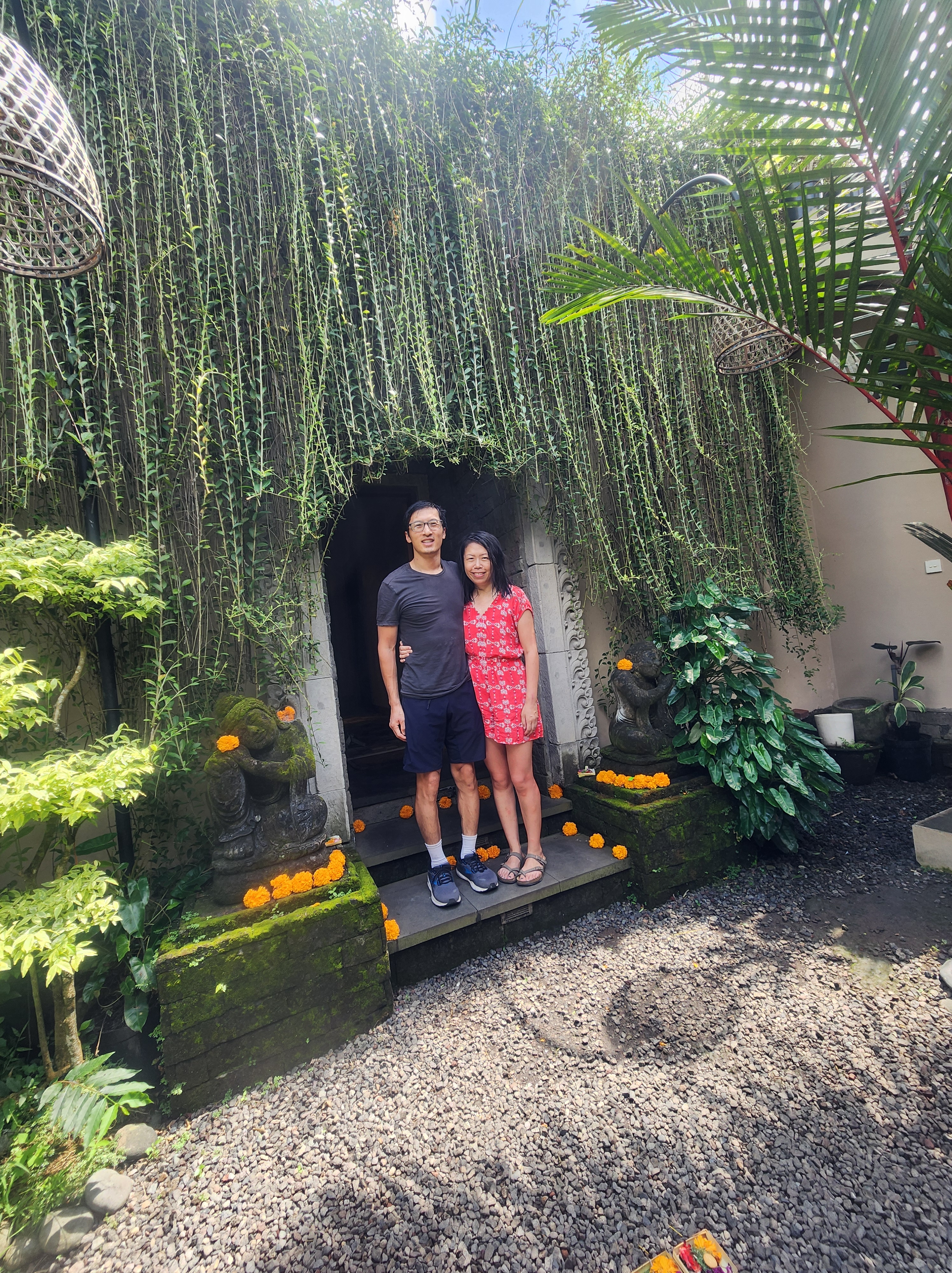
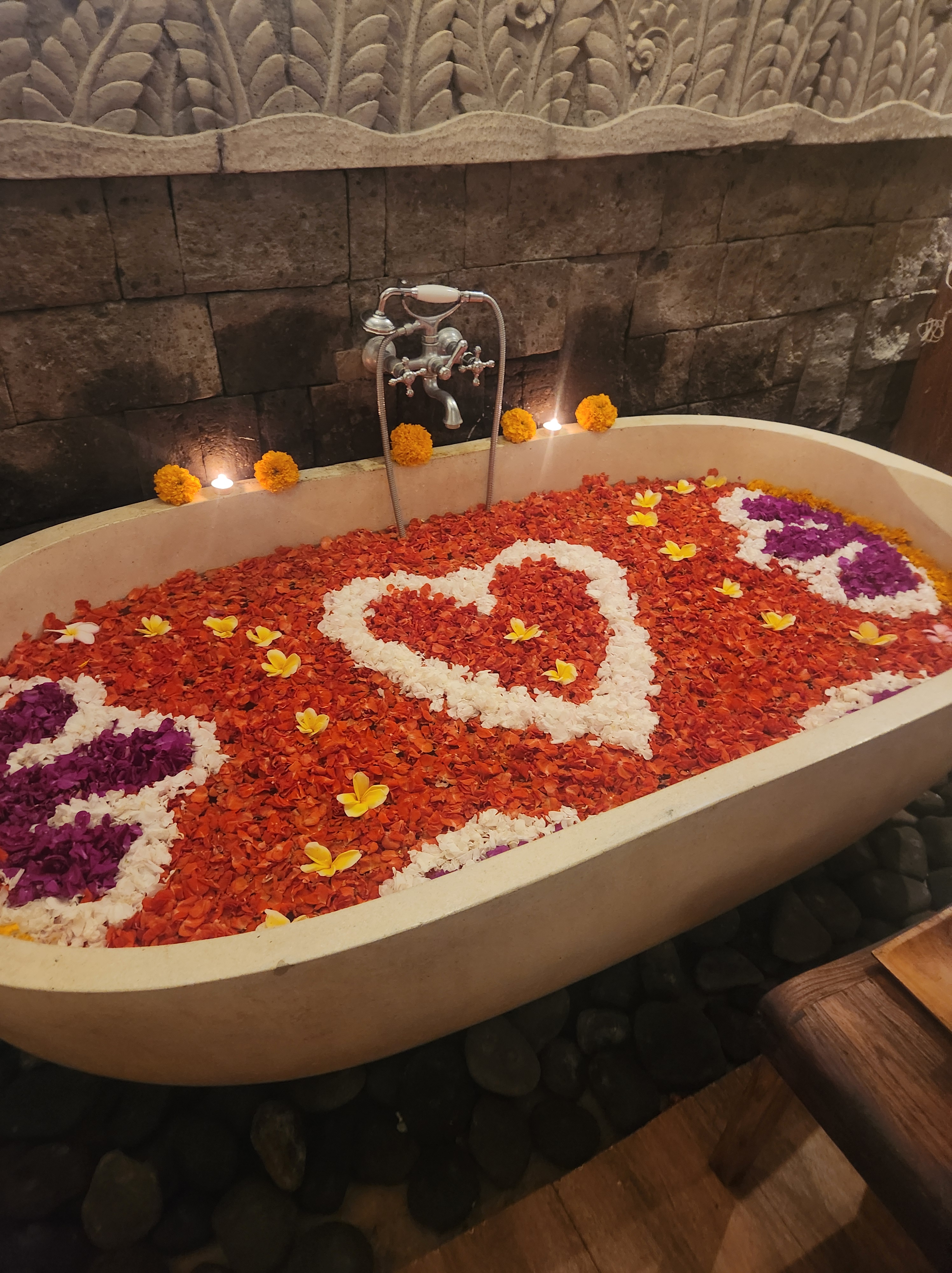
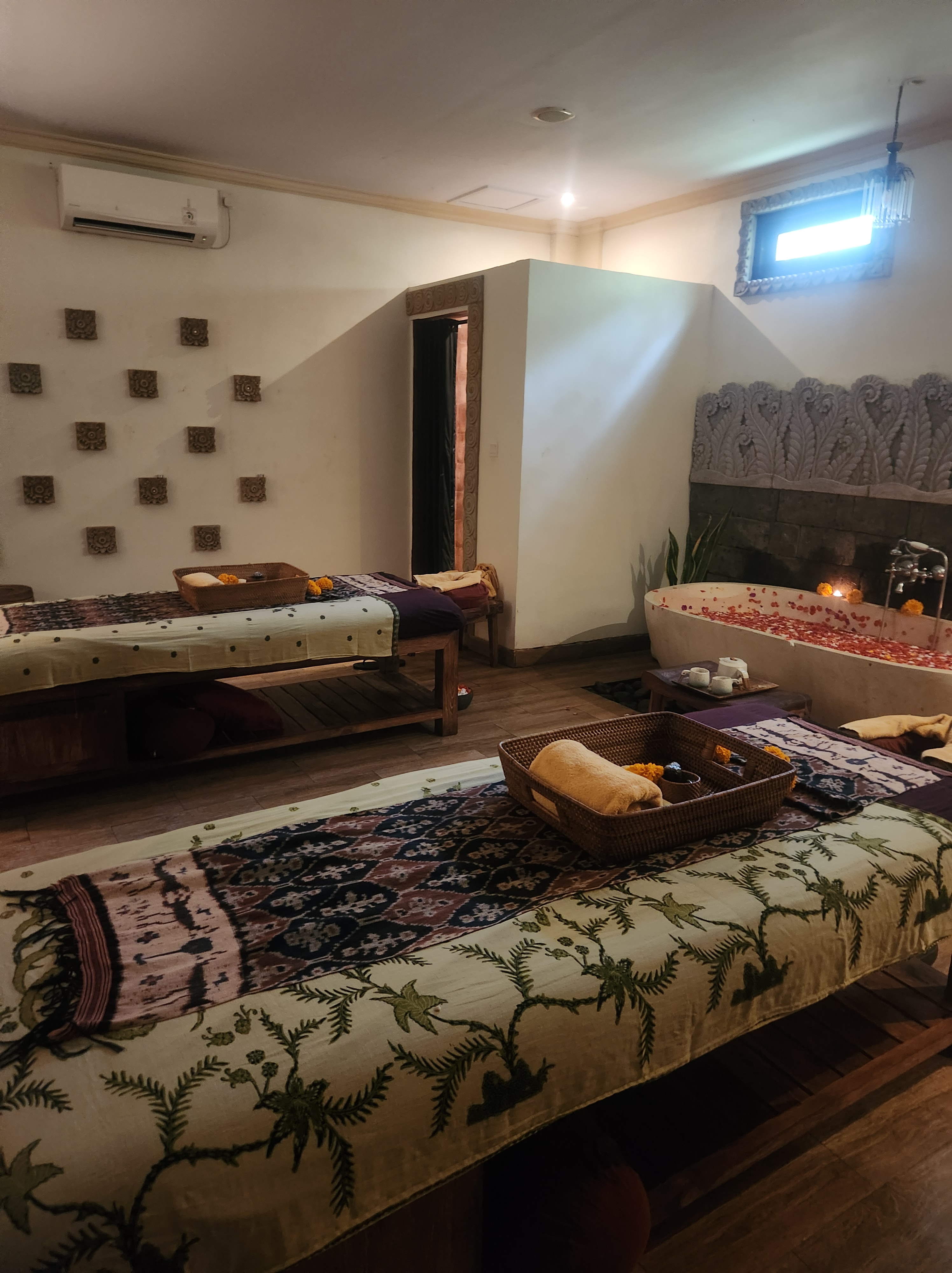
Bali is known for its spas, so of course we had book a couple’s spa/massage at Ubud Traditional Spa for Baba and me. The two-hour massage for 2 people cost only $60! It would be triple the price in SF.
While Baba and I were getting massages, my SIL took the boys to the Sacred Monkey Forest, where hundreds of monkeys roam free. Quite frankly, this would freak me out. 😅
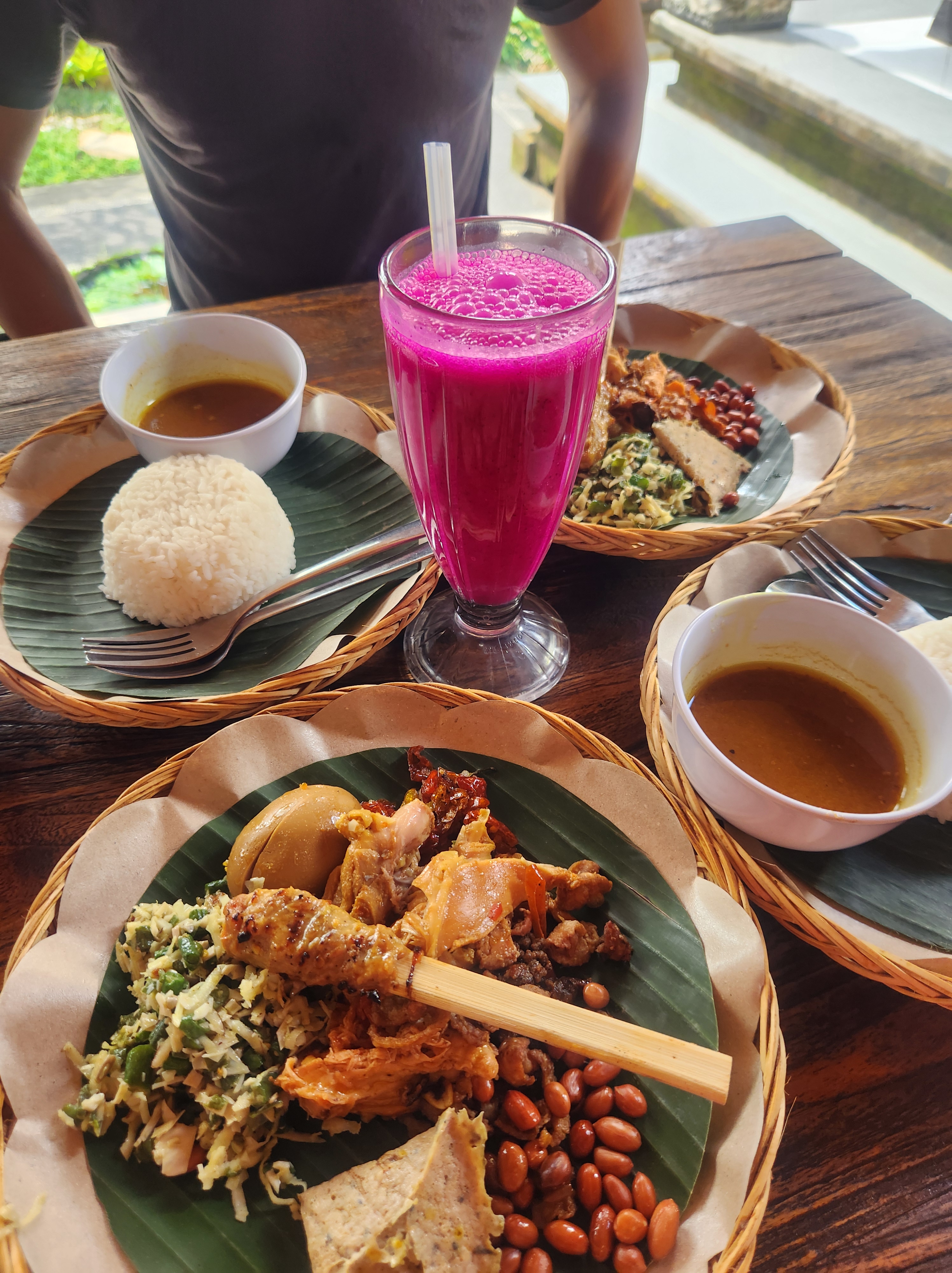
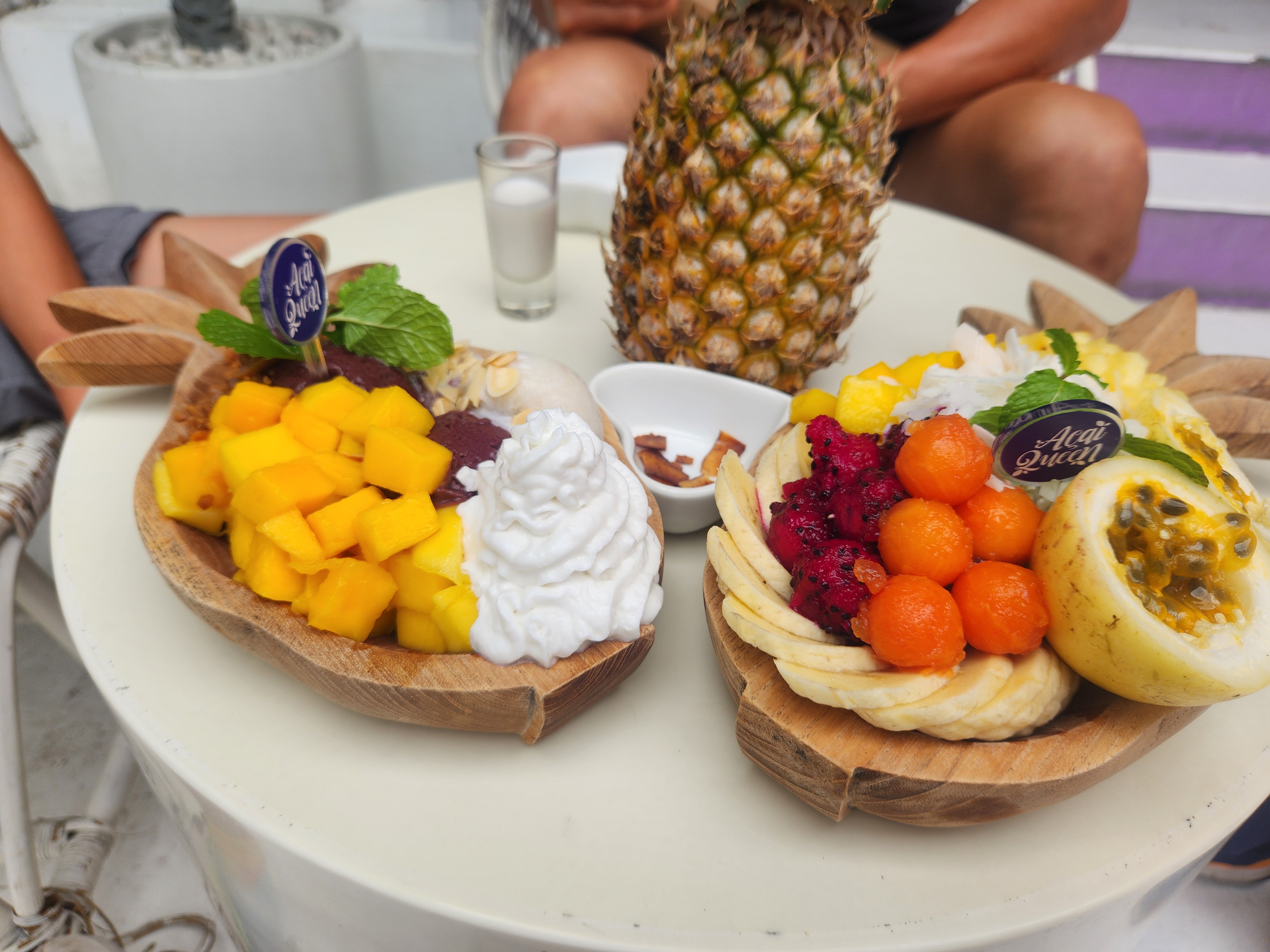
Food in Bali was a lot more expensive compared to Java and in our opinion, generally not as good. We felt like the flavors were altered to cater to foreign palettes. The center of Ubud had many trendy restaurants serving acai bowls, steaks, vegan cuisines, and sushi. Ironically though, the best meal we had in Indonesia was also in Bali – crispy, spicy pork belly and sausage with greens and rice (center picture).
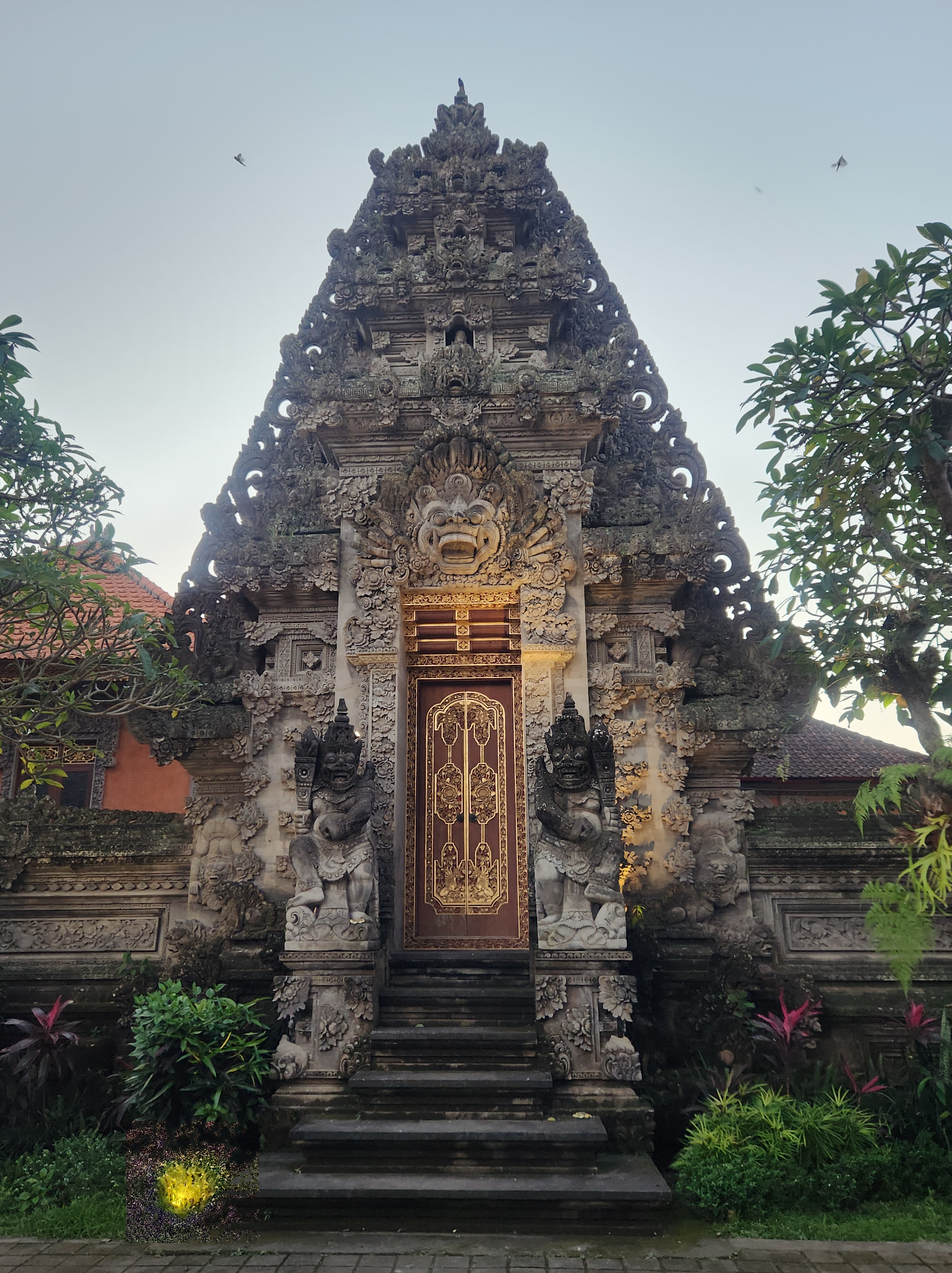
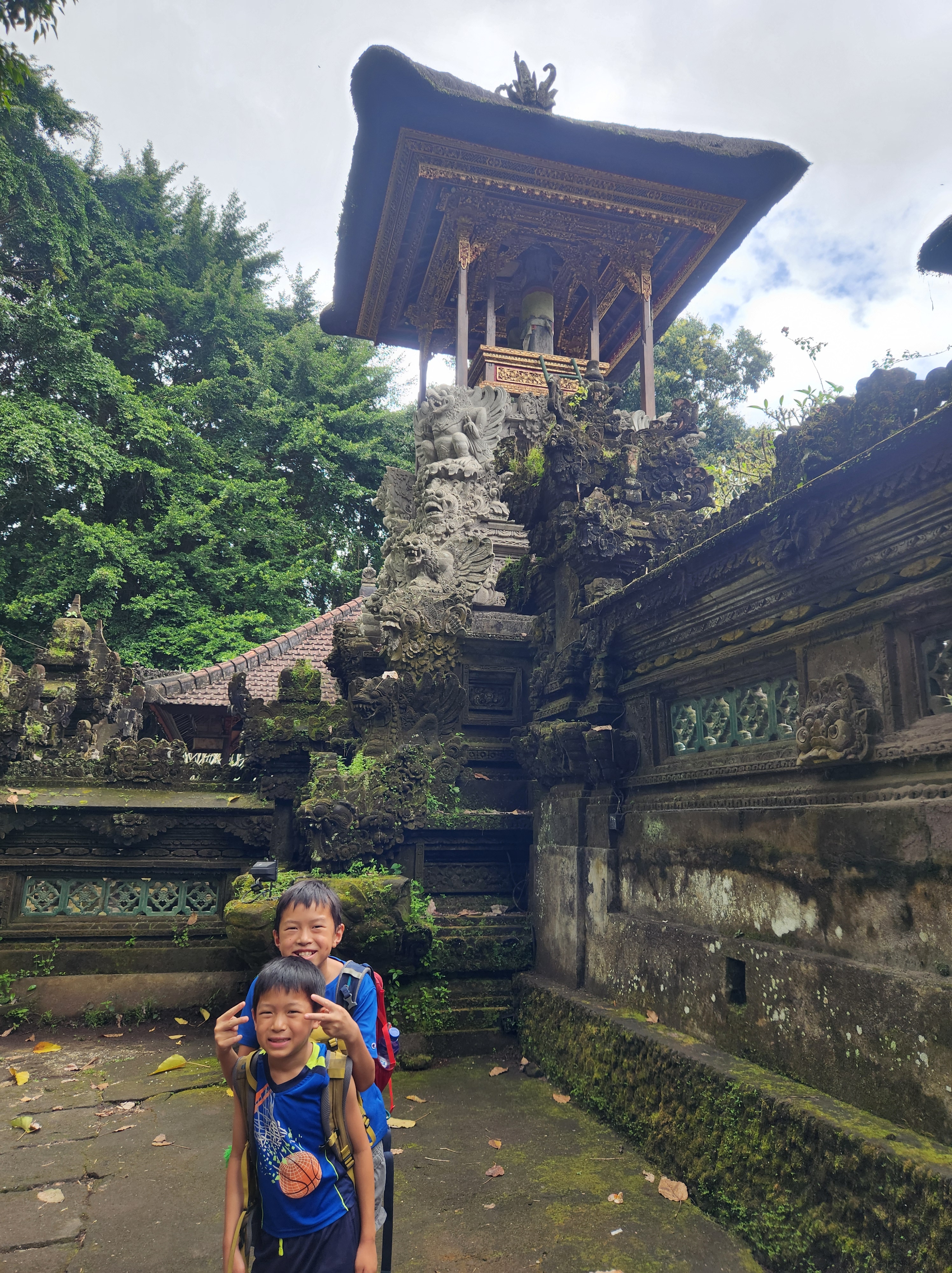
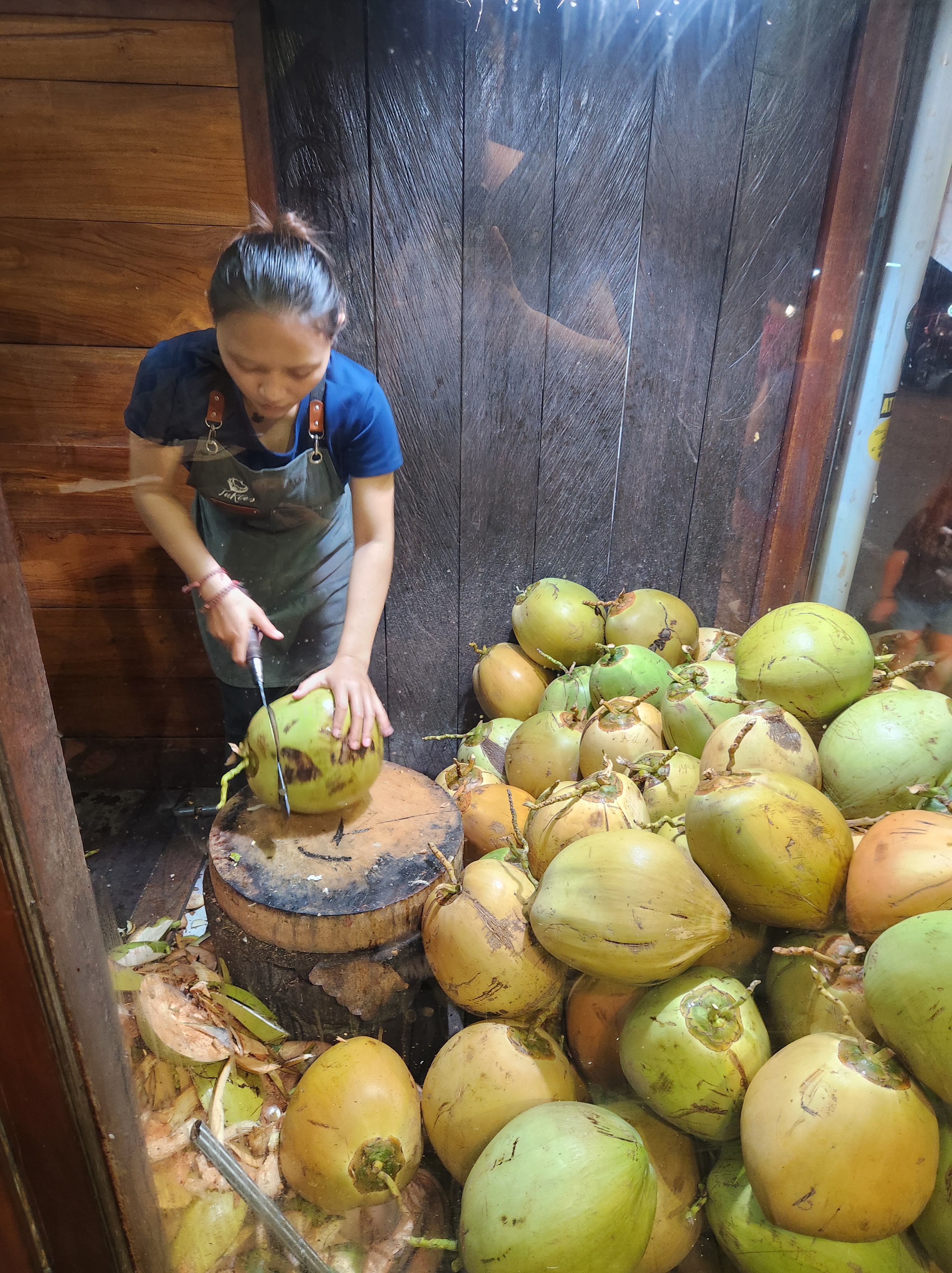
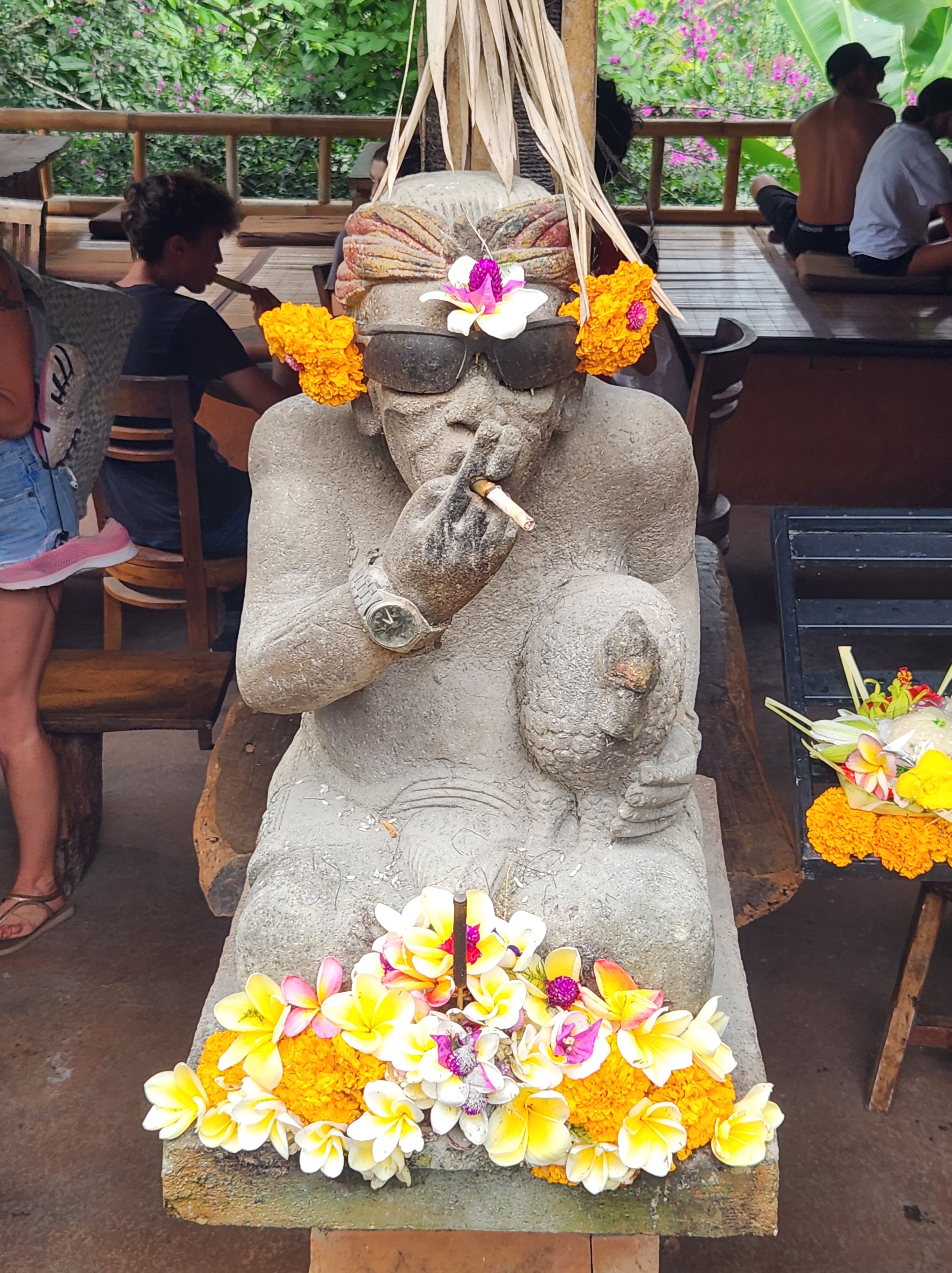
Sights around Ubud, Bali.
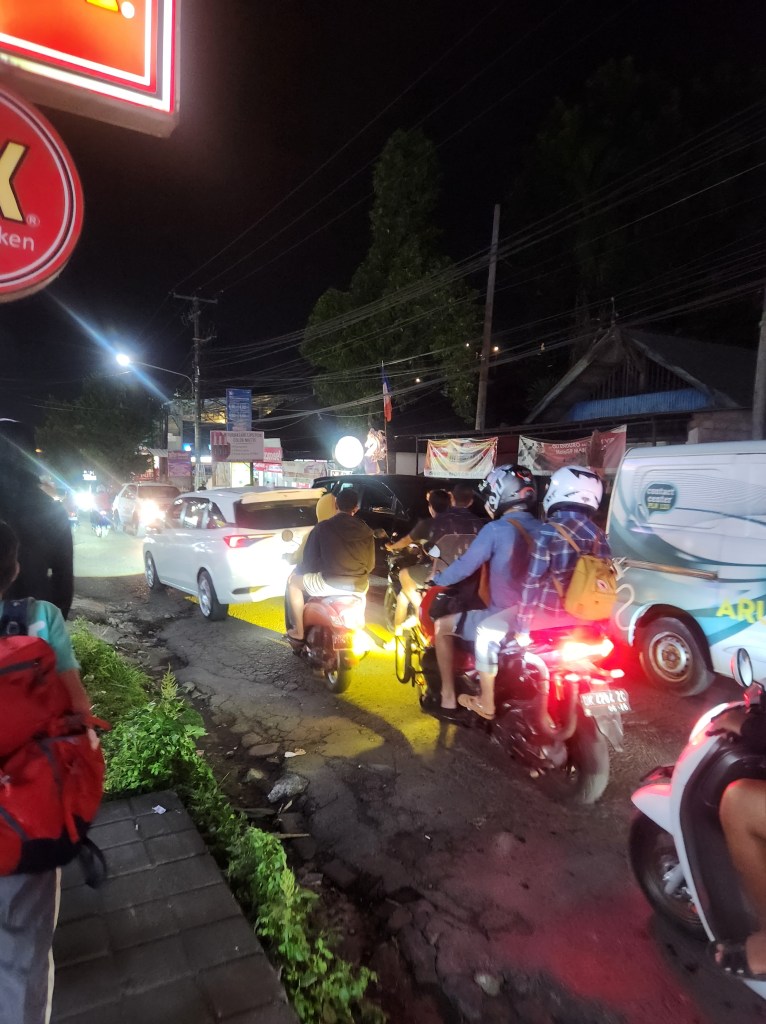
We wanted to explore other parts of the island but traveling around Bali was so, so cumbersome. Public transportation is non-existent and the roads are narrow, with only one lane going each way. Traffic is terrible at any hour of the day. One time, we were stuck in a taxi for an hour when the ride should’ve been only 20 minutes! 😠
I know Bali is a desired destination for many, but unfortunately it wasn’t our favorite. Many “attractions” felt like they were built just to bait tourists, like the Bali swing, or photo op setups at temples. Some bars and restaurants in Ubud look like they plucked straight from Las Vegas or London. Tourism is a huge part of Bali’s economy so it’s understandable they have to cater to visitors but it can feel inauthentic, especially since we had just come from Java.
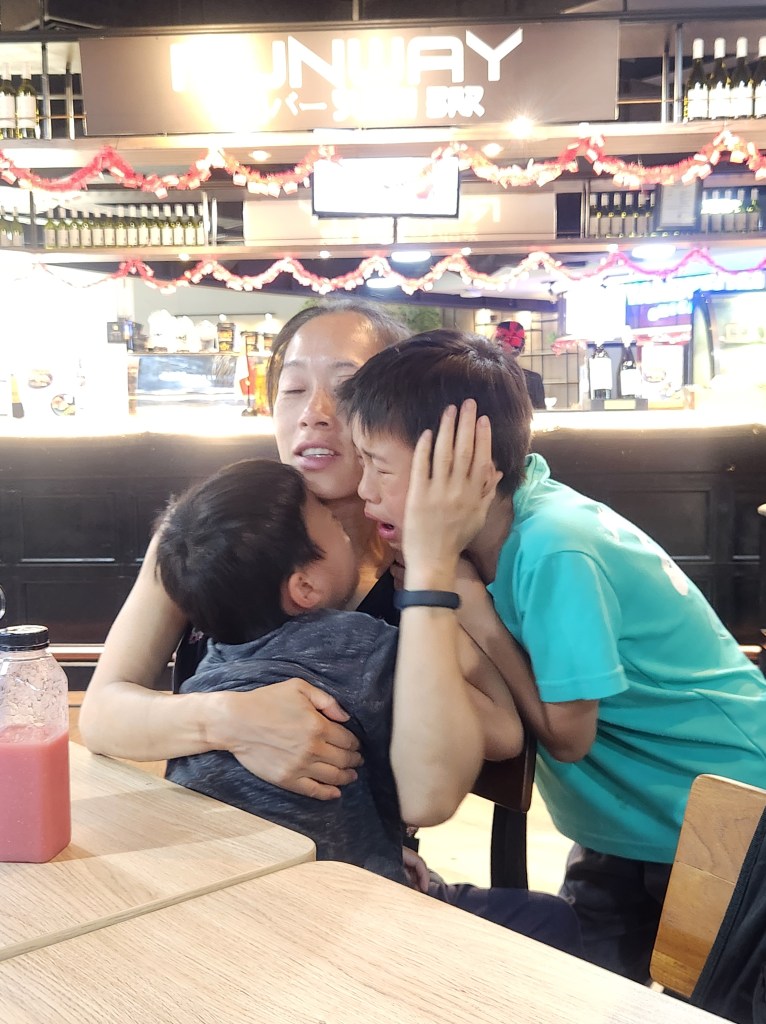
After a week in Bali and 2 months in Taiwan, we parted ways with my SIL at the airport. The boys were devastated. They had such a fun and memorable summer with their aunt, and we are thankful she spent her summer with us. Goodbyes are the hardest part of living abroad, but I don’t think they’ll ever get easier.
Bali had always been on my list of places to travel to. I was captivated by the blend of culture, beauty and laid back vibe of the island. But the 20+ hour flight from San Francisco deterred us from visiting for the longest time.
So when we moved to Taiwan, I knew we had to take advantage of the 5 hour flight to Bali. As I did more research though, I realized just how many islands there are in Indonesia that get overshadowed by Bali! (Seriously, there are 6,000 inhabited islands in the country.) I felt like we wouldn’t do Indonesia justice by visiting just Bali, so we decided to visit Java as well. Even thought there were other islands I wanted to go to – namely, Komodo, Borneo and Lombok – it was logistically hard to plan. We spent 1 week in Java and 1 week in Bali.
Java. Java is considered the economic and cultural center of Indonesia. The capital Jakarta is also on the island but we decided to skip it after reading many reviews saying there isn’t much to see/do. Instead, we went to Yogykarta and Surabaya.
Yogykarta (or commonly called “Jogja”) is known for its cultural heritage and traditional arts. It’s actually the most popular destination in Java but it never felt overly touristy or inauthentic. I really liked the laid-back vibe in Jogja.
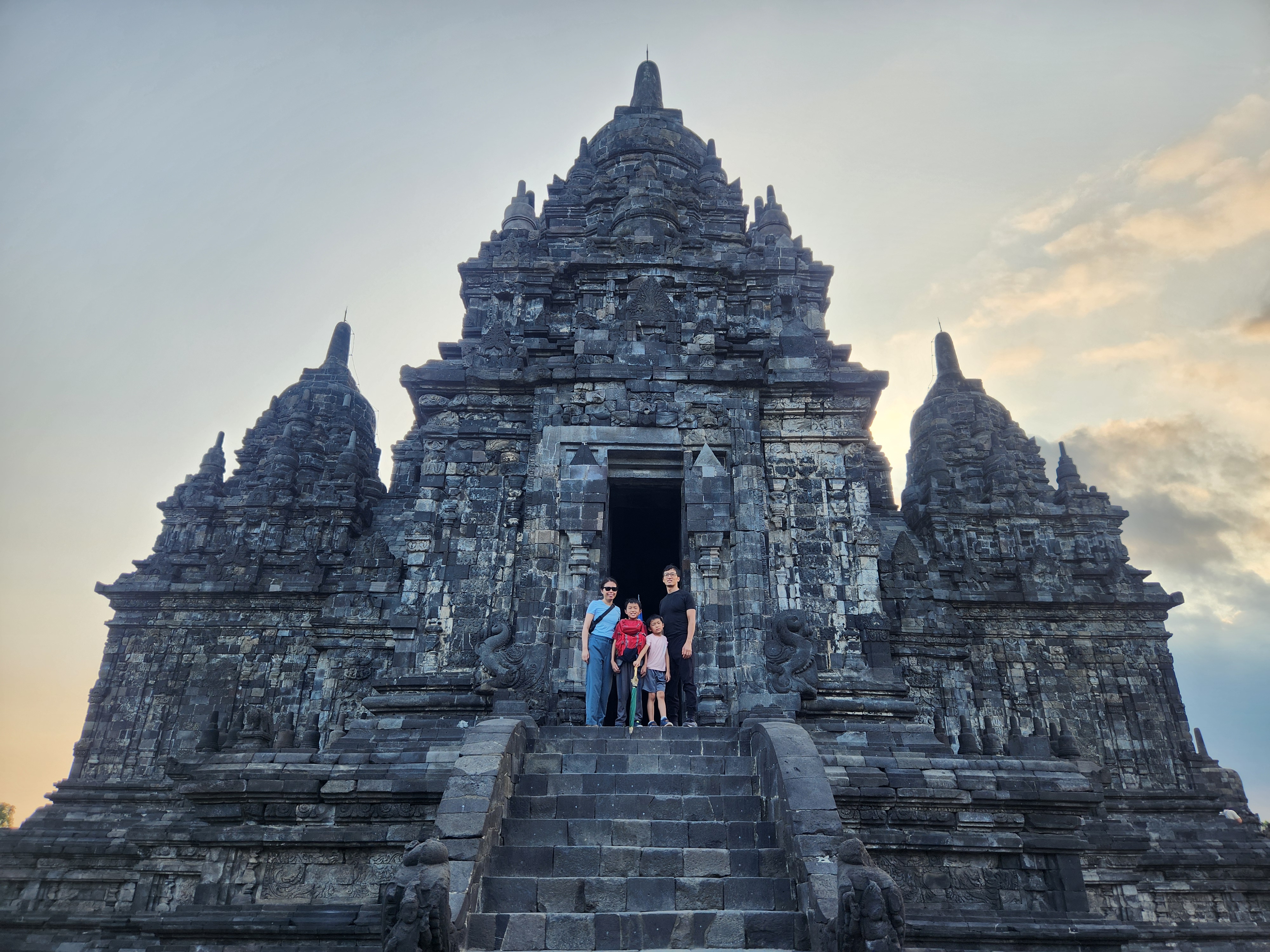
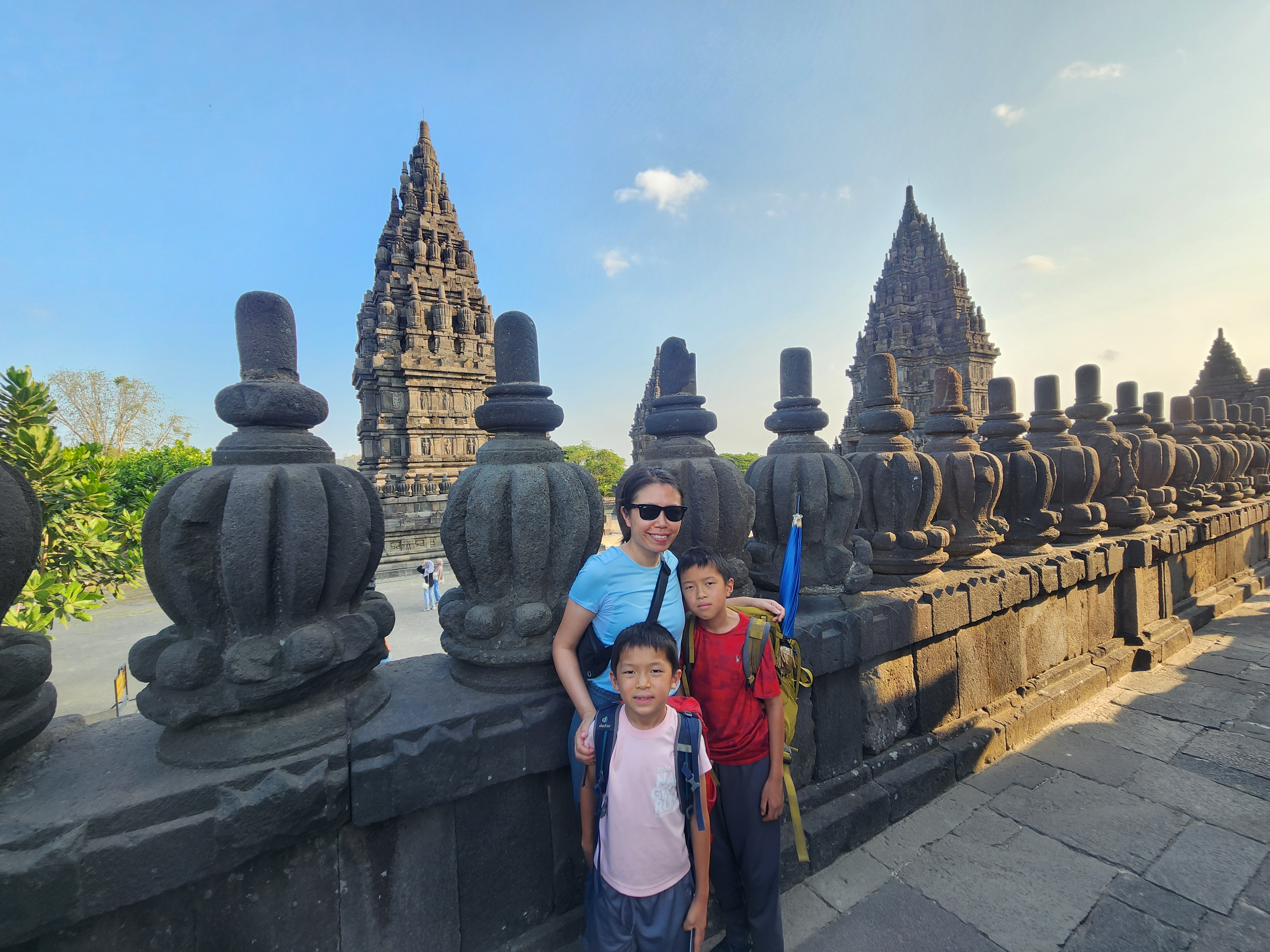
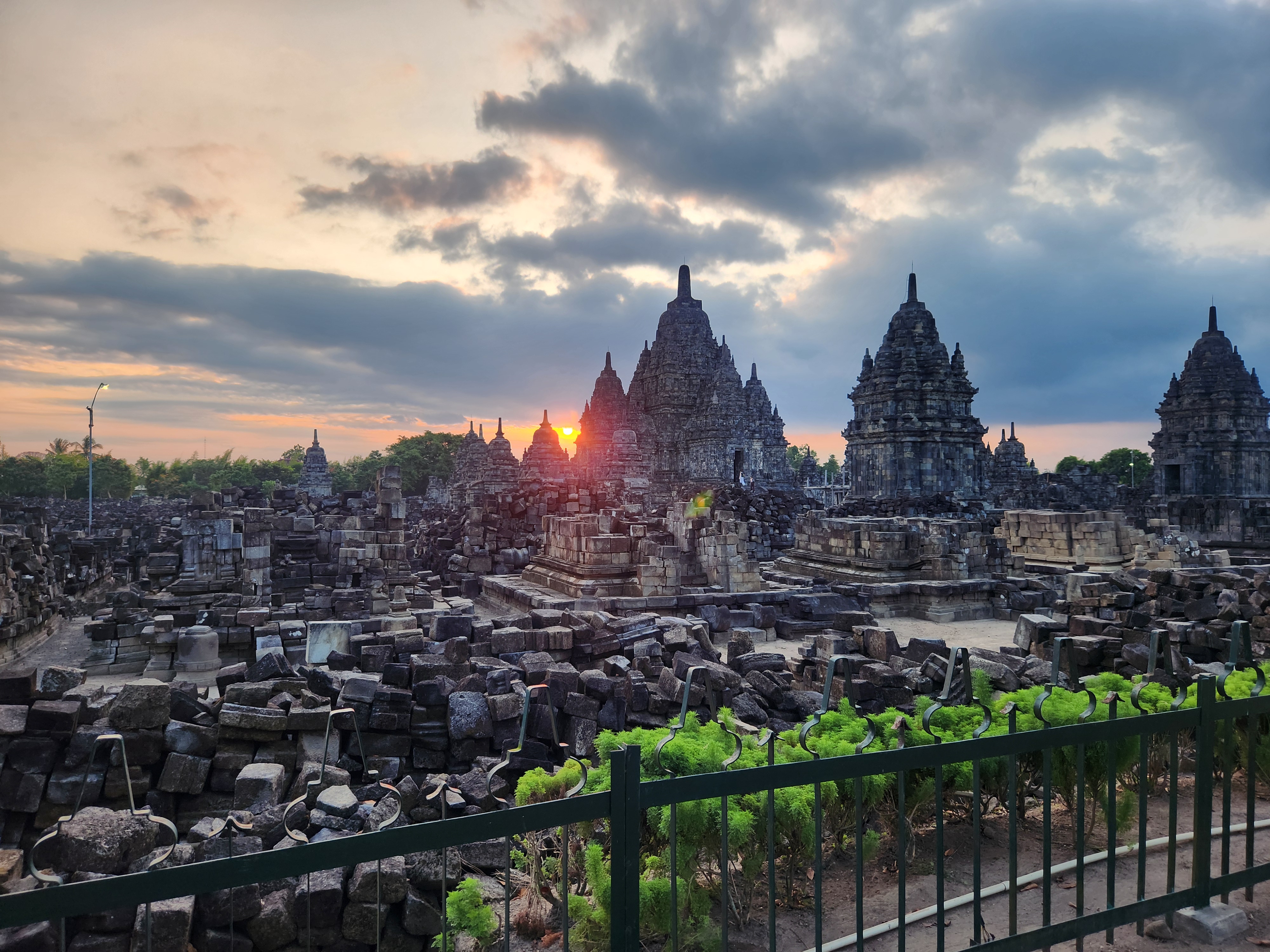
We visited the famous Prambanan and Borobudur temples in Jogja. Prambanan (pictured below) is a large Hindu temple complex that reminded us so much of Angkor Wat. Visitors can also climb up into some of the temples, where a statue of a deity often stood. We went to Prambanan during sunset and seeing the temples in the warm, glowing hues was a wonderful way to end the day.
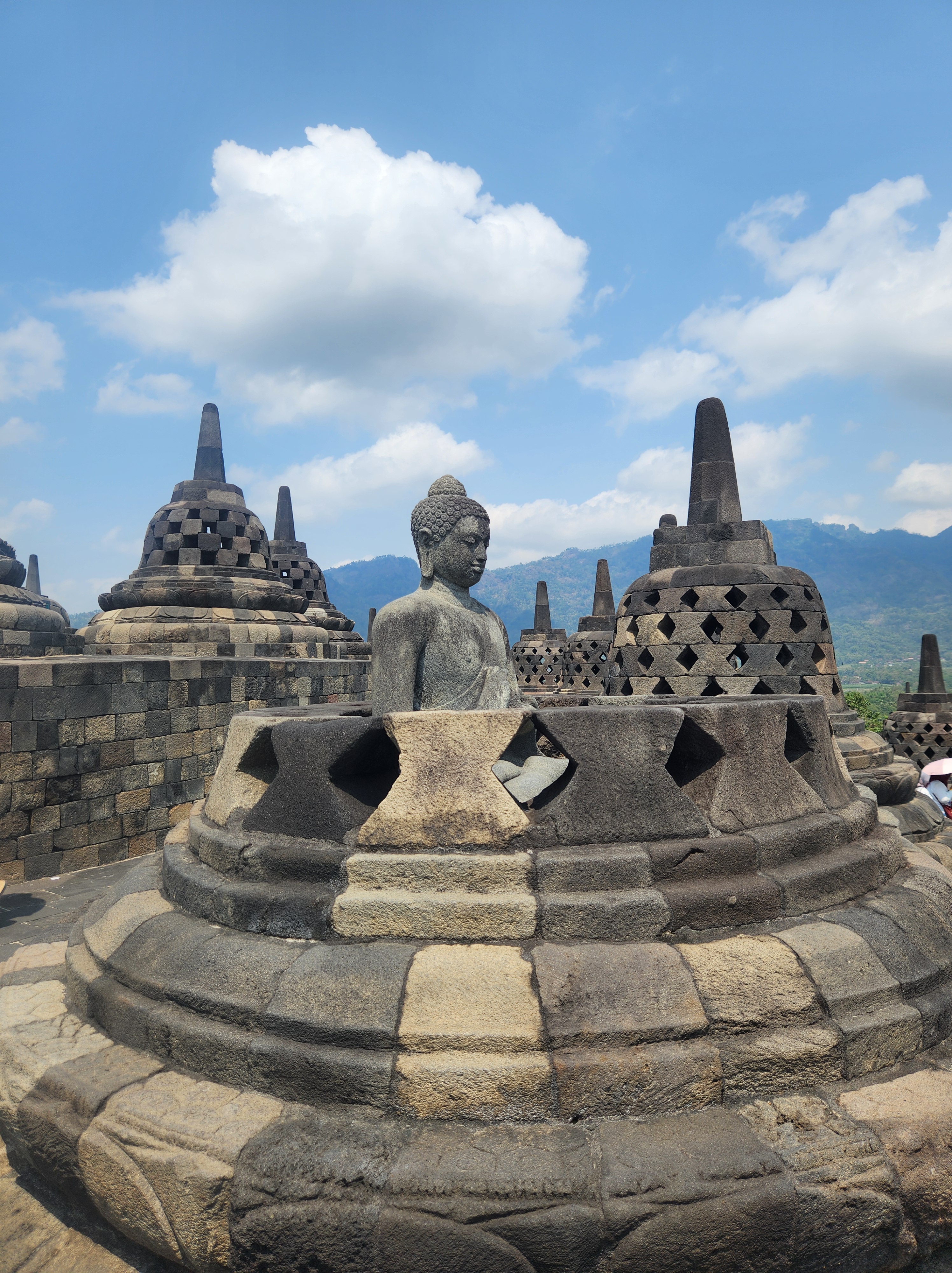
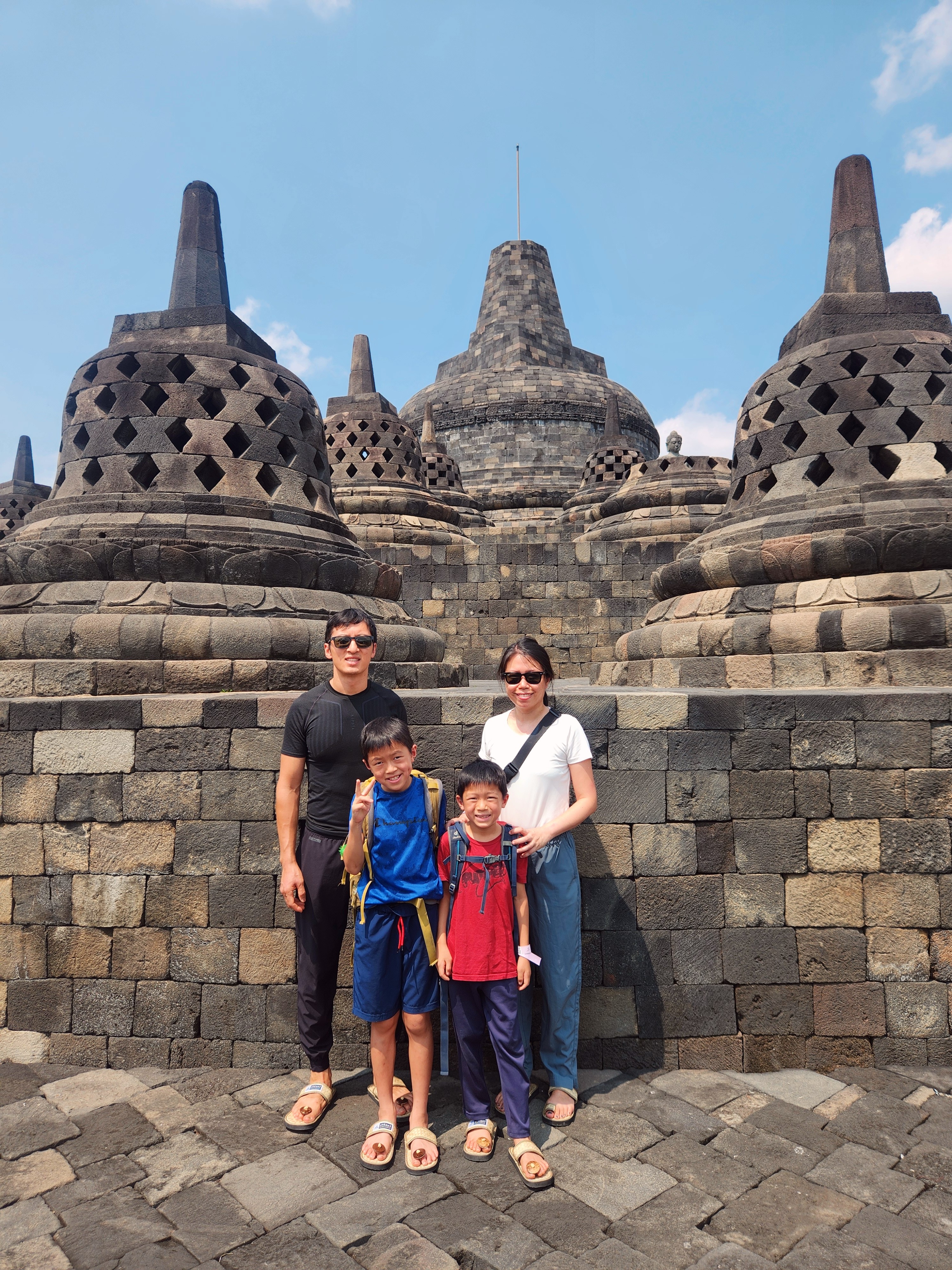
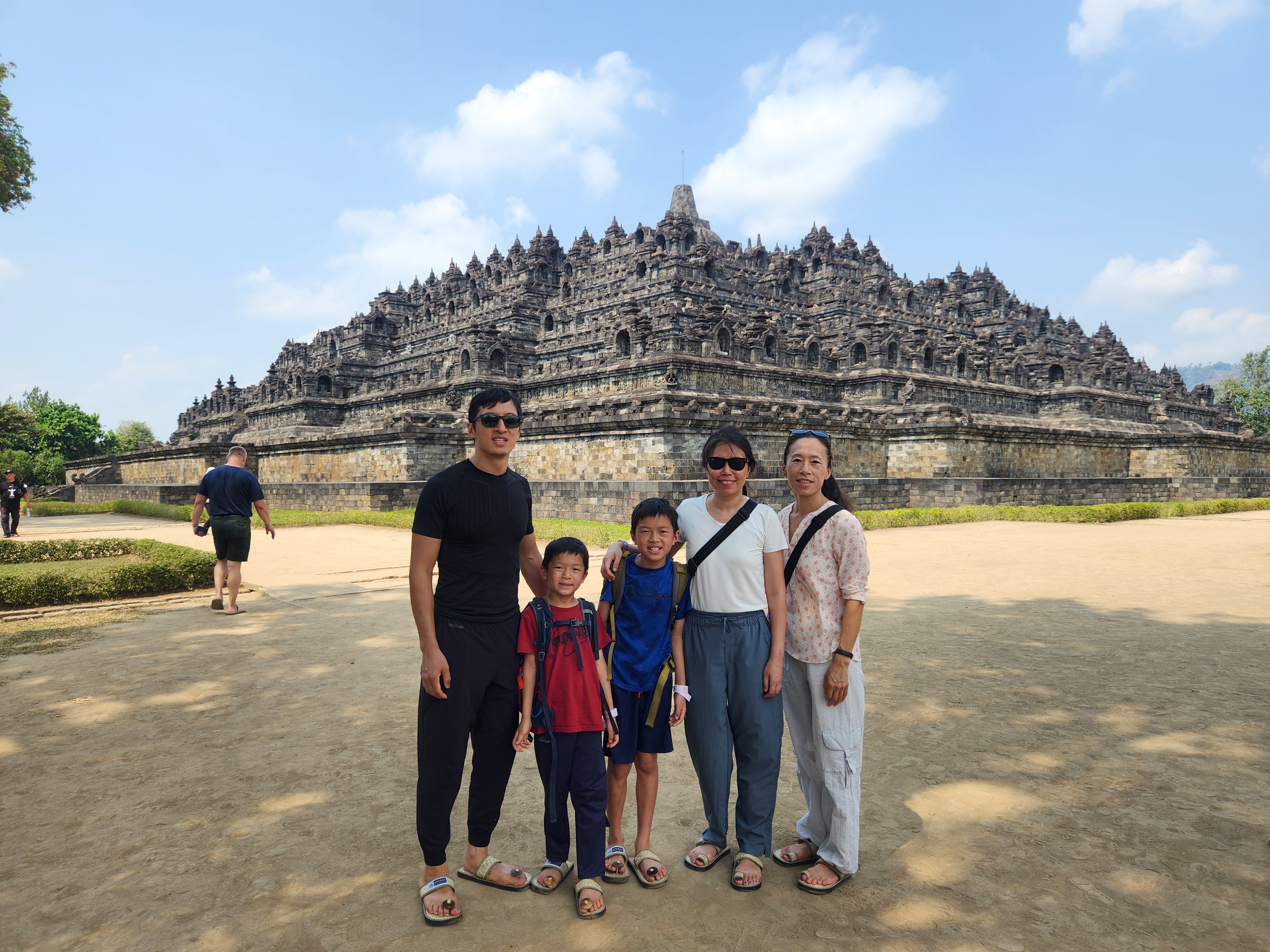
Borobudur is the largest Buddhist temple in the world. Borobudur is actually quite close to Prambanan (about 1.5 hour drive away) so many people visit the two temples in one day. But because we had extra time, we visited each temple on different days so as not to wear ourselves out.
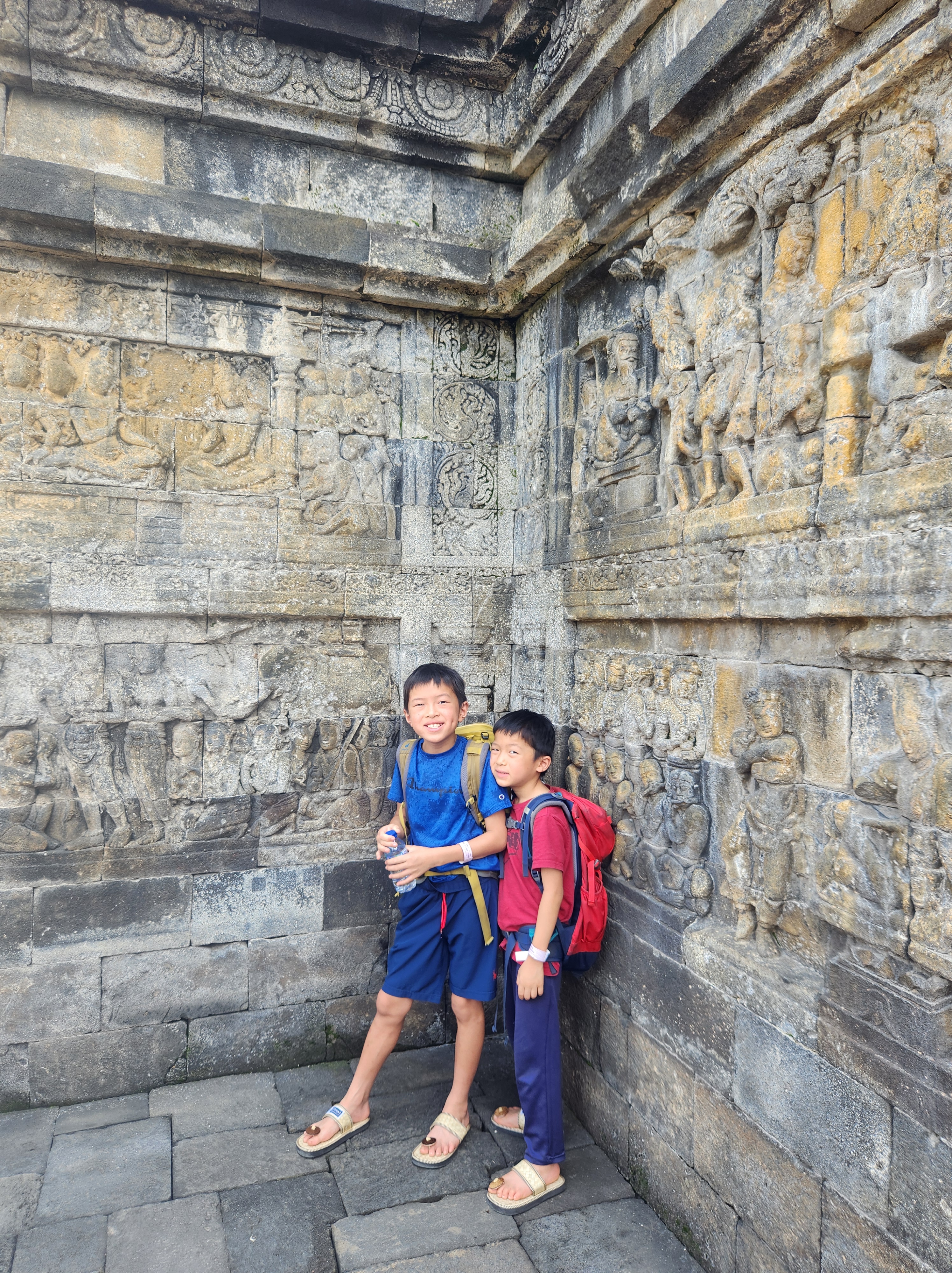
Borobudur temple has several upper levels, which visitors need to buy a special ticket to in order to visit. I had such a hard time securing the tickets (probably due to bots 😒) so ended up working with an agent. Because of its massive scale, the temple is very impressive from afar. We climbed the stairways and walked through the corridors to see the relief panels but the temple has no interior you can walk into. Overall, we enjoyed the architecture and aesthetic of Prambanan more.
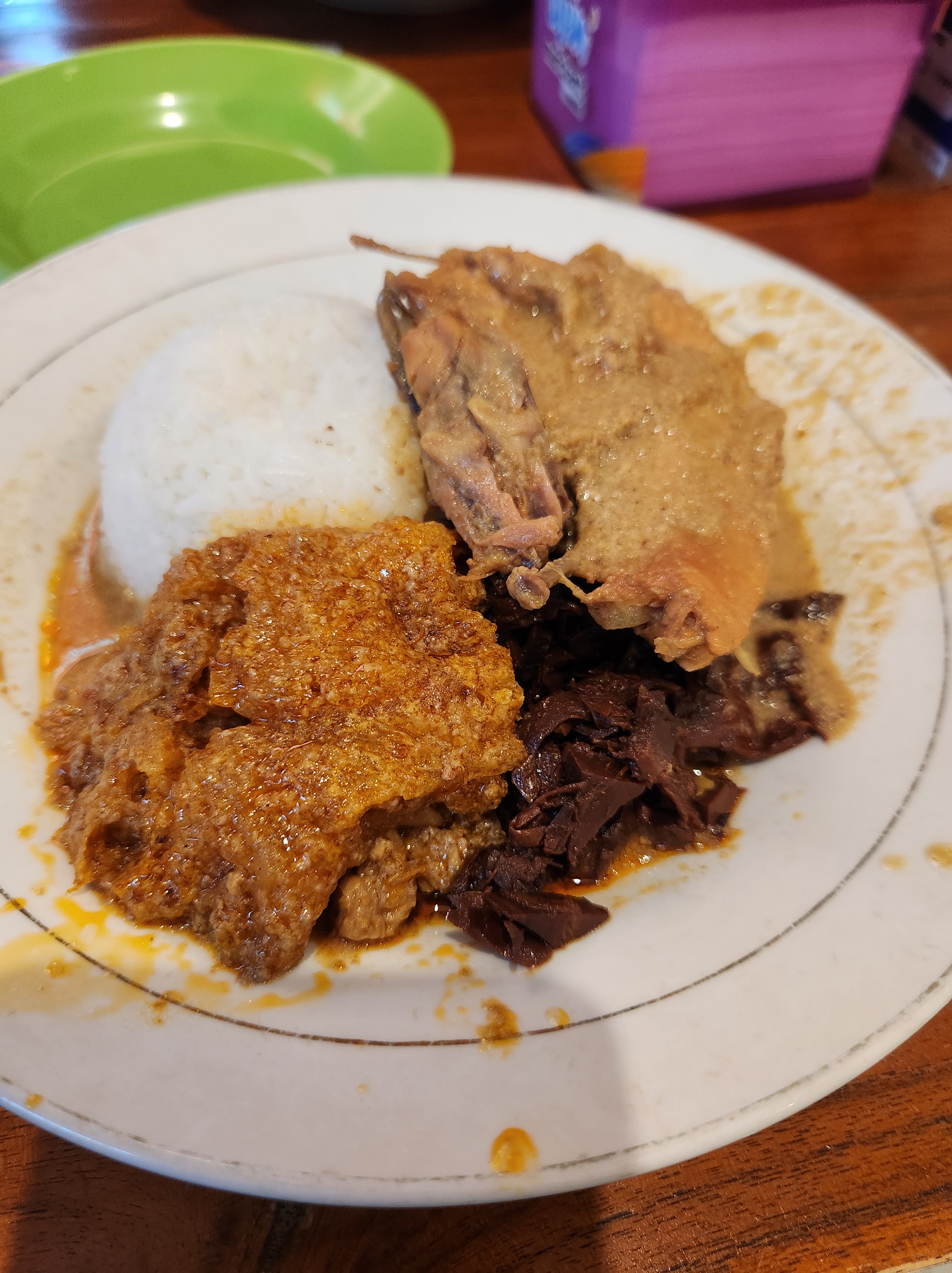
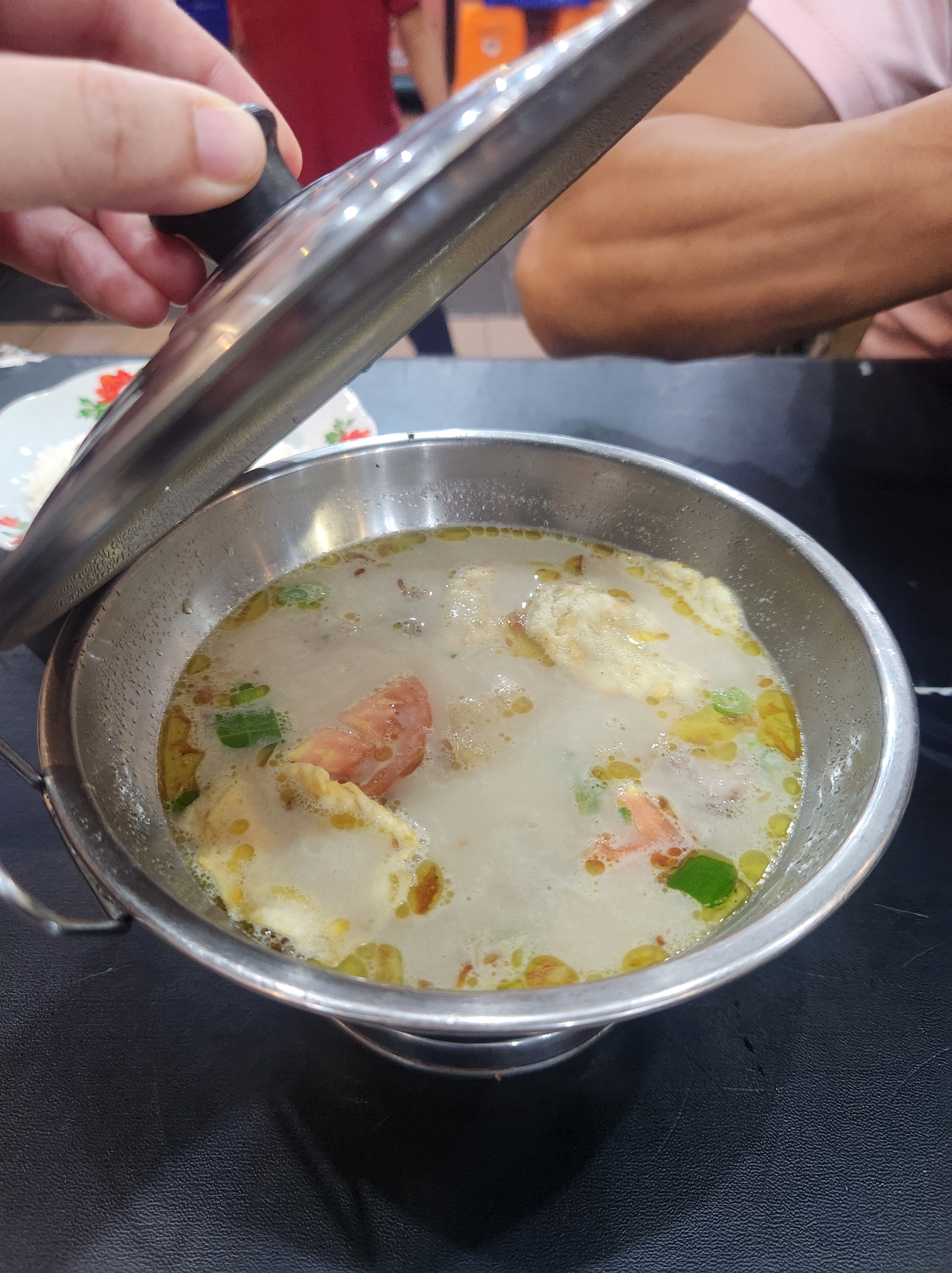
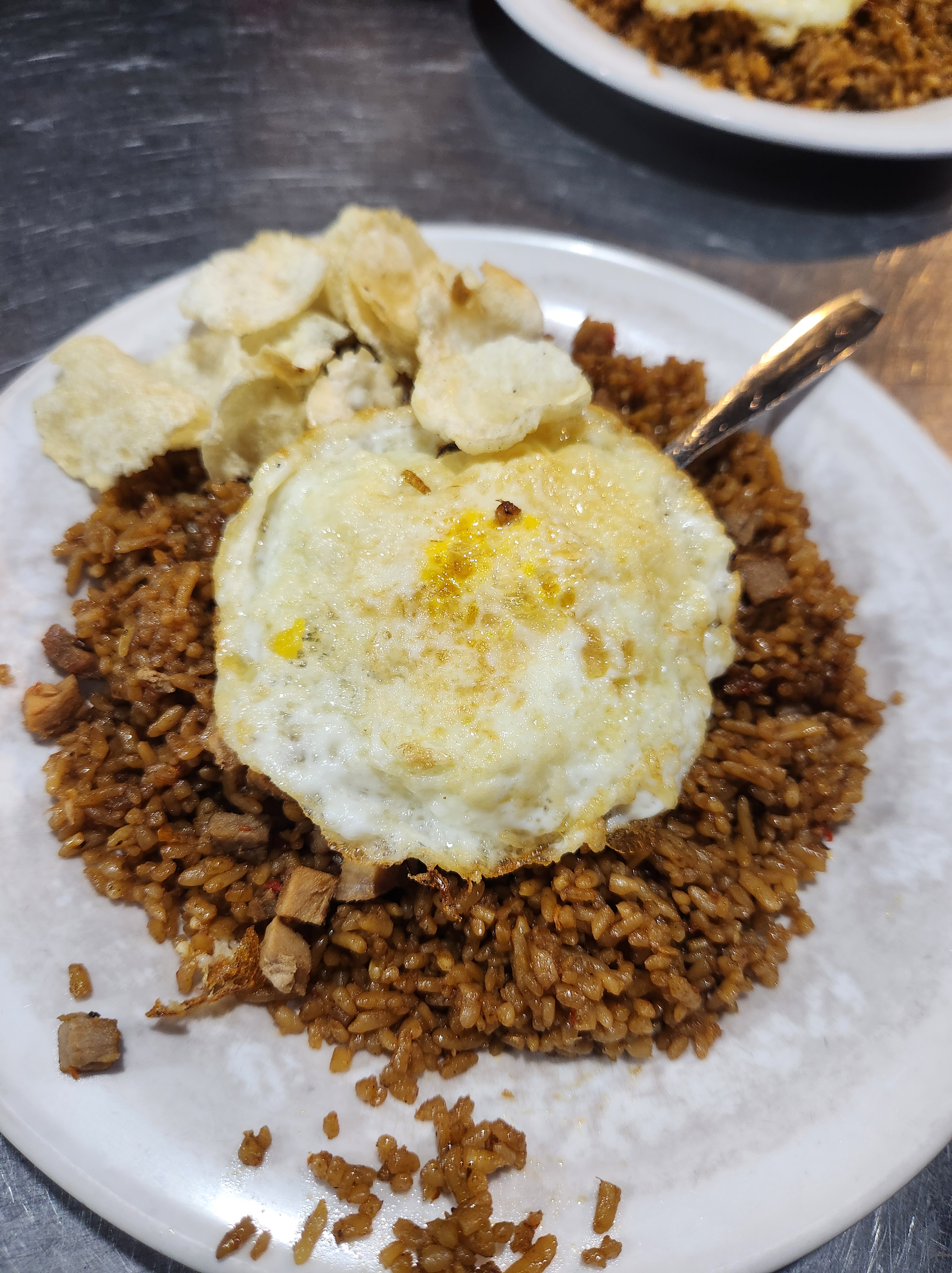
We didn’t realize it at the time, but Jogja had the best food out of all the places we visited in Indonesia. The dishes were reminiscent of Southeast Asia flavors: a mix of salty, sour, sweet and SPICY! I have a decent spice tolerance but some of the food set my mouth on fire (in a good way). The downside was finding food for the boys because even the least spicy foods were too much for them. 😂 Food was extremely affordable in Jogja – the total bill was generally no more than $20 for the 5 of us.
After Jogja, we took a 4 hour train ride to Surabaya in east Java. We were pleasantly surprised by how comfortable the trains were! We booked seats in the Executive Class through tiket.com, and each ticket only came out to be about $20 per person.
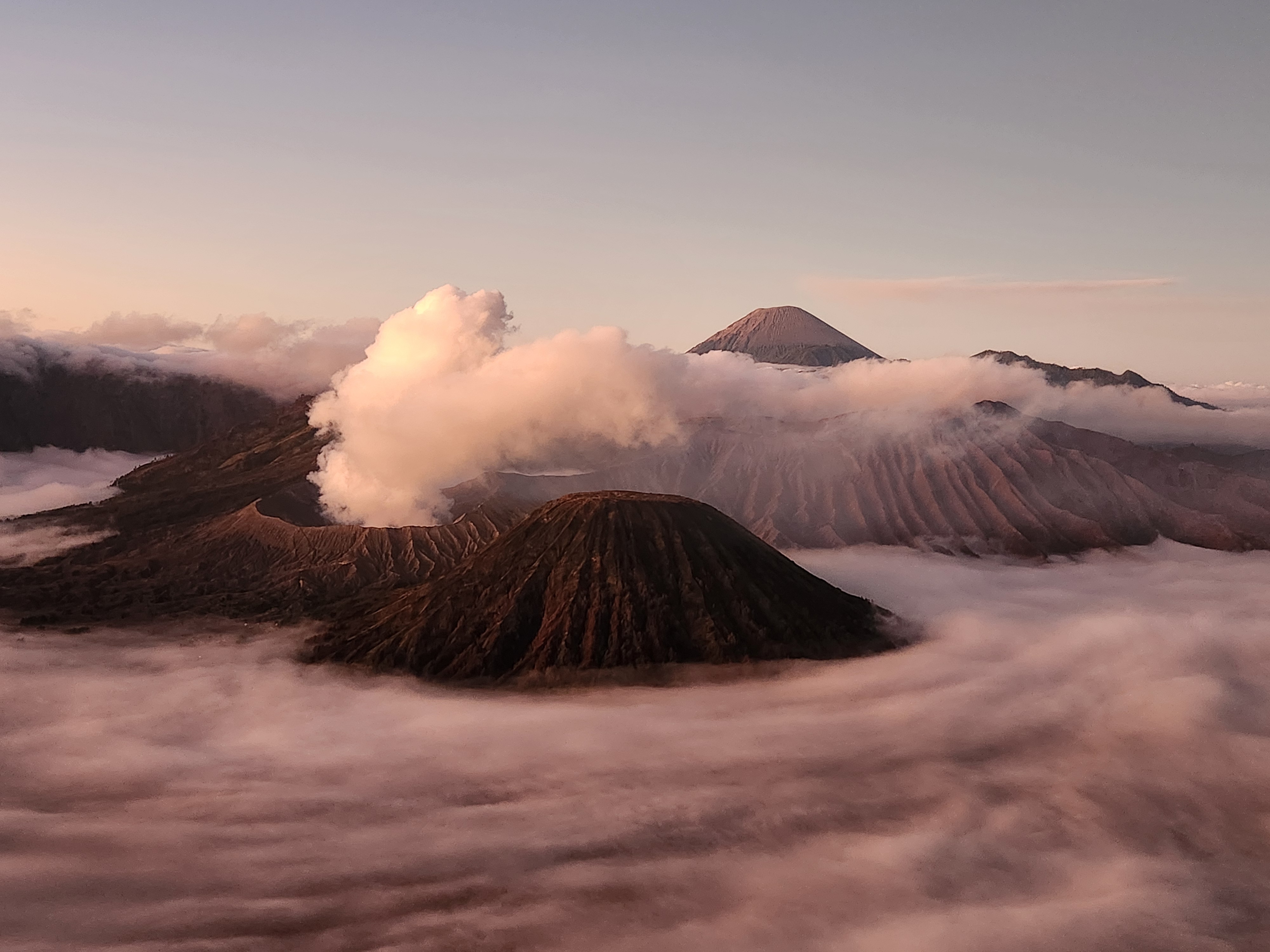
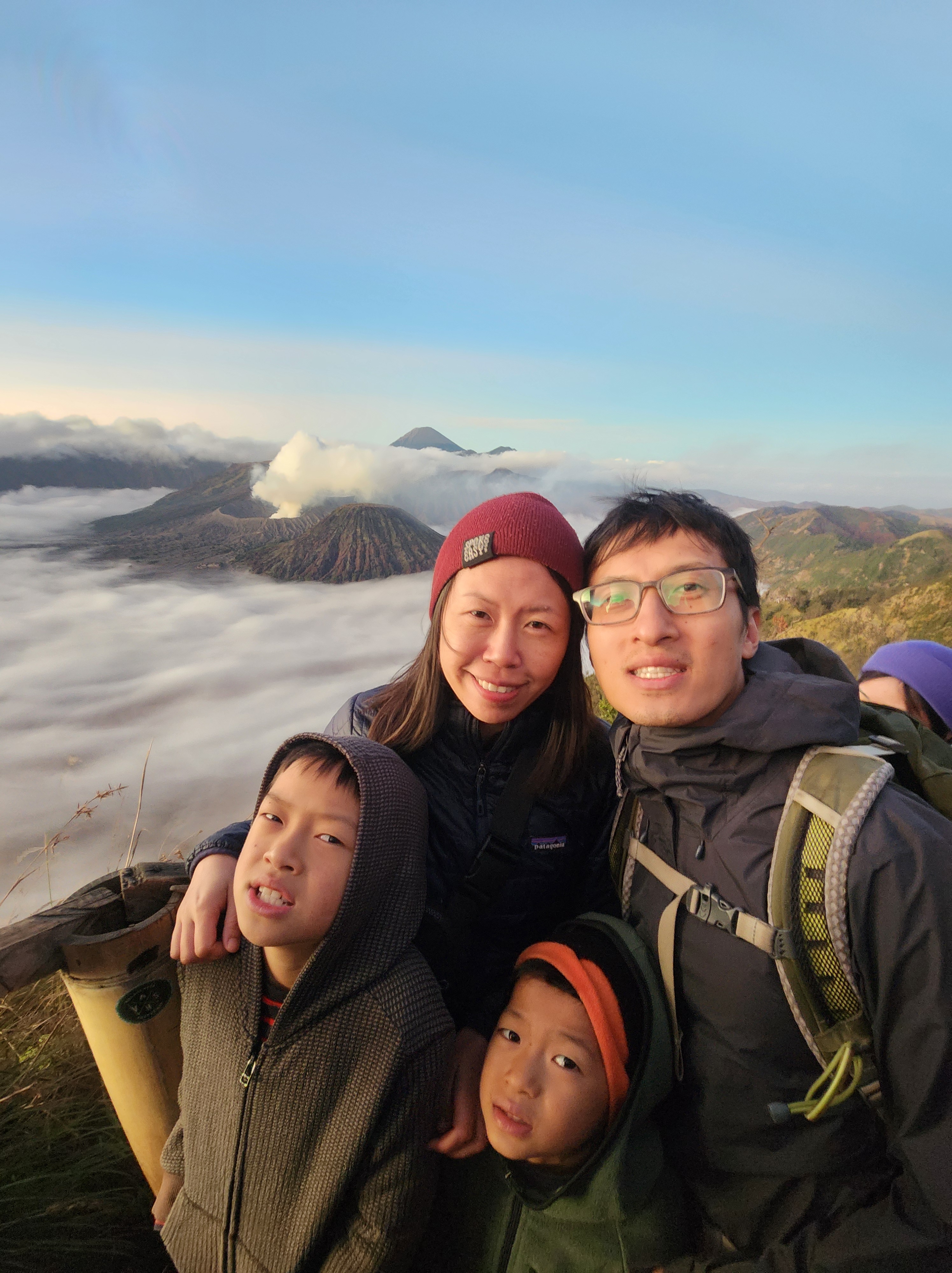
Surabaya is the gateway city to Mount Bromo, one of Indonesia’s most famous active volcanoes. We booked a Mount Bromo sunrise tour, which picked us up from our Airbnb at midnight (!!) 😱 to then drive 2 hours to a spot where we switched to a 4×4. The 4×4 drove us up a rugged, winding path for another 1.5 hours (which the boys loved of course) to King Kong Hill to catch the sunrise.
Prior to the tour, our guide had warned us about the windy and frigid weather at King Kong Hill. We packed as much warm clothing as we could, but our efforts were futile. The wind chill atop King Kong Hill was brutal. What’s worse is that we had to stand in the cold for 1.5 HOURS in order to see the sunrise from the best viewing spot. Understandably, the boys were very grumpy. At long last, we finally saw the sunrise and it was absolutely glorious…though we would’ve enjoyed it a lot more if it weren’t so damn cold.
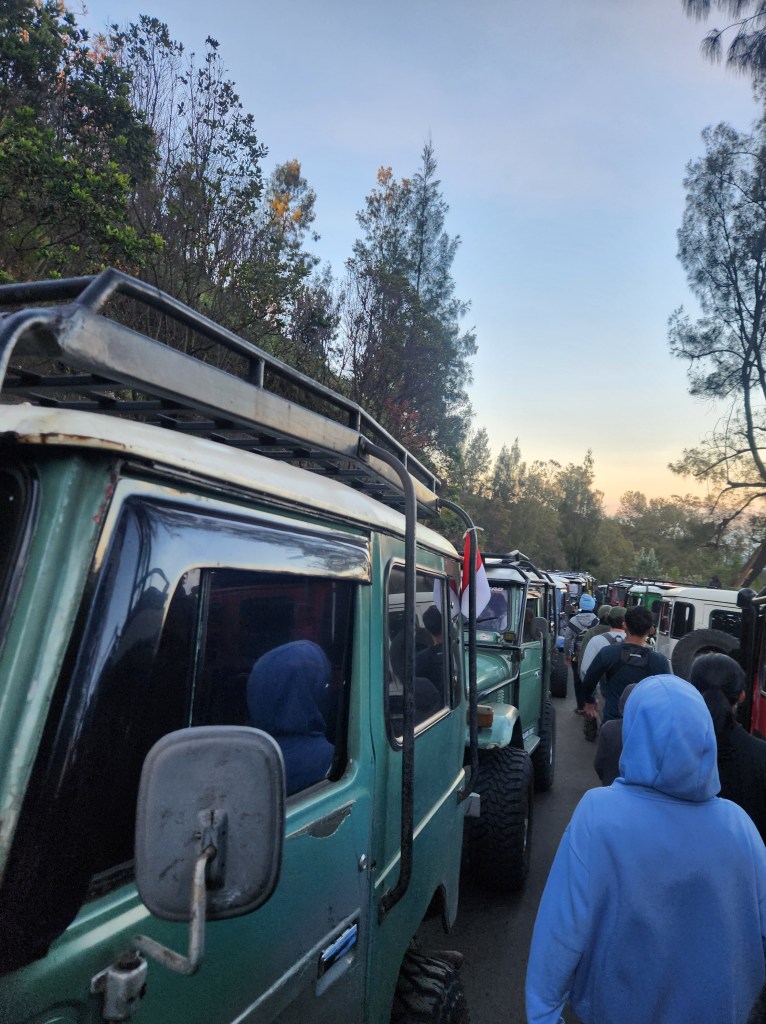
After snapping some pictures, we raced down the hill to try and beat the other tourists leaving the area. The road was PACKED with 4x4s, causing a major bottleneck. We had to wait another 45 minutes for the cars to start moving.
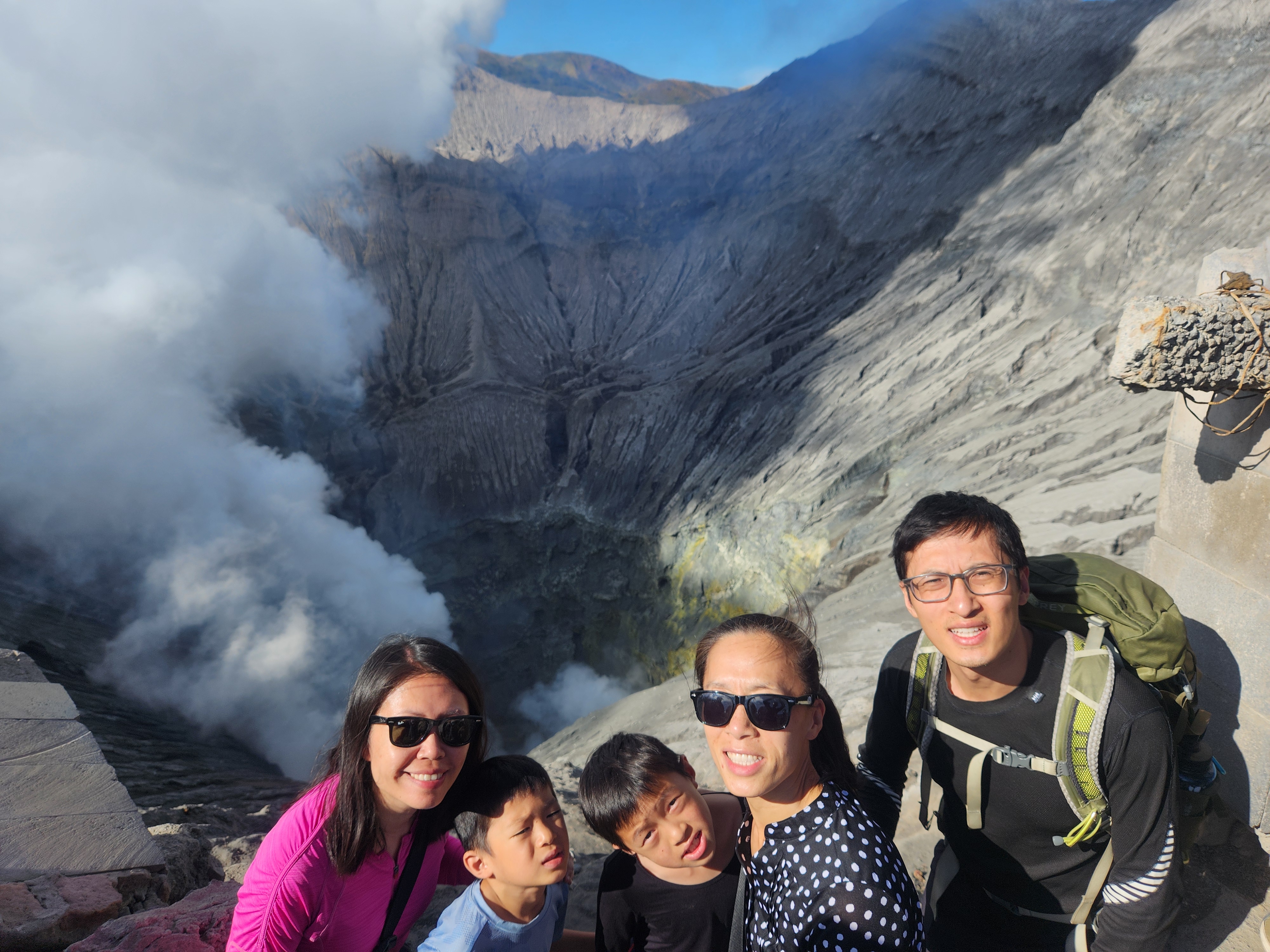
The next leg of the tour was climbing up to the crater of Mount Bromo. It’s not a hard or long climb, but can be steep in some areas. It was awe-inspiring to see an active volcano up close!
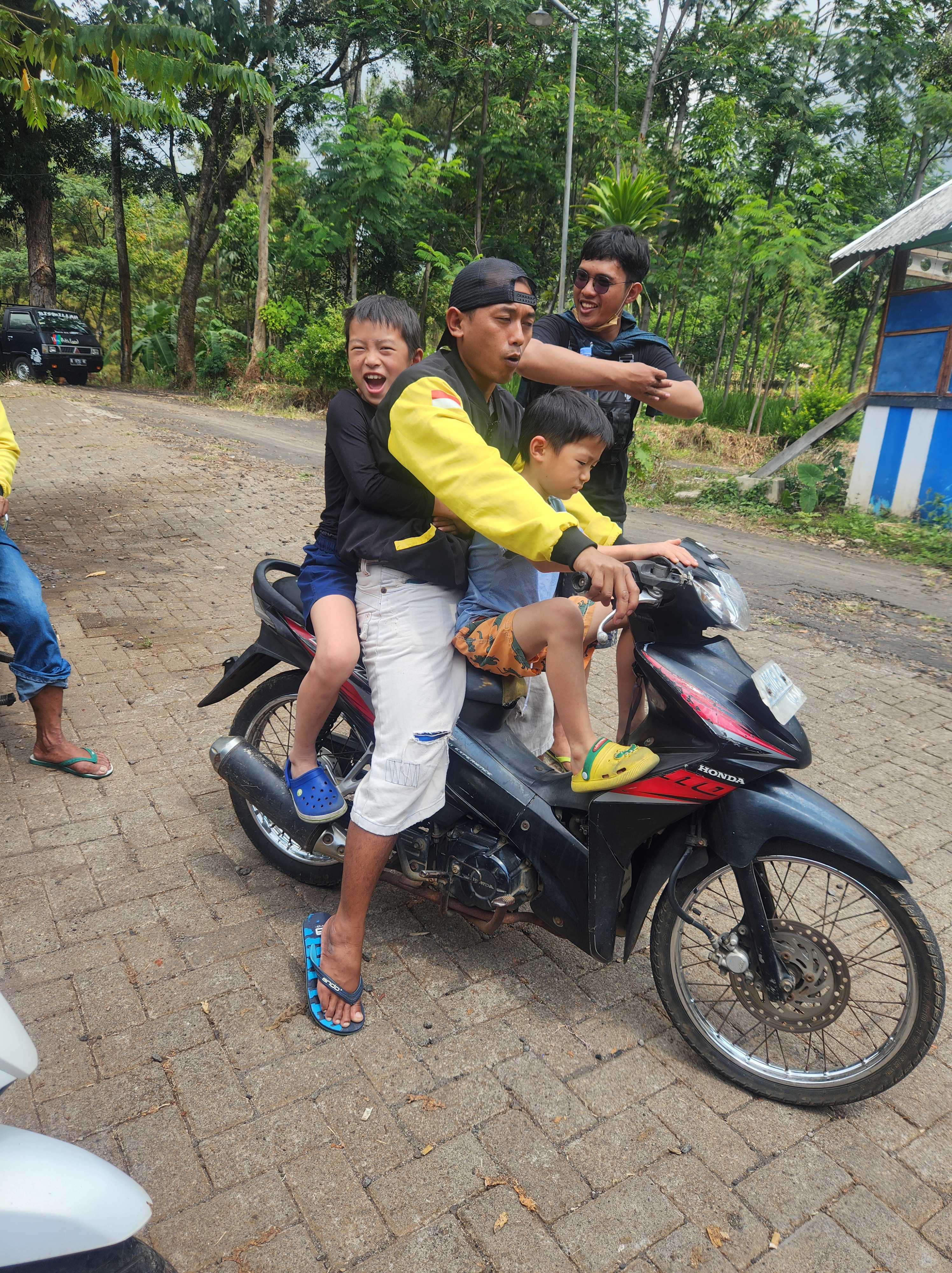
The last part of the tour was seeing the Madakaripura Waterfall. What we did NOT expect was having to reach the waterfall on the back of a motorbike. 😂 Granted the ride was short (about 10-15 minutes), but you can bet I was hanging onto the driver for dear life! Of course the boys loved it and thought it was the best thing ever.
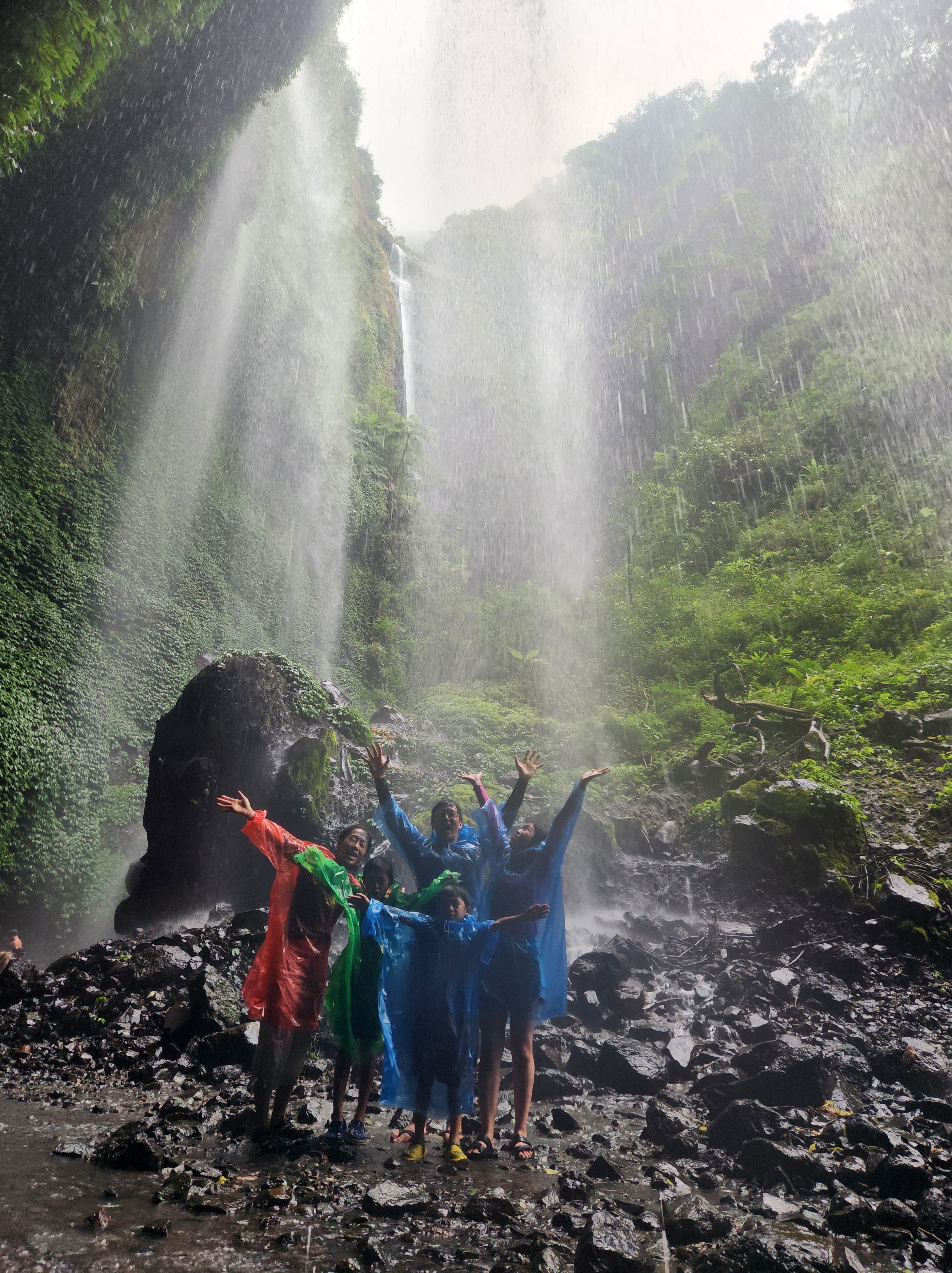
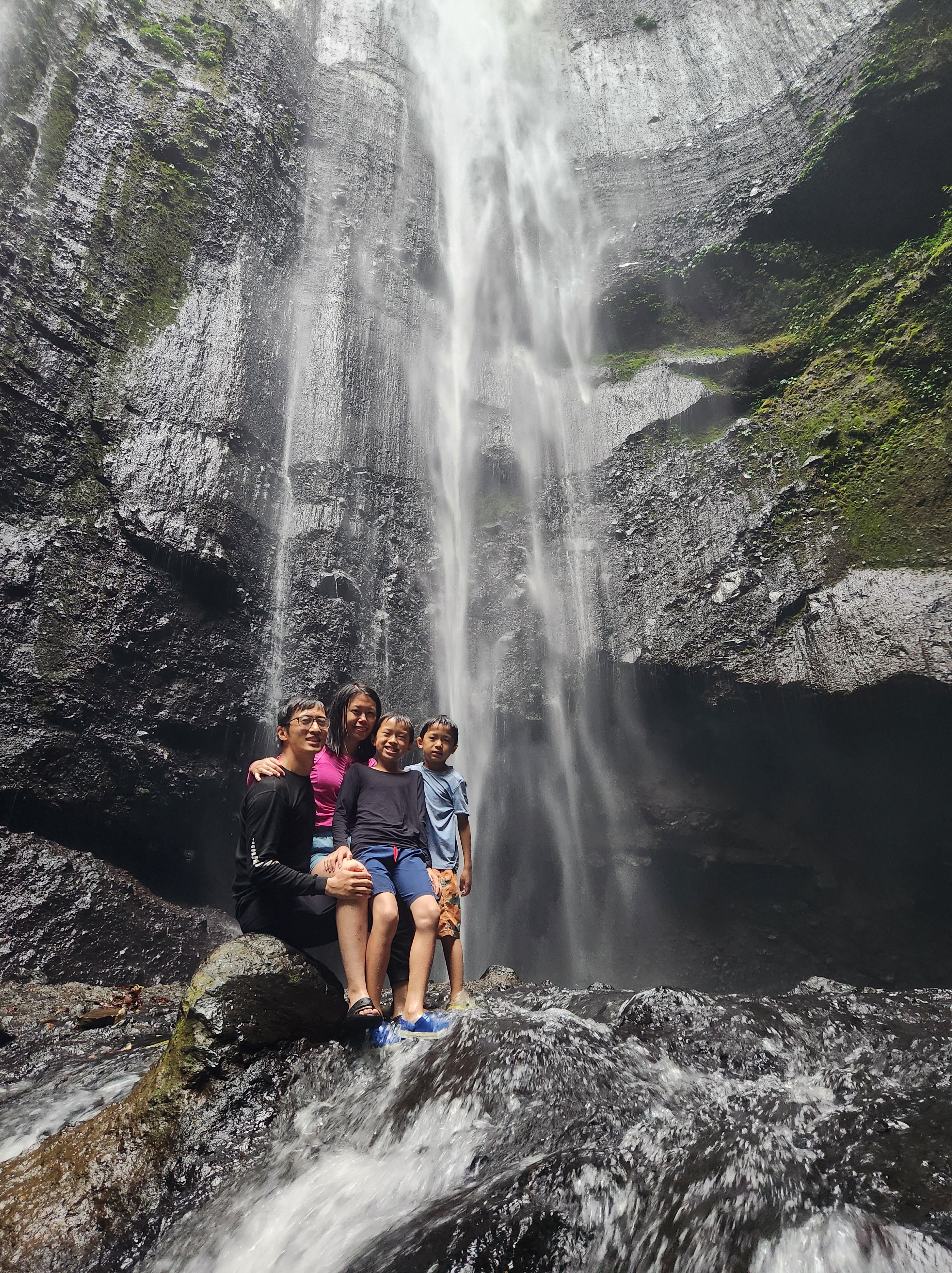
After the motorbikes dropped us off at the trailhead, we had to hike about 1/2 a mile – including crossing a few rivers and scrambling on rocks – to reach the Madakaripura Waterfall.
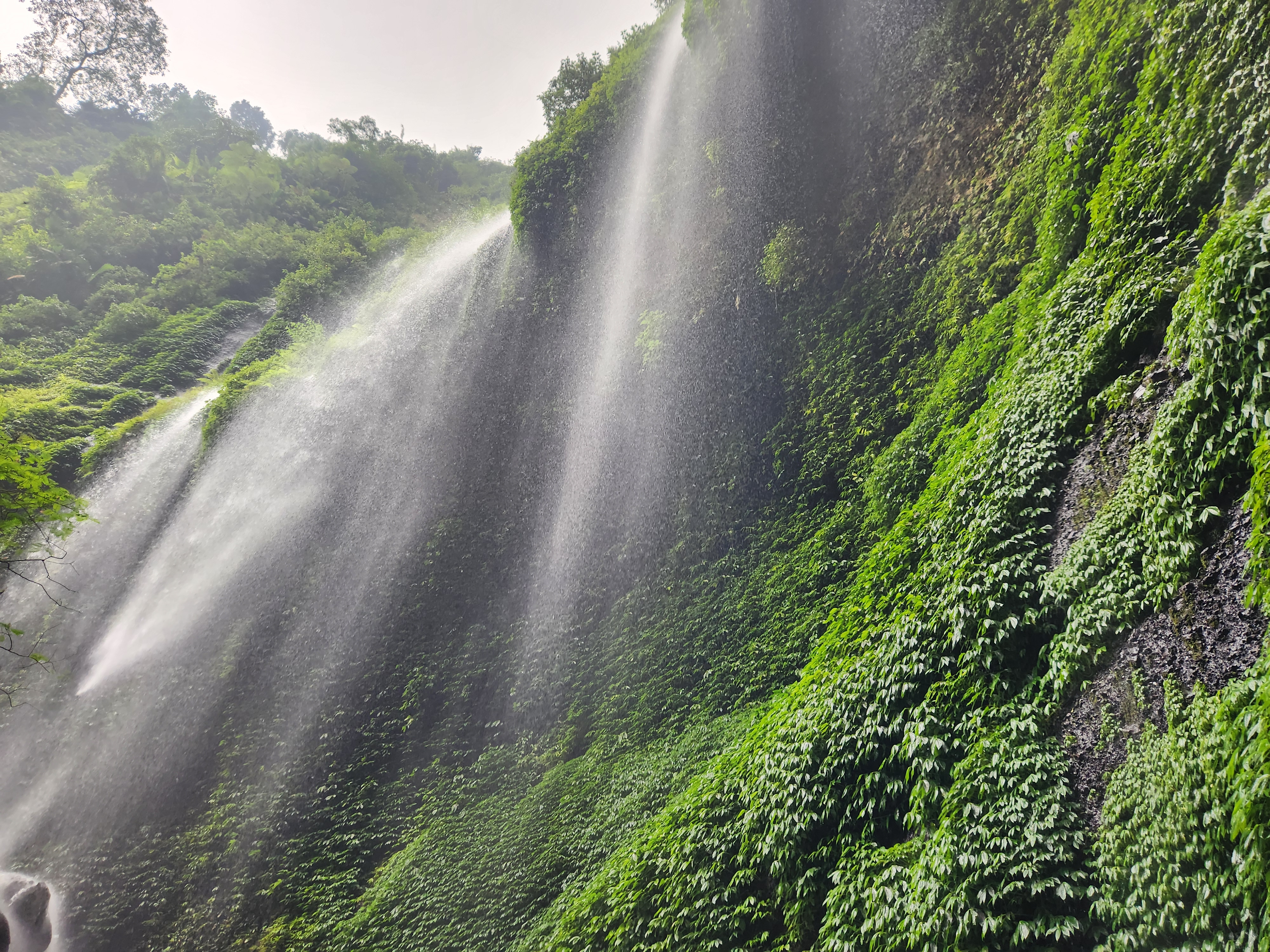
And it was STUNNING. Seriously, pictures cannot do this place justice. The soft streams of water flowing down from the cliffside was like a dream. The sound of the waterfall was thunderous yet I felt so at peace there.
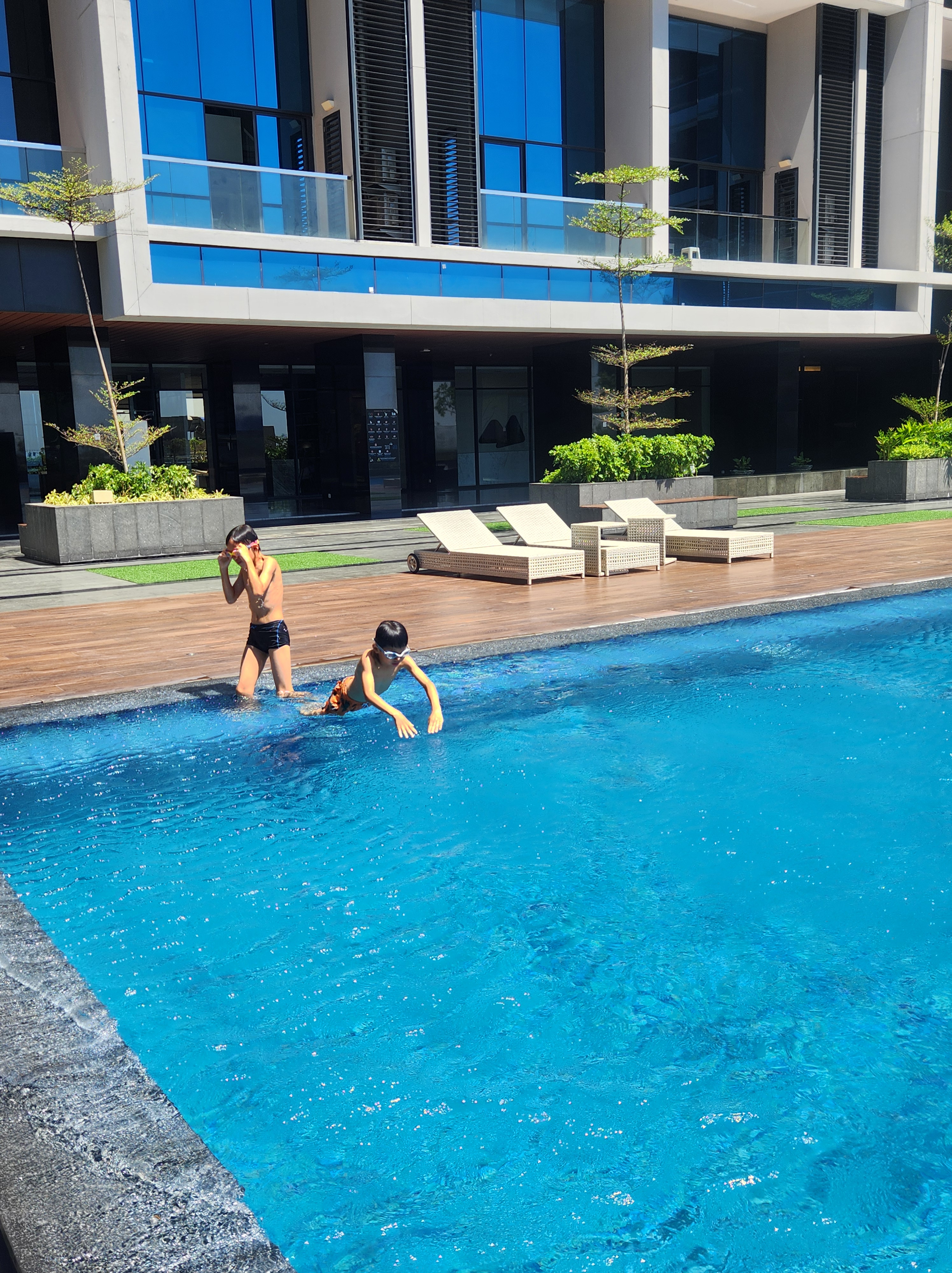
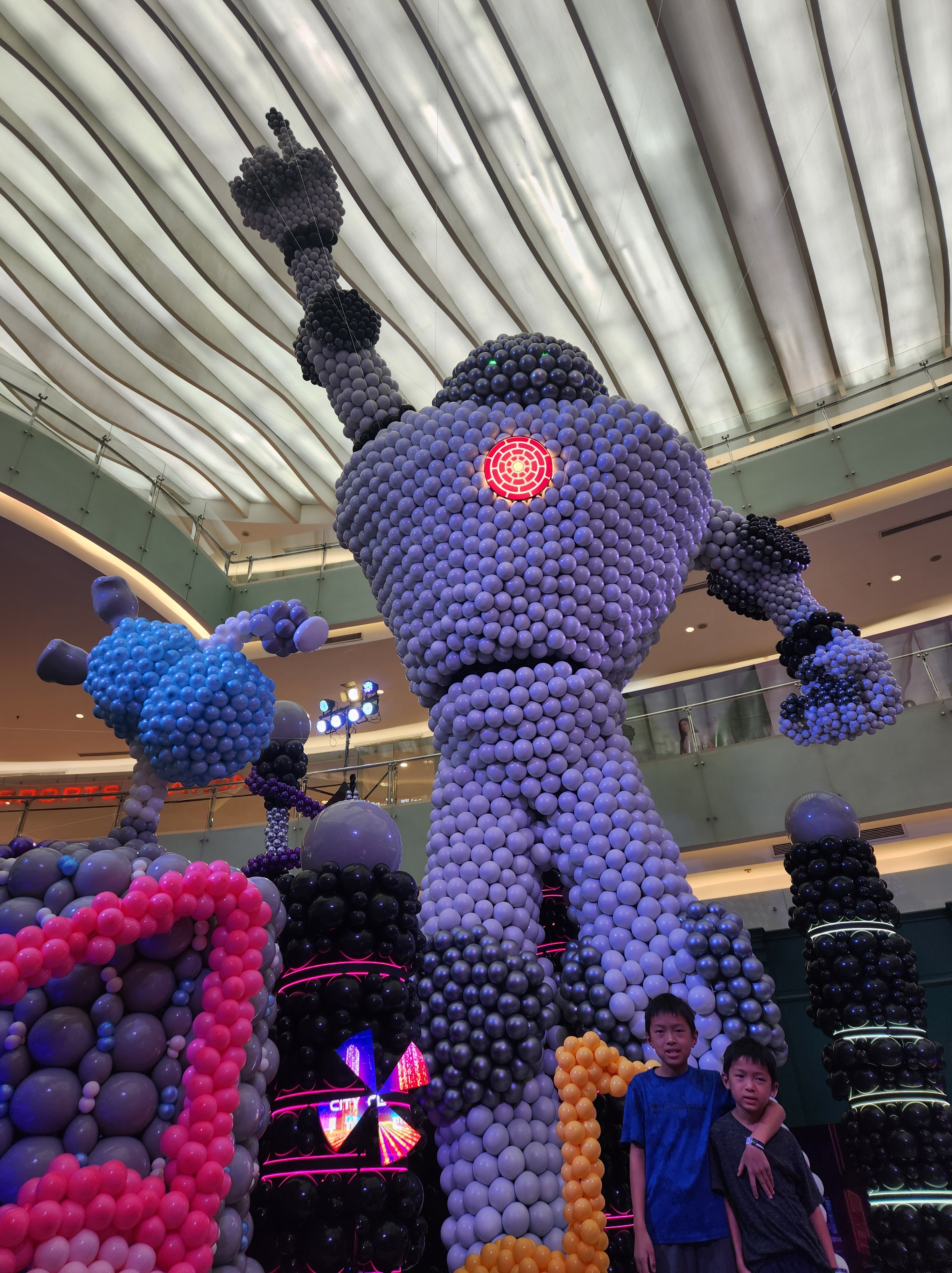
The entire tour lasted 16 hours. We were utterly exhausted but agreed this tour was the highlight of our Indonesia trip. The next day, we all slept in and didn’t have the energy to do much except hang out at the pool/gym. There was a mall and food court below our Airbnb, so we never even left the building. The boys later visited a cool balloon exhibit in the mall.
Looking back, we’re a little disappointed we didn’t get to explore much of Surabaya but getting some down time to recharge was also necessary. (I was experiencing cold symptoms at this point too!) From Surabaya, we took a 45 minute flight to Bali. However seeing how long this post is getting, I think I’ll save Bali for another post!
This summer, Baba’s sister (my SIL) came to Taiwan and stayed with us for 2.5 months. Prior to her arrival, the boys excitedly came up with a list of places to take her around Taipei and beyond. This is one of the few times we get to play host. Since most of our friends and family are from the Bay Area, we never had to take anyone around until we moved here.
Luckily, my SIL was down for everything. Even though we didn’t sign the boys up for any full-time camps, they still had a busy and productive summer! This is just a snippet of the things we did, in addition to Alishan and Indonesia (which I’ll blog about next!).
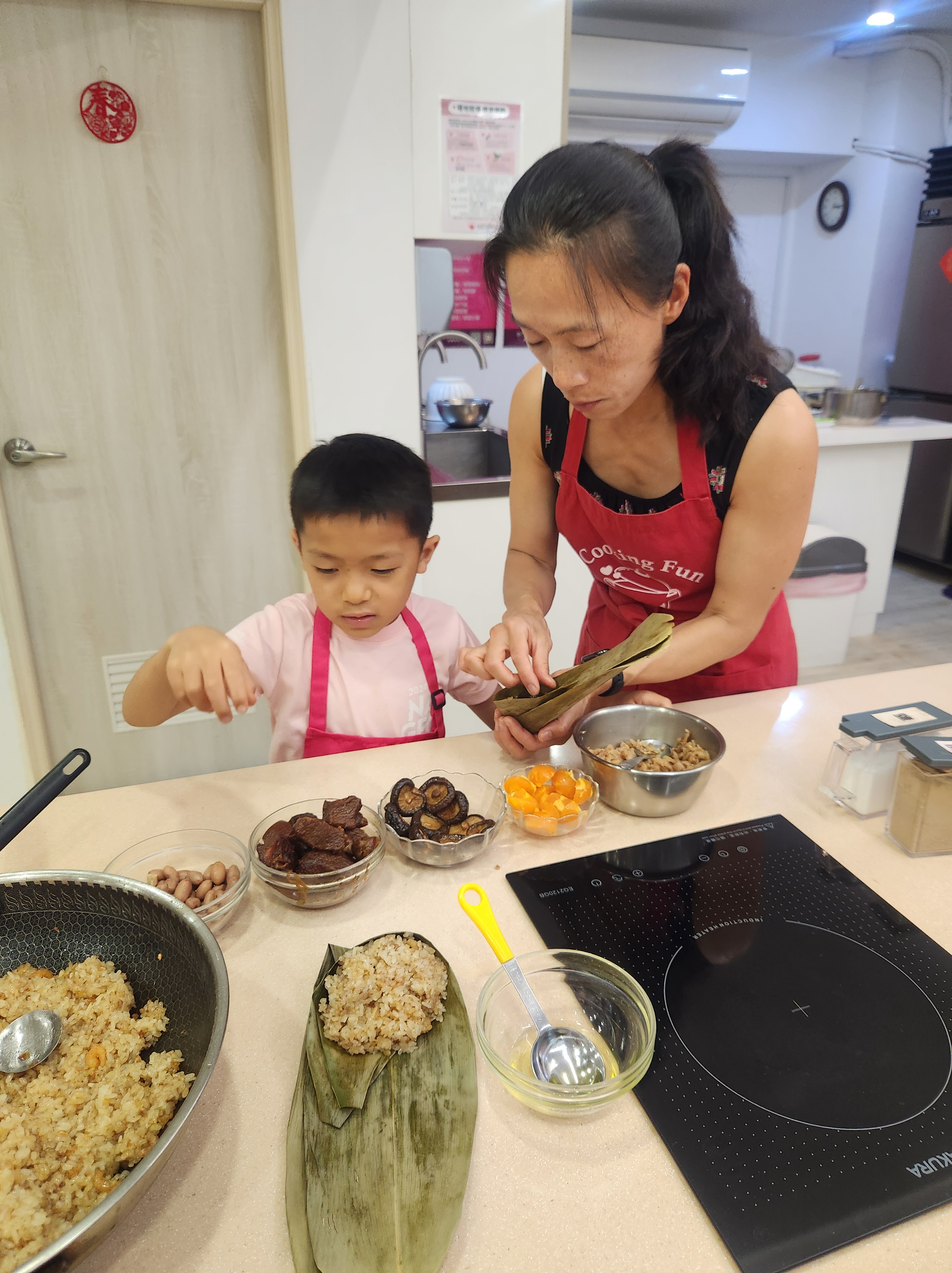
Zongzi Cooking Class. We had such a fun time learning how to wrap zongzi 粽子 at CookingFun Taiwan. At the time, the Dragon Boat Festival holiday had already passed so it was just the four of us in the whole class!
Making zongzi is extremely labor intensive since each ingredient needs to be prepared separately and in advance. The process can take days. Our teacher had already prepared some ingredients for us beforehand, so we were able to make 26 zongzi’s during the 2.5 hour class and take them all home with us!
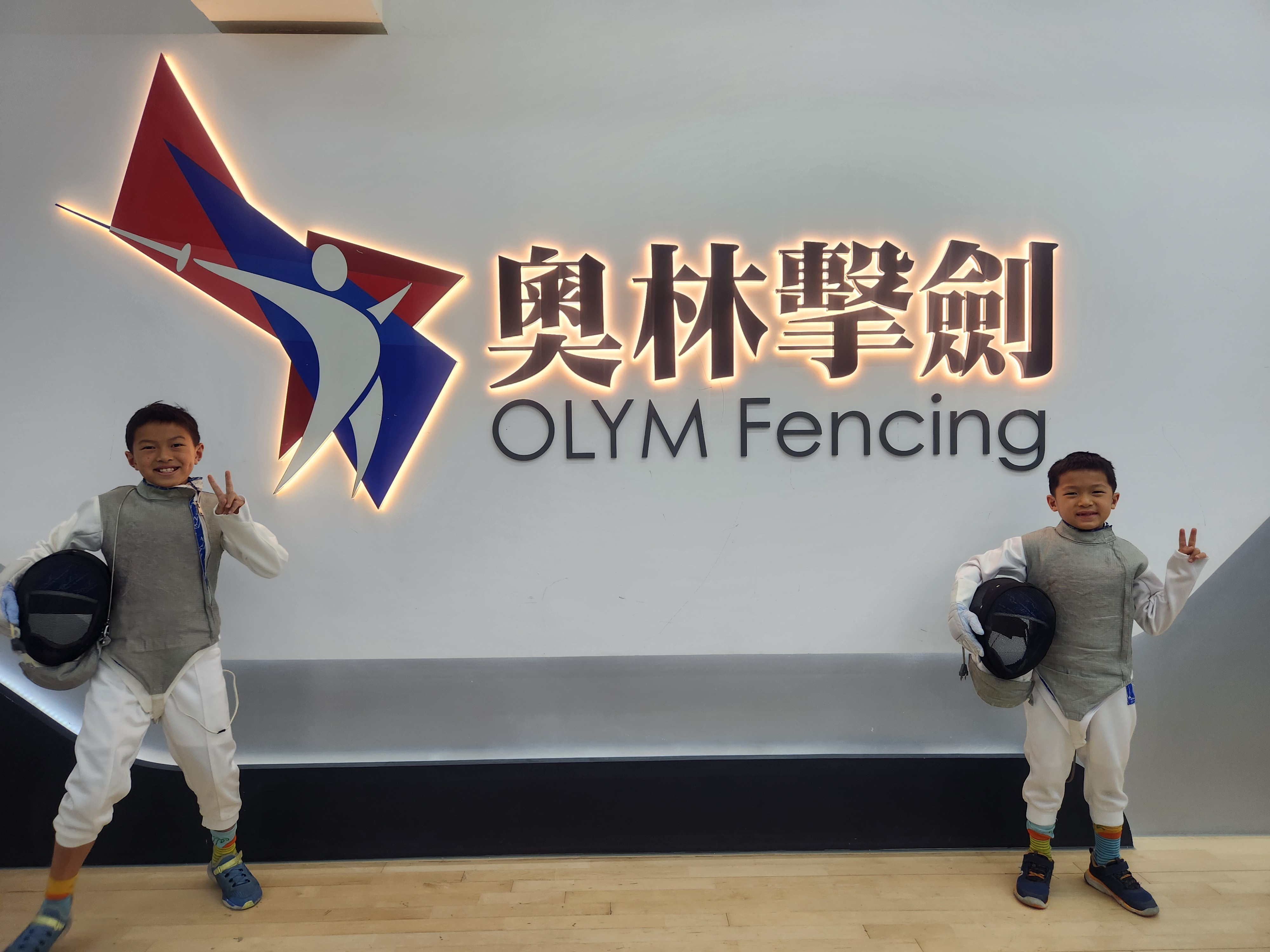
Fencing. Fencing always looked like sword fighting to me so I thought the boys would enjoy it. I found a one-day trial class and signed the boys up. The class was really fun, but it’s quite a journey from our place and I’m not sure if we want to manage another extracurricular during the weekend. But how adorable are the fencing uniforms? 😍
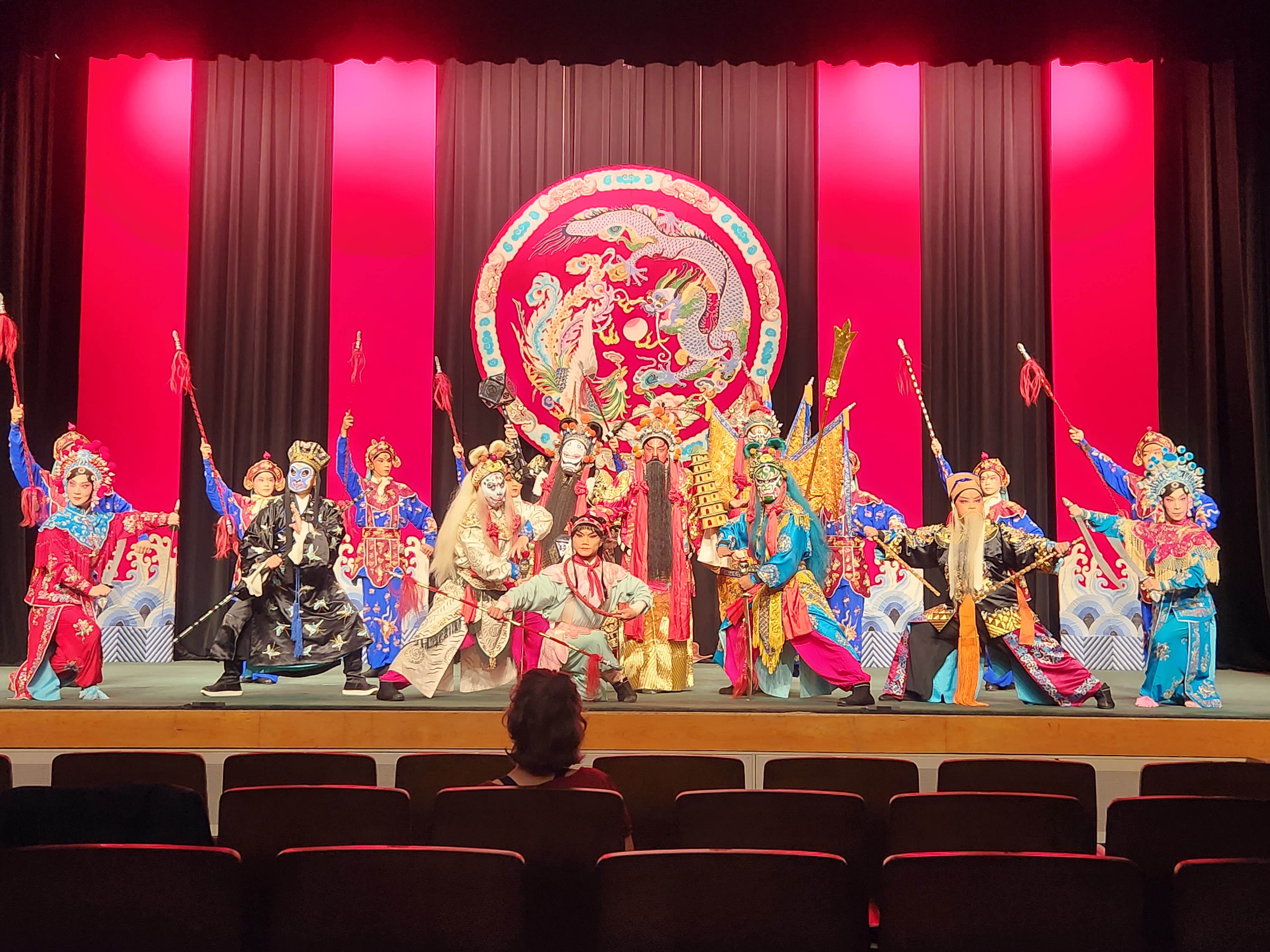
Monkey King Chinese Opera. The Monkey King opera is put on by Taipei Eye Performing Arts. The show was really entertaining but I’m also glad it was only an hour. 😅 While there were English subtitles displayed on the side of the stage, Chinese opera can be rather hard to follow! The pre and post show activities were so much fun. We got to dress up in traditional Chinese costumes, participated in a print-making activity, and even met the actors.
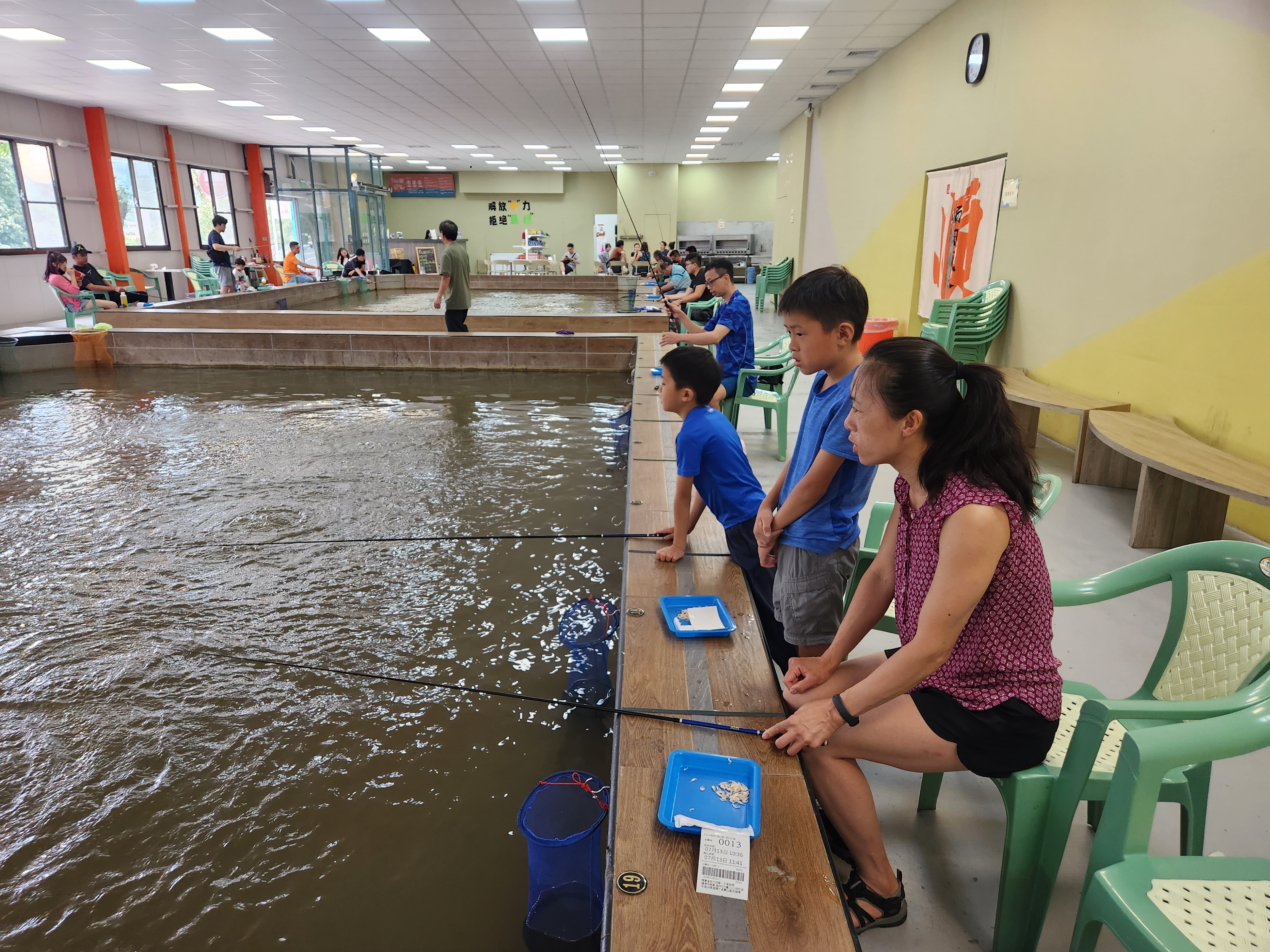
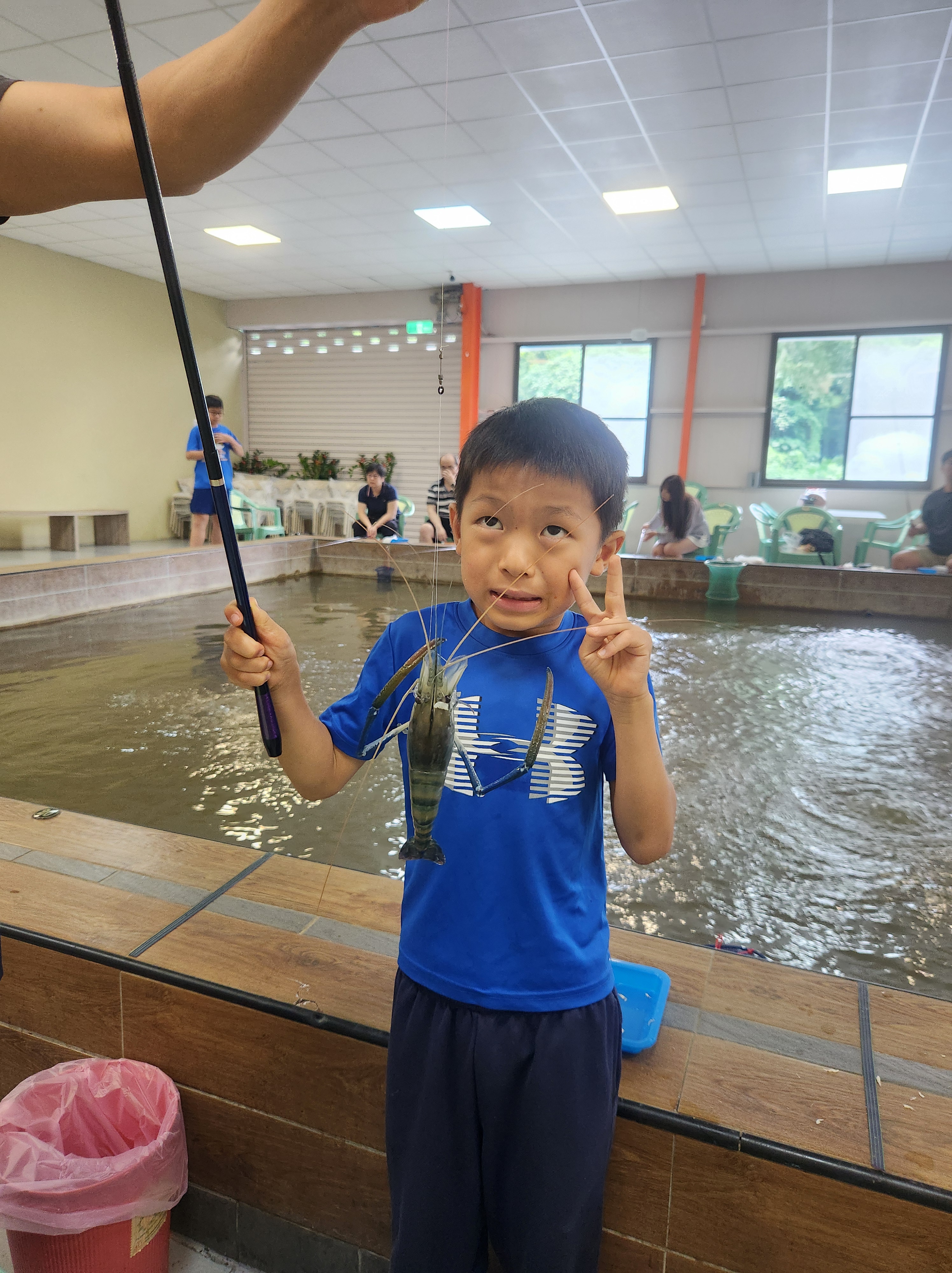
Shrimping. Believe it or not, one of Taiwan’s pastimes is indoor shrimping. You rent fishing rods for about $13 an hour, and can catch as many shrimp during that time. The first time we went, we only caught 5. This time, we caught 9! You can then grill and eat the shrimp onsite. Despite how peculiar this all is, we always get a thrill whenever we catch a shrimp. The shrimp pool we went to this time was called Fun蝦休閒釣蝦場. It was clean, had AC and the staff was kind – highly recommend!
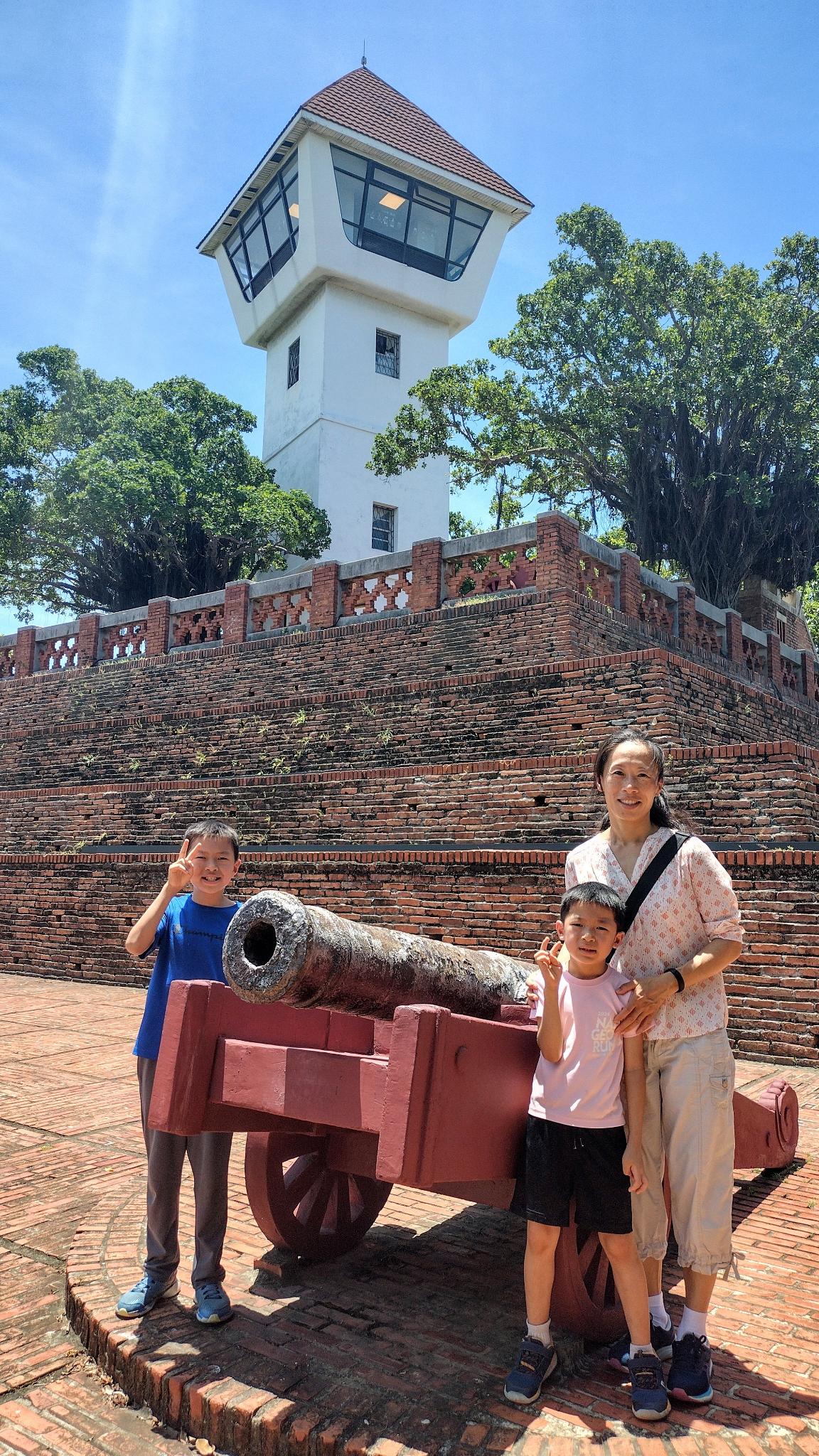
Tainan. Baba and I already took the boys to Tainan last October, but my SIL wanted to visit the city with the boys. They went for 2 nights, which gave Baba and me some much appreciated time off! 😊
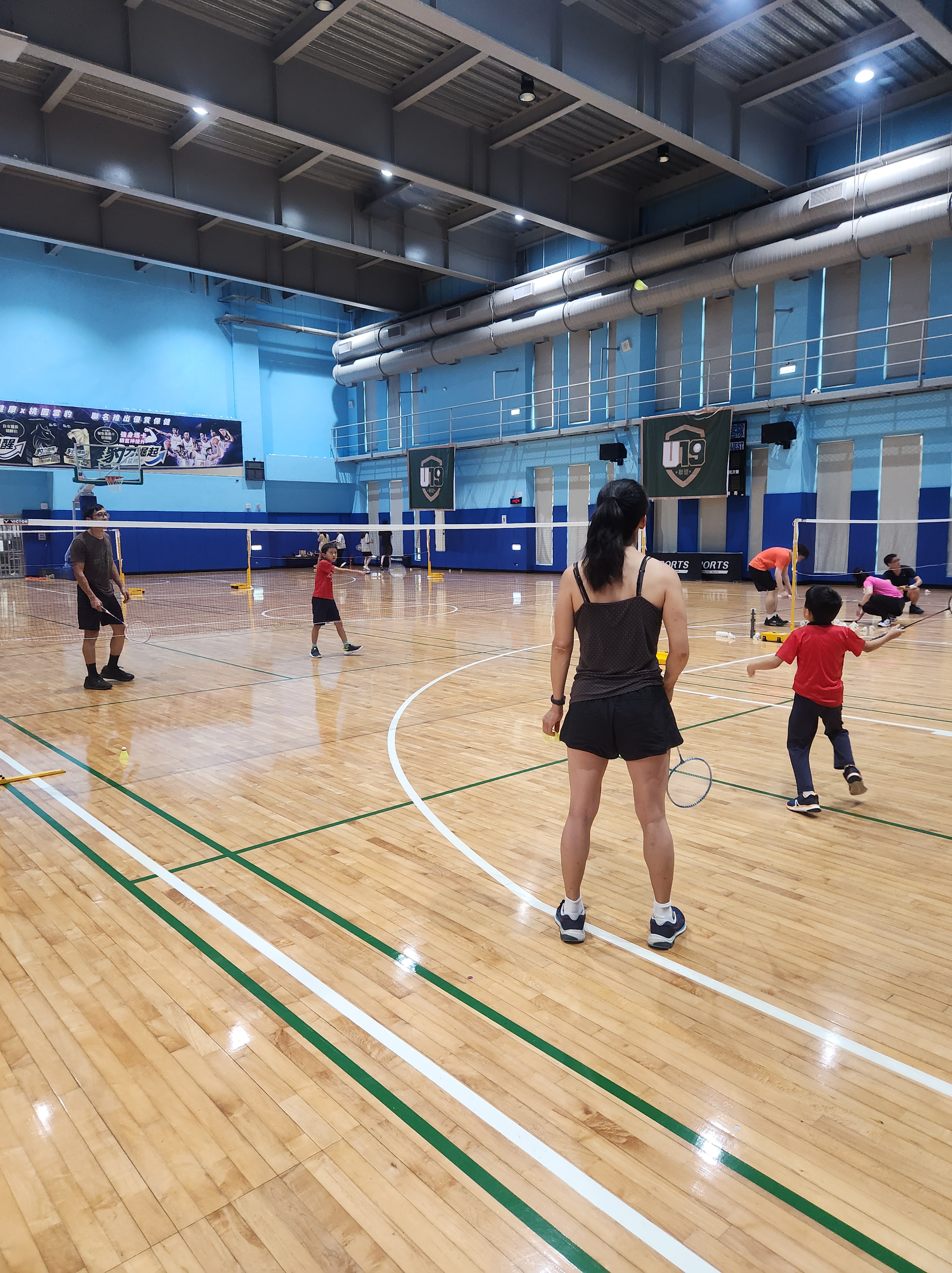
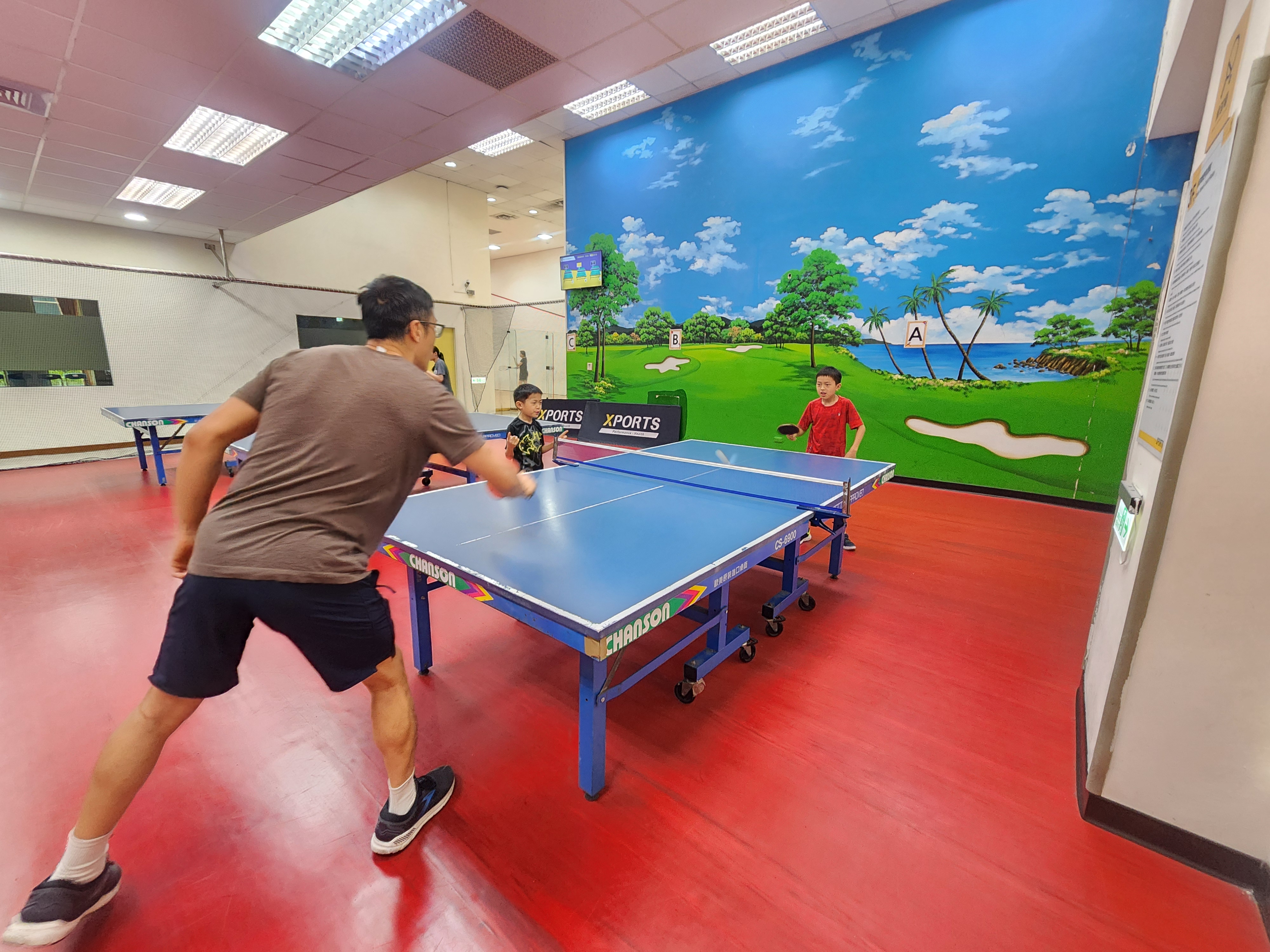
Staying Active. It’s absurdly hot and humid in Taipei during the summer, so we had to find ways to stay active indoors. We played badminton, ping pong, swam, and went to the gym at the nearby sports center. On occasion, we would join a group of visually impaired people at Sun Yat Sen for a run at night. (Ok full disclosure: I did it once and couldn’t stand the humidity but Baba, my SIL and the boys went a few times!)
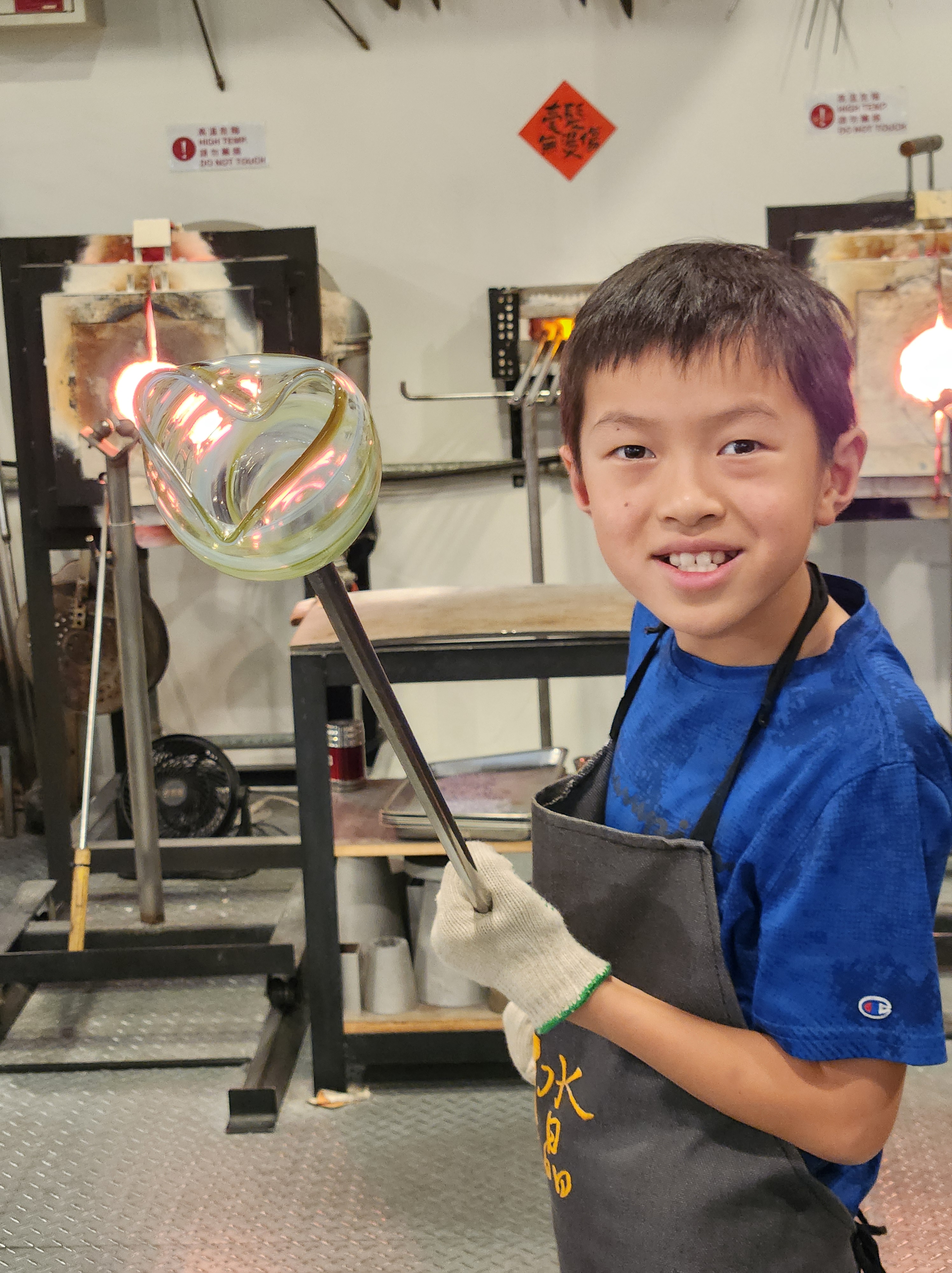
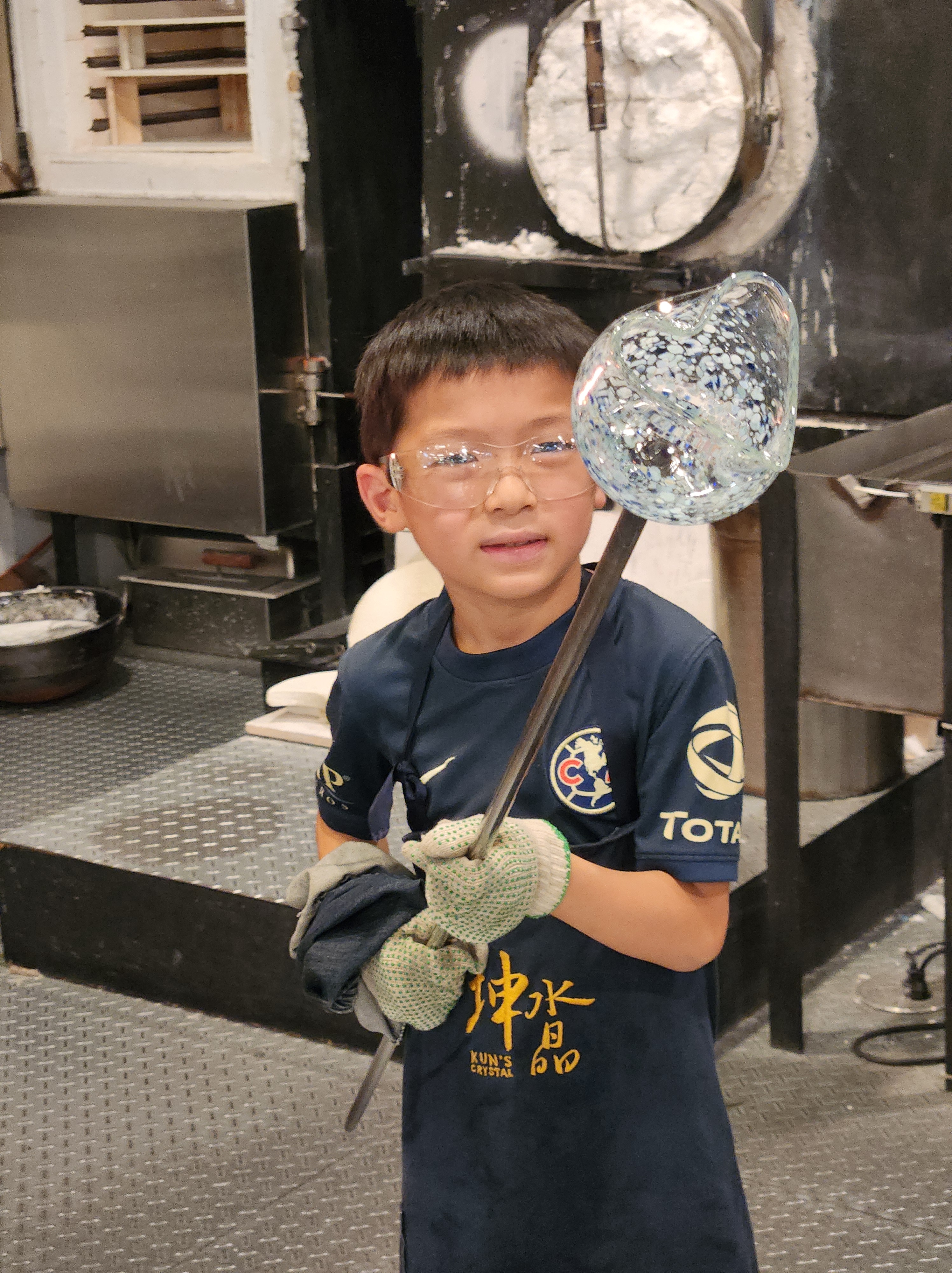
Glass Blowing. It never occurred to me to try glass blowing, but I wanted to find indoor activities to avoid the heat and this popped up on a blog. Guests get to take part in the entire process, from gathering molten glass from the furnace to forming the glass with the blowpipe. It was a fun, educational experience – but didn’t come cheap! Depending on the shape you want to make, the cost can be $30-$100 per person. Initially, we weren’t sure if we wanted to do it, until we realized the same experience in SF would cost around $200! Gotta take advantage of the benefits of living in Taiwan while we can. Our glass blowing experience was done at Kun Crystal.
There were more activities we did but I don’t want this blog to get too long. We had a pretty fun and productive summer, right? Except I’m sure if you asked the boys what we did all summer, they’d say, “Nothing. We just sat at home and played with our tablets.” 😒 Why do I even bother? 😂
Summer is coming to an end, and there is so much to catch up on! I’ll start with our trip to Alishan 阿里山 back in July.
Alishan is one place I had always wanted to visit in Taiwan. Known for its lush greenery, tea trails, and forest railway, Alishan is a wonderful escape from the big city (and heat!) in Taipei. Since my SIL was visiting for the summer, we all took a 3 night/4 day trip to the area.
We first took the high-speed rail from Taipei to Chiayi Station. From there, you can take the historic newly-reopened Alishan Forest Railway directly to Alishan, but tickets are hard to come by. So, the alternative is to take one of the many buses to Alishan, which can take about 1 hour and 45 minutes to 2 hours, depending on whether you want to stop at any of the smaller towns near Alishan. We did not have to book bus tickets in advance and simply paid the fare with our Easy Card on the bus.
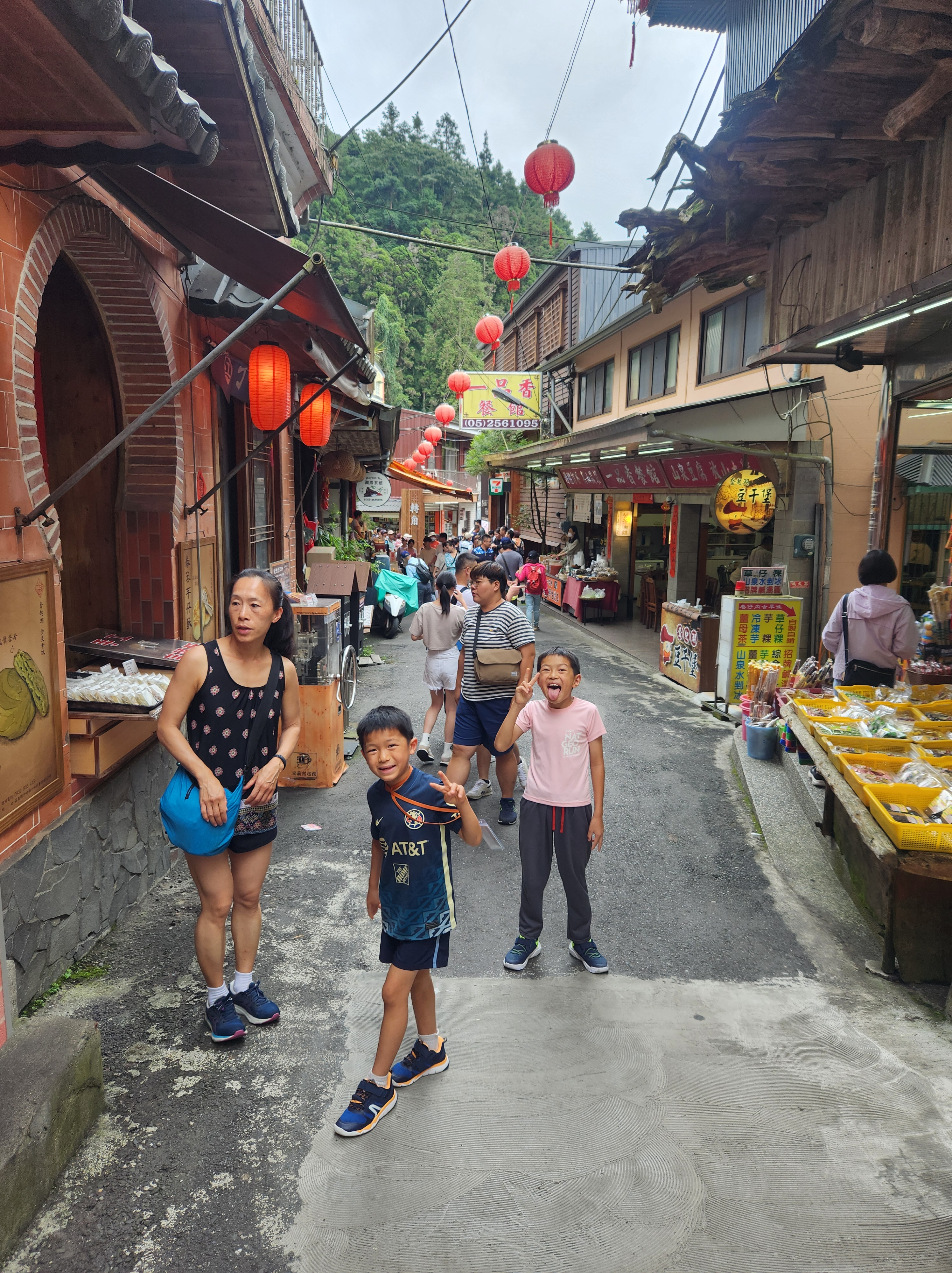
Since we had time, we decided to stop by a small town called Fenqihu 奮起湖 for 1 night before making our way to Alishan. We stayed at the Fenqihu Hotel located in the center of town. We immediately noticed the temperature difference between Taipei and the Alishan area after stepping off the bus. While Taipei has been in the 90s everyday plus humidity, Fenqihu was a cool, breezy 75°F. We were so thankful to be spared from the heat!
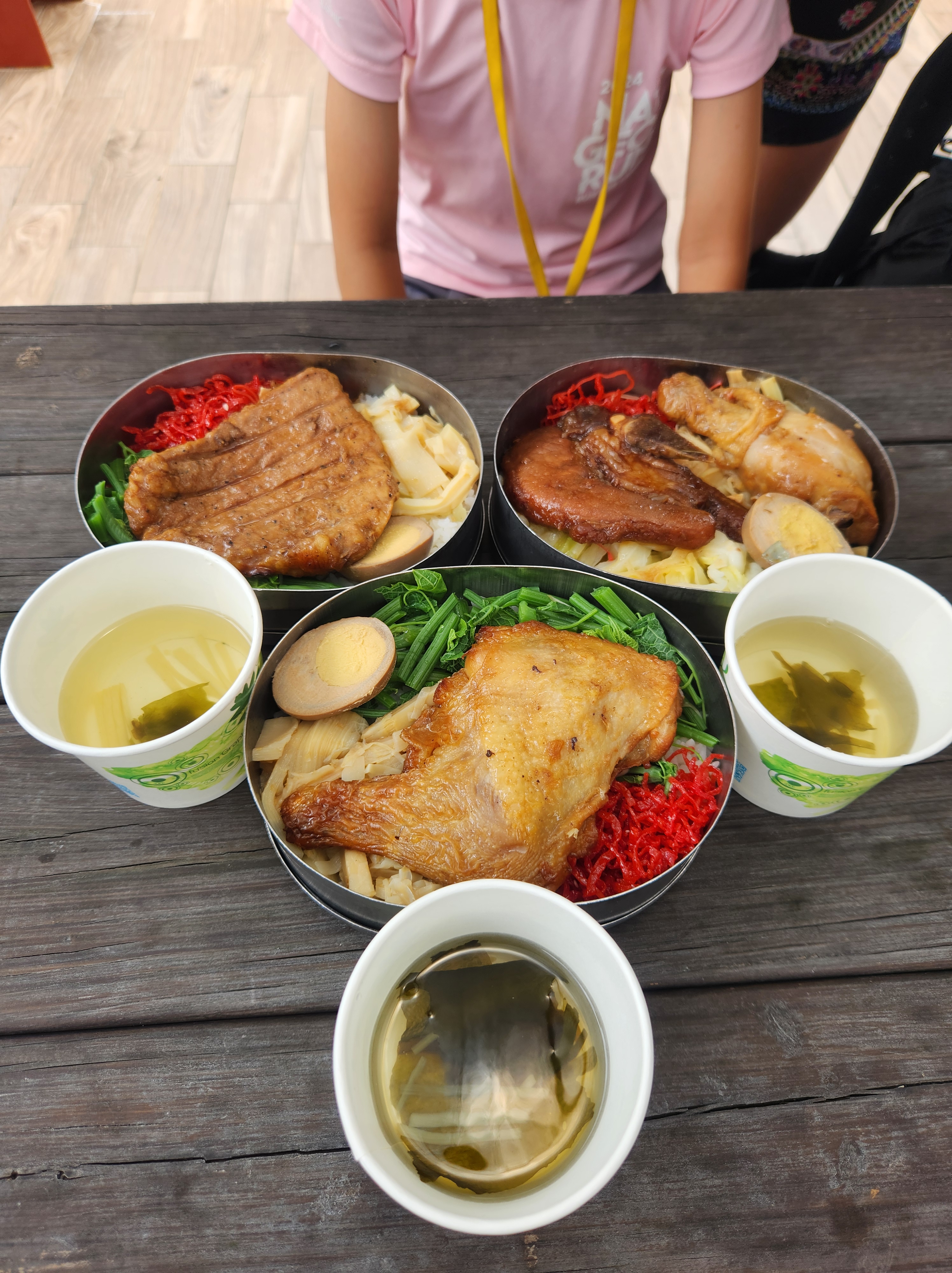
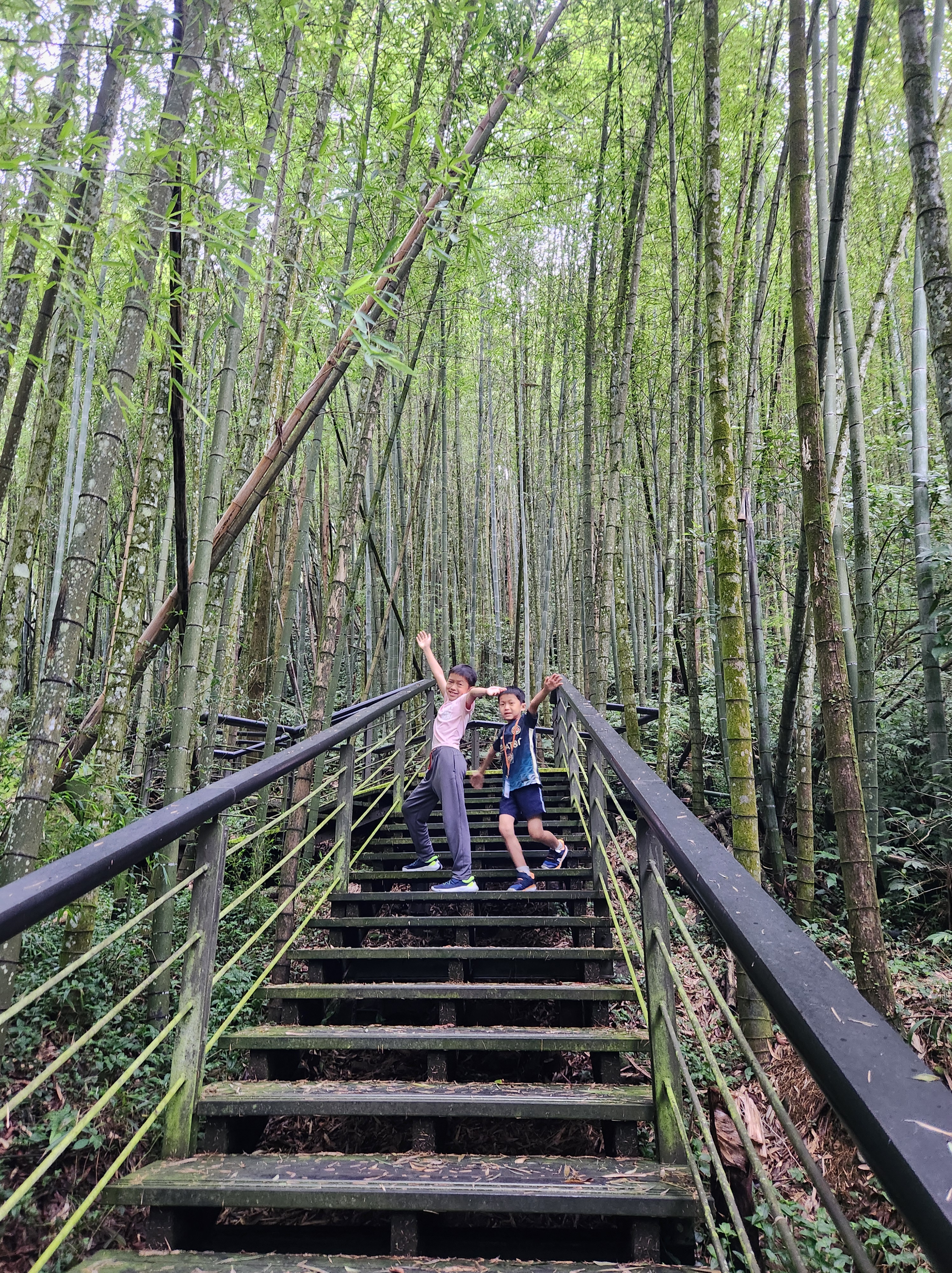
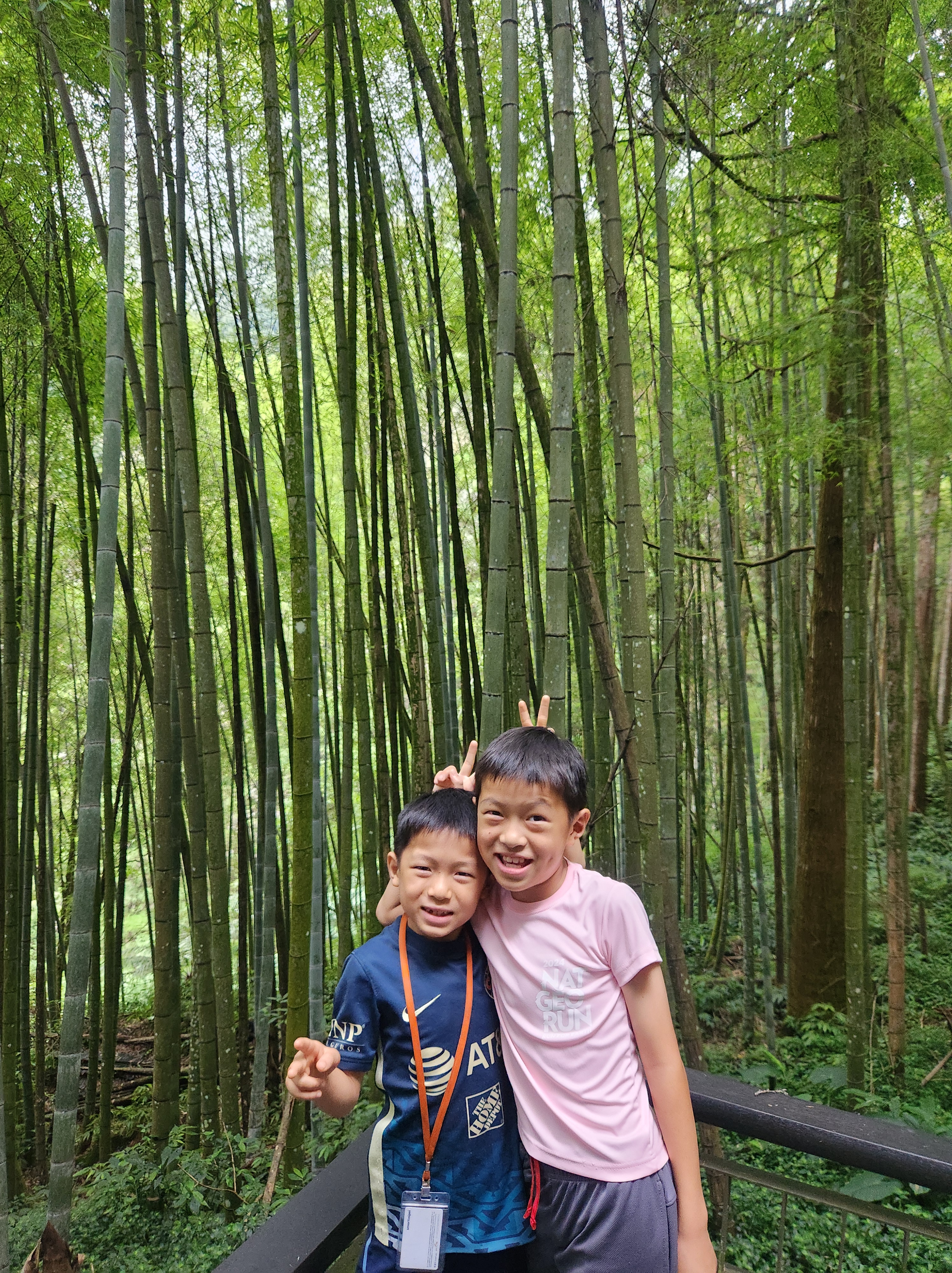
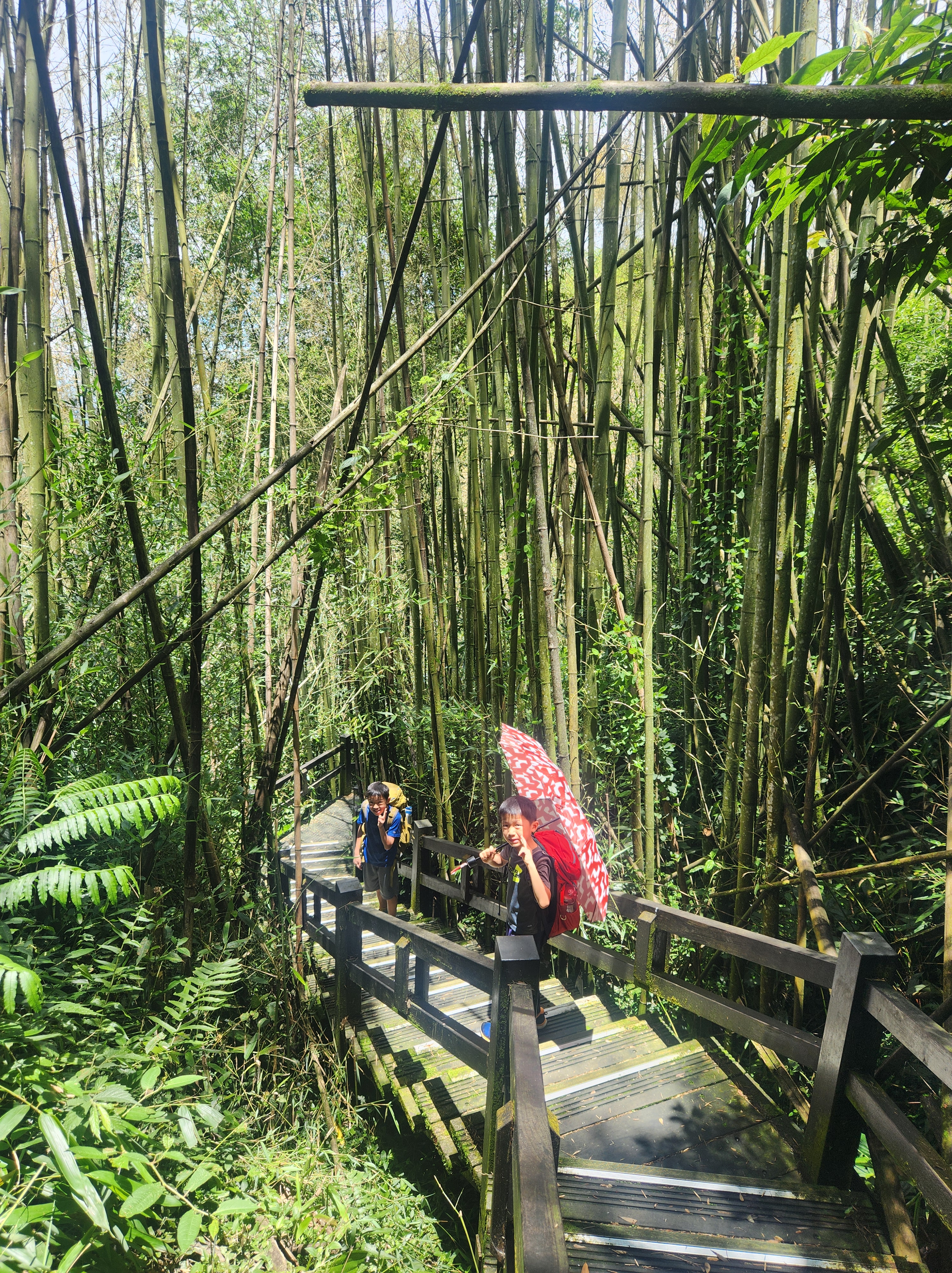
Fenqihu is popular for its bamboo forest and (weirdly) their bento boxes. The bento boxes were quite tasty, generous in size, and cheap! Each bento was about $4 and came with bottomless seaweed soup.
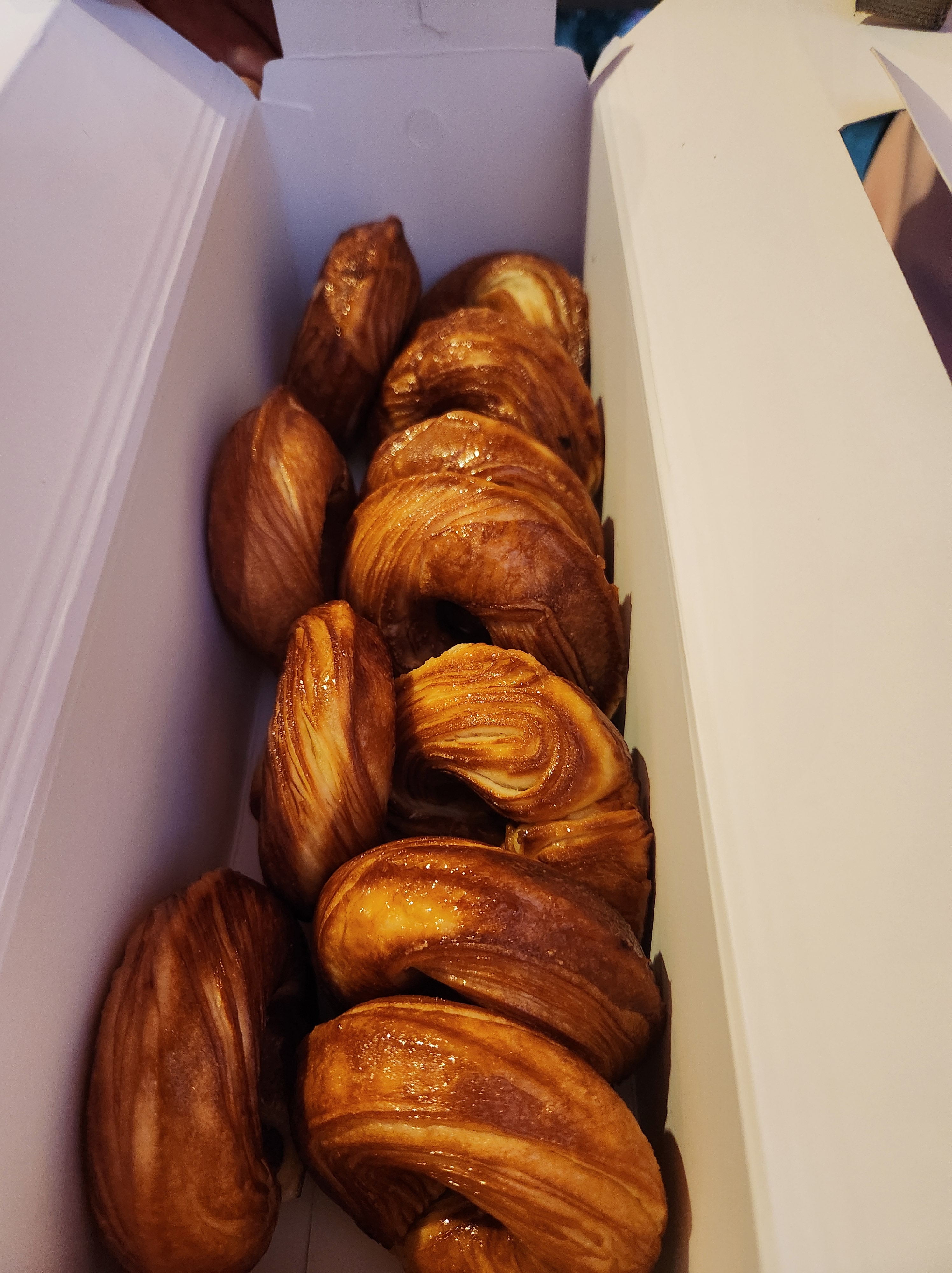
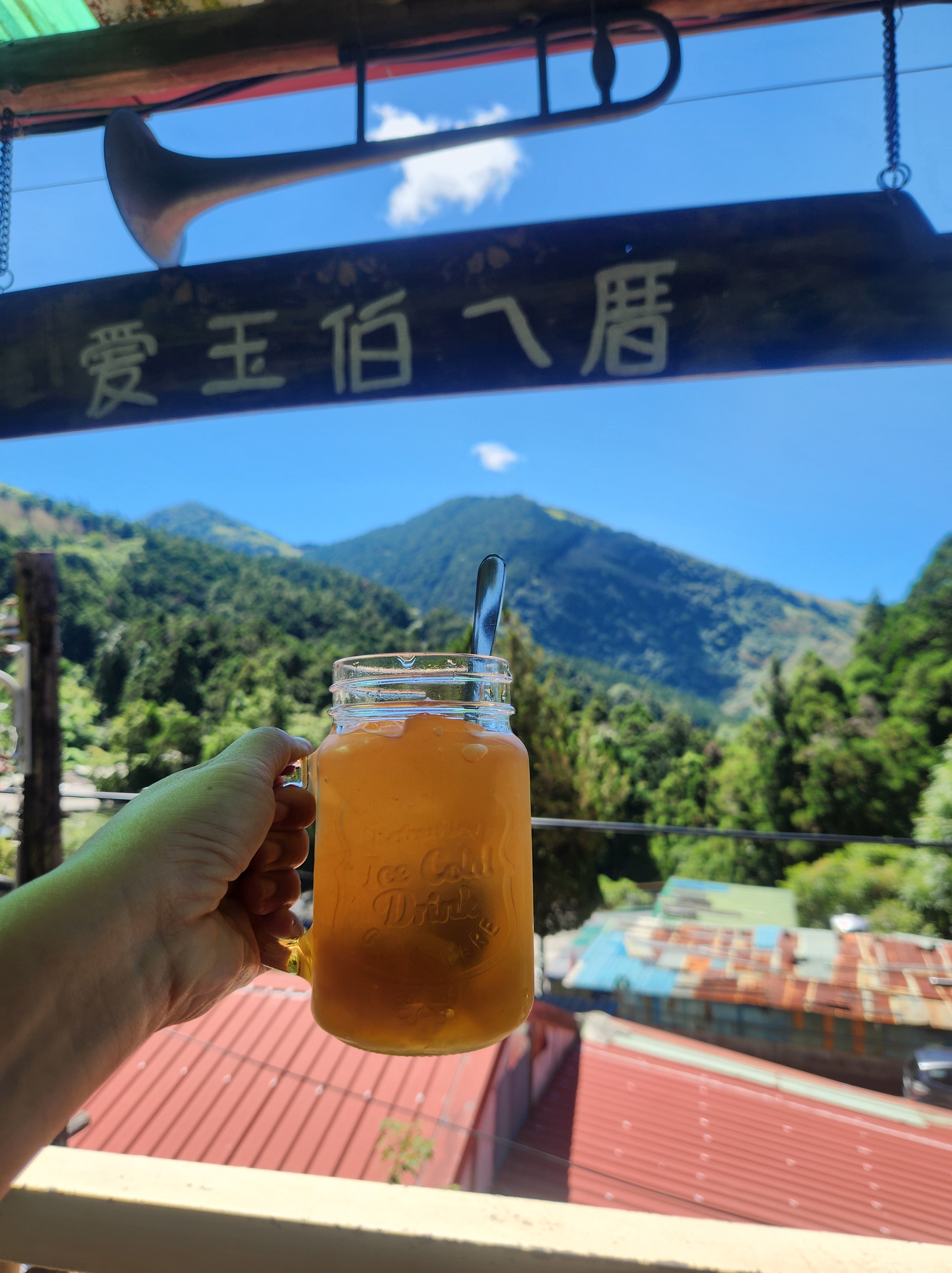
We had low expectations for good food in this little town, but we surprisingly found some incredible cronuts and aiyu jelly 愛玉, which is a refreshing jelly dessert made from fig seeds. The jelly is topped with ice and lime juice, making it a perfect summer treat.
Fenqihu is also popular location to see fireflies at night. Our hotel offers nightly tours to see fireflies but because of the rain, we weren’t able to see too many.
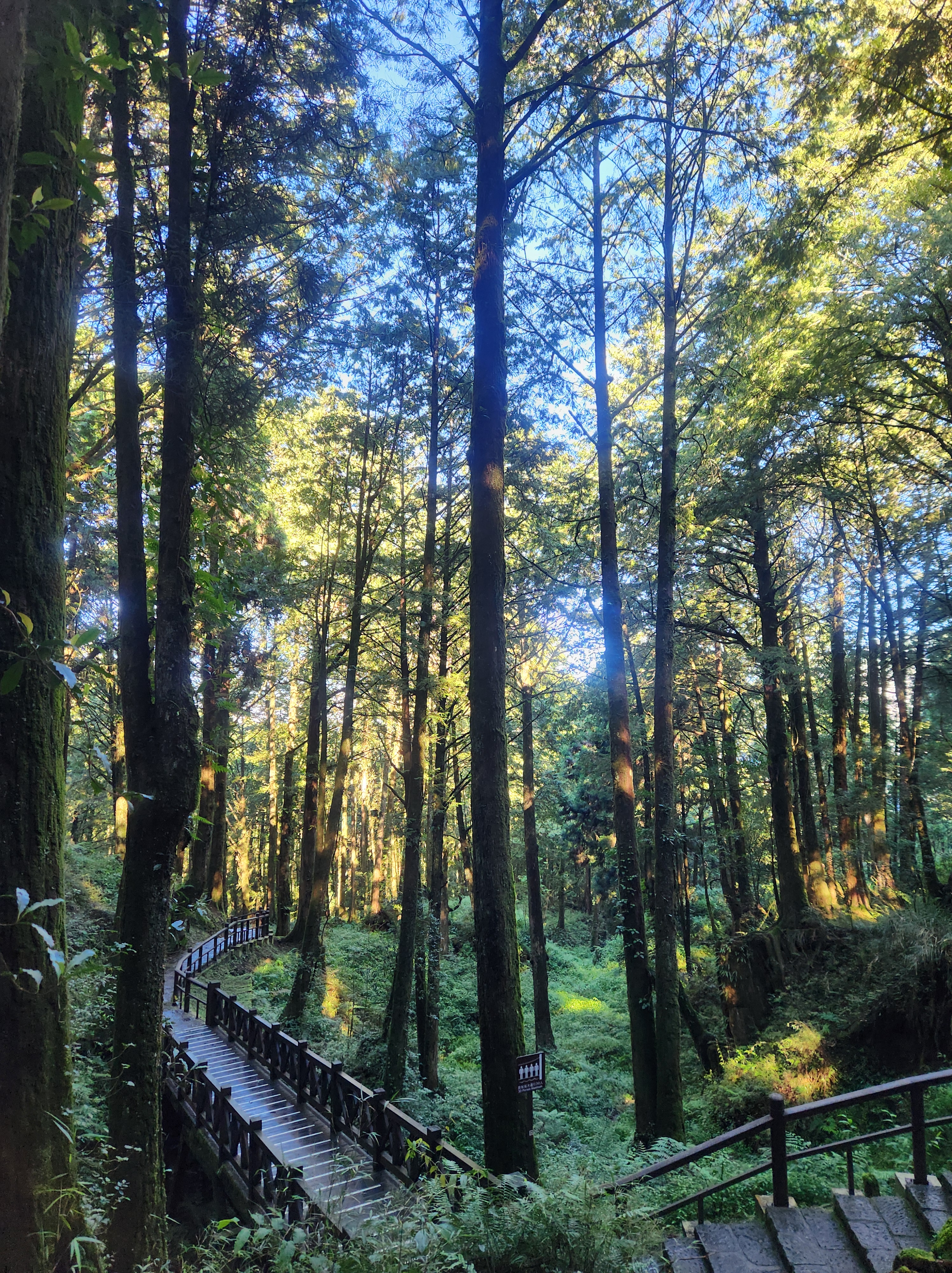
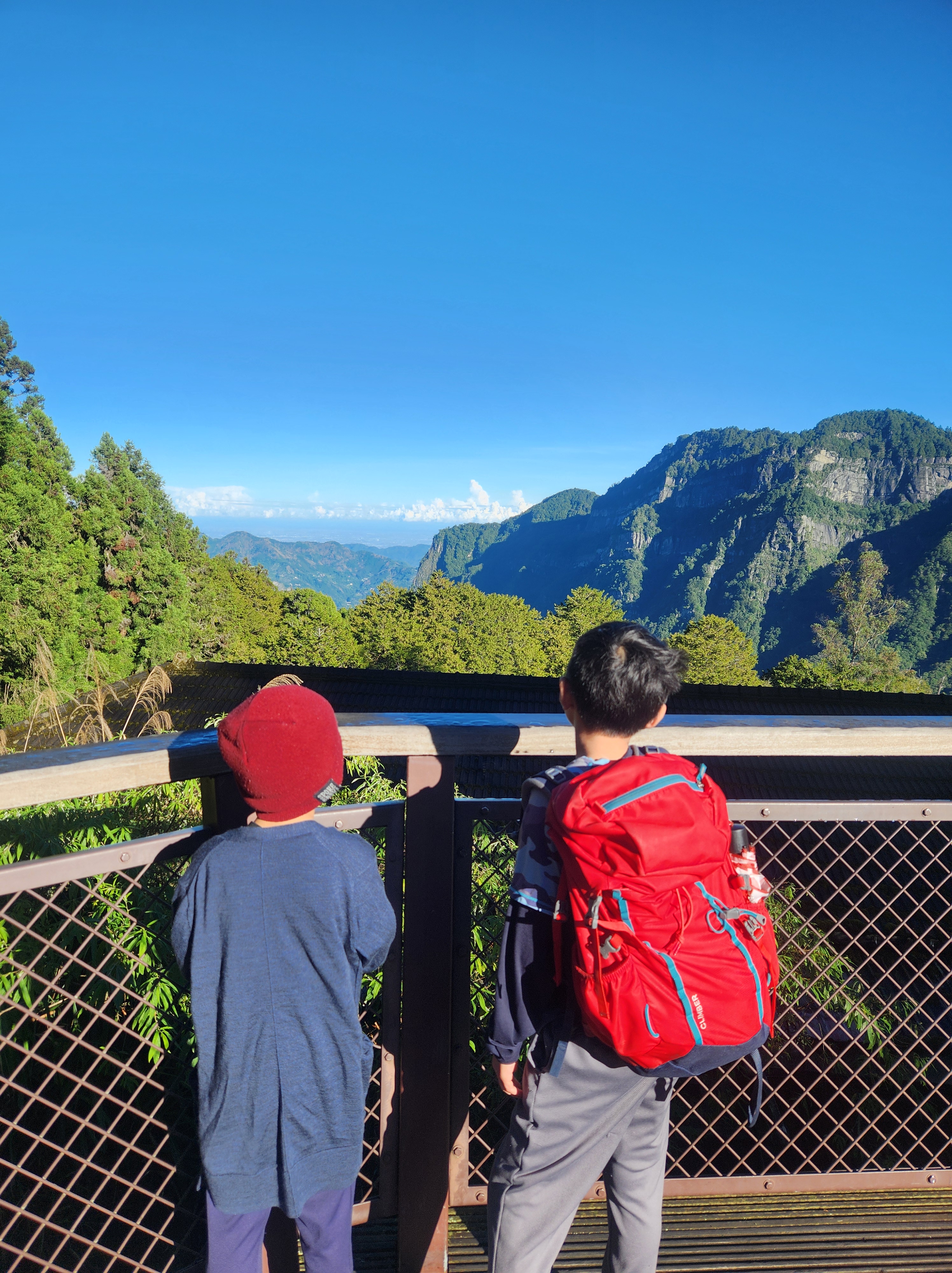
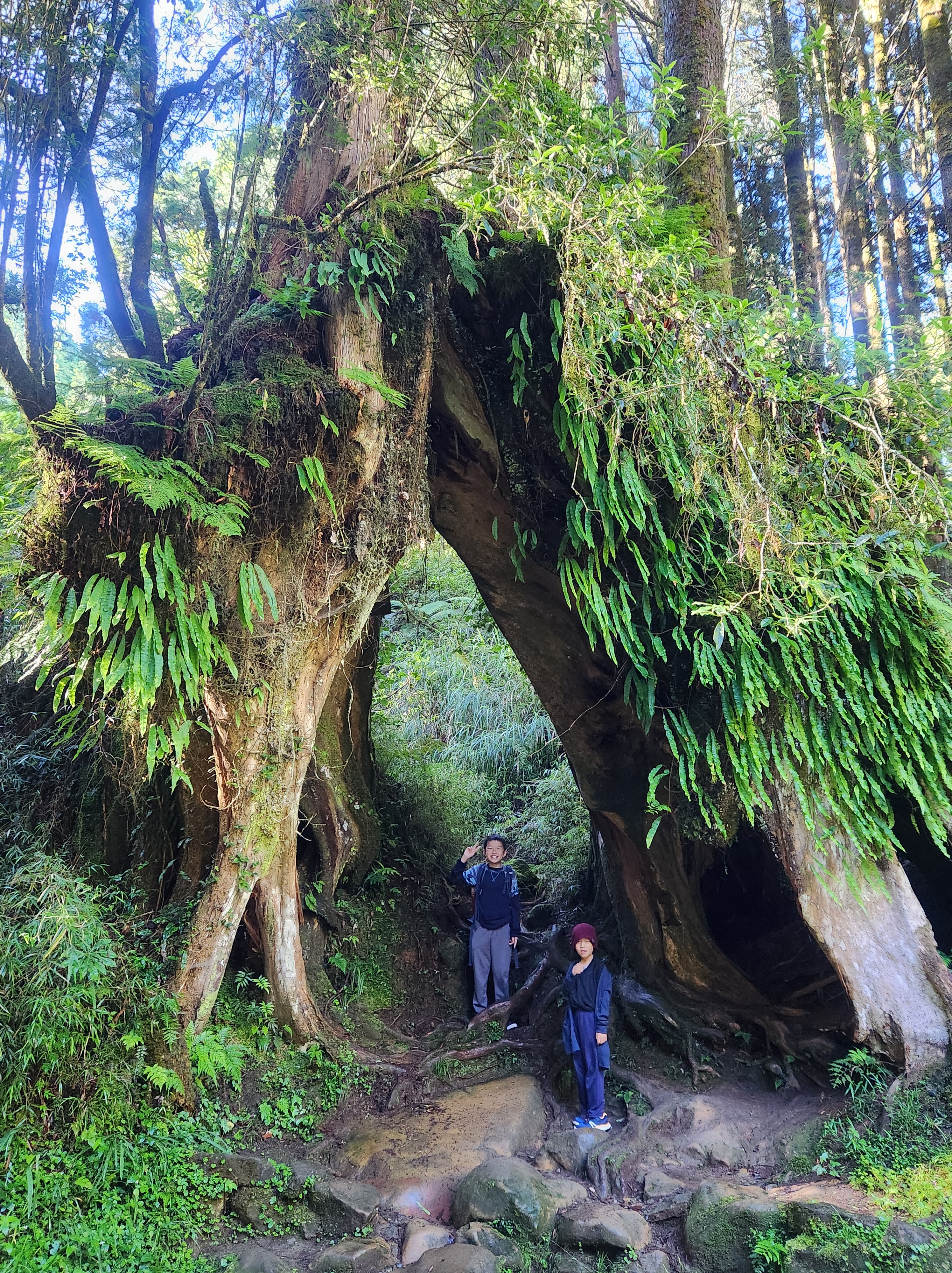
After Fenqihu, we took a 30-minute bus ride to Alishan, where we stayed for 2 nights. Our hotel was Chinshan Villa. I loved Alishan! I’ve always been a city girl, but being surrounded by mountains and lush green forests is just so calming. The air in Alishan is ten times cleaner and fresher than Taipei’s too. The park itself isn’t huge so you can do all the hikes within 2 days with time to spare. None of the hikes were particularly strenuous, so it’s great for all fitness levels.
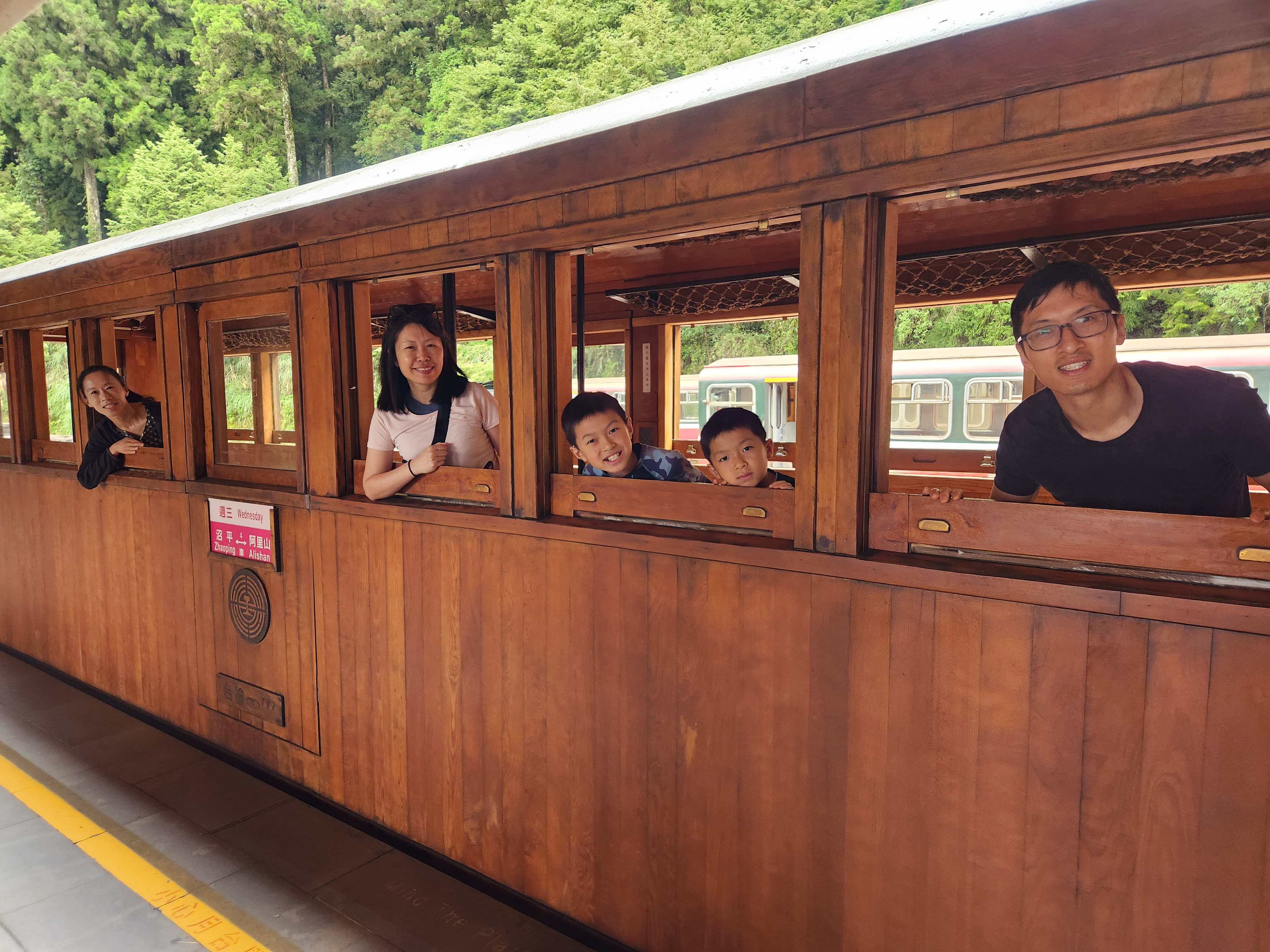
Even though we weren’t able to get tickets for the historic Alishan Forest Railway, you can still ride the train within the park. In fact, I think the trains that run within the park are even better because they use the old wooden carriages (while the trains from Chiayi are more like commuter trains). The trains look gorgeous against the landscape of Alishan!
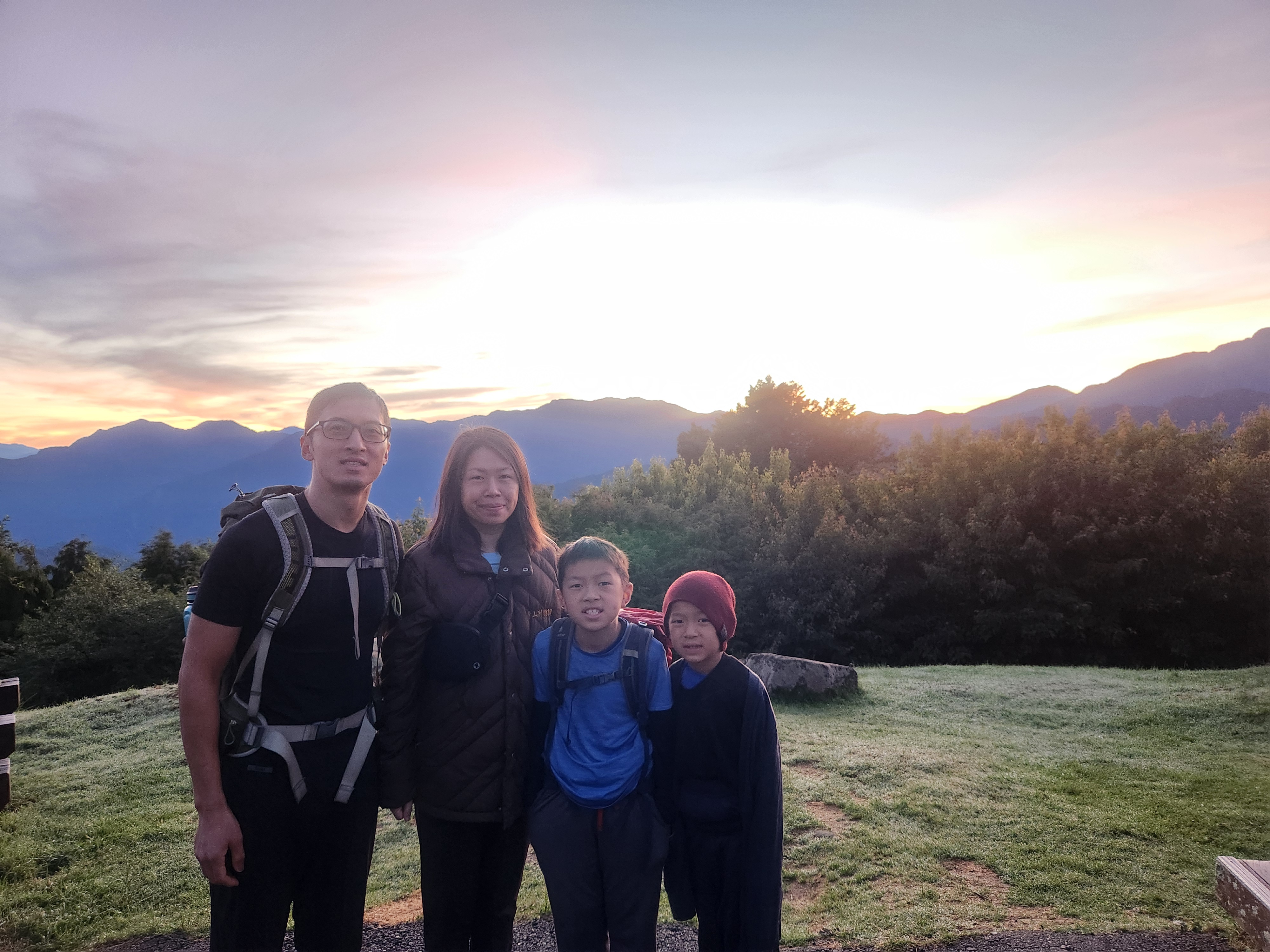
A popular thing to do in Alishan is seeing the sunrise. We woke up at 3am, rode the train up to the mountain peak and waited for the sunrise. It was beautiful, but not sure if it’s worth sacrificing my beauty sleep. 😅 The early morning was also extremely cold, so the boys had to wear Baba’s clothes and I had to rent a jacket from our hotel. Baba just braved the cold. 😂 Apparently tourists often underestimate the temperature drop in Alishan!
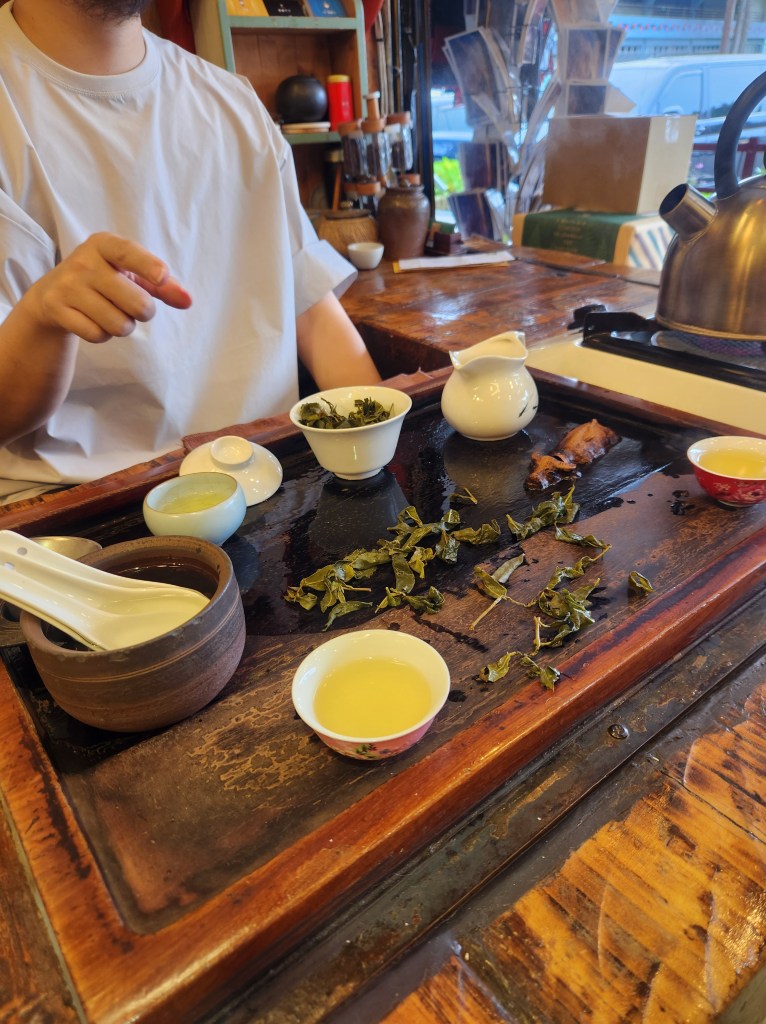
Alishan is probably the most well-respected producer of teas in Taiwan due to its altitude and weather. As a lover of teas – but I’m in no way a connoisseur! – I went with my SIL to do some tea tasting. The most interesting fact (or perhaps belief?) we learned is that tea does not have any long term health benefits! Instead, the tea master we met said it’s merely the lifestyle of tea drinkers that could contribute to longevity, which includes socializing with friends, drinking lots of fluids, etc. Still, my SIL walked away with a few bags of oolong teas. 😊
Before heading back to Taipei, we made a quick stop at another town called Shizhuo 石桌, known for its tea plantations. Shizhuo, along with Fenqihu and Xiding, are the three most common towns to stay at on the way to Alishan. We got to Shizhuo by the bus enroute to Chiayi.
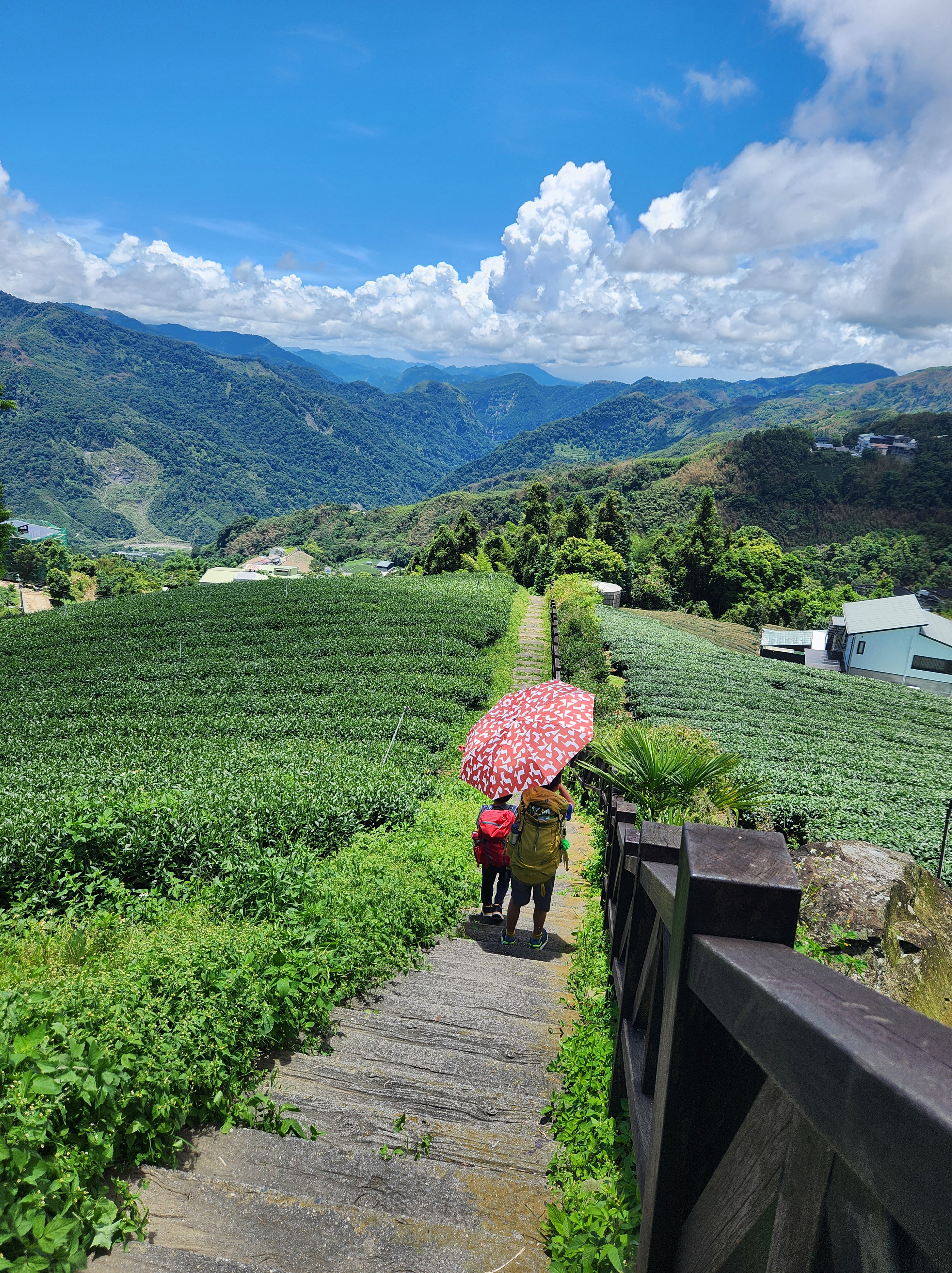
Seeing the neat rows of tea plantations was lovely but we didn’t realize how hot it was in Shizhuo. The hikes were all uphill and after about an hour, we were sweating buckets and ready to go home.
We were prepared to take the bus back to Chiayi Station to catch the high-speed rail, but a taxi driver offered us an unbelievable deal ($16 for a 1 hour drive back!) so our tired bodies eagerly hopped on the cab.
I can see why Alishan is such a popular destination for locals and tourists alike. The scenery is beautiful everywhere you look. Apparently it’s even more beautiful during cherry blossom season, where trails and railways are flanked with blooming pink flowers. I can only dream of seeing that one day!
Hours and hours of homework everyday. Tests each week. Instruction based purely on rote memorization. Berating from teachers.
These were the kinds of “horror” stories I read about Taiwan public schools before coming here. I mulled over our decision to send the boys to a public school, but ultimately agreed with Baba that it’s probably the best way for them to learn the language and culture.
Now that we’ve gone through one year in a Taiwan public elementary school, I can say that while some of the stories are true…it also isn’t nearly as bad as I imagined? Above all else, the boys learned many valuable lessons through this experience.
Time Management. Yes, there is homework everyday. O (1st grade) gets about 15-20 minutes of homework on average, while C (3rd grade) gets about 1.5 hours each day. Even more homework is assigned on the weekends and long holidays. On top of this, there are tests every week. Then the boys have extracurriculars and additional tutoring in math and English (from Baba and me).
This is a 180° from our life back in San Francisco. But with this shift, C and O have learned a lot about time management. They know to do homework when they come home. They know to ask Baba or me to double check their homework. When there is an upcoming test or more homework than usual, we strategize how to tackle everything. We complete the homework on Friday, then we spend Saturday and Sunday reviewing for the test. Yet through all of this, they never seem daunted by the workload.
C’s homework assignment book. He makes a habit of checking off assignments he’s completed.
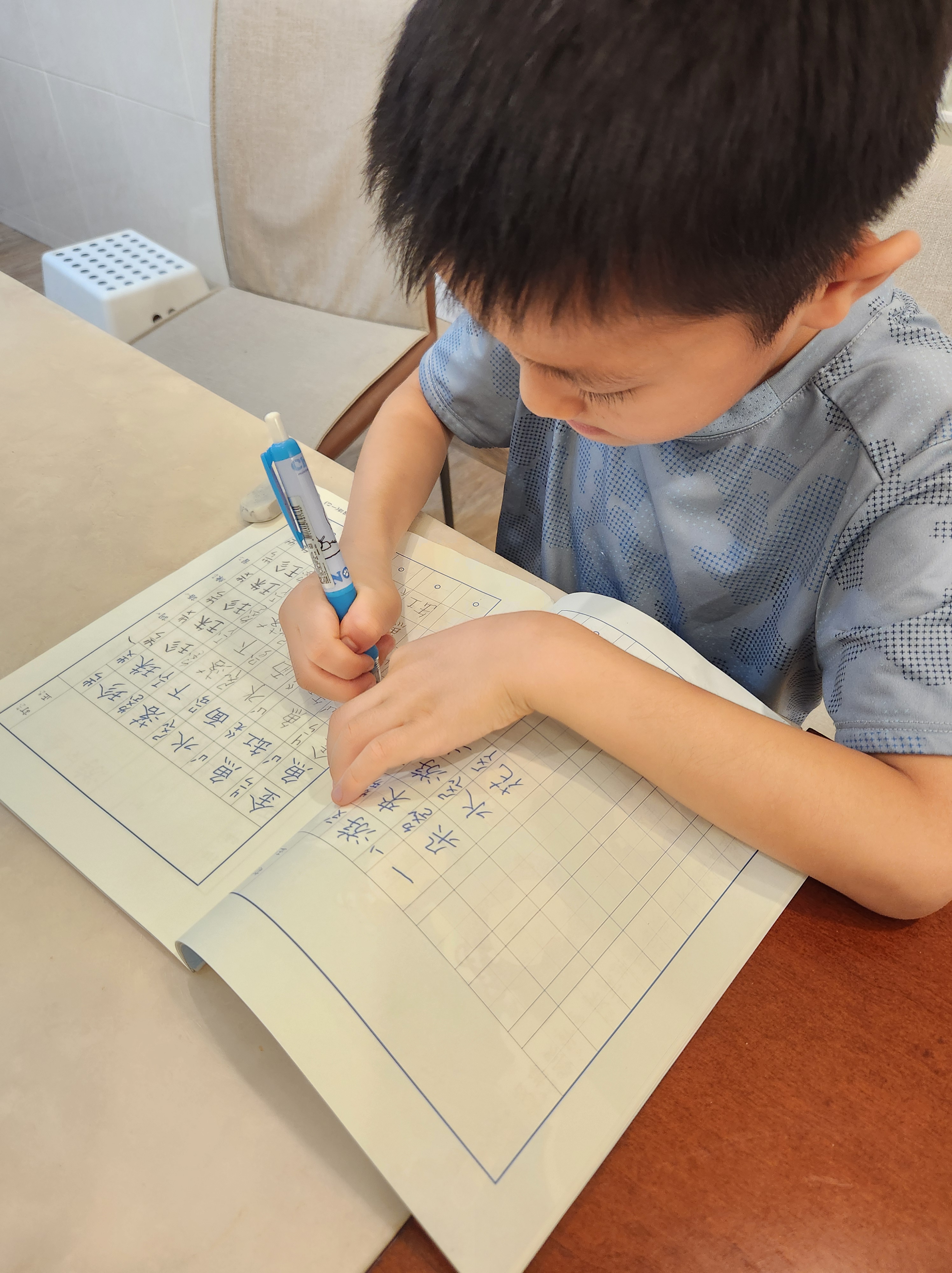
How to Study. I honestly didn’t know how to properly study until college. I used to aimlessly flip through my textbooks and call it a day. 😅 In Taiwan, teachers make students correct errors on homework and tests (訂正). So when it’s time to prepare for an exam, we’d review the problems the boys got wrong before doing new practice problems. In reading comprehension, they both know to preview the questions first before reading the passage so he knows what to look for. If they write a character incorrectly on at practice test at home, they know to write it again three times for me, just like they do at school. Education is taken very seriously in Taiwan and I think this principle has rubbed off on the boys.
Facing Challenges. The task of learning a new language is a challenge in and of itself, but the overall curriculum in Taiwan is more challenging than what we had in the US. O had to learn 10+ vocabulary words each week, including how to write the character and their definitions. C, for example, learned geometry and started using a protractor and compass. In science, C learned about magnetic fields and plant biology. On top of generally harder coursework, remember that everything is also written in a foreign language.
The boys started off not understanding anything in school. But day by day, they showed up to school without feeling discouraged or defeated. And in just one academic year, they have not only adjusted well at their new school but more importantly, learned that they can take on any challenge.
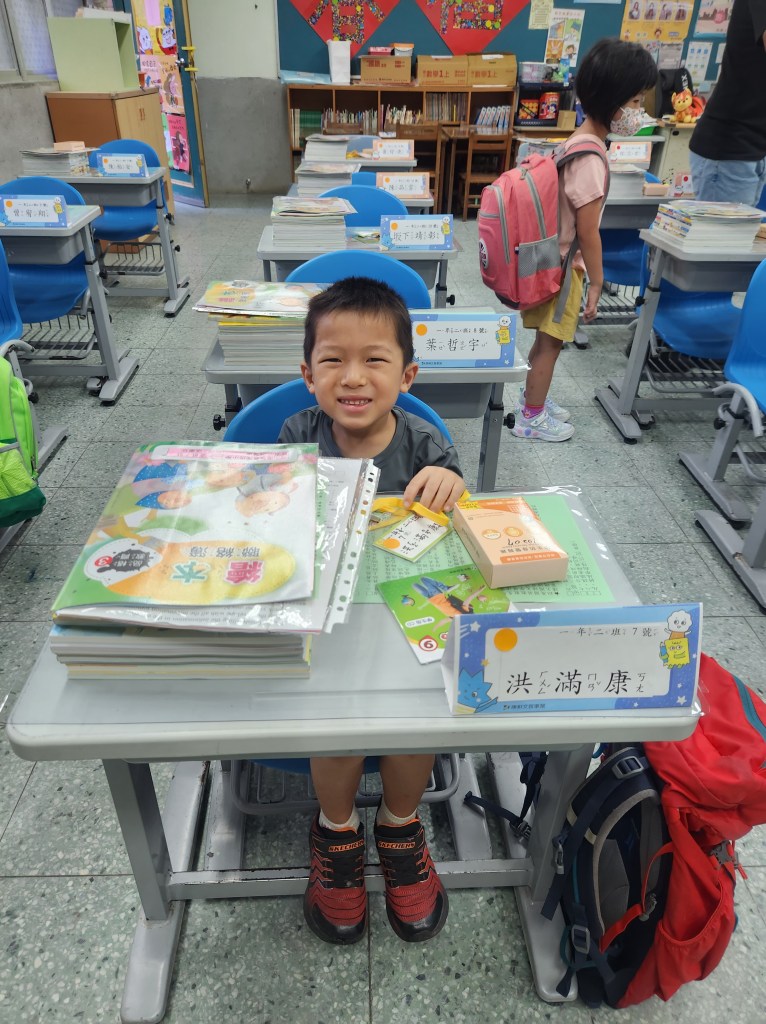
O’s first day of school and not understanding a single word. 😂
However, I would be remiss if I didn’t mention the factors that played into our mostly positive experience in a Taiwan public school. First, we never put any pressure on the boys. We just want them to try their best and if they end up failing their exams, that’s ok too. Second, we were lucky to find a school and teachers that have been supportive. Our school is known to be less intense than other nearby schools. We were also lucky to find a great tutor to help C with his homework. But I think the most important factor is C and O’s personalities. They are generally carefree, easy-going, can make friends easily and are at an age where they can still quickly adapt. When things get tough, they shrug it off and move on. Their resilience never ceases to amaze me.
Are Taiwan public schools the best fit for our family in the long run? Probably not. Like I mentioned, there is some truth to the stories you hear about schools here. Much of the curriculum is based on rote memorization, with homework and tests getting more and more intense in the upper grades. It’s not for everyone. And since we want to eventually move back to the US, we want C and O to hold on to values that are important for their growth in the future – things like creativity, project-based learning and critical thinking.
In the meantime, we are happy here and could not have asked for a better experience. The boys even said they like school in Taiwan more than in the US. 😶I always remind C and O how lucky they are to be able to go through two very different education systems that will only enrich their life experiences.
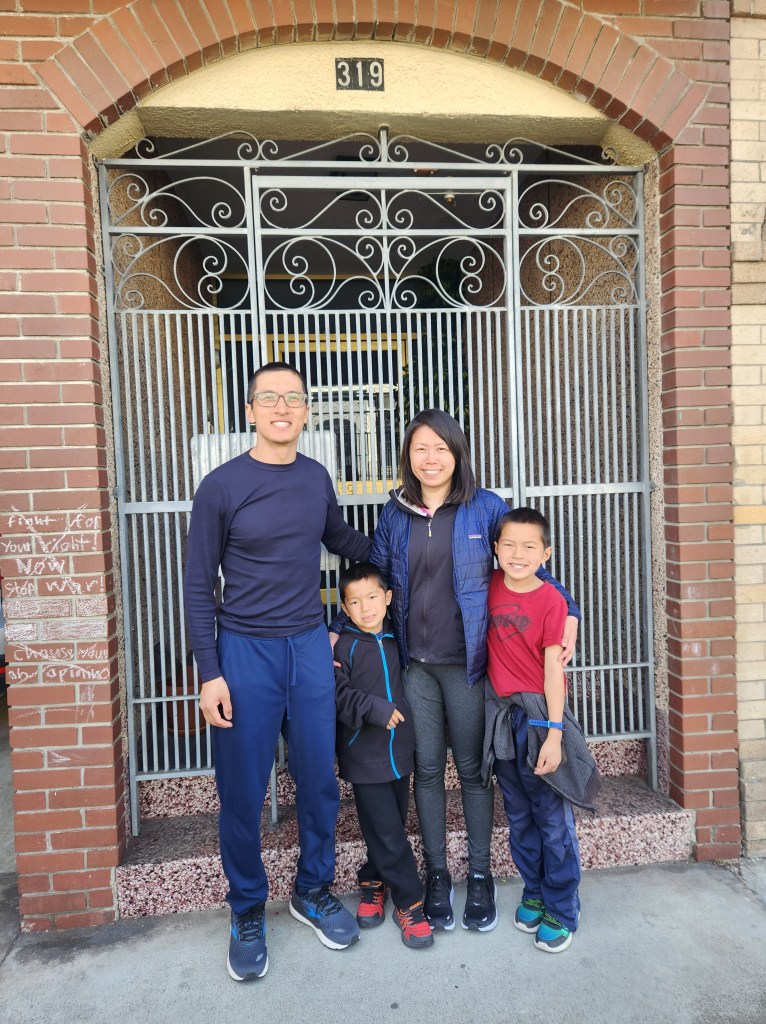
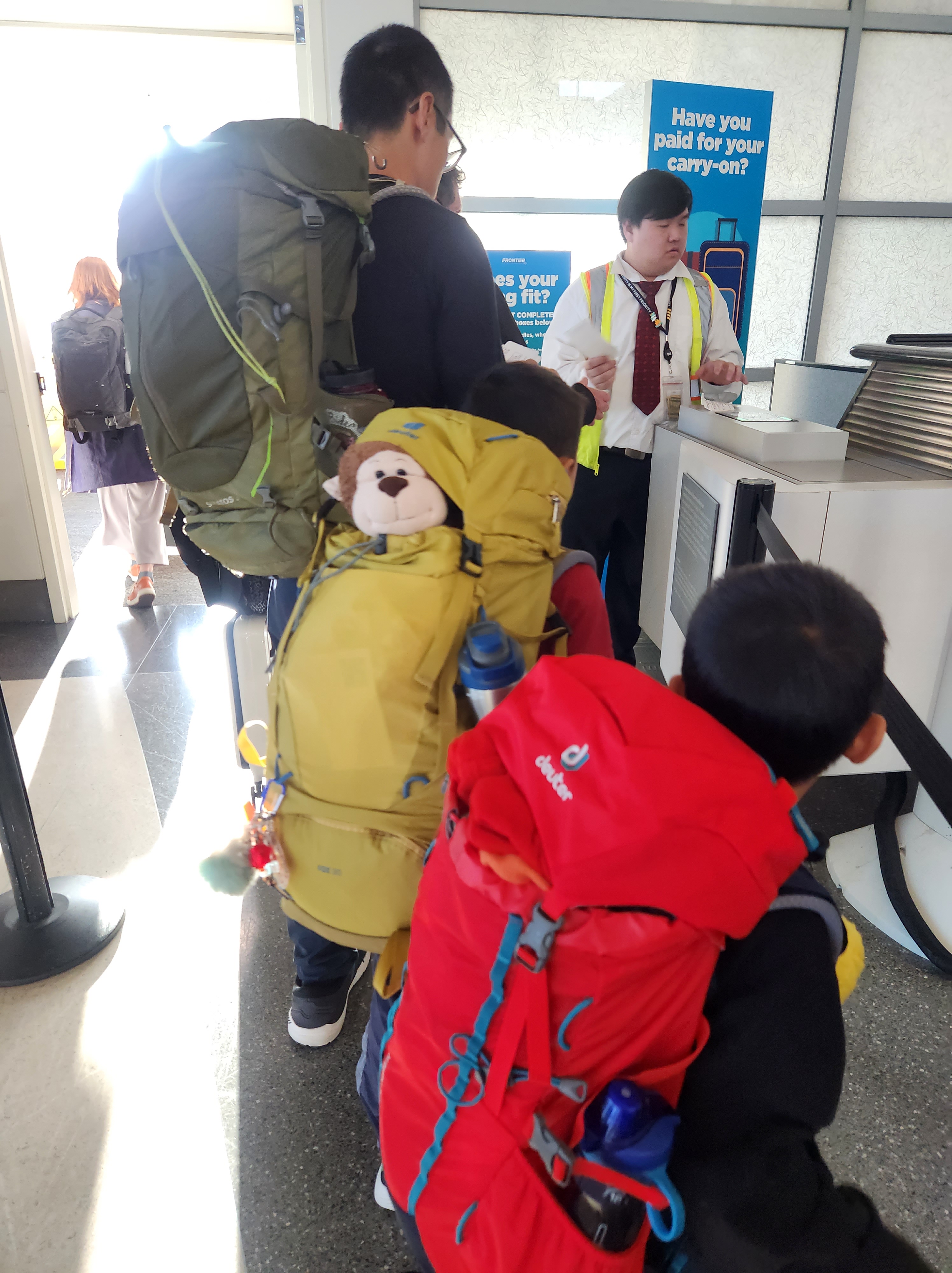
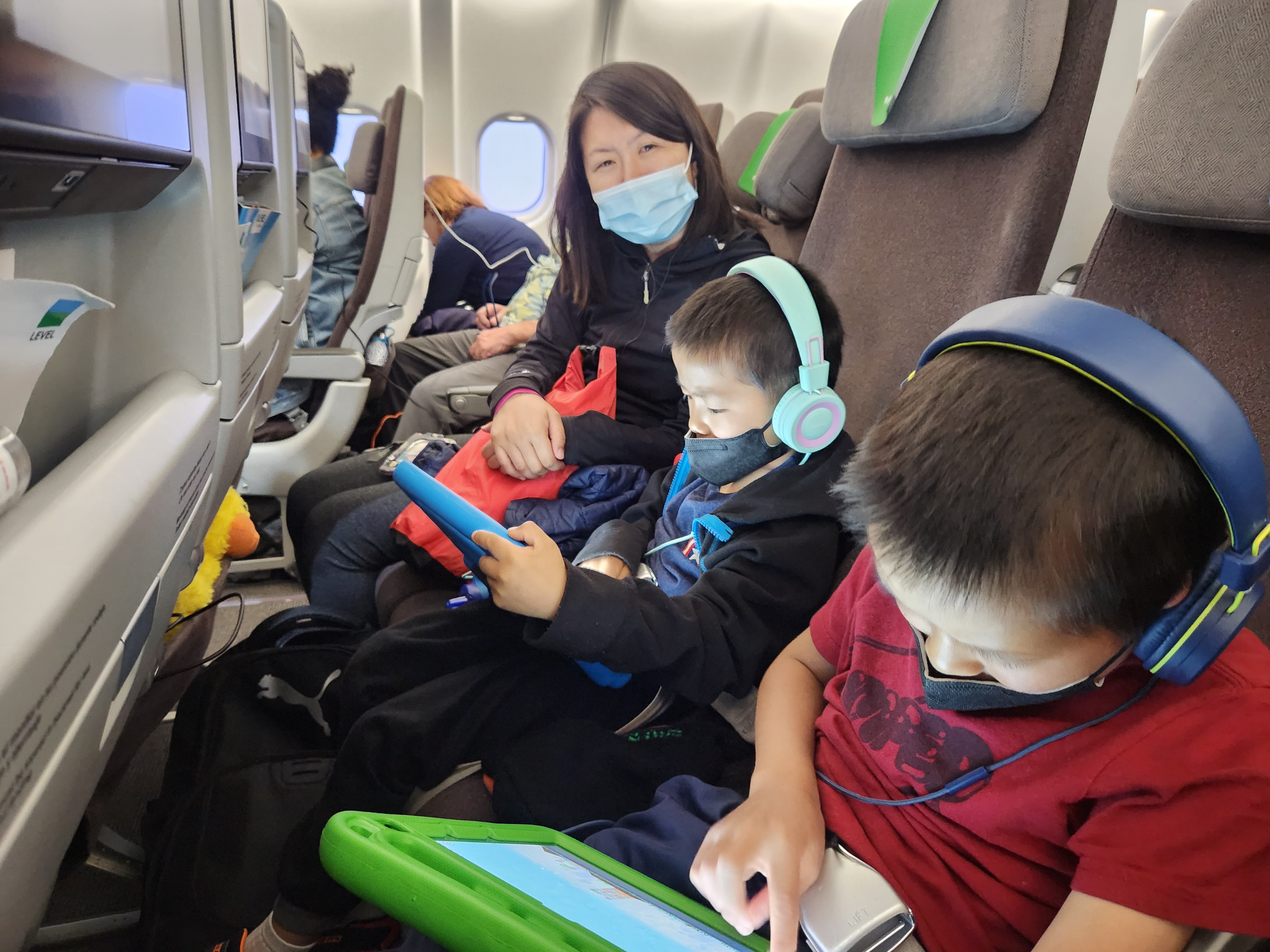
One year ago on this day, we left our home and went on the biggest adventure of our lives.
I still remember the days leading up to June 3rd last year and realized I never documented it. I remember tossing and turning every night, wondering if we were making the right decision. I remember my anxiety building up as we slowly gave/sold/stored away our belongings until our home of 7 years no longer looked like ours anymore.
On the day of, I woke up in disbelief – which as I later discovered, became a constant theme throughout the day. Is it really June 3rd? Are we really doing this? Is it too late to change our minds? 😂
In the morning, Connor’s good friend stopped by for another goodbye. Baba’s sisters and BILs came over to spend time with us and help us get rid of any remaining furniture. We ate lunch together and at around 4pm, my sister and BIL came to pick us up for the airport.
It was hard. We did one last walk through of a now empty apartment, a place that carried so many memories. My SILs cried as we left. I felt terribly guilty, like I was prematurely cutting short their relationship with the boys. They played a huge part in helping us raise C and O, and that is something we’ll sorely miss.
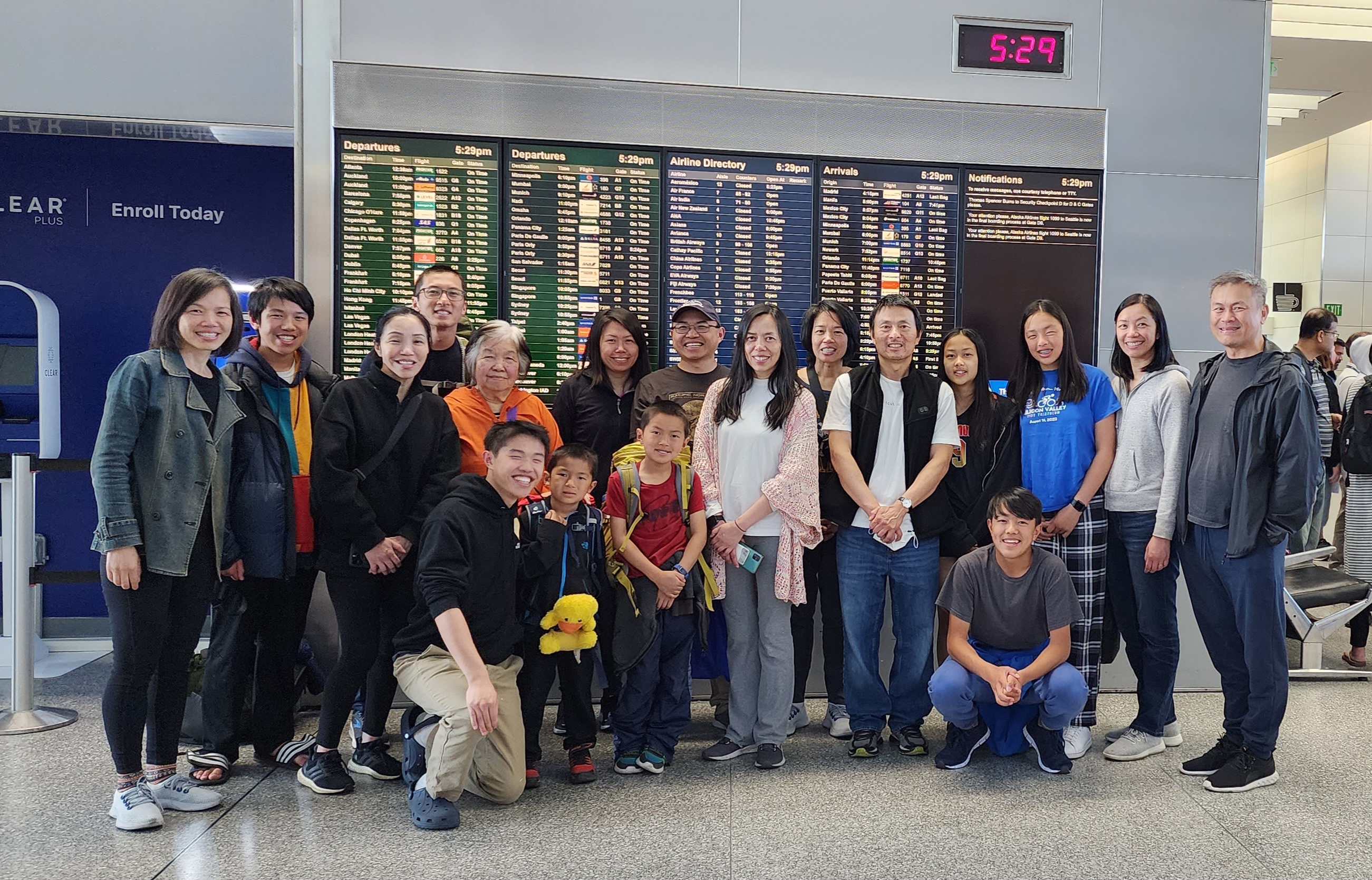
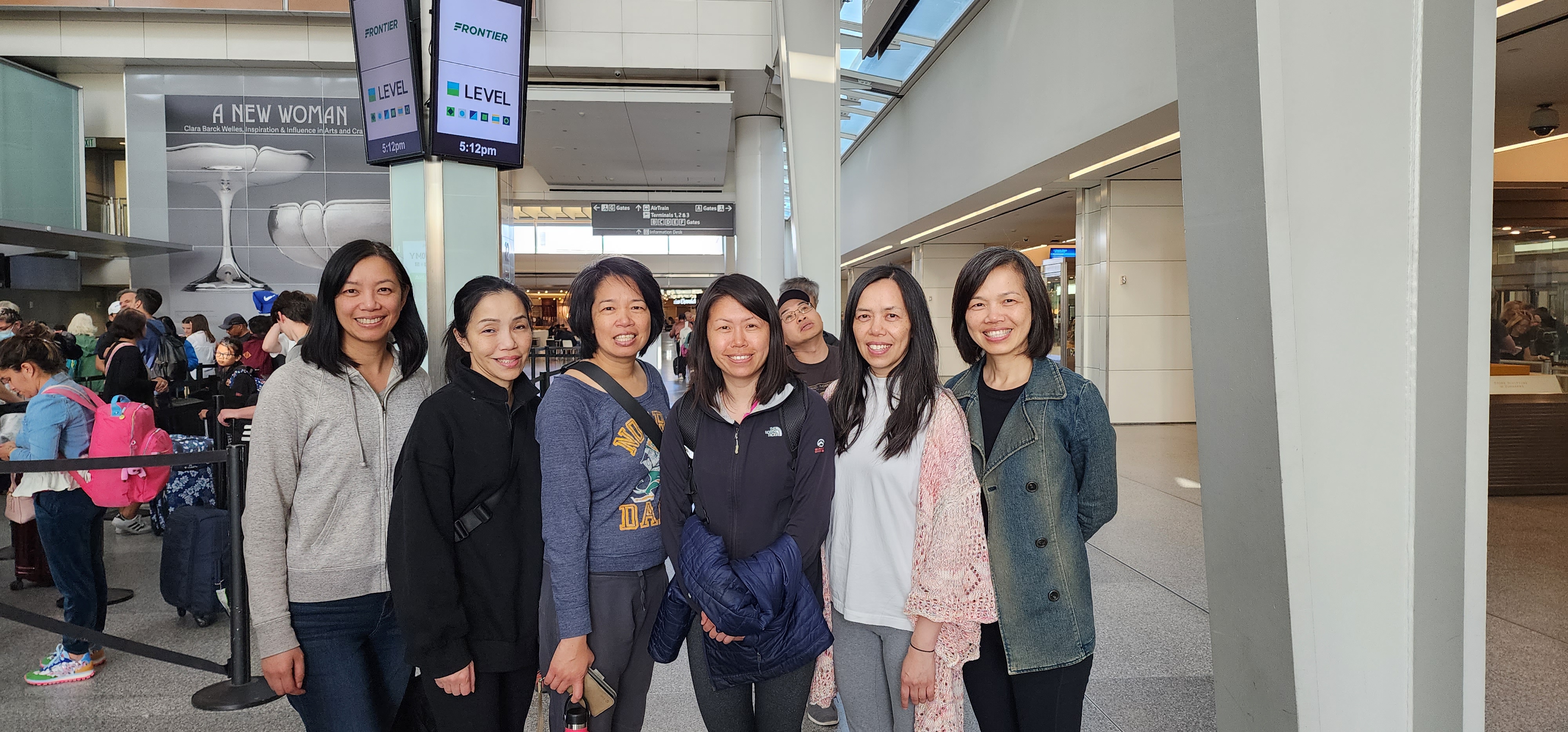
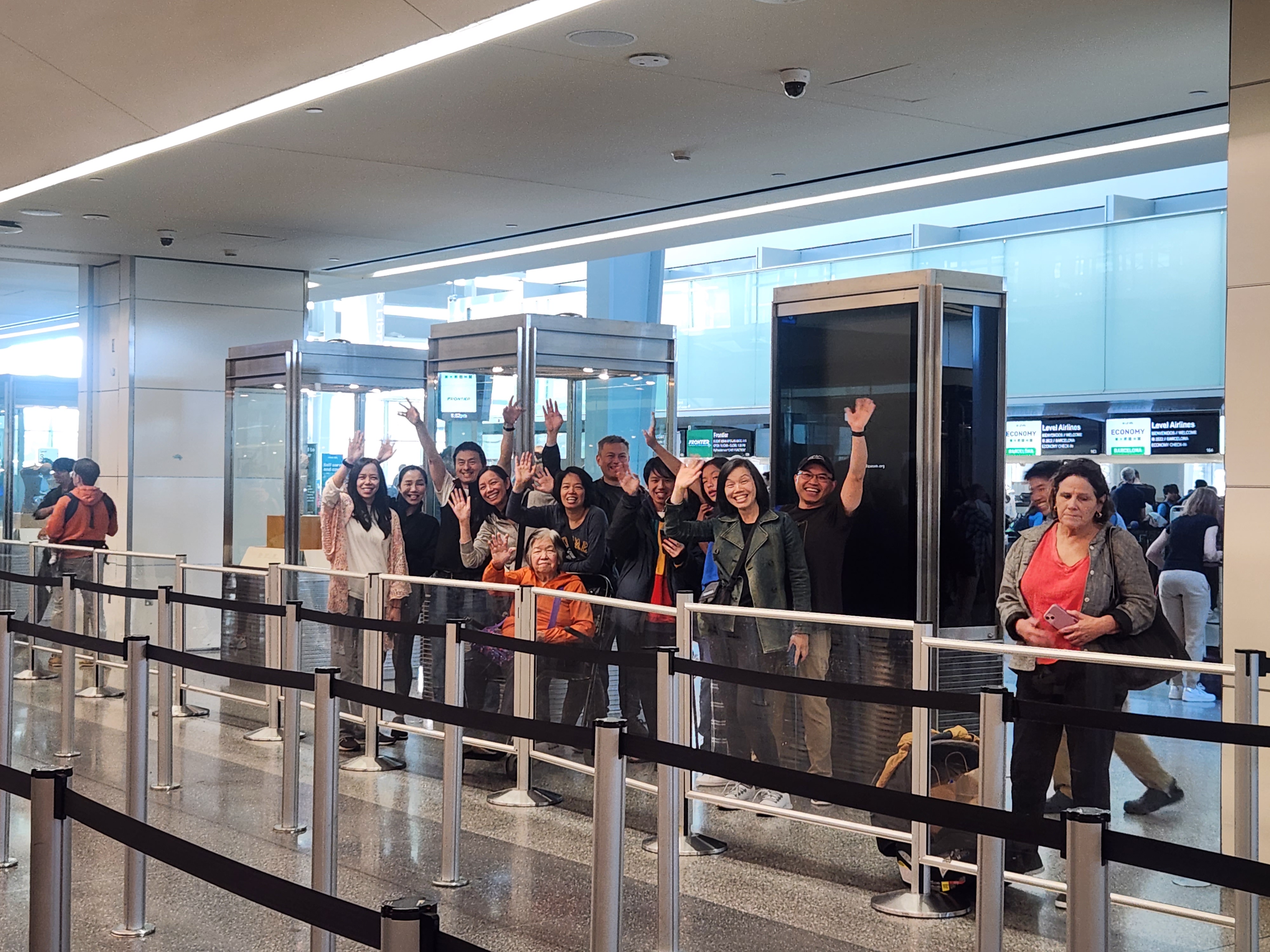
Although I told them not to come (because airport parking is crazy expensive!), my family met us at the airport to send us off. Everyone was in good spirits and excited for us, which made leaving a little less hard. They will always be my biggest cheerleaders, and I am so, so thankful for their support.
Going through the gates was surreal. I was flooded with anxiety, excitement, shock and everything in between. I couldn’t eat or sit still. Or breathe. (On the other hand, Baba and the boys seemed oblivious to it all. 😒)
When the plane took off, I looked over at Baba in disbelief. Did we really just leave the place we called home for most of our lives? Are we really not going to see our families for 3 years? I dozed on and off throughout the flight but every time I woke up, I wondered if this was all a dream. I simply could not believe this was happening.
Now, a whole year after that pivotal day, I wish I could tell the 2023 me that it’ll all be ok. It’s kind of funny how much I worried back then, when this has turned out to be such an incredible and transformative experience for our family. We began this journey long before we stepped foot in Taiwan. Looking back, the conversation Baba and I had could’ve gone in a totally different direction, but whether it’s through some divine intervention or just pure luck, I’m forever grateful that we decided to take the chance.
Before coming to Taiwan, the boys had minimal exposure to Chinese. They took several online classes (inconsistently) and went to an after school Chinese program that had only one hour of language instruction each day. We tried to supplement with Chinese books and shows at home but both boys showed little interest. We also spoke English exclusively at home because I was not confident in my Chinese at all.
After almost one year of public schooling in Taiwan, two things have proved to be true:
Kids are truly like sponges!
There is no better way to learn a new language than in an immersive environment.
At the start of the school year, I had trained both kids to introduce themselves in Chinese (their name, age, where they’re from), but that was pretty much all they could say. They could not understand what was going on in class and had to depend on classmates and teachers to help them translate. C could read/write a few characters, but O could barely remember to write his name in Chinese.
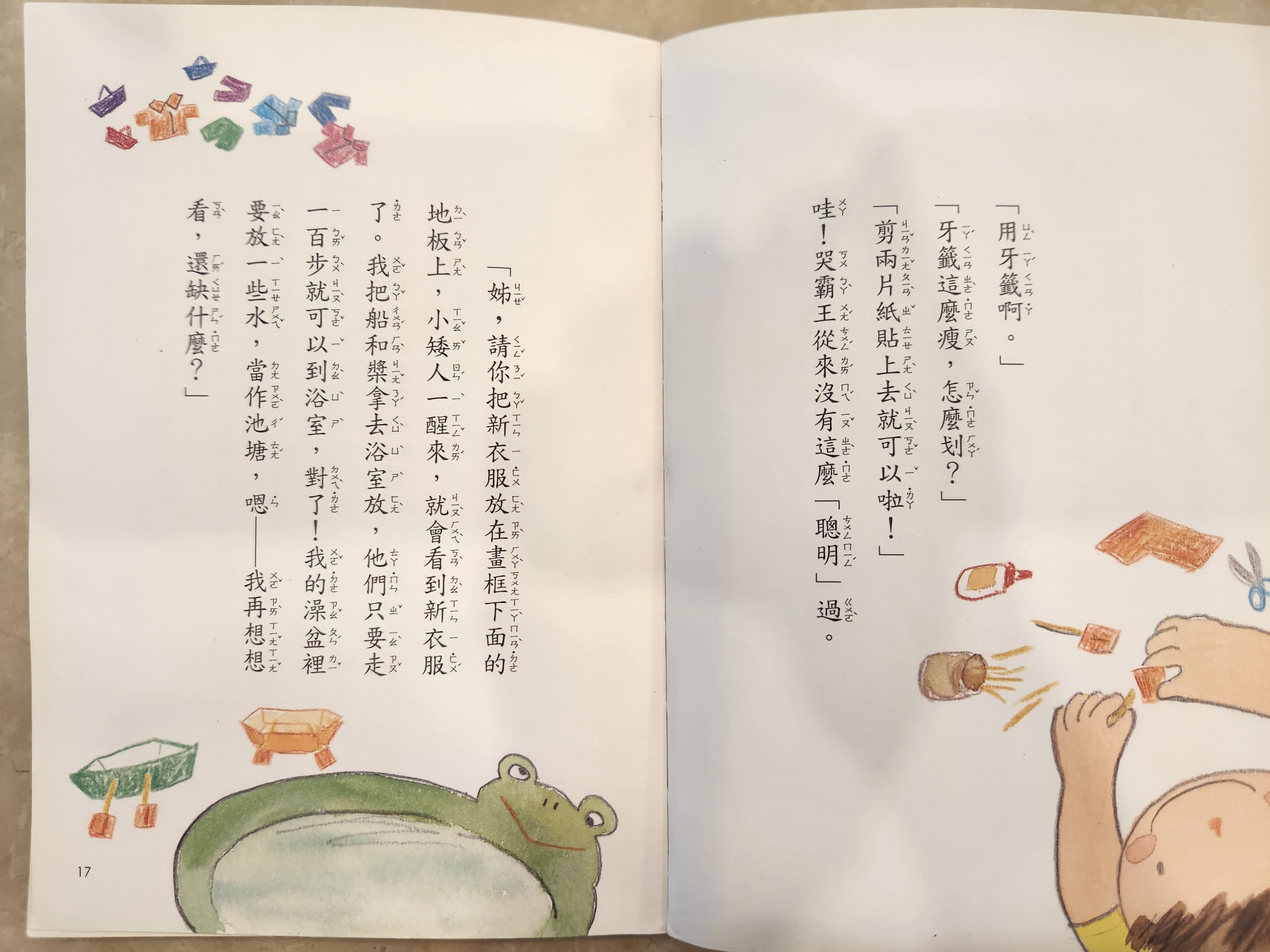
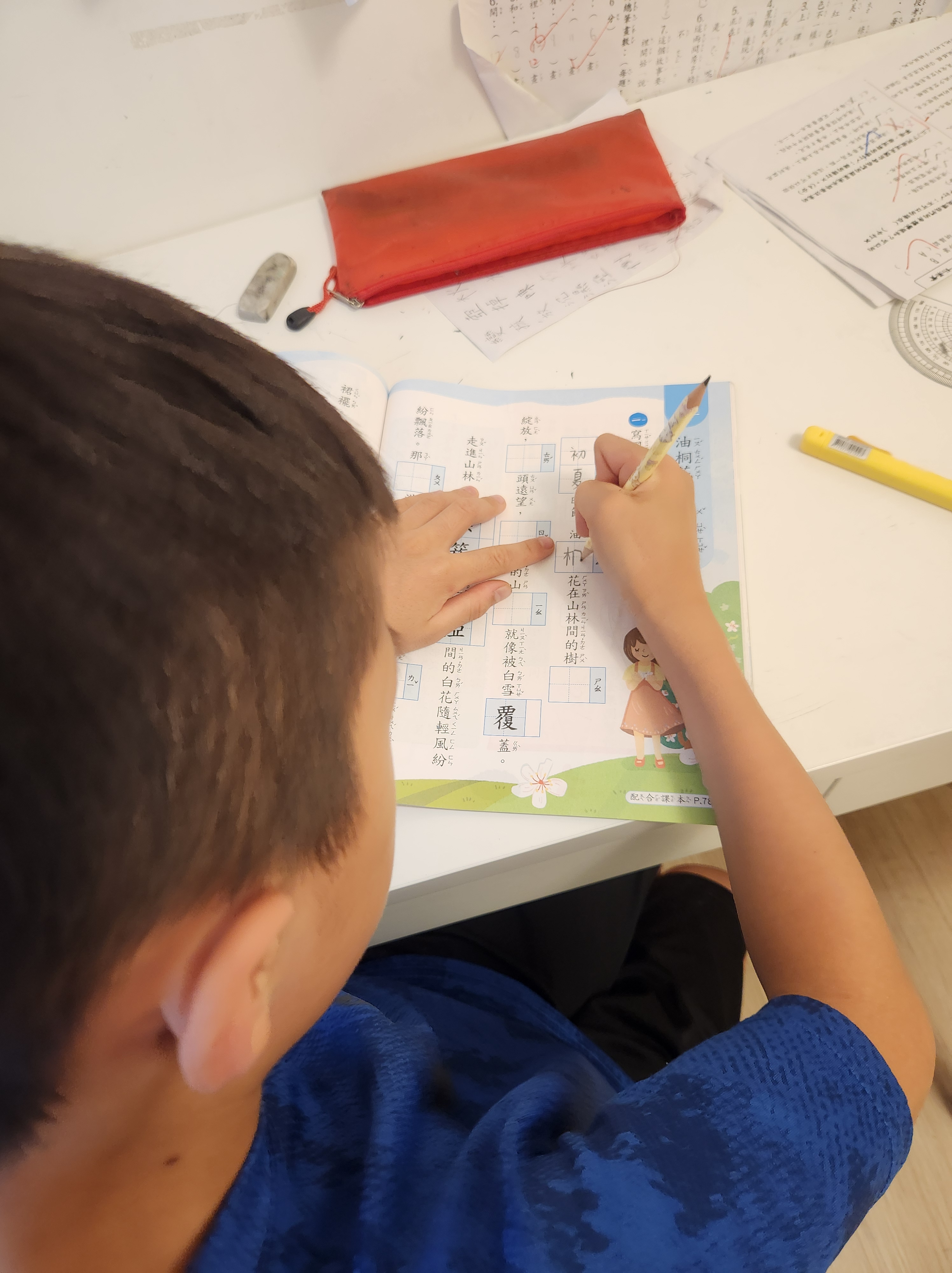
Flash forward to nine months later, C and O can understand their teachers, chat with friends, and read/write basic Chinese. O can do homework all by himself, from reading the problems to writing the answers. O’s teacher no longer needs to translate for him, and he still gets good grades on his tests and homework. With the help of zhuyin, O can also read a lot of text (see below for one of his assigned reading books) though he probably only understands 60% of it at this point.
C’s homework is a lot more challenging, but he can often complete more than half of his assignments by himself. (The rest is with his tutor’s help.) The fact is he is able to read, understand and answer difficult problems in Chinese is already a huge improvement from nine months ago. What I’ve noticed about C is that he’s able to retain information better as well. Almost every week, there is a dictation test on new vocabulary at school. At the beginning of the school year, I would help him study and man, it was a struggle! He would maybe get 20% right on the first try. Now, we wouldn’t really need to practice and C would still get almost every word correct.
This is why an immersive environment is so helpful when learning a language. In the US, both boys were SO resistant to doing anything in Chinese because it wasn’t the norm. Family and friends there all spoke English. Here, their friends speak only Chinese. Their teachers speak only Chinese. Everywhere they go, people speak only Chinese. If they want to watch TV, it will be in Chinese because there’s no other option. In this sink or swim environment, they learned they had to swim.
It’s been amazing witnessing C and O’s progress. I love hearing them talk in Chinese; it’s like reliving the time when they were toddlers first learning how to speak. As much as I am amazed at how quickly they’re learning, I am also incredibly proud of their attitude. They never once complained about not understanding anything, or all the homework and tests at school. They never seem frustrated when they have to read an entire page of Chinese, or have to write pages and pages of characters.
C and O are not fluent (I think my Chinese is still better than theirs 😅) and I honestly don’t expect them to be. But what I hope they’ll extract from this experience is that they can learn and do anything with patience and grit.
This post only pertains to my Chinese learning journey. I’ll write about the boys’ progress in another post.
We’ve been living in Taiwan for 9 months already 🤯, and for the most part we’ve adjusted to the Taiwanese way of life. We’ve made friends, are comfortable navigating around the city, and have our daily routines nailed down.
The biggest challenge has been, and continues to be, learning Chinese. I wrote about first learning Chinese 6 months ago, and while my Chinese has improved drastically since then, I feel like it’s plateaued. I can comfortably order at a restaurant, exchange simple pleasantries with strangers, and introduce my background. But beyond that, it can be a struggle holding conversations.
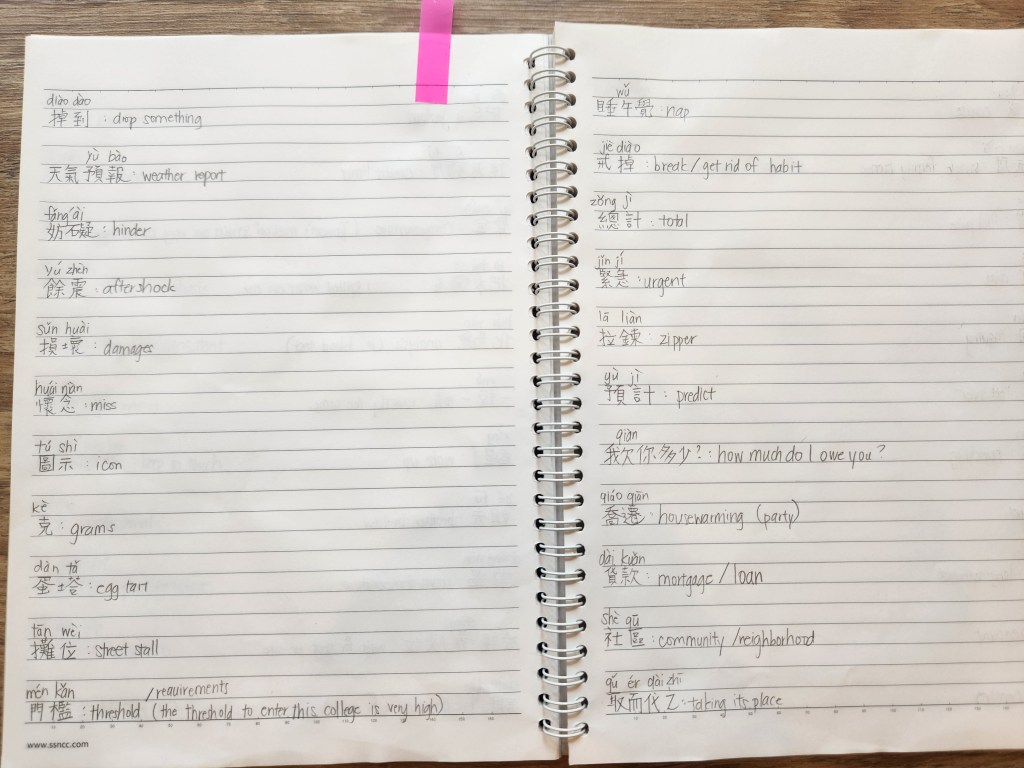
My conversation skills are completely dependent on the topic. I can chat about the kids’ school and about daily life, but if the topic shifts to say, skincare, I am clueless. (This actually happened in real life: I went in for a facial and had zero clue what the aesthetician was telling me about my pores and moisturizing. 😅) This is because I have been learning vocabulary by subject matter. I write down words that are useful or related to a topic that interests me. For example, after the earthquake, I learned the Chinese words for “damages”, “aftershock”, and “predict”, knowing that this subject might come up.
My notebook of Chinese words. I’m already on my second book!
So on days when I’m chatting about kids or eating out, I feel pretty good about my Chinese. Other days – like today, when a sales person tried to introduce me to different types of sneakers- I feel like I took 2 steps back.
All is not lost though. Because I have been writing down words and reviewing them consistently, my reading and writing skills have improved a lot. I can read signs and simple text messages without having to copy and paste into Google translate. I can write messages using pinyin (though it still takes me awhile to do). An indirect effect to all this is that my mom even noticed that my Cantonese got better! 😊
Aside from learning vocabulary words, I have been listening to podcasts, meeting language exchange partners and doing weekly sessions on italki. (I’ll list these resources at the bottom of this post.) I still volunteer at the boys’ school and it’s a great way to chat with locals, but our conversations are usually pretty perfunctory. I stopped taking in-person Chinese classes after the boys’ winter break. The classes gave me a great head start, but I wanted to try other things.
Baba asked me what my next goals for Chinese are, and honestly I’m not sure. To feel confident enough to just speak without mulling over every word? To be able to have deeper conversations with people? I don’t really have a definitive, measurable goal other than continuing to improve. It’s hard, but to be able to connect with people using their language is an amazing feeling.
Resources for Chinese Language Learning:
Learn Taiwanese Mandarin podcast – Probably my favorite podcast so far. The best part is she has a website with transcripts of each episode that includes pinyin and the English definitions.
italki – An online language platform where you can schedule 1:1 video chats with teachers. It’s convenient – you can schedule classes according to your schedule – but classes can be expensive. I found a teacher I really like on there.
Tandem – A free language exchange app where you can find people to chat with. (Conversely, I’d help them with English.) I’ve met a couple of people through the app, but the problem is finding someone who can regularly practice with you.
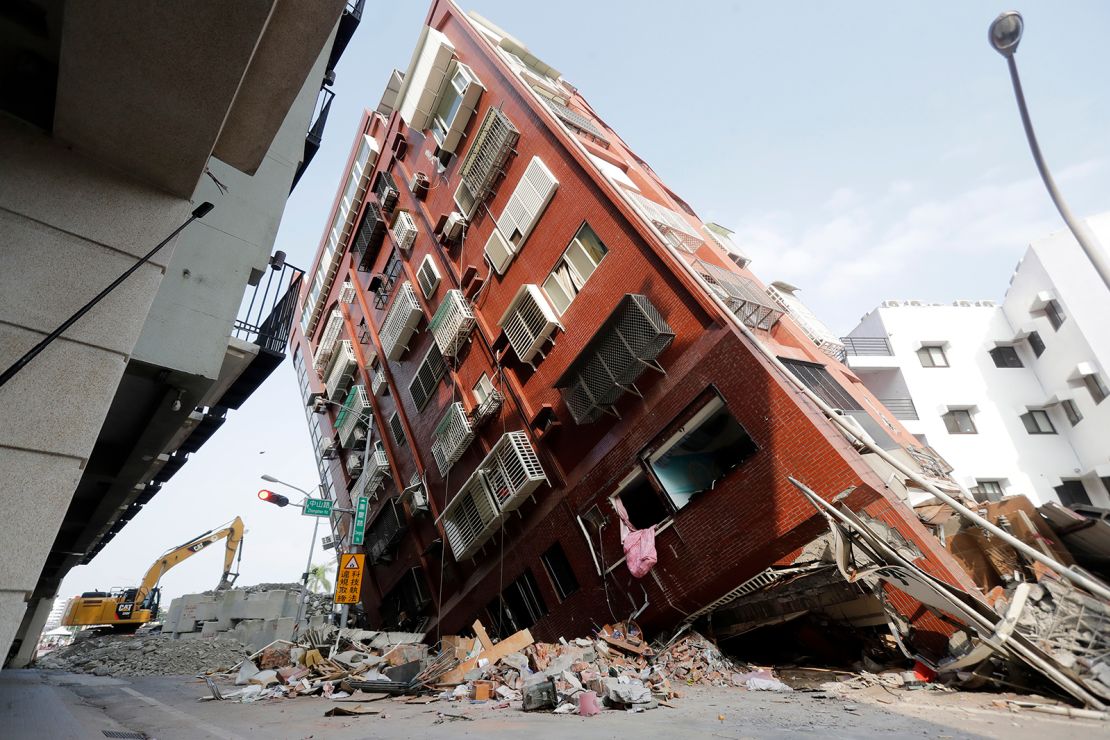
While my sister and BIL were in town, we had another visitor: an earthquake! It happened on Tuesday, April 3rd at 7:58am. We’ve experienced tremors before in Taiwan, but this was a big one – measuring in at 7.4 – with many, many aftershocks. The epicenter was in Hualien, which is about 2 hours away from Taipei.
A big earthquake like this is something that is forever burned into your memory. (I still remember everything from the 1989 San Francisco earthquake!) After I dropped off the kids at school, I cooked breakfast while my sister sat on the couch. Suddenly, we felt the ground shake and when it didn’t stop, we both scrambled under the dining table. 😂 The ground rolled violently back and forth, and the noise was thunderous. Meanwhile, my BIL was in the bathroom the whole time and Baba didn’t feel a thing because he was biking. 😶
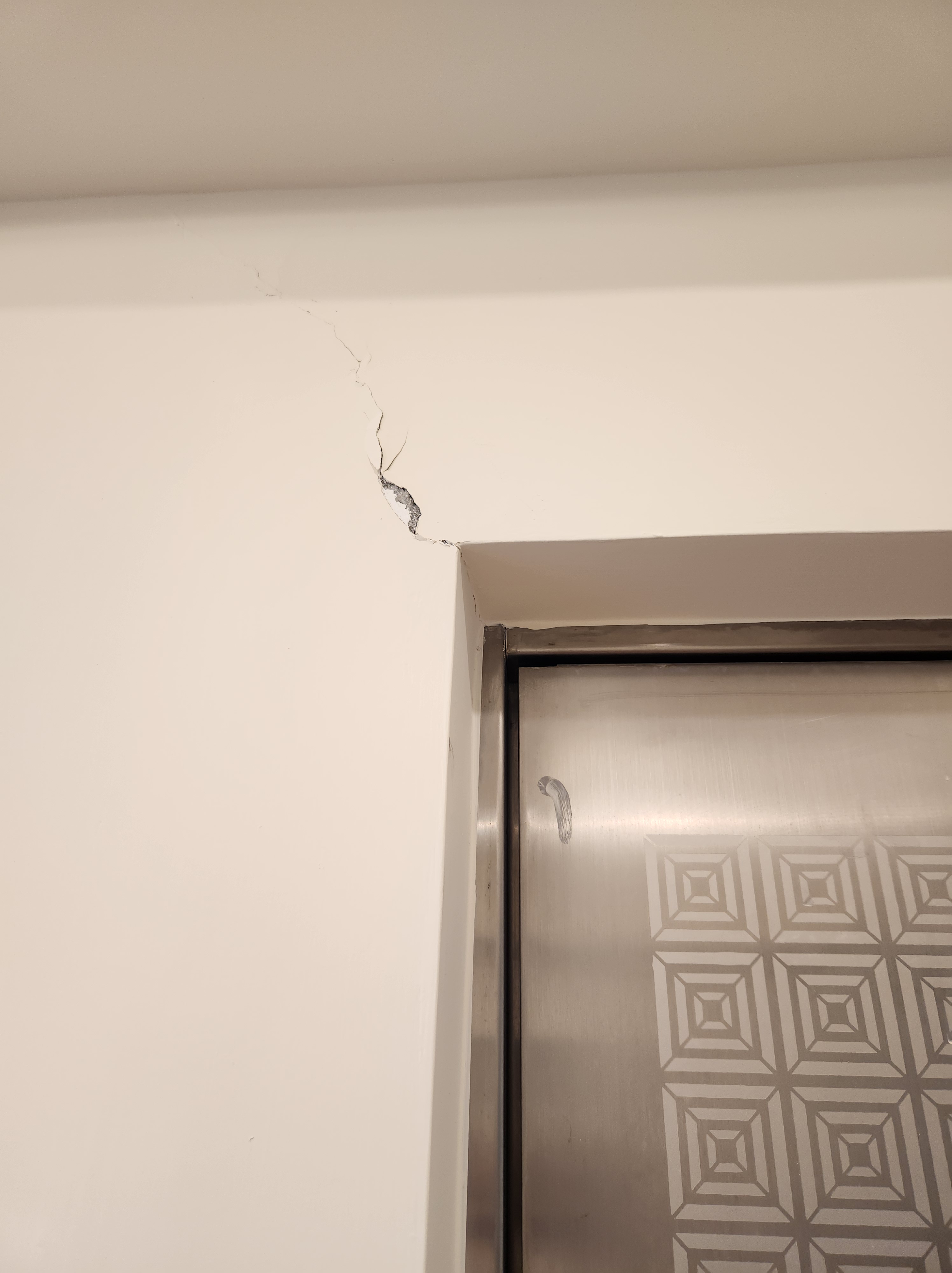
The earthquake might have only been for ~30 seconds, but it felt like an eternity. Luckily, no one was hurt (that we know of), and there was very little damage in the apartment, except for a crack near the front door and in the boys’ room.
Our school sent pictures and notifications shortly afterward, reassuring parents that all the students were safe. Because Taiwan is prone to earthquakes, our school does regular earthquake drills. So other than feeling rattled, all the students and staff were prepared. Classes resumed afterwards as usual, and C mentioned that his teacher was worried she wouldn’t finish the lesson on time! 😂
Taiwan’s preparedness for this earthquake has been impressive. In Taipei, other than the MRT and trains halting service for a couple of hours, there was no significant disruption. There were no power or internet outages, businesses were open as usual, and all buildings remained intact. Many US publications commended Taiwan for its earthquake resilience and the huge strides it made after the 7.7 earthquake in 1999.
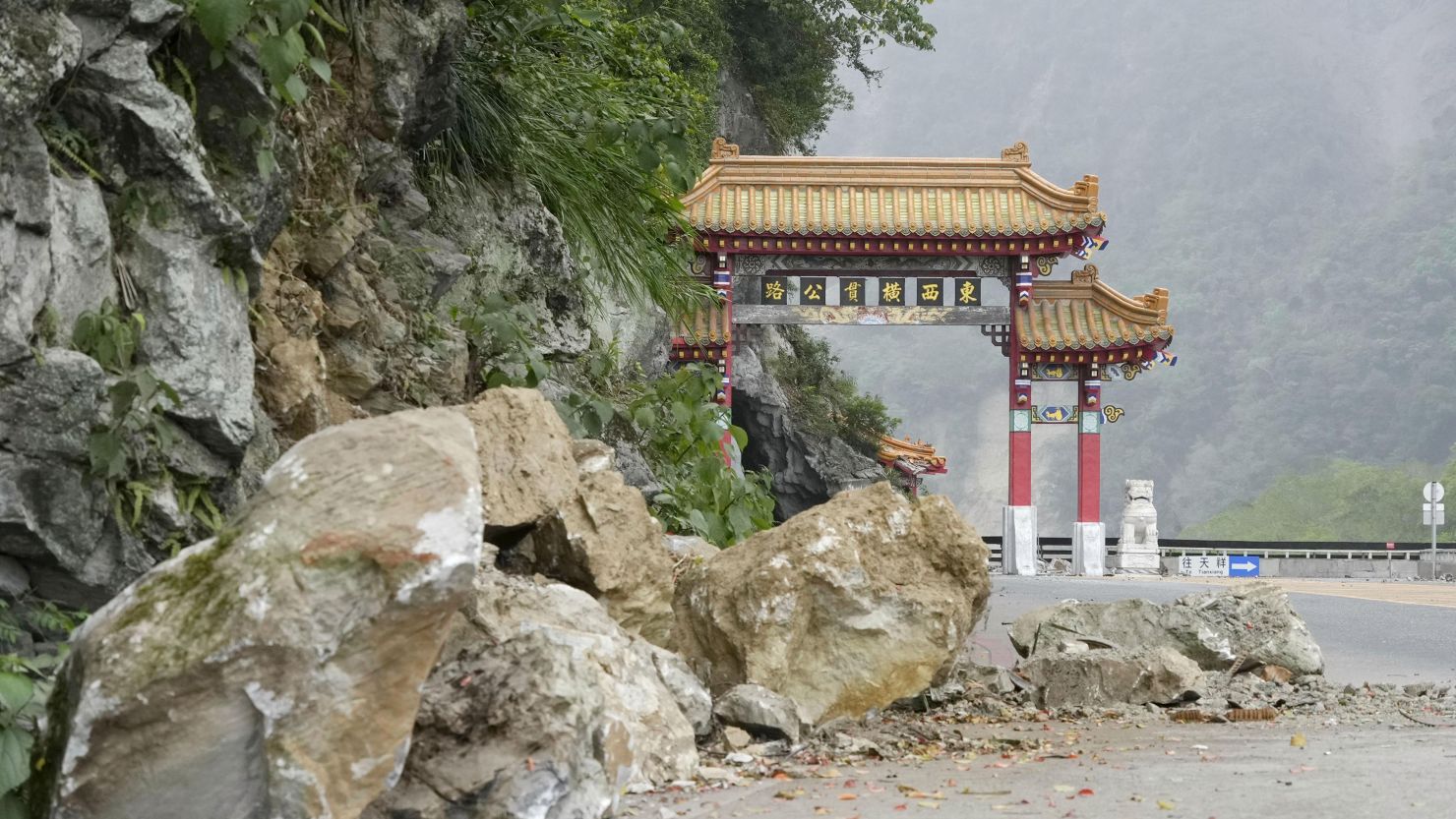
The greatest damage has been in the epicenter, Hualien, where Taroko National Park is located. So far, 13 people have died in the area but relative to the magnitude of the earthquake, the number of fatalities is pretty low. The park is likely to be closed for at least a year, and some trails like Zhuilu Old Road may be closed for much longer.
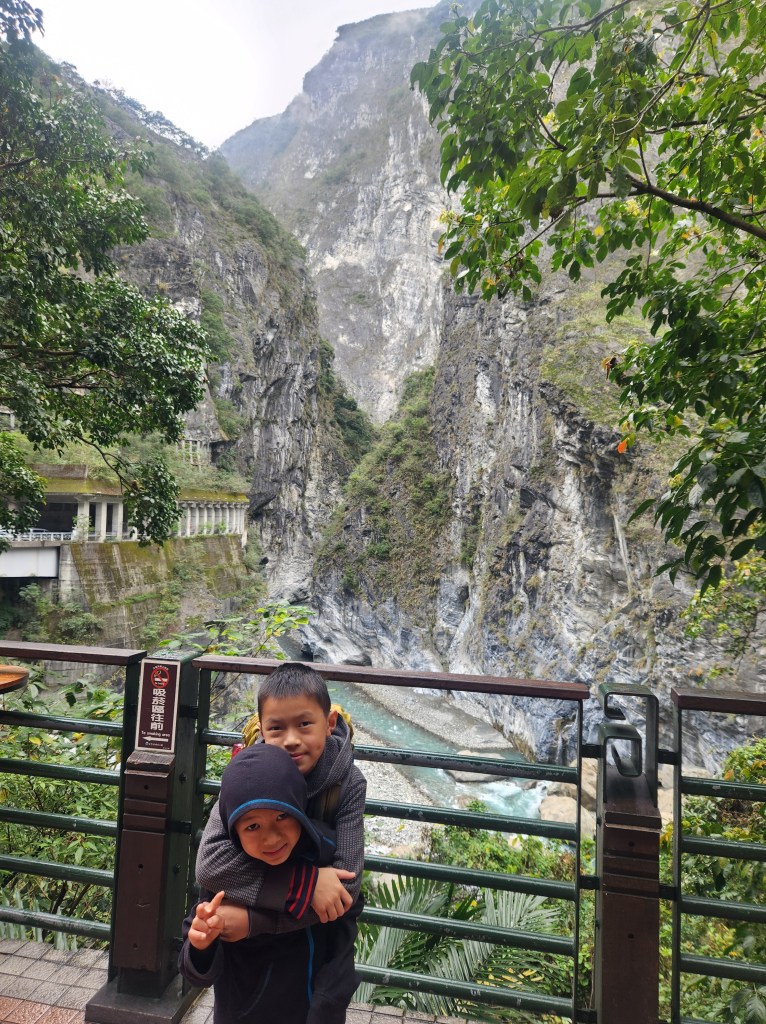
We feel so fortunate to have visited Taroko just 2 months before the earthquake. I’m saddened to hear that people lost their lives exploring this beautiful place, and it will be awhile before it can be enjoyed again. Here’s to hoping that the rescue and reconstruction efforts in Hualien continue smoothly and safely! 🙏






















 Hongs Abroad