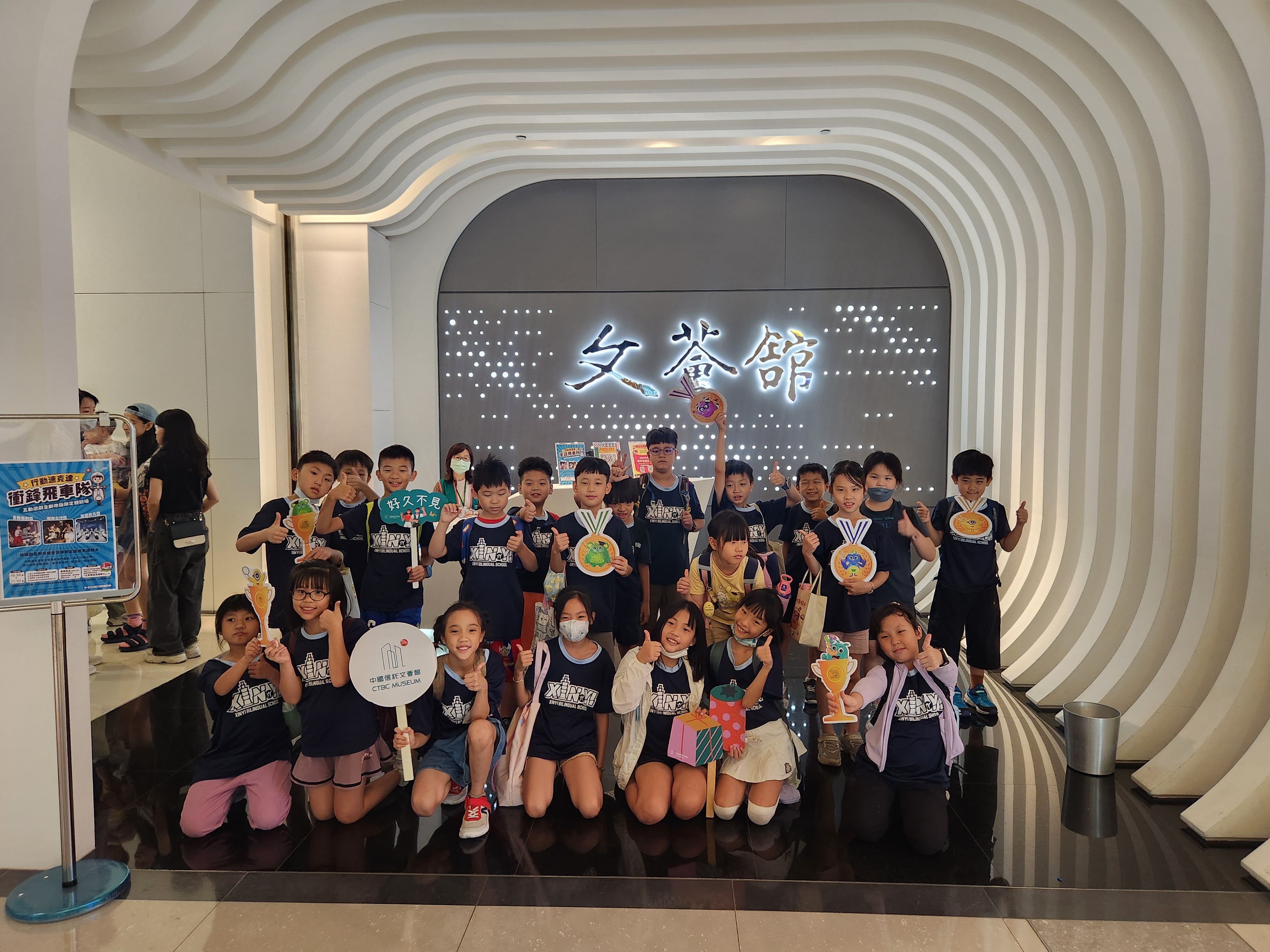
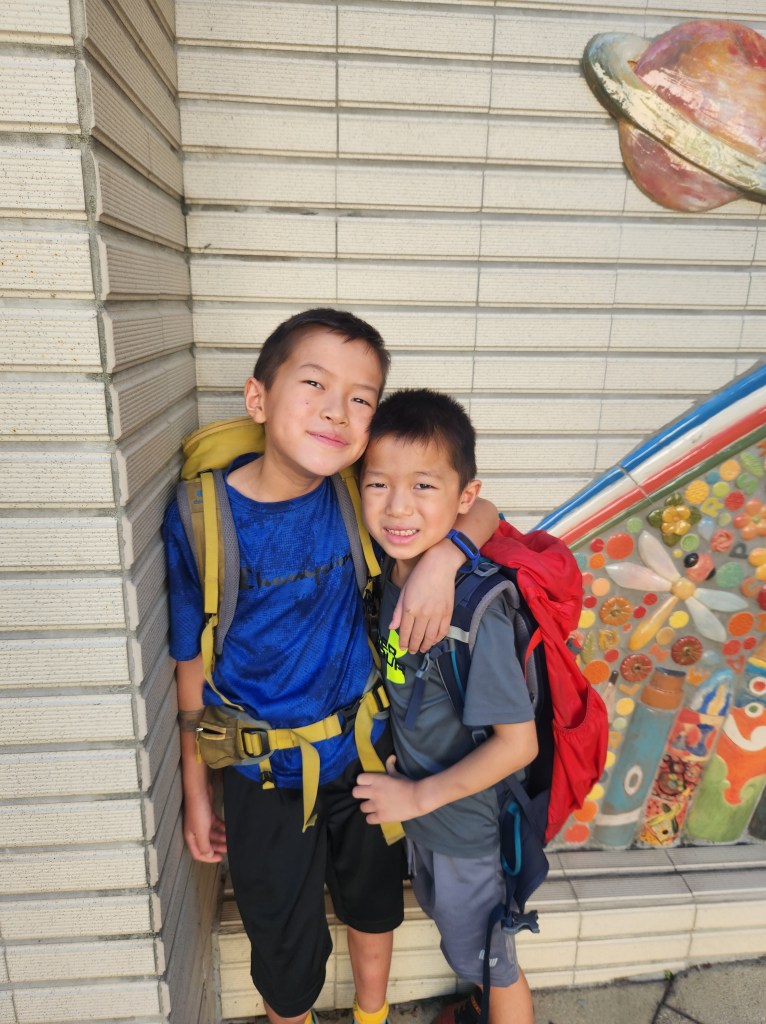
Little brother O (弟弟) started 3rd grade this year. We’re not too worried about O for a few reasons: 1) he’s been in Taiwan schools since 1st grade so he already has a solid foundation, 2) based on our experience with C, 3rd grade isn’t too stressful yet, and 3) thankfully, O was assigned a fairly relaxed teacher. He is known to organize a lot of field trips. Last week we went to a treasury/finance museum.
Homework is reasonable, on average 30-40 minutes a day. But O’s teacher has been giving more challenging homework than I remember C getting in 3rd grade — things like sentence composition and short essays. Thank goodness for ChatGPT! 😅
Starting this year, O has 3 long days of school a week, so I miss having the little guy around at home in the afternoons. For the last two years, he’d come home around noon, have lunch, finish his homework, and spend the rest of the afternoon on his hobbies. It felt so carefree. Now, on top of the longer school days, O has after-school activities everyday: Minecraft, swimming, and art — so we don’t see him until almost 6 pm on most days.
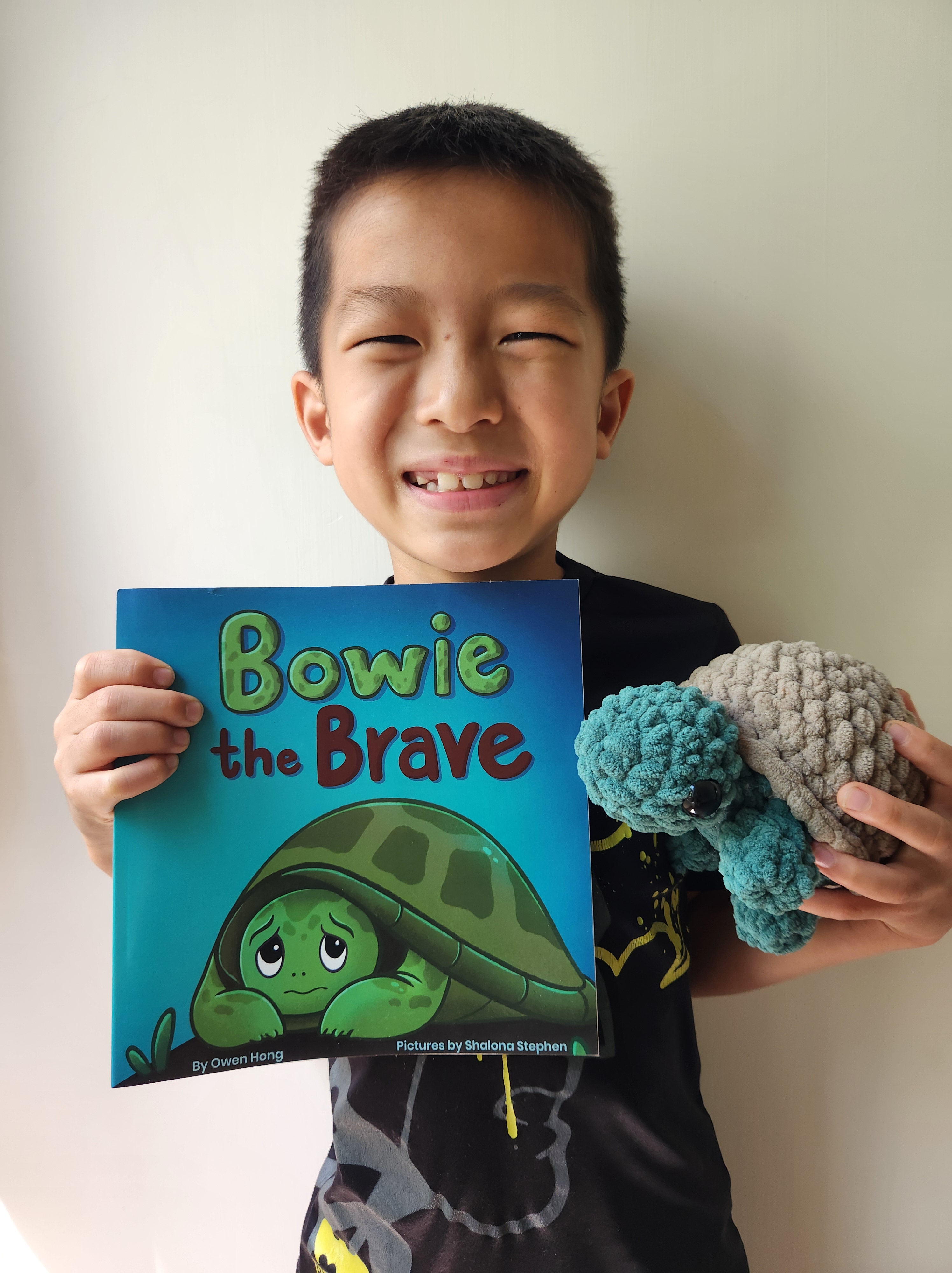
Outside of school, O practices Brazilian Jiu-Jitsu, plays Minecraft, and loves to read — especially fantasy novels. He’s become hooked on the Harry Potter and Percy Jackson series! Recently, I’ve noticed his writing becoming more expressive and imaginative, so over the summer, I encouraged him to write his own book (since I have a little experience in that area 😏). He decided to write a story about overcoming the fear of trying new things, something he is still personally working through. The result is a cute story called Bowie the Brave, now available on Amazon!
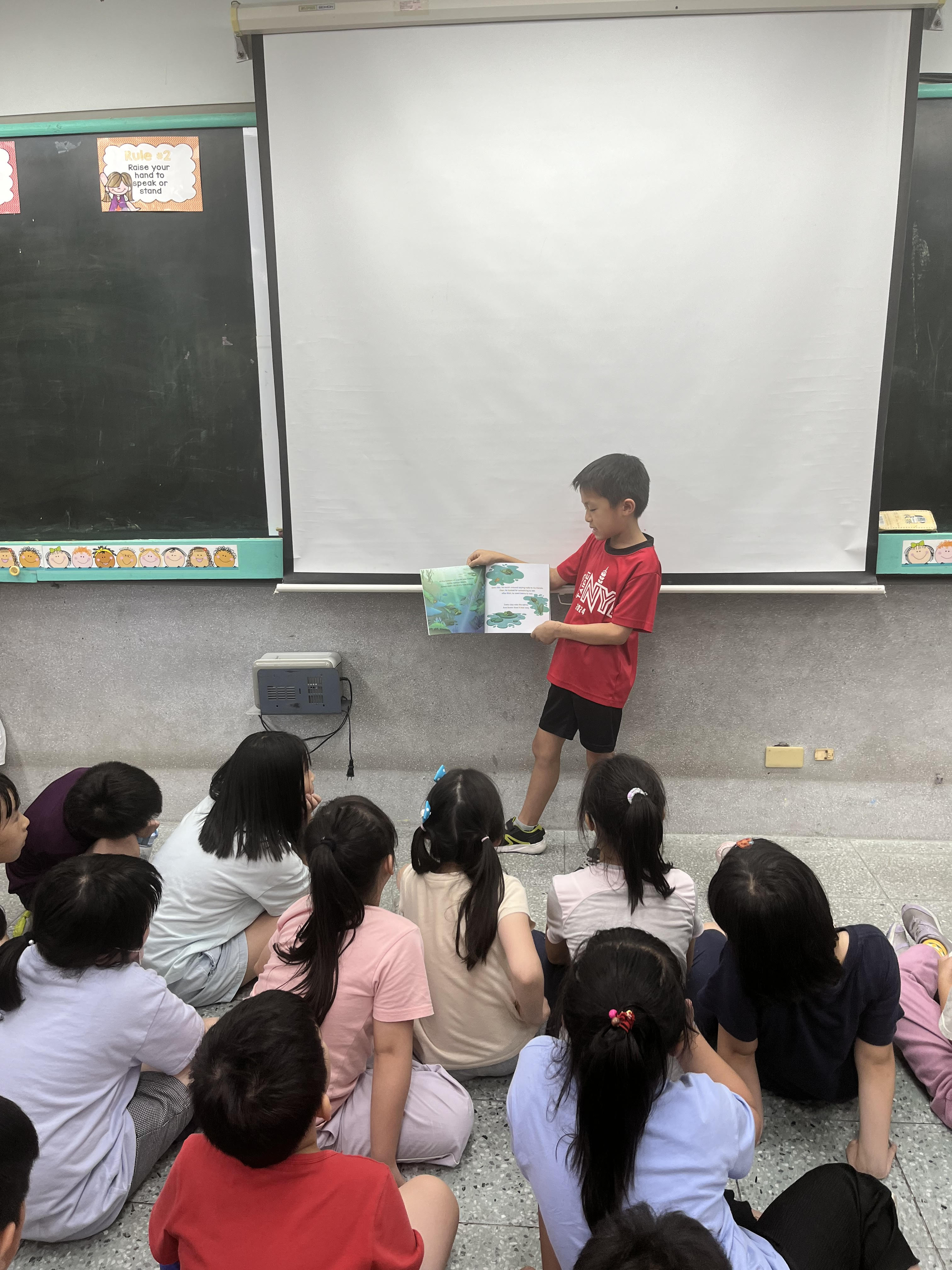
We couldn’t be prouder of O. He used to be really hesitant about trying new things, but we’ve seen how much his confidence has grown. Recently, he read his book in front of his class — something that would’ve seemed unlikely not long ago. Although he was nervous at first, we’re so glad he pushed through and did it anyway. My SIL also shared his book with her school principal, who then invited O to give a presentation about his book to a group of 2nd graders in December. It will another big challenge, but O is willing to take it on!
Sometimes I miss the summer, when Baba and I could take on projects like these with the kids. During that time, the boys seemed their most creative: building fun Lego and cardboard creations, C experimenting in the kitchen, and O working on his book. We had time to slow down, to wonder and create together. Now that school is in full swing and schedules are packed with homework, there’s little time left for personal projects like these, and I can’t help but wonder if their creativity gets stifled a bit. Still, I’m grateful that Baba and I get to spend so much valuable time with them. Not every parent gets that opportunity, and I don’t take it for granted.
C and O have been back in school for over a month now, so I thought it’d be a good time to share a little recap. I’ll start with big brother C (哥哥) first.
In Taiwan, elementary students switch teachers and classmates every two years, a transition that can feel nerve-wracking for families. This year, both C and O had to change classes. Knowing this, Baba and I met with the Director of Academic Affairs to request a more “relaxed” teacher for C. Since he was already doing about 2 hours of homework in 4th grade everyday, we couldn’t imagine what it would be like for the next two years.
The Director assured us that teachers are randomly assigned (which we weren’t entirely convinced of but let go) and said we’d need to work directly with C’s teacher. In August, classroom assignments were released and C was placed with the most notoriously strict 5th-grade teacher 😆. And we knew she was strict because she mailed every family a 4-page letter outlining expectations and sent daily reminders all summer.
We reached out to the teacher share our situation. She asked if C could try completing all the homework for a month and then see if adjustments are needed. We replied that he will do the best he can within the time we allocated for him (~1 hour a day), with the condition that he wouldn’t have to stay in class during recess if he couldn’t finish (a common practice here).
I was nervous about how she’d respond. In Taiwan, homework and tests are the ultimate measures of success, and this teacher seemed stern and unyielding. But to my surprise, she’s been understanding. Even when C couldn’t finish his homework, she didn’t scold or embarrass him (though she still has to grade him fairly). Over time, C has grown to appreciate that she allows students to start homework in class, has a structured schedule, and even her humor while scolding students. I’m grateful he’s kept such a positive attitude through all these changes.
Left photo: C doing homework in class. Right photo: His nightly stack of homework books. 😯
This year has been a bit more challenging since we decided not to bring back our tutor. Combined with our limited schedule for C’s Chinese homework, it’s led to lower grades, which was something we expected. We keep reminding C that this choice is intentional: we want to prioritize his well-being and focus on what will benefit him in the long run. Of course, once we’re back in the US, homework can’t be left unfinished and grades matter more. I just hope he’s not going to think that skipping work or poor grades are acceptable… 😣
For extracurriculars, C is on the badminton team, Global Scholars Program, and an ambassador 小小外交 at school. He also had the opportunity to visit Kinmen 金門 (an outer island of Taiwan) for 3 days in September with classmates. Outside of school activities, C (and O) still practices Brazilian Jiu-Jitsu, has gotten really interested in Minecraft and making Lego stop motion videos. Baba has also been working with the boys on simple engineering projects, while I’ve been focusing on reading and writing. It’s been busy in a good way!
I know I complained about C’s homework load in my last post, but I want to acknowledge that our school offers amazing opportunities that teach valuable lessons beyond the classroom, some of which were not available to us in the U.S. (especially not in elementary school). Most opportunities are for 4th grade and up, so unfortunately O will have to wait his turn.
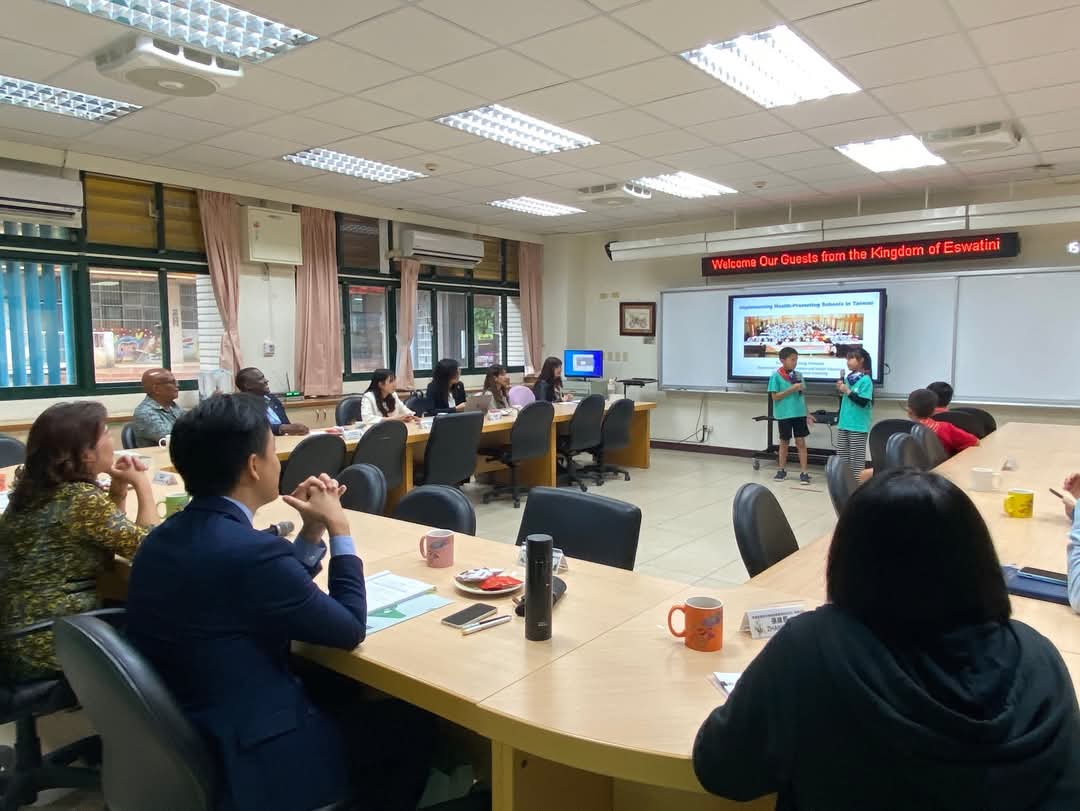
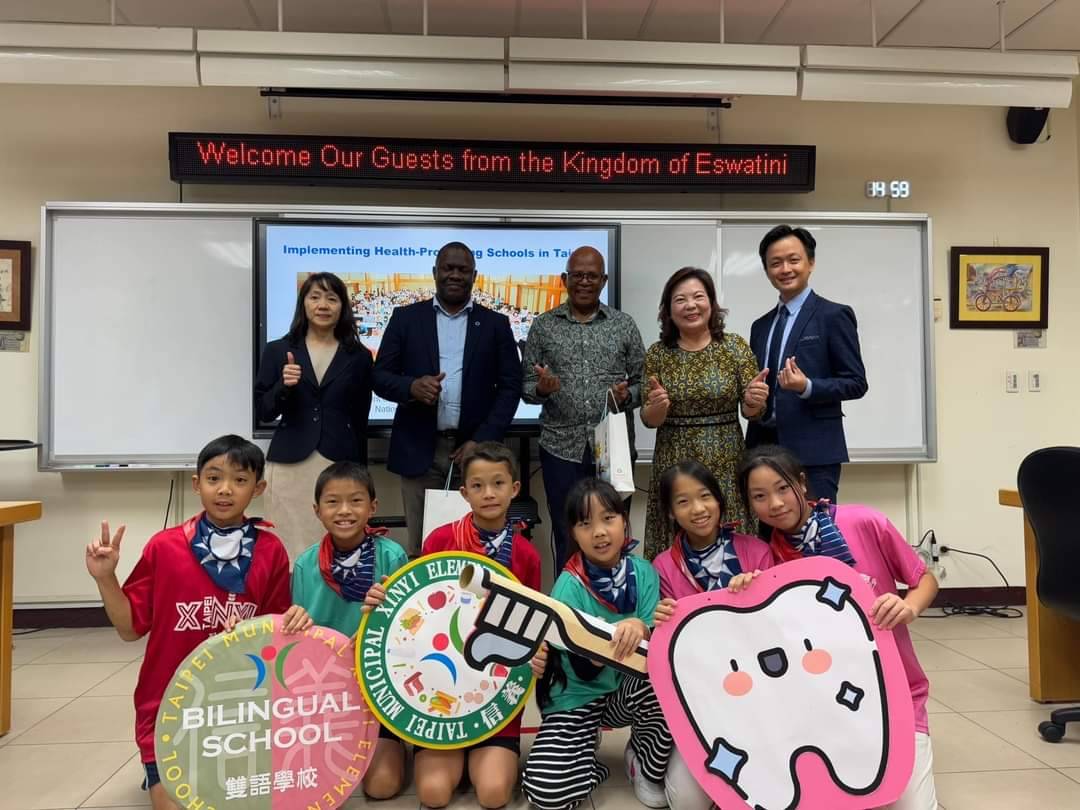
Little Diplomat. This year, C was selected to be a “Little Diplomat”. Occasionally, our school has visitors from other countries, and Little Diplomats are responsible for welcoming them, giving tours of the school, and presenting on different topics. C met people from Indonesia, Korea, Japan and the Kingdom of Eswatini. Being a Little Diplomat has allowed C to practice public speaking and learn how to interact with people from different cultures.
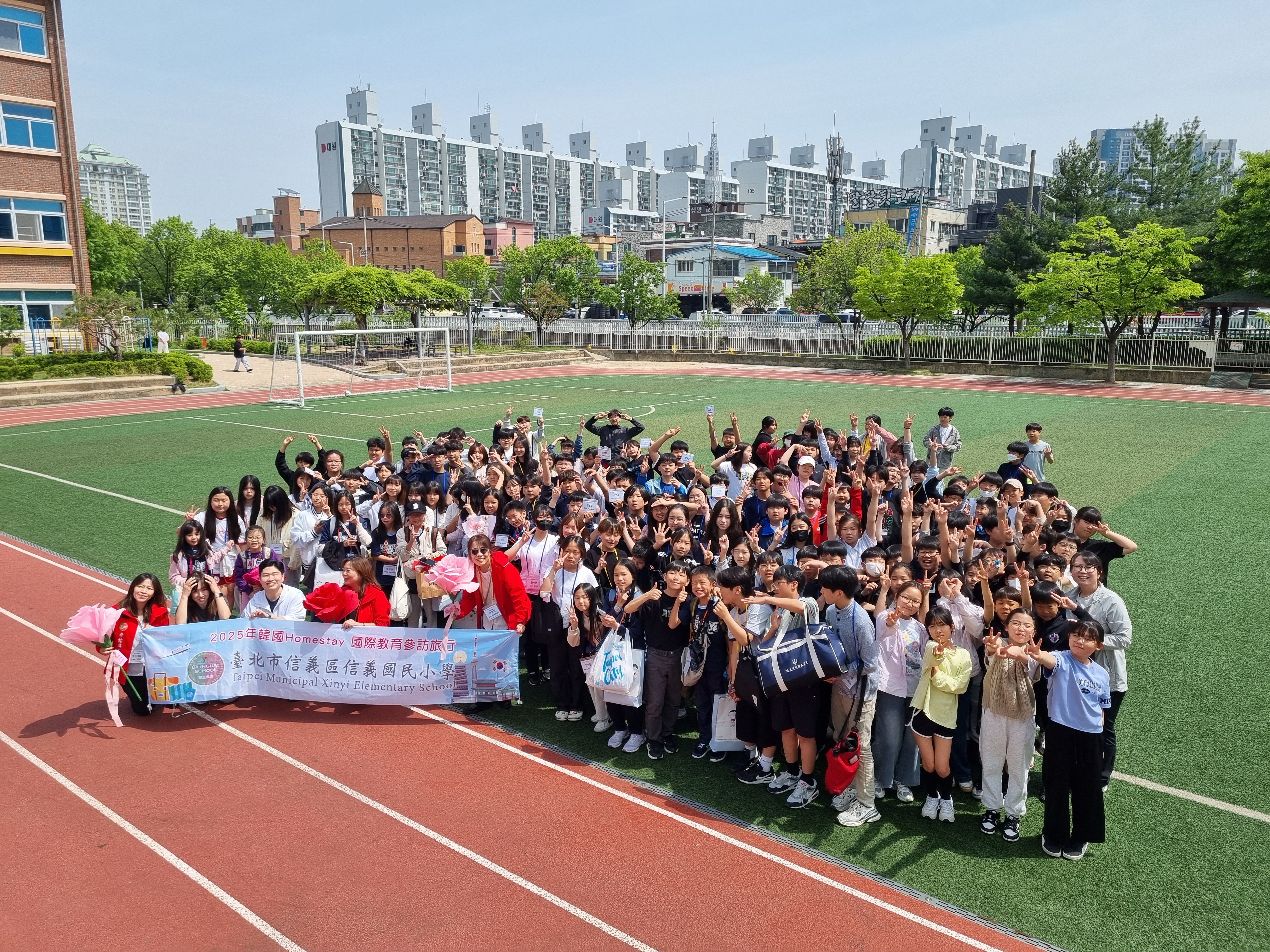
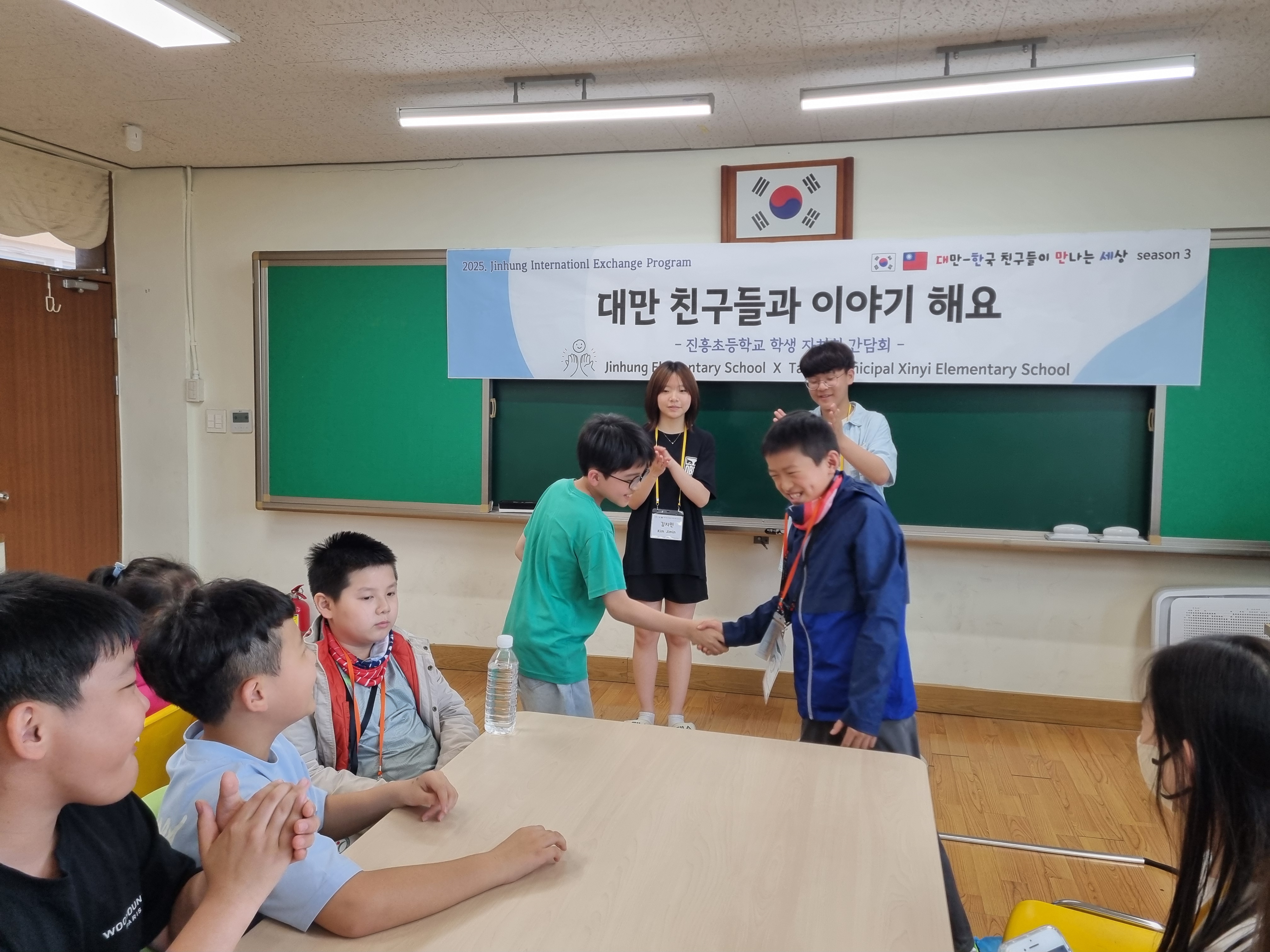
International Exchange. Early in the school year, C participated in a school trip to Penghu, one of Taiwan’s outer islands. He wrote about the experience here. Then last month, our school organized a trip to Korea for a week! Students even got to do a homestay for 1 night with a local family – how cool is that?! Hopefully C will be able to write a post about his Korean school trip sometime.
Beyond just having fun, C also learned a lot through this experience. Since he’s a native English speaker and comfortable speaking in front of others, the school often asks him to present or help translate between Taiwanese and Korean students. In the months leading up to the trip, students would also meet on a weekly basis to prepare – writing to Korean students, practicing performances, learning about Korean culture and language, etc.
Badminton Team. C has been on the badminton team since the beginning of the school year. I’ve always been a fan of kids playing sports – they learn about teamwork, get exercise, and develop grit. C absolutely loves playing badminton. And so much to his delight, his team has practices almost everyday, sometimes twice a day. Unlike the elementary school sports in the US, Taiwan school teams take practice very seriously (as with most other things 😅). Students have to run laps if they don’t do well during practices, and can get kicked off the team if they consistently perform poorly or have a bad attitude. It’s a bit harsh compared to U.S. standards but it definitely pushes the kids to work hard and take their responsibilities seriously.
Global Scholars Program. C isn’t part of this program yet, but will be applying for it. It’s a program for 5th and 6th graders that focuses on global issues – like reducing food waste – where students collaborate to develop solutions and create an action plan. They then present their action plan to other students from around the world participating in the same program.
The goal of this program aligns perfectly with what we’ve been encouraging our boys to do: identify a problem, come up with a solution, and take action. We hope this experience will help C build important skills like teamwork, communication, and leadership. To us, these skills are far more important than scoring well on a social studies exam. 😅
The programs I’ve mentioned are not available in every Taipei public school, so we really appreciate that our school has such an international and forward-thinking focus. That’s one of the great things about living on a small island like Taiwan – people are always looking outward and eager to learn from others around the world.
But it would be remiss not to mention C’s role in all of this. Despite a heavy homework load, he’s always excited to participate in activities. He definitely has a bit of FOMO – which, in his case, is a good thing – because he truly wants to make the most of every opportunity.
Oof. I haven’t had the motivation to write anything as of late. But with the school year is slipping away (less than 2 months to go!), I wanted to record our second-year experience at our school in Taiwan.
Students in elementary school have the same teacher, classmates, and schedule for two consecutive years, so there were no changes there. O is in 2nd grade, comes home at noon on most days, and homework is still about 20 minutes each day. This schedule is great because it allows him to relax and pursue his interests. For awhile he was into Rubik’s cube, and now he’s into reading (current favorite genre is fantasy) and coding.
Coding on Scratch.
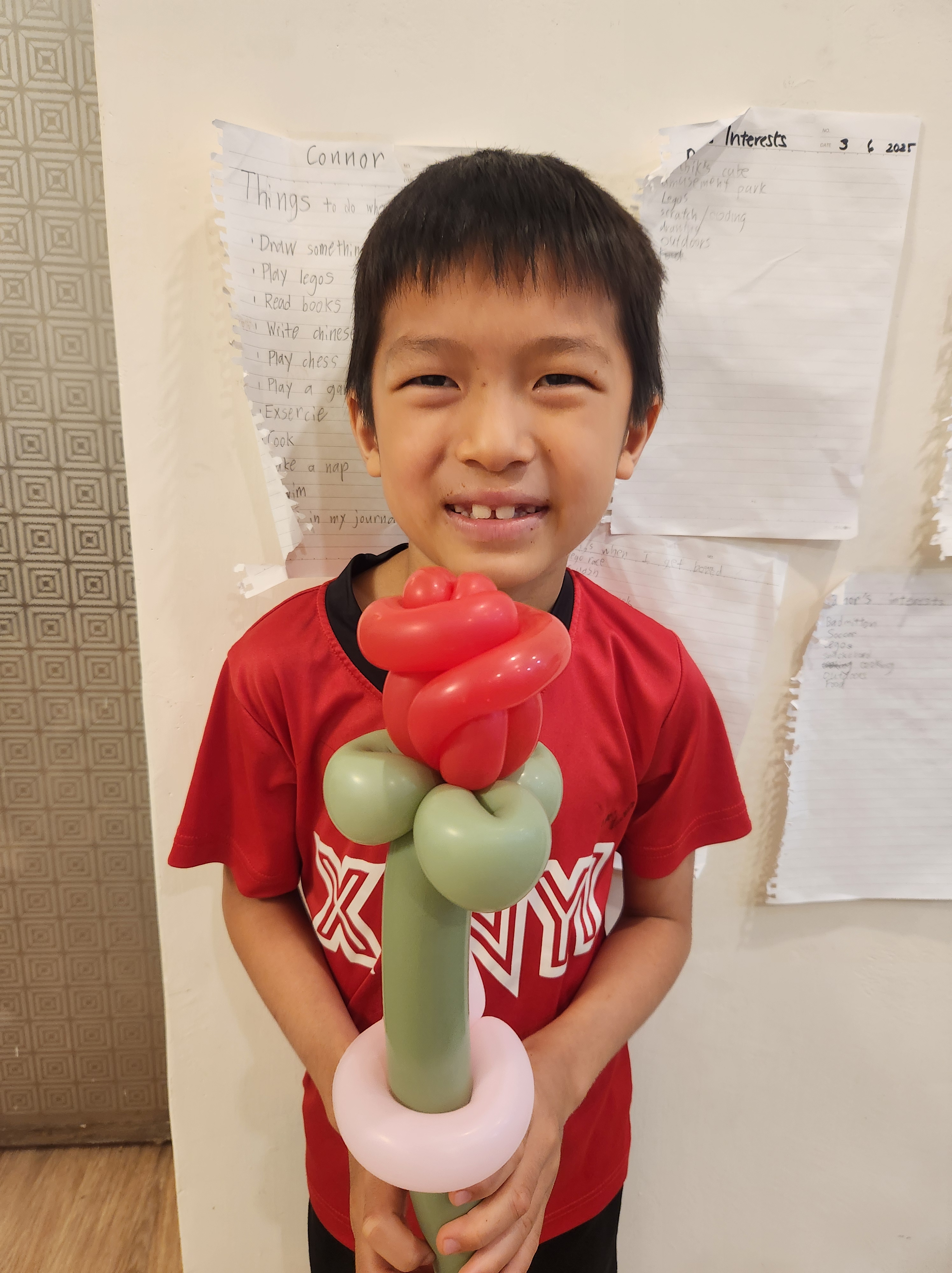
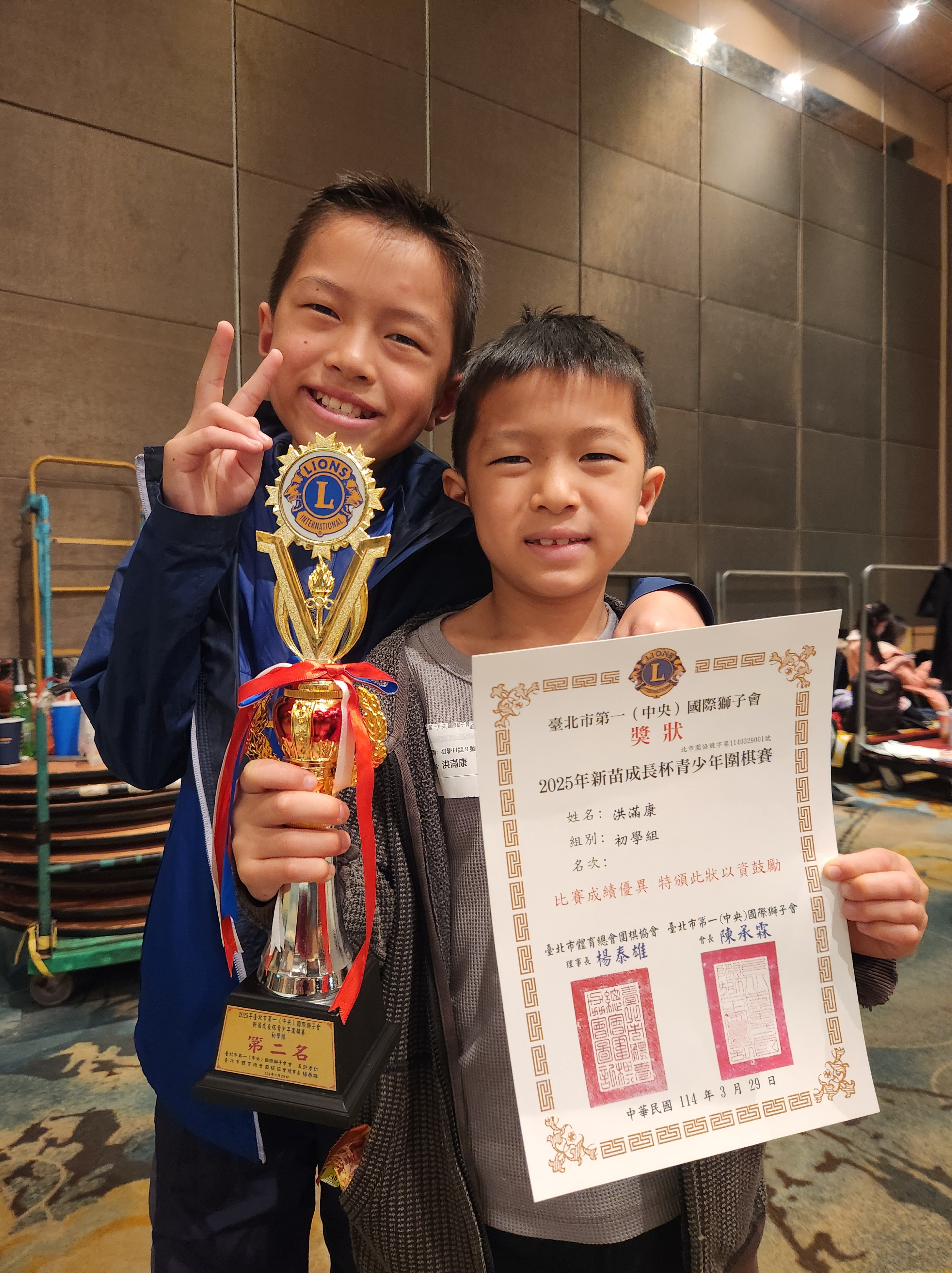
O also participates in a lot of after-school activities like swimming, Lego, balloon modeling, and Go 圍棋. He enjoys Go so much that we signed him up for a competition outside of school and he won 2nd place in the beginner’s group!
We’ve also been able to tutor O in English and math more at home due to his relaxed schedule. He is progressing a lot faster than C in this regard.
On the contrary, 4th grade for C has been filled with homework, homework and more homework. Even though he has the same teacher as last year, the volume and difficulty has increased. It also doesn’t help that 4th graders have school until 4pm on most days, and then C has badminton team practices and after-school activities until 5:45pm everyday. By the time he eats dinner, showers, and finishes homework, it’s already time to go to bed. C doesn’t have a lot of free time to relax and just be a kid. If this is what school is like in 4th grade, I’m nervous about what’s to come in 5th and 6th. 😬
Surprisingly, C hasn’t complained much about the long hours of Chinese homework—or even when Baba and I try to squeeze in extra math and English. I’m grateful he’s so diligent, but we still wrestle with how to balance the endless grind of schoolwork with simply letting him be a kid.
We’ve had to postpone projects because he’s busy all the time. Most weeknights, there’s no time for reading or playing because he’s doing homework right up until bedtime. And when he does get a sliver of free time, I feel guilty asking him to do more. Sometimes, people just need the space to switch off.
We’ve considered working with his teacher to reduce homework, but C didn’t want to. He wants to complete every assignment, and do it as well as he possibly can. (Honestly, he spends more time than necessary perfecting every stroke and sentence!) And so we find ourselves stuck again: we don’t want to temper C’s desire to excel, but we also want to make sure he doesn’t burn himself out.
Going to school in Taiwan has undoubtedly been a life-changing experience for the boys, but sometimes I can’t help but wonder how much more carefree their lives might have been if we had stayed in the U.S. No homework, no midterms and finals, just free time to explore. In the end, we’re still trying to strike that everyday balance between homework and happiness.
Hours and hours of homework everyday. Tests each week. Instruction based purely on rote memorization. Berating from teachers.
These were the kinds of “horror” stories I read about Taiwan public schools before coming here. I mulled over our decision to send the boys to a public school, but ultimately agreed with Baba that it’s probably the best way for them to learn the language and culture.
Now that we’ve gone through one year in a Taiwan public elementary school, I can say that while some of the stories are true…it also isn’t nearly as bad as I imagined? Above all else, the boys learned many valuable lessons through this experience.
Time Management. Yes, there is homework everyday. O (1st grade) gets about 15-20 minutes of homework on average, while C (3rd grade) gets about 1.5 hours each day. Even more homework is assigned on the weekends and long holidays. On top of this, there are tests every week. Then the boys have extracurriculars and additional tutoring in math and English (from Baba and me).
This is a 180° from our life back in San Francisco. But with this shift, C and O have learned a lot about time management. They know to do homework when they come home. They know to ask Baba or me to double check their homework. When there is an upcoming test or more homework than usual, we strategize how to tackle everything. We complete the homework on Friday, then we spend Saturday and Sunday reviewing for the test. Yet through all of this, they never seem daunted by the workload.
C’s homework assignment book. He makes a habit of checking off assignments he’s completed.
How to Study. I honestly didn’t know how to properly study until college. I used to aimlessly flip through my textbooks and call it a day. 😅 In Taiwan, teachers make students correct errors on homework and tests (訂正). So when it’s time to prepare for an exam, we’d review the problems the boys got wrong before doing new practice problems. In reading comprehension, they both know to preview the questions first before reading the passage so he knows what to look for. If they write a character incorrectly on at practice test at home, they know to write it again three times for me, just like they do at school. Education is taken very seriously in Taiwan and I think this principle has rubbed off on the boys.
Facing Challenges. The task of learning a new language is a challenge in and of itself, but the overall curriculum in Taiwan is more challenging than what we had in the US. O had to learn 10+ vocabulary words each week, including how to write the character and their definitions. C, for example, learned geometry and started using a protractor and compass. In science, C learned about magnetic fields and plant biology. On top of generally harder coursework, remember that everything is also written in a foreign language.
The boys started off not understanding anything in school. But day by day, they showed up to school without feeling discouraged or defeated. And in just one academic year, they have not only adjusted well at their new school but more importantly, learned that they can take on any challenge.
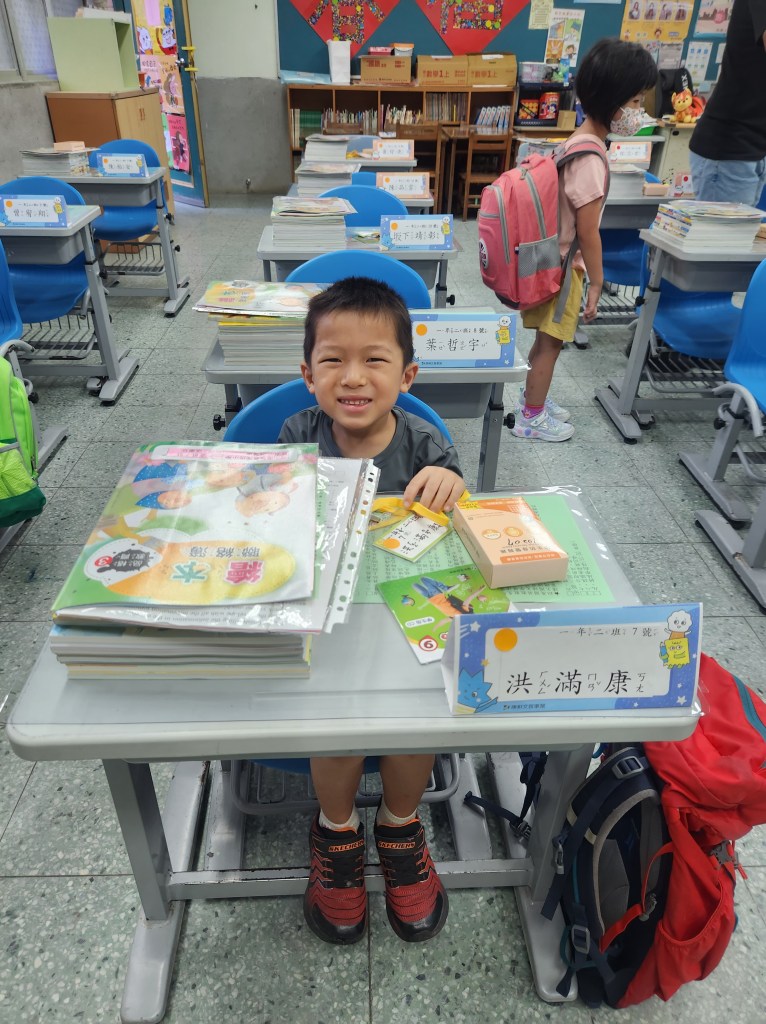
O’s first day of school and not understanding a single word. 😂
However, I would be remiss if I didn’t mention the factors that played into our mostly positive experience in a Taiwan public school. First, we never put any pressure on the boys. We just want them to try their best and if they end up failing their exams, that’s ok too. Second, we were lucky to find a school and teachers that have been supportive. Our school is known to be less intense than other nearby schools. We were also lucky to find a great tutor to help C with his homework. But I think the most important factor is C and O’s personalities. They are generally carefree, easy-going, can make friends easily and are at an age where they can still quickly adapt. When things get tough, they shrug it off and move on. Their resilience never ceases to amaze me.
Are Taiwan public schools the best fit for our family in the long run? Probably not. Like I mentioned, there is some truth to the stories you hear about schools here. Much of the curriculum is based on rote memorization, with homework and tests getting more and more intense in the upper grades. It’s not for everyone. And since we want to eventually move back to the US, we want C and O to hold on to values that are important for their growth in the future – things like creativity, project-based learning and critical thinking.
In the meantime, we are happy here and could not have asked for a better experience. The boys even said they like school in Taiwan more than in the US. 😶I always remind C and O how lucky they are to be able to go through two very different education systems that will only enrich their life experiences.
One of the reasons we chose to live in Taiwan is because its national language is something other than English. Moreover, we wanted to learn a language that is going to be interesting and useful to us, and Mandarin Chinese was perfect.
Baba and I are ethnically Chinese, though I grew up speaking Cantonese and learned Mandarin in high school and college. Baba grew up speaking Chiu Chou, and also studied Mandarin in high school. But that was ~20 years ago and most of what we learned has been forgotten.
So there’s really no better way to re-learn Mandarin than to live in Taiwan, right?! Except compared to ~20 years ago, our middle-aged brains can’t learn fast enough. I go to Chinese class twice a week for 4 hours at a place called LingoLab in Da’an. I come out of each class thinking my Mandarin is pretty decent, but then I get a reality check when a 7-11 clerk asks me a question other than “do you want a receipt?”. Ugh.
Classes at LingoLab are small (there is only 1 other student in my class), focus mostly on spoken Chinese, and cater to busy foreigners. Tuition is also reasonable. National Taiwan Normal University is actually the gold standard for foreigners learning Chinese in Taipei, but the courses are like 15-hours a week on top of many written exams. I just didn’t want to make that commitment.
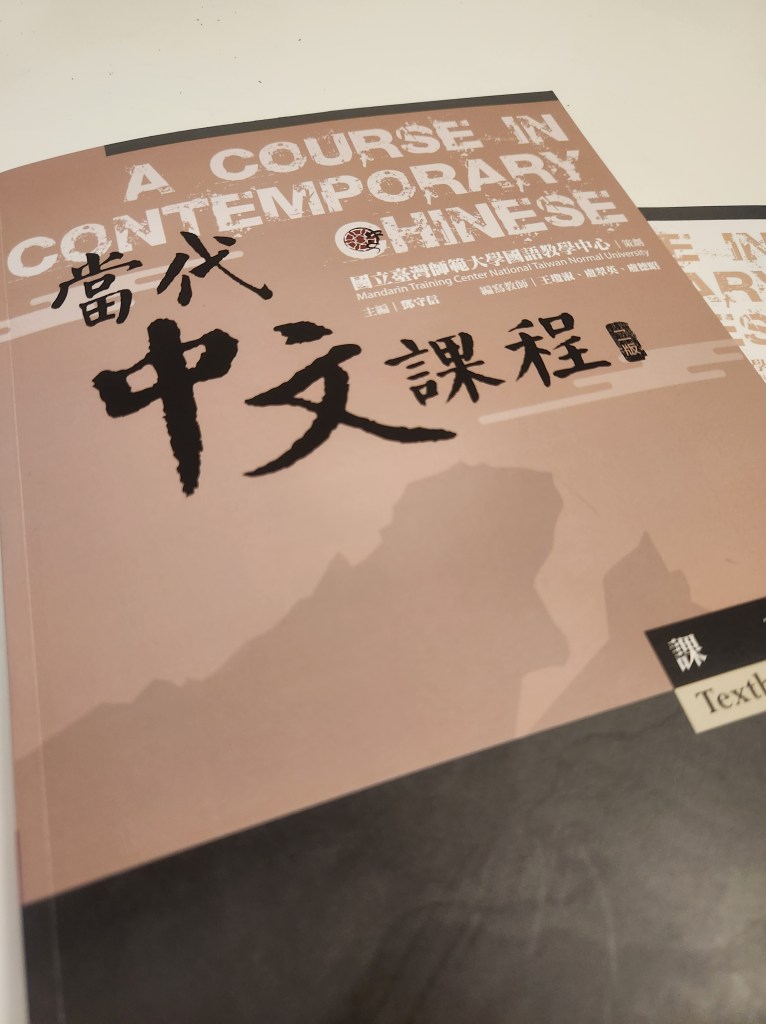
The textbook I use for class, published by the NTNU. It teaches Taiwanese Mandarin, and the lessons are really useful for daily life. There are also accompanying audio recordings on YouTube.
Because I have a foundation in Cantonese, I can understand quite a bit of Mandarin. My biggest obstacle is my limited vocabulary and due to that, a lack of confidence when speaking. It can be frustrating sometimes because I actually have a lot to say! 😆 But I don’t know how to express myself and so I slink away feeling defeated and embarrassed.
Baba self-studies at home for about 3 hours a day through a site called huayuworld.org. The site includes a lot of great resources to learn Chinese. Baba never kept up with any Chinese back home so he has to start from scratch. But to his advantage, he isn’t afraid to strike up a conversation with anyone, even in his broken Chinese (which is similar to C’s personality).
There are days when we feel like we’re making progress, and other days when we feel like we’re still so, so far behind. Despite all this, I still find learning Chinese interesting and enjoy the challenge. So, I’m setting small goals for myself: maybe it’s to confidently order a meal at a restaurant (which I think I’ve gotten 80% of it down now) or maybe it’s to ask more questions when shopping. But however slowly, I believe we’ll all get there one day!
In my last post, I shared the differences between public schools in Taiwan vs. the US. After some thought, I realized there are more differences I wanted to share.
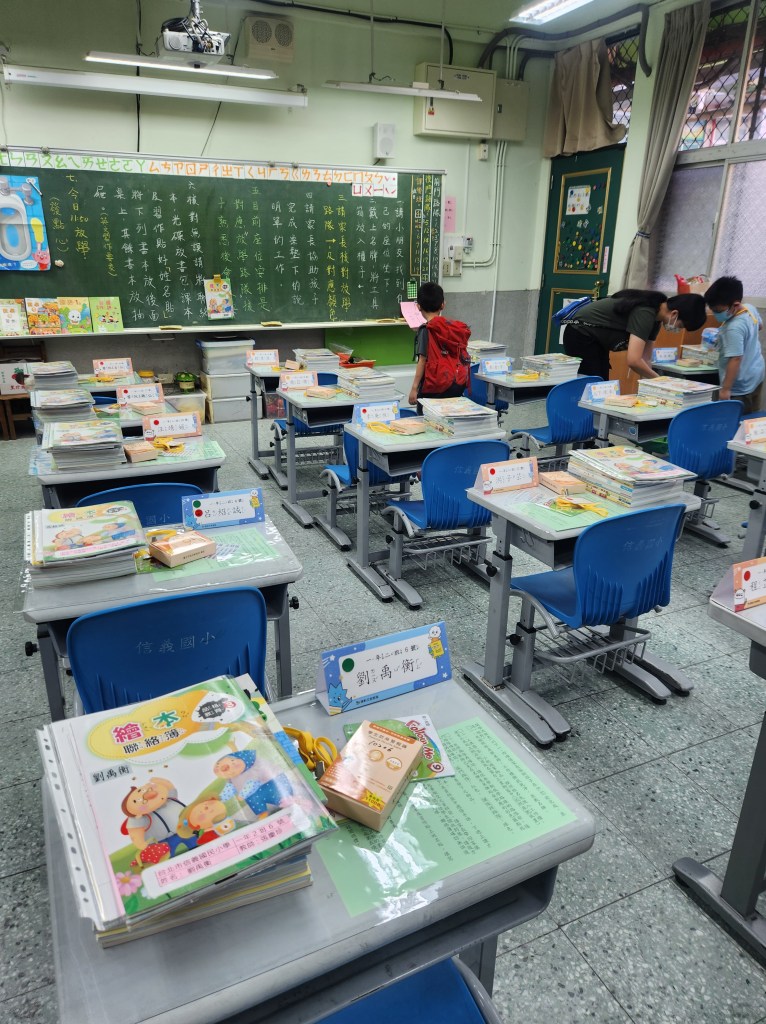
Classroom Setting. In the US, elementary school classrooms are usually pretty colorful and cheery, with artwork on the walls and bright rugs for circle time. Kids’ desks are usually pushed in groups to encourage teamwork. In Taiwan, the classrooms are not as cozy. There are rows of individual desks (though some classes may have two desks pushed together) and the rooms are bare except for teaching materials. There are no games, artwork, toys or books. Honestly, this brought back terrible memories of Chinese school for me. 😬
Tests, Tests, Tests. I knew beforehand that Taiwan schools are very focused on tests. What I didn’t know is how many there would be! O, even in first grade, has dictation tests each week. C either has a dictation or math test each week. There are also midterms and finals, and from what I understand, students are ranked at the end of each semester. 😬 In the US, there aren’t tests until the third grade. Even then, it’s just one exam taken on the computer.
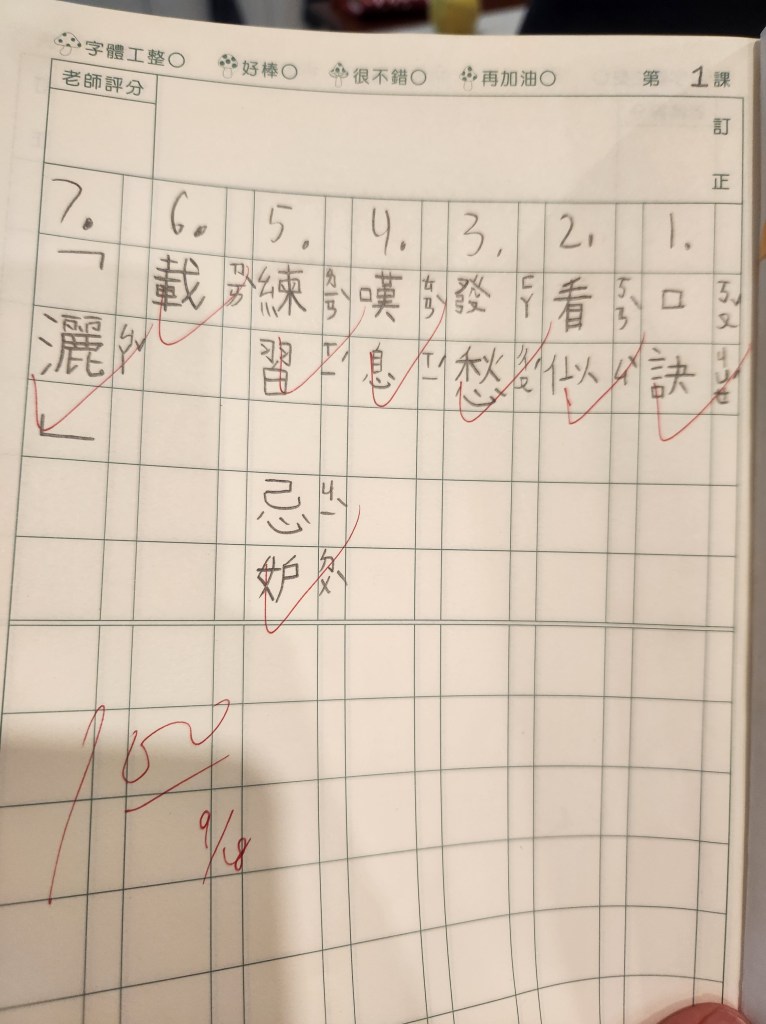
Grades. Elementary school in the US do not use real grades. Teachers use a rating system from 1-4, 4 being exceeding grade level. Homework assignments are given either a ✔+ or ✔. Here in Taiwan, everything is graded. You get one stroke or phonetic symbol wrong, points will be deducted. Parents also have to sign off on the test results. Below is C’s first dictation exam but he’s had others that were not so ideal.
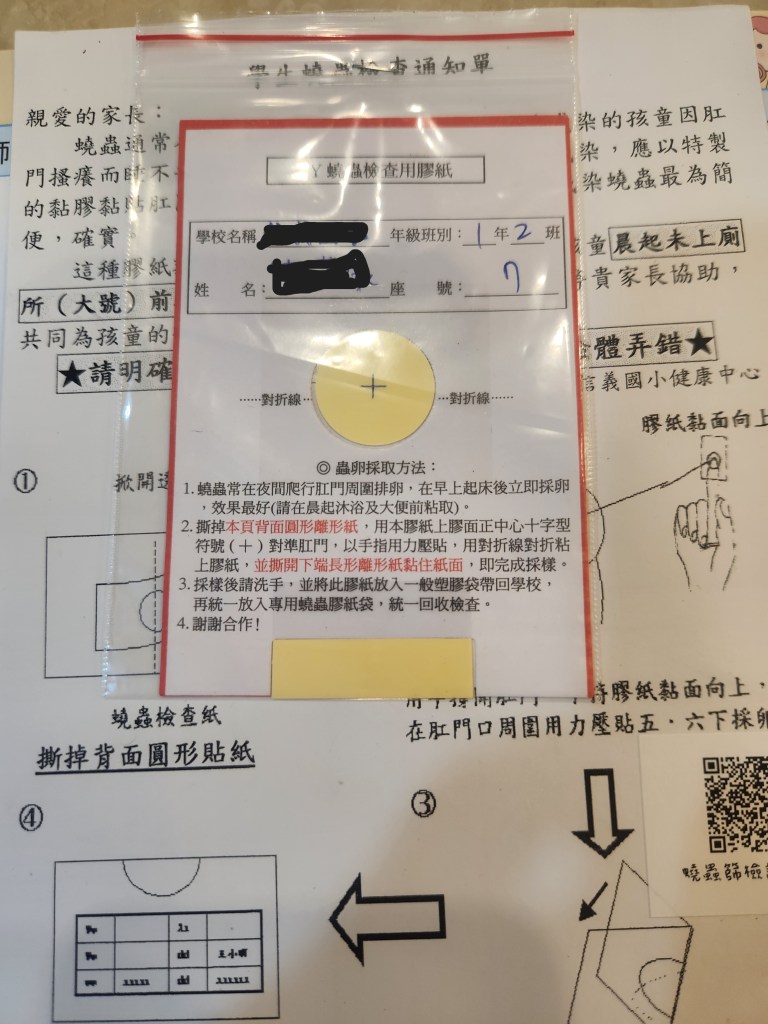
Health Tests. Besides academic tests, there are health tests that are administered at the school. So far, only O had to do the tests, so maybe they’re only for first graders. These tests require getting a sample at home. We’ve had to provide a urine sample and more recently, do a pinworm test which required getting a sample from where the sun don’t shine. 😂 I also read that students get a dental exam later on in the year. I can’t imagine US schools implementing something like this.
Staff. You often hear schools being short staffed in the US. I was surprised to see so many staff at our school in Taiwan! (Then again, our school has 700-800 students so they do need the manpower.) There is a Department of Academic Affairs, Department of General Affairs, Department of Student Affairs, and so on. Each department has a lead and then 4-5 staff. Then there are teachers for each subject. I remember at our old school in SF, we had one secretary who basically managed everything.
Saturday School. Last Saturday, the boys had school. This was a “make up” day for an upcoming Monday holiday. In Taiwan, if a holiday falls on Tuesday or Thursday, the government will give you Monday or Friday off to make it a 4-day weekend. But, you have to make up that extra day off by going to school or work on a Saturday. And yes, there is homework that day too. Again, file this under “things that will never work in the US.” 😂 There would be protests and riots, but the Taiwanese have such a strong work ethic!
We’ve been at a public elementary school in Taiwan for almost a month now. Our experience has been interesting, surprising, and eye-opening. I wanted to share some similarities and differences I’ve noticed between Taiwan schools and US schools.
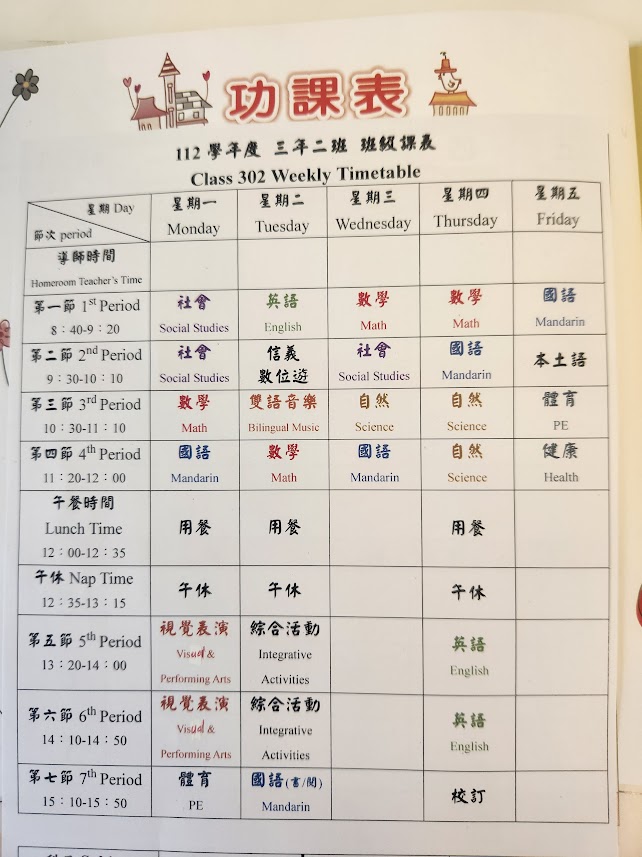
Class Schedule. Students study pretty much the same subjects as in the US. There is math, PE, science, English, music and language arts (except we’re learning Chinese Mandarin of course). However, elementary students in Taiwan follow a period schedule, much like middle school and high school in the US. There is homeroom, followed by periods for the different classes. The homeroom teacher is the “main” teacher for subjects like math and language arts, but kids change teachers and classrooms for the other classes. Kids also have a textbook and workbook for each subject – totaling to about 15 books! 😮
Students at different grades also have different schedules. C, who is a 3rd grader, has three long days during the week, in which his classes go from 7:50am – 3:50pm. O, a 1st grader, only has one long day during the week. The rest of the days are short days, from 7:50am – 12pm. We had a hard time trying to remember their schedules at first!
Homework. Like in the US, there is homework and it’s usually on math and language arts. There is homework everyday, even on weekends. We were prepared for 2-3 hours of homework a day, but so far it hasn’t been that bad. O’s homework is really easy right now, because he’s still learning the basics of zhuyin. The math is just counting or very simple addition. He usually completes everything within 20 minutes.
C’s homework is more complicated solely because the questions are all in Chinese. But in terms of quantity, it’s manageable. I’d say his homework takes anywhere from 1-2 hours a day. If he could read/write Chinese fluently, I’m sure it would be half the time. We also lucked out finding a great tutor who comes to our place everyday for an hour to help him with homework. Otherwise, we would be struggling with Google Translate. 😅
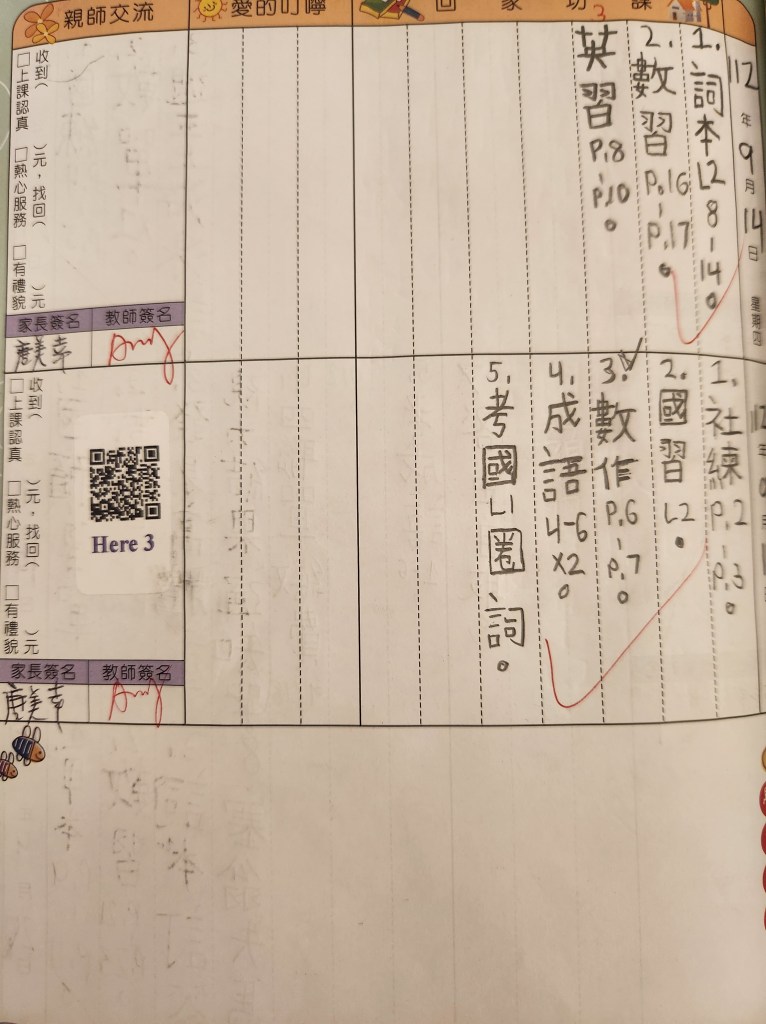
Daily homework assignments are written in a booklet. The teachers review and make sure students wrote everything down correctly. Parents then have to sign it each night when the homework is completed. You can also write messages to the teacher in the booklet, but most communications are done via LINE.
Recess (or lack thereof). Schools in Taiwan mostly have 10 minute breaks in between classes. The longest break is 20 minutes. Unlike the US, students don’t have an official “recess” where they go out into the yard and play. They usually either hang out in the hallways or stay inside the classroom. They get a 40 minute nap time after lunch, but that just means they rest their head on their desk inside the classroom. At first, the boys were disappointed there was no recess and I was worried they weren’t getting enough outside time. But like with everything else, they’ve gotten used to it and don’t mind it at all now!
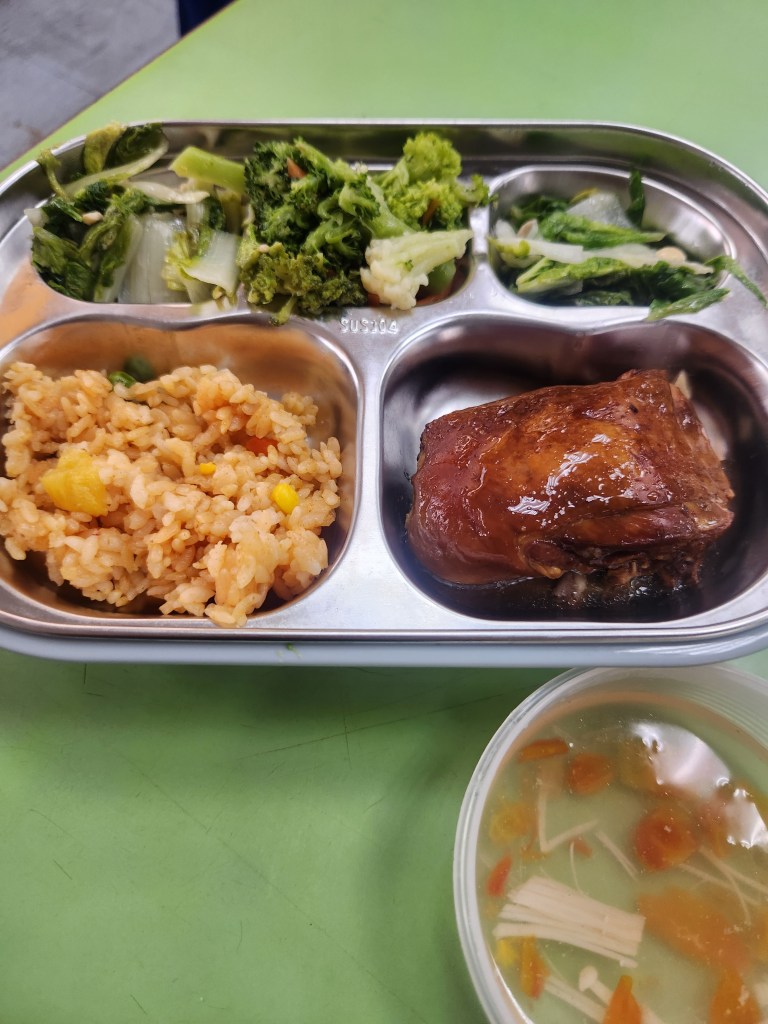
Lunches. The school provides lunches, but only on long days. The lunches are served and eaten in the classroom because there is no cafeteria, and students have to bring their own utensils. The boys have been loving the food, and look forward to it. Lunches usually consist of a rice, protein, vegetables, soup and fruit, and they try to serve different types of cuisines. The boys say it’s “SOOO MUCH BETTER” than the school lunches in the US. 😆 What’s also interesting is that students have to brush their teeth after lunch too!
PTA. Back at our old school in SF, Baba and I were pretty involved with the PTA. It was a great opportunity to help out the school while getting a glimpse into our kids’ day. I didn’t expect schools in Taiwan to have anything like that, but it turns out our school has a “Parent Association” or 家長會. Currently, Baba volunteers as a traffic control guard and I volunteer at the library.
Parents take volunteering seriously here! When you sign up for shift, you are expected to show up that day/time for the entire semester. (Unlike the US, where parent volunteers come and go whenever they please.) Baba had to undergo training for his job and the 家長會 had to buy him insurance. There are also group chats for each volunteer team, and there are multiple messages being sent everyday!
School Fees. In the US, public schools are entirely free (unless you join special clubs, teams or what not.) In Taiwan public school, there are fees. We have to pay for textbooks, school lunches, and bring all supplies. This includes pencils, markers, scissors, glue, and so on. It’s not expensive – we paid less than $200 per kid this semester – but it was a little surprising coming from the US.
However, what’s different in Taiwan is that there are zero school fundraisers. Everything is “paid for” in US schools because families raise funds to support the classrooms. Here, families are responsible for their own expenses. Neither is good or bad, just different!
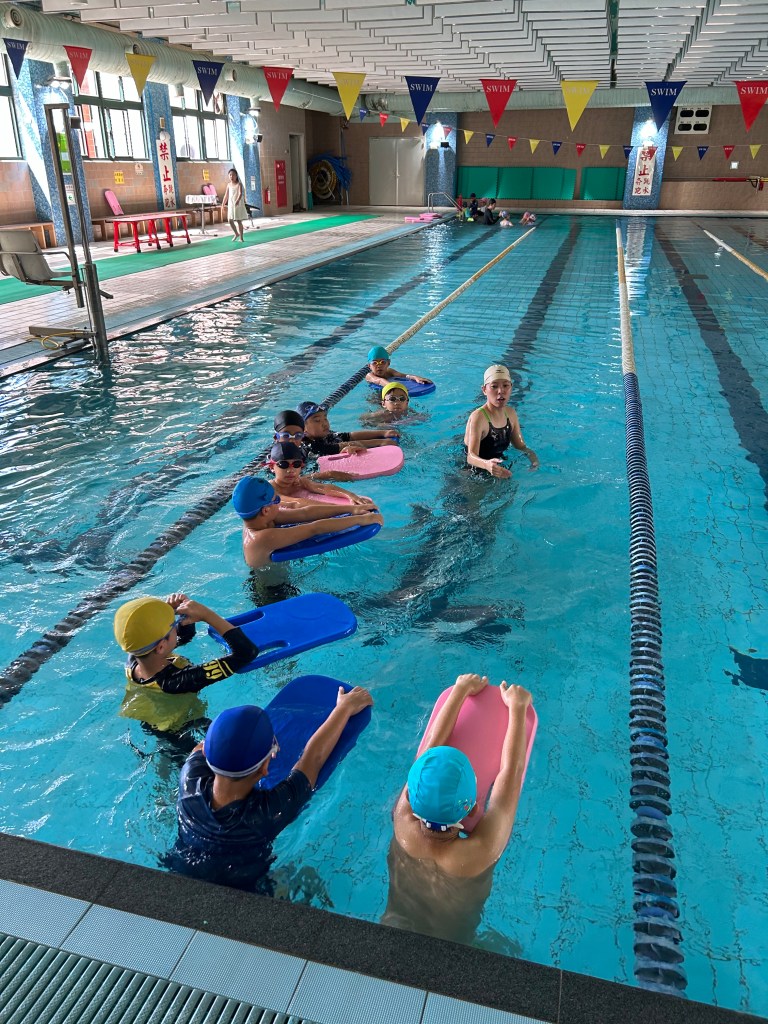
Swim Class. Something really interesting at our school is that it has a pool! Many schools in Taiwan have a pool too, but not all. Students at our school take a 4-week swim class during the semester. I can’t imagine the logistics of trying to get 25 kids in and out of the pool, but I guess the school has figured it out. Kids are grouped by swimming ability. We don’t expect the boys to come out of the class being pro swimmers, but it’s neat that the school has this option.
Afterschool Care. Taiwan schools have afterschool care too, where kids can get homework help. But we felt like C needed 1:1 help in Chinese, so we opted out of this program. However, we were surprised to learn that our school offers A TON of after school activities. There is in-line skating, badminton, ping-pong, magic, track & field, Legos, taekwondo, and much more! We got a little too excited and signed the boys up for something everyday. 😅
But much like the school fees, there are costs to these activities and you have to supply all materials. So we had to purchase in-line skates and helmets, ping-pong paddles and even a deck of cards for O’s magic class.
School Teams. Back in SF, our school had one sports team (soccer) and that was 100% run by parents. Here, our school has several school-run sports teams: basketball, swimming, soccer, badminton, track & field and even theater. But unlike the US, where all kids are accepted into the team (at least in elementary school), there are tryouts here. Not everyone gets in. C says he wants to try out for track & field next semester, so we’ll see.
As I’m writing this post, I realized there are other differences between the schools in the US vs. Taiwan that I haven’t mentioned. Not glaringly different as the ones I’ve listed above, but still interesting. This post is getting too long though, so hopefully I can get to it next time!









 Hongs Abroad