Ramblings

Learning Chinese

This shit’s hard.

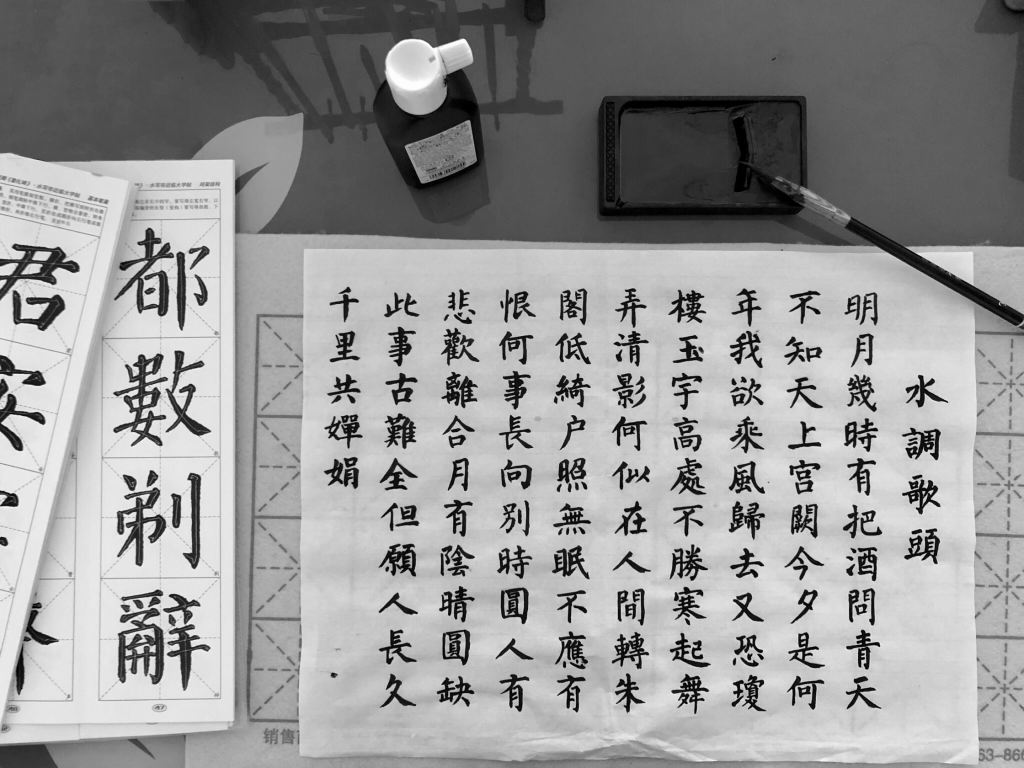
One of the reasons we chose to live in Taiwan is because its national language is something other than English. Moreover, we wanted to learn a language that is going to be interesting and useful to us, and Mandarin Chinese was perfect.

Baba and I are ethnically Chinese, though I grew up speaking Cantonese and learned Mandarin in high school and college. Baba grew up speaking Chiu Chou, and also studied Mandarin in high school. But that was ~20 years ago and most of what we learned has been forgotten.

So there’s really no better way to re-learn Mandarin than to live in Taiwan, right?! Except compared to ~20 years ago, our middle-aged brains can’t learn fast enough. I go to Chinese class twice a week for 4 hours at a place called LingoLab in Da’an. I come out of each class thinking my Mandarin is pretty decent, but then I get a reality check when a 7-11 clerk asks me a question other than “do you want a receipt?”. Ugh.

Classes at LingoLab are small (there is only 1 other student in my class), focus mostly on spoken Chinese, and cater to busy foreigners. Tuition is also reasonable. National Taiwan Normal University is actually the gold standard for foreigners learning Chinese in Taipei, but the courses are like 15-hours a week on top of many written exams. I just didn’t want to make that commitment.

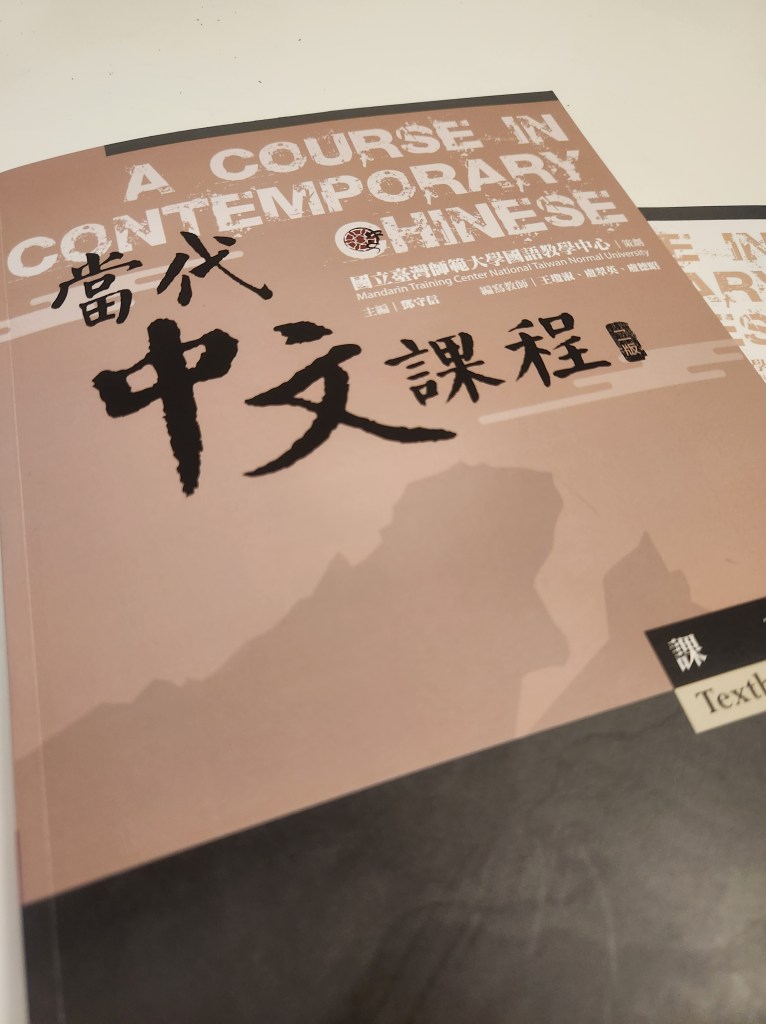
The textbook I use for class, published by the NTNU. It teaches Taiwanese Mandarin, and the lessons are really useful for daily life. There are also accompanying audio recordings on YouTube.

Because I have a foundation in Cantonese, I can understand quite a bit of Mandarin. My biggest obstacle is my limited vocabulary and due to that, a lack of confidence when speaking. It can be frustrating sometimes because I actually have a lot to say! 😆 But I don’t know how to express myself and so I slink away feeling defeated and embarrassed.

Baba self-studies at home for about 3 hours a day through a site called huayuworld.org. The site includes a lot of great resources to learn Chinese. Baba never kept up with any Chinese back home so he has to start from scratch. But to his advantage, he isn’t afraid to strike up a conversation with anyone, even in his broken Chinese (which is similar to C’s personality).

There are days when we feel like we’re making progress, and other days when we feel like we’re still so, so far behind. Despite all this, I still find learning Chinese interesting and enjoy the challenge. So, I’m setting small goals for myself: maybe it’s to confidently order a meal at a restaurant (which I think I’ve gotten 80% of it down now) or maybe it’s to ask more questions when shopping. But however slowly, I believe we’ll all get there one day!

Other useful Chinese online resources:

Ramblings

A Day in the Life

Quite a few people have asked what Baba and I do while the kids are at school since we’re not currently working. Well, here’s an idea of what a typical day looks like for us in Taiwan. (Why do I feel like an influencer making this post? 😂)

6:45am: Wake up and make breakfast.

7:30am: Walk the kids to school. We’re lucky that we’re just a 5-minute walk away. School doesn’t officially start until 7:50am, but C likes getting there early.

8:00am: Baba studies Chinese at home. I either practice Chinese, read, or surf the internet. On Thursdays, Baba would be doing traffic control at school and I’d be volunteering at the school library.

9:30am: Buy groceries at the nearby traditional market or PX Mart, which is like a smaller version of a Safeway here. These are the two places where we shop for groceries the most.

10:00am: I attend Chinese class in Da’an. Some days, Baba and I may use this time to take a mid-morning nap. 😆

12:00pm: Pick up O from school and have lunch. C has school until 4pm for most days out of the week.

1:00pm: We help O complete his homework. (Yes, it takes two adults to do a 1st grader’s Chinese homework. 😂) Most of the time though, O has already completed a portion of his homework at school. Depending on the day, Baba may have Brazilian Jiu-Jitsu class in Zhongshan district.

1:30pm: O plays by himself, we go to the library, or buy more groceries for dinner.

2:30pm: Swim at the sports center across the street. Again, we’re super lucky to be living so close to a pool!

3:45pm: Bring O back to school for his after school club. Depending on the day, he may have ping pong, STEM, in-line skating, taekwondo, or magic. C is already at school so he goes straight to his after school club.

4:00pm: I cook dinner. Baba practices more Chinese.

5:45pm: Pick up the kids from after school club.

6:00pm: Dinner and shower before C’s tutor comes. This is usually the most hectic time.

6:30pm: C’s tutor arrives and helps him with his homework.

8:00pm: Kids pack up for school the next day. Brush teeth, and get ready for bed.

8:30pm: Bedtime for the boys.

9:00pm: Garbage trucks come, and Baba and I take the garbage and recycling downstairs. The garbage disposal process in Taiwan is quite an experience! You can read about it here.

10:00pm: Bedtime for Baba and me.

Ramblings

Tips for Apartment Hunting in Taipei

Now that we have a bit of experience apartment hunting in Taipei, we wanted to share some tips for those who might be in our shoes.

Tip 1: Rent.591.com.tw is the most popular website in Taiwan to search for apartments. You can filter by city, district, number of bedrooms, price, parking, and so much more. There is no English version of the site, but you can use Google to translate the text into English.

I’ve seen people use dd-room.com as well, but 591 is by far the most popular website for apartment listings.


Tip 2: If Chinese is not your native language, it’s best to bring a Taiwanese friend with you to view apartments and negotiate with the landlord. But if you’re like us and don’t have any close friends or family in Taiwan 😅, then work with a real estate agency that caters to expats. We worked with Elegant Realty and UR House (and ultimately found a place with UR House). There is a one-time fee of a half-month’s rent when working with agents.

Note that agencies will typically only show you apartment listings from their inventory. So, you’d have to do your own research on rent.591.com.tw if you want to explore other options.

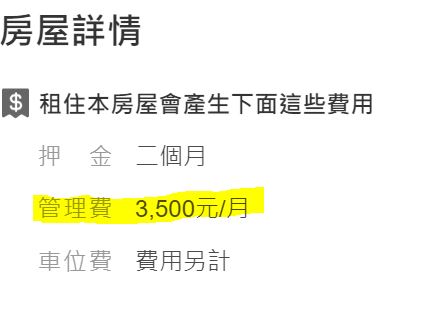
Tip 3. On top of rent, pay attention to the monthly management fee on the listing. Management fees include general maintenance of the building and security. They can be exorbitant, but can also be negotiable with the landlord.

Tip 4. Reduce the number of pings listed by approximately 30% to get the actual living space. This is because listings often add in common areas like hallways, lobbies, etc. into the total number of pings.

Tip 5: Look for an apartment that uses natural gas or piped propane. Some of the older buildings still use natural gas cans, which means you’ll be taking cold showers if they run out and until you get them replaced.

Tip 6. Get an apartment with an individual electricity meter. If it’s a shared meter, there’s no control over how much you pay per month as the meter is shared by everyone in the building.

Tip 7. If you don’t have a car or scooter, make sure the apartment is close to public transportation (either MRT or bus). Taipei is a huge city, so you’ll need access to public transportation to get around.

Tip 8. This may not be applicable to everyone, but having an apartment with natural light was important to us. Look at whether there is ample light in the living areas. Are there bars over the windows? Are the windows frosted?

Tip 9. As mentioned in my previous post, everything is negotiable in Taiwan. You can negotiate rent, management fees, furniture, etc. I’ve also heard people negotiating for the landlord to pay for the internet and cable fees. Of course, this is dependent on whether the apartment is highly sought after.

Tip 10. This is a great, and much more exhaustive guide for foreigners looking for an apartment in Taiwan: https://www.foreignersintaiwan.com/blog-370963385326684/taiwan-apartment-rental-guide We referenced this guide many times during our apartment hunt.

If I think of any more tips, I’ll add it to this post!