Ramblings

Australia

After Japan, we flew to Australia, a destination that had long been on our travel wish list. Since it’s only about a 7.5-hour direct flight from Tokyo with just a 3-hour time difference, we couldn’t pass up the chance to visit while living in Asia.

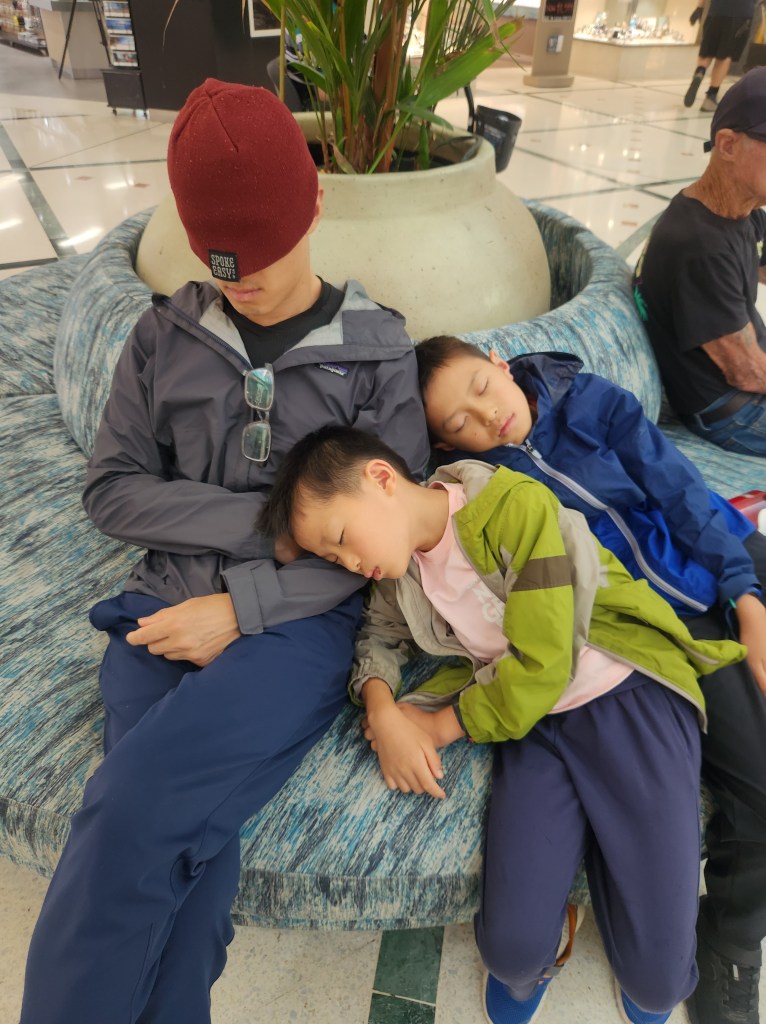
Cairns. We took a direct flight from Tokyo to Cairns, landing at 4:30 a.m. We were exhausted. Unfortunately, our hotel room wasn’t ready, so we wandered between cafes, and eventually fell asleep on a couch at a mall looking more than a little disheveled. It was not our best moment. 😂
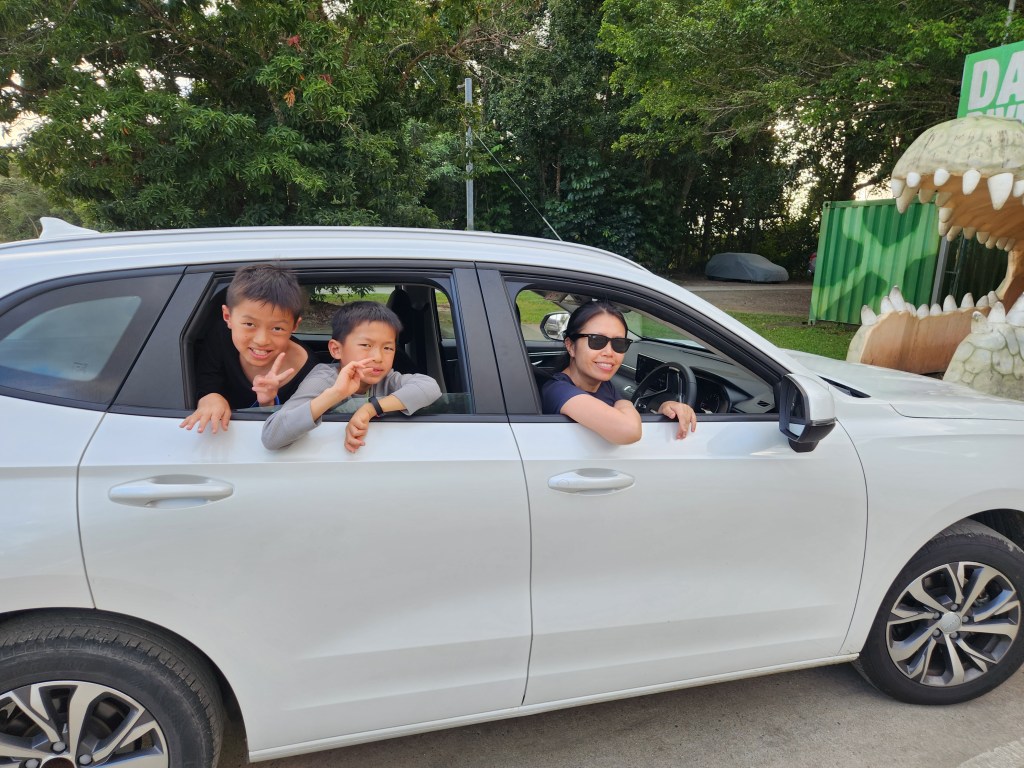
The next day, we rented a car to drive to Daintree Rainforest. I hadn’t driven in two years since moving to Taiwan, and now I had to do it on the opposite side of the road! 😬 I was white-knuckling the wheel for a good 10 minutes, but got so used to driving in Australia after awhile that I don’t even remember what it’s like driving on the right side anymore.
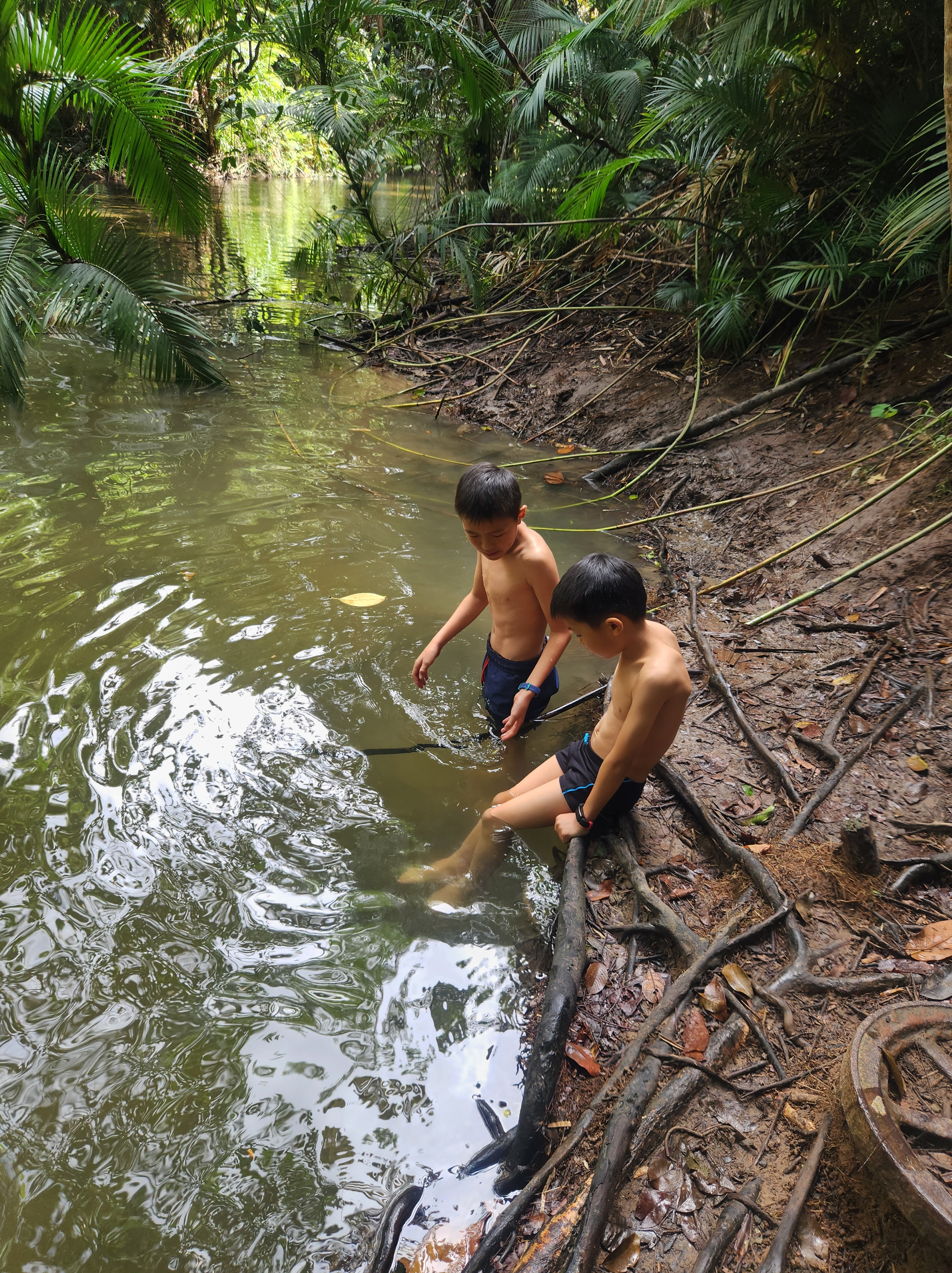
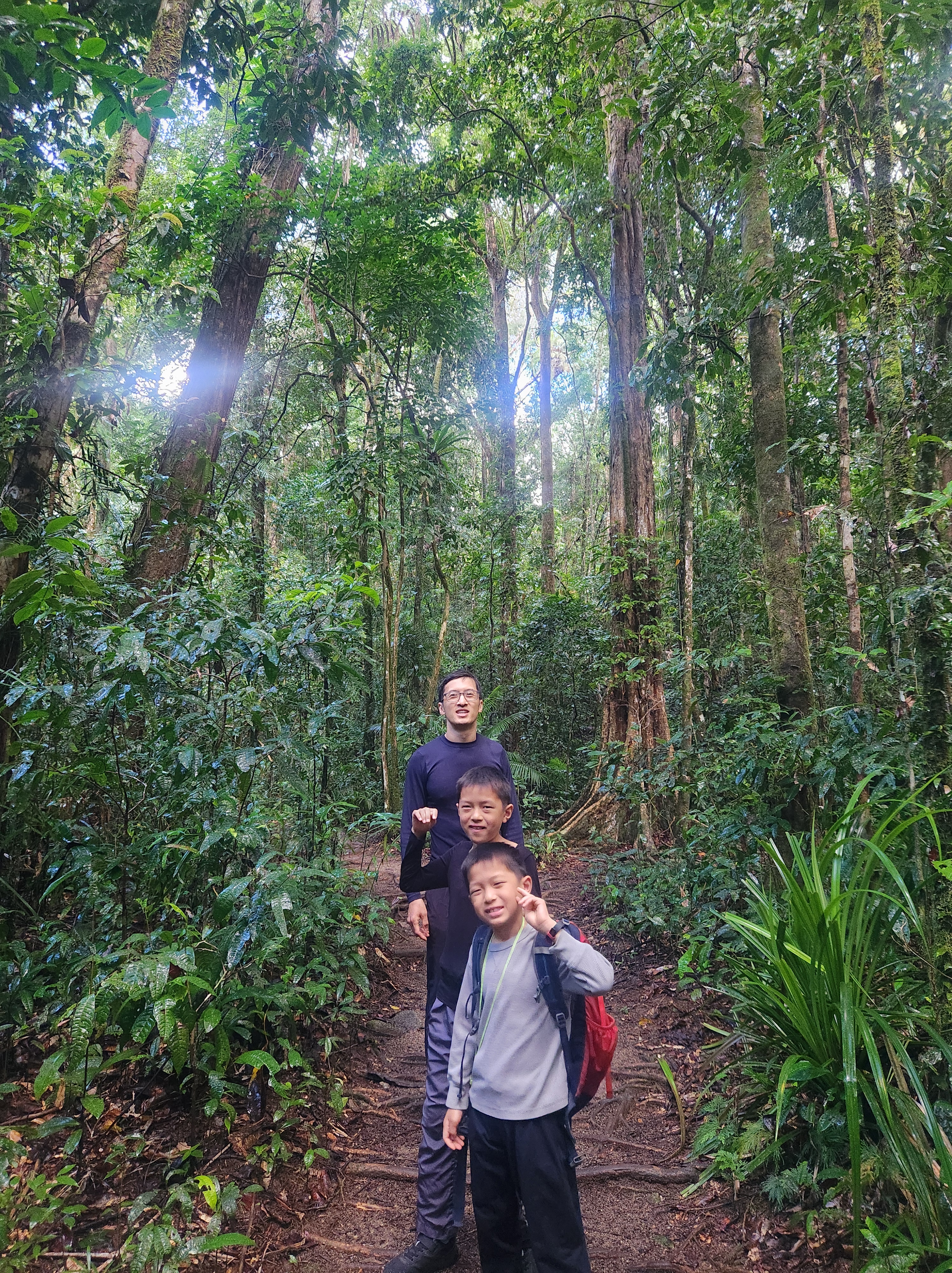
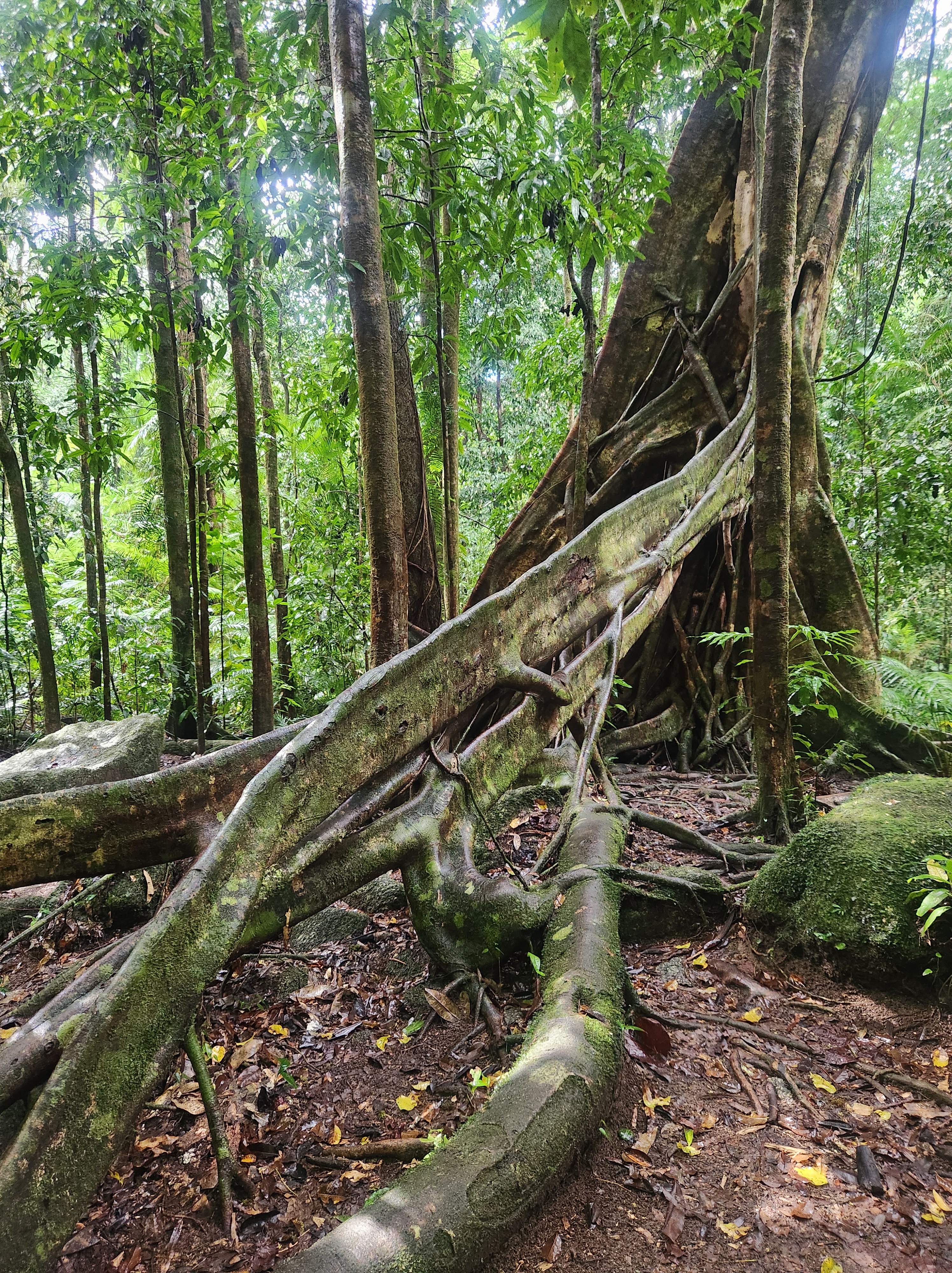
We hiked through the Daintree, spotted some wild turkeys (though the elusive cassowary remained out of sight!), and swam in a freezing cold water hole. Daintree is actually pretty huge and requires driving between different spots, but it was was a much appreciated peaceful break from our usual city life.
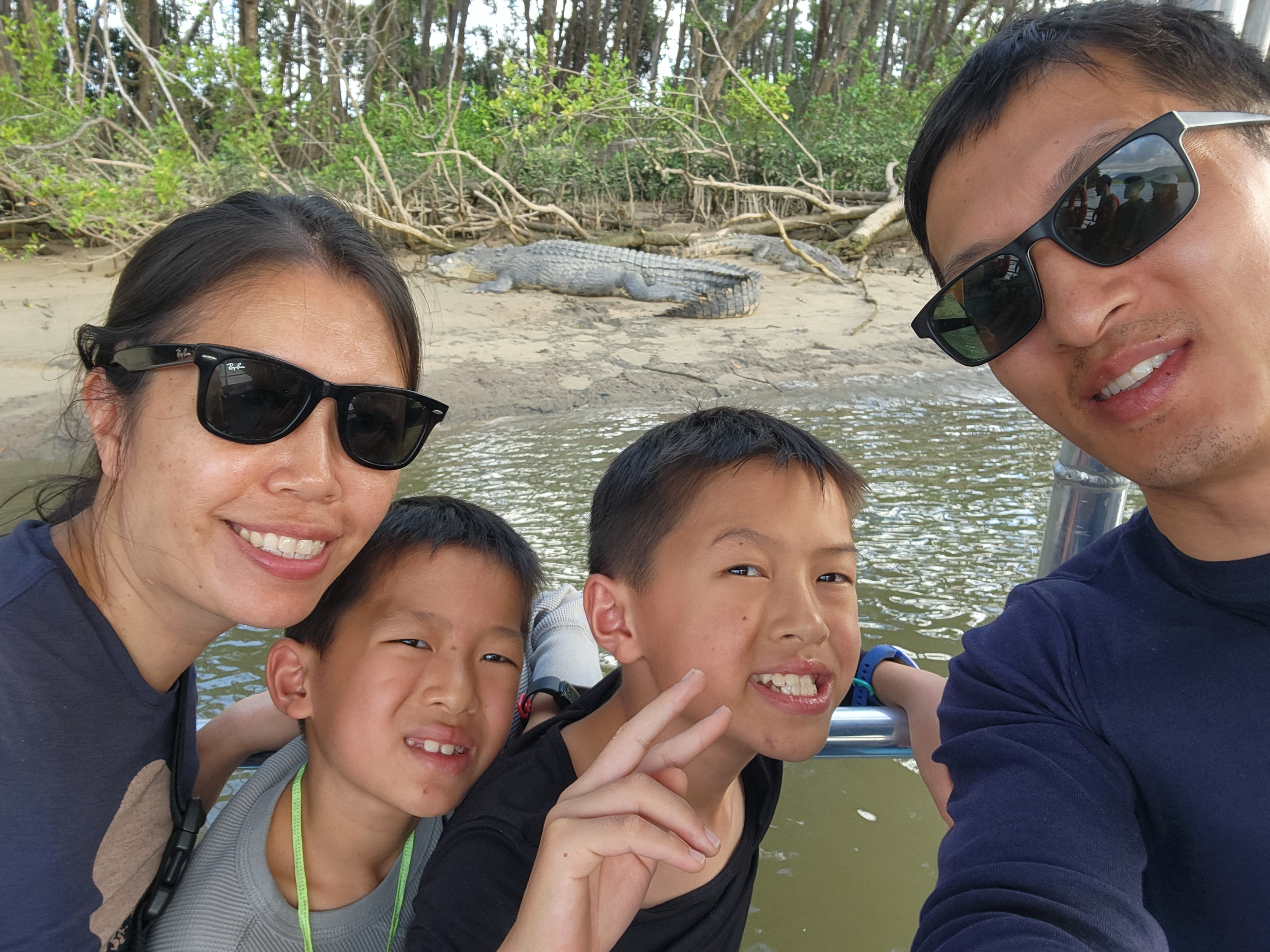
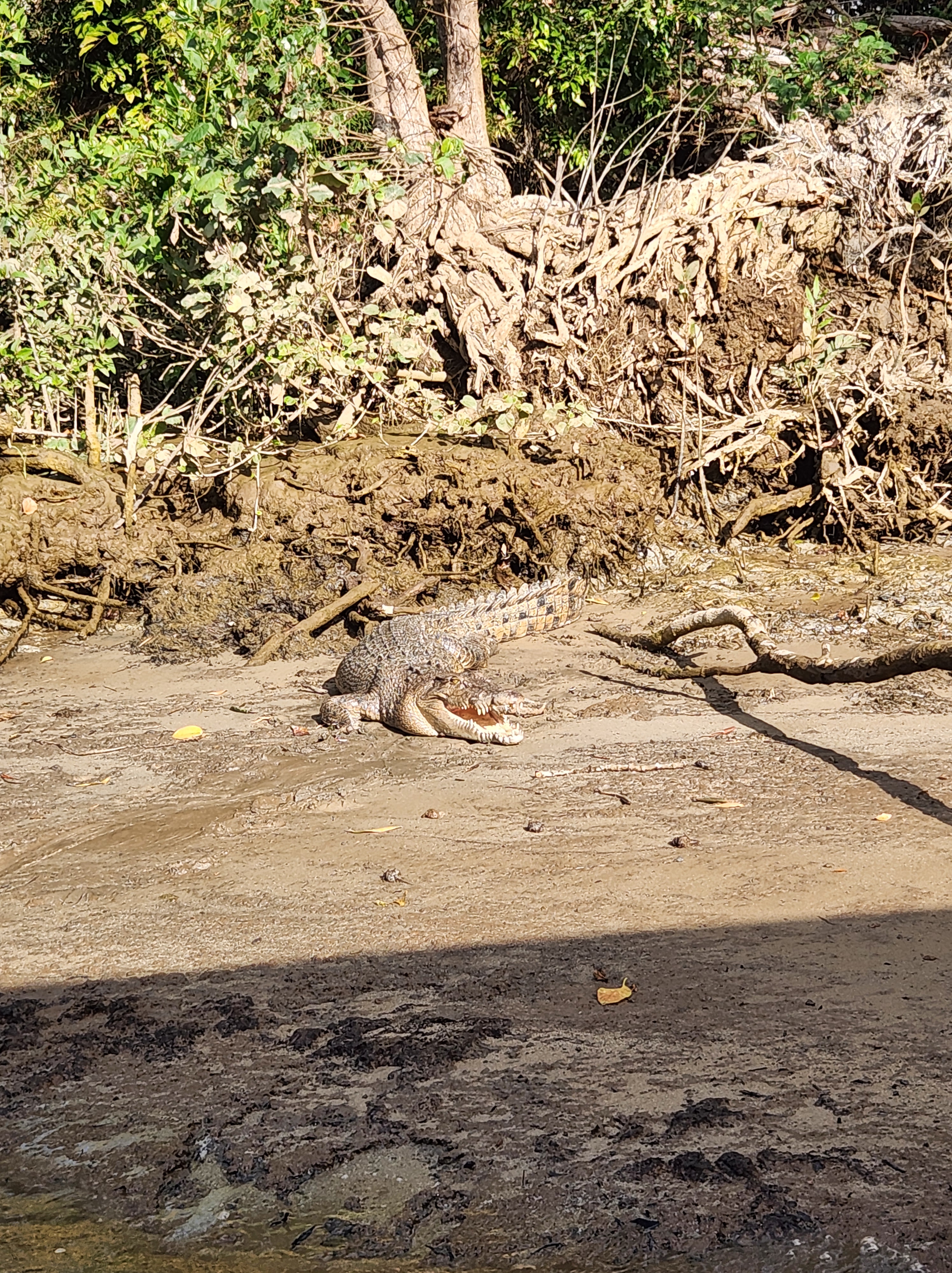
Later that day, we went on a boat ride to spot wild crocodiles at the Daintree River. We saw crocodiles of all sizes, from the massive dominant male to a 6-month-old baby.
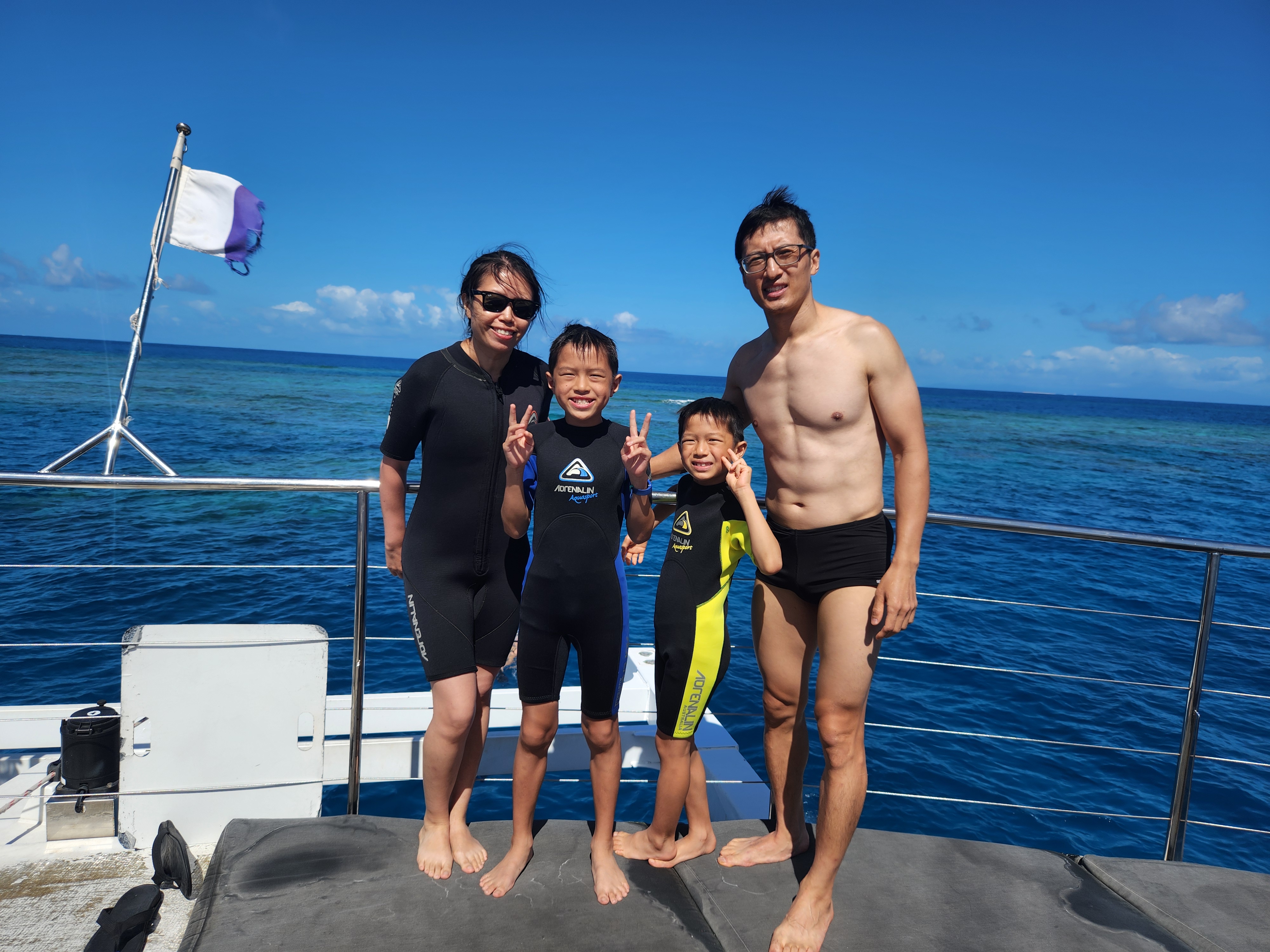
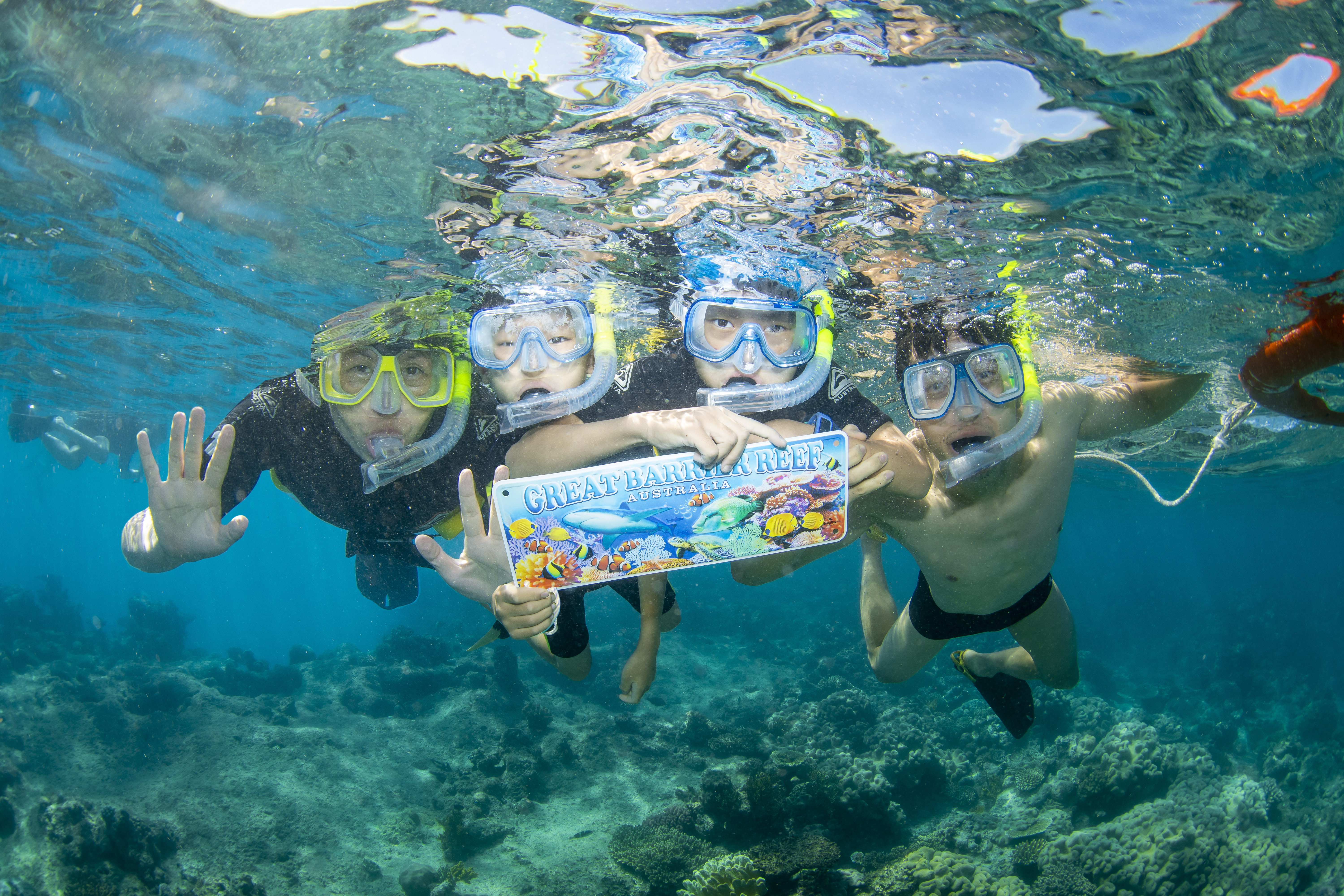
But the main attraction in Cairns is, of course, the Great Barrier Reef. We booked a snorkeling tour with Passions of Paradise, which first required a two-hour drive out to the outer reef. The boat ride there was incredibly rocky, and several people got seasick, including C.

The Great Barrier Reef was truly a dream. The coral was huge, and full of diverse colors, intricate shapes and beauty. It’s fascinating to me that this underwater wonder was built by billions of tiny polyps over thousands of years. We didn’t see any unusual sea creatures (sea turtles, sharks, etc.) but we were surrounded by schools of dazzling colorful fish, and even spotted a humpback whale on our way back! Despite it being winter, the water was surprisingly warm and comfortable.
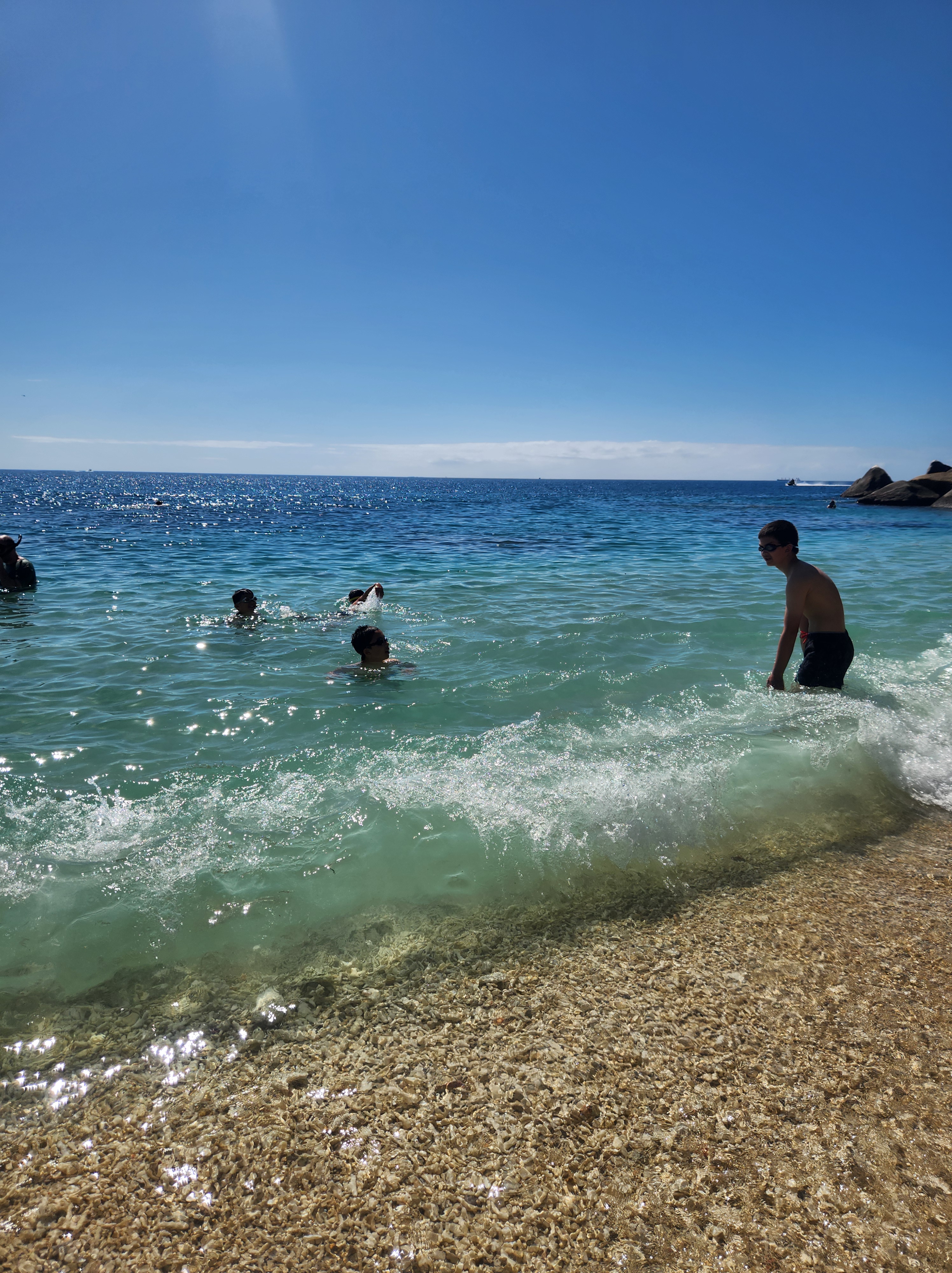
On our last day in Cairns, we were able to meet up with friends that happened to be in Australia at the same time. We took a ferry to Fitzroy Island, where we hiked and snorkeled at the stunning beach. It was the perfect way to end our stay in Cairns: sharing it with familiar faces Down Under!
The Outback. After Cairns, we flew to the Outback. Baba and I had debated whether to go here because for one thing, it’s very remote, and secondly, it’s expensive. The Outback’s remoteness makes everything — flights, hotels, food, gas — much more expensive than almost anywhere in the country. But the Outback is quintessentially Australian, and we felt it would be a really unique experience so we decided to go after all.

We flew into Alice Springs in the late afternoon and began the four-hour drive to Kings Canyon, knowing we’d arrive well after sunset. That alone felt like an adventure because driving after dark is considered one of the riskiest things you can do in the Outback. Kangaroos and other wildlife frequently dart across the road, and a collision could leave your car badly damaged. Out here, there’s no quick call to AAA and a tow truck comes to the rescue. You’d be stranded. In summer, the danger is even greater, with extreme heat turning a breakdown into a life-threatening situation. (Thankfully, we were traveling during Australia’s winter, when the weather was cool.)
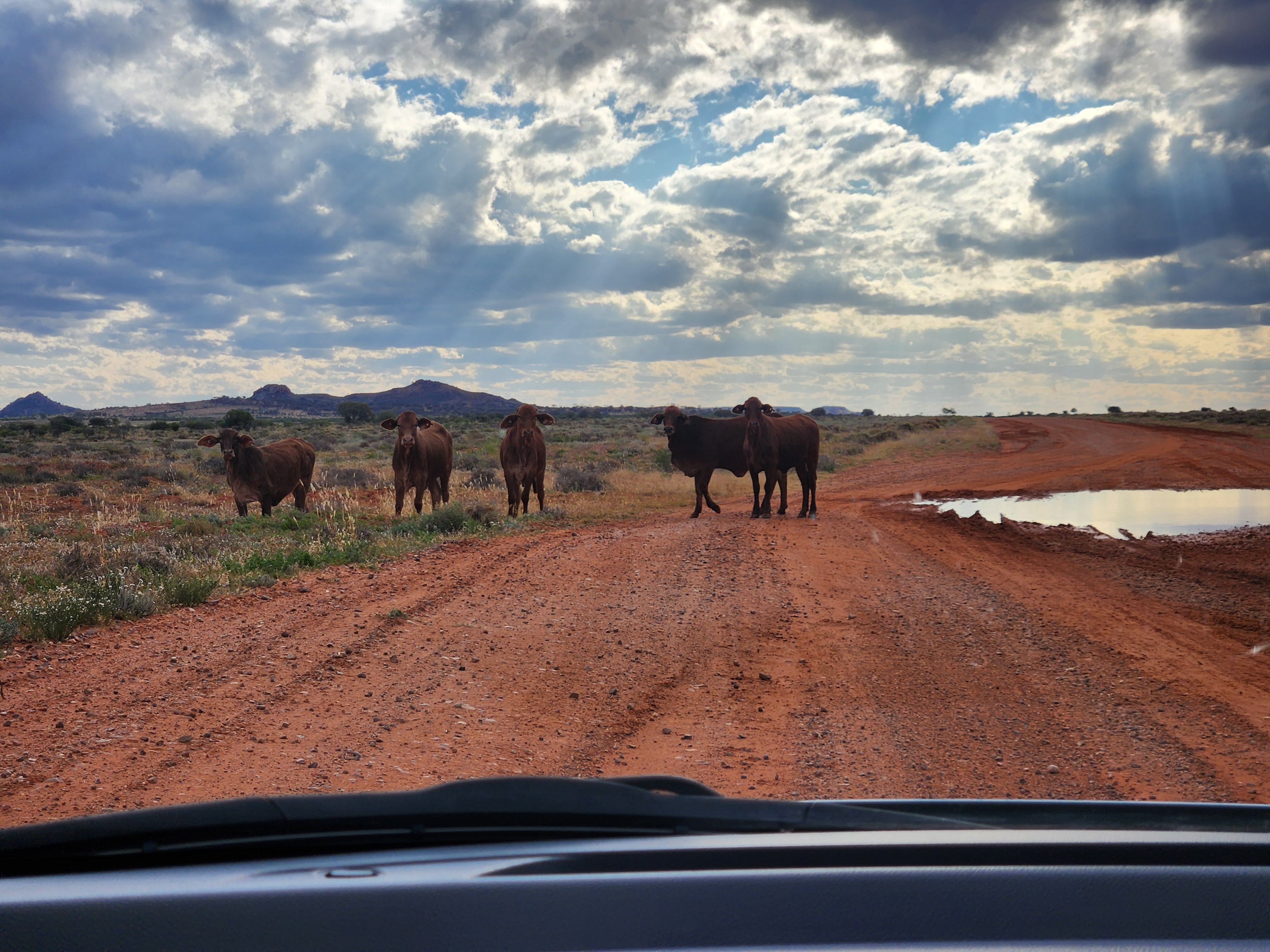
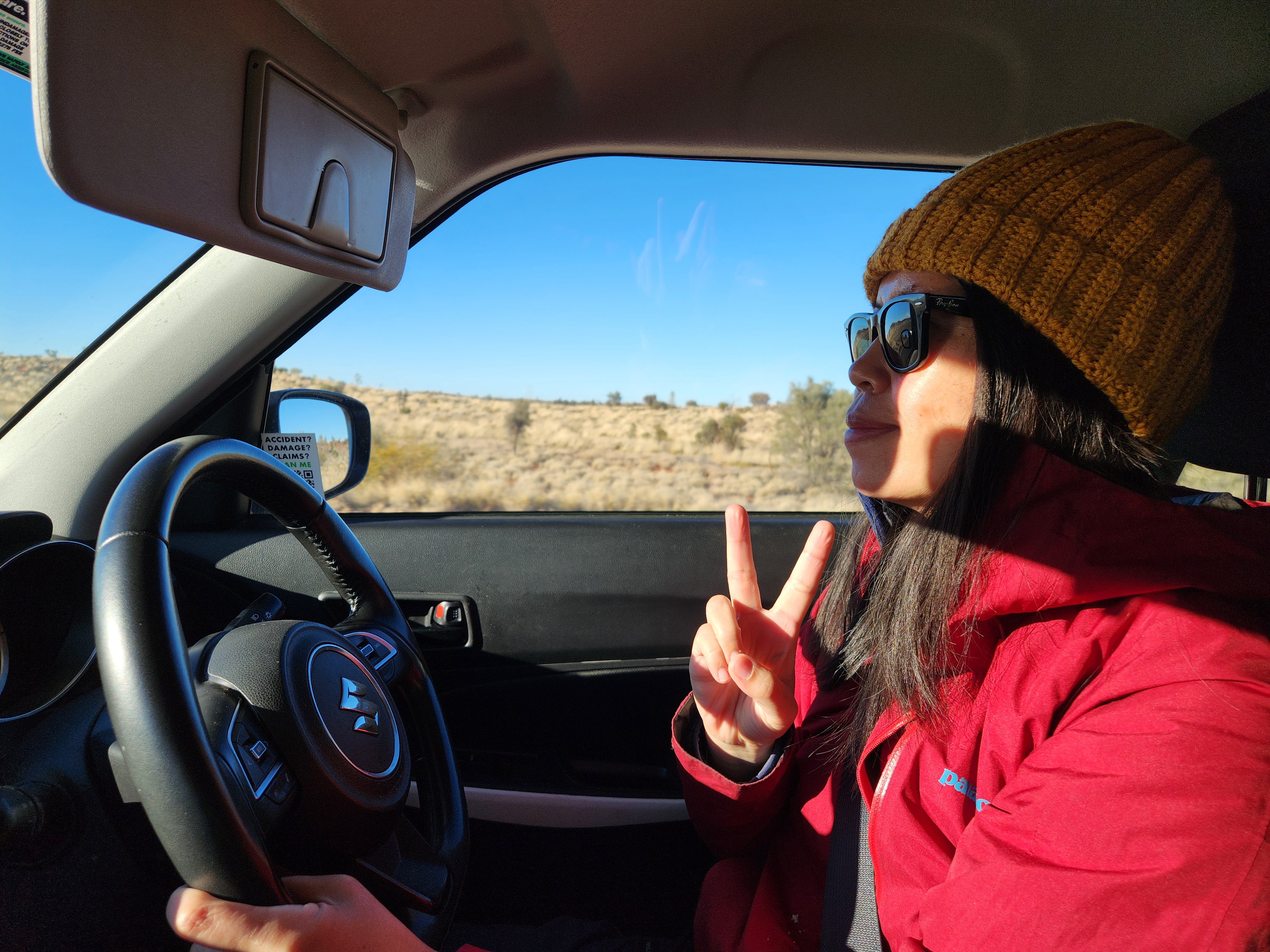
The road to Kings Canyon was rough and uneven, and for nearly two hours we were tossed around, swaying side to side like balls rattling inside a machine. To make matters worse, we had rented the tiniest, dinkiest car, so we felt every jolt along the way. 😅 The road was full of obstacles too — huge puddles and herds of camels and cows blocking our path. After an eternity, we made it to Kings Canyon safely and had a good night’s sleep.

Kings Canyon is beautiful, with its bright red rock formations and dramatic, deep canyon. We hiked the popular Rim Trail, and the clear blue skies, crisp air, and breathtaking views made the trek enjoyable. Temperatures were chilly, ranging from the mid-30s to low 50s, and we quickly realized this would be the pattern throughout our Outback stay. No complaints, though…we actually prefer the cold!
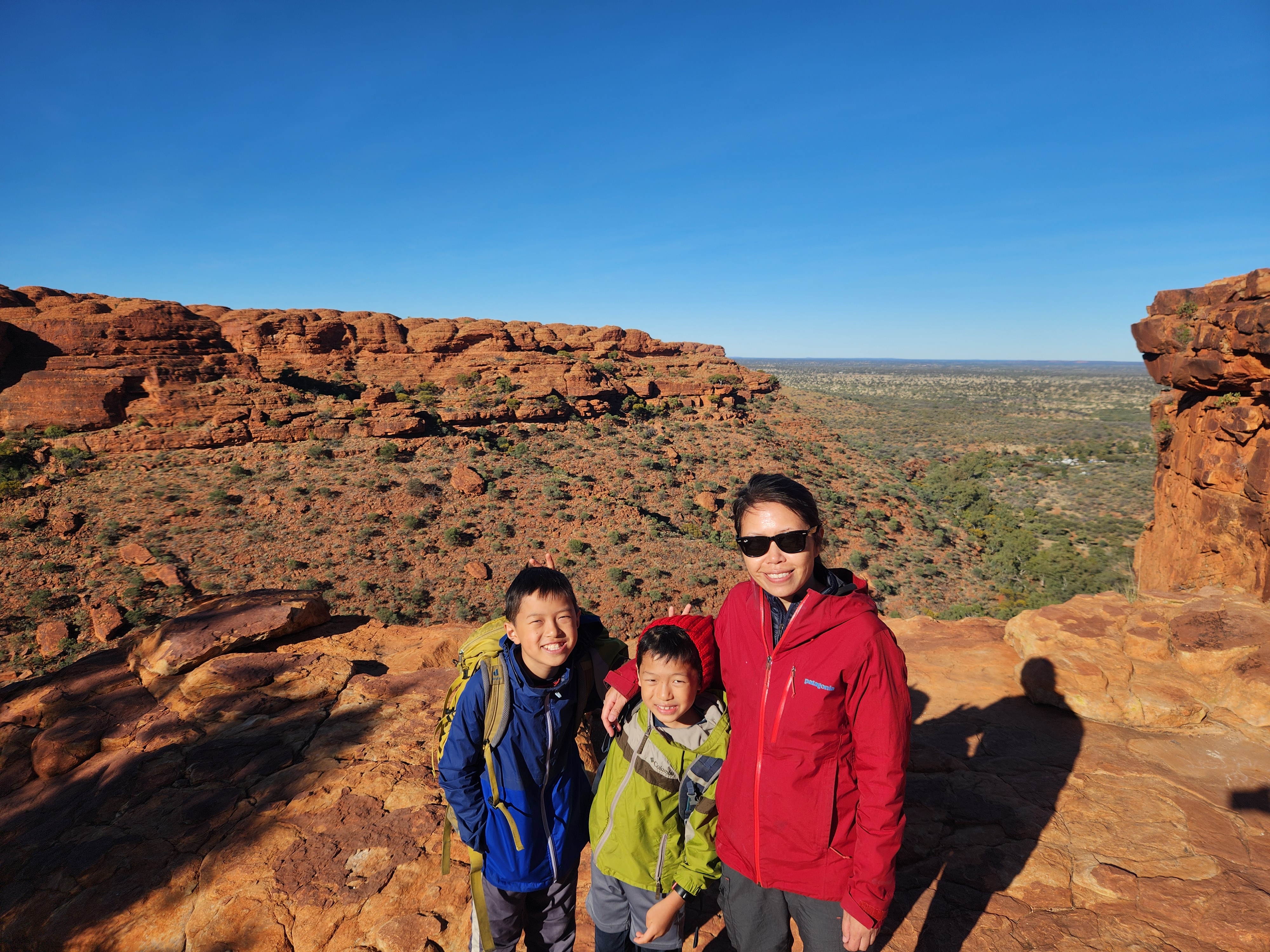
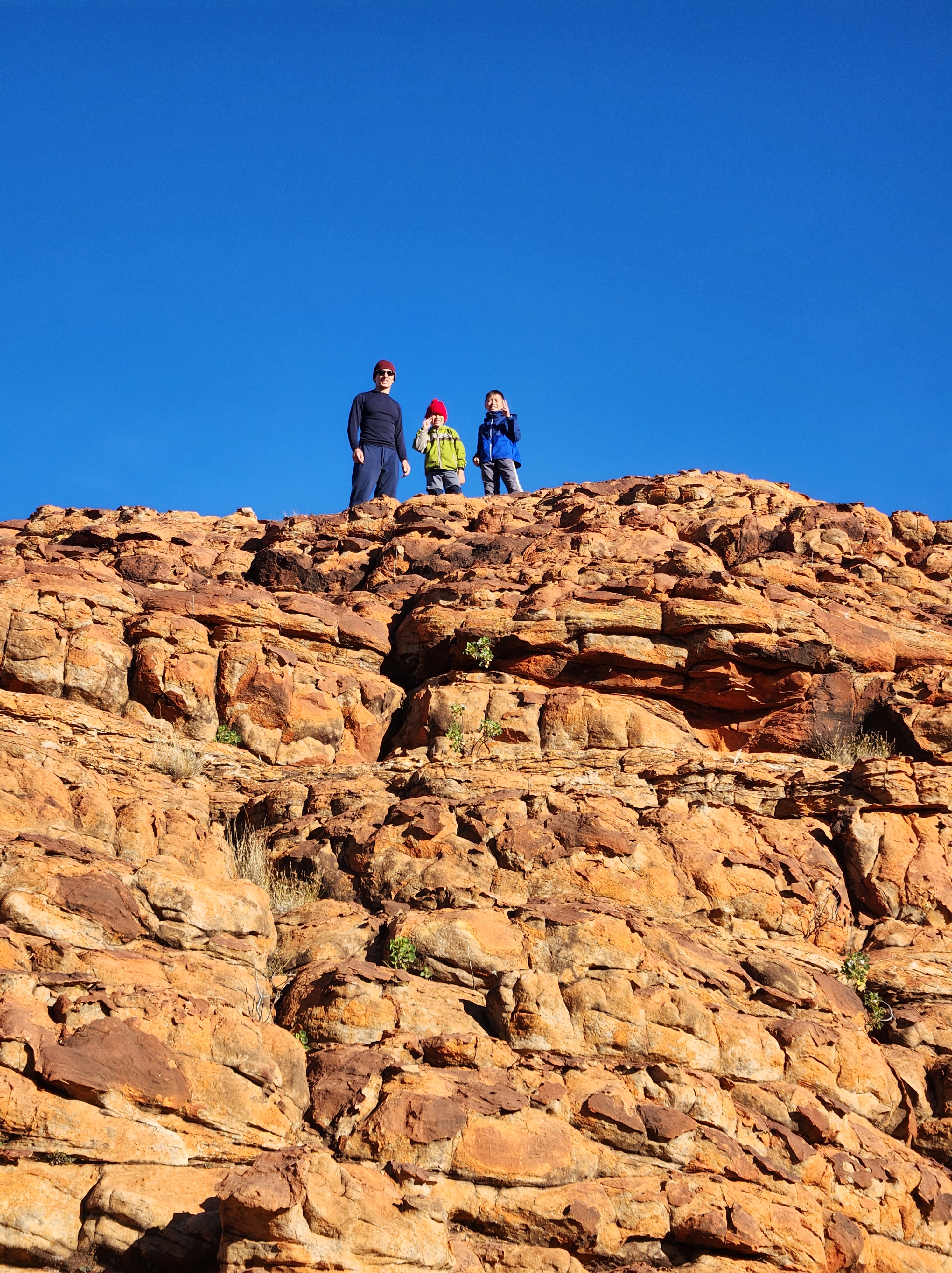
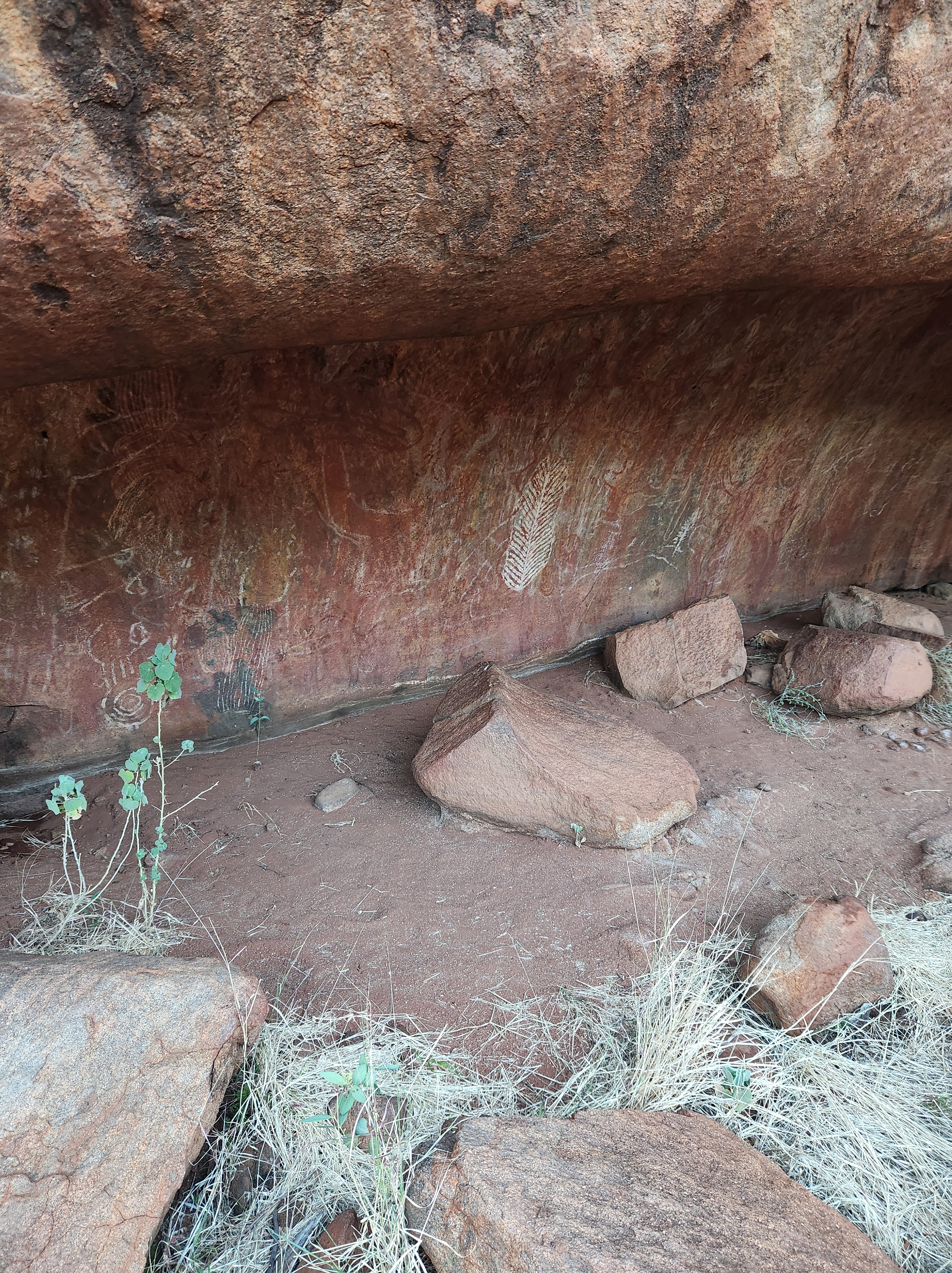
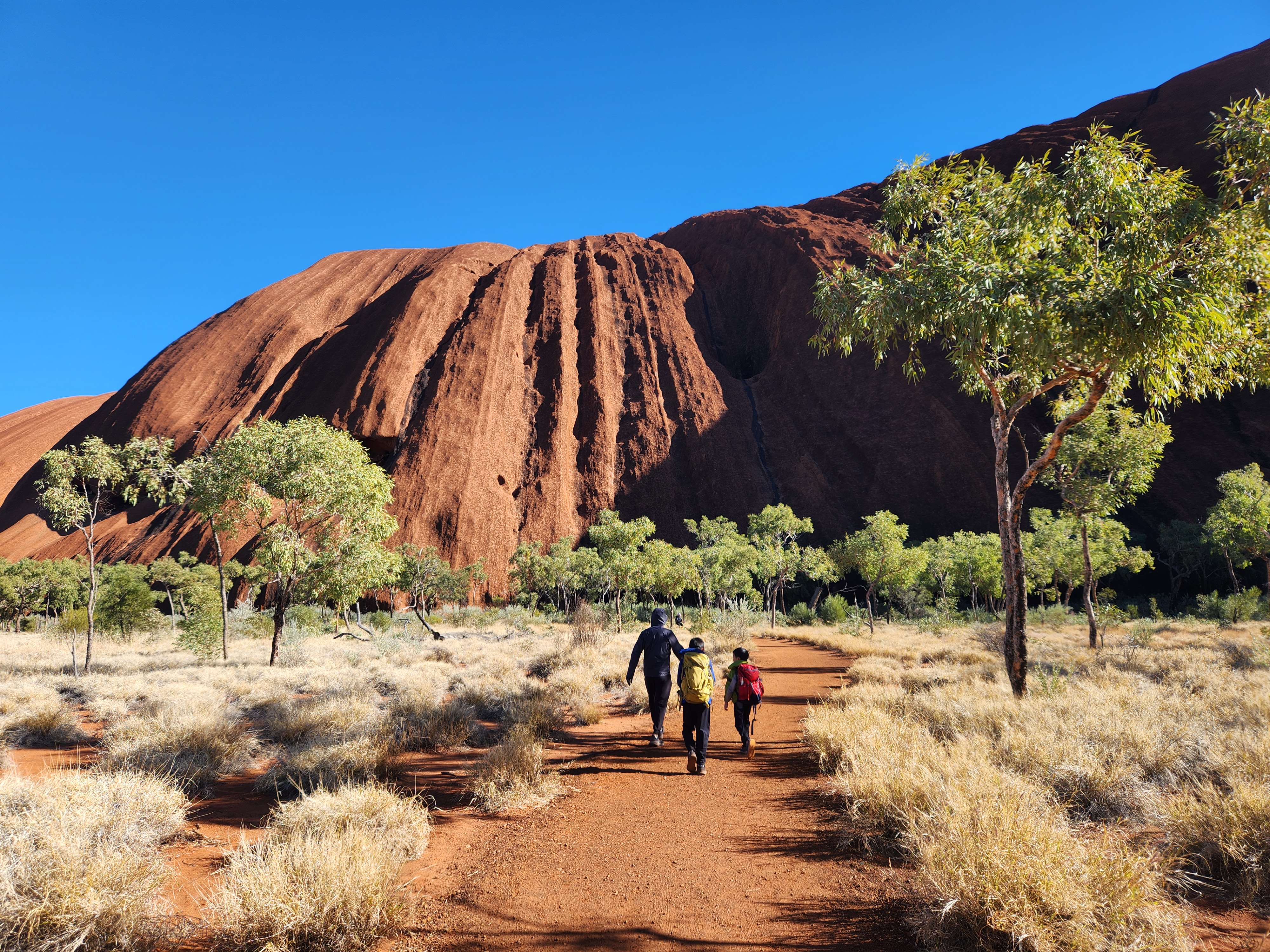
After Kings Canyon, we drove to Uluru, the icon of the Outback. The rock is estimated to be 550 million years old and formed from sandstone. We did the Uluru Base Walk, a flat 6-mile walk around the sacred rock. The Aboriginal people of Uluru belong to one of the oldest continuous cultures in the world, with a history that goes back more than 50,000 years, even longer than the ancient civilizations of Egypt!
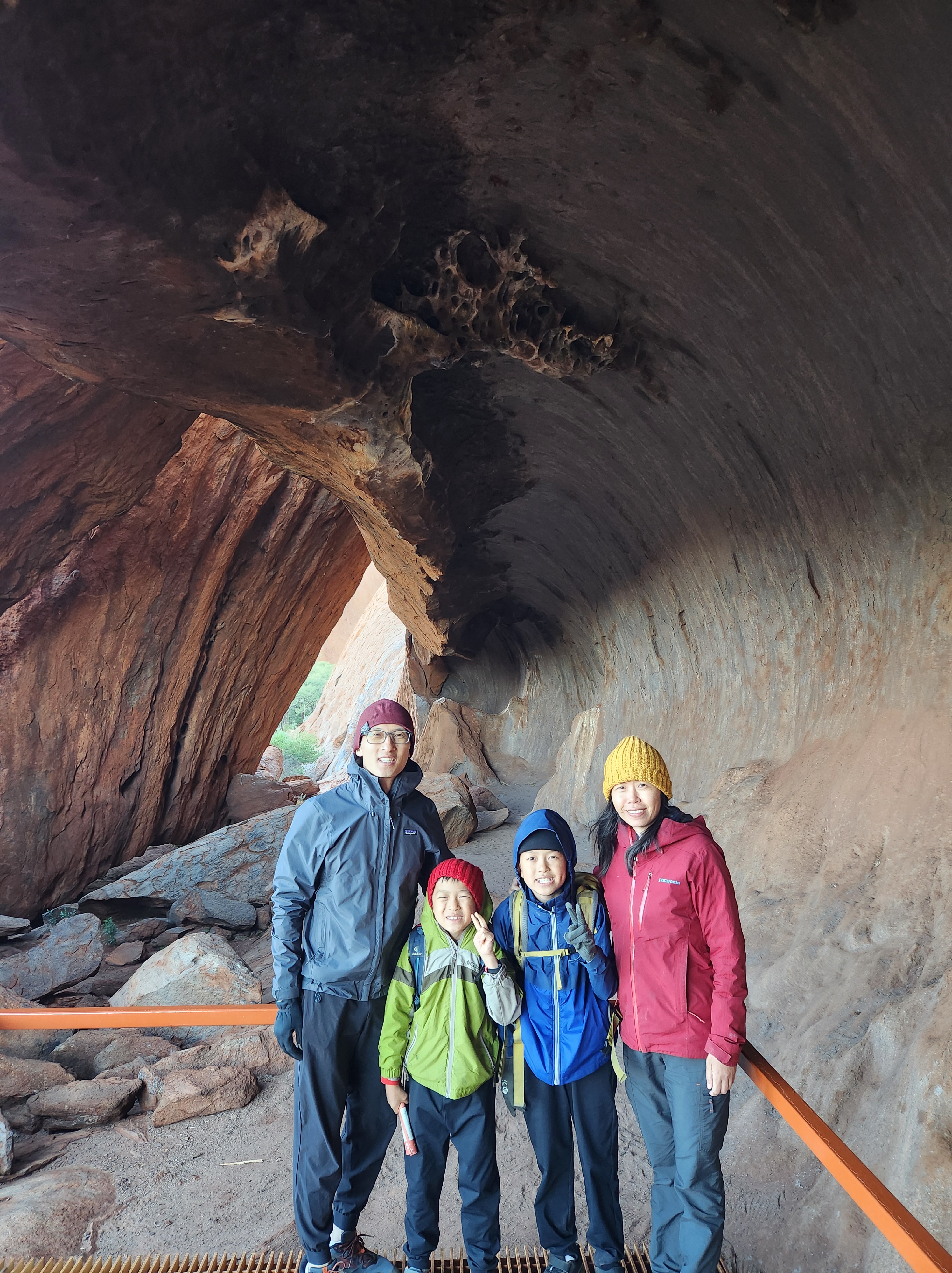
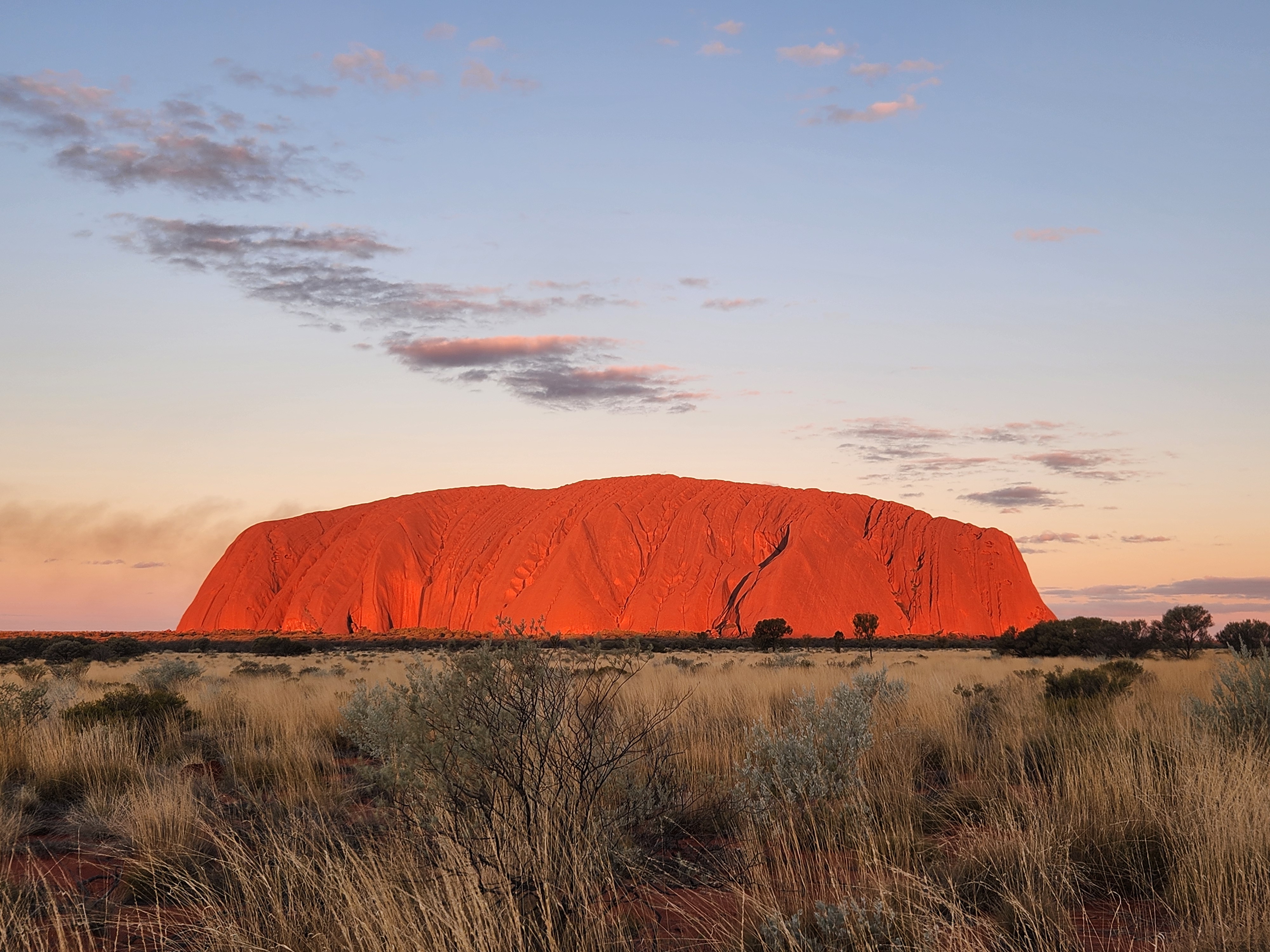
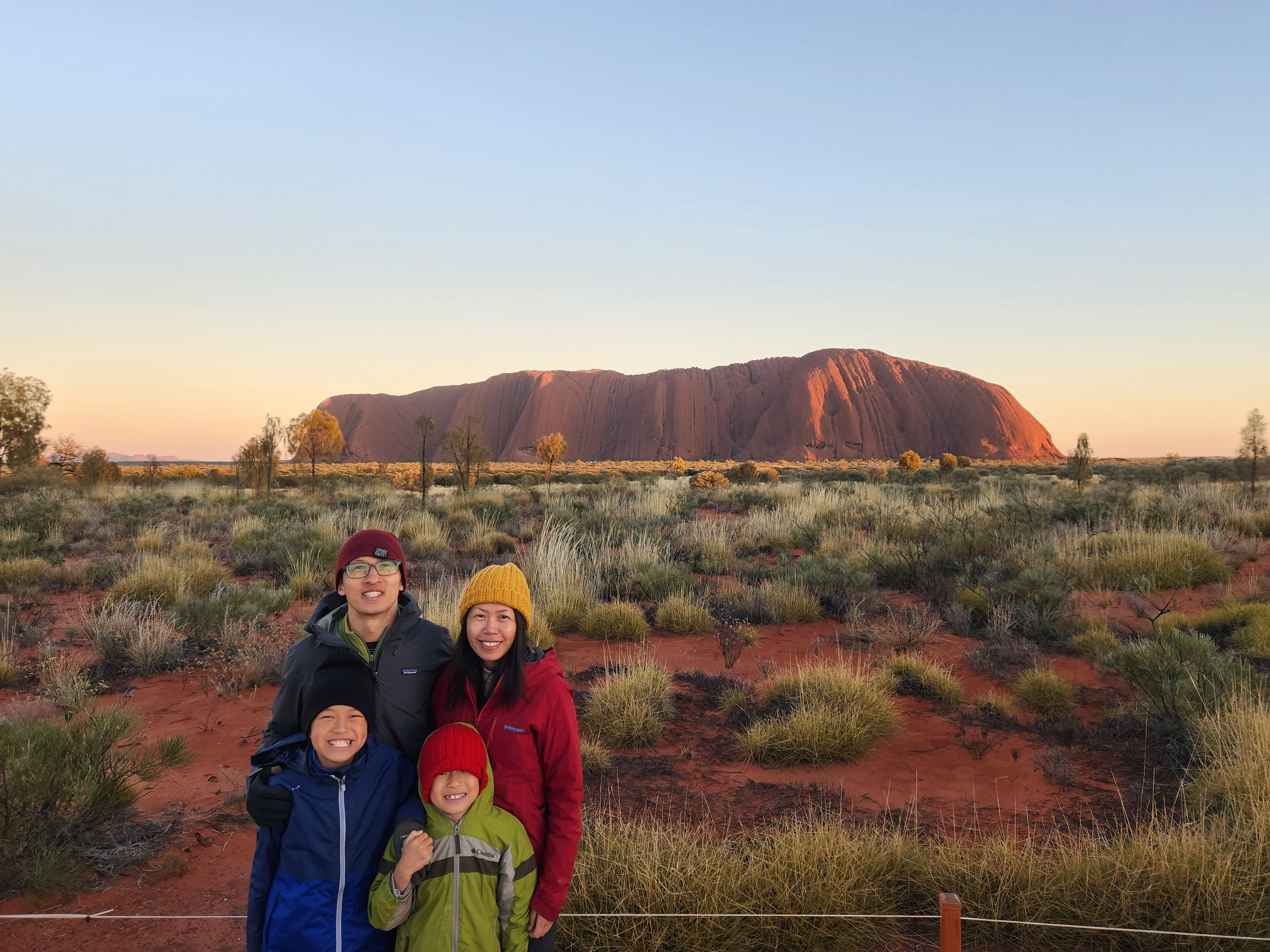
During our stay in Uluru, we saw the rock countless times. Honestly, at first I shrugged and thought, “Eh, it’s just a rock.” Despite knowing its deep cultural and historical significance, it didn’t strike me as particularly spectacular. But then we saw Uluru at sunset. As the sun sank lower, the dull brown surface changed into a fiery red, glowing as if lit from within. In that moment, it felt otherworldly. (Picture on the left is Uluru during sunset, and right is during sunrise.)
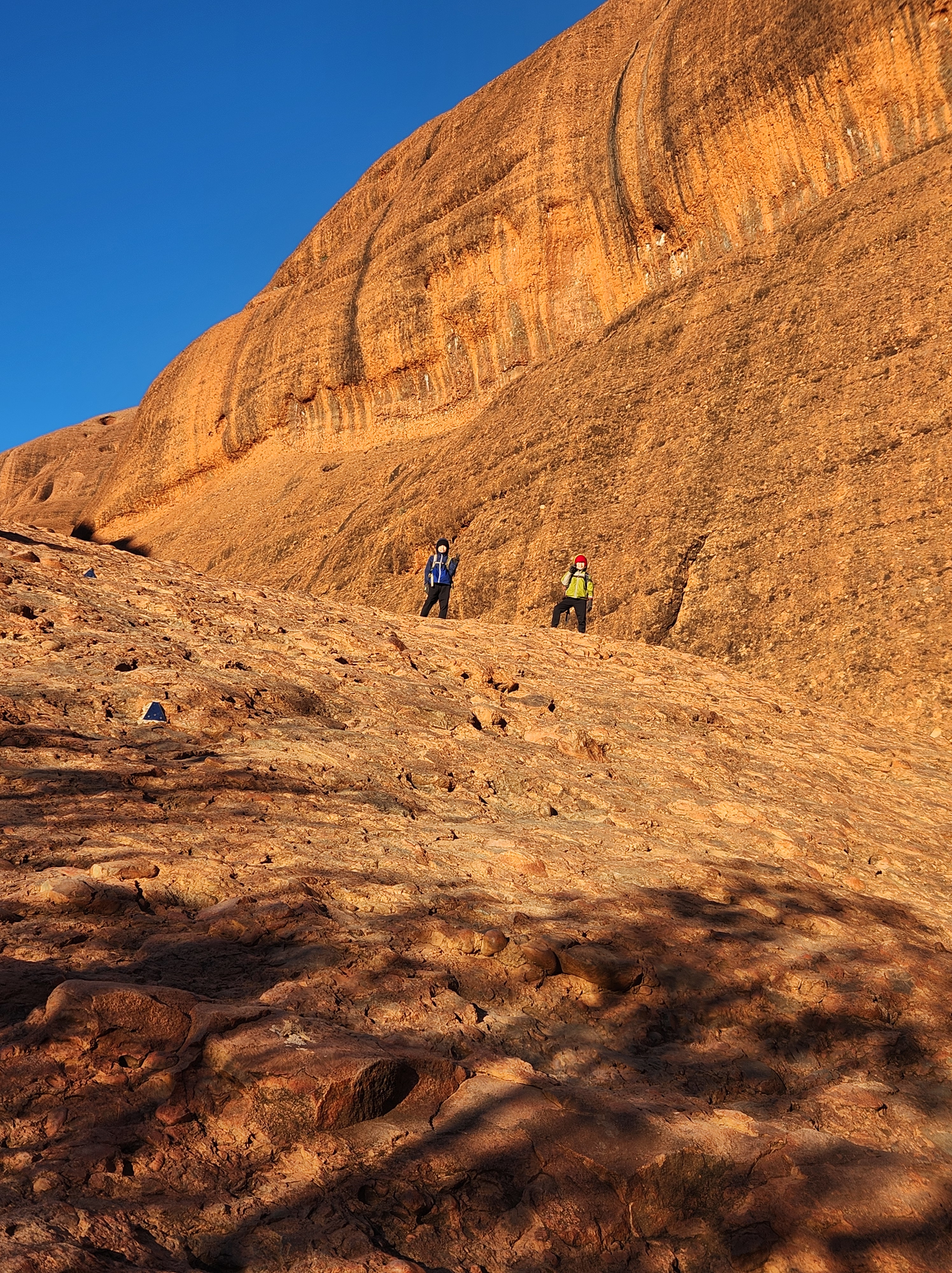
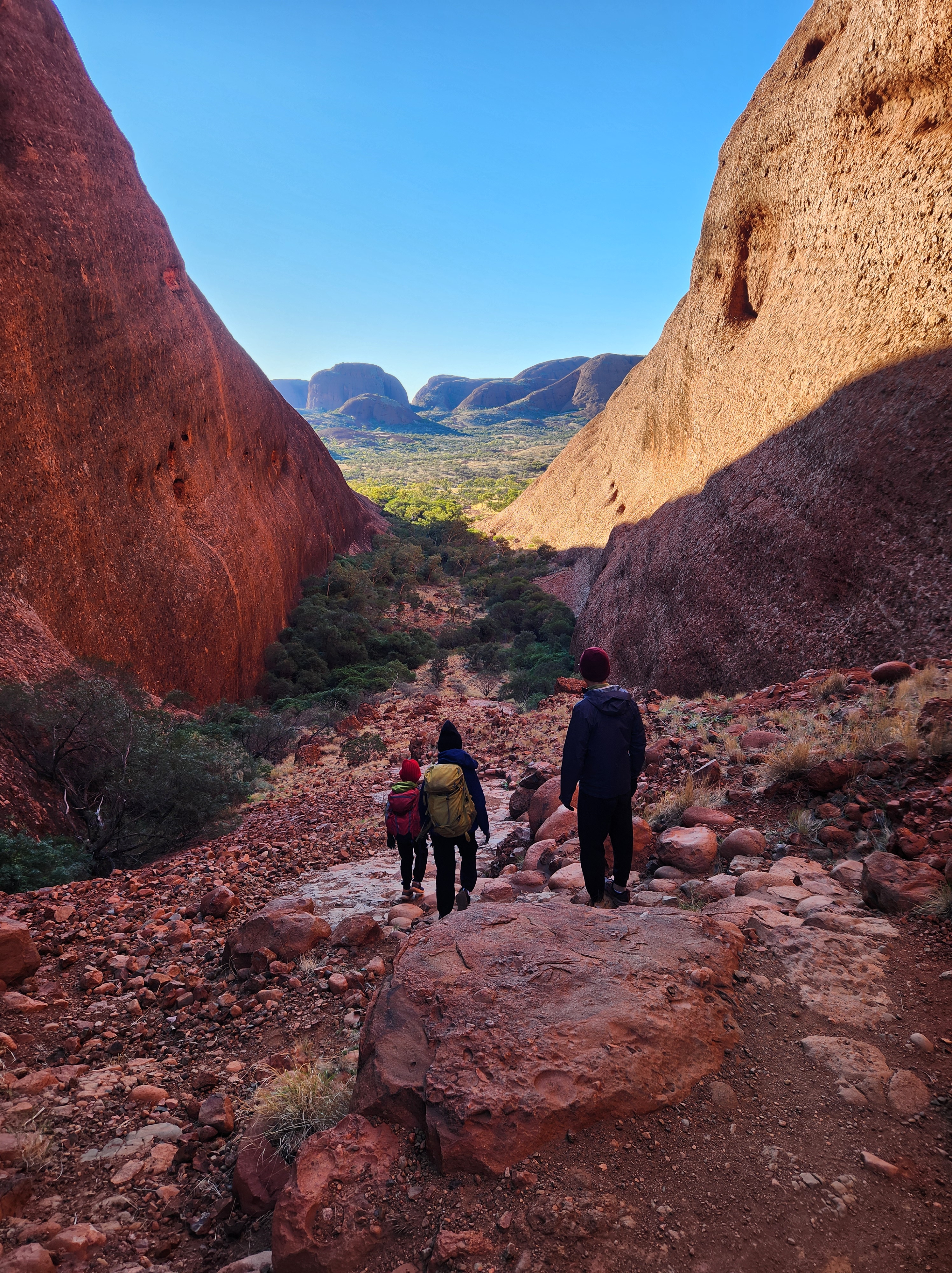
We also hiked the Valley of the Winds at Uluru, a beautiful trail that winds through towering red rock domes and offers sweeping views of the desert landscape. One of my favorite hikes in Australia!
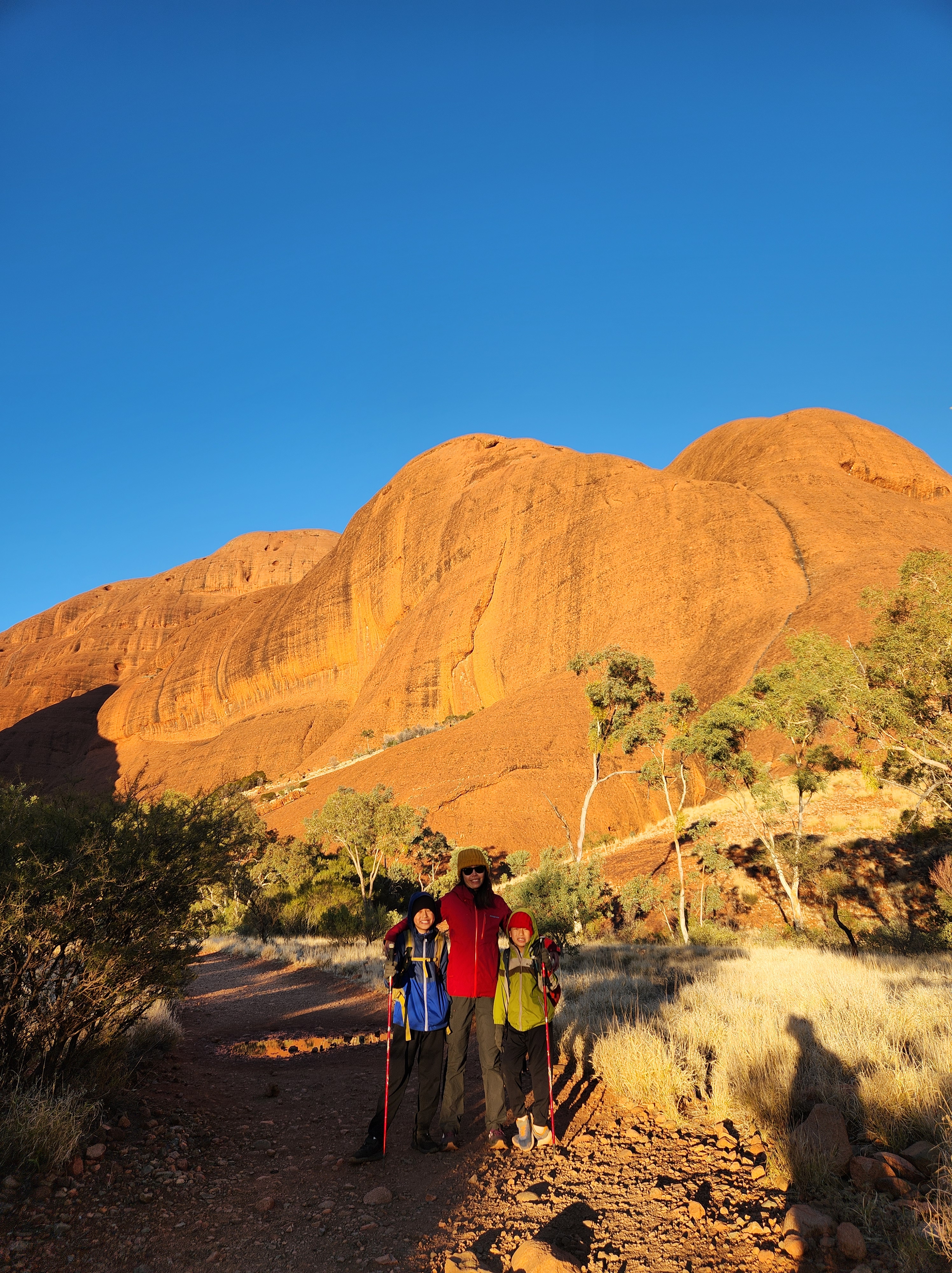
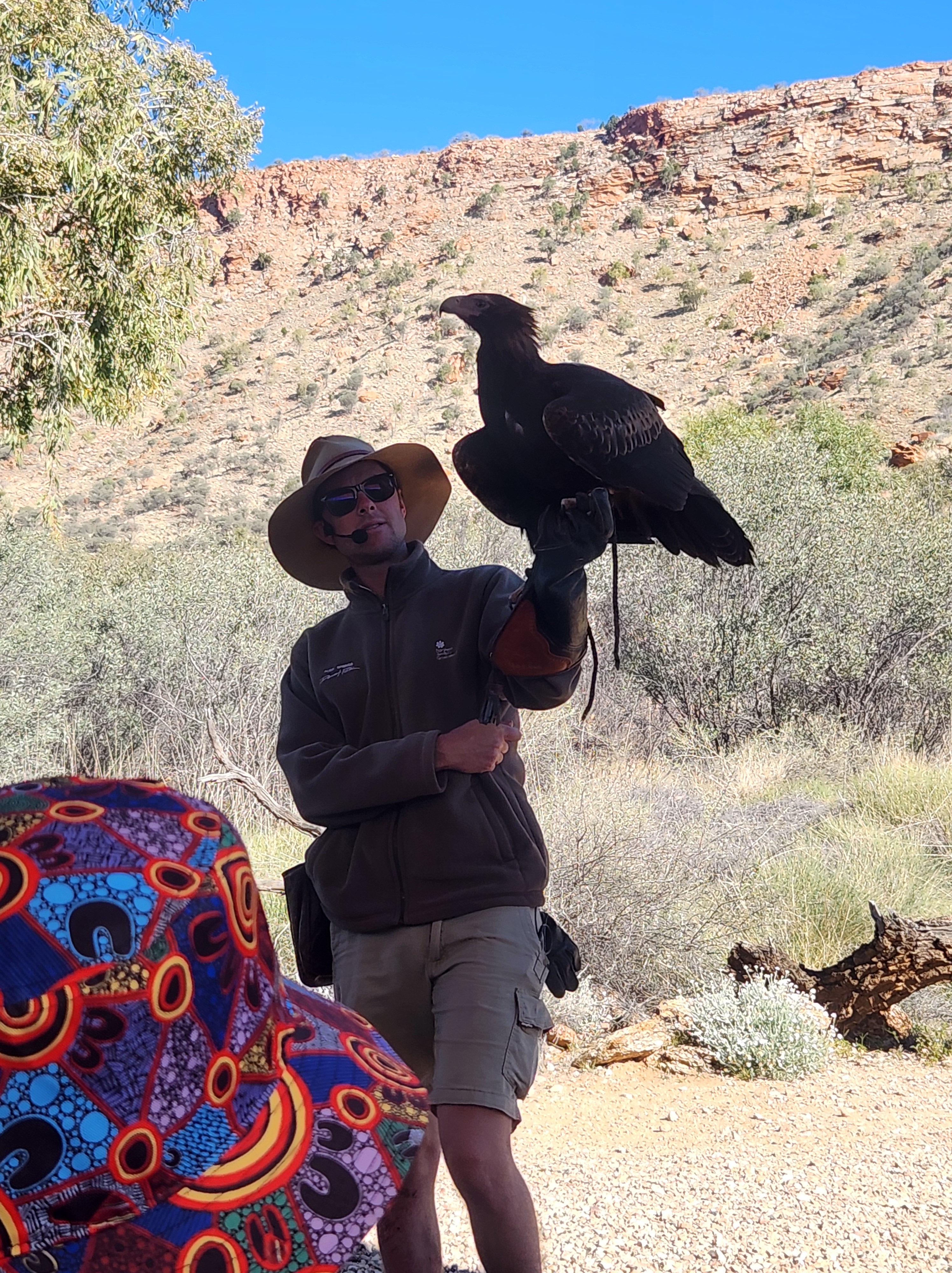
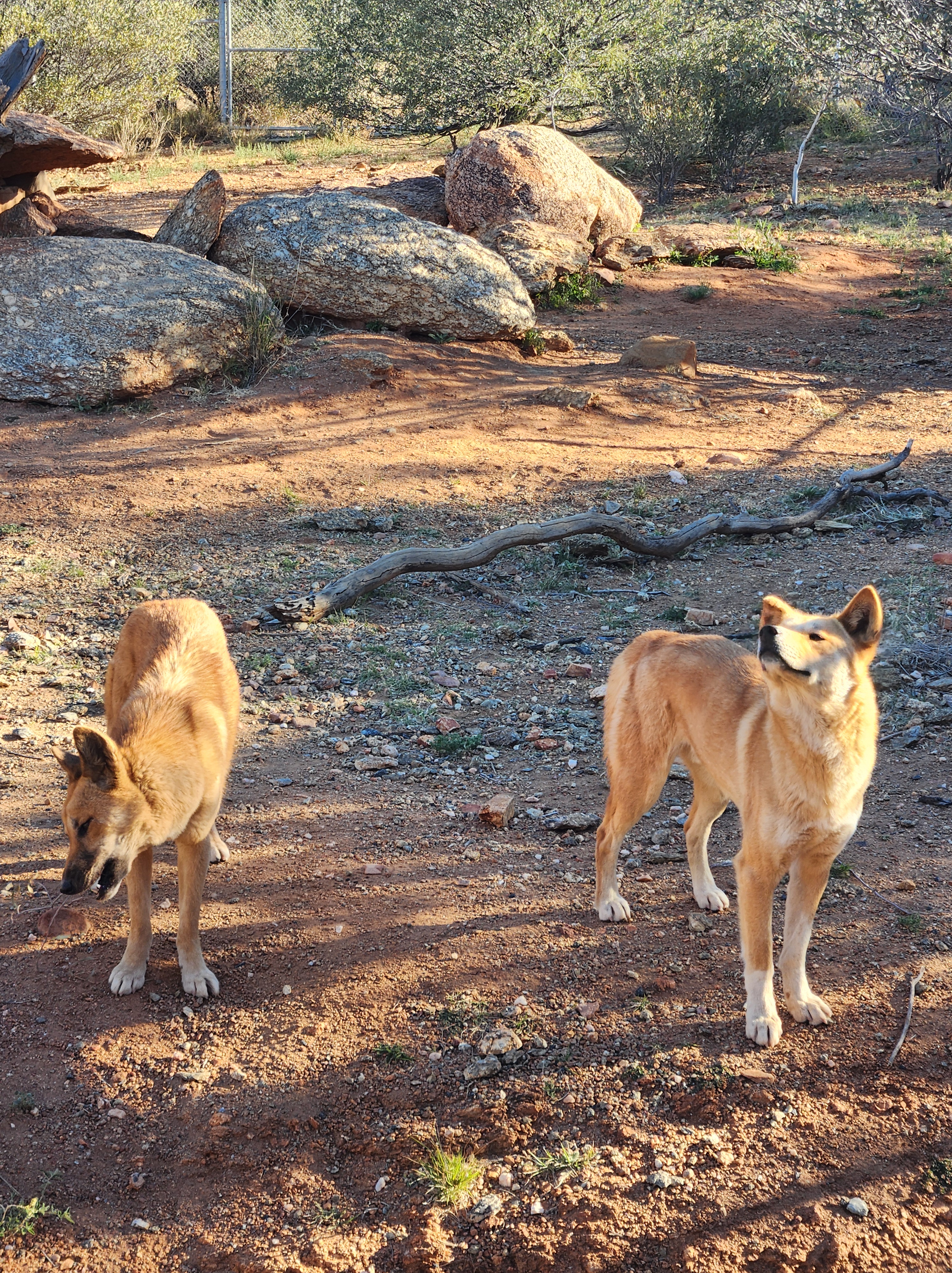
The next day, we drove 5 hours from Uluru back to Alice Springs. (Yes, there was A LOT of driving in the Outback.) In Alice Springs, we visited the Alice Springs Desert Park, filled with animals native to the Outback. Honestly, it was a little underwhelming — many exhibits were empty and we saw very few animals. Tickets weren’t cheap either, about $26 USD per adult and $13 USD per kid.

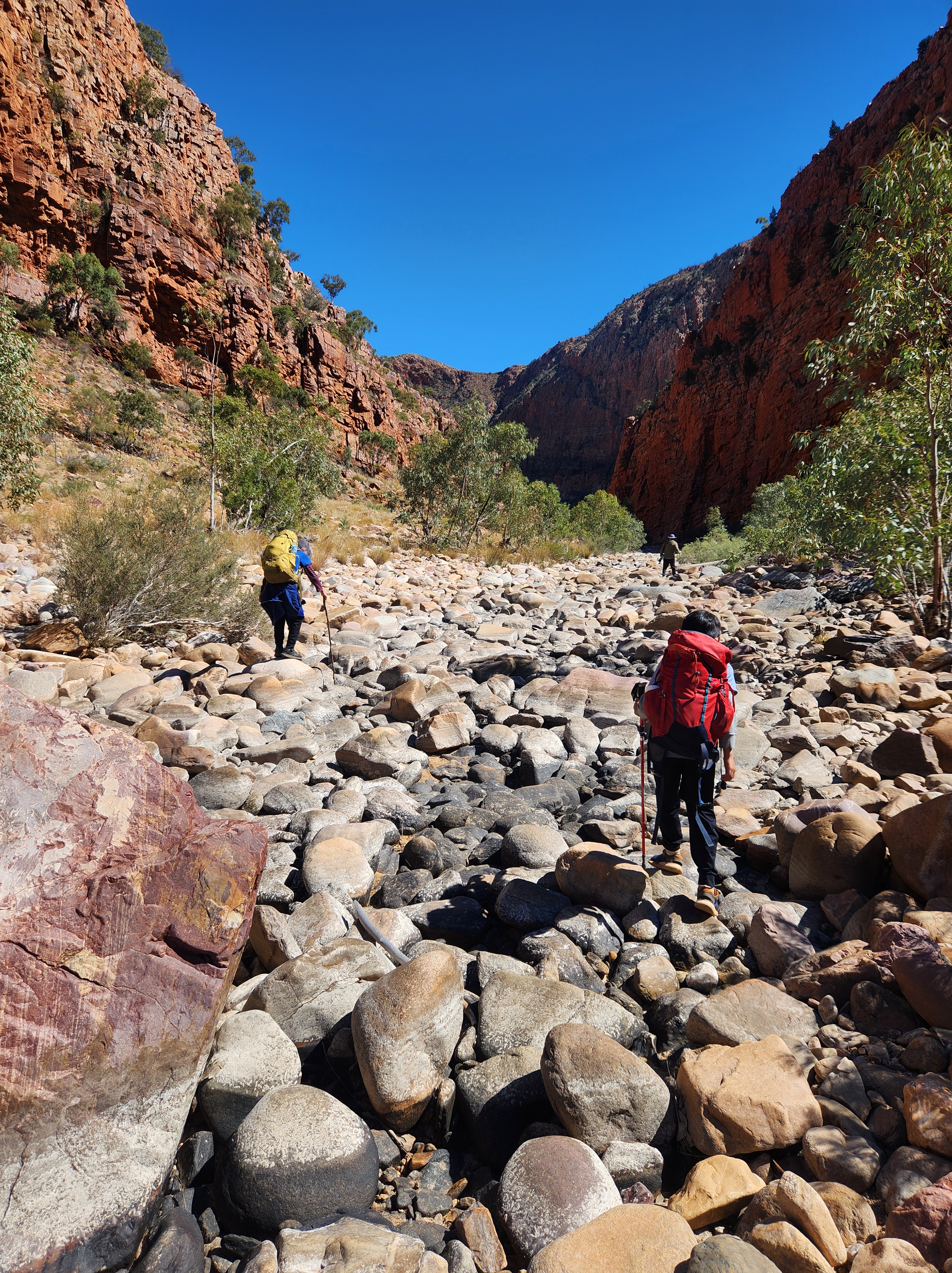
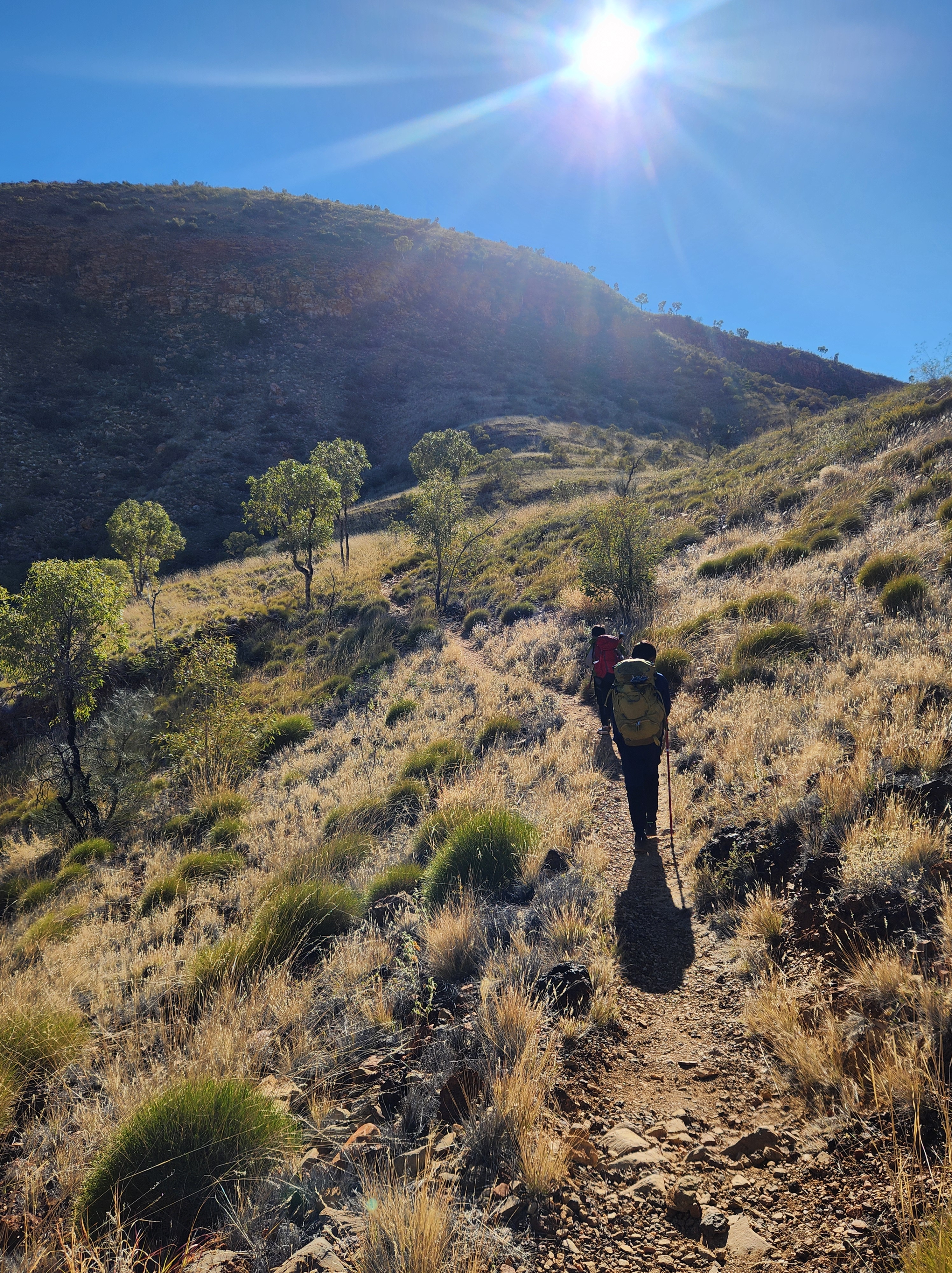
On our last day in the Outback, we drove to the West MacDonnell Ranges, which is a huge mountain range spanning over 400 miles. There are popular multi-day treks there but we picked a half-day hike at Ormiston Pound. The trail was wonderfully varied — we walked through grasslands, scrambled over huge boulders, and even waded across a small pond.
Would I go back to the Outback? Probably not. It’s difficult to reach, the food was mediocre at best, and as I mentioned, it’s expensive. With so few restaurants, we found ourselves eating way too many protein bars on our hikes. The boys and I agreed we never want to see another one again. 😆Still, the Outback has its own quiet charm. Its vast, empty stretches make you feel like you’re the only person out there on this strange, wild landscape.

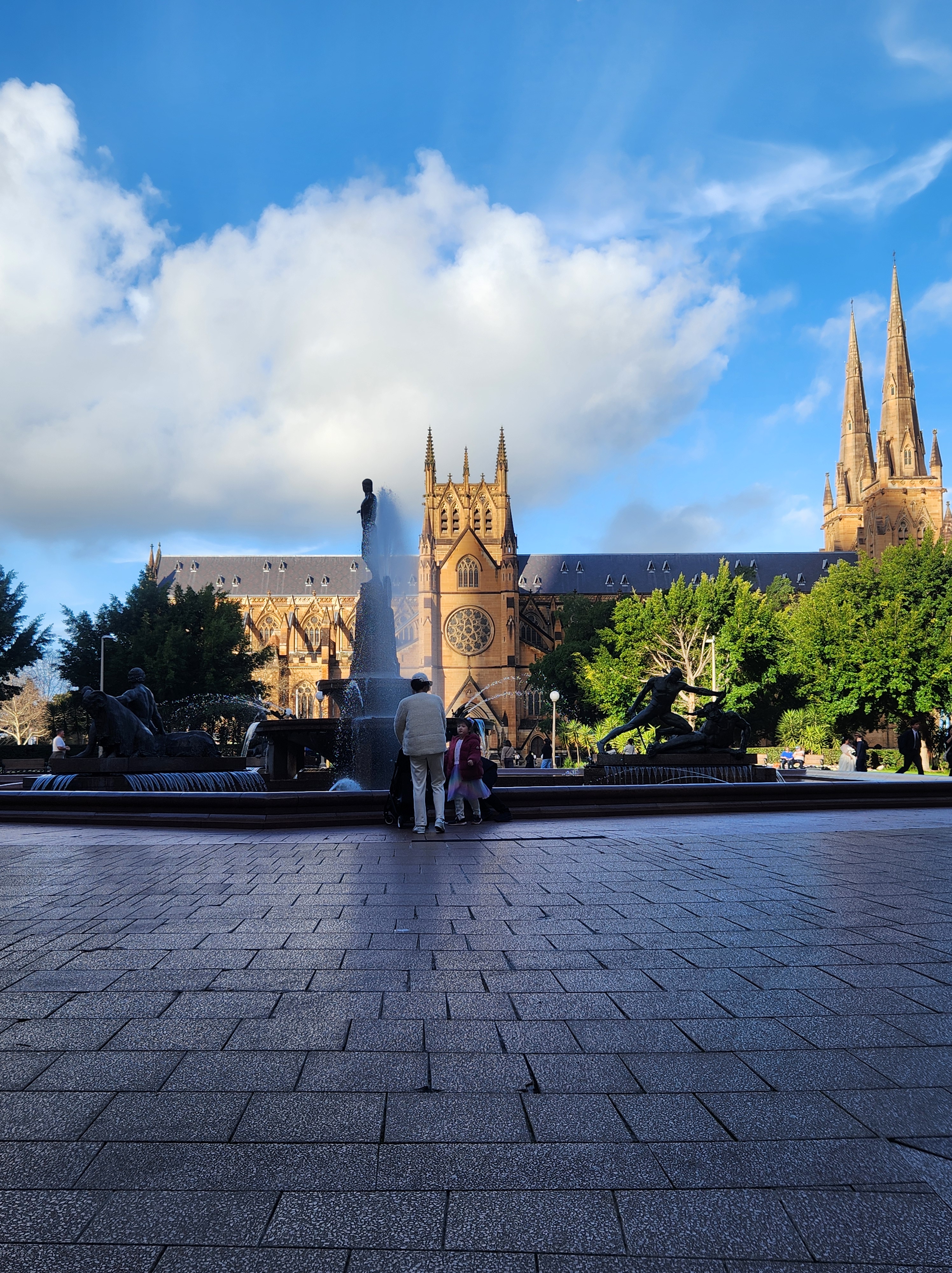
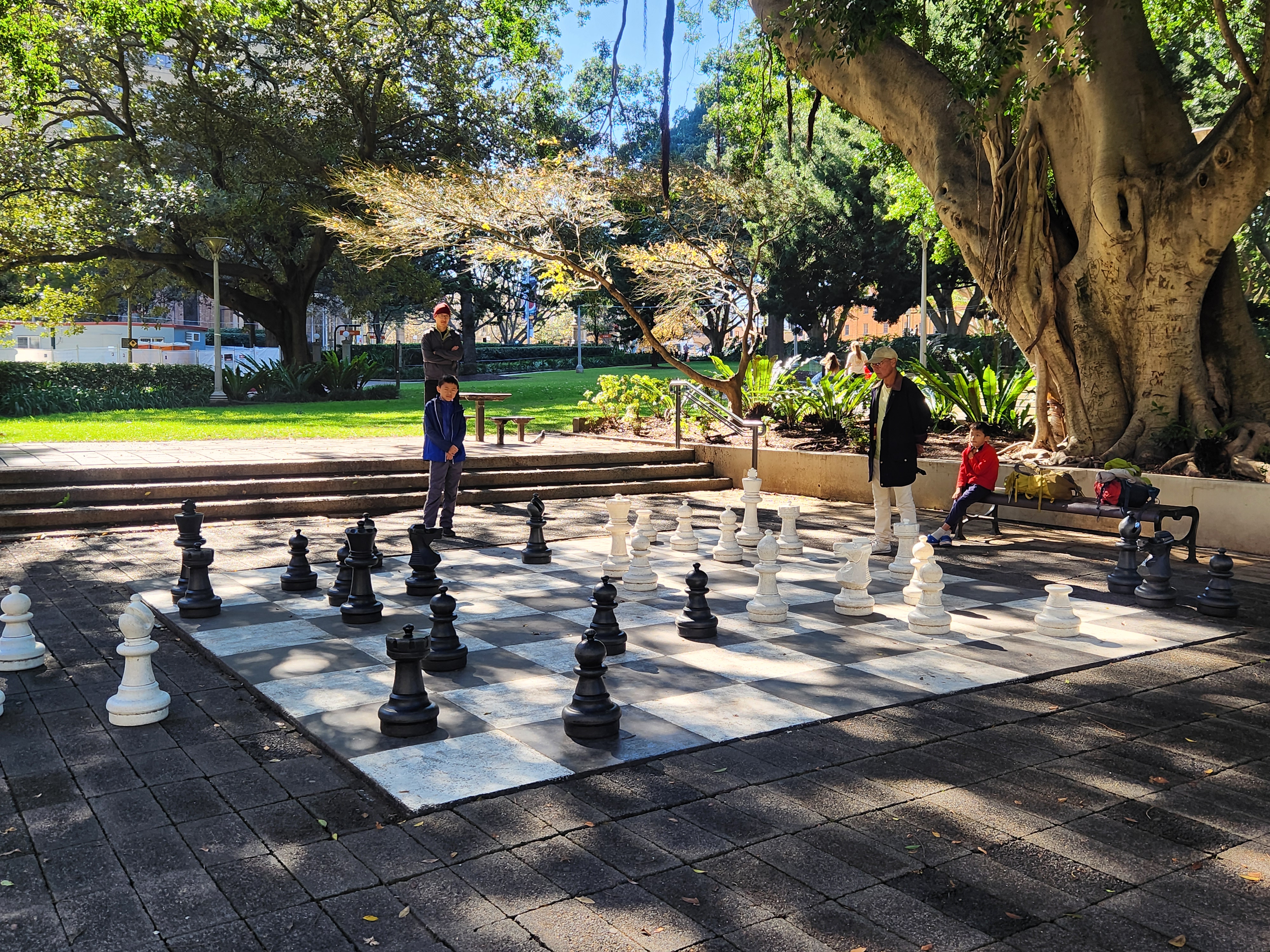
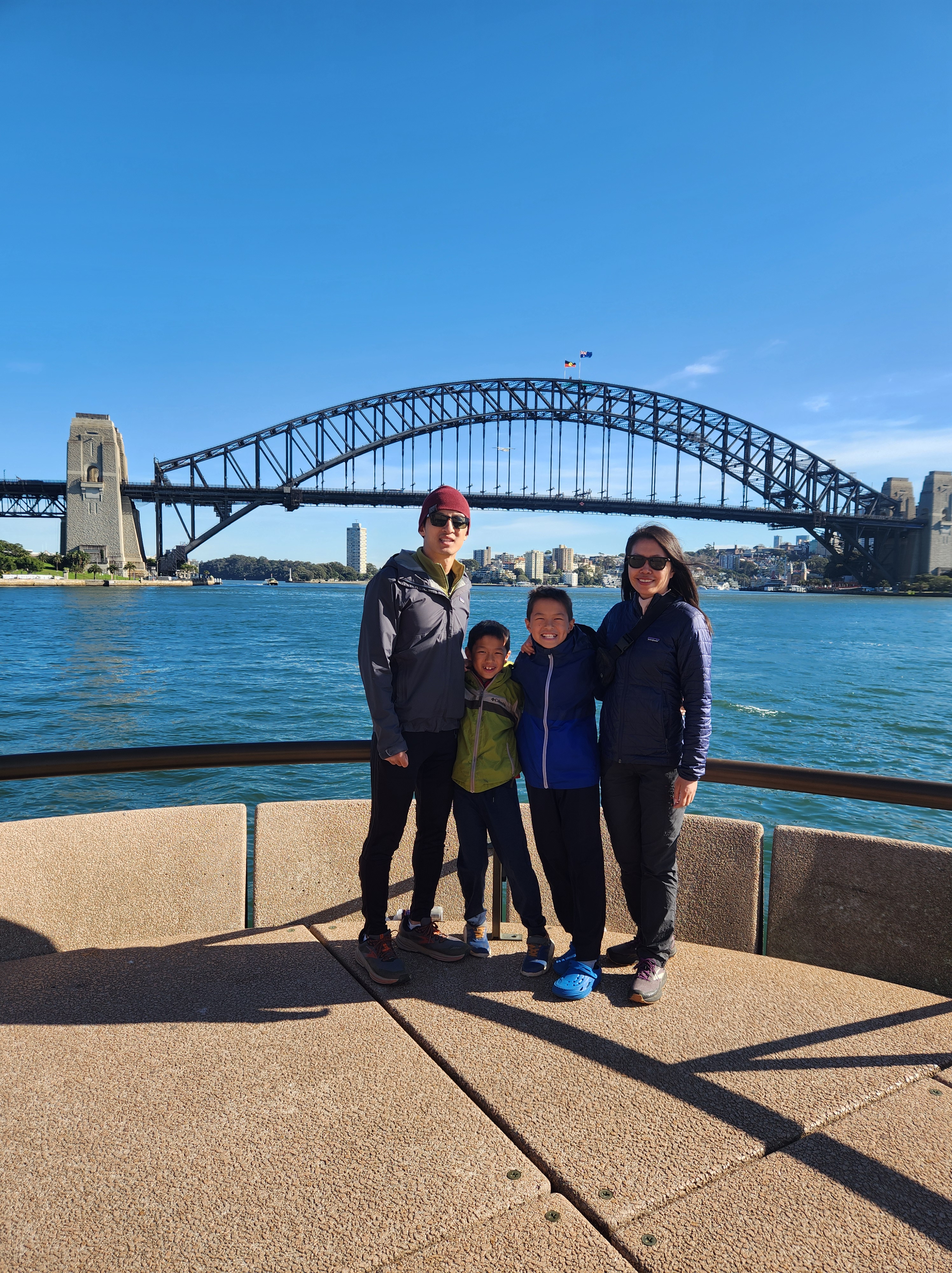
Sydney. After a week in the rugged, desolate Outback, we were more than ready to return to city life, and Sydney was the perfect contrast. With its blend of historic and modern architecture, diverse culture, lush parks, and waterfront setting, it reminded me of a mix between San Francisco and New York. Sydney is often rated as one of the most beautiful cities in the world and there’s no refuting that.
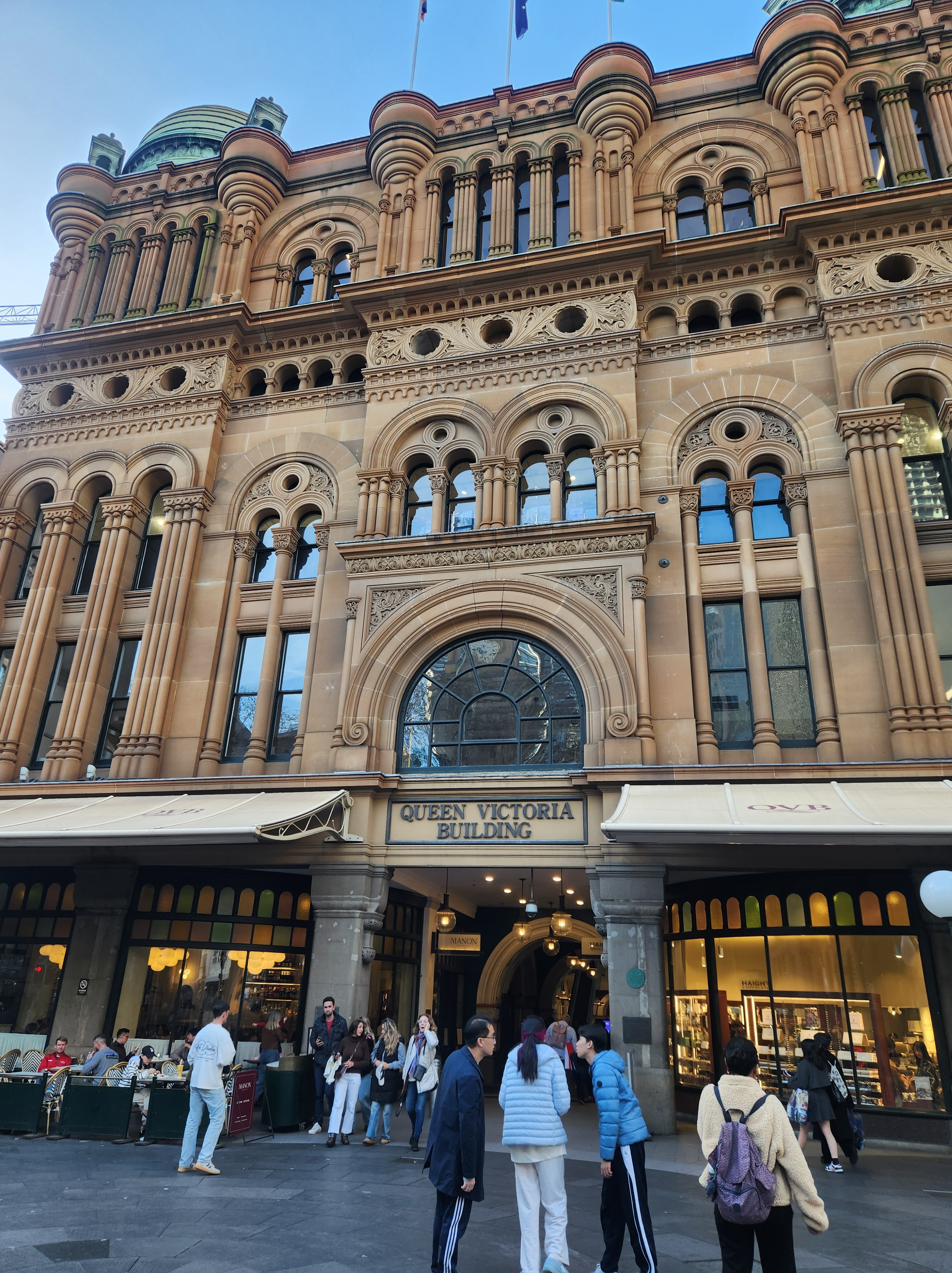
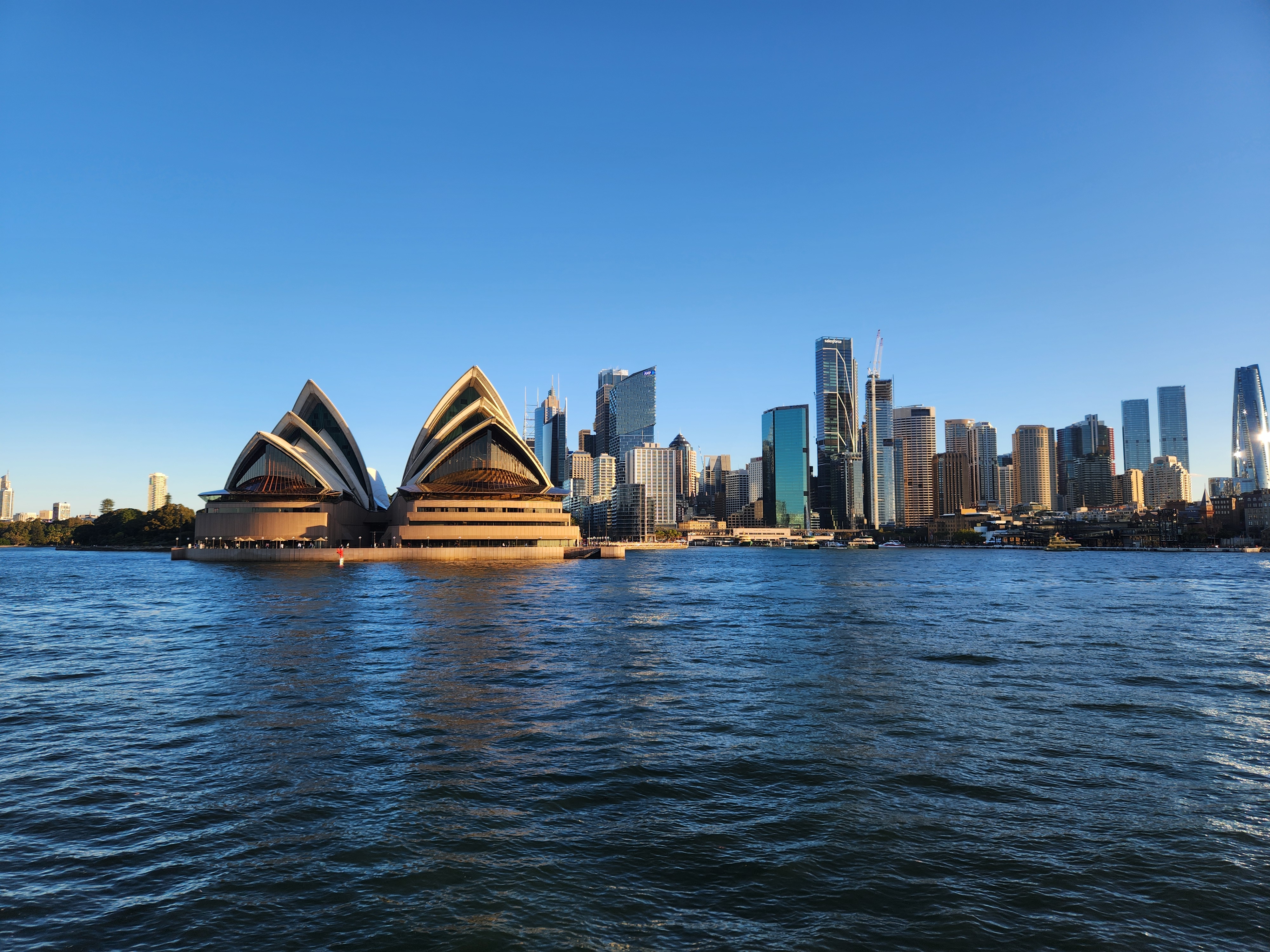
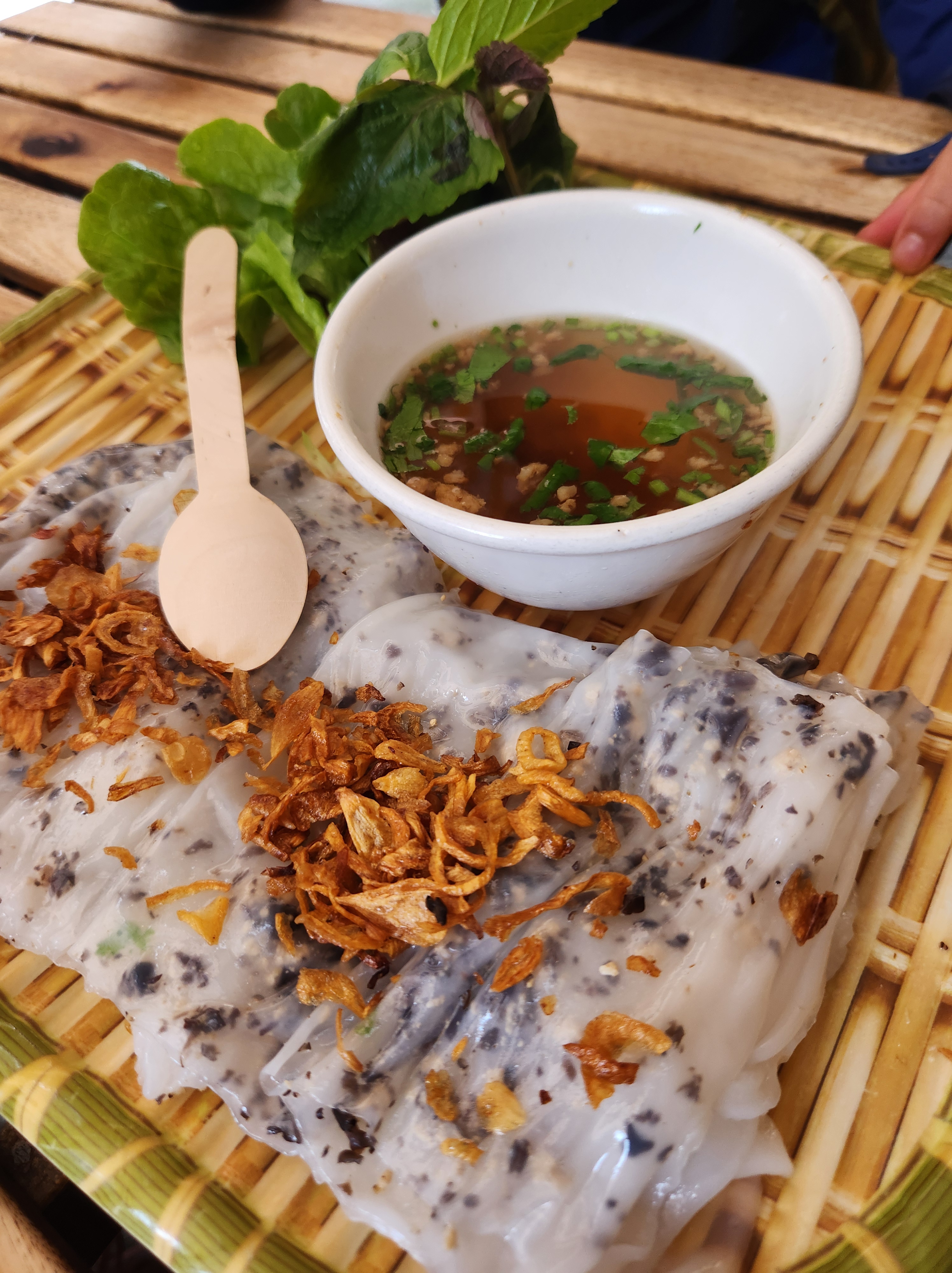
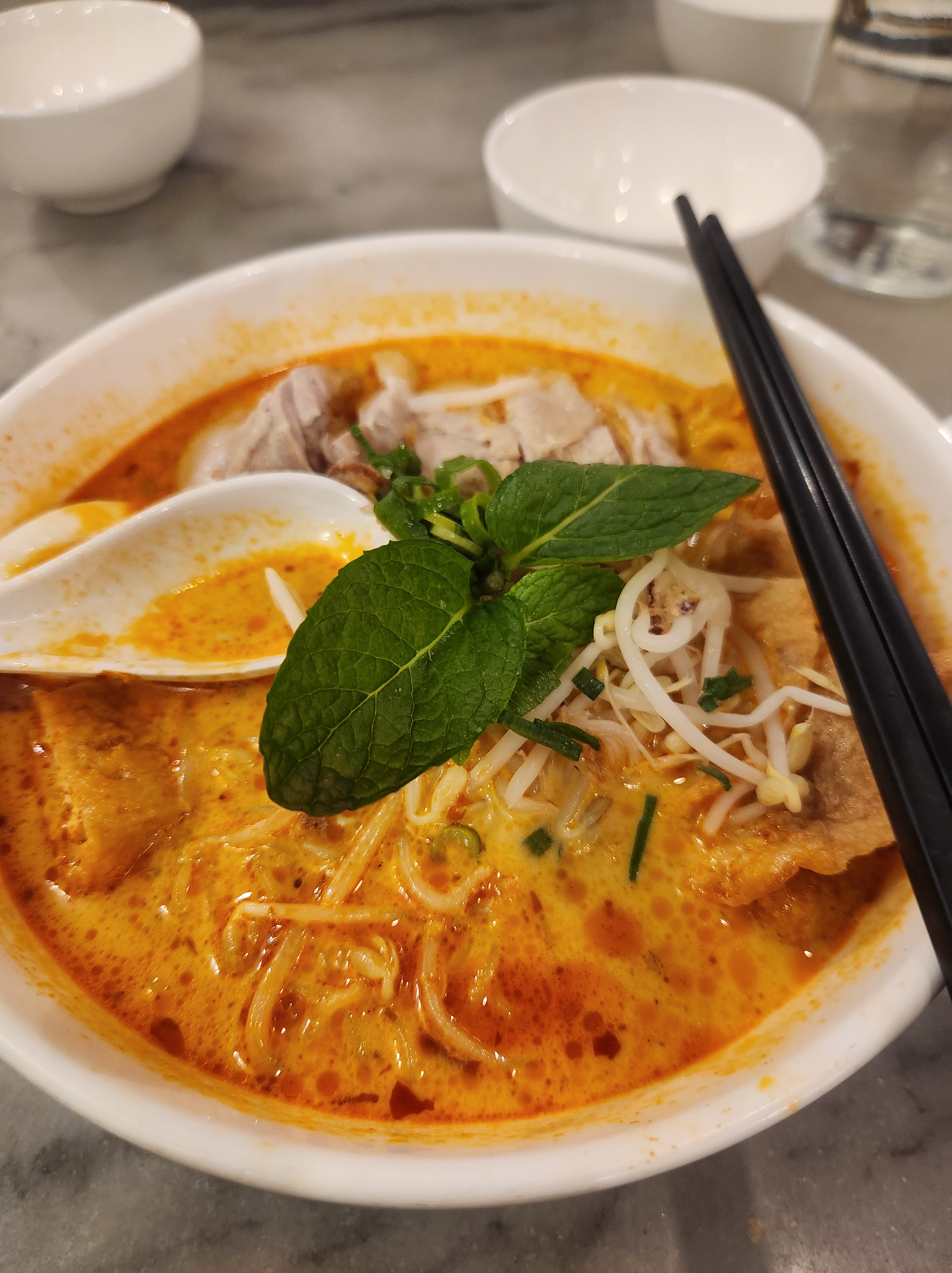
Sydney reminded me of why I sometimes miss living in the US. People were so friendly, not just in Sydney, but all across Australia. Taiwanese people are incredibly kind but reserved. Australians have this way of striking up a conversation as if you’ve been friends for years. Walking into a supermarket, I couldn’t help but linger over the ingredients I’ve long missed in Taiwan: all the cheese, beans, berries, and spices! Sydney is a very diverse city so of course we made sure to enjoy all the cuisines that are harder to find back in Taipei. (We thought the food in the Bay Area is slightly better, but still hit the spot!)

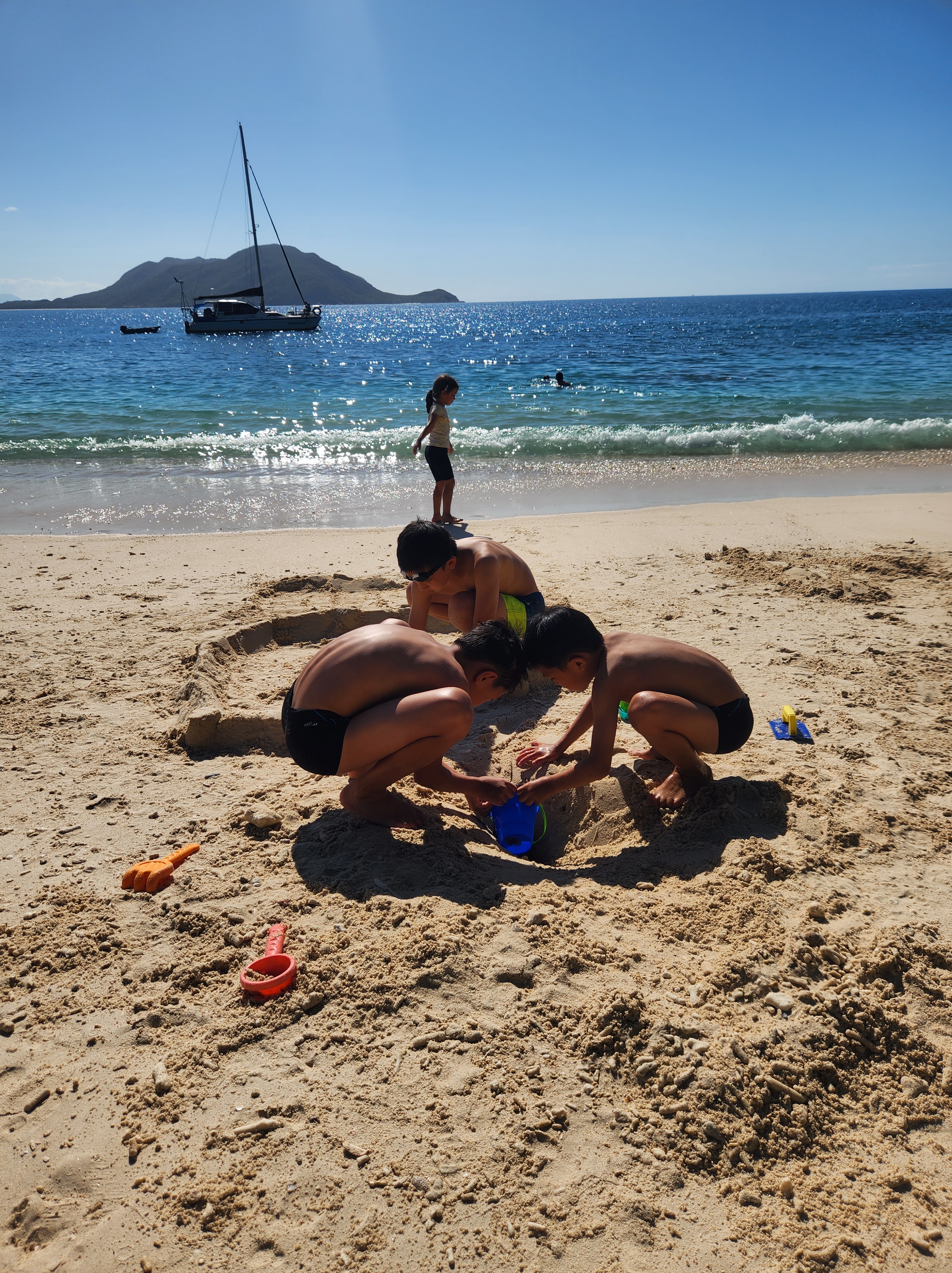
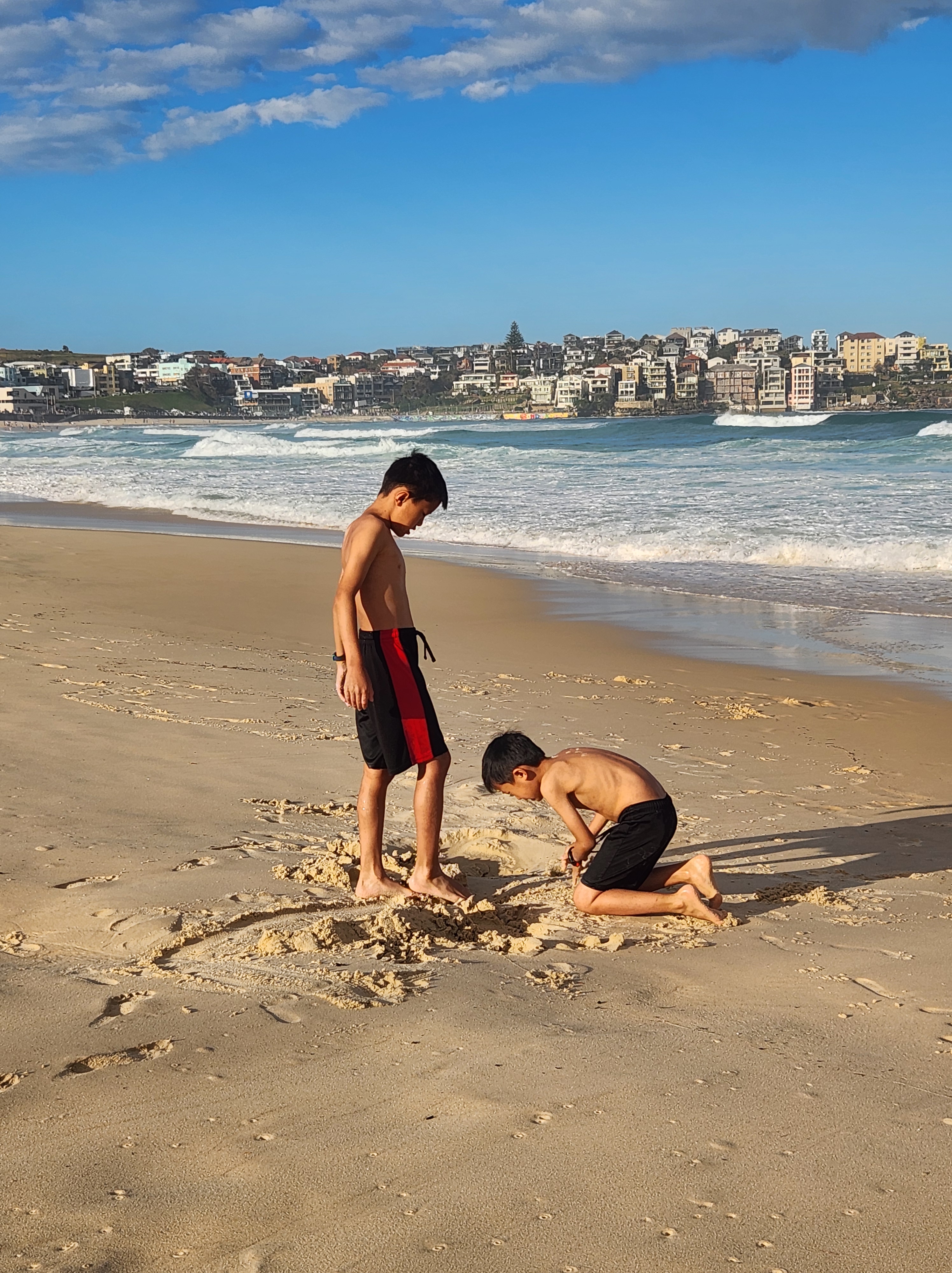
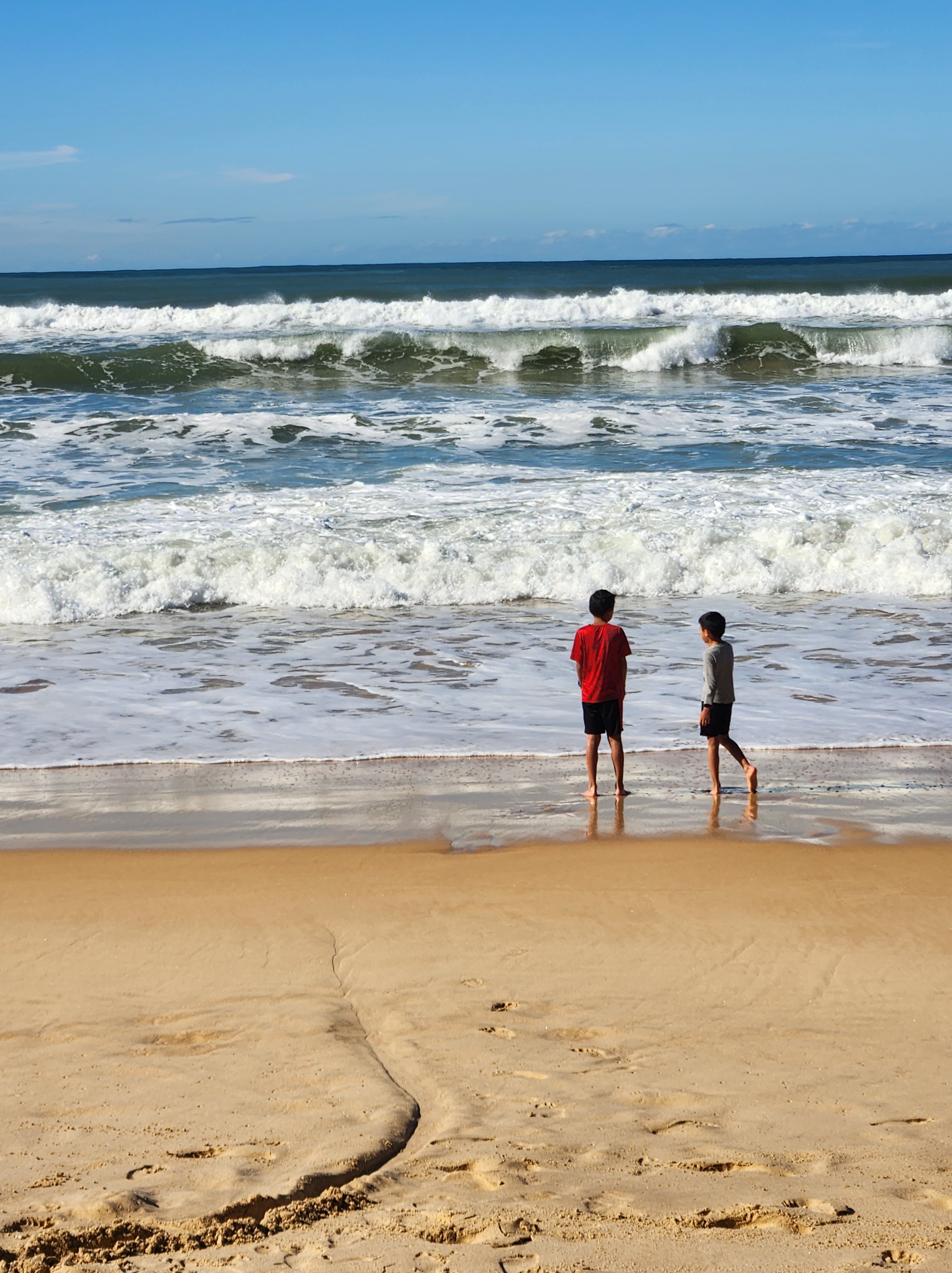
The kids absolutely love the beach, so we made our way to two of Sydney’s most famous ones: Bondi and Manly. Since it was winter, the water was cold and the waves were strong so wading in the water wasn’t an option. Still, the boys were perfectly happy spending hours playing in the sand. Living in Taipei, we don’t really have easy access to beaches, so I’m glad the boys had these special seaside moments.
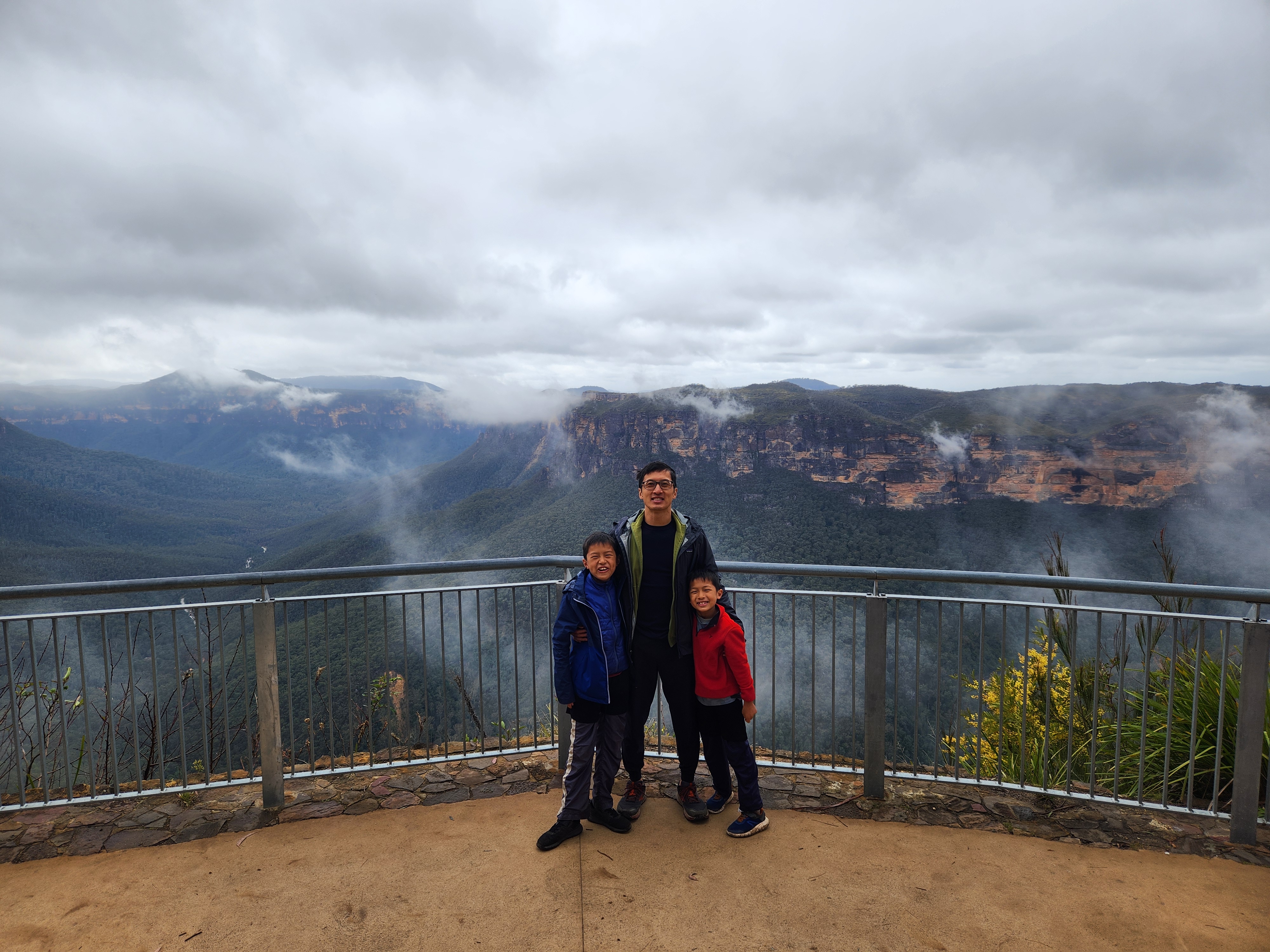
We also took a day trip to the Blue Mountains, a national park about a 1.5 hour drive outside of Sydney. There, we hiked the Grand Canyon trail, which turned out to be stunning, full of lush greenery, canyons, and river crossings. Although the fog kept us from seeing some of the Blue Mountains’ more iconic viewpoints, the hike itself was so beautiful that it felt entirely worth the trip.
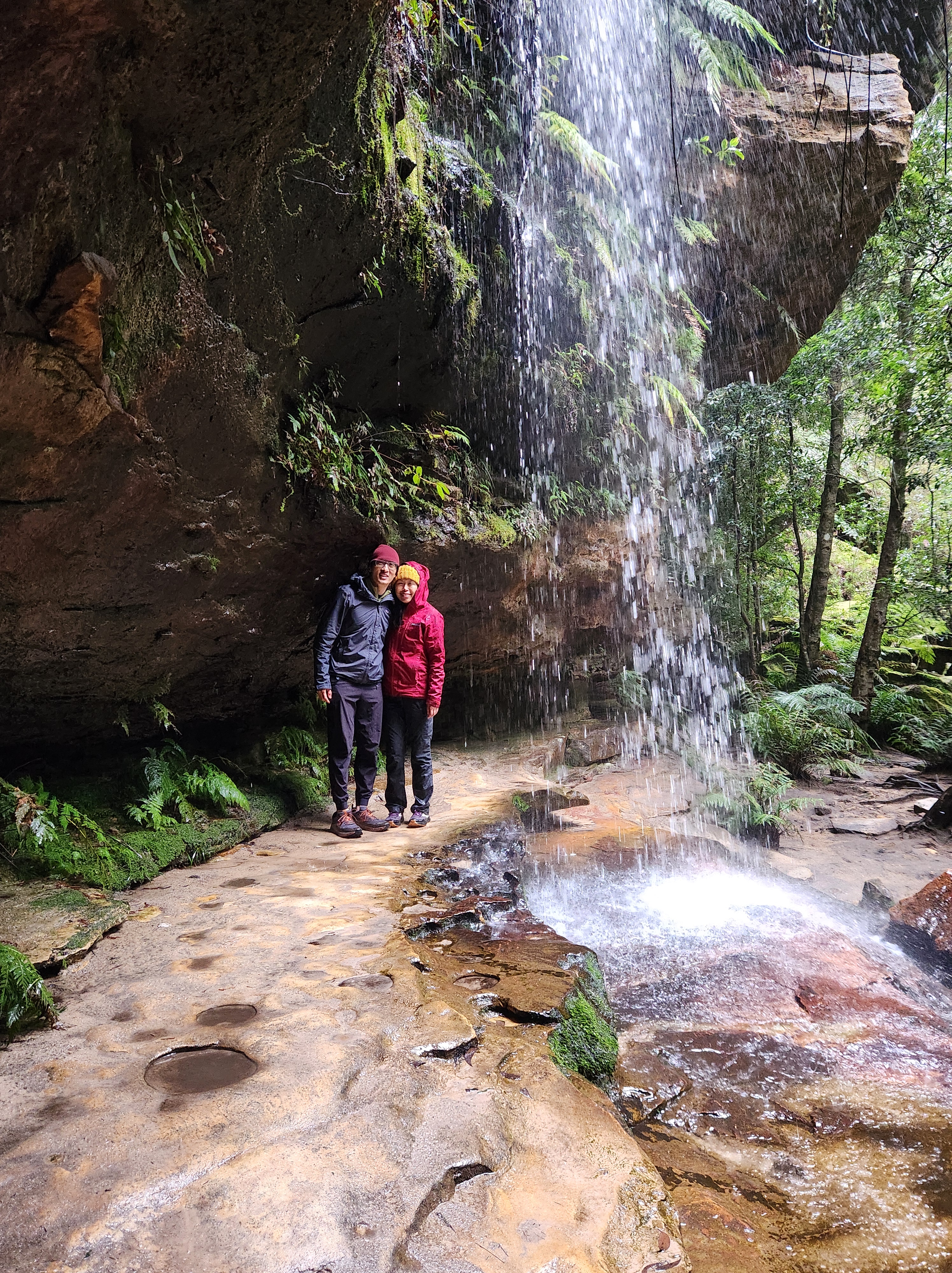
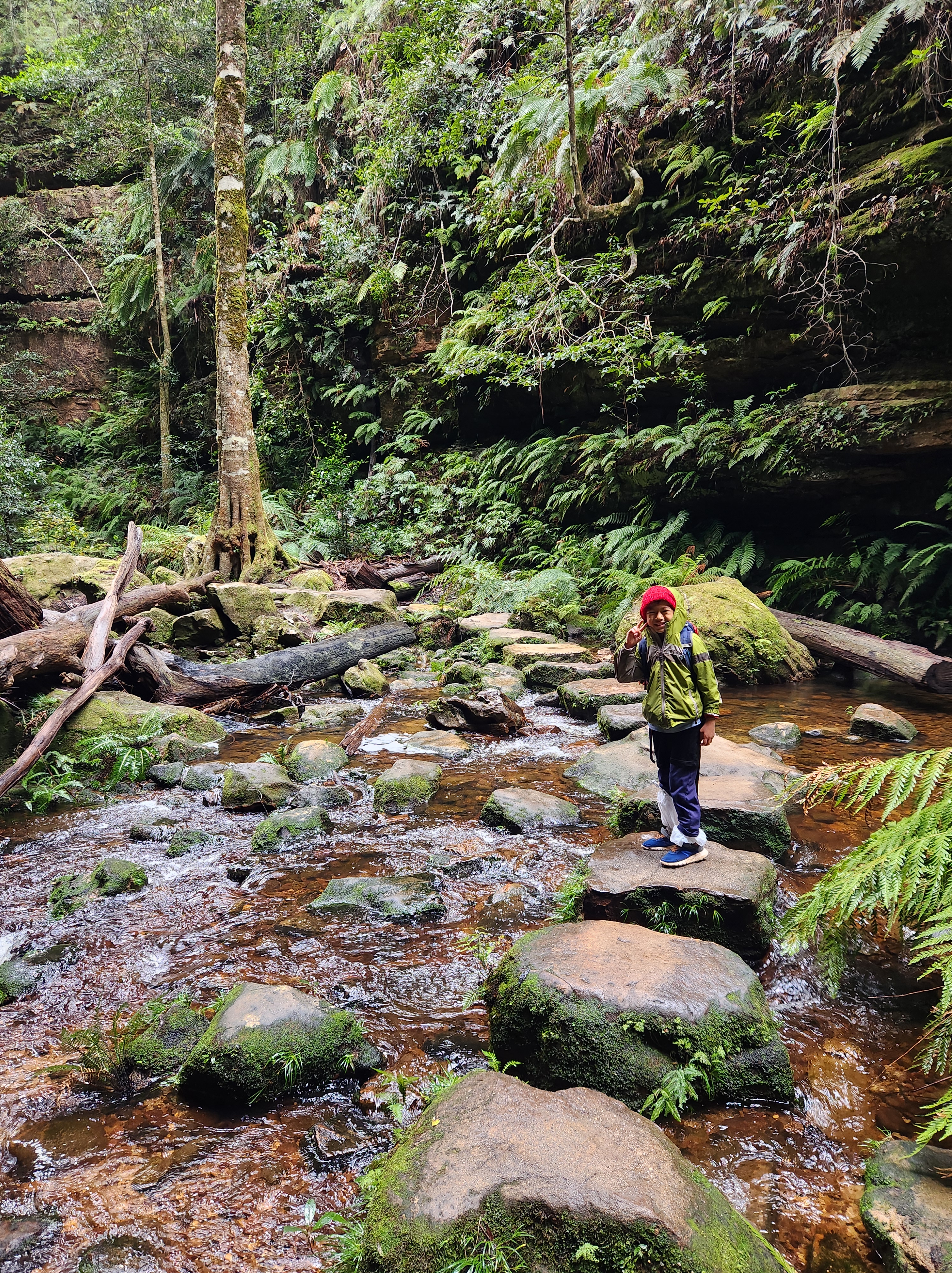
We spent 2.5 weeks in Australia and had an amazing time. Sydney, in particular, was one of those places that made us wonder, “Should we move here?” 😏 The trip felt perfectly balanced: we visited tropical Cairns, the rugged Outback, and vibrant Sydney. It was the kind of vacation that made it really hard to pack up and go home!
Ramblings

Climbing Mt. Fuji

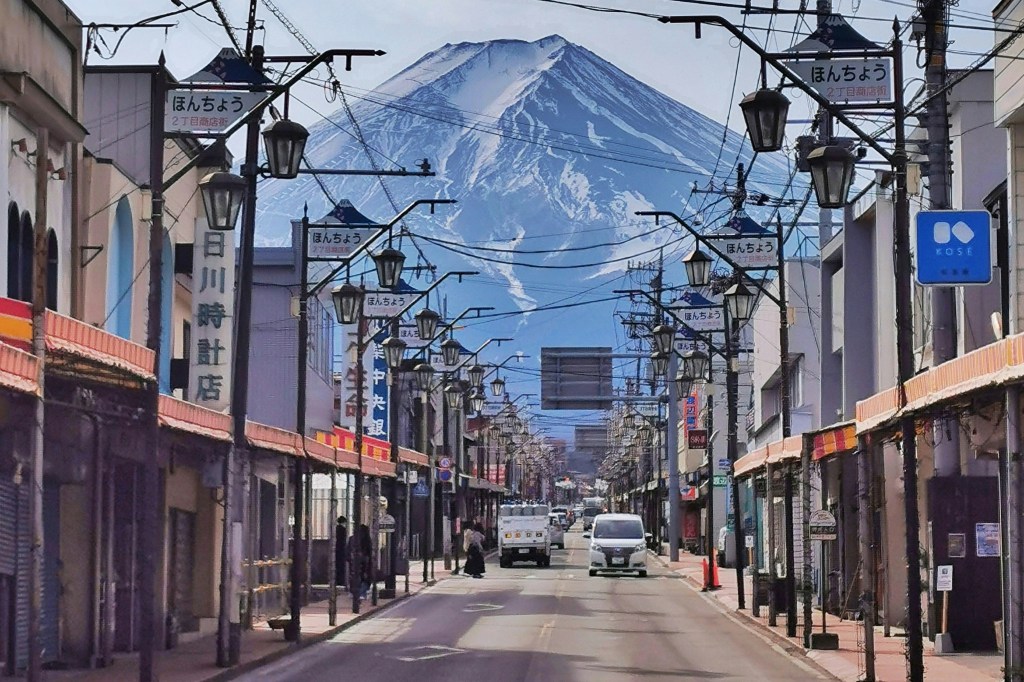
I honestly can’t remember what sparked the idea of climbing Fuji. What I do know is that when Baba and I started planning this trip, I wanted to go beyond the usual tourist stops. It wasn’t our first time in Japan after all. The boys love hiking – the more challenging, the better – and this felt like something unique our family can do together.

Source: Unsplash.com

Before you think I’d completely lost my mind, let me assure you: we weren’t the only ones with this idea. Kids as young as O’s age and hikers in their 70s-80s have made it to the top of Mt. Fuji. The mountain isn’t a stroll through the park, but it also isn’t a technical climb. With some determination and a decent level of fitness, even ordinary people like our family can do it!

The summer months are Mt. Fuji’s official climbing season. People can do the climb in one day (aka a “bullet climb”) but I wanted to stay overnight in a mountain hut to acclimate and rest. There are multiple huts at various parts of the mountain, the closer it is to the summit the more expensive and harder to reserve. I was able to snag a mountain hut at the 7.5th station at 3,200 meters high. (The highest hut you can book is at 8.5th station.) That would give us 2-3 hours to reach the summit the next day.

For reference, I booked the Miharashikan Hut on the Subashiri Trail. It cost about $340 USD for the four of us, which included a one night stay with basic facilities and two meals (dinner and breakfast).

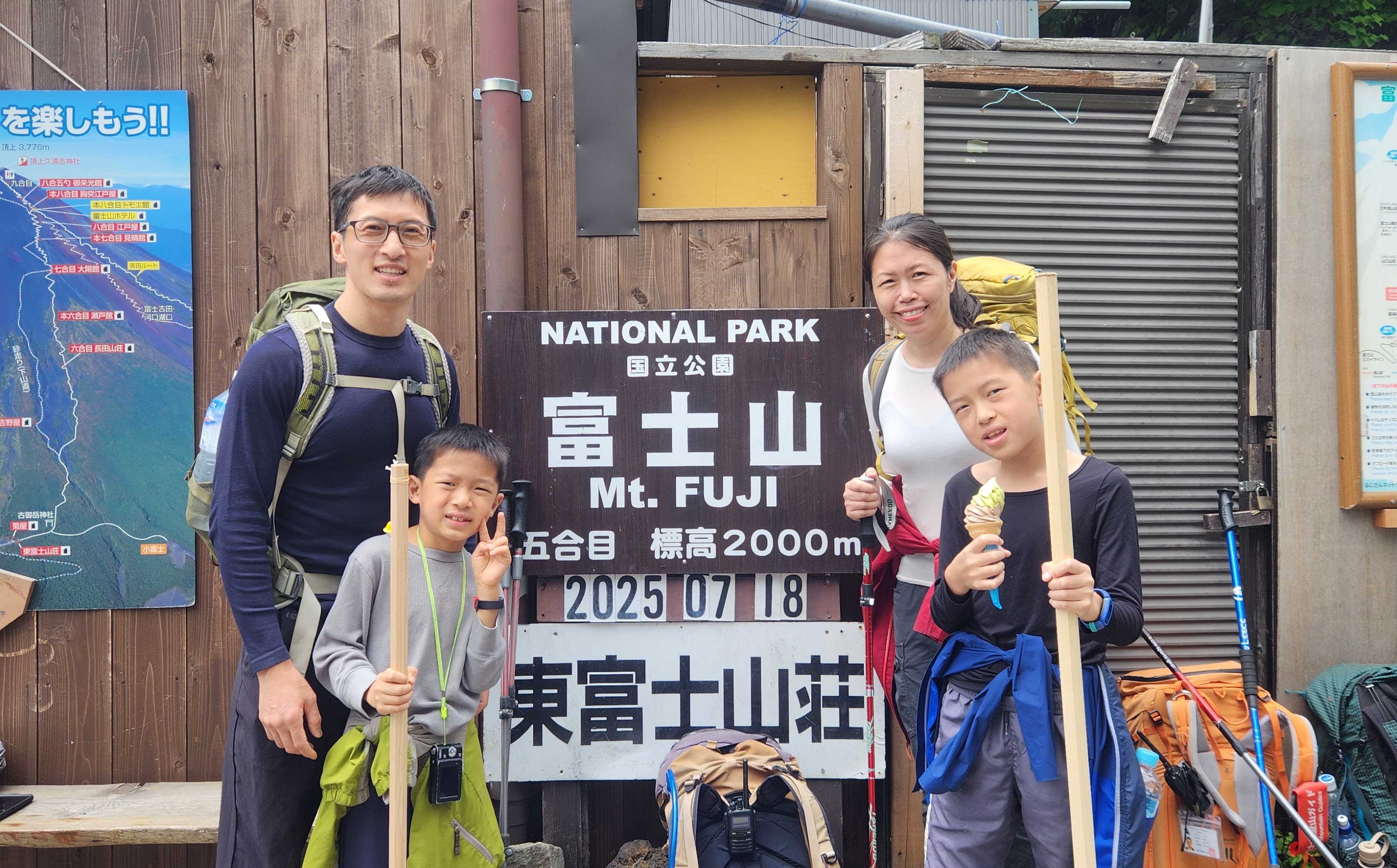
We decided to hike Mt. Fuji on Friday, July 18, toward the end of our trip. In the days leading up to our climb, the mountain was hit with severe storms. The park even issued alerts prohibiting hiking and summiting, and many disappointed hikers shared online that their trips had been canceled. I kept checking the forecast for the 18th, which showed signs of clearing, but with mountain weather you can never be too sure…

But on July 18, the weather cleared. In fact, the weather was PERFECT. No rain, no wind, and not too hot or cold. We couldn’t have been any luckier with the weather. 🙏

For the hike, we packed plenty of snacks, water, and layers of clothing as the temperature changes rapidly as you ascend. We started out early in the morning, and traveled about 3 hours by train and shuttle bus to reach the 5th station of the Subashiri Trail.

Mt. Fuji has four main trails to the summit: Yoshida, Fujinomiya, Subashiri, and Gotemba. The Yoshida Trail is often considered the “easiest,” but it’s also the most crowded so we chose the Subashiri Trail instead. The other two routes were either too long and or had too much elevation gain.

Map of the Mt. Fuji trails

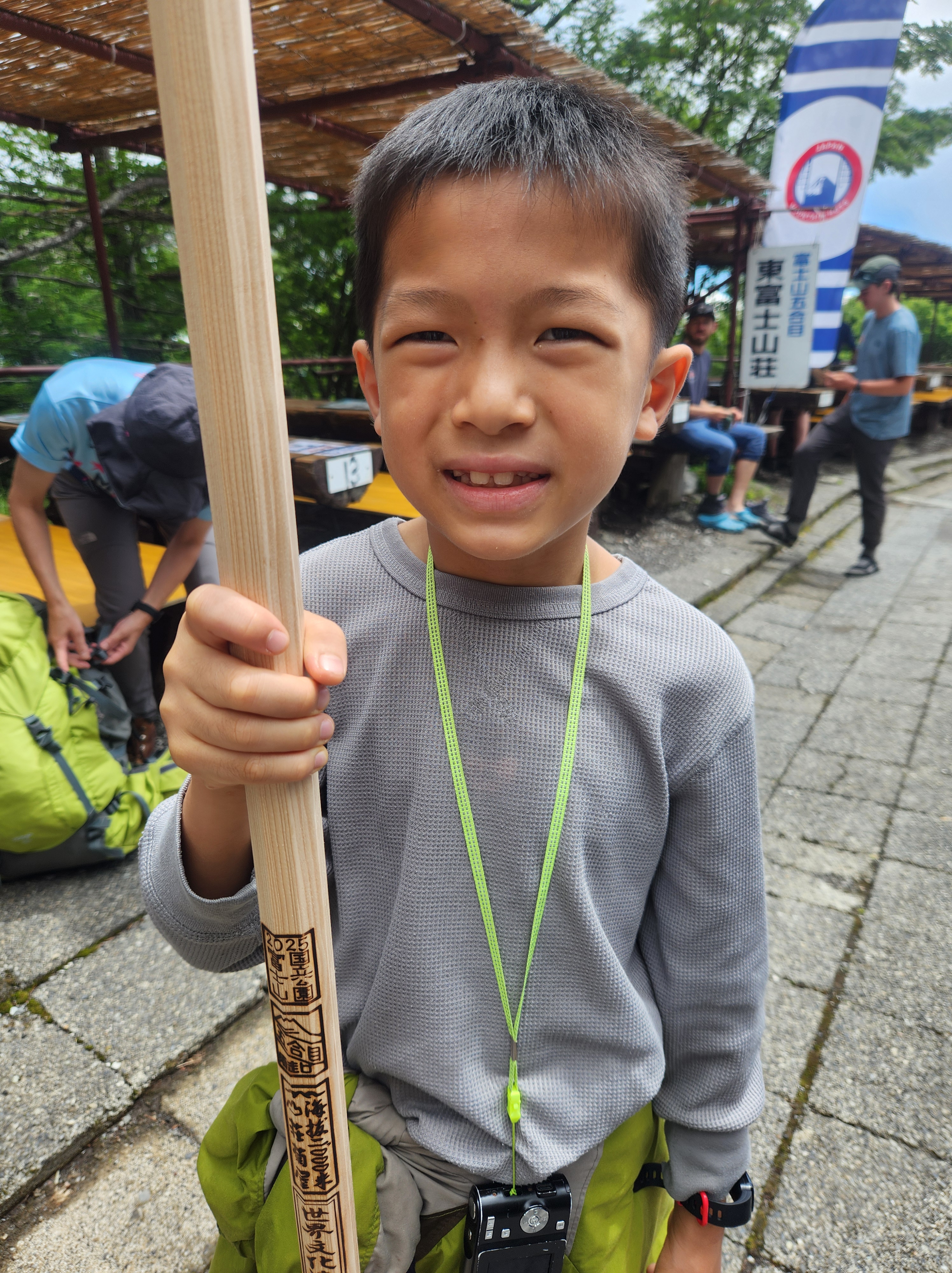
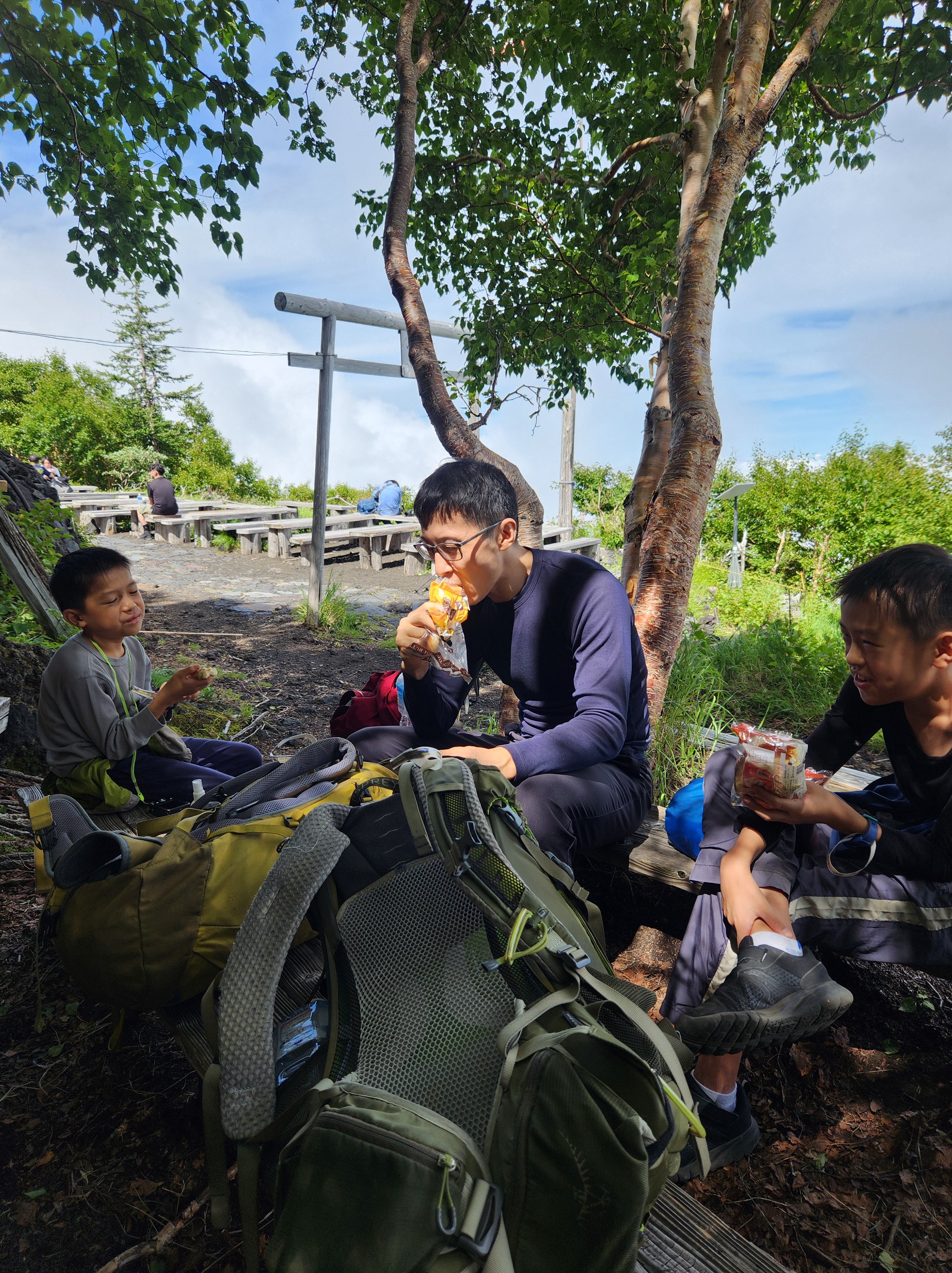
We arrived at the 5th station around 11am, about an hour later than planned since we missed the first shuttle bus. 😣 We spent the next hour there snacking, resting, and acclimating. Note: At 2,000 meters, the 5th station isn’t that high so most people really don’t need that much time to adjust, but we wanted to play it safe. We also bought matcha ice cream and a Fuji hiking stick while we were there.

Starting in 2025, all hikers on Mt. Fuji are required to purchase a $25 USD permit. The new system is designed to limit the number of climbers to about 4,000 per day, addressing the growing crowds. While booking a mountain hut was difficult, getting a permit was not.

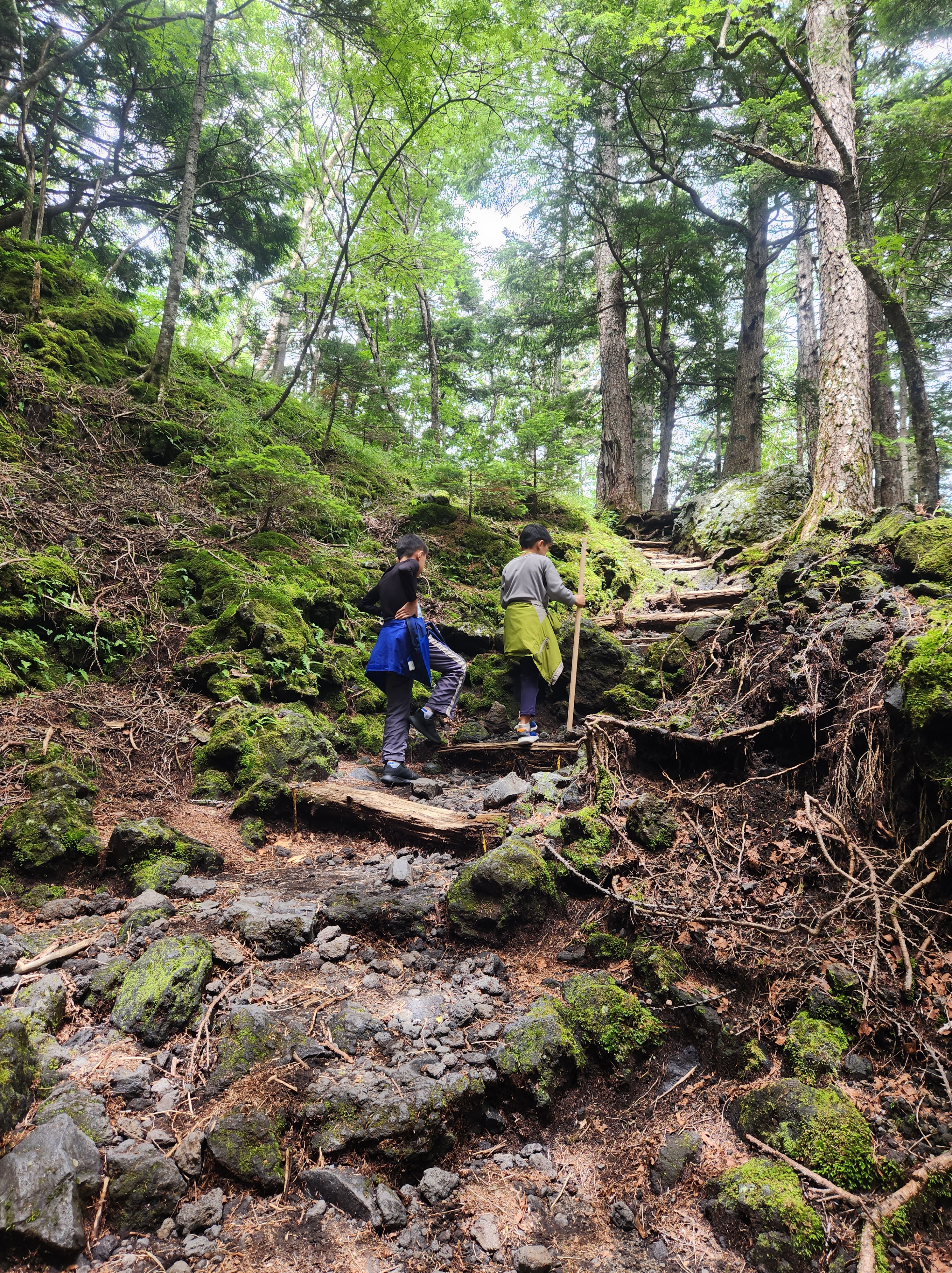
We started our hike on the Subashiri Trail around noon. Our destination for that day was our mountain hut at the 7.5th station where we would spend the night. The trail began like many wooded paths, lined with trees that provided shade, big stone steps and exposed roots that we had to climb over. Thankfully, about every mile there were mountain huts where hikers could rest, buy water, and use the restroom.

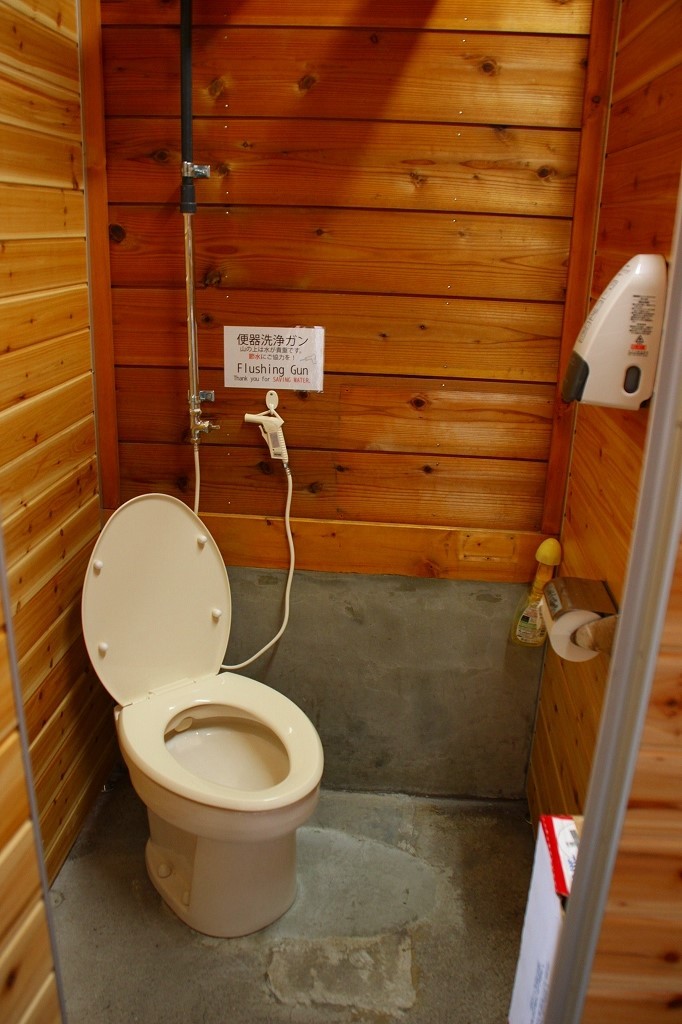
Snacks and water are available for purchase at every station, though prices increase with elevation. By the 7th and 8th stations, a 0.5L bottle of water can cost around $4 USD. Toilets are also available at every station and cost about $1.50 USD per use. To my relief, they were Western-style, generally pretty clean, stocked with toilet paper, and some even had flushing capability!, an impressive feat on a 3,776-meter-high mountain. Leave it to the Japanese to make flushing toilets possible at that altitude.

Forgot to take a picture of the toilets, but here’s one pulled from the internet!

I’ll be honest, it was not easy for me to get up to our hut. 😅 Mt. Fuji is famous for its switchbacks, where the trails zigzag across the slopes instead of going straight up. While this makes the climb more manageable, it also made the uphill feel endless. I’ve hiked many steep trails before, but usually after a stretch of climbing you hit some flat ground to catch your breath. On Fuji, it’s steep the ENTIRE way, and the higher elevation makes every step even harder. I hiked up very slowly (probably a little too slowly) but thankfully Baba stayed with me for support.

The boys, on the other hand, found the hike to be a walk in the park. 😆 They often hiked far ahead, leaving me and Baba in the dust. C and I had planned to take turns carrying the backpack, but at one point, he ended up carrying it the whole way himself. I’m so grateful that my boys are so strong and easy going.

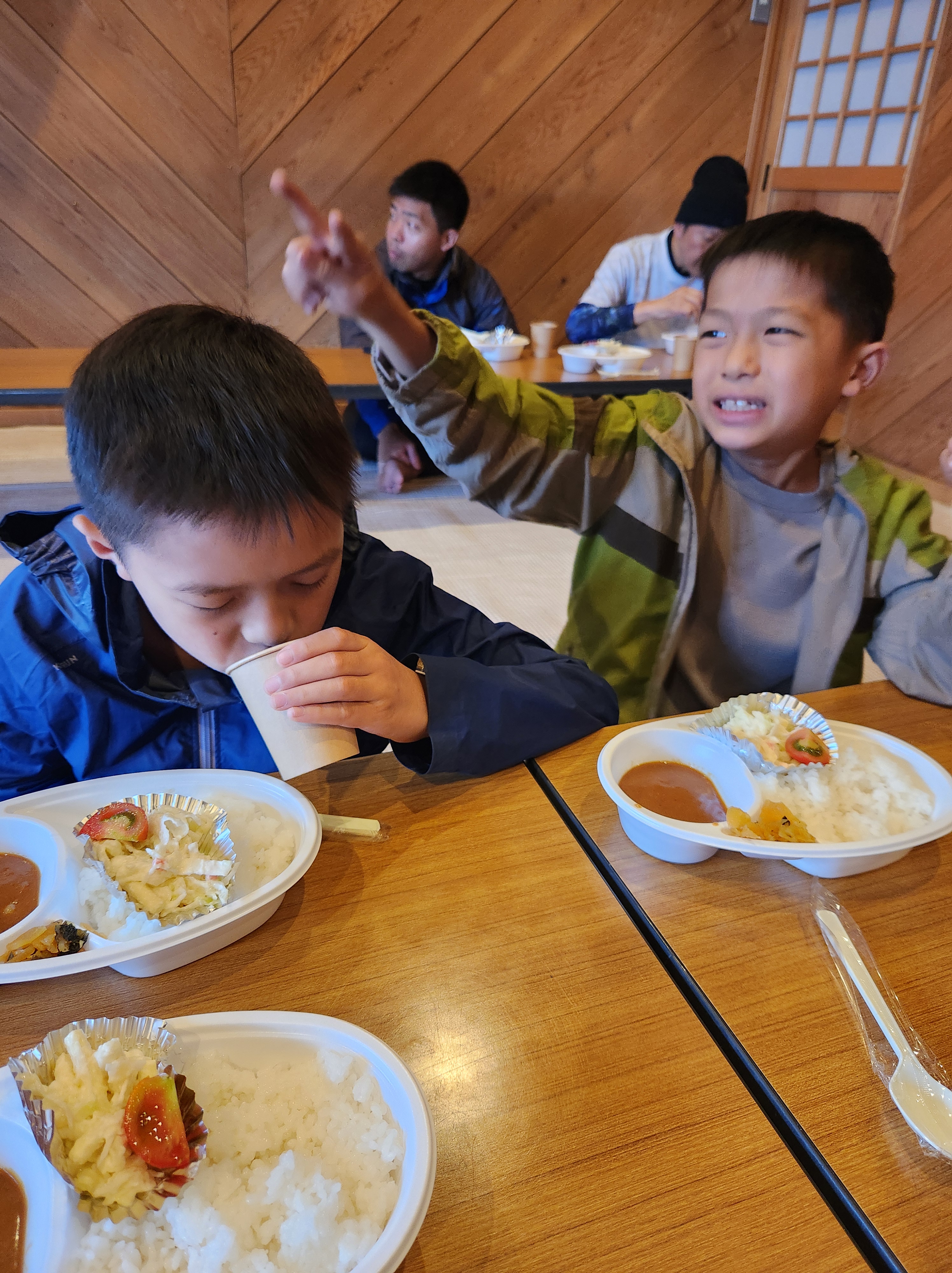
By around 6pm, we finally arrived at our mountain hut. It was extremely cold at this point. We were served a simple meal of curry with rice, vegetables and hot tea. I had a minor headache and no appetite (likely from the altitude) but Baba insisted we finish every bite, reminding us that our bodies needed the fuel. After taking an ibuprofen, I felt somewhat better.

Since most hikers wake up around 2am to catch the sunrise, the hut turns off the lights at 8pm. We slept in sleeping bags laid out in a large shared room, separated only by thin curtains for a bit of privacy. The space was clean, but you are literally sleeping shoulder-to-shoulder with strangers. Surprisingly, we all slept pretty well despite the cold and unfamiliar space.

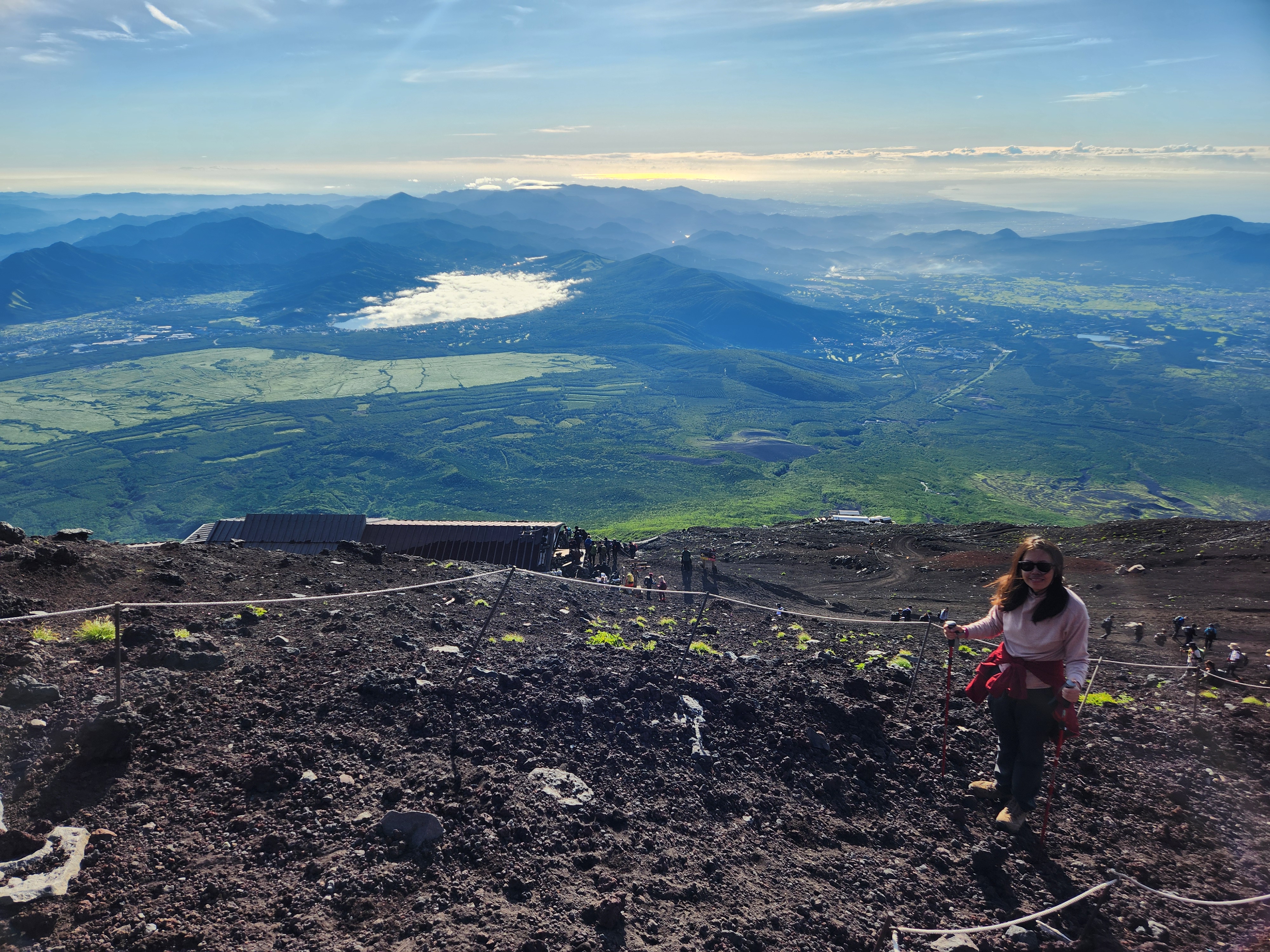
We’ve seen many sunrises and never felt that it was worth getting up at 2-3am so we also skipped it on Fuji. While the other hikers in our hut left early, we got up at 5am and were the last to check out. Still, we were able to catch the sunrise from our hut and it was lovely. (Still not worth getting up early though. 😅)

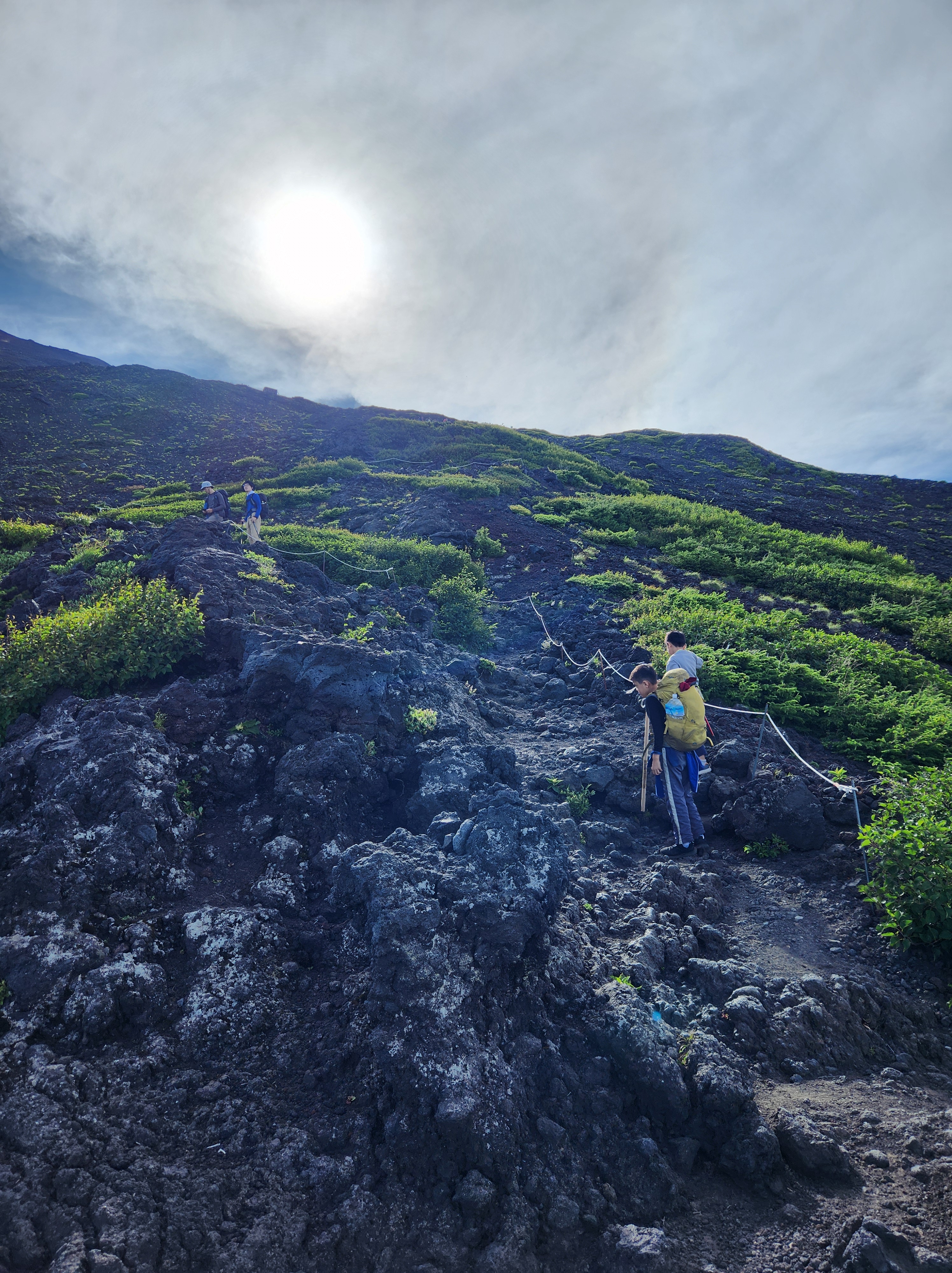
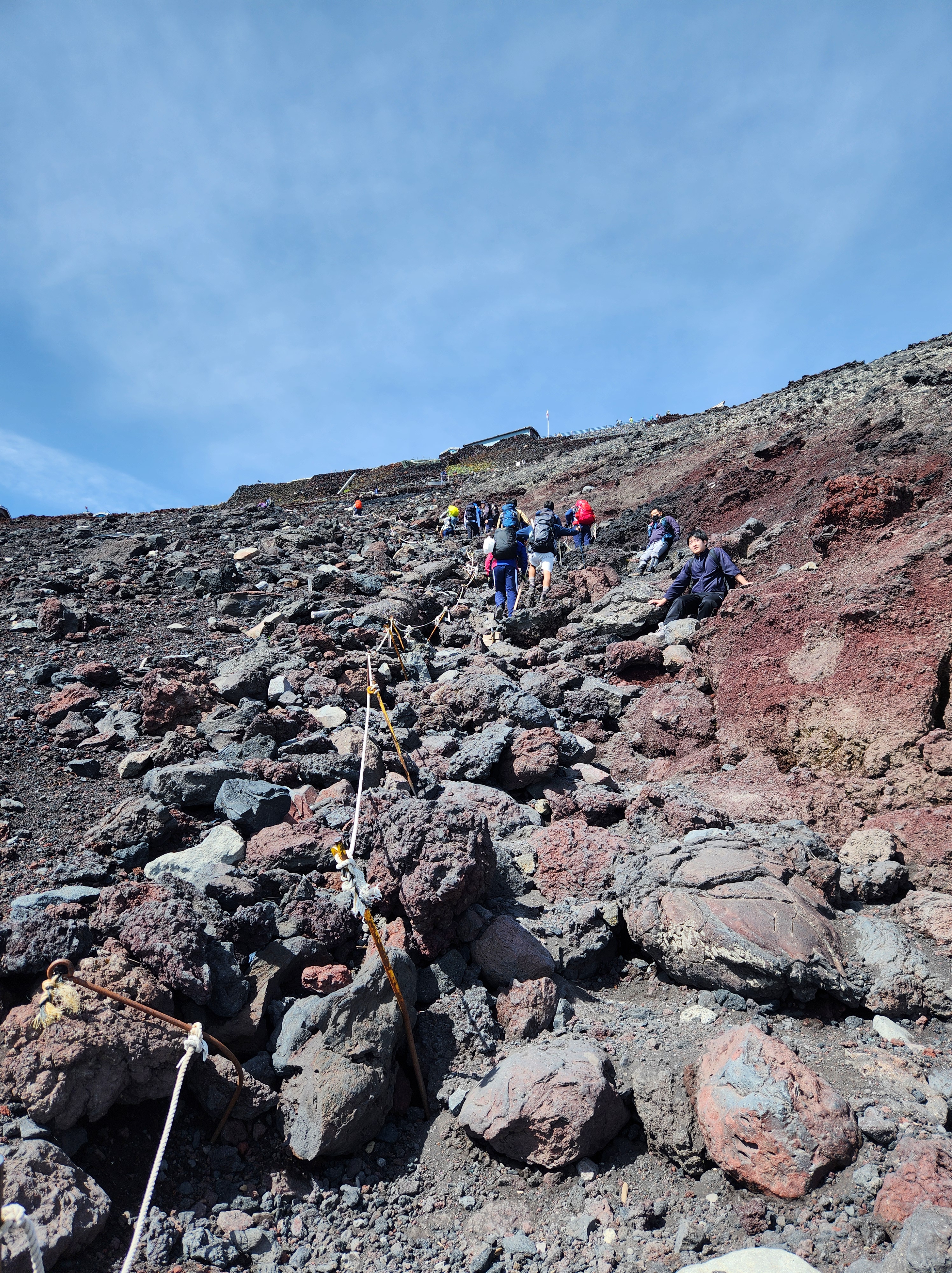
After a quick breakfast of bread and juice at our hut, we set out for the summit. From there, it was estimated to take 2–3 hours to reach the top. As we climbed higher, the trail grew steeper and more challenging. To make matters worse, the path alternated between large boulders to scramble over and loose, slippery gravel that made every step feel like you were sliding backward – ugh!

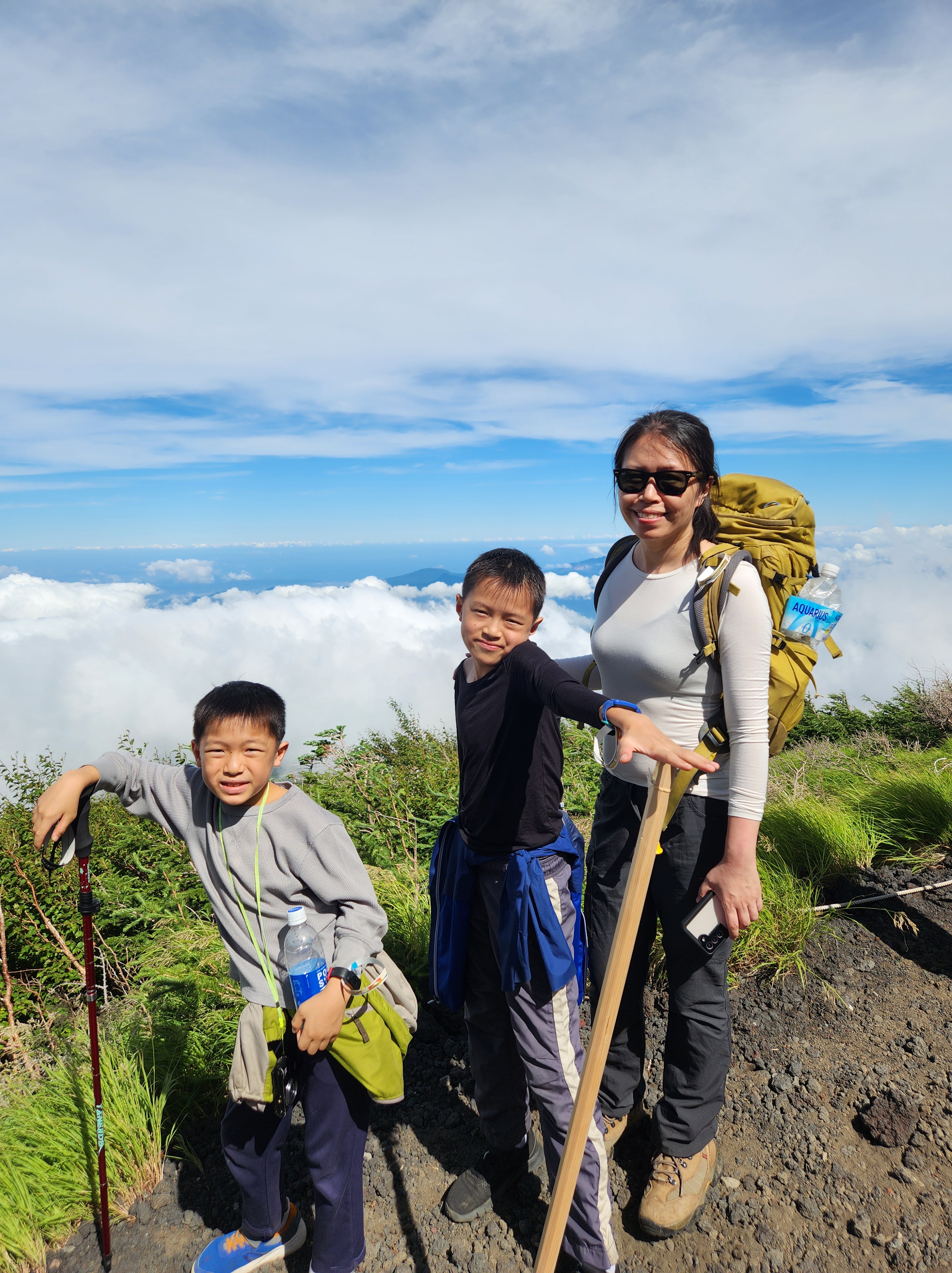
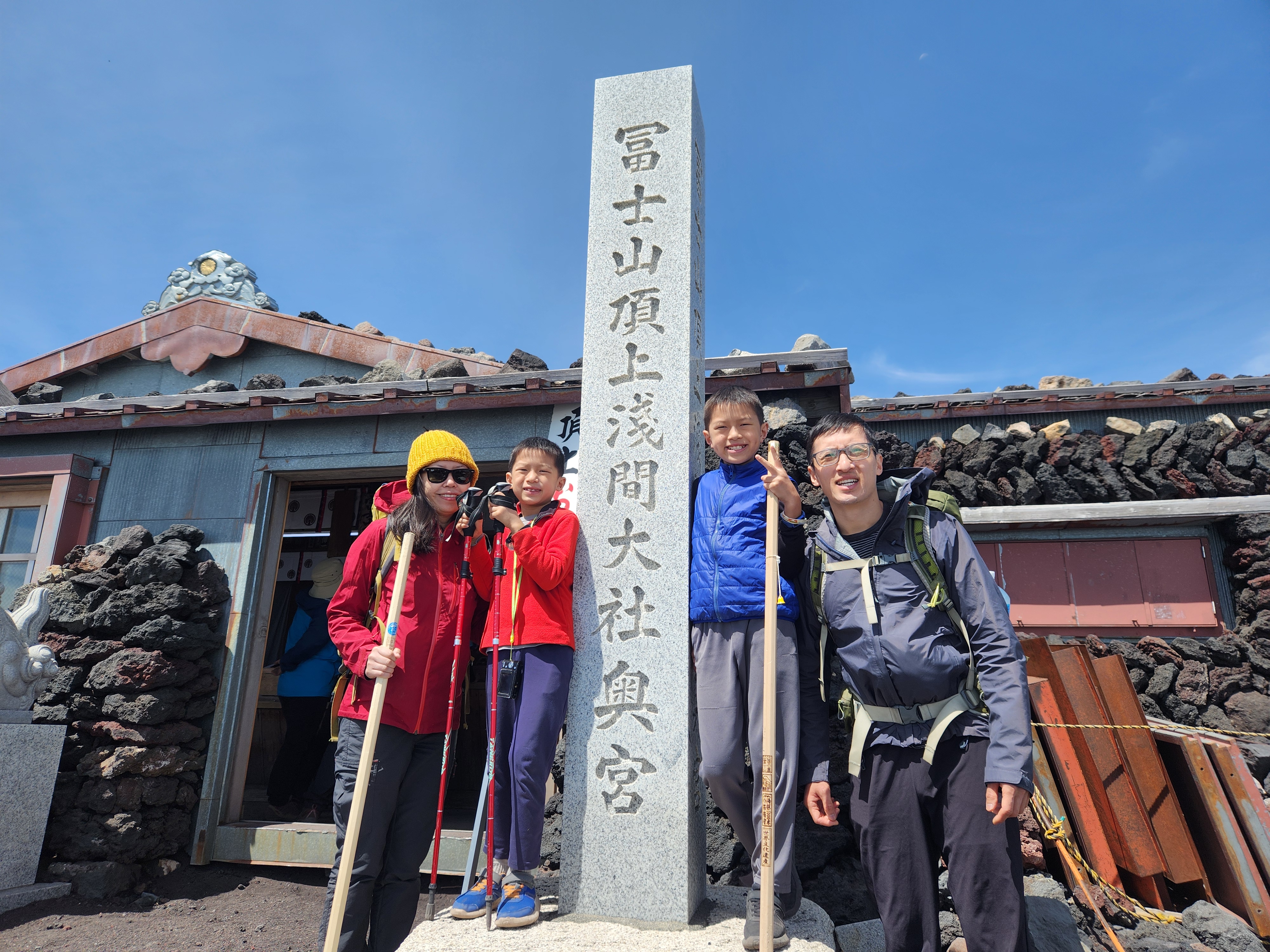
Baba made sure I drank plenty of water and took a rest at every opportunity. (The boys, meanwhile, zoomed ahead on their own.) I took far longer to reach the summit than necessary, but finally, after one last grueling push, we all made it to the peak!! 🎉

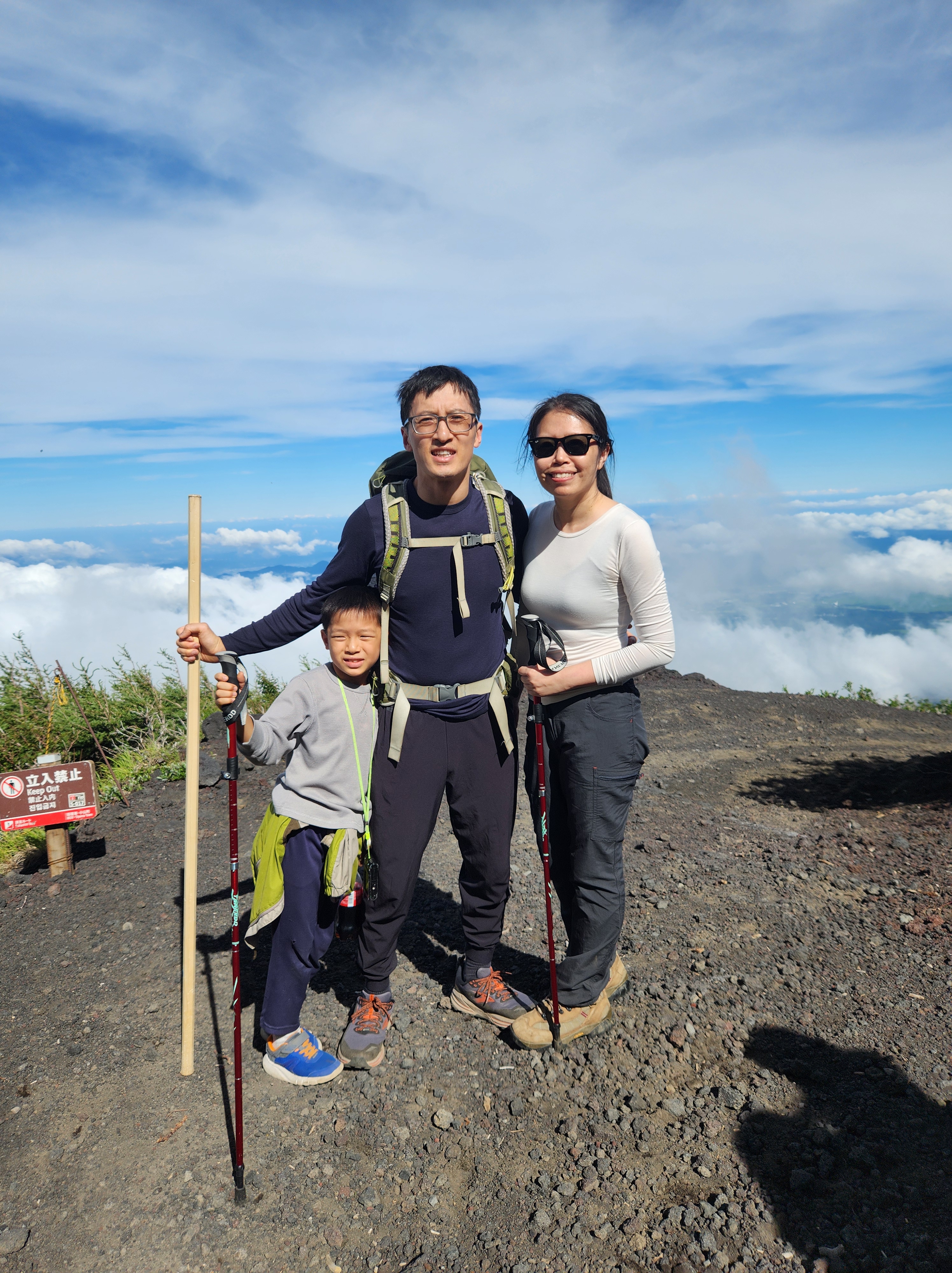
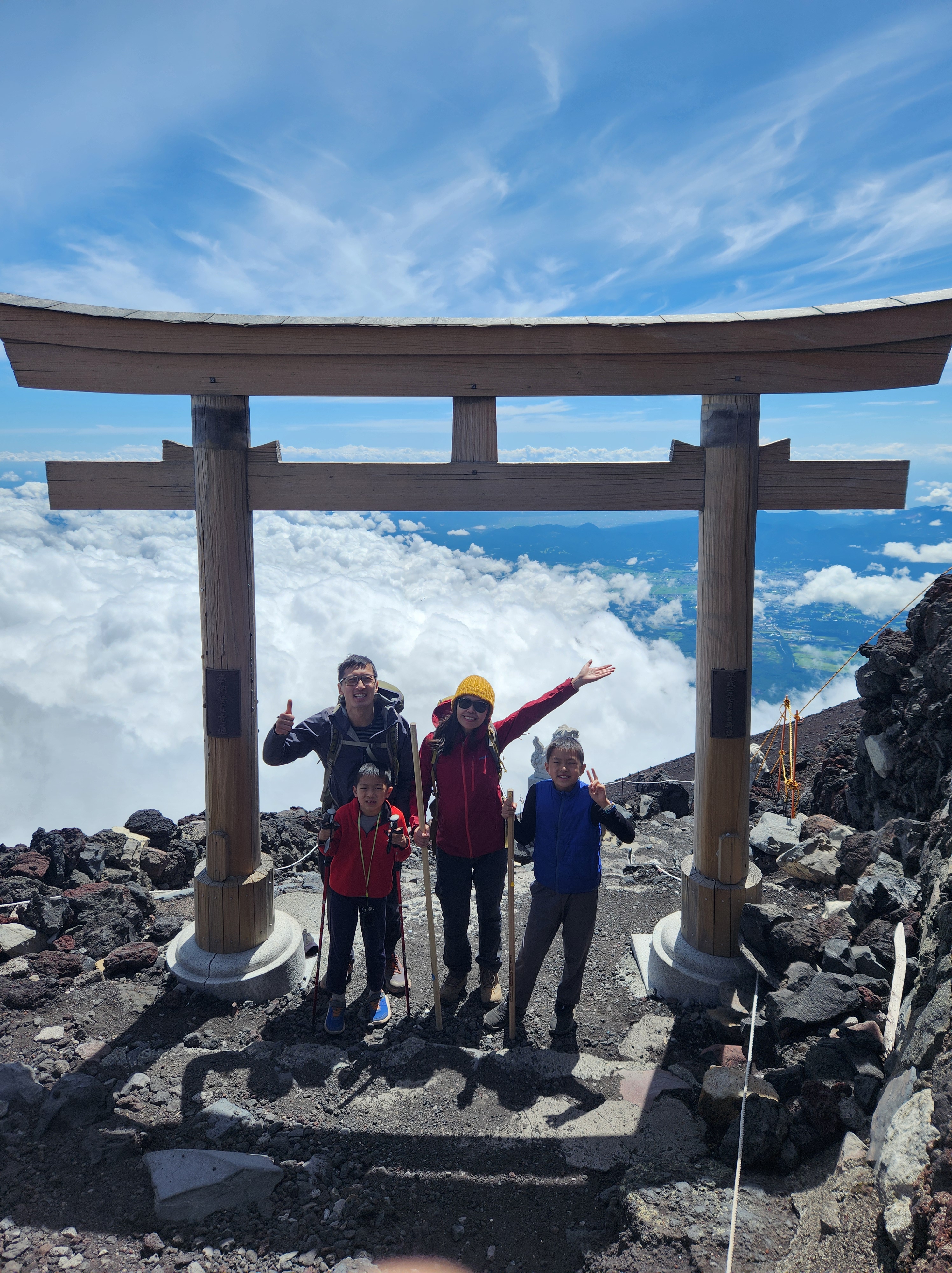
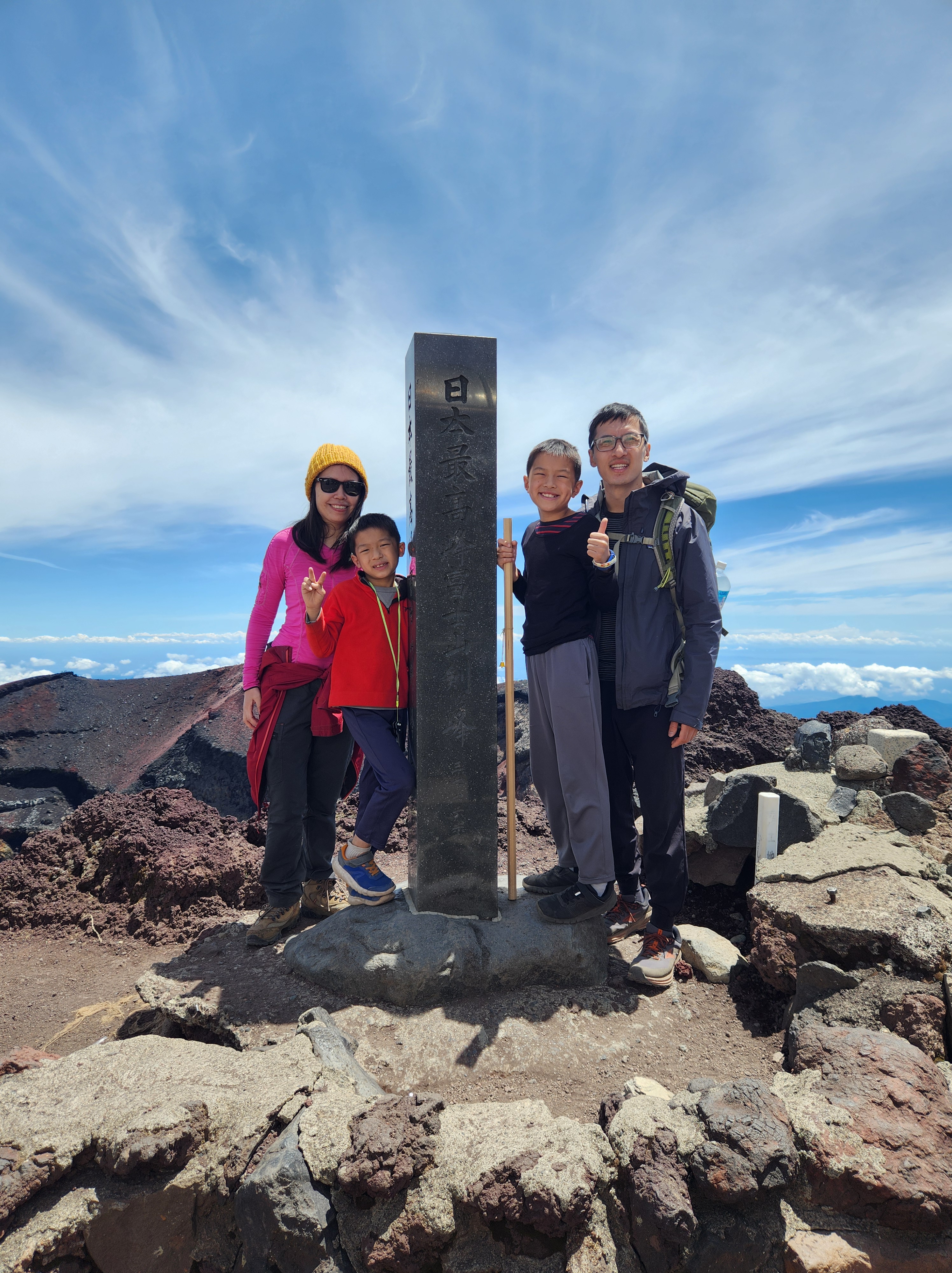
Being the worrywart that I am, I had worried we wouldn’t make it to the top, or that something would go wrong and our plans would be canceled. So finally passing through the last gate to Mt. Fuji’s summit felt utterly surreal. I am so proud of us!

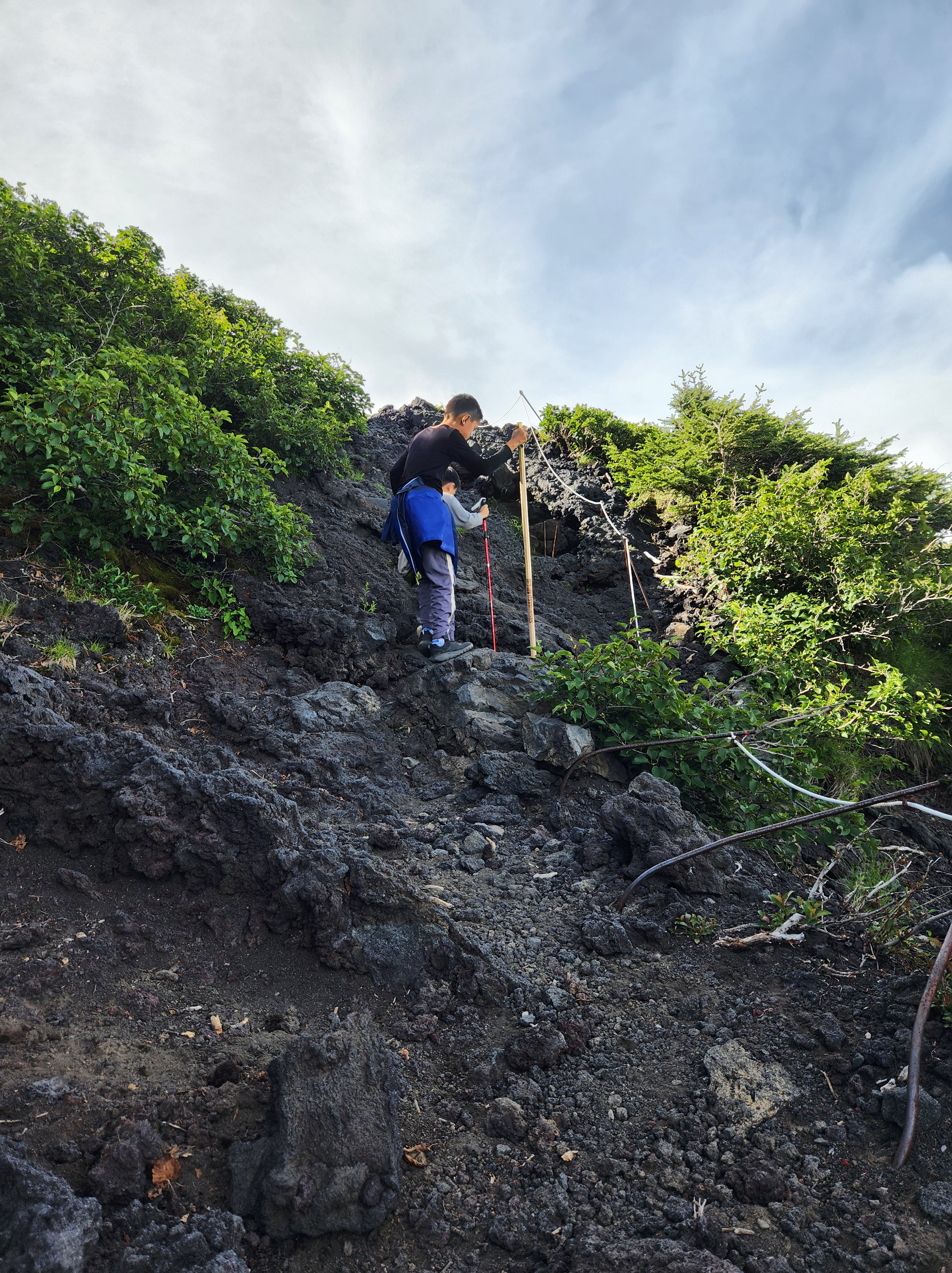
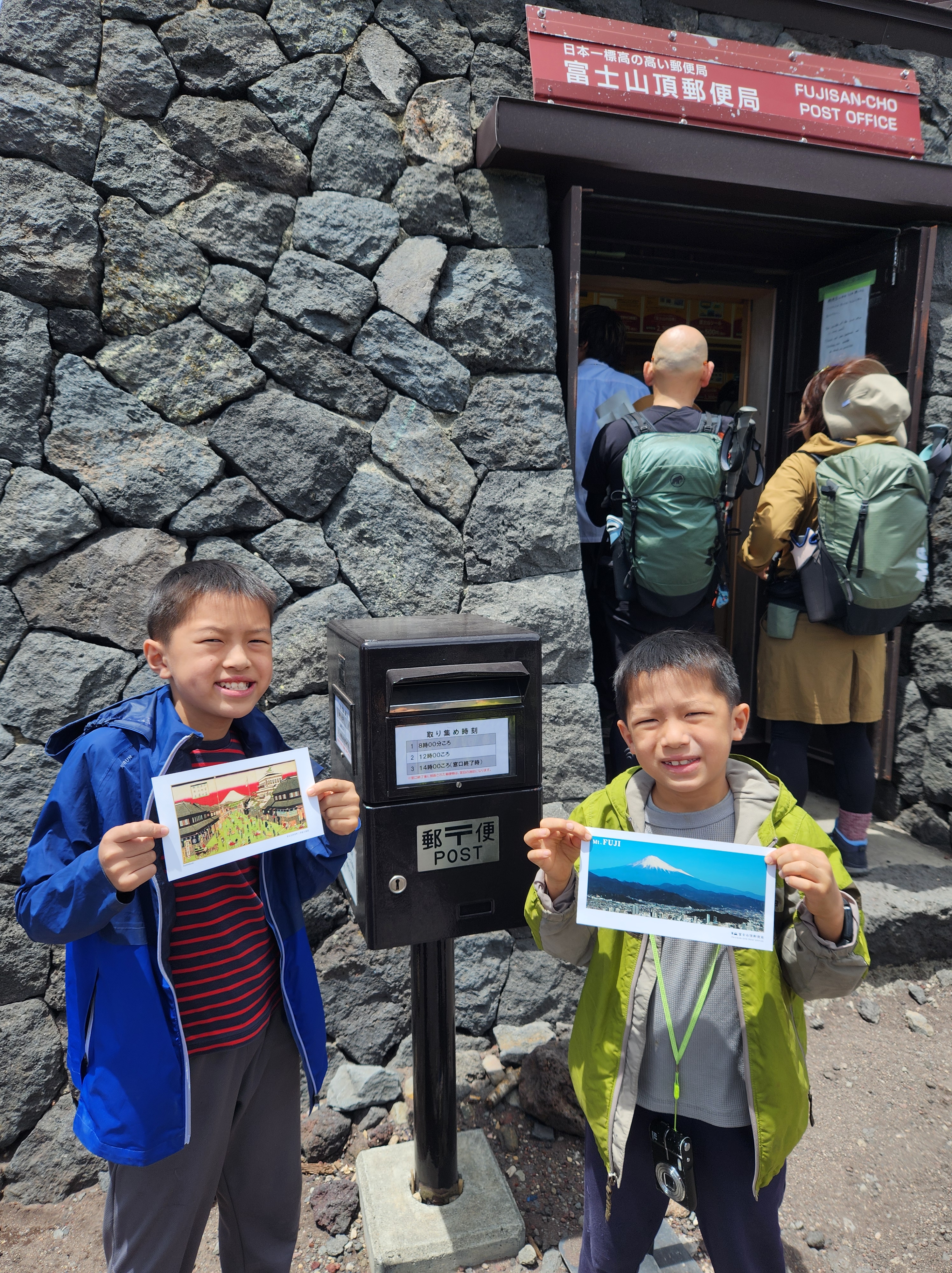
We spent about an hour at the summit, wandering around the crater. The boys mailed postcards – yes, there’s an actual post office on top of Mt. Fuji! Later, we discovered that there’s an even higher point along the crater called Kengamine, considered the true peak of Mt. Fuji. Descending from there was an adventure in itself. It was by far the steepest part of the hike. People were literally slipping and sliding down, and Baba and I had to cling to the side railing for dear life. The picture below doesn’t do it justice!

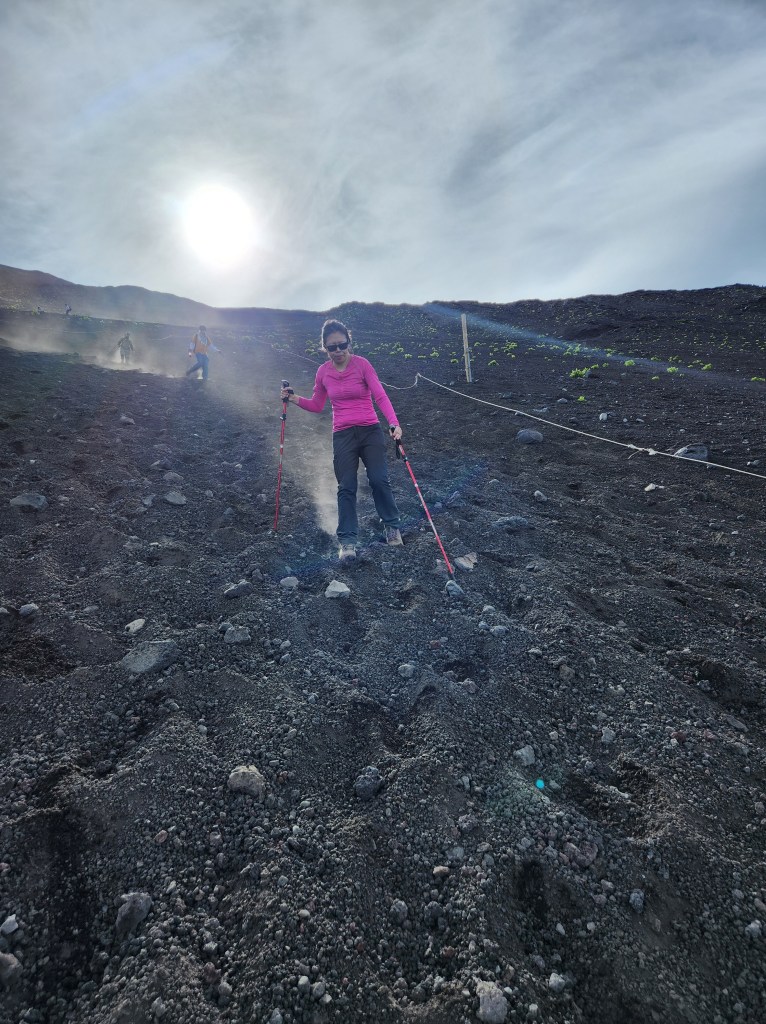
Around noon, we began our descent, which took much longer than expected. The trail down was super steep and covered in loose gravel, offering little grip and made me extremely nervous. The Subashiri Trail also has a “sand run” section, where people literally run or slide down. My boys found it fun, but I thought otherwise. It felt like skiing on volcanic sand!

Frankly, I found the descent even harder than the ascent. I was exhausted, drenched in sweat, and my ankles were painfully digging into my boots. I moved at a snail’s pace, my nerves only fueling my frustration. But we had to hurry back to the 5th station to catch the last shuttle and, luckily, we made it just in time!

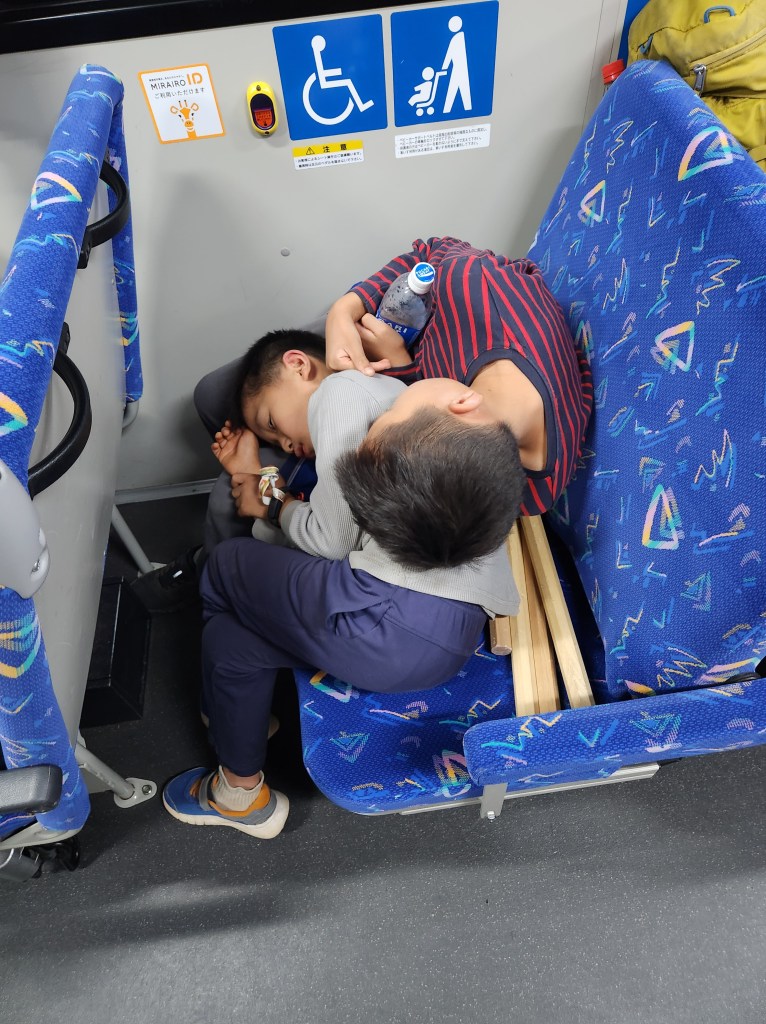
Passed out on the shuttle.

Unfortunately, we still had to endure the 3-hour trek back to Tokyo. 😅 Once at our Airbnb, we quickly ate instant ramen (because most restaurants were closed at that point), took a much-needed shower, and finally, FINALLY, collapsed into a deep, well-deserved sleep.

We didn’t wake up until almost 10am the next day. We were all a bit sore and tired, but ecstatic we’d made it. A strange side effect of the hike though? C and I both ended up with huge swollen, sunburned lips! We hadn’t thought to put on lip balm, and the sun at that high elevation was merciless. Lesson learned: never forget your lip balm!

Someone once said, “A wise man climbs Mt. Fuji once; only a fool climbs it twice.” I couldn’t agree more. I’m so glad we did it, and it will always be a core memory, but once was definitely enough. 😆 Thanks for an unforgettable time, Fuji-san!

Ramblings

A Hike to Montserrat

(Another overdue post. I am running behind on my blogging!)

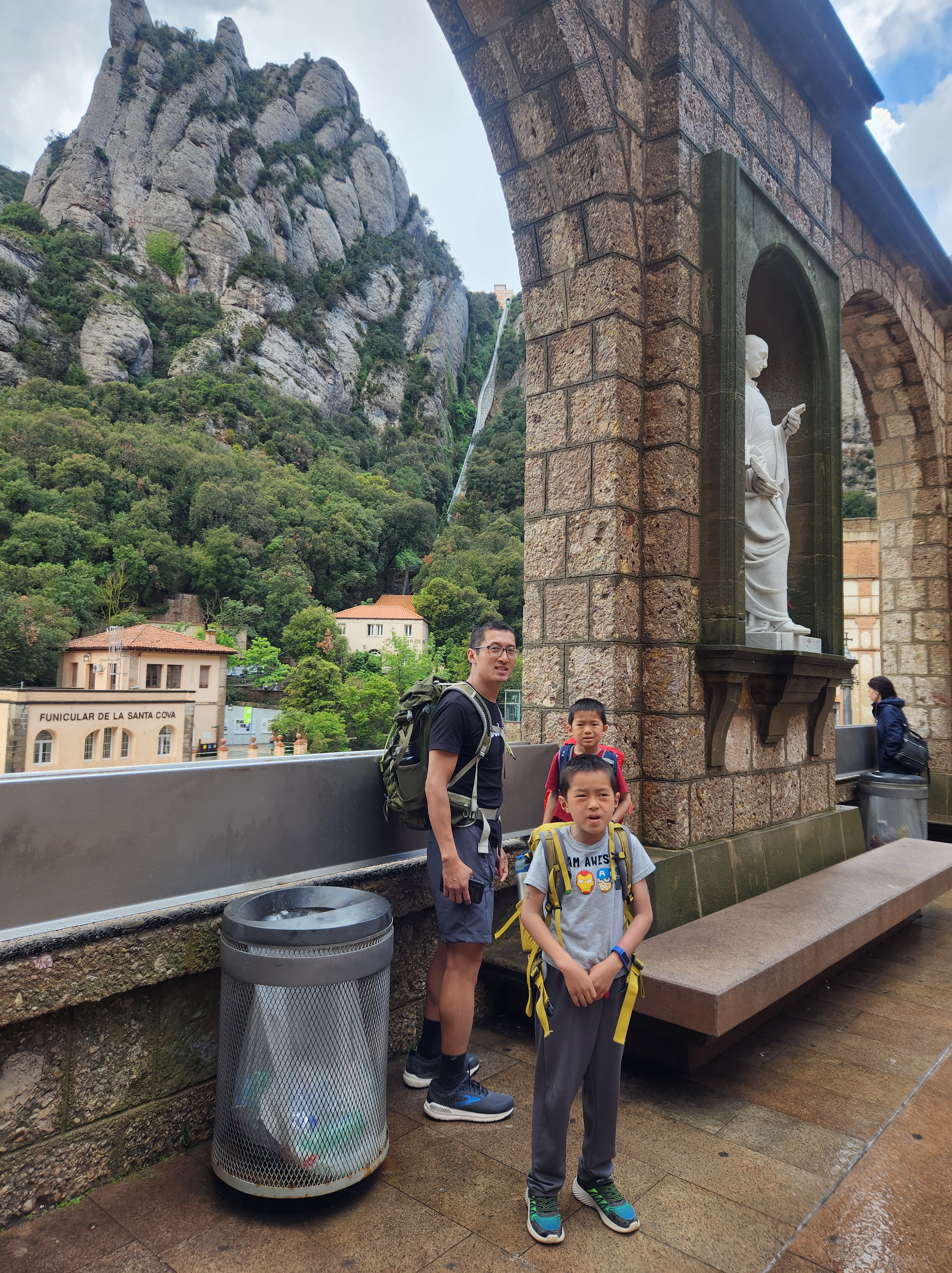
A popular day trip from Barcelona is to Montserrat, a mountain range that’s about a 1-hour train ride from the city. The Benedictine monastery of Santa María also sits at the top of the mountain.

To get there from Barcelona, take the metro to Espanya station, then follow the FGC train signs for Montserrat. You’ll need to take the FGC train (line R5) and tickets can be purchased at the ticket machines. Roundtrip train tickets cost about $50 for the 4 of us.

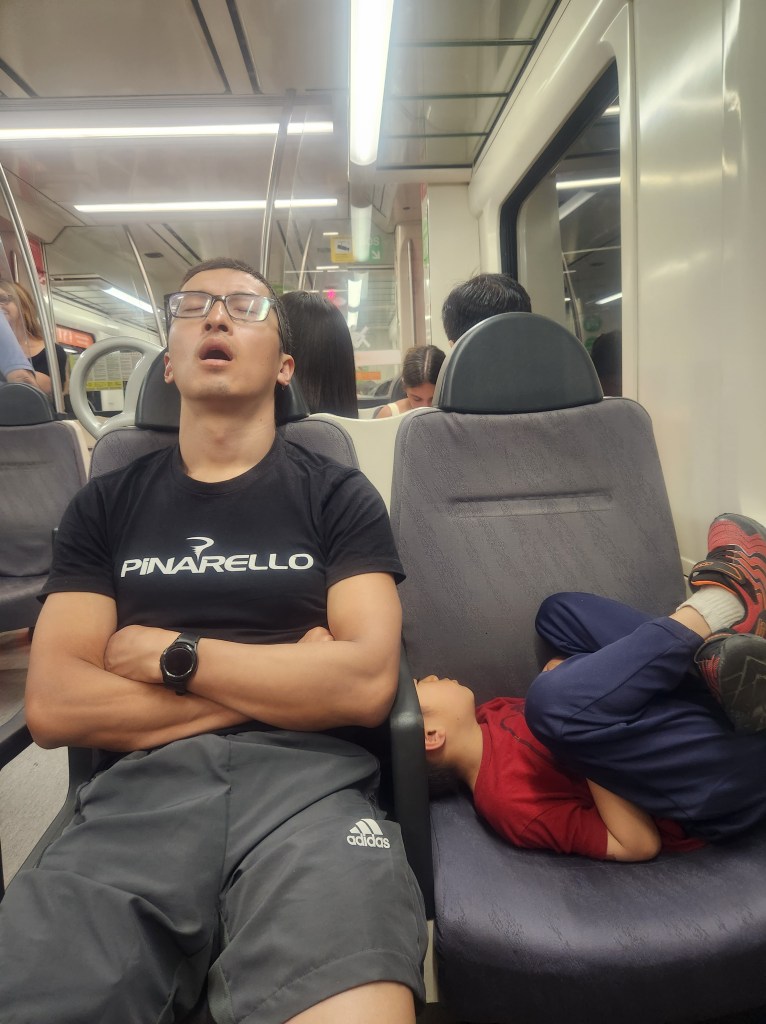
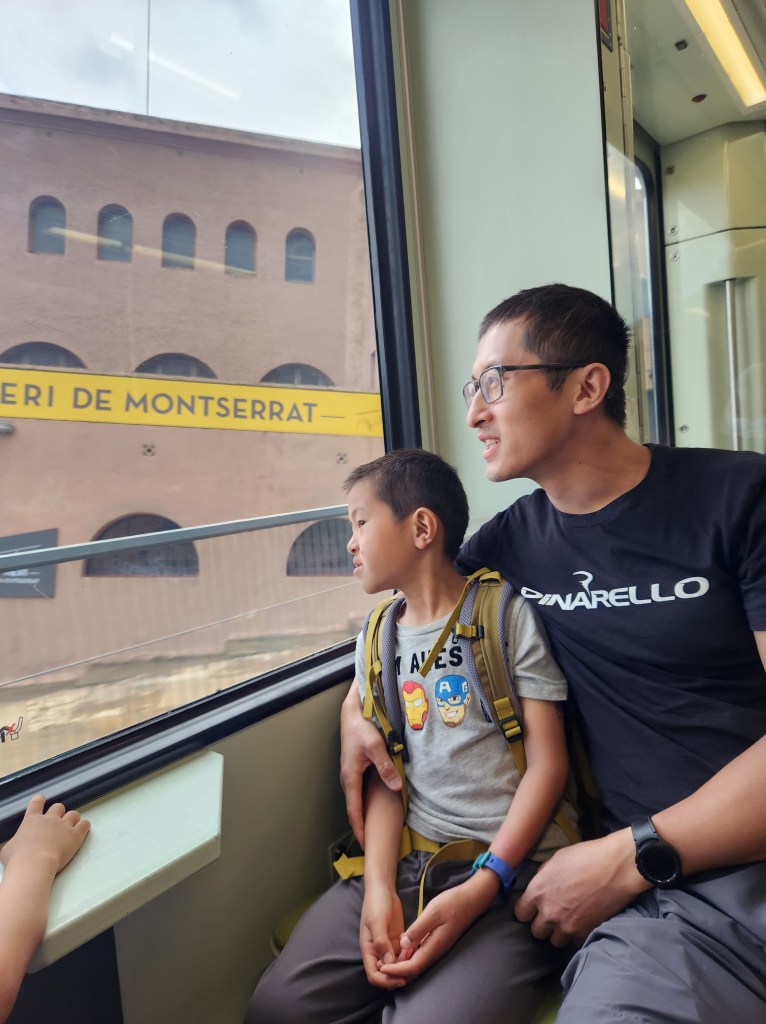
Quick nap on the train.

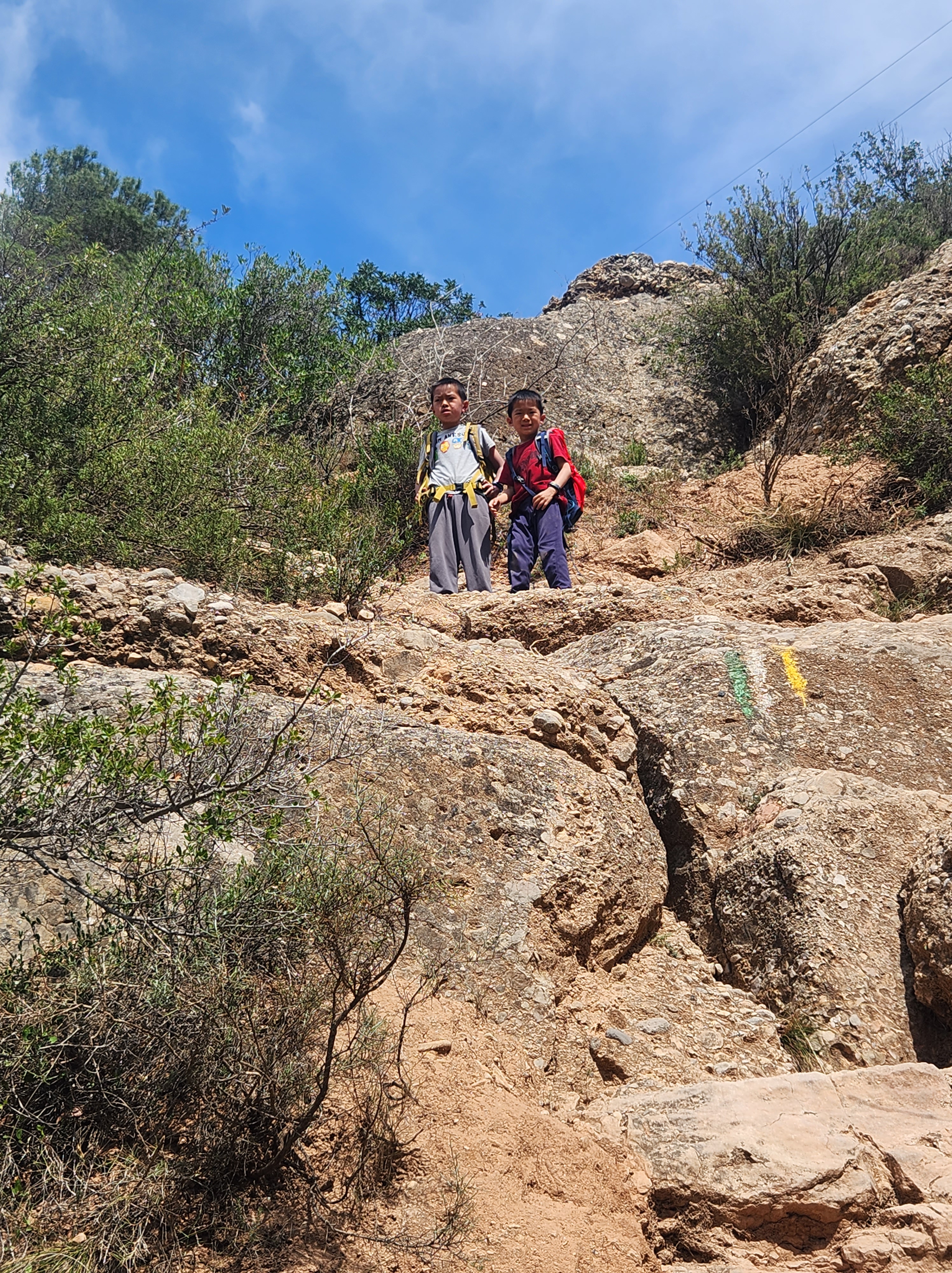
We got off at Aeri Montserrat station. Once there, you take a cable car up the mountain but of course Baba chose the hardest route: hiking. The hike itself isn’t long (about 2.5 miles up) but it is strenuous, and made even more challenging with the heat.

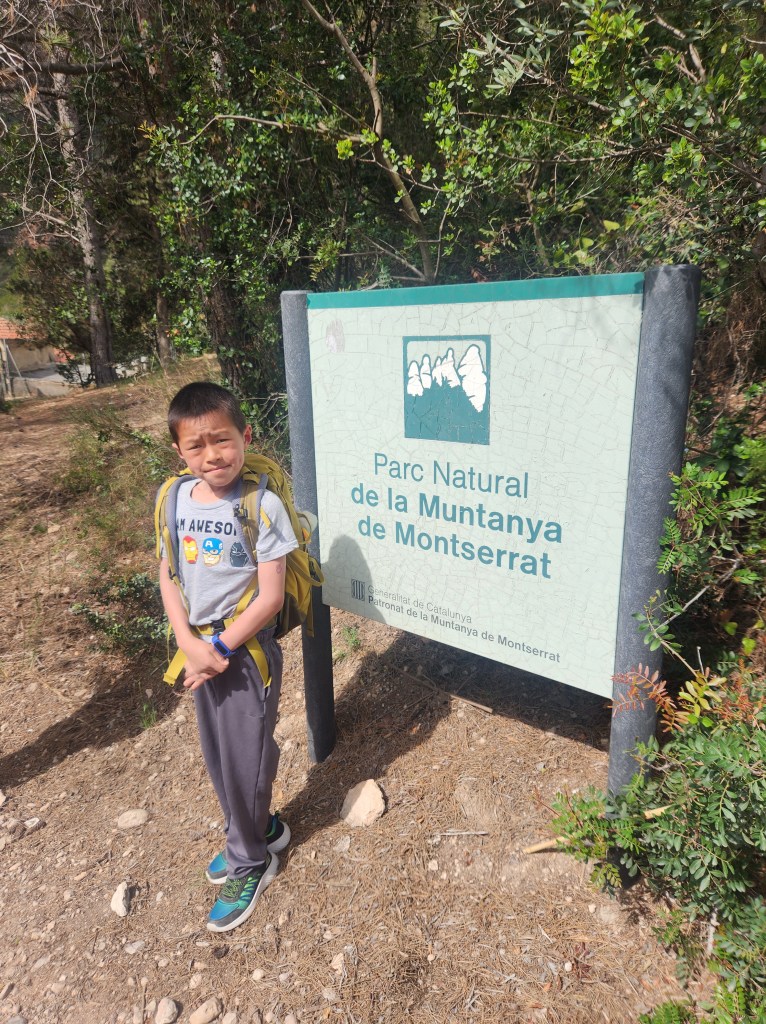
Near the trailhead.

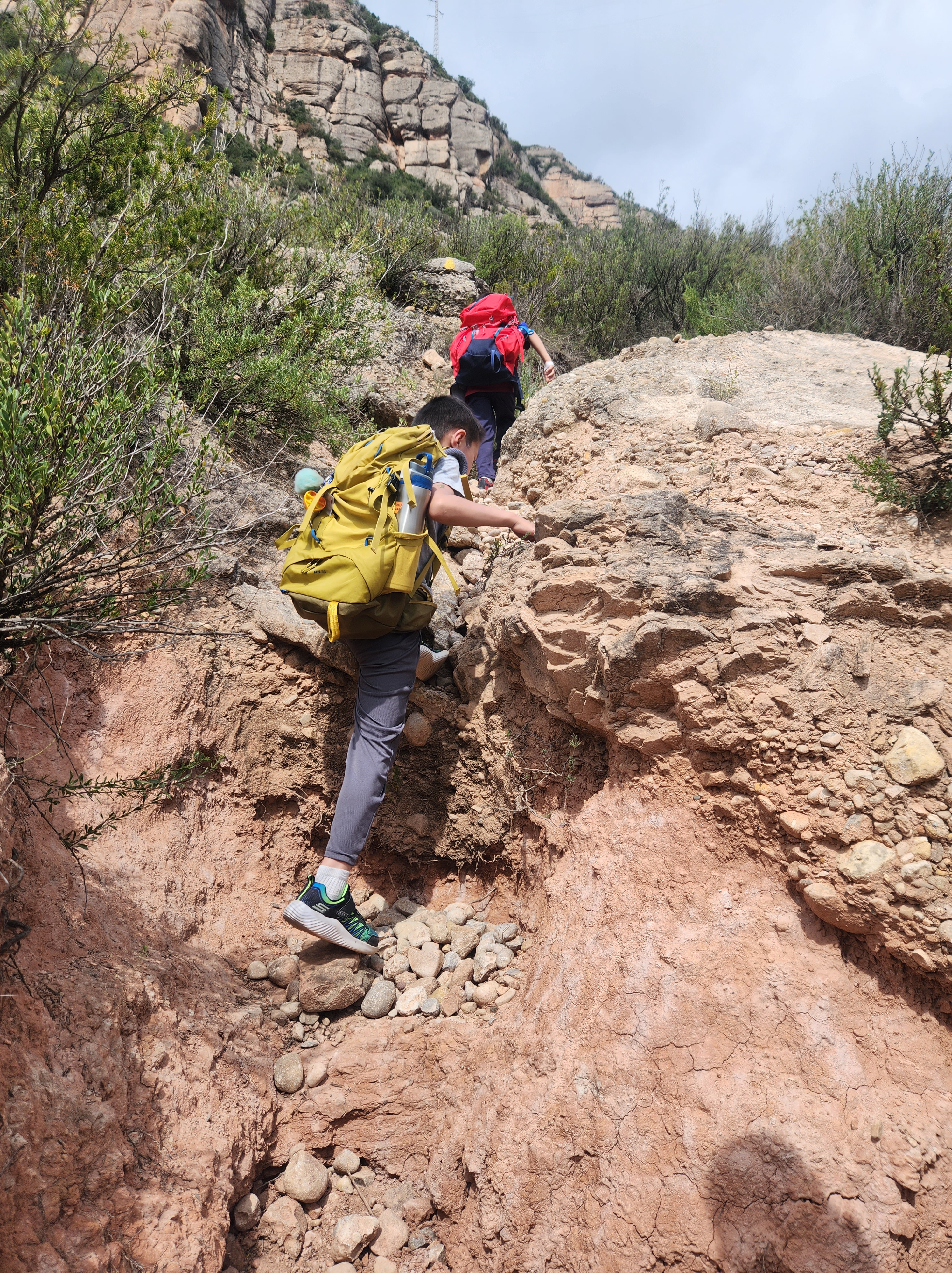
The path was unpaved so required lots of scrambling up rocks. Trail markers were spray-painted arrows on rocks, which were thankfully fairly easy to spot.

C and O have some experience with challenging hikes after going to Arches and Canyonlands earlier this year. Though they were drenched in sweat, the hike was relatively easy for them – even while carrying their backpacks! We did make sure to make many stops for snacks and water.

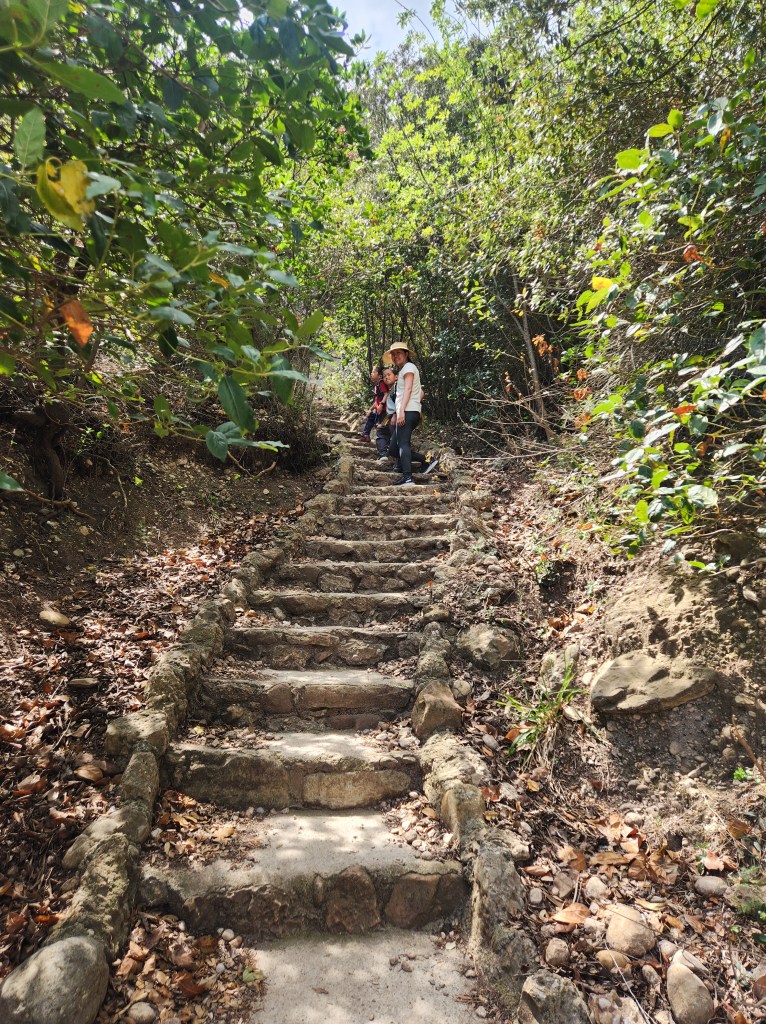
The last half of the hike was the most painful (for me). There were SO. MANY. STAIRS. Just when you thought you reached the top, you round a corner and there were more flights of stairs. 😭

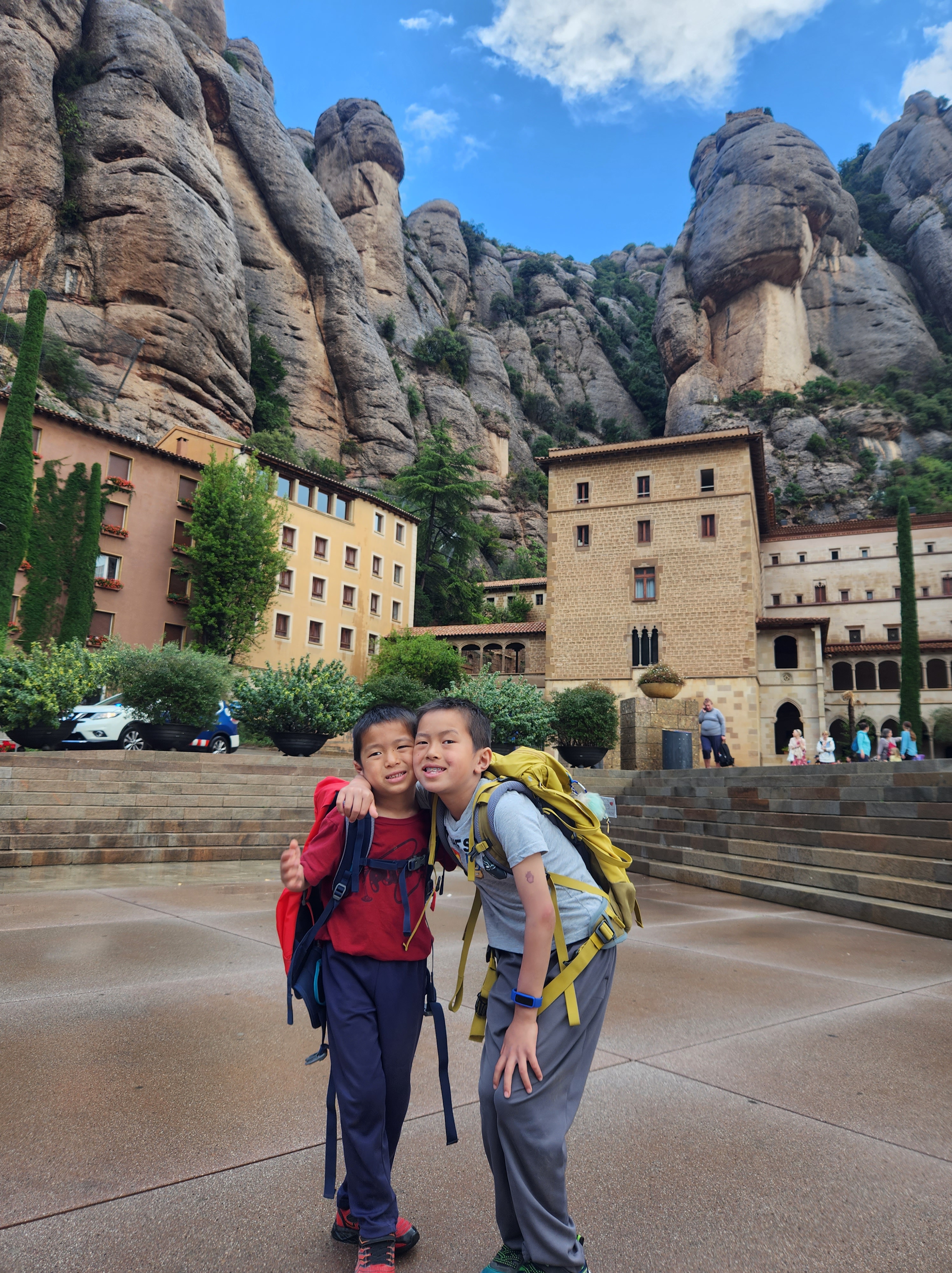
With burning calves and tired feet, we finally made it to the top! The views were gorgeous. I’m so proud of the boys for making the hike look easy and keeping complaints to a minimum. 😂

Amusing story: After the hike, we went to eat at one of the restaurants at the top of the mountain. Within five minutes of walking into the restaurant, it started POURING RAIN. We didn’t think much of it, so we started to order food.

But then, all the restaurant staff rushed from the kitchen into a smaller room just outside the restaurant. They were gesturing towards the ceiling. We couldn’t understand what they were saying, but judging by their tones and expressions they seem worried. Firemen started arriving, and shortly after, the restaurant manager told all guests to leave immediately because of an emergency.

Apparently, the torrential rain had caused a rockslide! The restaurant is nestled against the mountain and the barrier that was used to catch any rockfall was breaking apart. The surrounding area was flooded as well.

We went home without eating lunch. Because of the rain, we were concerned about the trail being too slick so ended up taking the train back down the mountain. Another fun day in Spain!