
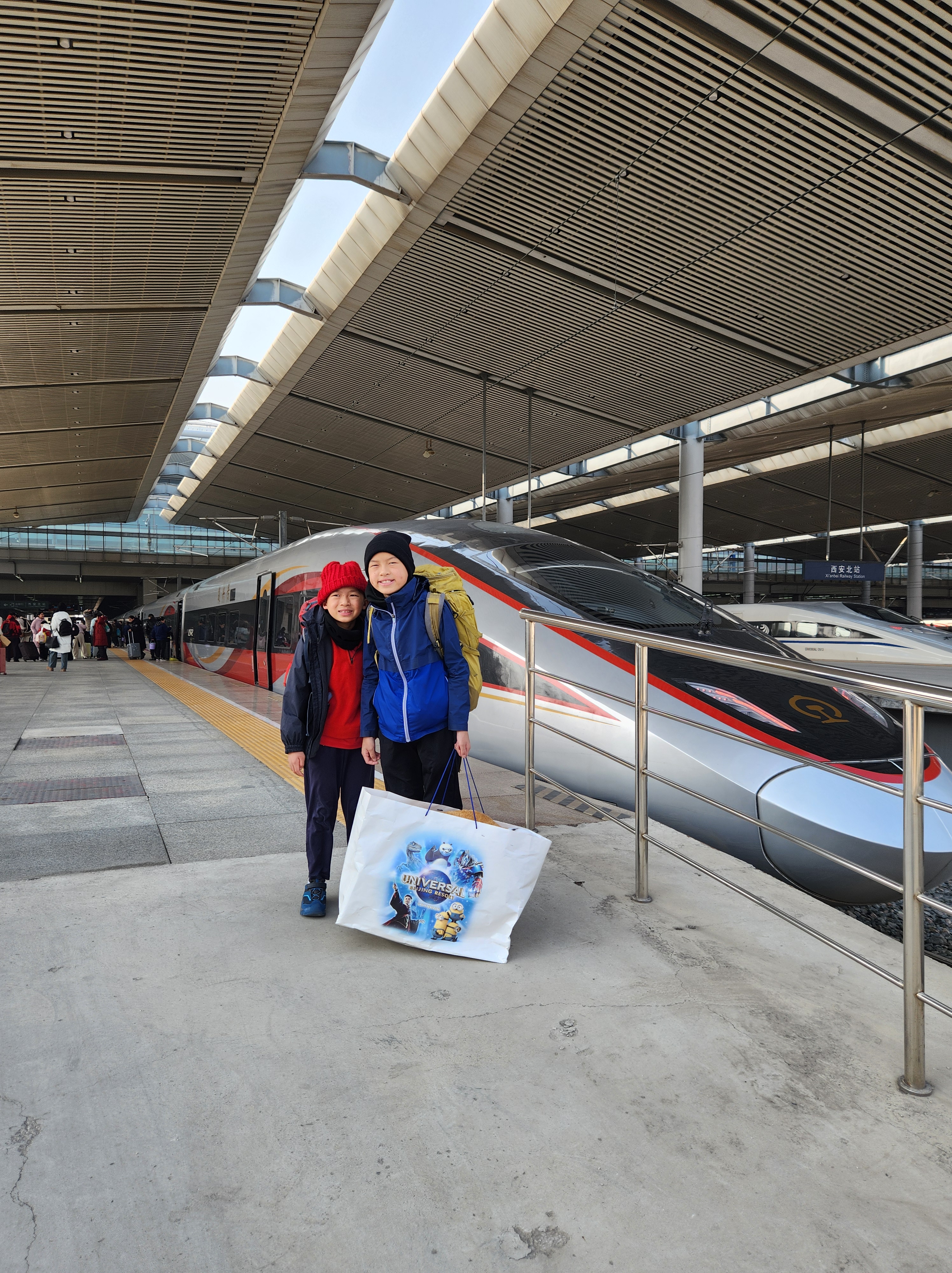
Luoyang. From Xian, we went on a day trip to Luoyang, one of China’s ancient capitals. The main attraction is the Longmen Grottoes, 龍門石窟, a set of Buddhist statues carved into the cliffs, many of which were completed during the Tang Dynasty. The site was about a 1.5 hour train ride from Xian.
Longmen Grottoes are absolutely worth a day trip. Each of the small caves you see in the photo below contains intricately carved Buddha statues…so incredible! A light dusting of snow that day blanketed the mountains, making the place even more beautiful.
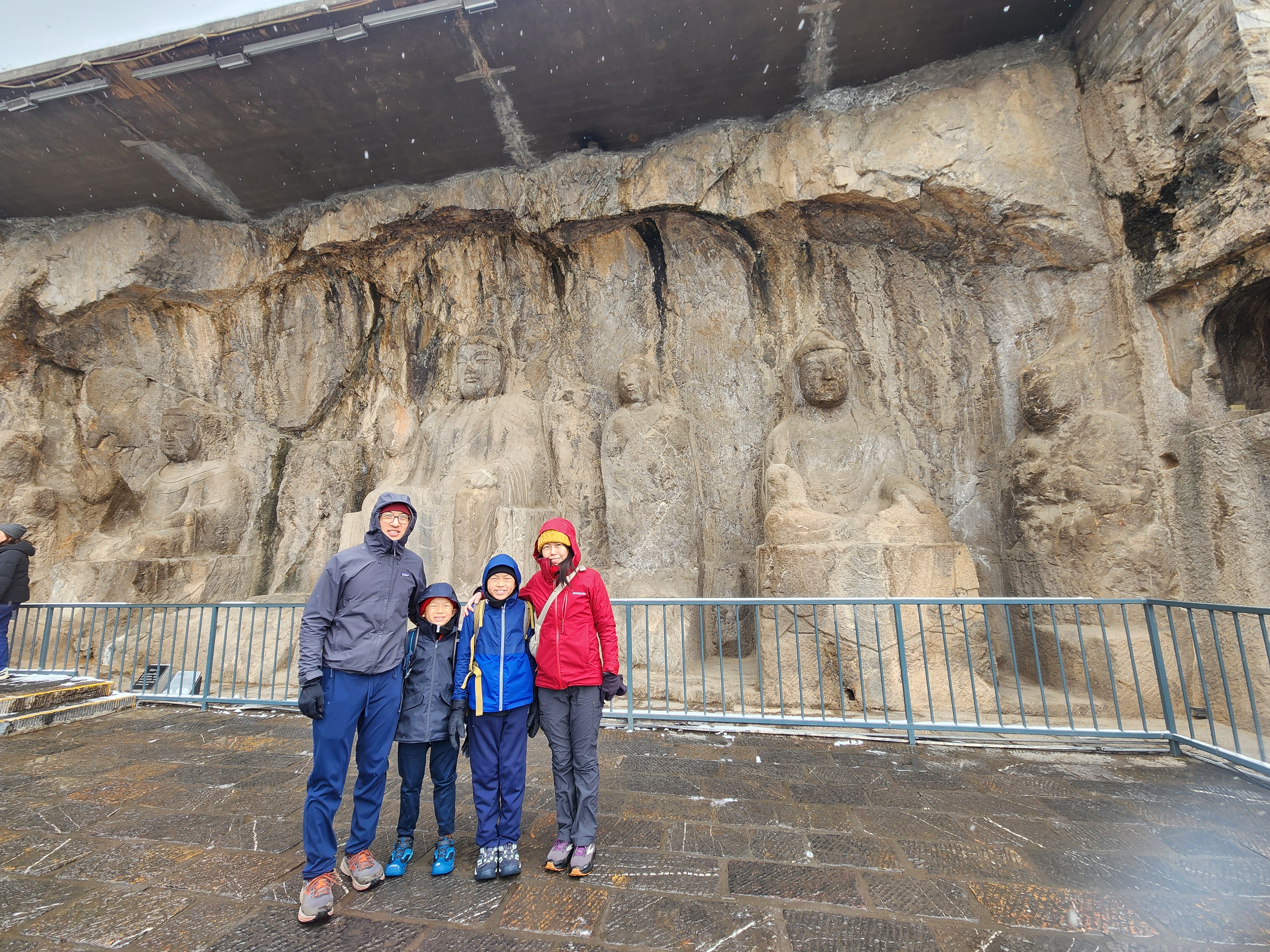
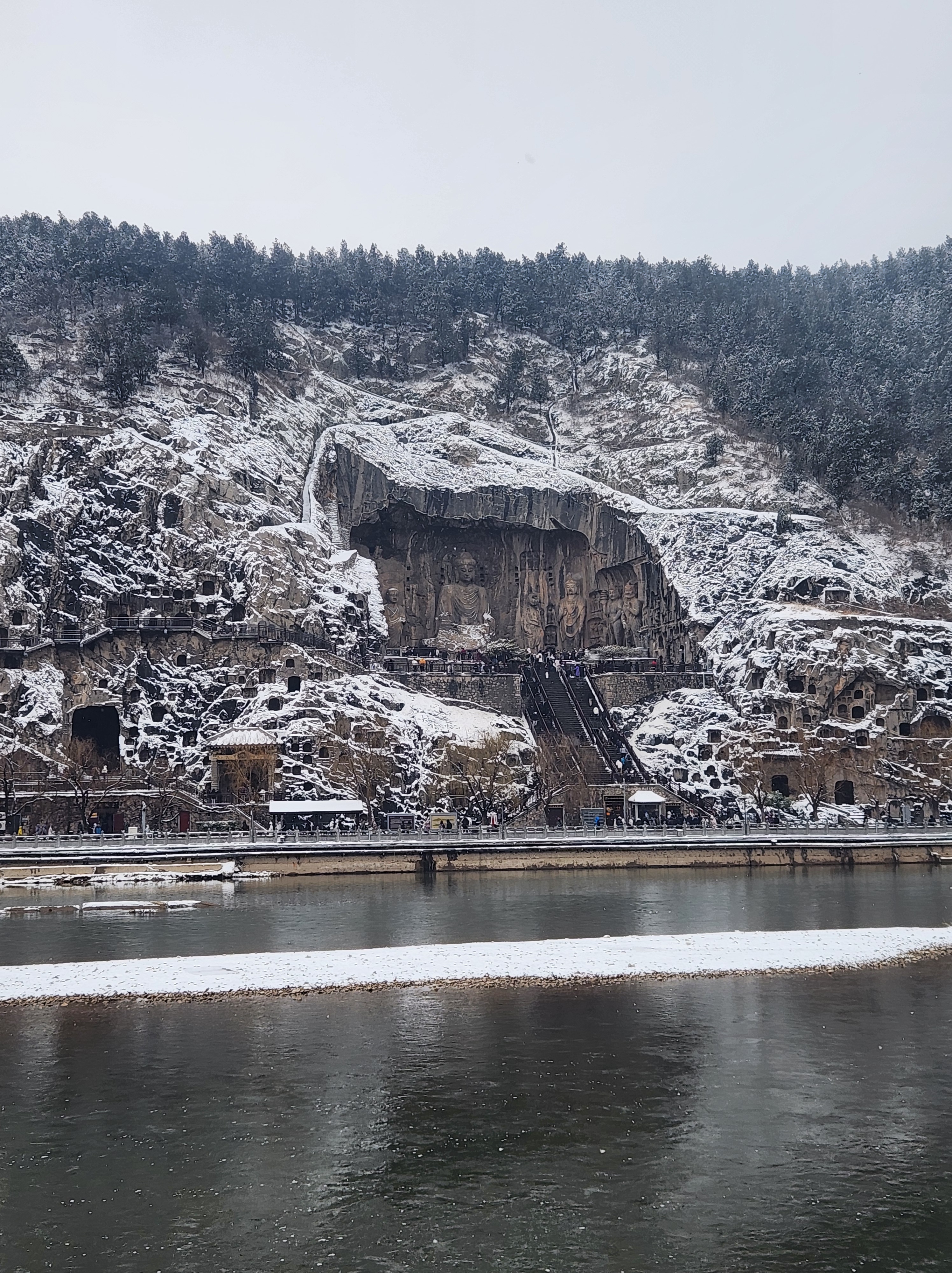
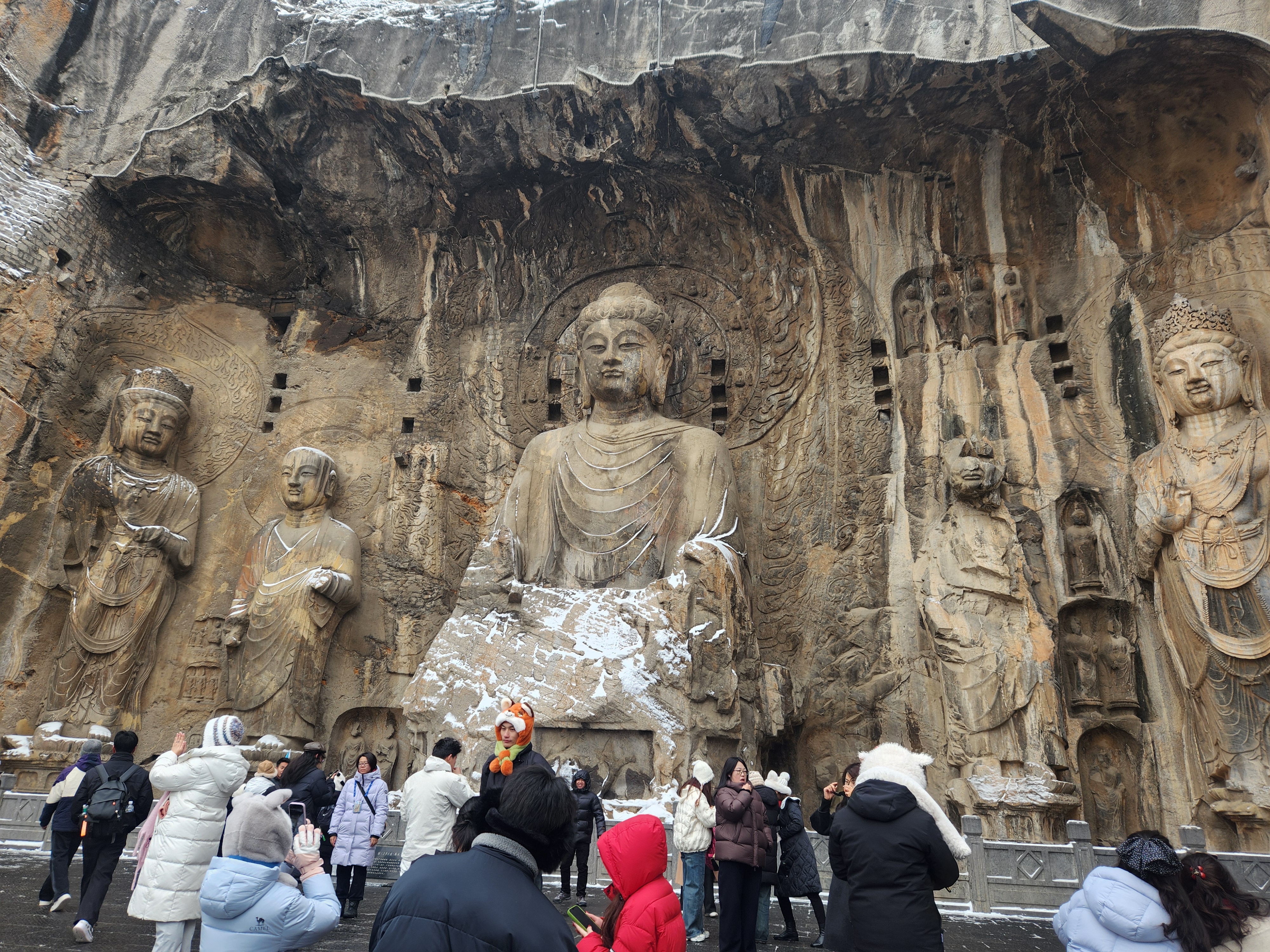
The main attraction at Longmen Grottoes is the Fengxian Temple, featuring a 57′ tall Buddha surrounded by smaller guardians and disciples on both sides. I remember climbing the long staircase with my head down, completely unprepared for the moment I looked up and found myself face to face with this amazing sight. The boys of course, were more amused by the snow. 😏
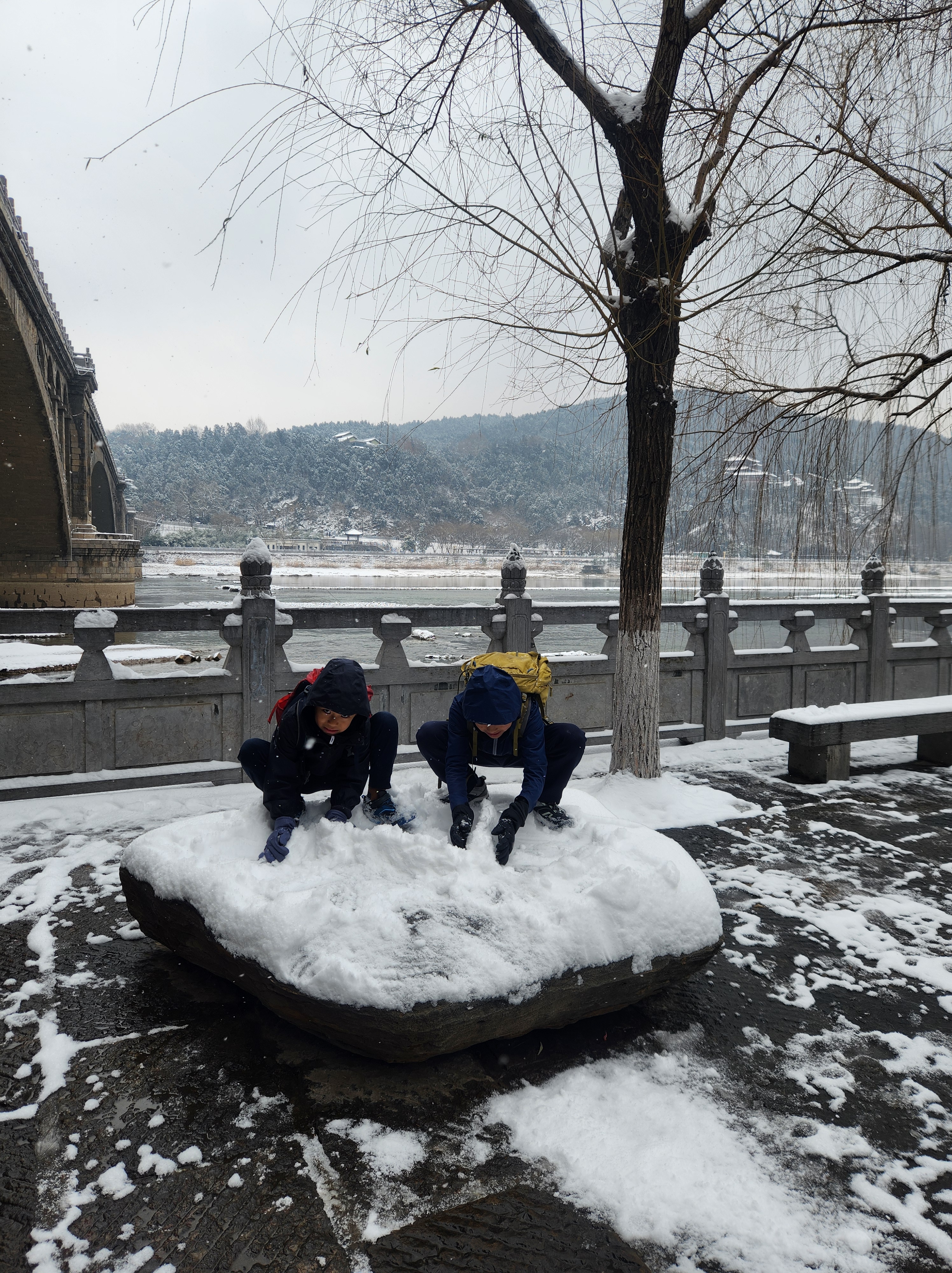
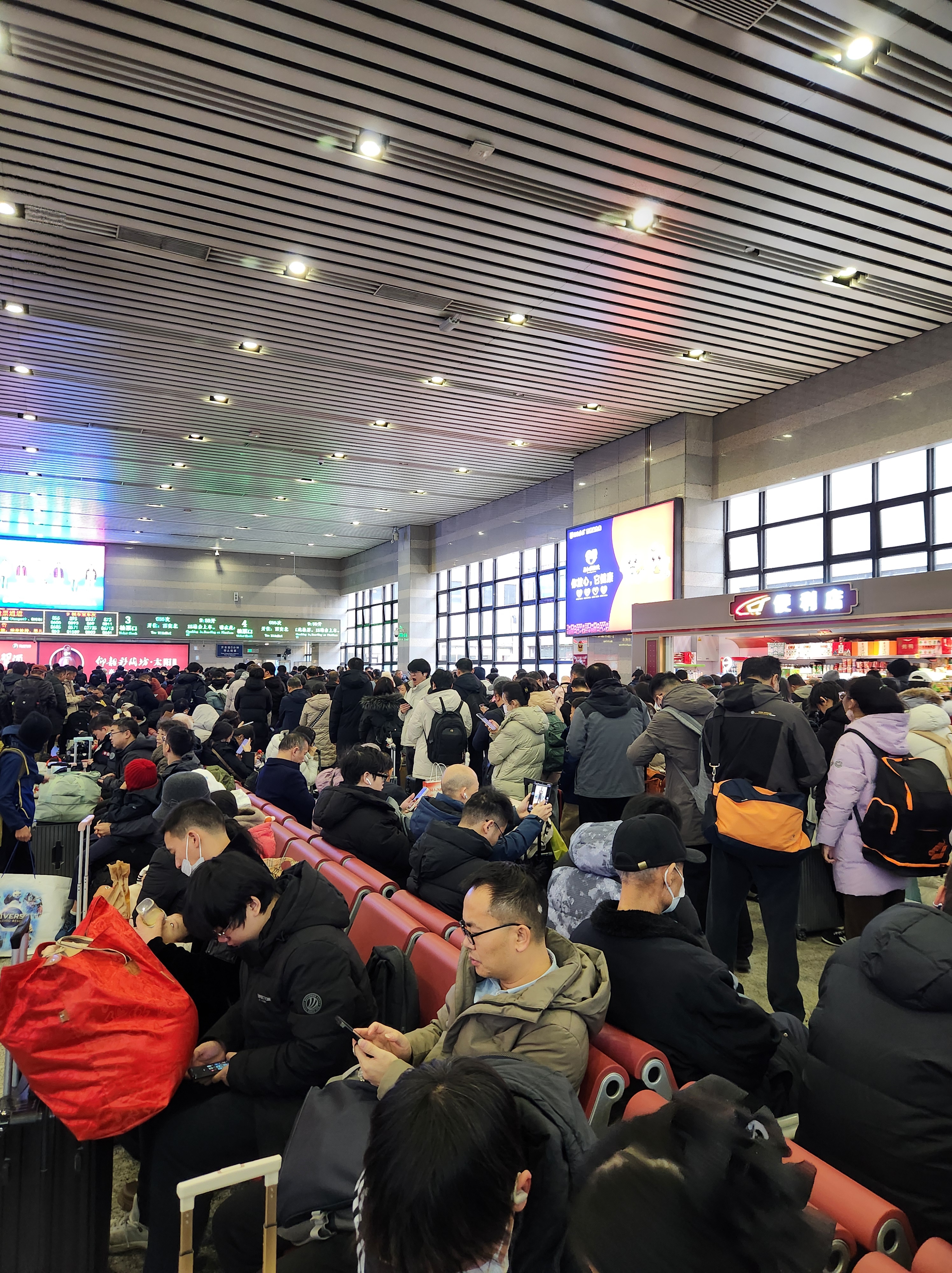
Our day trip to Luoyang was perfect, other than the fact our train back to Xian was delayed by over 2 hours because of the snow. 😣
Huangshan. Even though I’m mostly a city girl, I like to incorporate some nature experiences on our trips. I originally wanted to go to Zhangjiajie National Park, but was afraid winter wouldn’t be a good time to go and it’s a bit out of the way. So, we decided to go to Huangshan National Park, though that wasn’t exactly easy to get to either. The high speed rail took 7 hours to get from Xian to Huangshan!
We stayed at Tangkou, a town at the base of Huangshan, for 2 nights. Friday morning, we took a shuttle bus from the town which took us to the cable car up the mountain. This was our first glimpse of what awaited us at Huangshan. Swarms of people ran around the steel barricades, racing to catch the buses – it honestly felt like Disneyland! We stood there stunned for a moment…then did what everyone else was doing and joined the flow. Do as the Romans do, right?
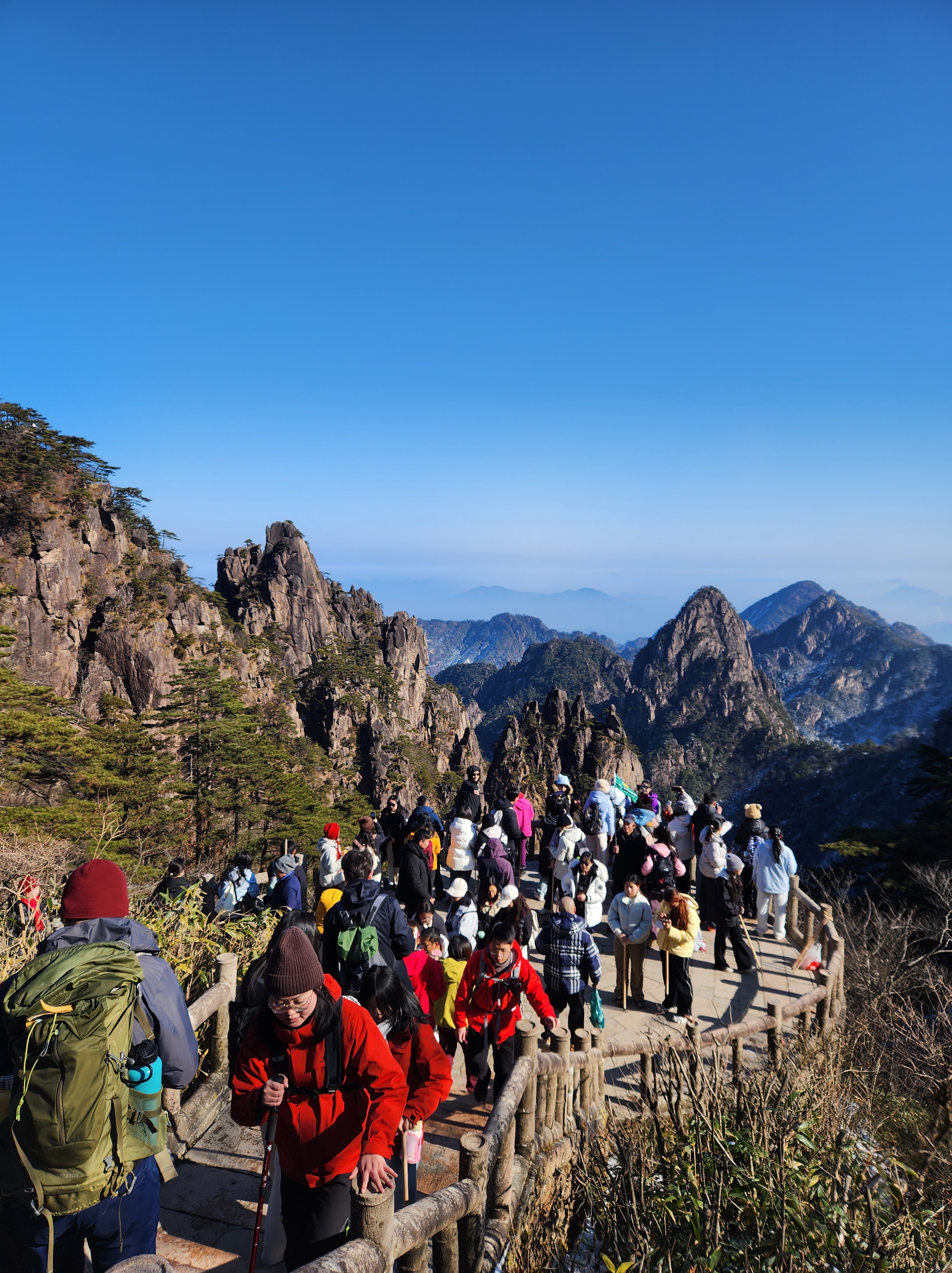
Huangshan is often known as the most beautiful mountain in China, and had inspired many of the famous ancient landscape paintings. We didn’t see the famous “sea of clouds” grazing the tops of the mountains as it was a clear day, but they were still extremely beautiful. The trails were all paved and fairly easy so hiking in Huangshan is suitable for anyone of decent fitness.
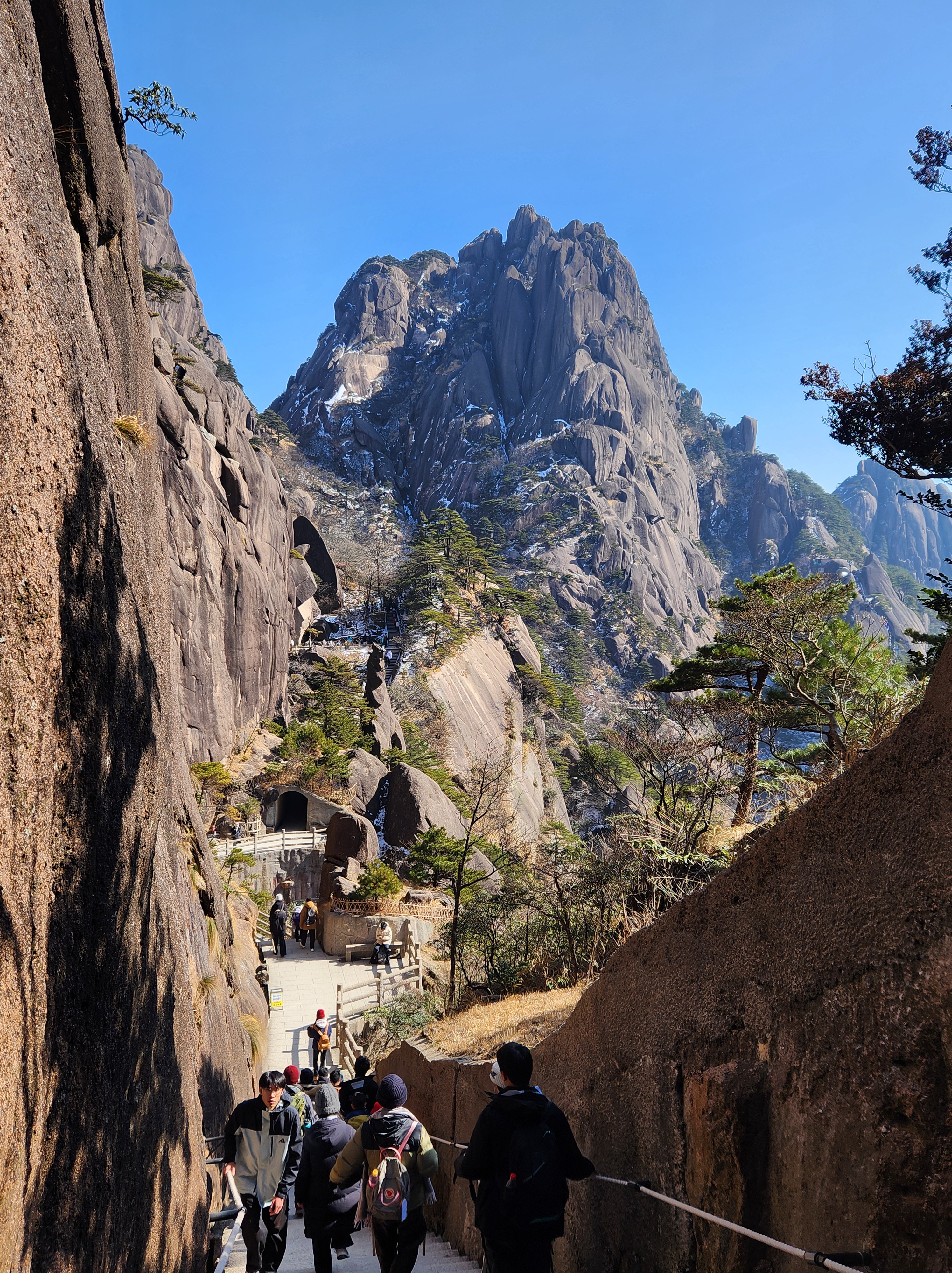
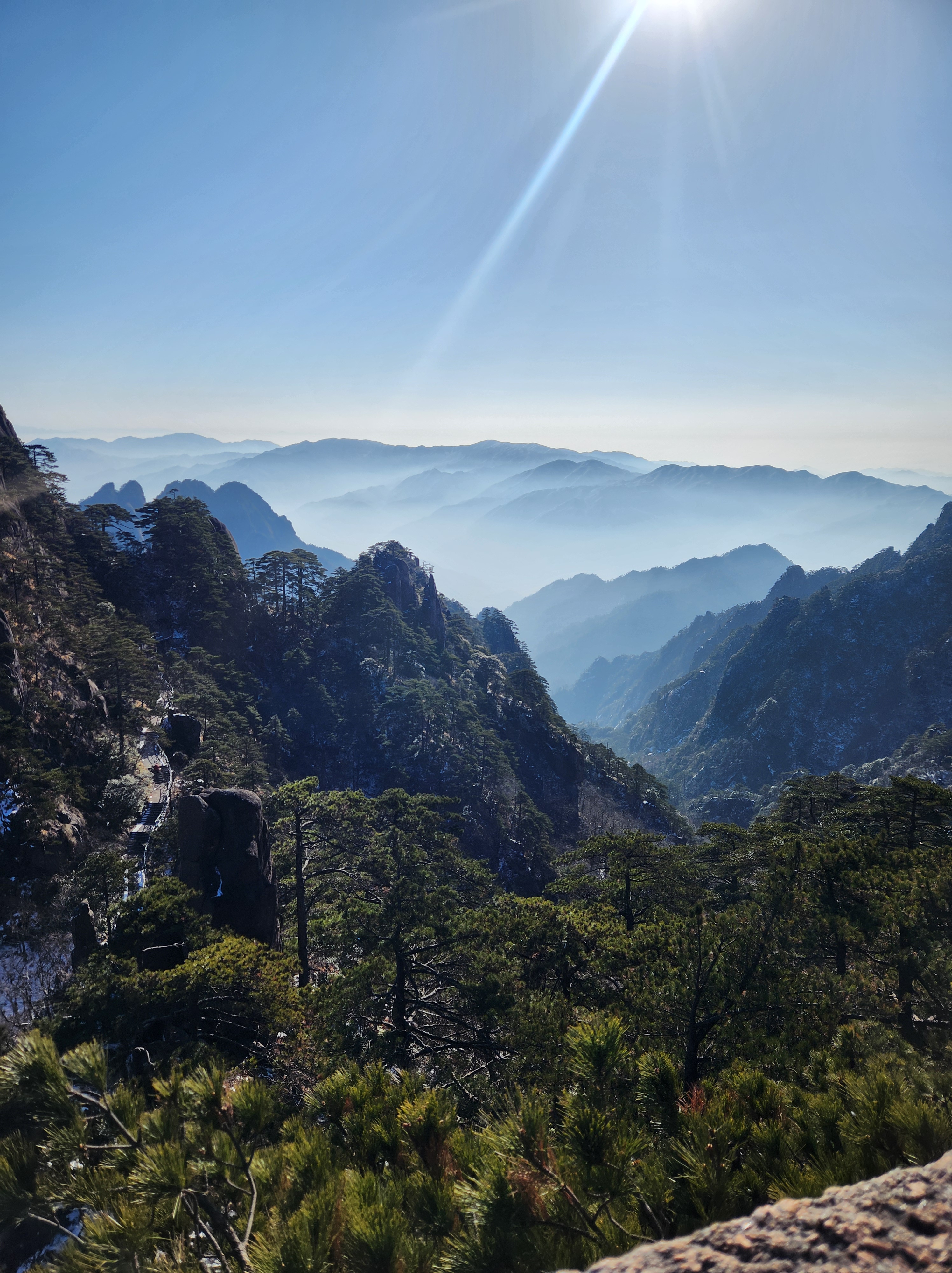
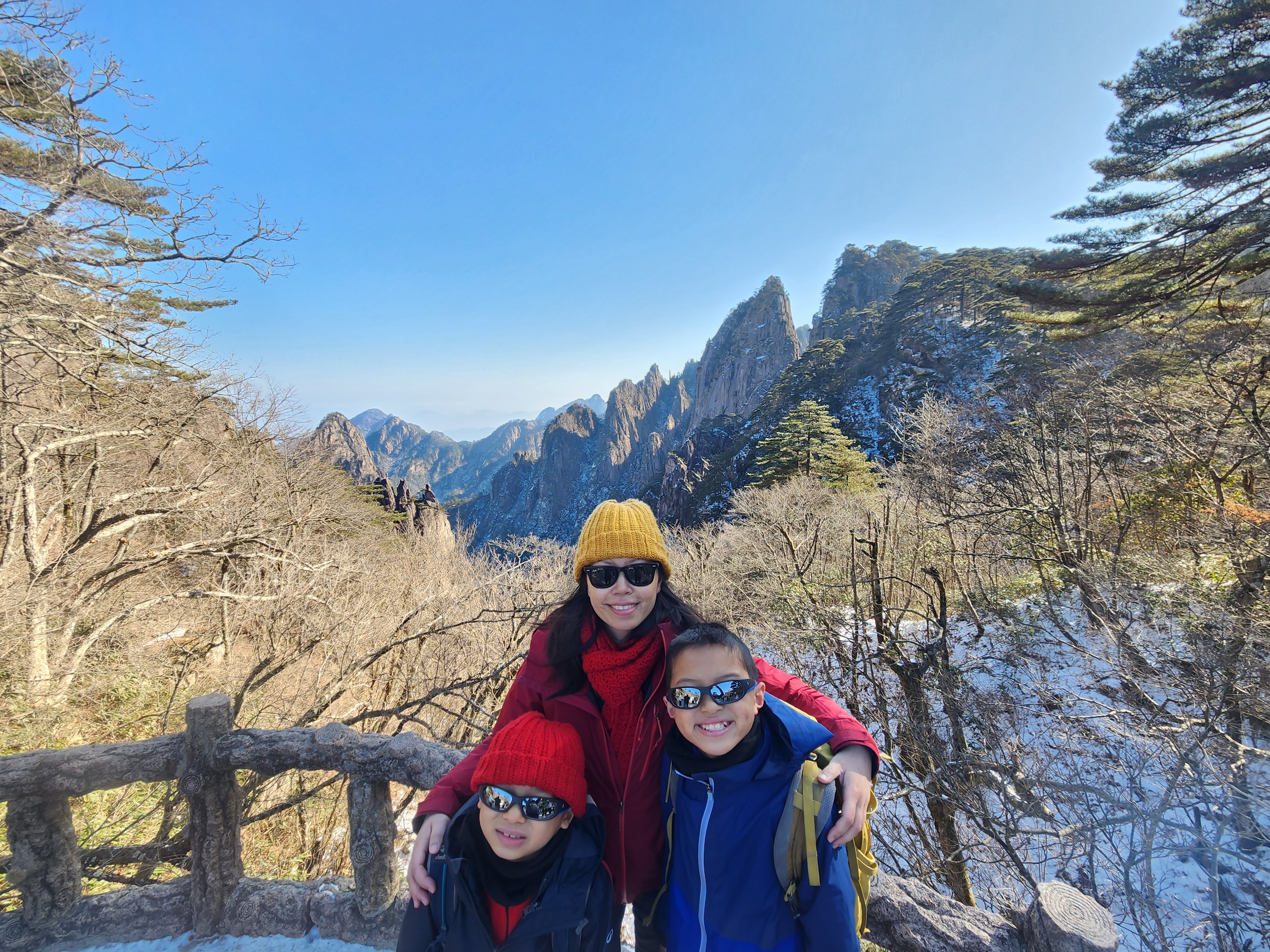
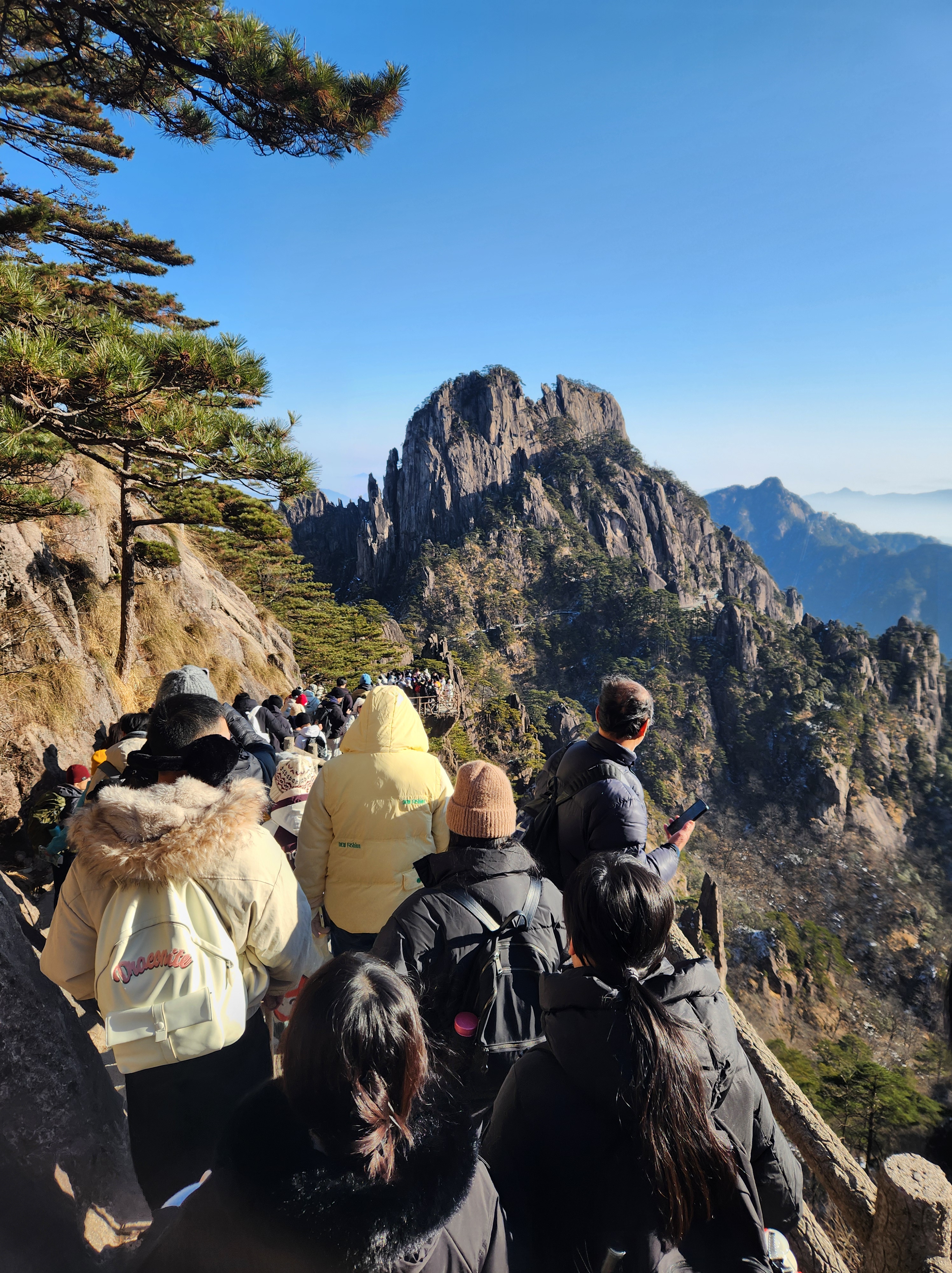
But oh, the crowds. If the chaos at the bus station was already overwhelming, stepping inside the park was like being swept into a human river. Baba and I had experienced Yosemite at its busiest, but even that felt tame compared to this. We were bumping into people at every viewpoint and on every trail. There were lines of people waiting to get up to a viewpoint or to take a picture. It was hard to get a picture without someone in the way, and I was disappointed I couldn’t take as many photos as I’d hoped. The constant jostling really took away from the quiet, peaceful experience of being in nature.
Shanghai. We were honestly happy to leave Huangshan and head to Shanghai. We took the high speed rail for 2.5 hours, and stayed in Shanghai for 4 nights.
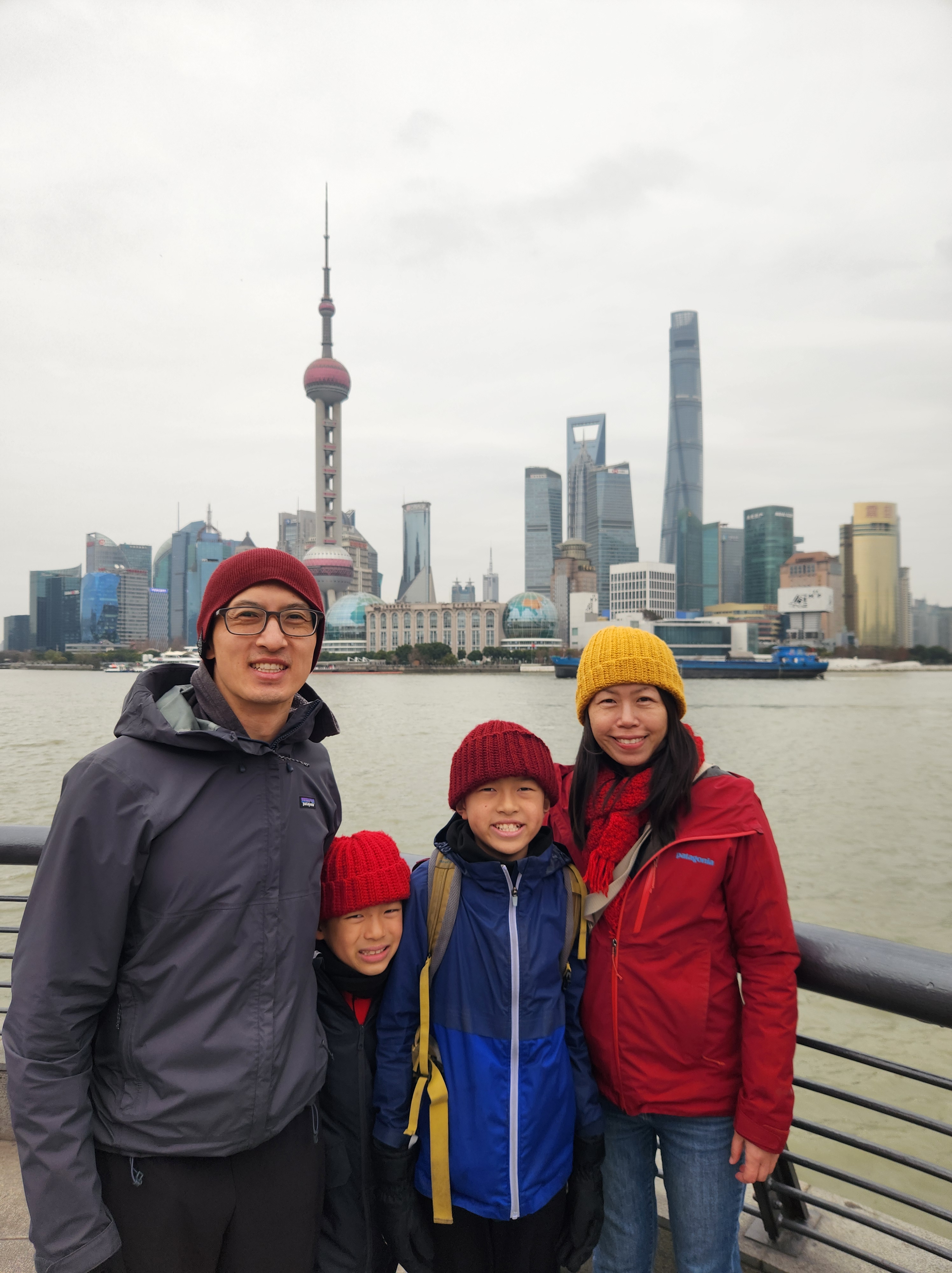
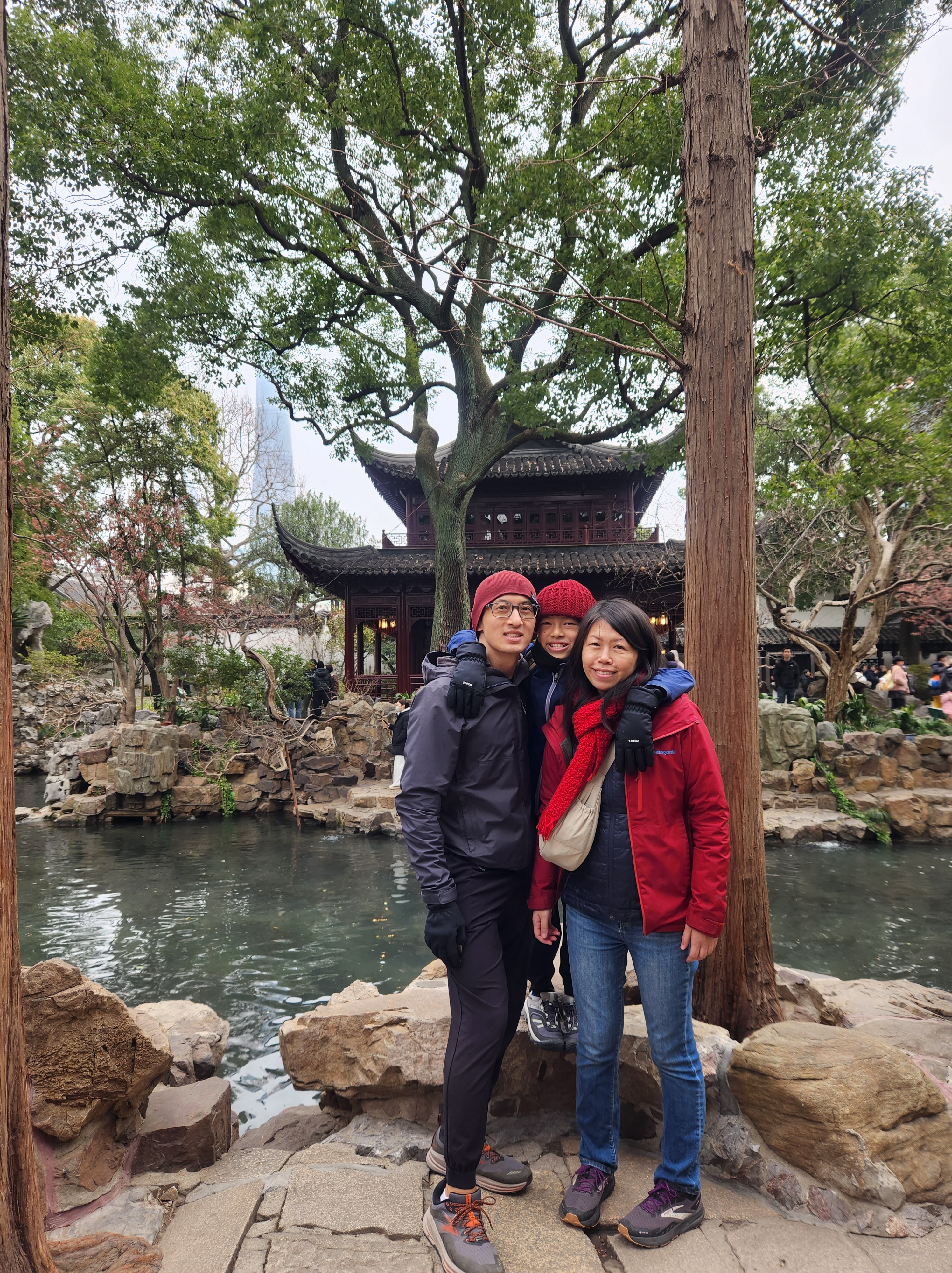
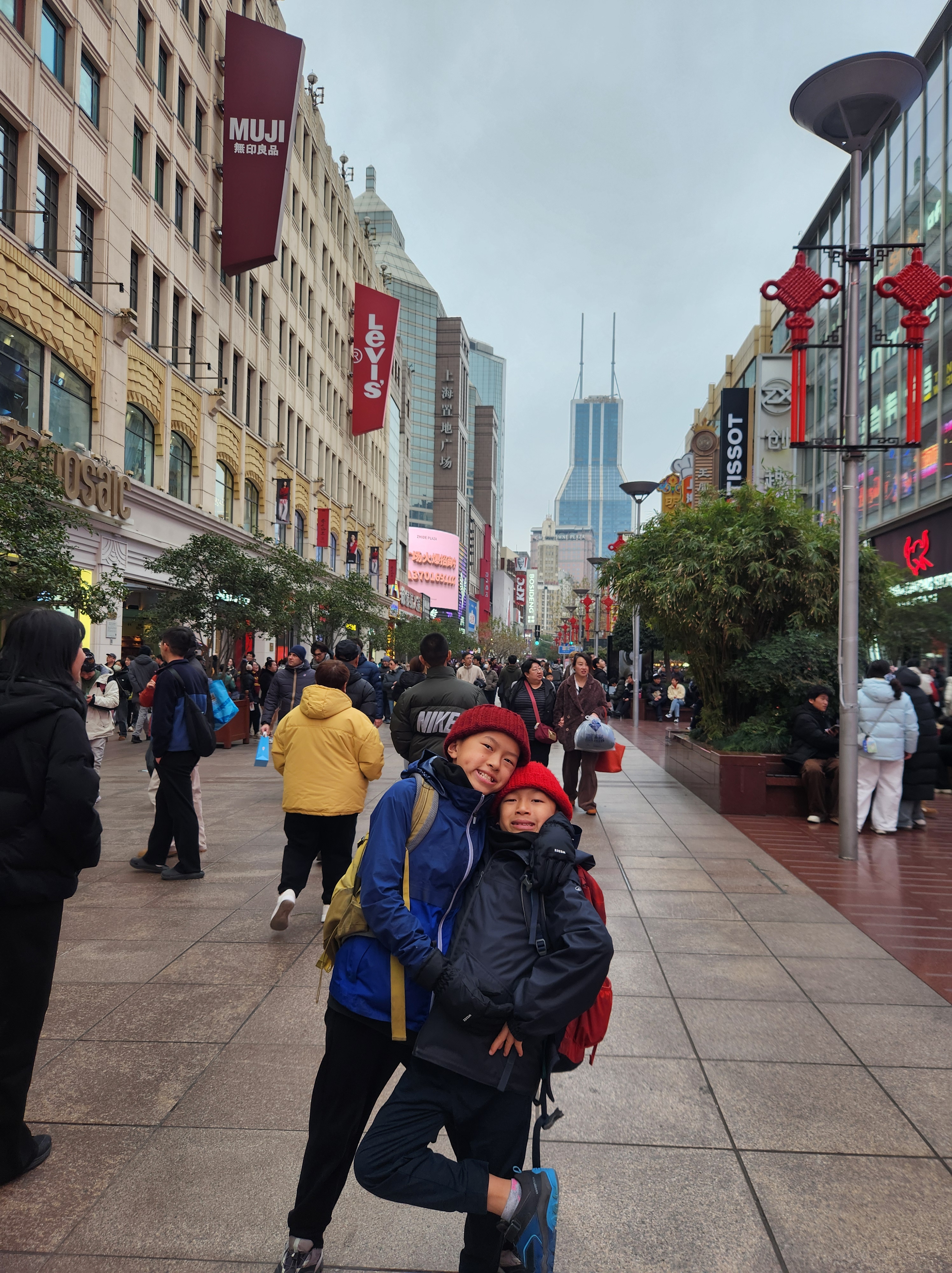
In terms of attractions and famous landmarks, Shanghai doesn’t compare to other cities in China. However, I also liked Shanghai the most. I loved its stylish, modern vibes, great food, and controlled chaos. Shanghai is a mega city with 30 million residents but it never felt like it. We hit up all the tourist spots: the Bund, Yu Garden, and Nanjing Road.
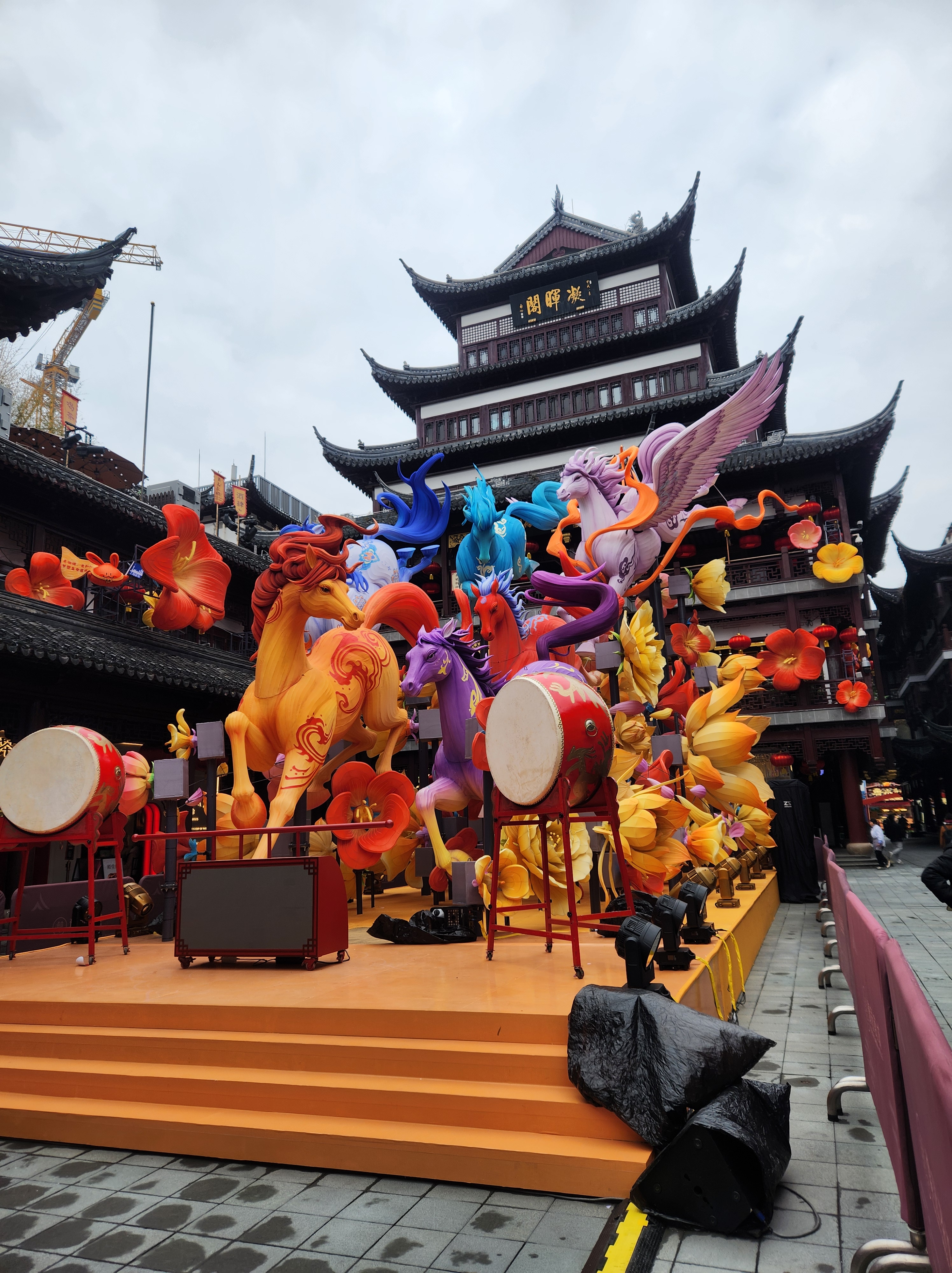
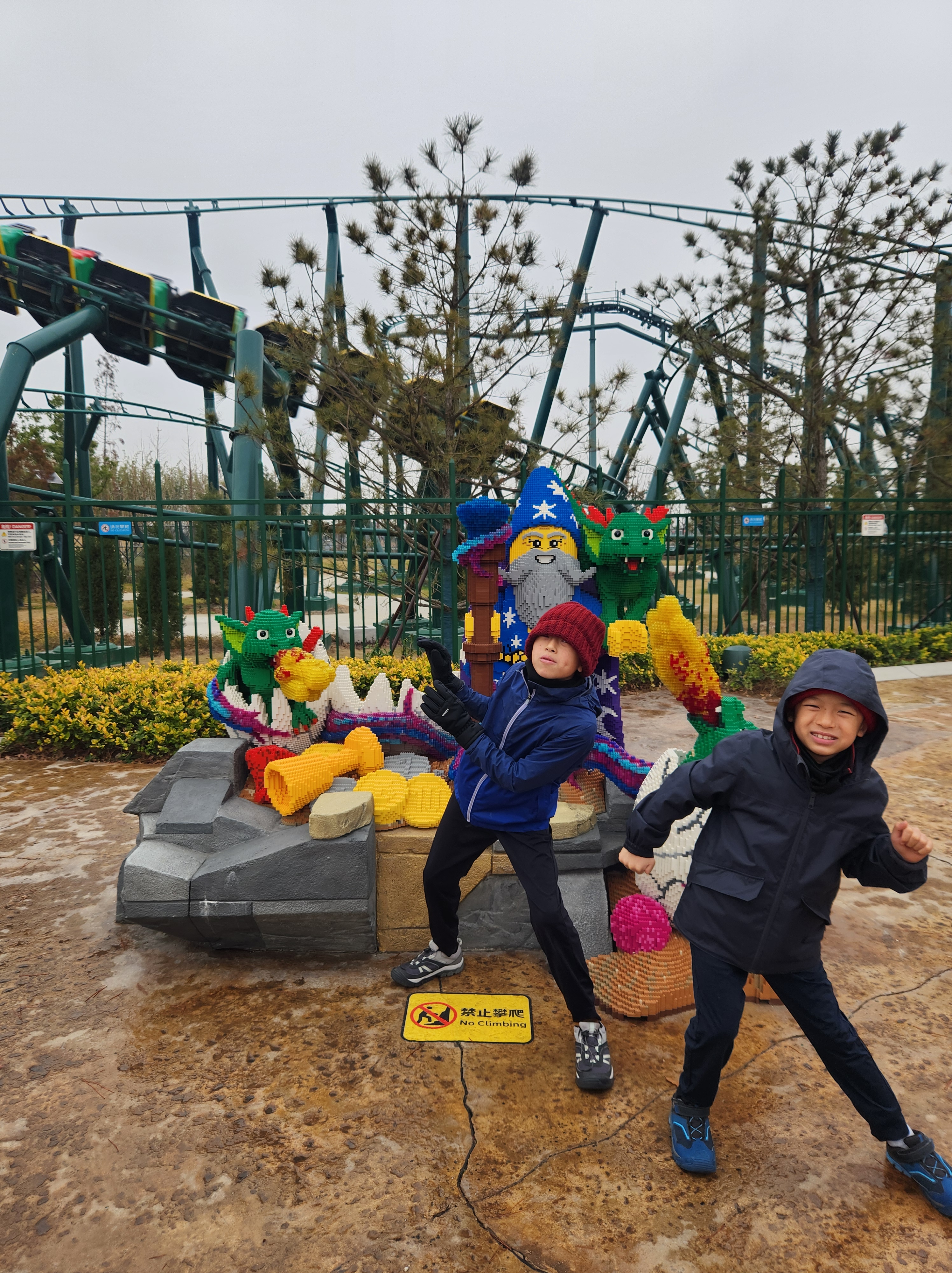
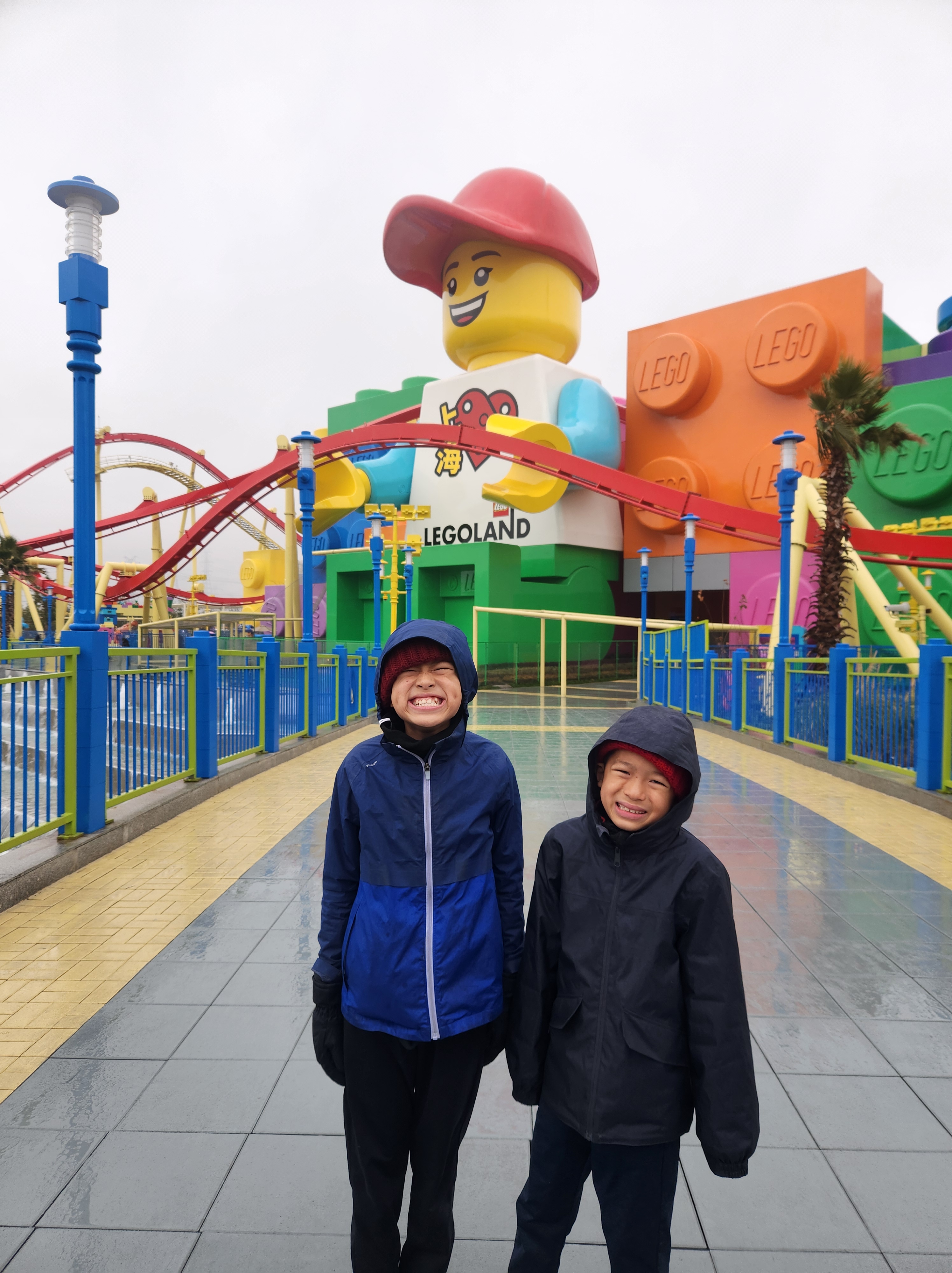
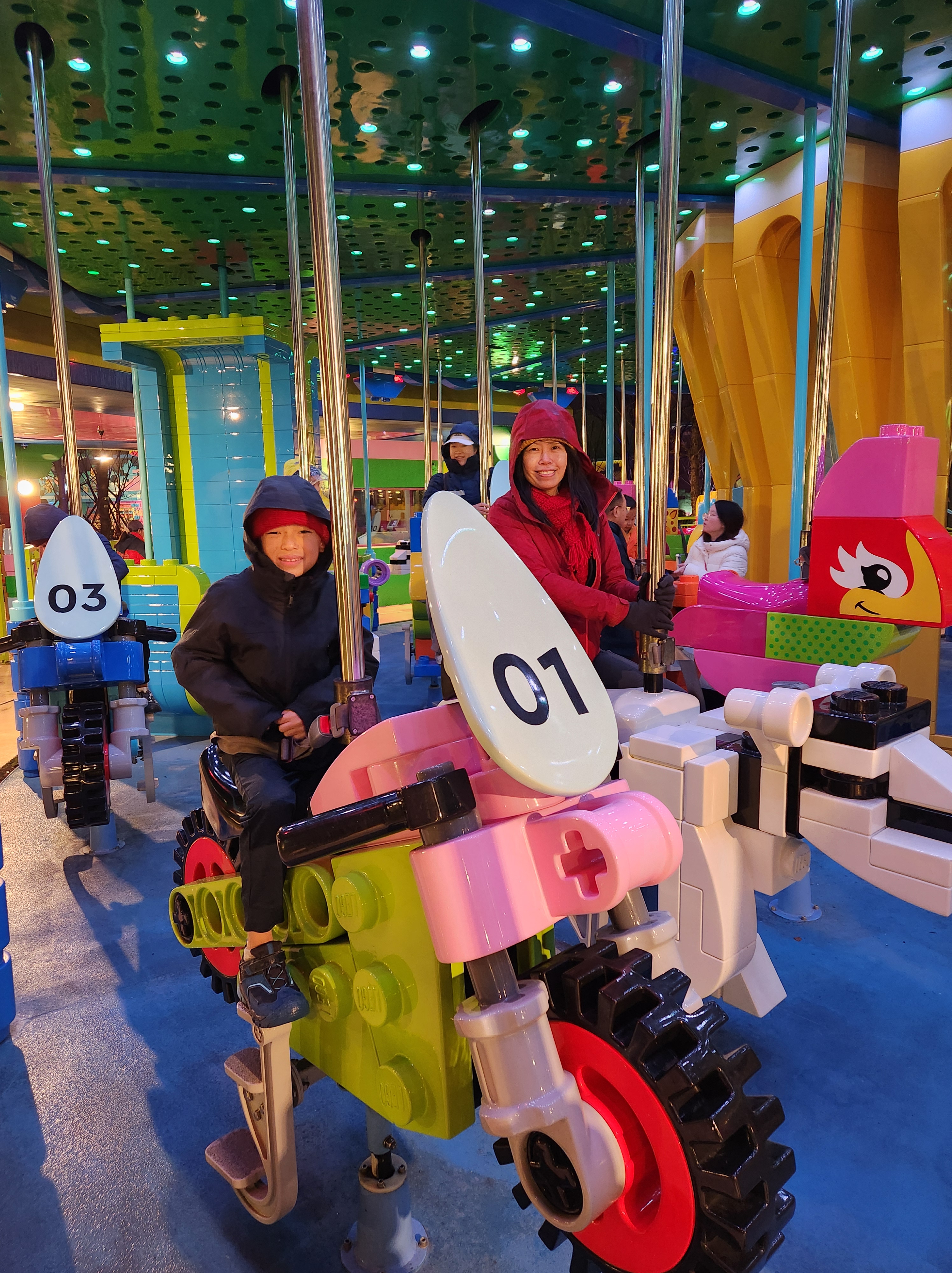
We also visited Shanghai’s newly opened Legoland, since our last attempt in Japan was a failure. 😅 It’s currently the biggest Legoland in the world, but it felt manageable and none of the lines were ever too long (though we also went on a rainy weekday). I’m glad we brought the kids to Legoland at least once, because I think C might outgrow it in about a year. The park seems most appropriate for younger kids.
My friends from business school live in Shanghai, so we took this opportunity to meet up! Traveling to a foreign place is so much more fun when you have local friends taking you around. I originally wanted to do a day trip to Suzhou, but my friends offered to drive us to Wuzhen, a small water town about 1.5 hours outside of Shanghai.
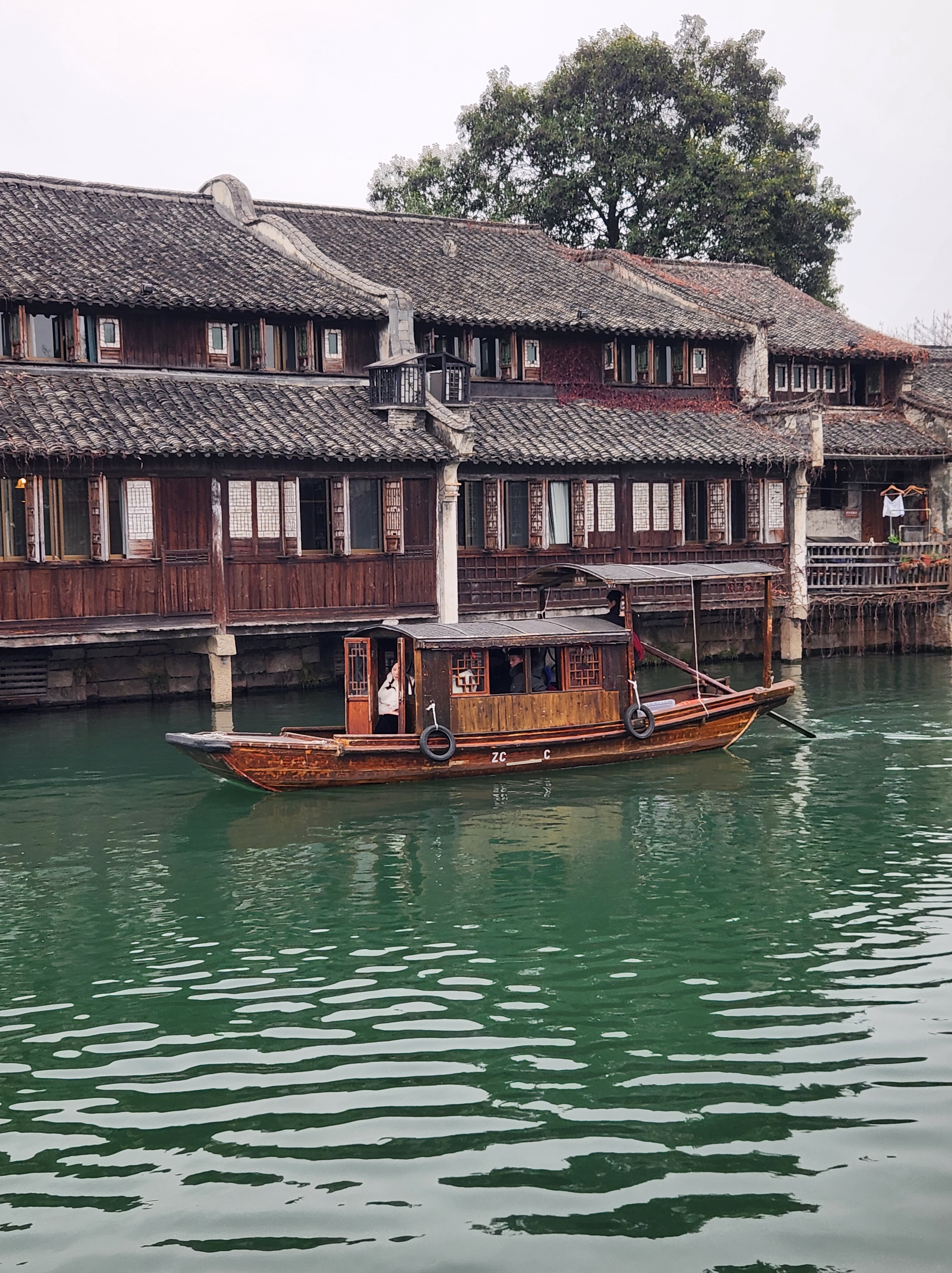
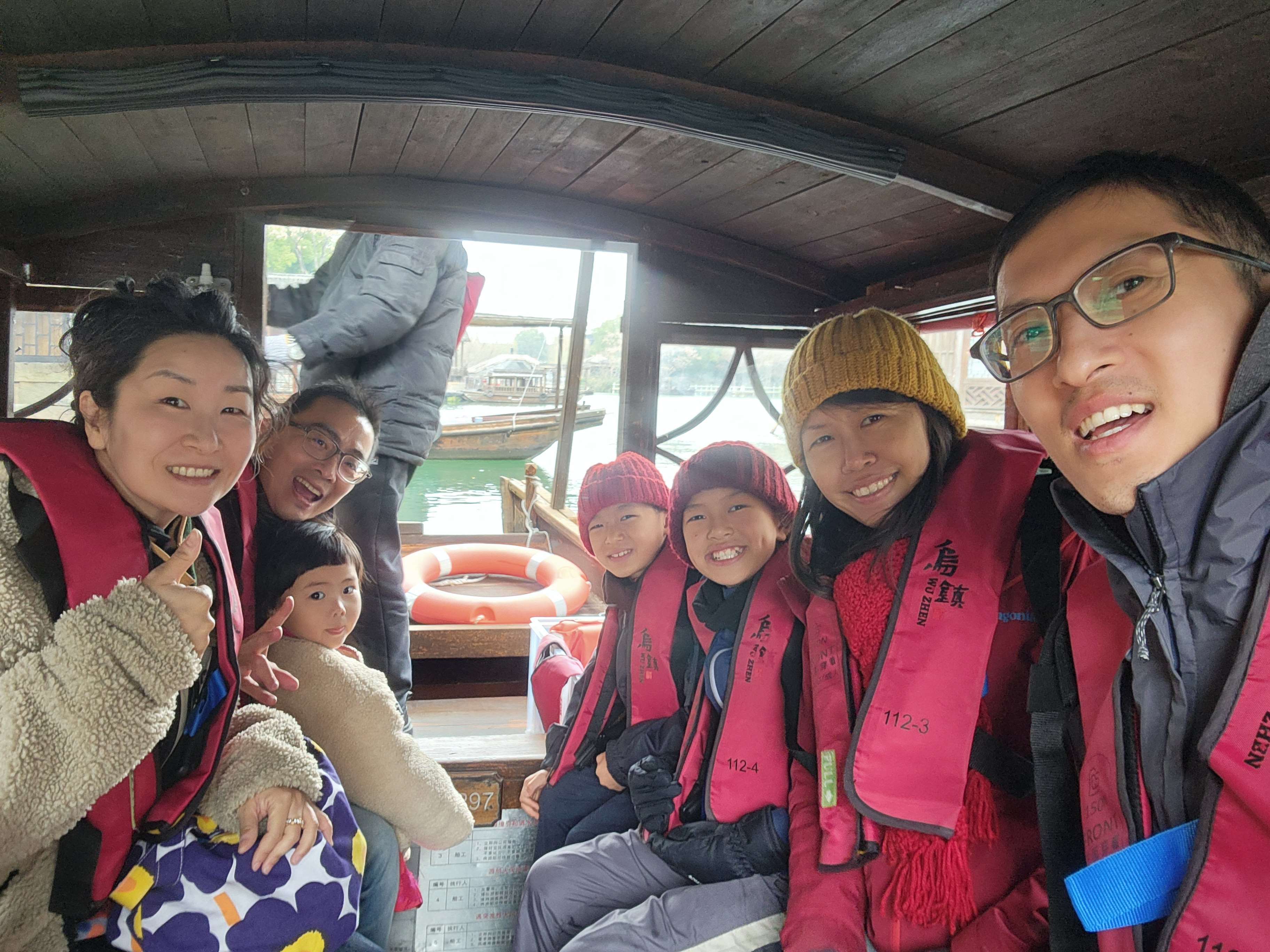
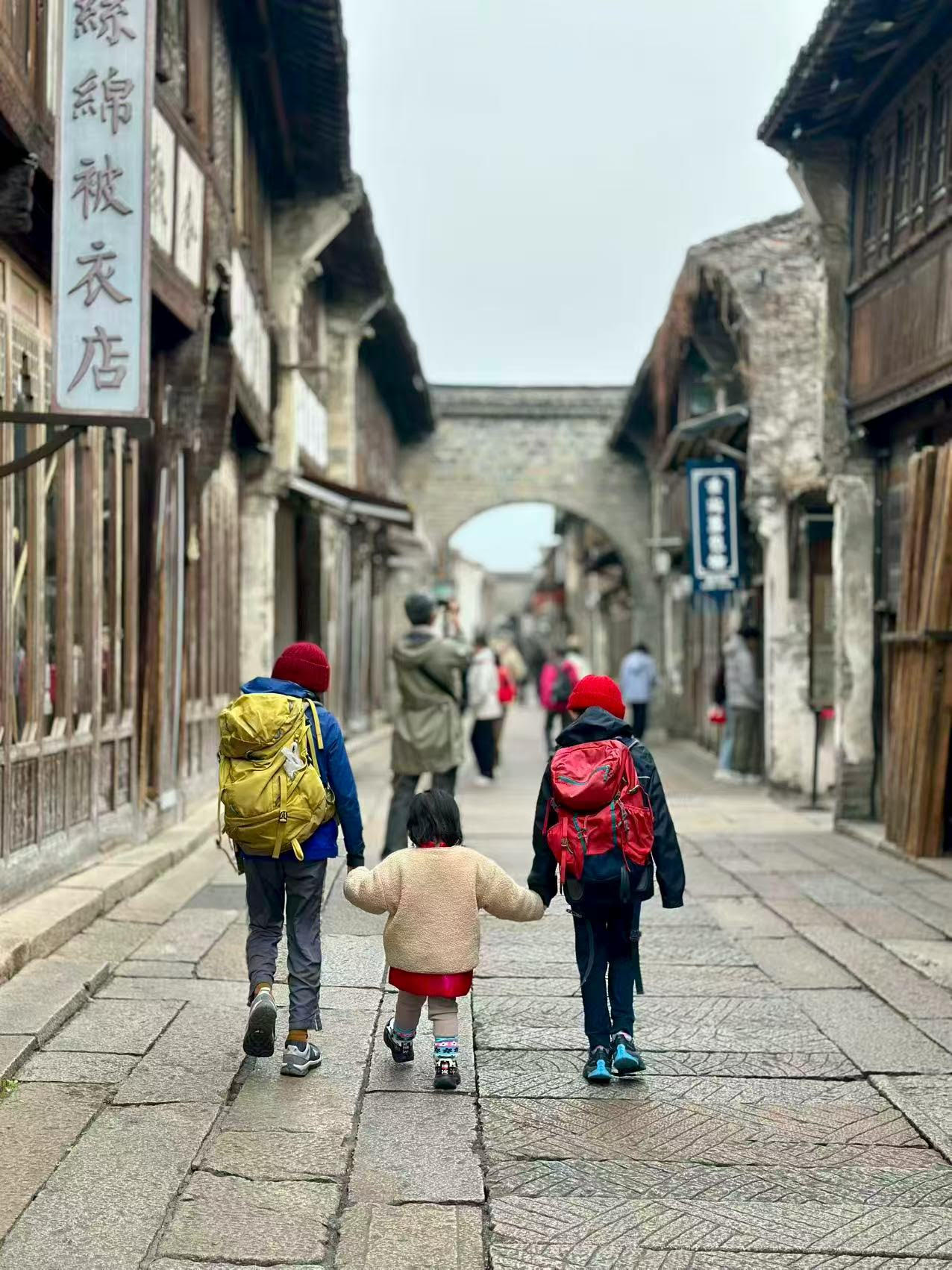
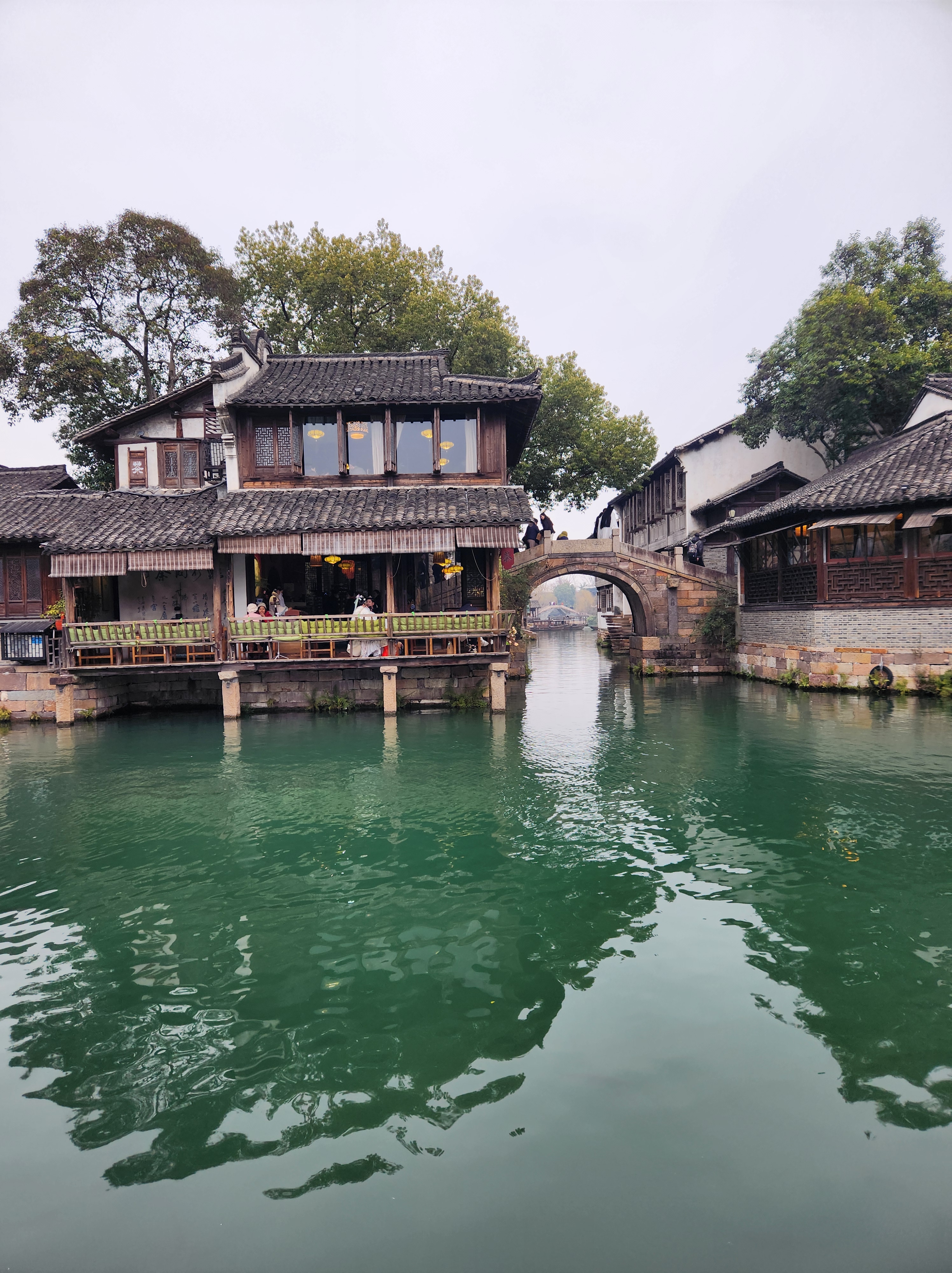
Wuzhen was a lovely little town. It’s like the Venice of the east, with waterfront houses and stone bridges built over quiet canals. We all took a ride in one of the old wooden boats. My friends also brought along their 2 year old daughter, whom my boys absolutely adored. 💓 Wuzhen, though well developed for tourism, still felt wonderfully quiet and unhurried. I’m so grateful our friends introduced us to this hidden gem! It’s the kind of place we probably wouldn’t have discovered on our own.
This pretty much wraps up our 3 week trip in China. It wasn’t exactly a relaxing trip – we were challenged, overwhelmed but also amazed. Would we return? Absolutely! For all its imperfections, China has too many iconic destinations, too much good food, and far too much depth of culture for us not to keep exploring.
Tips for visiting China:
- China has their own set of apps for everyday activities. It’s recommended to download and set up these apps before entering China.
- WeChat: Probably the most important app to download. It’s used for payment, messaging, and has a built-in Didi app, which is used for ride hailing.
- Alipay: Another payment app. It’s good to have both WeChat and Alipay in case one doesn’t work (which happened to us more than once). You can link your credit card in both WeChat and Alipay.
- Didi: A ride hailing app like Uber, but if you already have WeChat, there’s no need to download the separate Didi app.
- Amap: Similar to Google maps, but not as accurate. We got lost many times using this app. Baidu is another navigation app, but it’s entirely in Chinese.
- Dianping: Chinese people use this app to find and book restaurants. I downloaded it, but found it confusing to use. Instead, we mainly looked on social media for restaurant recommendations.
- The language barrier is real. Almost no English is spoken in China. Even staff at the hotels we stayed at did not speak English, nor did the staff at popular tourist attractions. Luckily, since we’ve been living in Taiwan for awhile, we could get by with our mediocre Chinese. But I can see it being really frustrating for other travelers. So if your Chinese is not up to par, use a translator app!
- Bring your passports with you everywhere. Not only does it serve as your ID, your passport is also your ticket to many attractions. For instance, when you book tickets for Forbidden City, it’ll link your ticket to your passport number. When you enter the site, they’ll only need to scan your passport. There are no separate tickets.
- Some tickets (such as Temple of Heaven and Summer Palace) were difficult to book as they require downloading a “mini-app” in WeChat, then inputting a Chinese phone number, which we didn’t have. I ended up booking some tickets through Klook or GetYourGuide and paid a little extra to have someone else book for us.
- Bring your own toilet paper when going out! Squat toilets are still the norm. You’ll find some Western toilets in modern shopping areas and hotels, but majority of toilets are squat style. Thankfully, most of them are clean, but toilet paper is usually not provided.
- Be prepared for crowds and chaos. I used to think Taipei, a city with 2.5 million people, was huge. But crowds take on a whole new meaning in China. 😆 You will likely get nudged, pushed or someone may cut you in line. I would get annoyed, but later understood that it’s nothing personal – it’s just part of having to live with 1.4 billion other people.


 Hongs Abroad