Ramblings

Becoming Bilingual

Before coming to Taiwan, the boys had minimal exposure to Chinese. They took several online classes (inconsistently) and went to an after school Chinese program that had only one hour of language instruction each day. We tried to supplement with Chinese books and shows at home but both boys showed little interest. We also spoke English exclusively at home because I was not confident in my Chinese at all.

After almost one year of public schooling in Taiwan, two things have proved to be true:

  1. Kids are truly like sponges!
  2. There is no better way to learn a new language than in an immersive environment.

At the start of the school year, I had trained both kids to introduce themselves in Chinese (their name, age, where they’re from), but that was pretty much all they could say. They could not understand what was going on in class and had to depend on classmates and teachers to help them translate. C could read/write a few characters, but O could barely remember to write his name in Chinese.

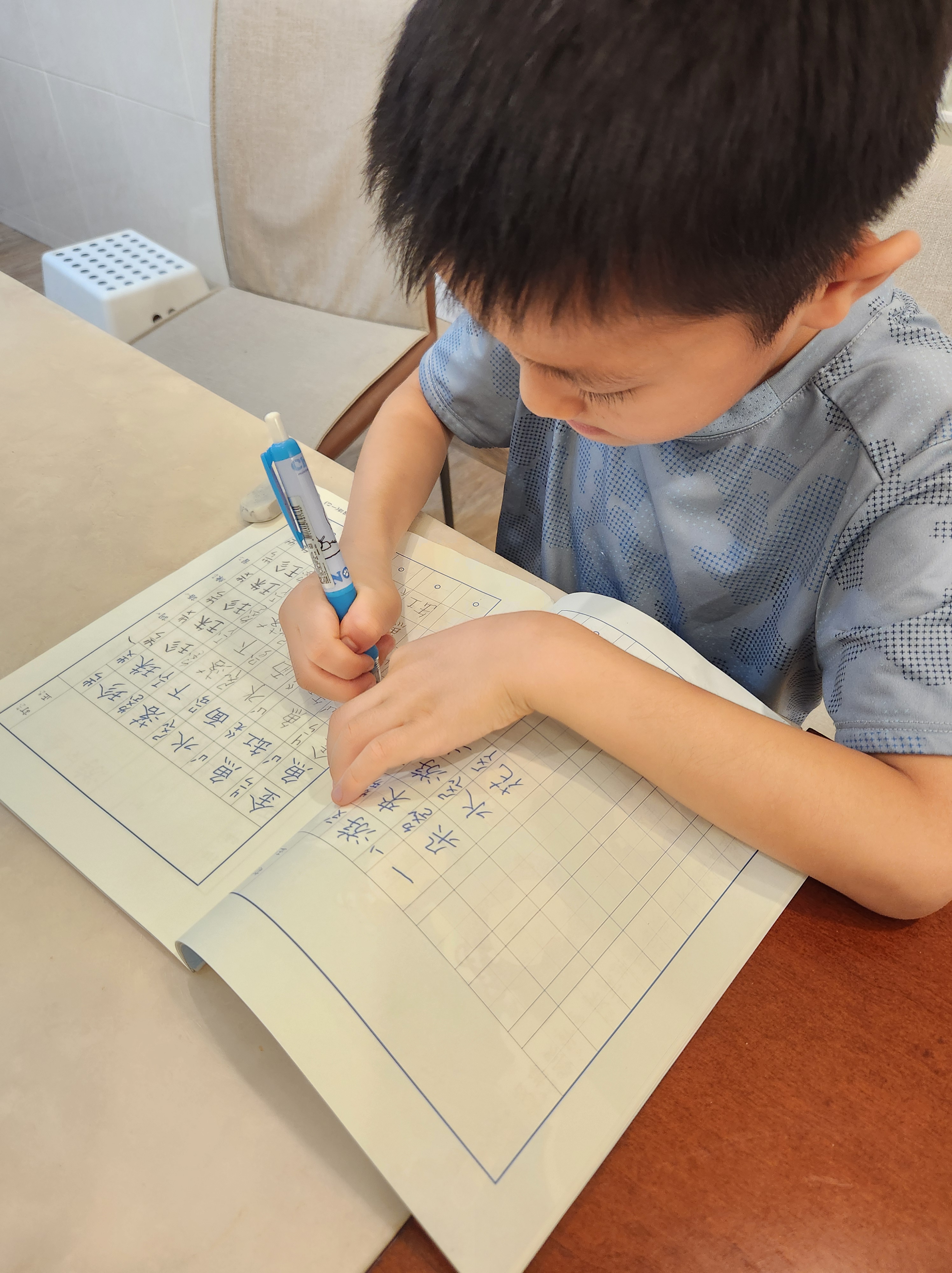
Flash forward to nine months later, C and O can understand their teachers, chat with friends, and read/write basic Chinese. O can do homework all by himself, from reading the problems to writing the answers. O’s teacher no longer needs to translate for him, and he still gets good grades on his tests and homework. With the help of zhuyin, O can also read a lot of text (see below for one of his assigned reading books) though he probably only understands 60% of it at this point.
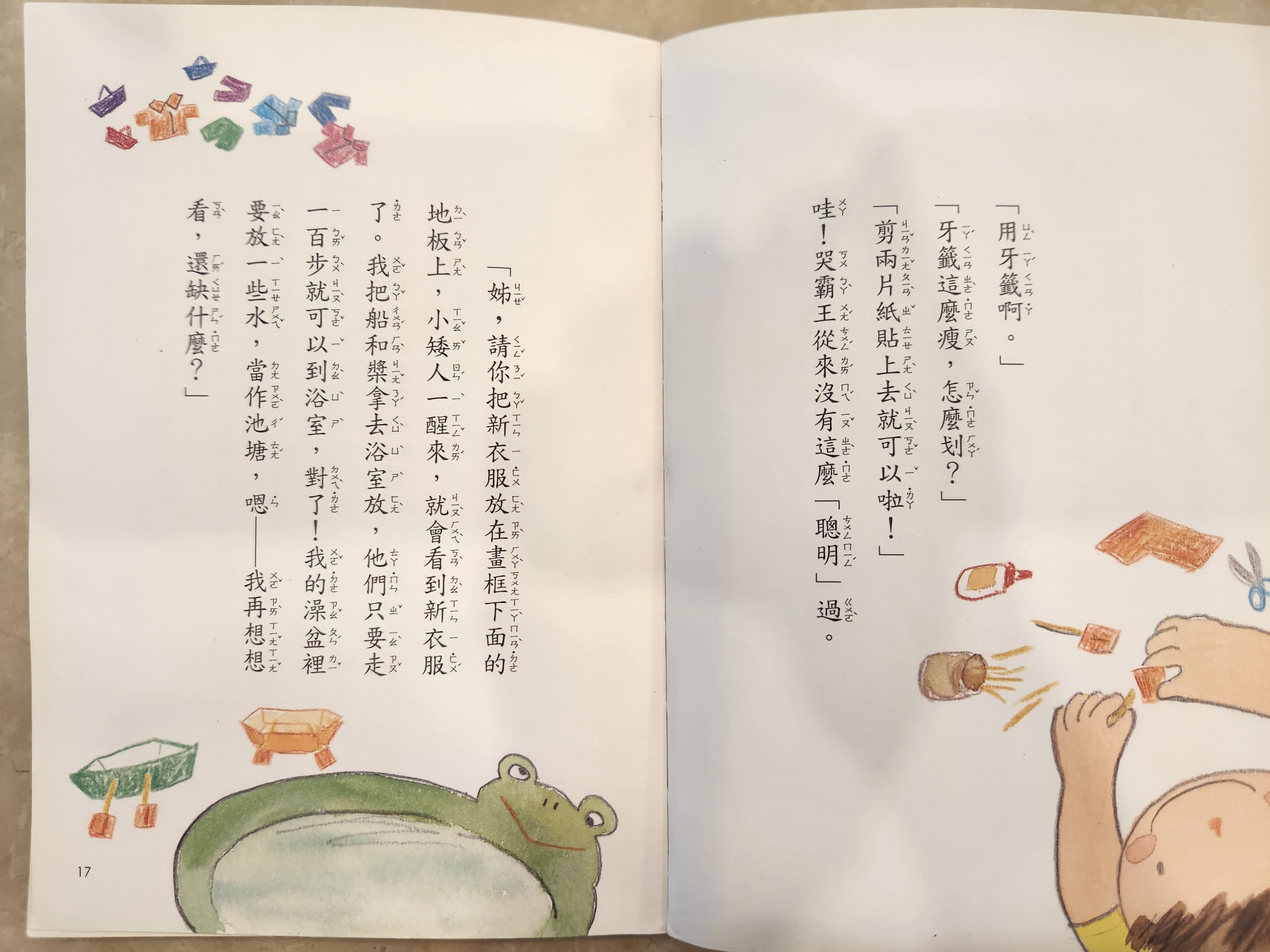
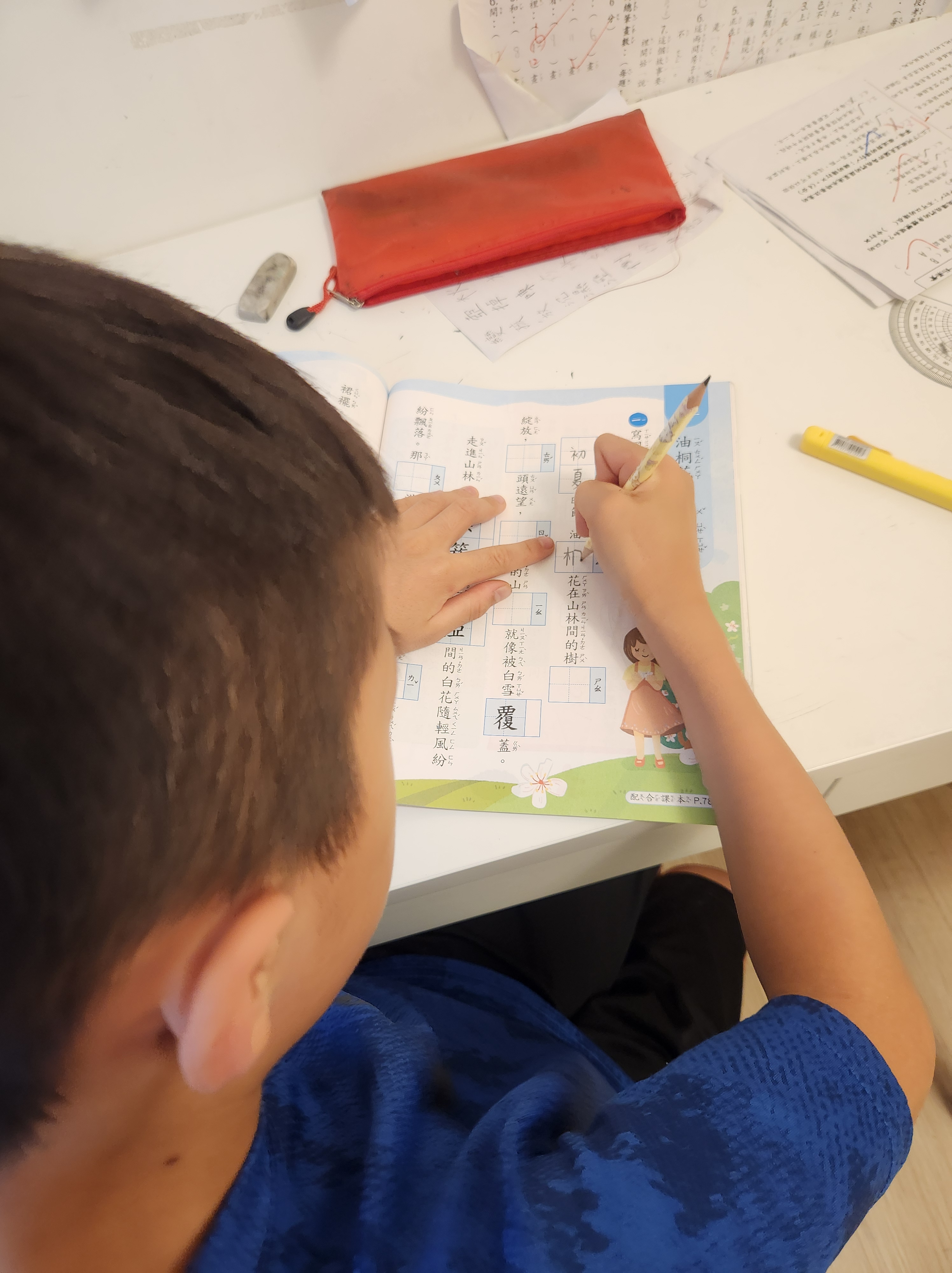
C’s homework is a lot more challenging, but he can often complete more than half of his assignments by himself. (The rest is with his tutor’s help.) The fact is he is able to read, understand and answer difficult problems in Chinese is already a huge improvement from nine months ago. What I’ve noticed about C is that he’s able to retain information better as well. Almost every week, there is a dictation test on new vocabulary at school. At the beginning of the school year, I would help him study and man, it was a struggle! He would maybe get 20% right on the first try. Now, we wouldn’t really need to practice and C would still get almost every word correct.
This is why an immersive environment is so helpful when learning a language. In the US, both boys were SO resistant to doing anything in Chinese because it wasn’t the norm. Family and friends there all spoke English. Here, their friends speak only Chinese. Their teachers speak only Chinese. Everywhere they go, people speak only Chinese. If they want to watch TV, it will be in Chinese because there’s no other option. In this sink or swim environment, they learned they had to swim.

It’s been amazing witnessing C and O’s progress. I love hearing them talk in Chinese; it’s like reliving the time when they were toddlers first learning how to speak. As much as I am amazed at how quickly they’re learning, I am also incredibly proud of their attitude. They never once complained about not understanding anything, or all the homework and tests at school. They never seem frustrated when they have to read an entire page of Chinese, or have to write pages and pages of characters.

C and O are not fluent (I think my Chinese is still better than theirs 😅) and I honestly don’t expect them to be. But what I hope they’ll extract from this experience is that they can learn and do anything with patience and grit.
Ramblings

Learning Chinese: 1 Step Forward, 2 Steps Back

This post only pertains to my Chinese learning journey. I’ll write about the boys’ progress in another post.

We’ve been living in Taiwan for 9 months already 🤯, and for the most part we’ve adjusted to the Taiwanese way of life. We’ve made friends, are comfortable navigating around the city, and have our daily routines nailed down.

The biggest challenge has been, and continues to be, learning Chinese. I wrote about first learning Chinese 6 months ago, and while my Chinese has improved drastically since then, I feel like it’s plateaued. I can comfortably order at a restaurant, exchange simple pleasantries with strangers, and introduce my background. But beyond that, it can be a struggle holding conversations.

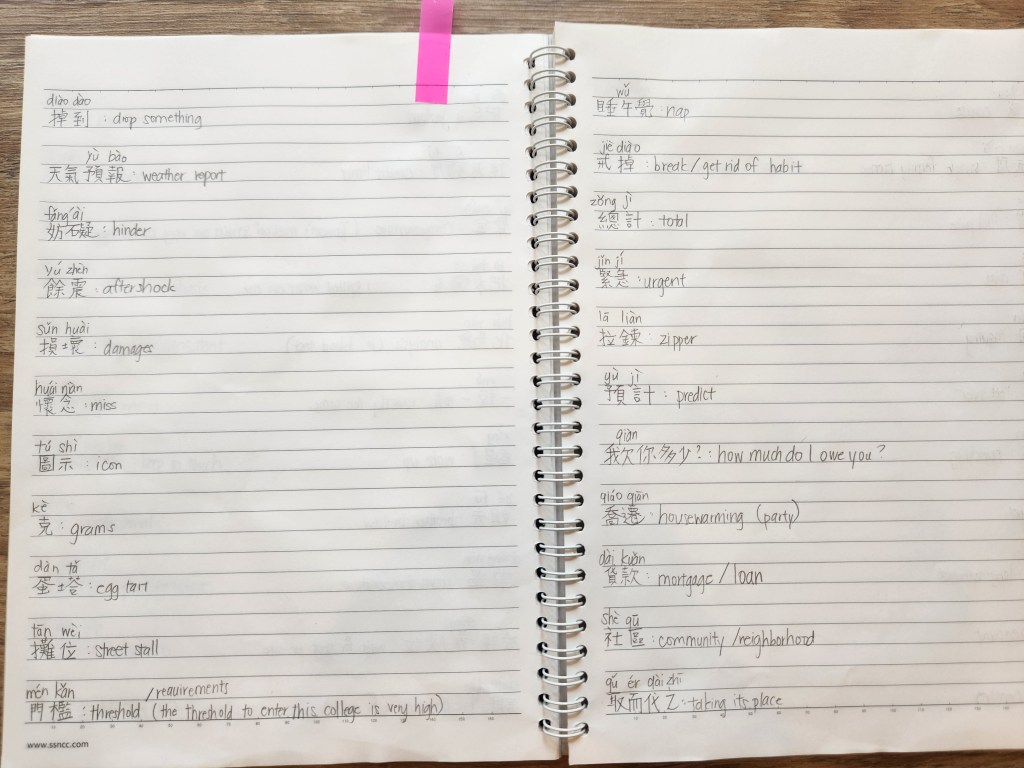
My conversation skills are completely dependent on the topic. I can chat about the kids’ school and about daily life, but if the topic shifts to say, skincare, I am clueless. (This actually happened in real life: I went in for a facial and had zero clue what the aesthetician was telling me about my pores and moisturizing. 😅) This is because I have been learning vocabulary by subject matter. I write down words that are useful or related to a topic that interests me. For example, after the earthquake, I learned the Chinese words for “damages”, “aftershock”, and “predict”, knowing that this subject might come up.

My notebook of Chinese words. I’m already on my second book!

So on days when I’m chatting about kids or eating out, I feel pretty good about my Chinese. Other days – like today, when a sales person tried to introduce me to different types of sneakers- I feel like I took 2 steps back.

All is not lost though. Because I have been writing down words and reviewing them consistently, my reading and writing skills have improved a lot. I can read signs and simple text messages without having to copy and paste into Google translate. I can write messages using pinyin (though it still takes me awhile to do). An indirect effect to all this is that my mom even noticed that my Cantonese got better! 😊

Aside from learning vocabulary words, I have been listening to podcasts, meeting language exchange partners and doing weekly sessions on italki. (I’ll list these resources at the bottom of this post.) I still volunteer at the boys’ school and it’s a great way to chat with locals, but our conversations are usually pretty perfunctory. I stopped taking in-person Chinese classes after the boys’ winter break. The classes gave me a great head start, but I wanted to try other things.

Baba asked me what my next goals for Chinese are, and honestly I’m not sure. To feel confident enough to just speak without mulling over every word? To be able to have deeper conversations with people? I don’t really have a definitive, measurable goal other than continuing to improve. It’s hard, but to be able to connect with people using their language is an amazing feeling.

Resources for Chinese Language Learning:

  • Learn Taiwanese Mandarin podcast – Probably my favorite podcast so far. The best part is she has a website with transcripts of each episode that includes pinyin and the English definitions.
  • Talk Taiwanese Mandarin with Abby podcast – Another good podcast for Chinese learning. You do have to join her Patreon to access the transcripts.
  • italki – An online language platform where you can schedule 1:1 video chats with teachers. It’s convenient – you can schedule classes according to your schedule – but classes can be expensive. I found a teacher I really like on there.
  • Tandem – A free language exchange app where you can find people to chat with. (Conversely, I’d help them with English.) I’ve met a couple of people through the app, but the problem is finding someone who can regularly practice with you.