Ramblings

5 Things We Don’t Love About Taiwan

We’ve only been living in Taiwan for 3.5 months so by no means are we experts about the Taiwanese way of life, but I thought it’d be fun to share what we love and don’t love about Taiwan so far. Let’s start with the not-so-good stuff.

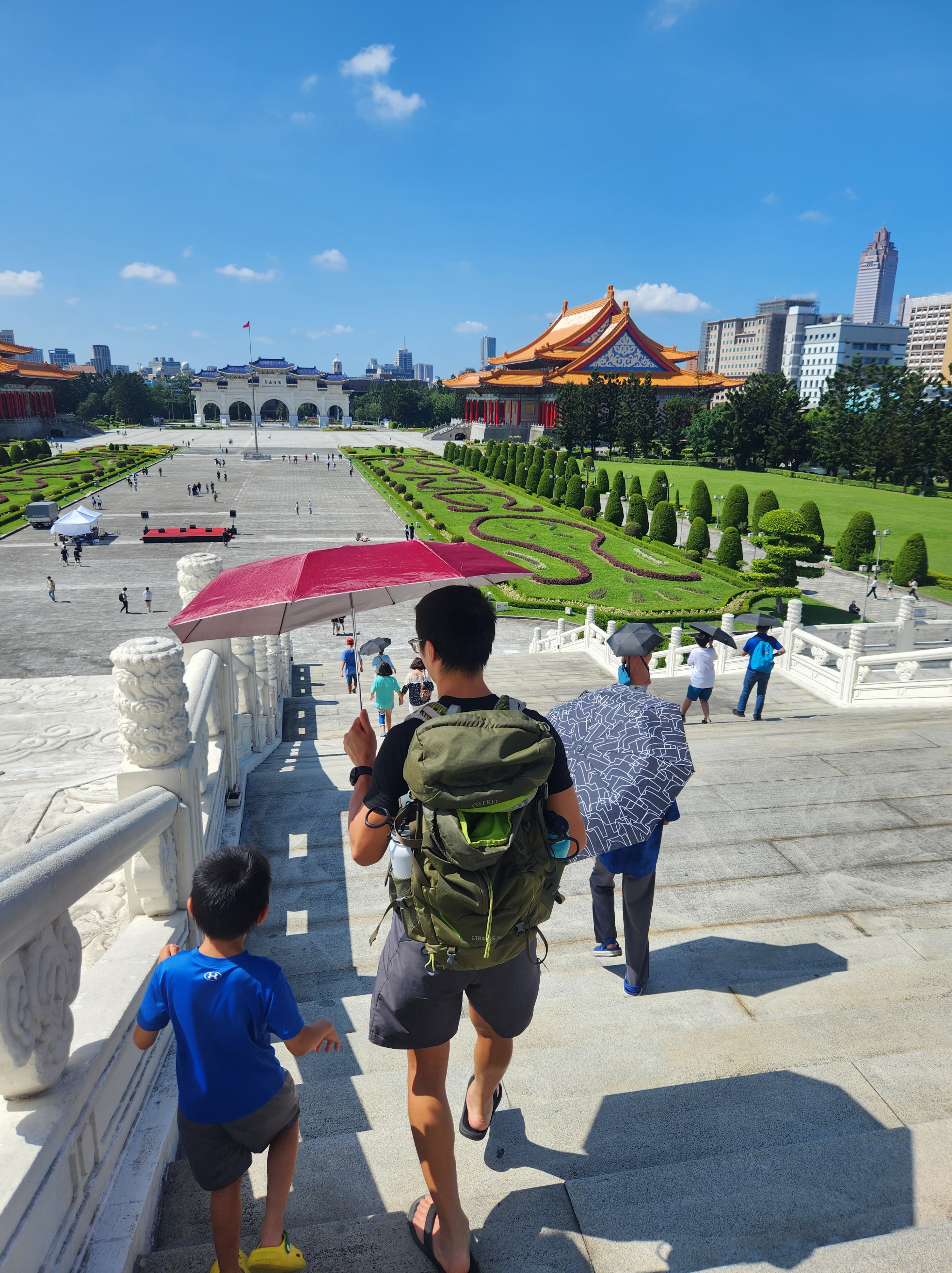
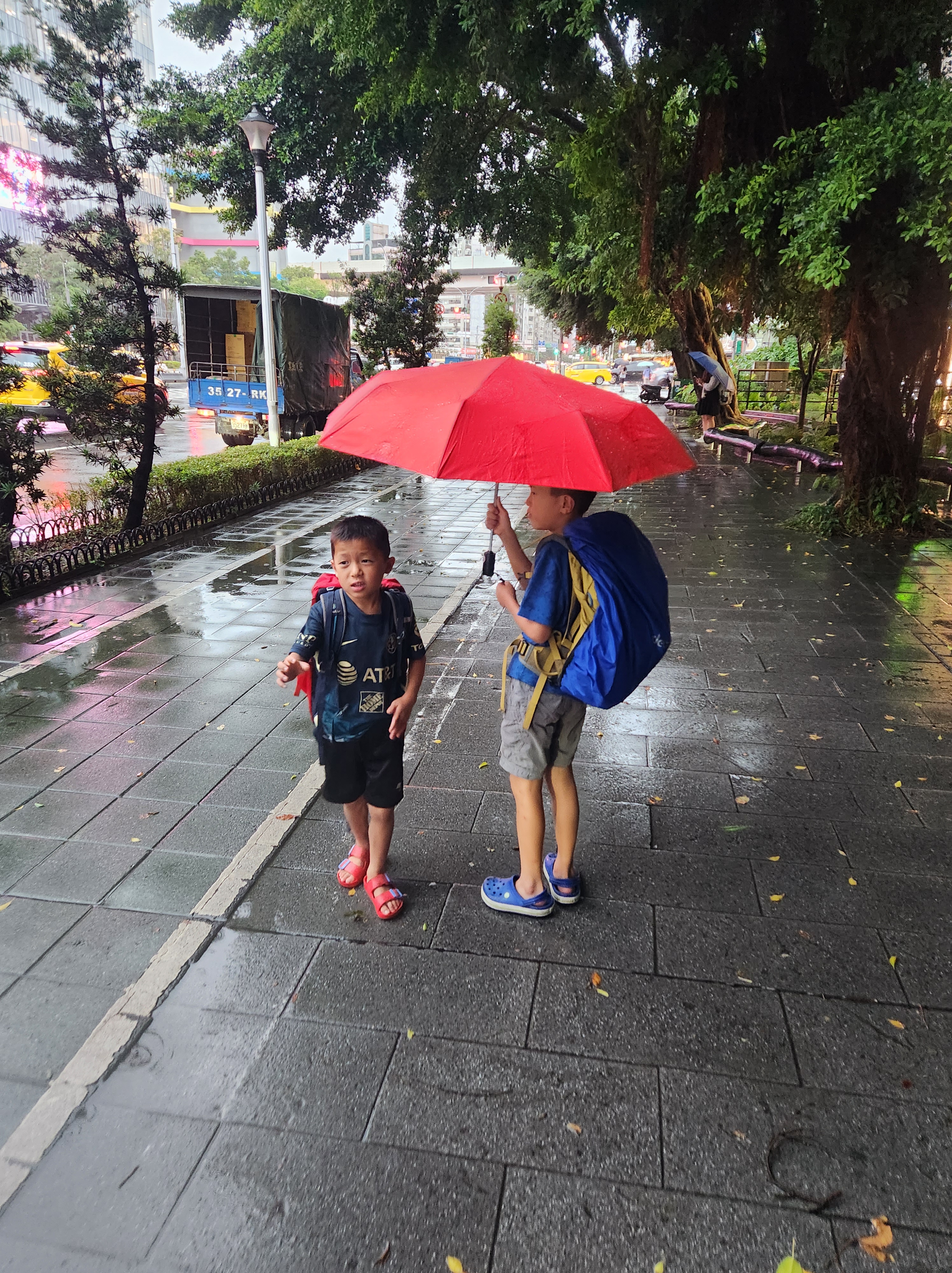
Weather. Before moving to Taiwan, we already knew the weather was going to be a drawback and unfortunately, this perception hasn’t changed. 😆 It gets very hot and humid during the summer – I’m talking at least 90°F plus humidity – and this year, it remained hot up until early November (!!!). It got so uncomfortable some days that we dreaded going out. And when it wasn’t brutally hot, there was pouring rain. It’s no wonder that Taiwanese people bring an umbrella with them everywhere – if it’s not to block the lethal sun, then it’s for the rain!

Now that we’re in mid-November, the weather has finally cooled down (most days are in the high 60s to mid 70s). We’re excited to do more outdoor activities, but we’ve also heard that it rains almost everyday during the winter season. 😑

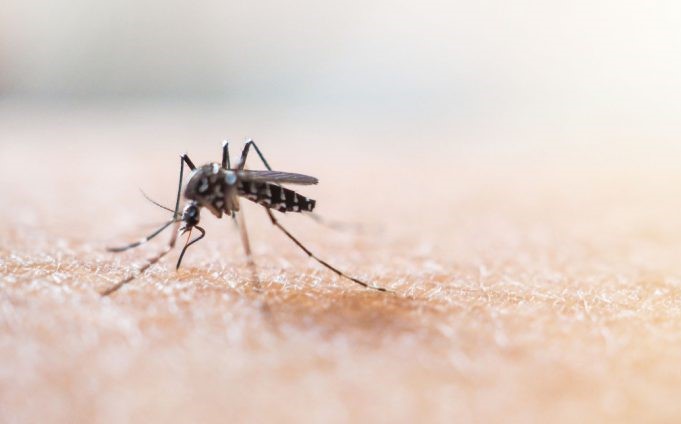
Bugs. Because of the hot, humid weather, Taiwan has a lot of bugs. We probably lost a pint of blood to the vicious little mosquitoes here. They are relentless yet so tiny that you can’t see them (and squash them). What’s worse is that I have an allergic reaction to mosquito bites so my bites would turn into huge welts. But over time, the bites have dwindled and we found a great tool that relieves the itching and swelling. No cream or insect repellant has worked better than this little gadget!

We also get a fair share of annoying fruit flies and ants, but nothing we haven’t dealt with in SF.

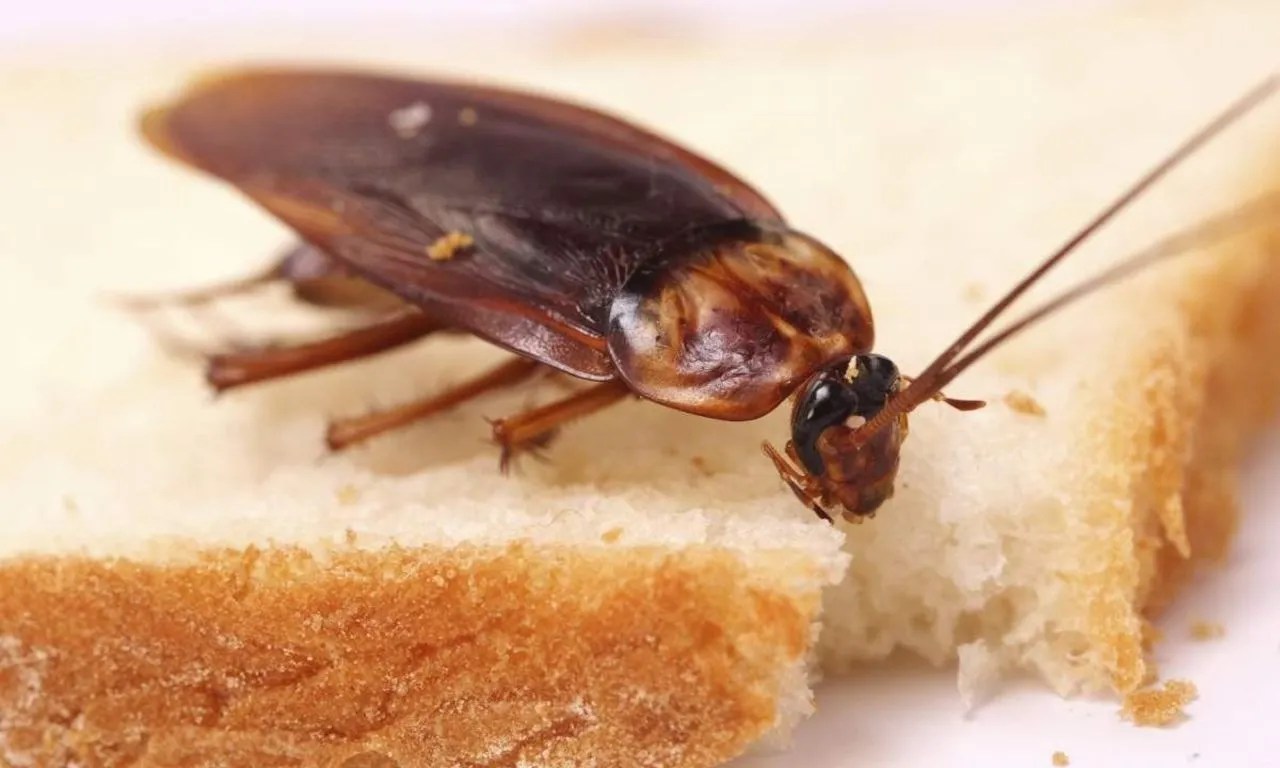
Cockroaches are massive here, but we’ve only found them on the streets (thank god!) and even then they are usually dead due to Taipei’s periodic pest control efforts. C is totally grossed out by the roaches, but I don’t mind them as long as they are out of the house!

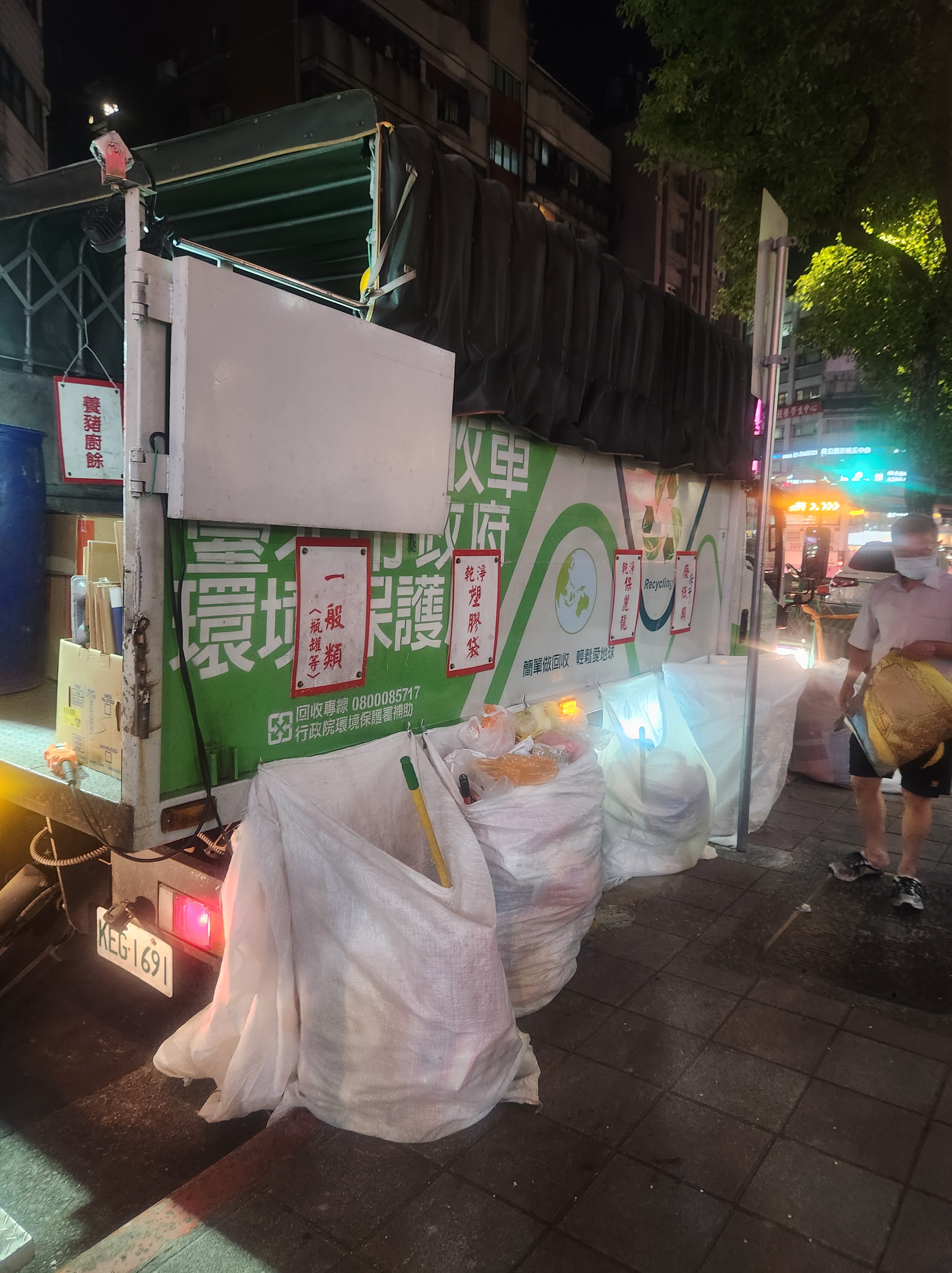
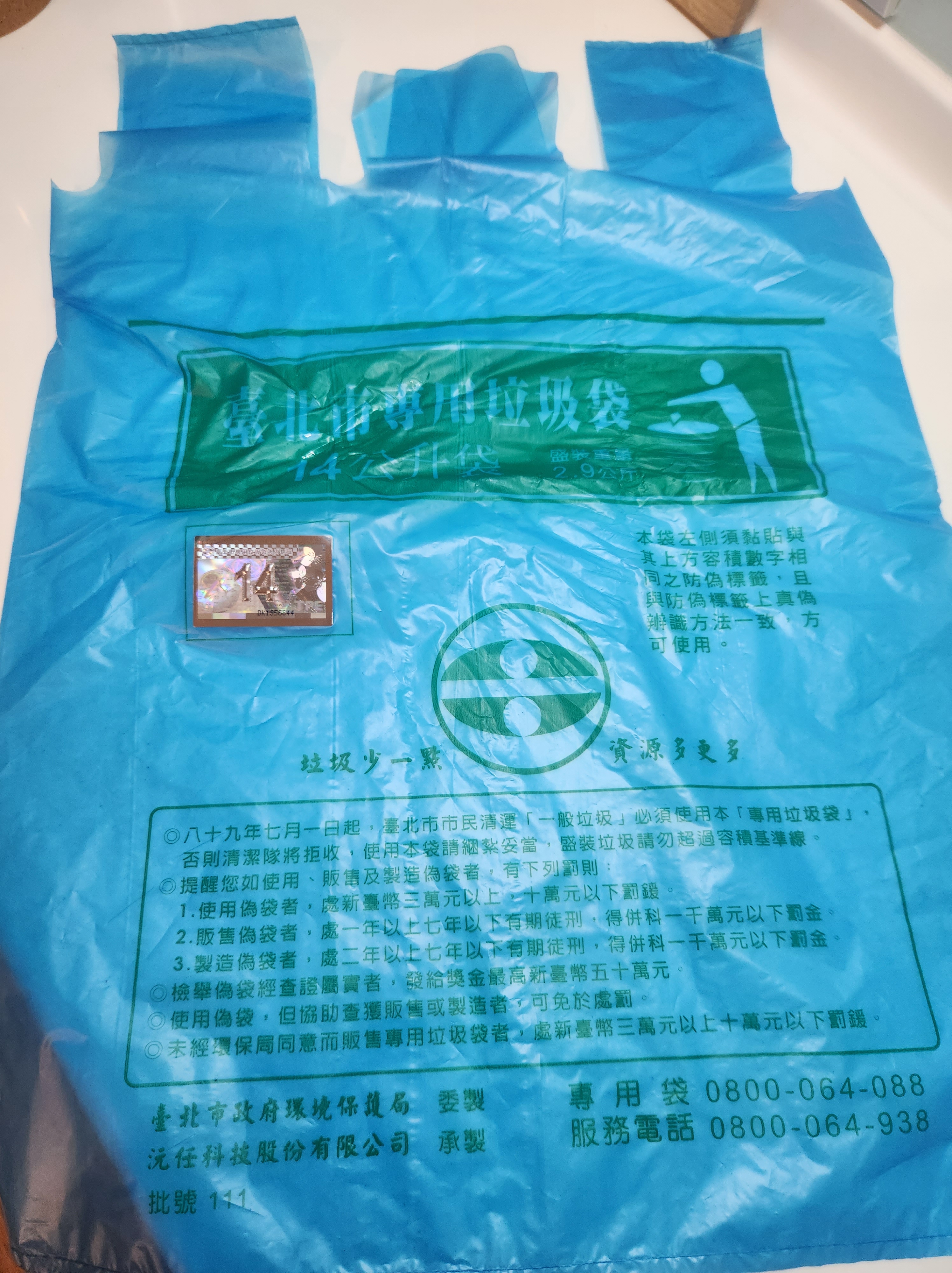
Garbage Collection. Look, we’re glad that Taiwan tries to be eco-friendly but the garbage/recycling system is a quite annoying and complicated. First, there are very few public garbage cans, which isn’t that big of a deal because we know people often abuse them. So you bring your trash home, but it has to be separated into multiple categories: general trash, soft plastics, hard plastics and metals, paper, and compost. You just bought a drink in a paper cup with a plastic lid? You have to separate the paper and plastic into two bins. But if the paper cup is dirty, you also have to rinse it before putting it with the rest of the recycling. 😫 Additionally, there are special “government-approved” trash bags you have to purchase (pictured below) or else your garage will be rejected.

In the US, apartment buildings and single family homes have large garbage and recycling bins that are usually stored in a garage and get collected once a week. In Taiwan, all garbage is kept within your home. The garbage trucks come through each neighborhood everyday except Wednesdays and Sundays at a predetermined time to collect everyone’s trash. But because there are 5 different categories, you’re running downstairs with 5 bags/bins to catch the trucks. (Side note: Some apartments include garbage collection or you can pay for this service out of pocket, so this doesn’t apply to everyone in Taiwan.)

The peculiar thing about all this though, is that many stores and restaurants still use a ton of plastic. Plastic bags, plastic utensils, utensils wrapped in plastic, plastic straws, and so on. So if the government is trying to reduce waste, why are they still allowing so much plastic? 🤔

Traffic Lights. Taipei isn’t exactly a pedestrian friendly place. The sidewalks are uneven, and some of the smaller streets don’t even have a proper sidewalk.

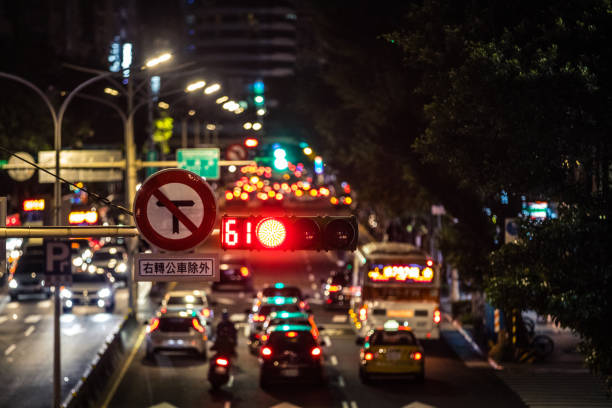
But our biggest issue is with the traffic lights. If you miss a light for example, it’s possible you’d have to wait up to 90 seconds. And on scorching hot days, it’s not fun at all. Sometimes, we’ve found that it was faster to go downstairs to an MRT station and back upstairs on the other side of the street. The traffic lights make walking feel like an eternity sometimes.

Food Diversity. One thing we miss about living in SF is the diversity of food (and people!) living there. You can easily find good Mexican, Thai, Indian or pizza in one neighborhood. It’s not easy to find that variety in Taipei. So far, we’ve found 2 good pizza joints and 1 decent Indian place, but still out of luck on the others. I miss a good burrito!

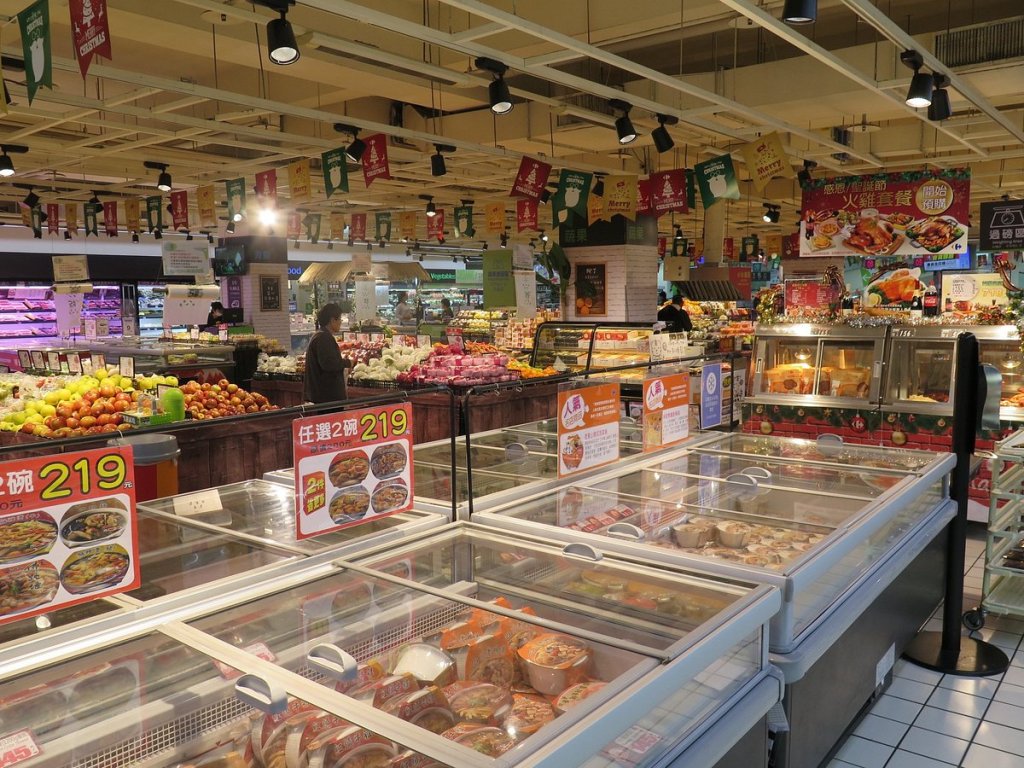
Finding ingredients from other cuisines is challenging too. I still haven’t found fresh dill or Cajun seasoning in stores. Either that, or the ingredients are very expensive. For example, a small bag of lentils is close to $10 and a can of diced tomatoes is $2.50. Meats and seafood are also quite pricey. We’ve found that buying groceries is often more expensive than eating out, but I still cook on weekdays because of the boys’ school schedule.

Enough complaining though – I’ll share what we love about living in Taiwan next!

Ramblings

Learning Chinese

This shit’s hard.

One of the reasons we chose to live in Taiwan is because its national language is something other than English. Moreover, we wanted to learn a language that is going to be interesting and useful to us, and Mandarin Chinese was perfect.

Baba and I are ethnically Chinese, though I grew up speaking Cantonese and learned Mandarin in high school and college. Baba grew up speaking Chiu Chou, and also studied Mandarin in high school. But that was ~20 years ago and most of what we learned has been forgotten.

So there’s really no better way to re-learn Mandarin than to live in Taiwan, right?! Except compared to ~20 years ago, our middle-aged brains can’t learn fast enough. I go to Chinese class twice a week for 4 hours at a place called LingoLab in Da’an. I come out of each class thinking my Mandarin is pretty decent, but then I get a reality check when a 7-11 clerk asks me a question other than “do you want a receipt?”. Ugh.

Classes at LingoLab are small (there is only 1 other student in my class), focus mostly on spoken Chinese, and cater to busy foreigners. Tuition is also reasonable. National Taiwan Normal University is actually the gold standard for foreigners learning Chinese in Taipei, but the courses are like 15-hours a week on top of many written exams. I just didn’t want to make that commitment.

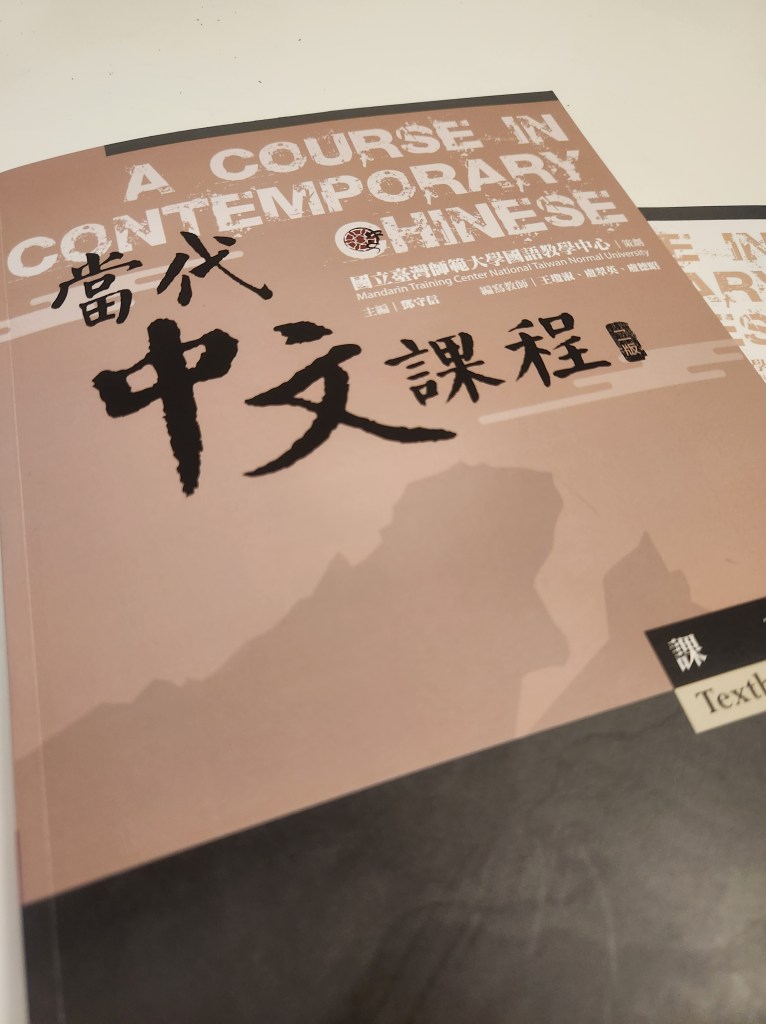
The textbook I use for class, published by the NTNU. It teaches Taiwanese Mandarin, and the lessons are really useful for daily life. There are also accompanying audio recordings on YouTube.

Because I have a foundation in Cantonese, I can understand quite a bit of Mandarin. My biggest obstacle is my limited vocabulary and due to that, a lack of confidence when speaking. It can be frustrating sometimes because I actually have a lot to say! 😆 But I don’t know how to express myself and so I slink away feeling defeated and embarrassed.

Baba self-studies at home for about 3 hours a day through a site called huayuworld.org. The site includes a lot of great resources to learn Chinese. Baba never kept up with any Chinese back home so he has to start from scratch. But to his advantage, he isn’t afraid to strike up a conversation with anyone, even in his broken Chinese (which is similar to C’s personality).

There are days when we feel like we’re making progress, and other days when we feel like we’re still so, so far behind. Despite all this, I still find learning Chinese interesting and enjoy the challenge. So, I’m setting small goals for myself: maybe it’s to confidently order a meal at a restaurant (which I think I’ve gotten 80% of it down now) or maybe it’s to ask more questions when shopping. But however slowly, I believe we’ll all get there one day!

Other useful Chinese online resources:

Ramblings

A Day in the Life

Quite a few people have asked what Baba and I do while the kids are at school since we’re not currently working. Well, here’s an idea of what a typical day looks like for us in Taiwan. (Why do I feel like an influencer making this post? 😂)

6:45am: Wake up and make breakfast.

7:30am: Walk the kids to school. We’re lucky that we’re just a 5-minute walk away. School doesn’t officially start until 7:50am, but C likes getting there early.

8:00am: Baba studies Chinese at home. I either practice Chinese, read, or surf the internet. On Thursdays, Baba would be doing traffic control at school and I’d be volunteering at the school library.

9:30am: Buy groceries at the nearby traditional market or PX Mart, which is like a smaller version of a Safeway here. These are the two places where we shop for groceries the most.

10:00am: I attend Chinese class in Da’an. Some days, Baba and I may use this time to take a mid-morning nap. 😆

12:00pm: Pick up O from school and have lunch. C has school until 4pm for most days out of the week.

1:00pm: We help O complete his homework. (Yes, it takes two adults to do a 1st grader’s Chinese homework. 😂) Most of the time though, O has already completed a portion of his homework at school. Depending on the day, Baba may have Brazilian Jiu-Jitsu class in Zhongshan district.

1:30pm: O plays by himself, we go to the library, or buy more groceries for dinner.

2:30pm: Swim at the sports center across the street. Again, we’re super lucky to be living so close to a pool!

3:45pm: Bring O back to school for his after school club. Depending on the day, he may have ping pong, STEM, in-line skating, taekwondo, or magic. C is already at school so he goes straight to his after school club.

4:00pm: I cook dinner. Baba practices more Chinese.

5:45pm: Pick up the kids from after school club.

6:00pm: Dinner and shower before C’s tutor comes. This is usually the most hectic time.

6:30pm: C’s tutor arrives and helps him with his homework.

8:00pm: Kids pack up for school the next day. Brush teeth, and get ready for bed.

8:30pm: Bedtime for the boys.

9:00pm: Garbage trucks come, and Baba and I take the garbage and recycling downstairs. The garbage disposal process in Taiwan is quite an experience! You can read about it here.

10:00pm: Bedtime for Baba and me.

Ramblings

School in Taiwan, Part II

In my last post, I shared the differences between public schools in Taiwan vs. the US. After some thought, I realized there are more differences I wanted to share.

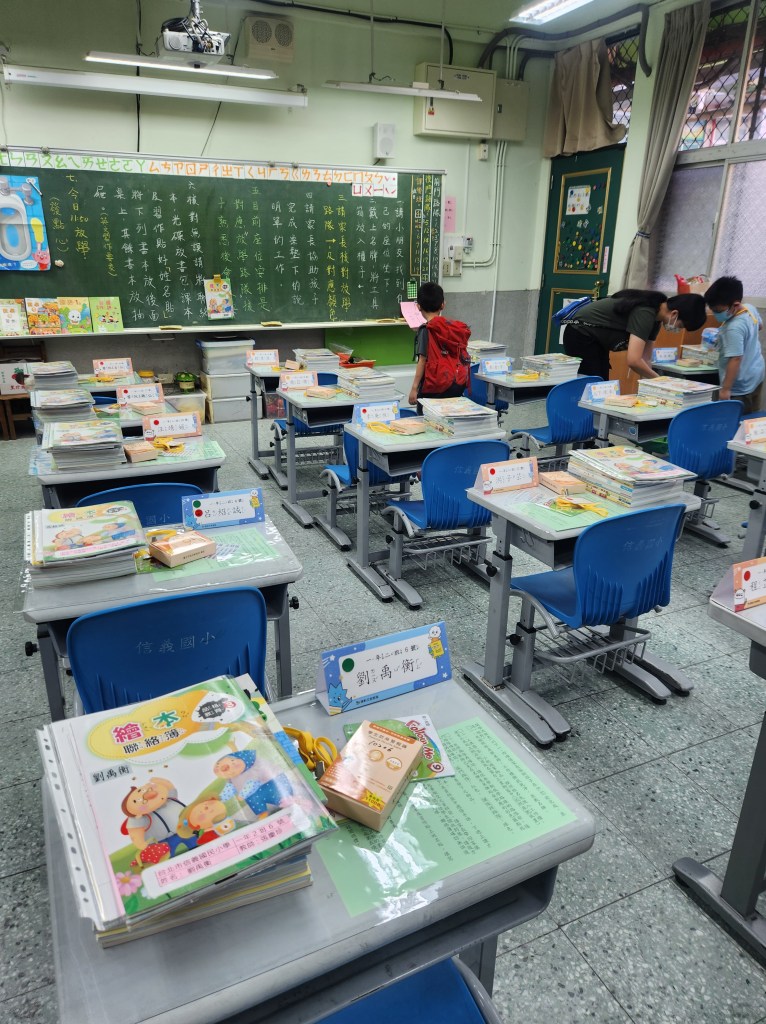
Classroom Setting. In the US, elementary school classrooms are usually pretty colorful and cheery, with artwork on the walls and bright rugs for circle time. Kids’ desks are usually pushed in groups to encourage teamwork. In Taiwan, the classrooms are not as cozy. There are rows of individual desks (though some classes may have two desks pushed together) and the rooms are bare except for teaching materials. There are no games, artwork, toys or books. Honestly, this brought back terrible memories of Chinese school for me. 😬

Tests, Tests, Tests. I knew beforehand that Taiwan schools are very focused on tests. What I didn’t know is how many there would be! O, even in first grade, has dictation tests each week. C either has a dictation or math test each week. There are also midterms and finals, and from what I understand, students are ranked at the end of each semester. 😬 In the US, there aren’t tests until the third grade. Even then, it’s just one exam taken on the computer.

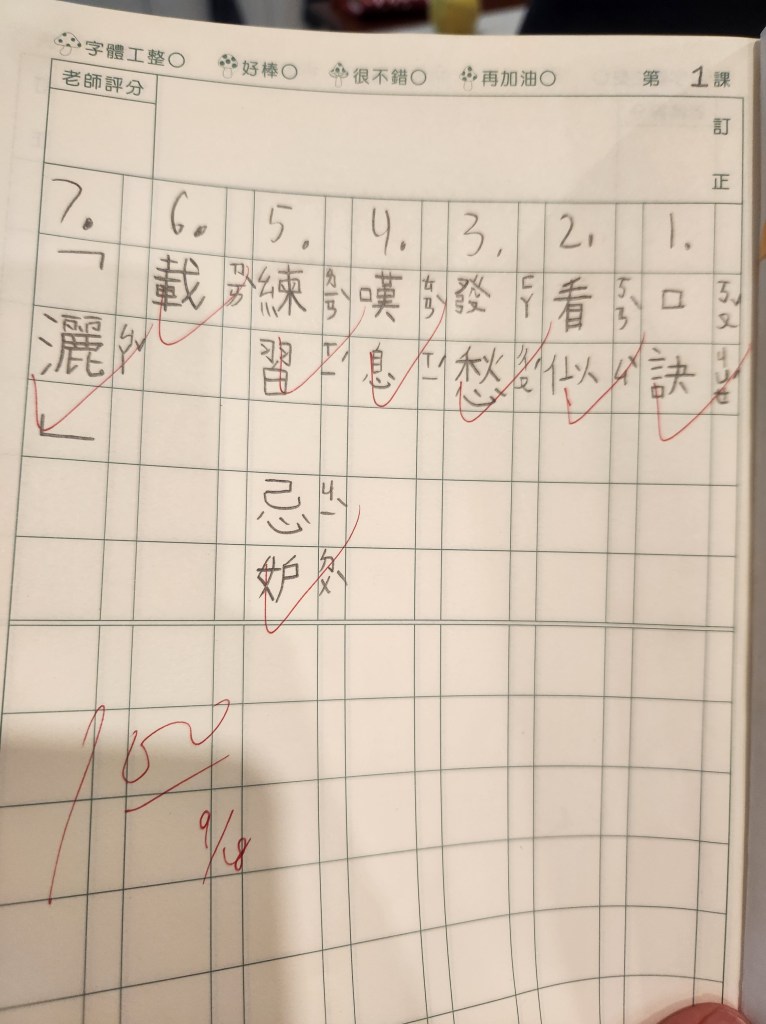
Grades. Elementary school in the US do not use real grades. Teachers use a rating system from 1-4, 4 being exceeding grade level. Homework assignments are given either a ✔+ or ✔. Here in Taiwan, everything is graded. You get one stroke or phonetic symbol wrong, points will be deducted. Parents also have to sign off on the test results. Below is C’s first dictation exam but he’s had others that were not so ideal.

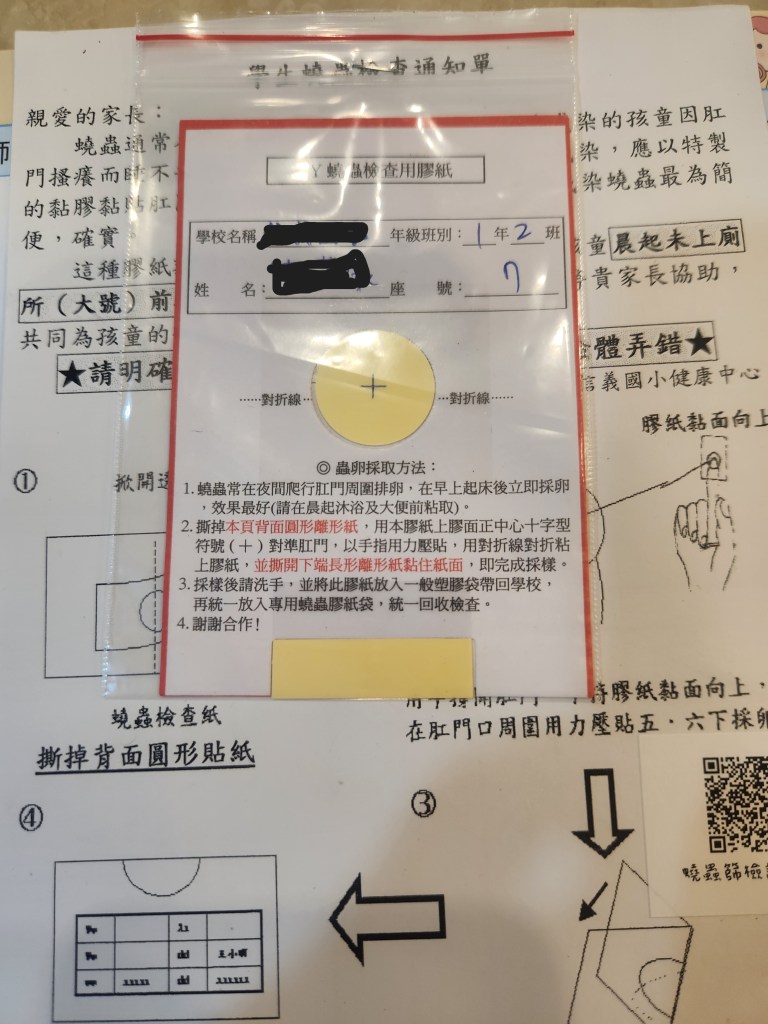
Health Tests. Besides academic tests, there are health tests that are administered at the school. So far, only O had to do the tests, so maybe they’re only for first graders. These tests require getting a sample at home. We’ve had to provide a urine sample and more recently, do a pinworm test which required getting a sample from where the sun don’t shine. 😂 I also read that students get a dental exam later on in the year. I can’t imagine US schools implementing something like this.

Staff. You often hear schools being short staffed in the US. I was surprised to see so many staff at our school in Taiwan! (Then again, our school has 700-800 students so they do need the manpower.) There is a Department of Academic Affairs, Department of General Affairs, Department of Student Affairs, and so on. Each department has a lead and then 4-5 staff. Then there are teachers for each subject. I remember at our old school in SF, we had one secretary who basically managed everything.

Saturday School. Last Saturday, the boys had school. This was a “make up” day for an upcoming Monday holiday. In Taiwan, if a holiday falls on Tuesday or Thursday, the government will give you Monday or Friday off to make it a 4-day weekend. But, you have to make up that extra day off by going to school or work on a Saturday. And yes, there is homework that day too. Again, file this under “things that will never work in the US.” 😂 There would be protests and riots, but the Taiwanese have such a strong work ethic!

Ramblings

School in Taiwan: Same, But Different

We’ve been at a public elementary school in Taiwan for almost a month now. Our experience has been interesting, surprising, and eye-opening. I wanted to share some similarities and differences I’ve noticed between Taiwan schools and US schools.

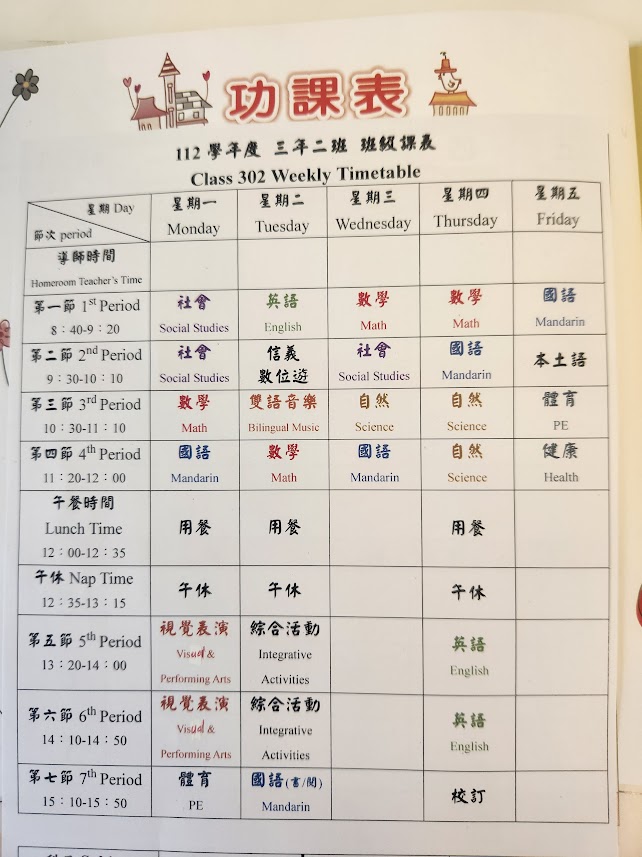
Class Schedule. Students study pretty much the same subjects as in the US. There is math, PE, science, English, music and language arts (except we’re learning Chinese Mandarin of course). However, elementary students in Taiwan follow a period schedule, much like middle school and high school in the US. There is homeroom, followed by periods for the different classes. The homeroom teacher is the “main” teacher for subjects like math and language arts, but kids change teachers and classrooms for the other classes. Kids also have a textbook and workbook for each subject – totaling to about 15 books! 😮

Students at different grades also have different schedules. C, who is a 3rd grader, has three long days during the week, in which his classes go from 7:50am – 3:50pm. O, a 1st grader, only has one long day during the week. The rest of the days are short days, from 7:50am – 12pm. We had a hard time trying to remember their schedules at first!

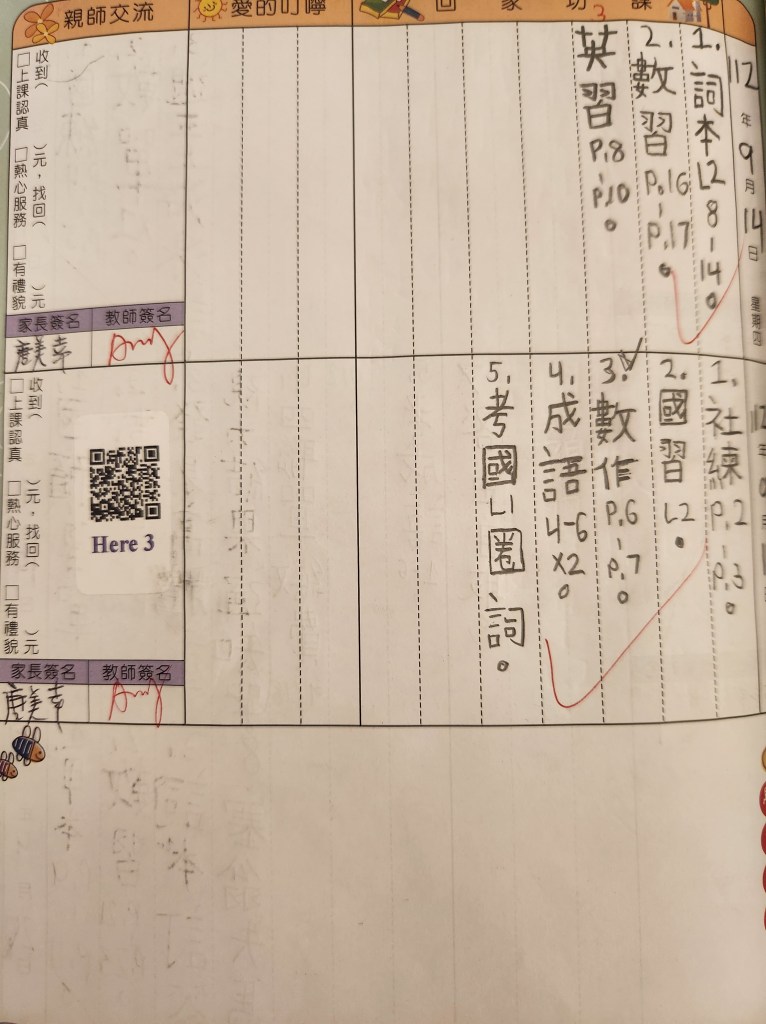
Homework. Like in the US, there is homework and it’s usually on math and language arts. There is homework everyday, even on weekends. We were prepared for 2-3 hours of homework a day, but so far it hasn’t been that bad. O’s homework is really easy right now, because he’s still learning the basics of zhuyin. The math is just counting or very simple addition. He usually completes everything within 20 minutes.

C’s homework is more complicated solely because the questions are all in Chinese. But in terms of quantity, it’s manageable. I’d say his homework takes anywhere from 1-2 hours a day. If he could read/write Chinese fluently, I’m sure it would be half the time. We also lucked out finding a great tutor who comes to our place everyday for an hour to help him with homework. Otherwise, we would be struggling with Google Translate. 😅

Daily homework assignments are written in a booklet. The teachers review and make sure students wrote everything down correctly. Parents then have to sign it each night when the homework is completed. You can also write messages to the teacher in the booklet, but most communications are done via LINE.

Recess (or lack thereof). Schools in Taiwan mostly have 10 minute breaks in between classes. The longest break is 20 minutes. Unlike the US, students don’t have an official “recess” where they go out into the yard and play. They usually either hang out in the hallways or stay inside the classroom. They get a 40 minute nap time after lunch, but that just means they rest their head on their desk inside the classroom. At first, the boys were disappointed there was no recess and I was worried they weren’t getting enough outside time. But like with everything else, they’ve gotten used to it and don’t mind it at all now!

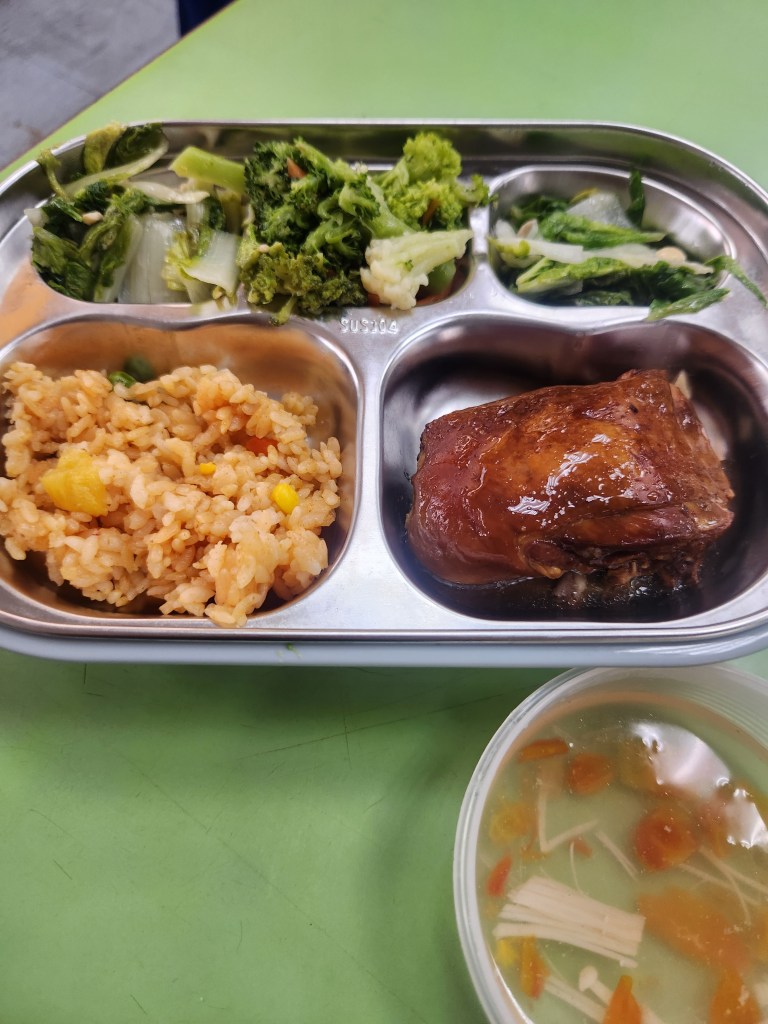
Lunches. The school provides lunches, but only on long days. The lunches are served and eaten in the classroom because there is no cafeteria, and students have to bring their own utensils. The boys have been loving the food, and look forward to it. Lunches usually consist of a rice, protein, vegetables, soup and fruit, and they try to serve different types of cuisines. The boys say it’s “SOOO MUCH BETTER” than the school lunches in the US. 😆 What’s also interesting is that students have to brush their teeth after lunch too!

PTA. Back at our old school in SF, Baba and I were pretty involved with the PTA. It was a great opportunity to help out the school while getting a glimpse into our kids’ day. I didn’t expect schools in Taiwan to have anything like that, but it turns out our school has a “Parent Association” or 家長會. Currently, Baba volunteers as a traffic control guard and I volunteer at the library.

Parents take volunteering seriously here! When you sign up for shift, you are expected to show up that day/time for the entire semester. (Unlike the US, where parent volunteers come and go whenever they please.) Baba had to undergo training for his job and the 家長會 had to buy him insurance. There are also group chats for each volunteer team, and there are multiple messages being sent everyday!

School Fees. In the US, public schools are entirely free (unless you join special clubs, teams or what not.) In Taiwan public school, there are fees. We have to pay for textbooks, school lunches, and bring all supplies. This includes pencils, markers, scissors, glue, and so on. It’s not expensive – we paid less than $200 per kid this semester – but it was a little surprising coming from the US.

However, what’s different in Taiwan is that there are zero school fundraisers. Everything is “paid for” in US schools because families raise funds to support the classrooms. Here, families are responsible for their own expenses. Neither is good or bad, just different!

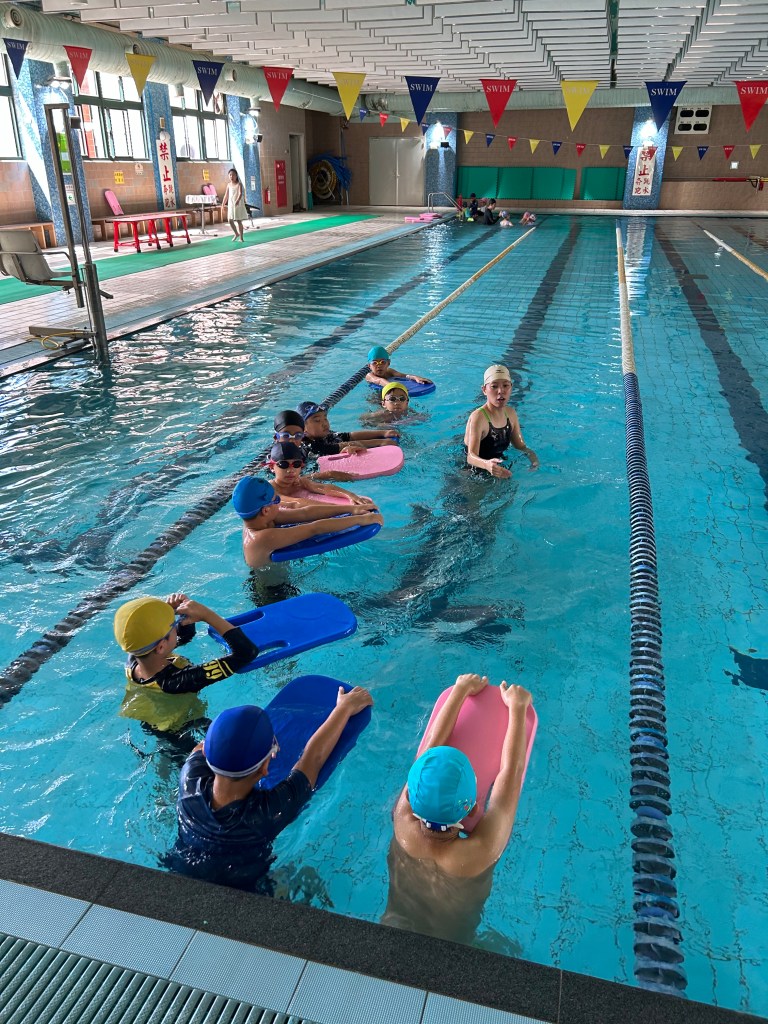
Swim Class. Something really interesting at our school is that it has a pool! Many schools in Taiwan have a pool too, but not all. Students at our school take a 4-week swim class during the semester. I can’t imagine the logistics of trying to get 25 kids in and out of the pool, but I guess the school has figured it out. Kids are grouped by swimming ability. We don’t expect the boys to come out of the class being pro swimmers, but it’s neat that the school has this option.

Afterschool Care. Taiwan schools have afterschool care too, where kids can get homework help. But we felt like C needed 1:1 help in Chinese, so we opted out of this program. However, we were surprised to learn that our school offers A TON of after school activities. There is in-line skating, badminton, ping-pong, magic, track & field, Legos, taekwondo, and much more! We got a little too excited and signed the boys up for something everyday. 😅

But much like the school fees, there are costs to these activities and you have to supply all materials. So we had to purchase in-line skates and helmets, ping-pong paddles and even a deck of cards for O’s magic class.

School Teams. Back in SF, our school had one sports team (soccer) and that was 100% run by parents. Here, our school has several school-run sports teams: basketball, swimming, soccer, badminton, track & field and even theater. But unlike the US, where all kids are accepted into the team (at least in elementary school), there are tryouts here. Not everyone gets in. C says he wants to try out for track & field next semester, so we’ll see.

As I’m writing this post, I realized there are other differences between the schools in the US vs. Taiwan that I haven’t mentioned. Not glaringly different as the ones I’ve listed above, but still interesting. This post is getting too long though, so hopefully I can get to it next time!

Ramblings

Tips for Apartment Hunting in Taipei

Now that we have a bit of experience apartment hunting in Taipei, we wanted to share some tips for those who might be in our shoes.

Tip 1: Rent.591.com.tw is the most popular website in Taiwan to search for apartments. You can filter by city, district, number of bedrooms, price, parking, and so much more. There is no English version of the site, but you can use Google to translate the text into English.

I’ve seen people use dd-room.com as well, but 591 is by far the most popular website for apartment listings.


Tip 2: If Chinese is not your native language, it’s best to bring a Taiwanese friend with you to view apartments and negotiate with the landlord. But if you’re like us and don’t have any close friends or family in Taiwan 😅, then work with a real estate agency that caters to expats. We worked with Elegant Realty and UR House (and ultimately found a place with UR House). There is a one-time fee of a half-month’s rent when working with agents.

Note that agencies will typically only show you apartment listings from their inventory. So, you’d have to do your own research on rent.591.com.tw if you want to explore other options.

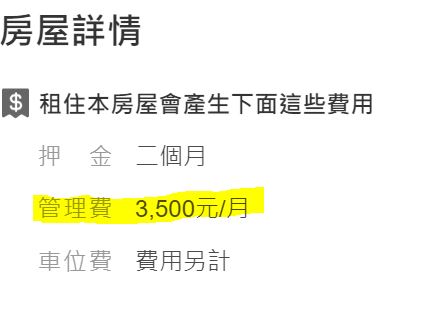
Tip 3. On top of rent, pay attention to the monthly management fee on the listing. Management fees include general maintenance of the building and security. They can be exorbitant, but can also be negotiable with the landlord.

Tip 4. Reduce the number of pings listed by approximately 30% to get the actual living space. This is because listings often add in common areas like hallways, lobbies, etc. into the total number of pings.

Tip 5: Look for an apartment that uses natural gas or piped propane. Some of the older buildings still use natural gas cans, which means you’ll be taking cold showers if they run out and until you get them replaced.

Tip 6. Get an apartment with an individual electricity meter. If it’s a shared meter, there’s no control over how much you pay per month as the meter is shared by everyone in the building.

Tip 7. If you don’t have a car or scooter, make sure the apartment is close to public transportation (either MRT or bus). Taipei is a huge city, so you’ll need access to public transportation to get around.

Tip 8. This may not be applicable to everyone, but having an apartment with natural light was important to us. Look at whether there is ample light in the living areas. Are there bars over the windows? Are the windows frosted?

Tip 9. As mentioned in my previous post, everything is negotiable in Taiwan. You can negotiate rent, management fees, furniture, etc. I’ve also heard people negotiating for the landlord to pay for the internet and cable fees. Of course, this is dependent on whether the apartment is highly sought after.

Tip 10. This is a great, and much more exhaustive guide for foreigners looking for an apartment in Taiwan: https://www.foreignersintaiwan.com/blog-370963385326684/taiwan-apartment-rental-guide We referenced this guide many times during our apartment hunt.

If I think of any more tips, I’ll add it to this post!

Ramblings

Apartment Hunting in Taipei: Success

Time was ticking. We realized we had to compromise on some things. First, we increased our budget to find an apartment that was more suitable to our tastes. We started looking for apartments that were ~50 pings after learning that the advertised number of pings is often inflated. We expanded our search to not only Da’an but Songshan and Xinyi districts. Our main goal was to find an apartment with good natural light and within a school’s service district. We didn’t even care whether the apartment was furnished, or near the MRT, or what floor it was on.

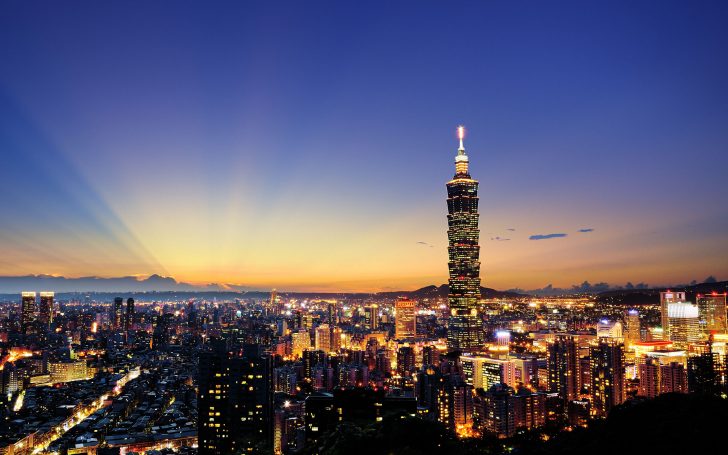
Then one day, we saw an apartment in Xinyi district. Xinyi is the financial district of Taipei, with many skyscrapers including Taipei 101, upscale malls and eateries, and newer apartment buildings. This particular apartment is within 4 minutes walking distance to a school that had availability, and the landlord was fine with us using the address for school. The apartment came with only a couple pieces of furniture, but we were willing to overlook it. We immediately reached out to the agent to express our interest.

The interesting thing about Taiwan is that almost everything can be negotiated, including rent. Our agent told us to outline all our demands and he can help us negotiate with the landlord. We asked for a ~12% reduction in rent, including all management and garbage fees. (Most apartments have an monthly management fee on top of your rent. This fee is to pay for things like security and general maintenance of the building.)

Our agent suggested that we ask for furniture as well, but that we’d need to sign a 2-year lease. The commitment-phobe in me was a little hesitant, but I also didn’t want to go through this whole process again in a year. So we agreed and waited for the landlord’s response.

We waited about a day (which felt like an eternity!) but finally, we heard back from the landlord. She agreed to all terms (hurray!!) except we’d have to pay for the garbage fees, which was pretty nominal anyway (about $30/month).

There were a few hiccups before we signed the contract – e.g., making sure we had enough cash for the deposit and first month’s rent; the landlord kept changing the time and place for the contract signing, which made Baba suspicious; realizing at the last minute that one room at no door 😆, so we had to negotiate with the landlord; getting the landlord to purchase the furniture in time for our move-in.

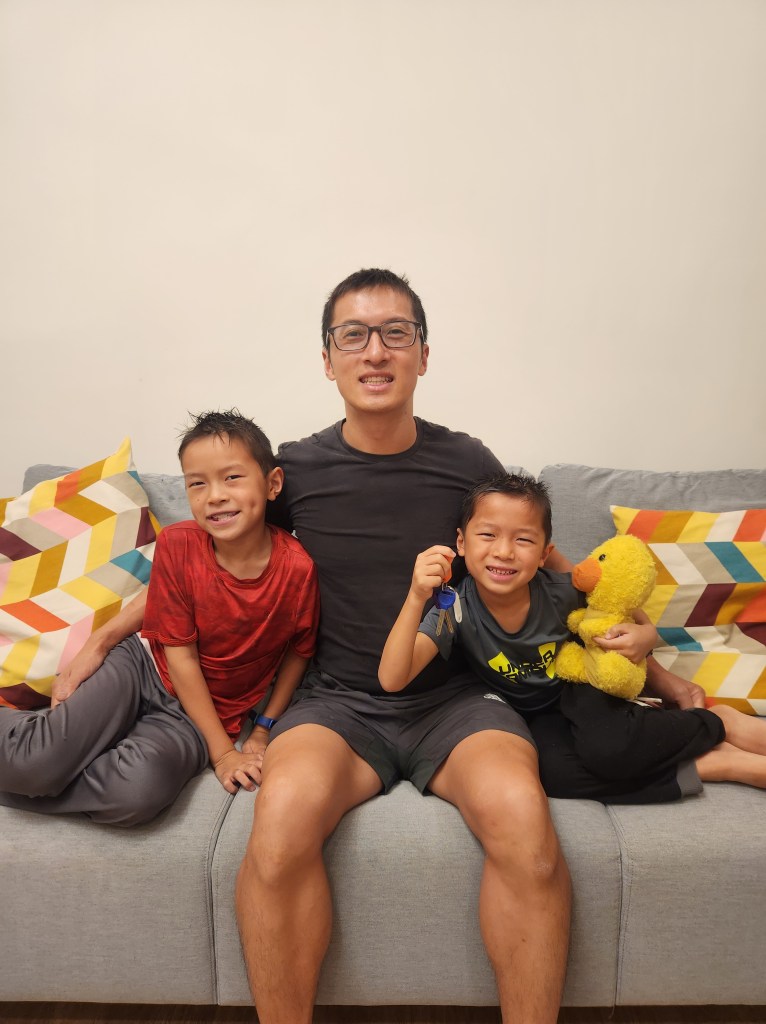
But ultimately, we signed the contract and finally got the keys to our apartment in Taipei! 🎊 This was a HUGE relief because the check-out date for our Airbnb was coming up, and we can now register for the boys’ school. Woo hoo!

As of writing, we’ve been living in this apartment for about 3 weeks. It’s not perfect – our refrigerator is on the balcony and we’re on the second floor so it’s more prone to getting bugs. 😣 But, we are close to the boys’ school, one short block from the Xinyi Sports Center which has a pool!, close to the MRT and buses, and walking distance to markets and convenience stores. I also like that on one side, there is Taipei 101 with all its fancy shopping and restaurants, but on the other side of our apartment, you can find numerous cheap eats, or 小吃.

The apartment hunt in Taiwan was a roller coaster ride and such an interesting learning experience. In the end, I’m incredibly grateful that we found a great place to live in such a short period of time. Everything worked out in our favor (so far). But I’m even more grateful to have a partner in crime, Baba, to go on these crazy adventures with me! 😘

Ramblings

Apartment Hunting in Taipei: Apartment Features

While apartment hunting in Taiwan, we came across many interesting apartment features. I hesitate to say “weird” because it’s likely we’re just not used to the style of living here.

Pings. I had mentioned in an earlier post that Taiwan uses pings 坪 as a measurement of floor space. One ping is equivalent to about 35.6 square feet. We searched for apartments between 25-30 pings, or 890-1067 square feet, which is about the same size as our old apartment in San Francisco. Not asking for too much, right?

Well, this brings me back to the theme of “expectations vs. reality” when it comes to apartment hunting in Taiwan. An apartment listing that advertises 30 pings does not mean the actual living space is 30 pings. The 30 pings include common areas like hallways, lobby area, stairwells. So you can imagine our surprise when we showed up to an apartment thinking it was 30 pings and saw a teeny tiny apartment. Apparently, the rule of thumb is to reduce the advertised number of pings by ~30% to get the actual living space.

Old buildings. Taipei is an old city, so many of its buildings are old. We wanted to live in Da’an for its central location but many of available apartments were very dated. Aside from aesthetics, older buildings may not be up to code to withstand earthquakes or fires.

Natural light. Having a good amount of natural light in the apartment was an important factor to us. Unfortunately, this wasn’t super easy to find in Taipei. A lot of the buildings (particularly the older ones) were blocked by other taller buildings, or they had small windows that were often frosted or barred. (The bars are to protect the windows during typhoons.)

Furniture. We were pleasantly surprised that most apartments come fully furnished or at least semi-furnished. This works perfectly for temporary residents like us.

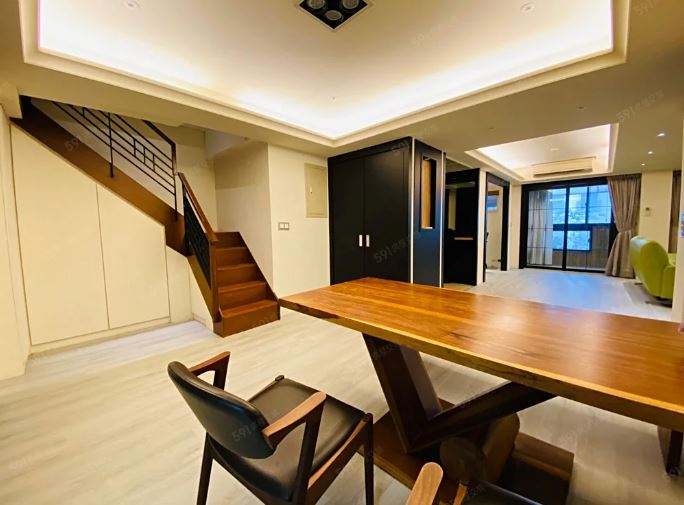
Interesting designs. American luxuries like ovens and dishwashers are not common in Taiwan and we had already accepted that. But we discovered really interesting designs in some apartments. One apartment we saw had a staircase (see picture below), but the agent said we could not go upstairs. When we asked why, he said it’s because a family lives up there! 😮 There is a locked door between the apartment and upstairs, and the family has a separate entrance/exit, but it still freaked us out a bit.

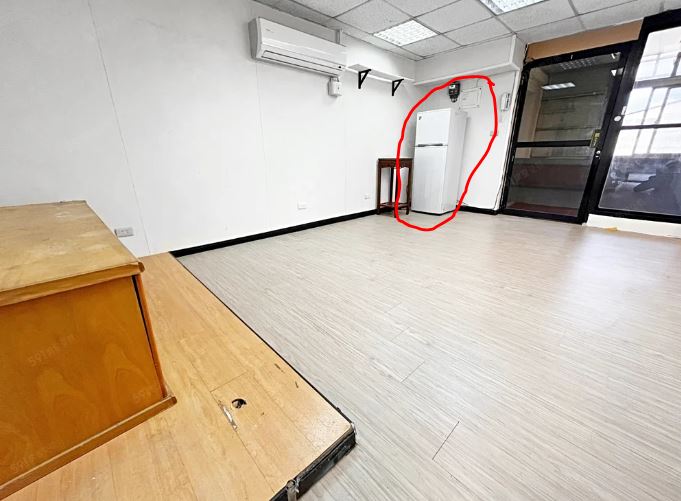
Other apartments had appliances in unexpected places, like refrigerators in the living room or balcony. Another apartment had an upstairs with a bedroom and bathroom, but the ceilings were so low that you could barely stand up straight (and I’m only 5’3″!).

At this point, we were getting a little desperate. Our choices were limited: not only do we have to find an apartment that fit our needs, but one that is within a school’s service area plus a landlord who was willing to let us use the address for school registration.

We also had to work against time. School was starting soon and we needed to find an apartment, sign the contract, and update the boys’ ARC cards with the new address so we could register for school. Then, we had to get settled in and get ready for school before it starts. We had about ~2-3 weeks to do all this. Needless to say, it was pretty nerve-racking.

Next on the blog: the conclusion of our apartment search!

Ramblings

Apartment Hunting in Taipei: Landlords

Landlords posed a different problem in our search for an apartment. Apparently, some landlords in Taiwan do not report their rental income to the government and transactions are completed under the table.

This creates an issue for us because we need to use the apartment’s address on our Alien Resident Cards (ARCs). Public schools need to verify that the address on your child’s ARC falls within their service area, so this was a critical step.

But if an address is used on an ARC, this informs the government that the property is being rented out or has been sold. To avoid taxes, some landlords are unwilling to let you use their address for ARCs and school registration. You can avoid this issue if you agree to pay more (usually 10% extra) to cover the landlord’s taxes, but we wanted to avoid paying more if possible.

What surprised us though, was that landlords in Taiwan didn’t request paystubs or credit checks. This is common in the US and we were concerned this would be the case in Taiwan. Landlords do ask what our careers are, what we’re doing in Taiwan, and to see our “business cards” (we told them we don’t have any) but that was it. Rental contracts here require a 2-month security deposit which is pretty hefty, but as long as you can fork over the money you are qualified to rent.

Next up in our apartment hunting adventures: interesting apartment features!

Ramblings

Apartment Hunting in Taipei: Schools

Note: This is referring to public schools in Taipei only. The process for private schools will be different.

Every parent knows that the location of your home is important because that usually determines the school your kids can attend.

Last time, I shared that our strategy was to first decide the schools we wanted and then try to find an apartment close by. There were two issues:

  1. The PDF I had of school openings was only for 1st grade. We (stupidly) assumed that if a school had openings for 1st grade, they’d also have it for 3rd grade. Usually, there are more open spaces in the upper grades because families move or switch schools.

    But that’s not the case in Taipei. So I had to wake up at the crack of dawn while in Rome, brush off my rusty Mandarin Chinese, and call the schools to confirm whether they have space for my 1st and 3rd grader. Thankfully, 2 out of 3 schools we were interested in had space for both.

    An interesting tidbit about the public school system in Taipei is that there isn’t a centralized organization that governs the schools (like SFUSD in San Francisco for example). There is a Ministry of Education in Taiwan, but any school inquiries and enrollment is done with the individual school. This made things a bit more challenging for us because we had to communicate with multiple schools at once rather than work with one entity.

  2. Once we had a couple of schools to choose from, we started to look for apartments. Again, we (stupidly) assumed that as long as we could find an apartment within 15-20 minute walking distance to the school, we would be set.

    But soon, we learned that it doesn’t matter even if your apartment is 1 minute away from the school. If the address isn’t within the school’s service area, you cannot get in. I don’t know why we didn’t think of this because SF works similarly. Ugh, we wasted so much time looking at apartments that wouldn’t work for us in the first place. 😣

    This is the website where you can check which school is assigned to your address: https://schooldistrict.tp.edu.tw/html/search.jsp

    If the school your address is assigned to is full, you can request a transfer to the next closest school. From what I gather, you still have to officially register with your designated school but then you’d fill out a one page form requesting a transfer.

So lesson learned: never assume anything when you’re living in a foreign country. 😅

Now that we’ve figured out the schools (sort of?), we have to face our next challenge: landlords. Stay tuned for the next post!