Ramblings

Climbing Mt. Fuji

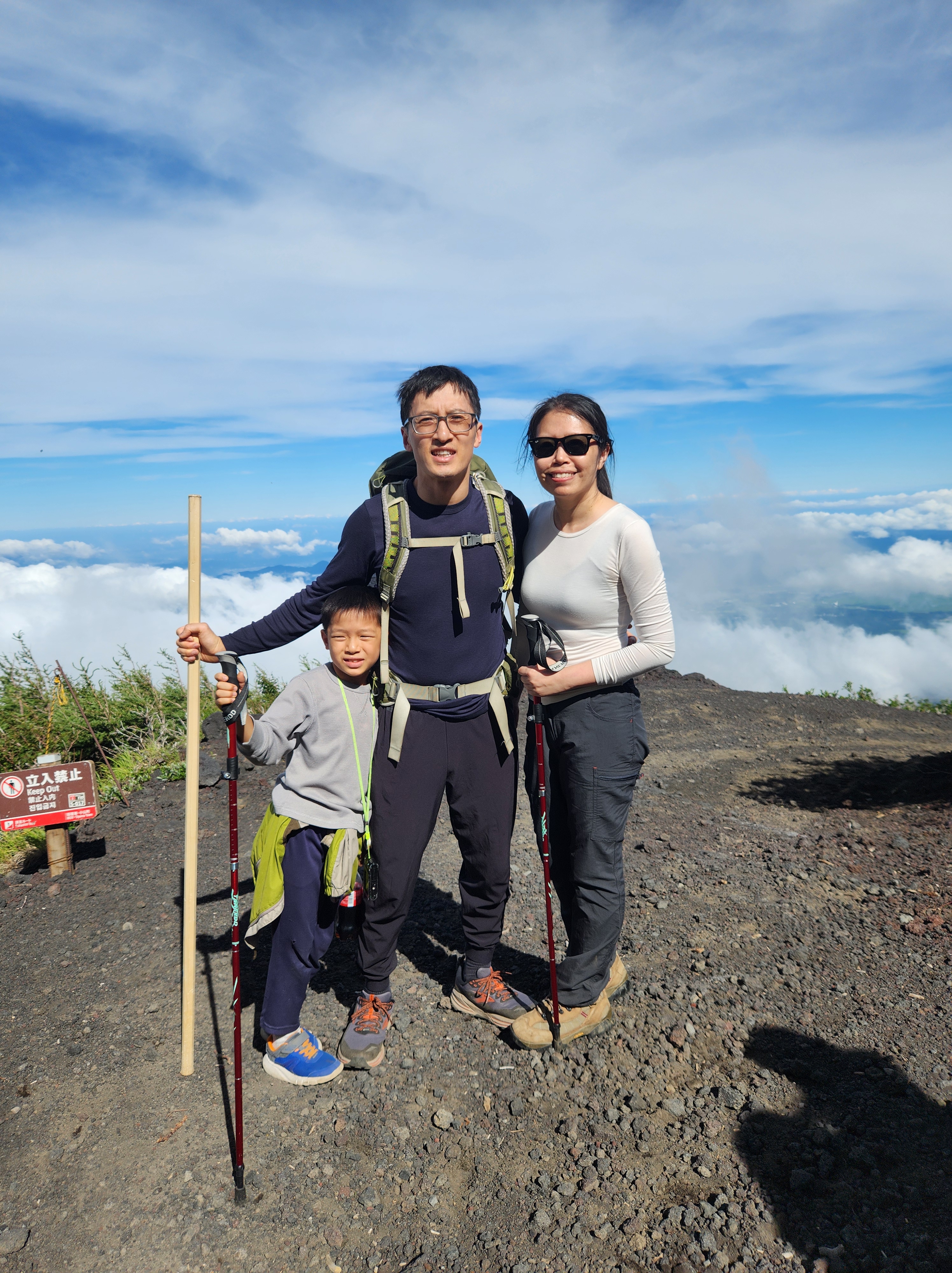
I honestly can’t remember what sparked the idea of climbing Fuji. What I do know is that when Baba and I started planning this trip, I wanted to go beyond the usual tourist stops. It wasn’t our first time in Japan after all. The boys love hiking – the more challenging, the better – and this felt like something unique our family can do together.
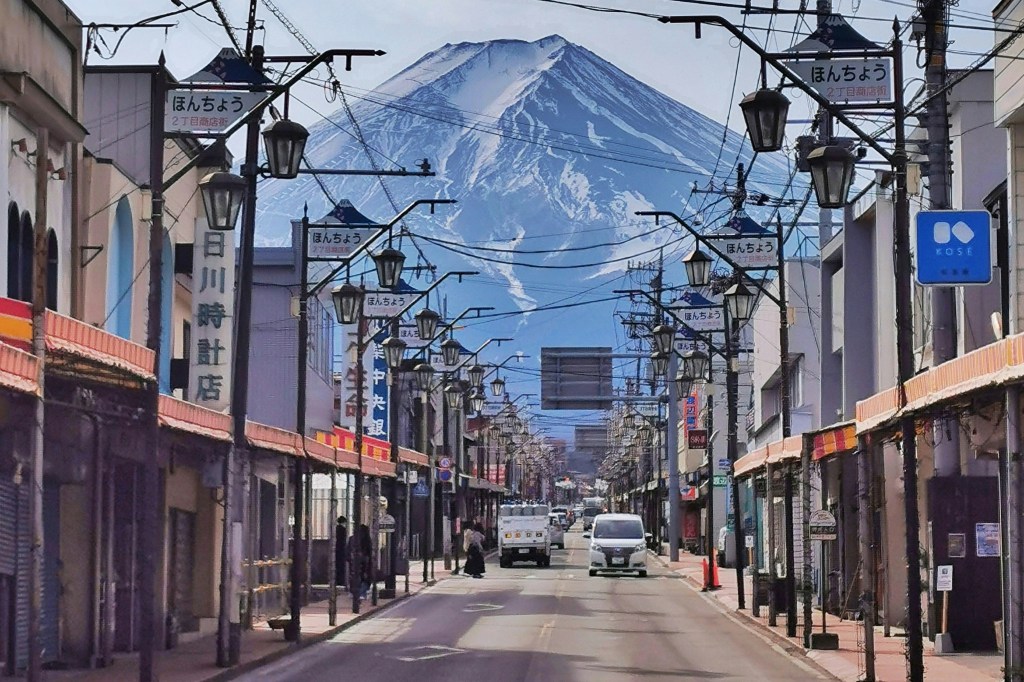
Source: Unsplash.com

Before you think I’d completely lost my mind, let me assure you: we weren’t the only ones with this idea. Kids as young as O’s age and hikers in their 70s-80s have made it to the top of Mt. Fuji. The mountain isn’t a stroll through the park, but it also isn’t a technical climb. With some determination and a decent level of fitness, even ordinary people like our family can do it!

The summer months are Mt. Fuji’s official climbing season. People can do the climb in one day (aka a “bullet climb”) but I wanted to stay overnight in a mountain hut to acclimate and rest. There are multiple huts at various parts of the mountain, the closer it is to the summit the more expensive and harder to reserve. I was able to snag a mountain hut at the 7.5th station at 3,200 meters high. (The highest hut you can book is at 8.5th station.) That would give us 2-3 hours to reach the summit the next day.

For reference, I booked the Miharashikan Hut on the Subashiri Trail. It cost about $340 USD for the four of us, which included a one night stay with basic facilities and two meals (dinner and breakfast).

We decided to hike Mt. Fuji on Friday, July 18, toward the end of our trip. In the days leading up to our climb, the mountain was hit with severe storms. The park even issued alerts prohibiting hiking and summiting, and many disappointed hikers shared online that their trips had been canceled. I kept checking the forecast for the 18th, which showed signs of clearing, but with mountain weather you can never be too sure…

But on July 18, the weather cleared. In fact, the weather was PERFECT. No rain, no wind, and not too hot or cold. We couldn’t have been any luckier with the weather. 🙏

For the hike, we packed plenty of snacks, water, and layers of clothing as the temperature changes rapidly as you ascend. We started out early in the morning, and traveled about 3 hours by train and shuttle bus to reach the 5th station of the Subashiri Trail.

Mt. Fuji has four main trails to the summit: Yoshida, Fujinomiya, Subashiri, and Gotemba. The Yoshida Trail is often considered the “easiest,” but it’s also the most crowded so we chose the Subashiri Trail instead. The other two routes were either too long and or had too much elevation gain.

Map of the Mt. Fuji trails

We arrived at the 5th station around 11am, about an hour later than planned since we missed the first shuttle bus. 😣 We spent the next hour there snacking, resting, and acclimating. Note: At 2,000 meters, the 5th station isn’t that high so most people really don’t need that much time to adjust, but we wanted to play it safe. We also bought matcha ice cream and a Fuji hiking stick while we were there.
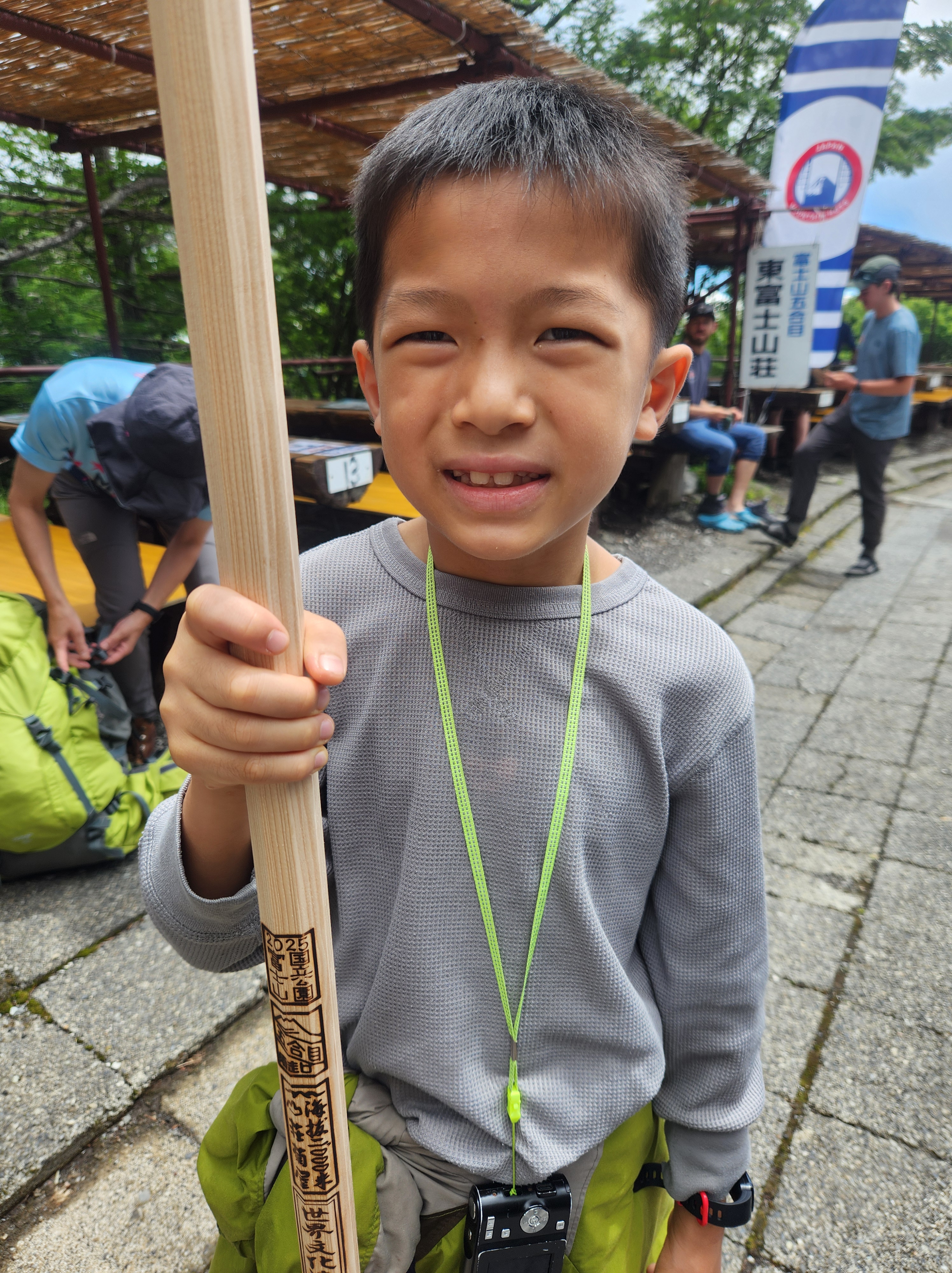
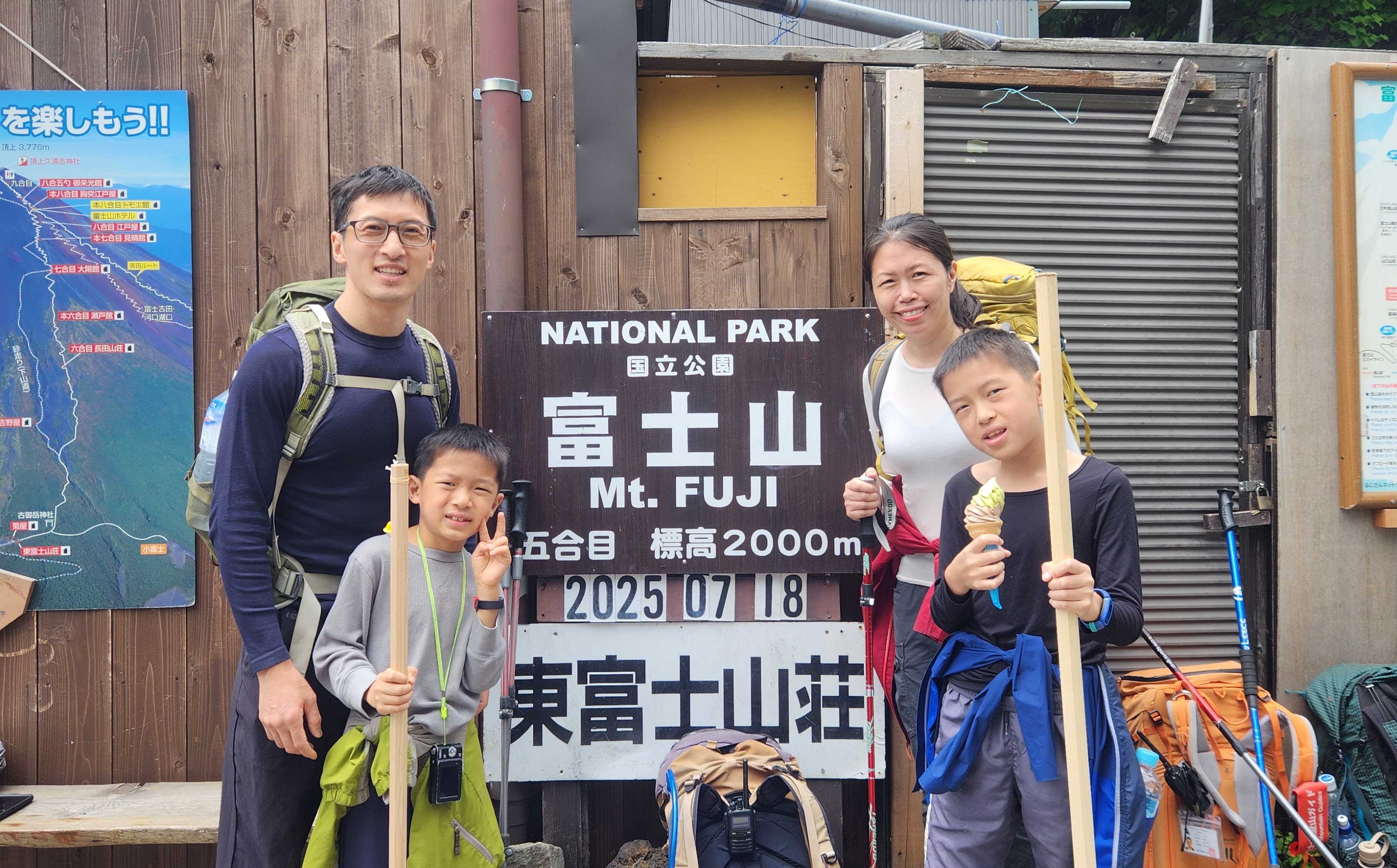
Starting in 2025, all hikers on Mt. Fuji are required to purchase a $25 USD permit. The new system is designed to limit the number of climbers to about 4,000 per day, addressing the growing crowds. While booking a mountain hut was difficult, getting a permit was not.

We started our hike on the Subashiri Trail around noon. Our destination for that day was our mountain hut at the 7.5th station where we would spend the night. The trail began like many wooded paths, lined with trees that provided shade, big stone steps and exposed roots that we had to climb over. Thankfully, about every mile there were mountain huts where hikers could rest, buy water, and use the restroom.
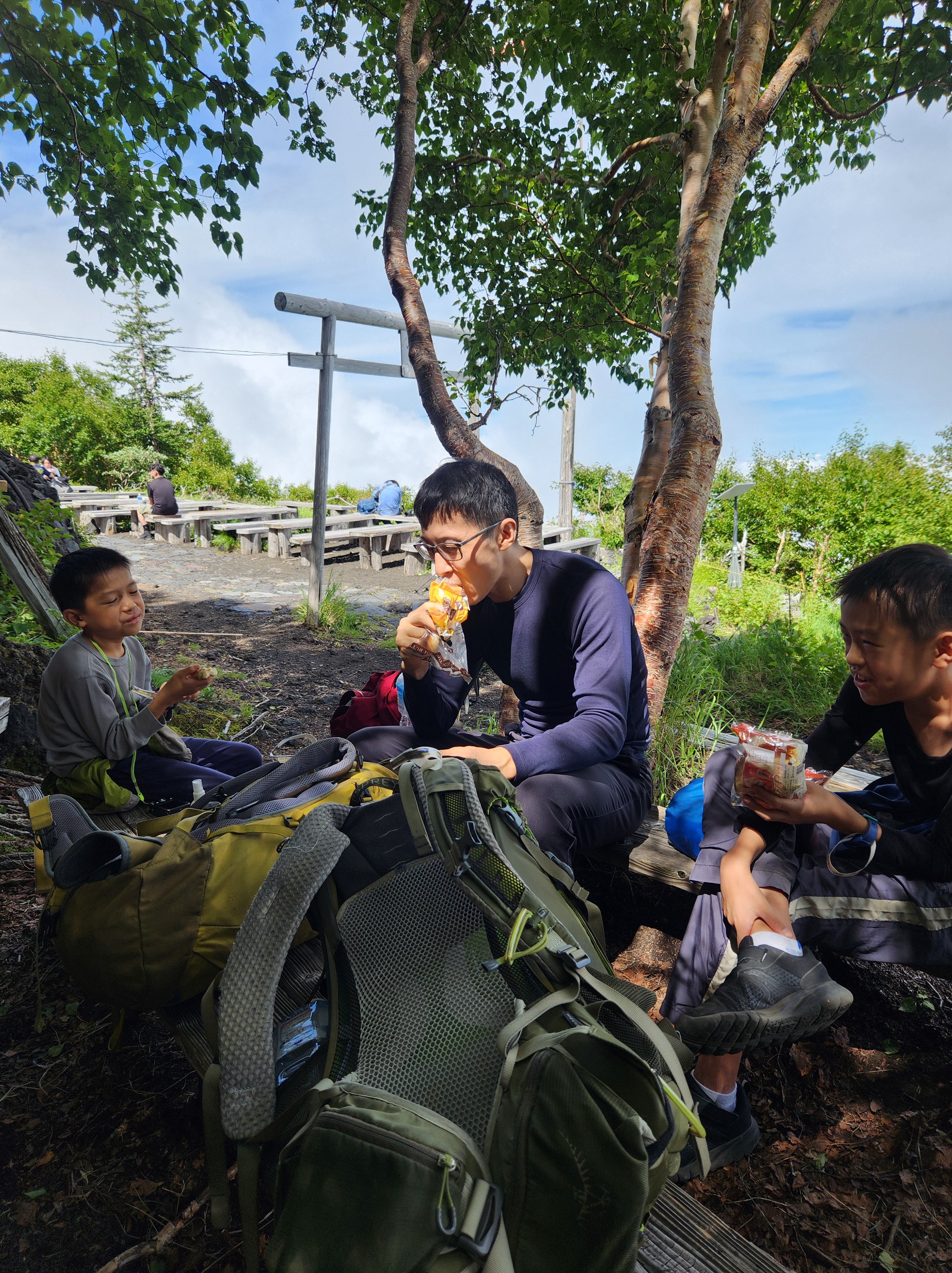
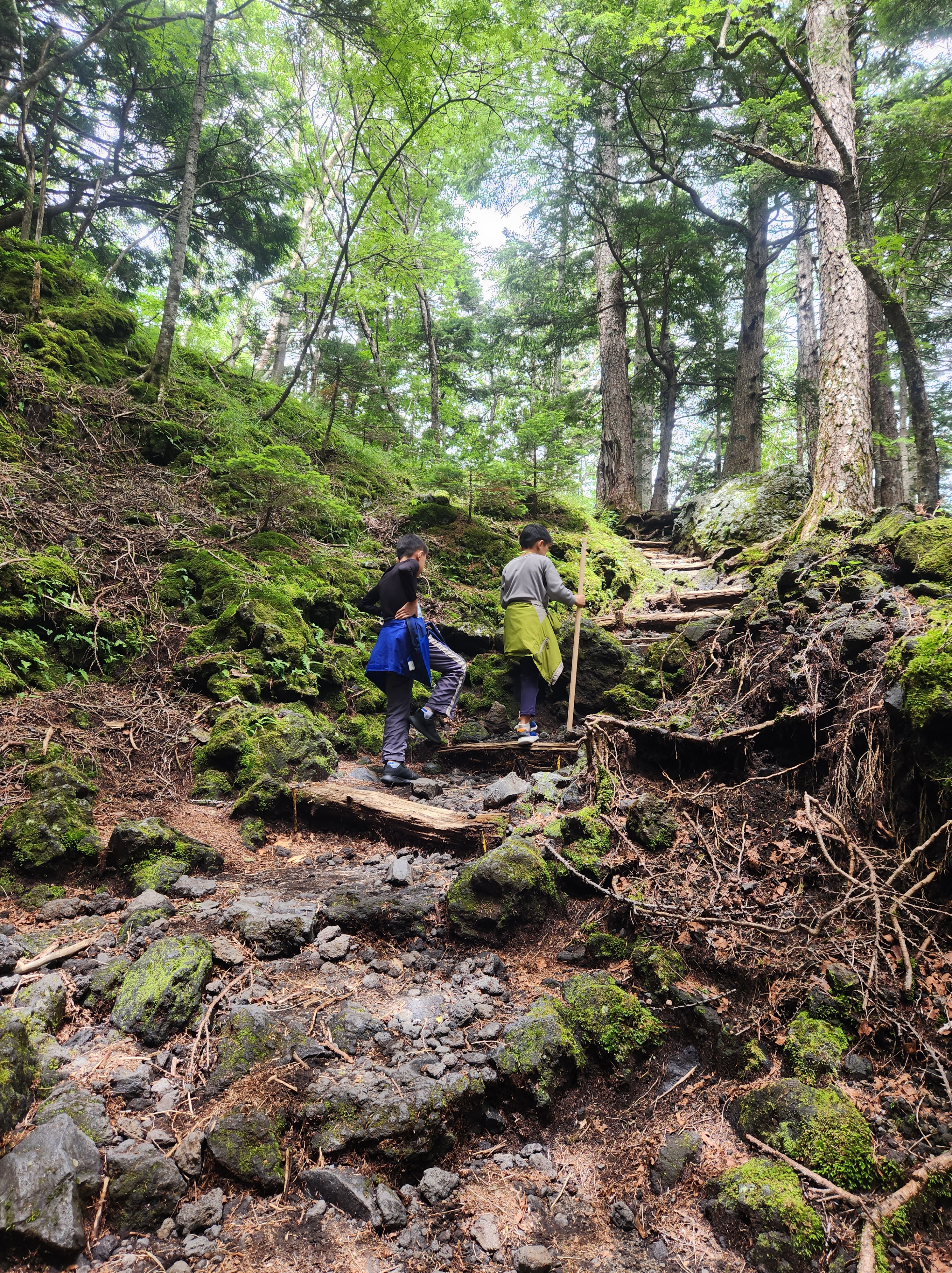
Snacks and water are available for purchase at every station, though prices increase with elevation. By the 7th and 8th stations, a 0.5L bottle of water can cost around $4 USD. Toilets are also available at every station and cost about $1.50 USD per use. To my relief, they were Western-style, generally pretty clean, stocked with toilet paper, and some even had flushing capability!, an impressive feat on a 3,776-meter-high mountain. Leave it to the Japanese to make flushing toilets possible at that altitude.
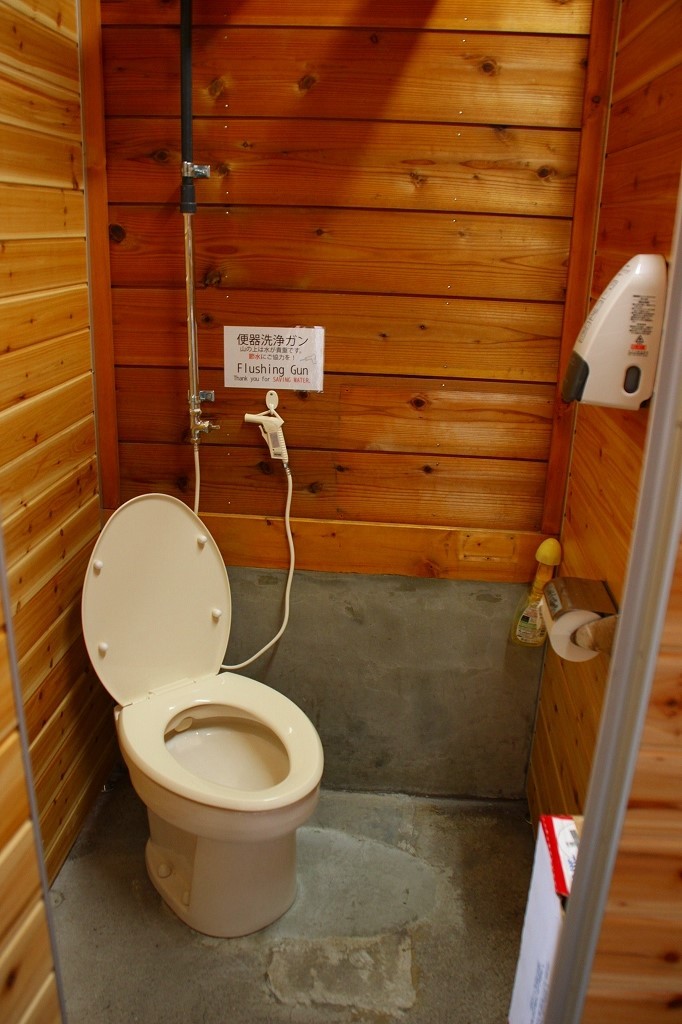
Forgot to take a picture of the toilets, but here’s one pulled from the internet!

I’ll be honest, it was not easy for me to get up to our hut. 😅 Mt. Fuji is famous for its switchbacks, where the trails zigzag across the slopes instead of going straight up. While this makes the climb more manageable, it also made the uphill feel endless. I’ve hiked many steep trails before, but usually after a stretch of climbing you hit some flat ground to catch your breath. On Fuji, it’s steep the ENTIRE way, and the higher elevation makes every step even harder. I hiked up very slowly (probably a little too slowly) but thankfully Baba stayed with me for support.
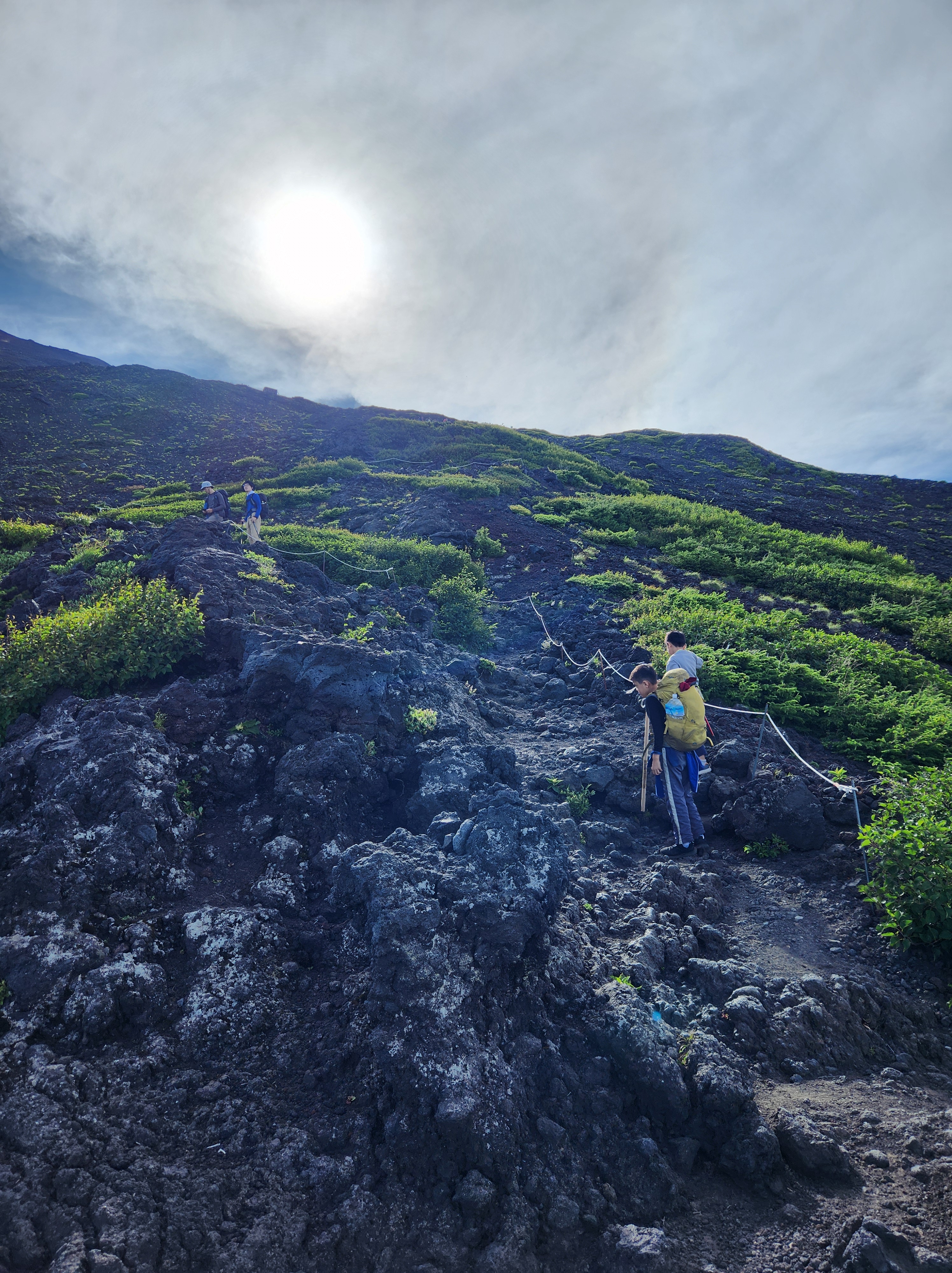
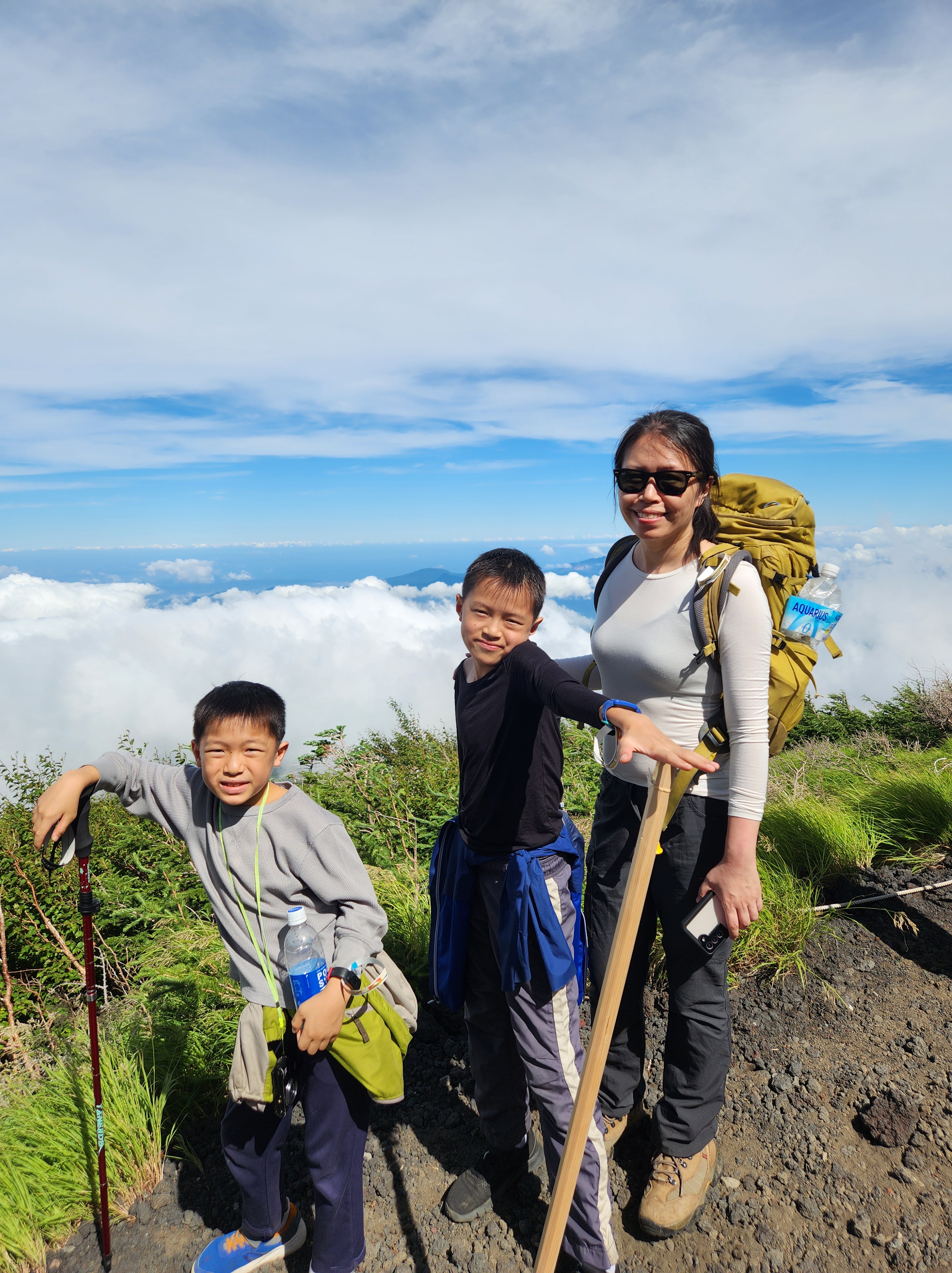
The boys, on the other hand, found the hike to be a walk in the park. 😆 They often hiked far ahead, leaving me and Baba in the dust. C and I had planned to take turns carrying the backpack, but at one point, he ended up carrying it the whole way himself. I’m so grateful that my boys are so strong and easy going.

By around 6pm, we finally arrived at our mountain hut. It was extremely cold at this point. We were served a simple meal of curry with rice, vegetables and hot tea. I had a minor headache and no appetite (likely from the altitude) but Baba insisted we finish every bite, reminding us that our bodies needed the fuel. After taking an ibuprofen, I felt somewhat better.

Since most hikers wake up around 2am to catch the sunrise, the hut turns off the lights at 8pm. We slept in sleeping bags laid out in a large shared room, separated only by thin curtains for a bit of privacy. The space was clean, but you are literally sleeping shoulder-to-shoulder with strangers. Surprisingly, we all slept pretty well despite the cold and unfamiliar space.
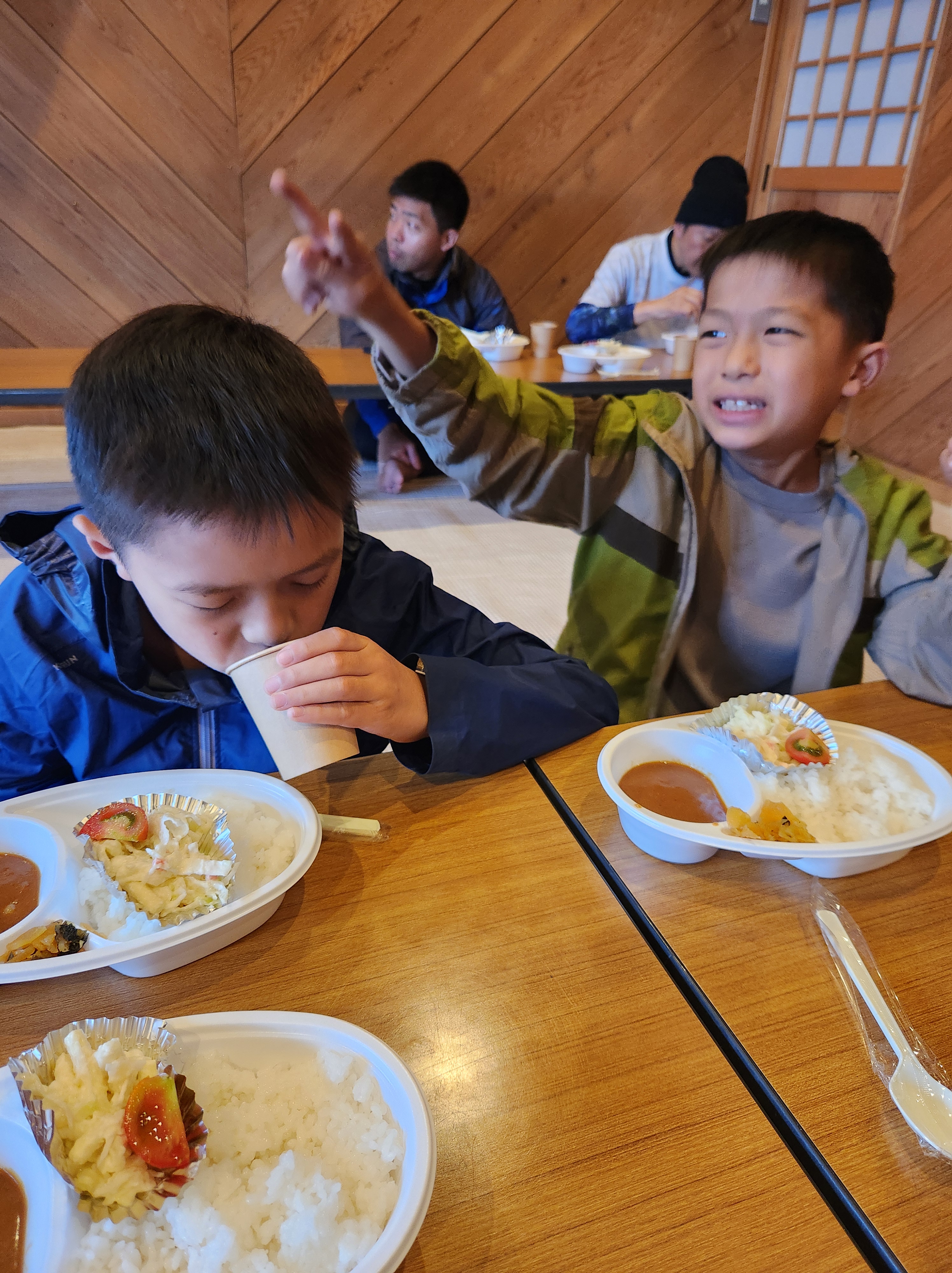
We’ve seen many sunrises and never felt that it was worth getting up at 2-3am so we also skipped it on Fuji. While the other hikers in our hut left early, we got up at 5am and were the last to check out. Still, we were able to catch the sunrise from our hut and it was lovely. (Still not worth getting up early though. 😅)

After a quick breakfast of bread and juice at our hut, we set out for the summit. From there, it was estimated to take 2–3 hours to reach the top. As we climbed higher, the trail grew steeper and more challenging. To make matters worse, the path alternated between large boulders to scramble over and loose, slippery gravel that made every step feel like you were sliding backward – ugh!
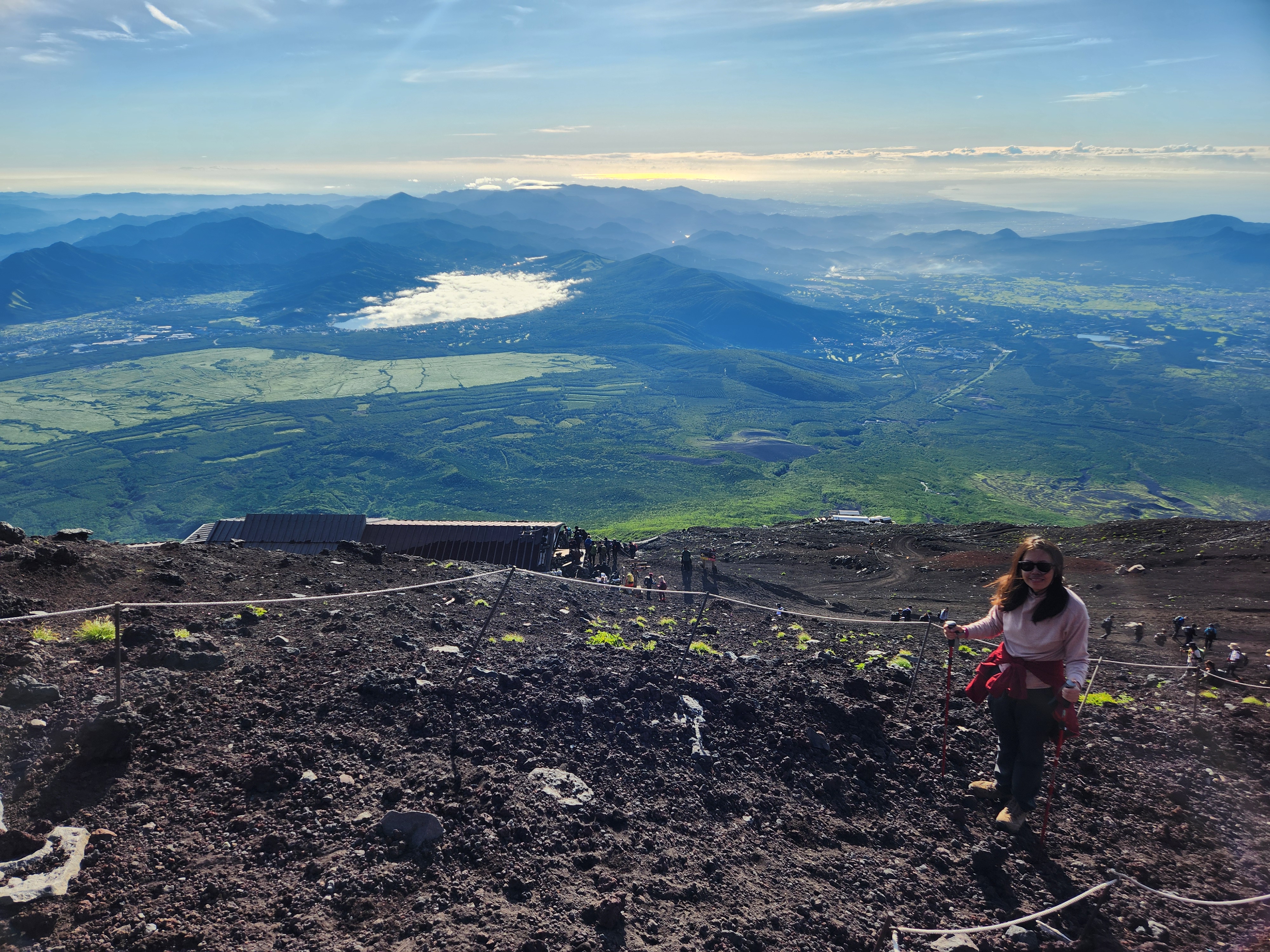
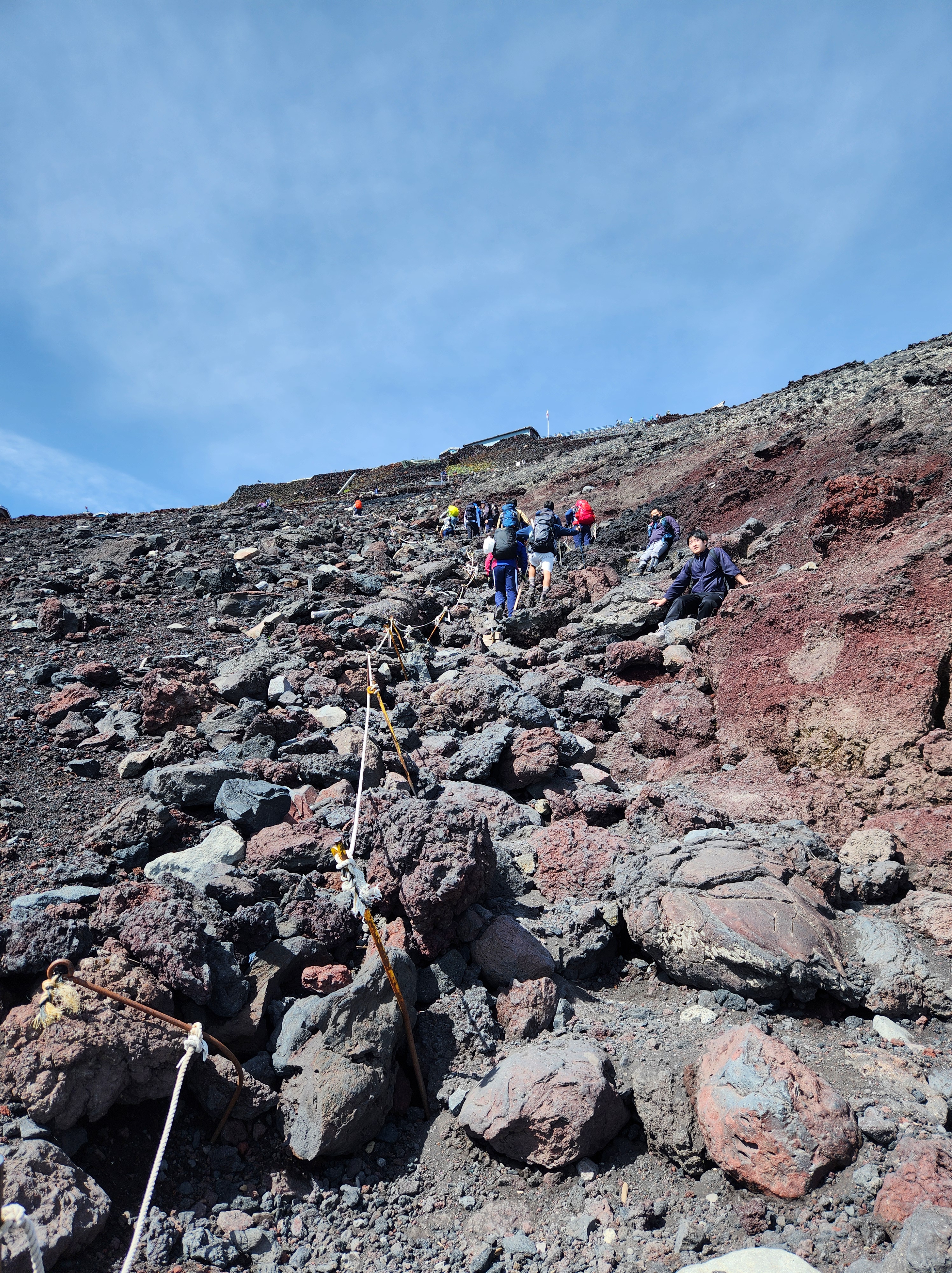
Baba made sure I drank plenty of water and took a rest at every opportunity. (The boys, meanwhile, zoomed ahead on their own.) I took far longer to reach the summit than necessary, but finally, after one last grueling push, we all made it to the peak!! 🎉
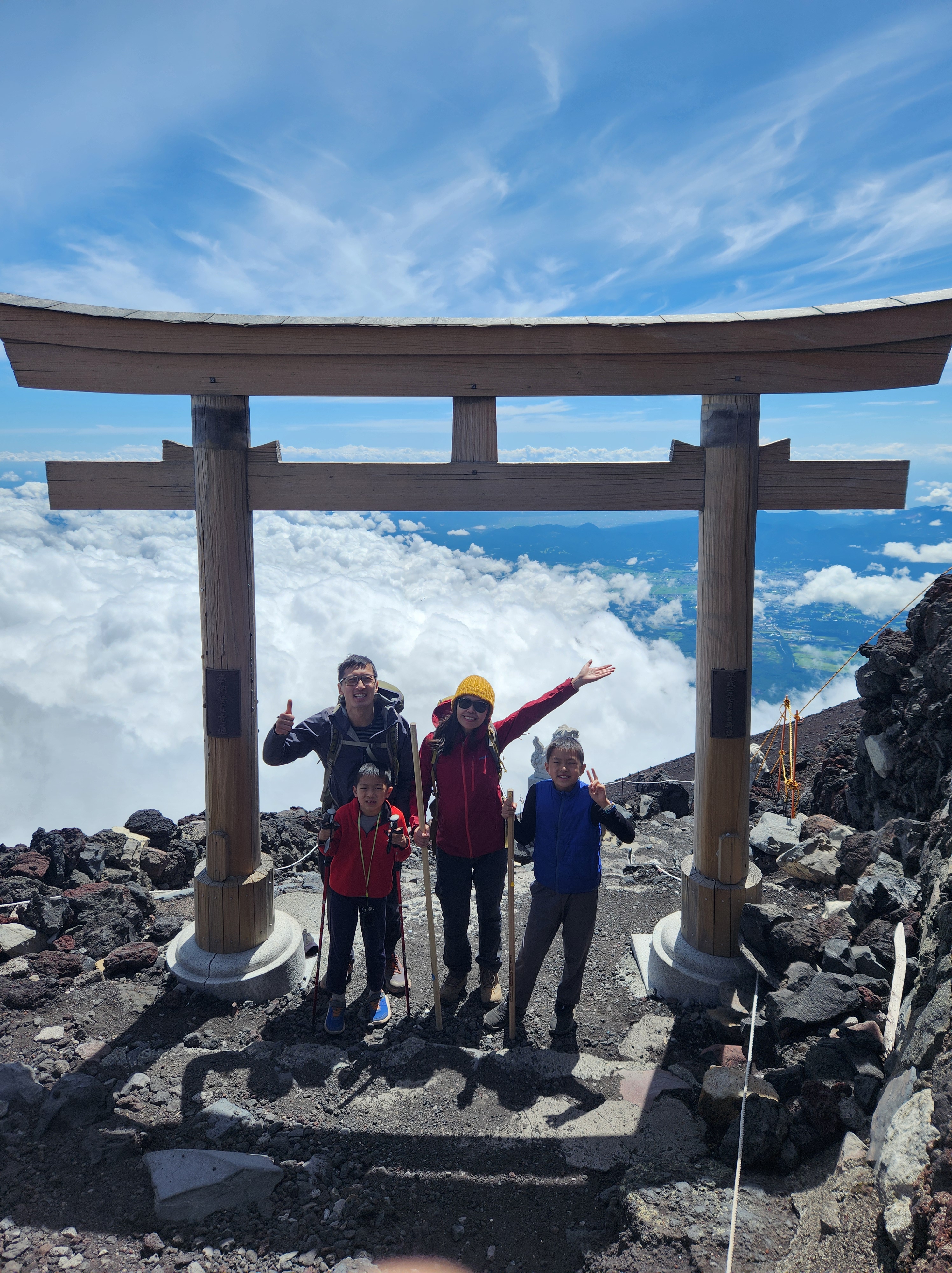
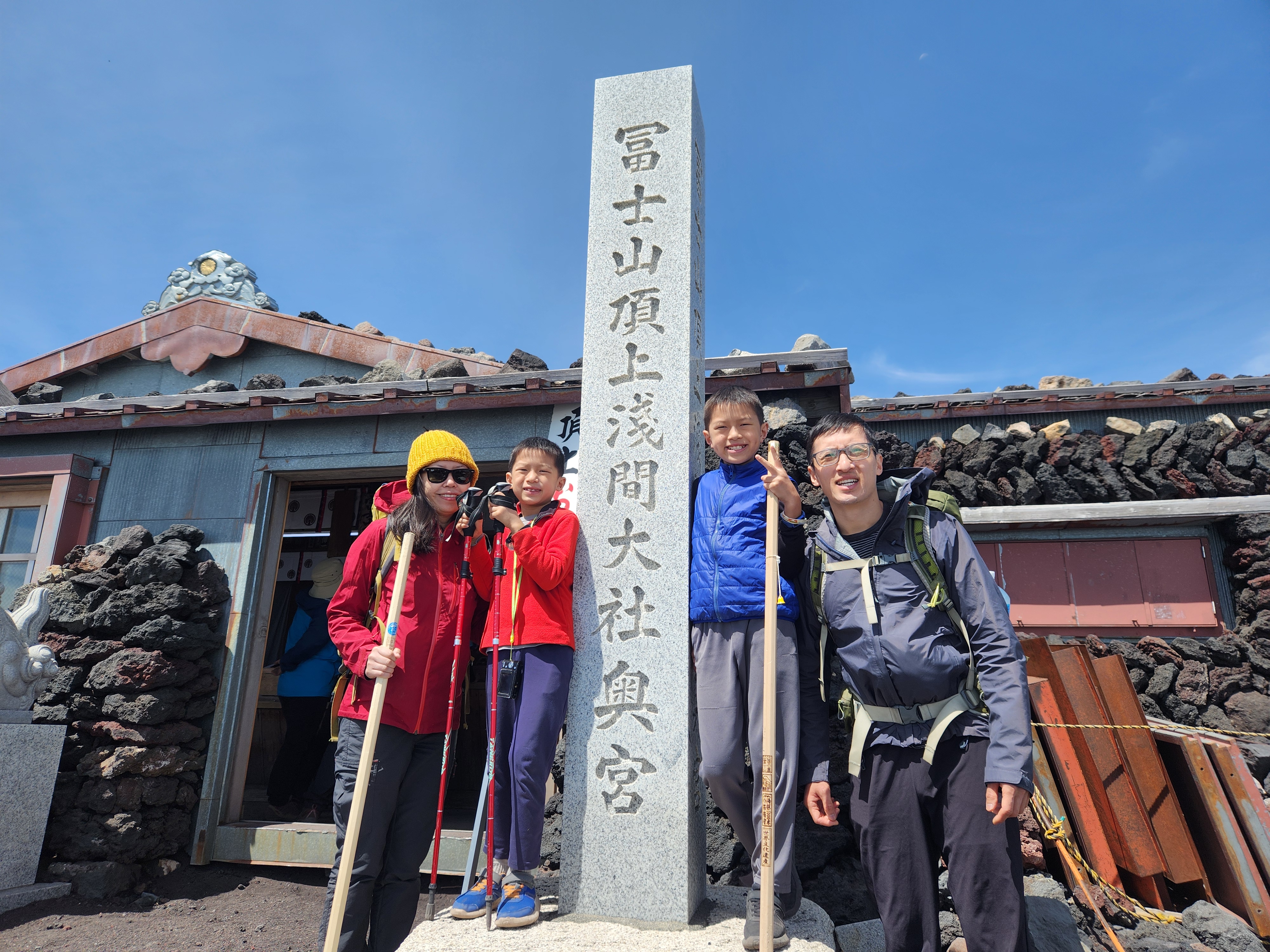
Being the worrywart that I am, I had worried we wouldn’t make it to the top, or that something would go wrong and our plans would be canceled. So finally passing through the last gate to Mt. Fuji’s summit felt utterly surreal. I am so proud of us!

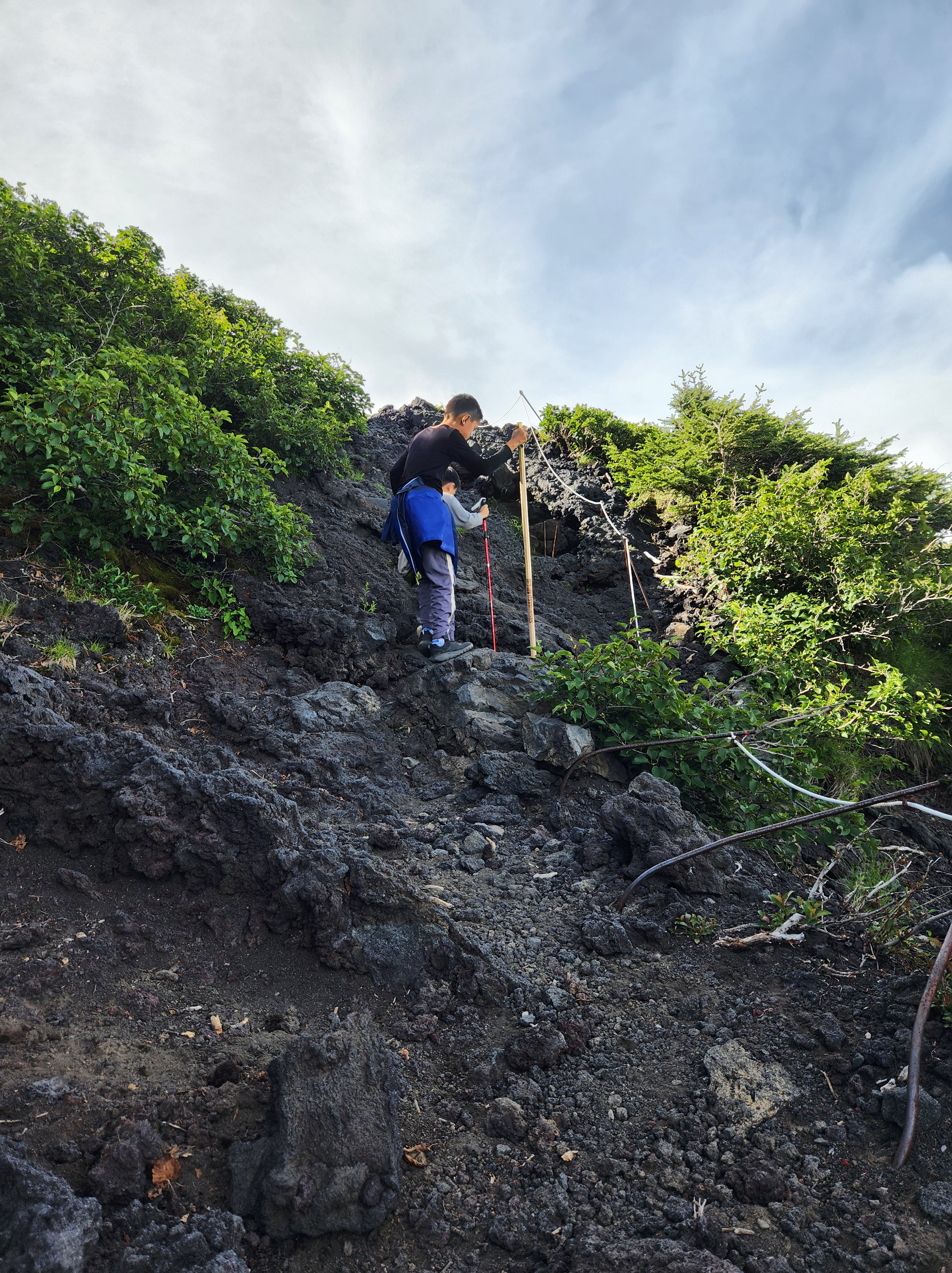
We spent about an hour at the summit, wandering around the crater. The boys mailed postcards – yes, there’s an actual post office on top of Mt. Fuji! Later, we discovered that there’s an even higher point along the crater called Kengamine, considered the true peak of Mt. Fuji. Descending from there was an adventure in itself. It was by far the steepest part of the hike. People were literally slipping and sliding down, and Baba and I had to cling to the side railing for dear life. The picture below doesn’t do it justice!
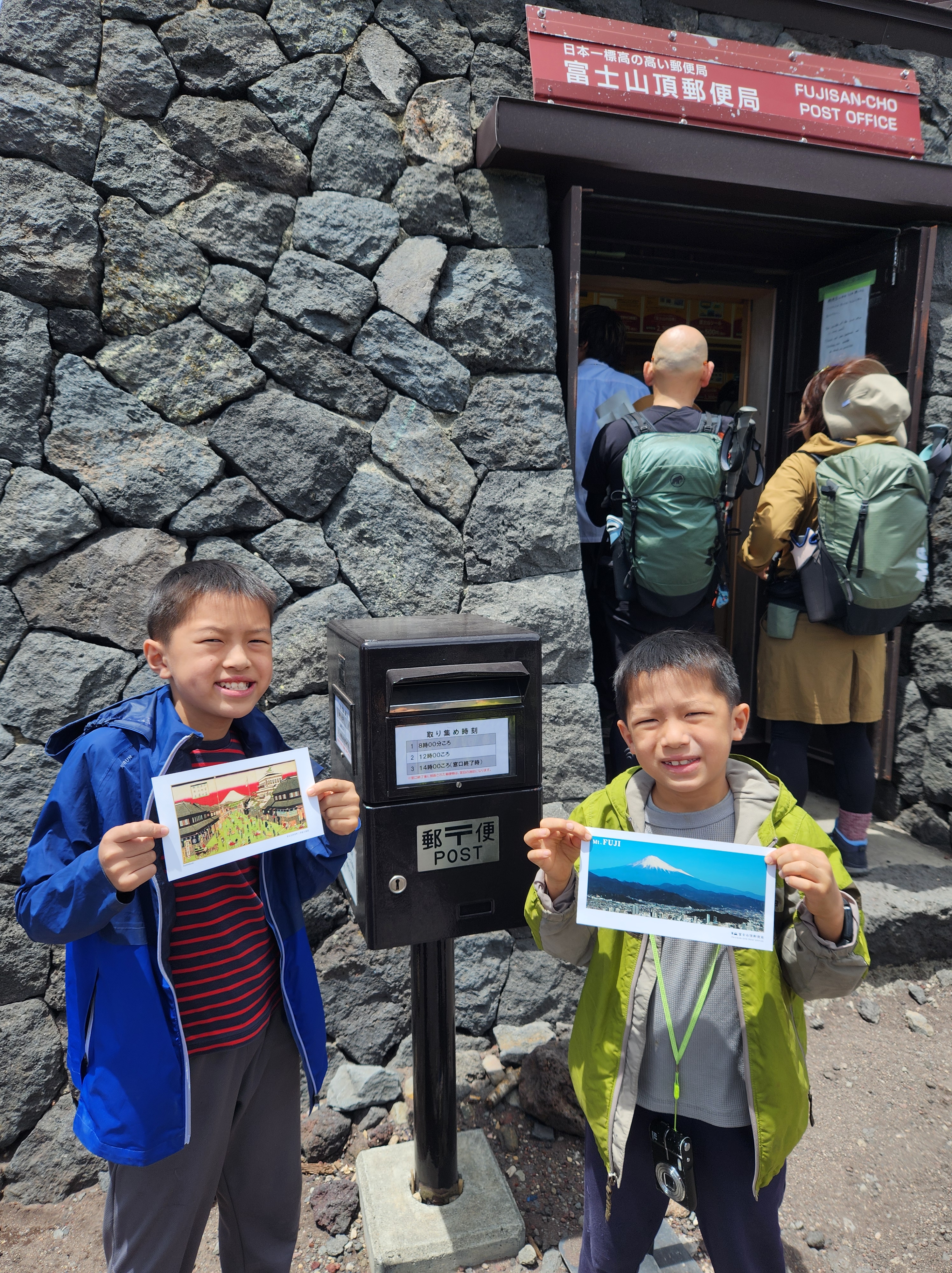
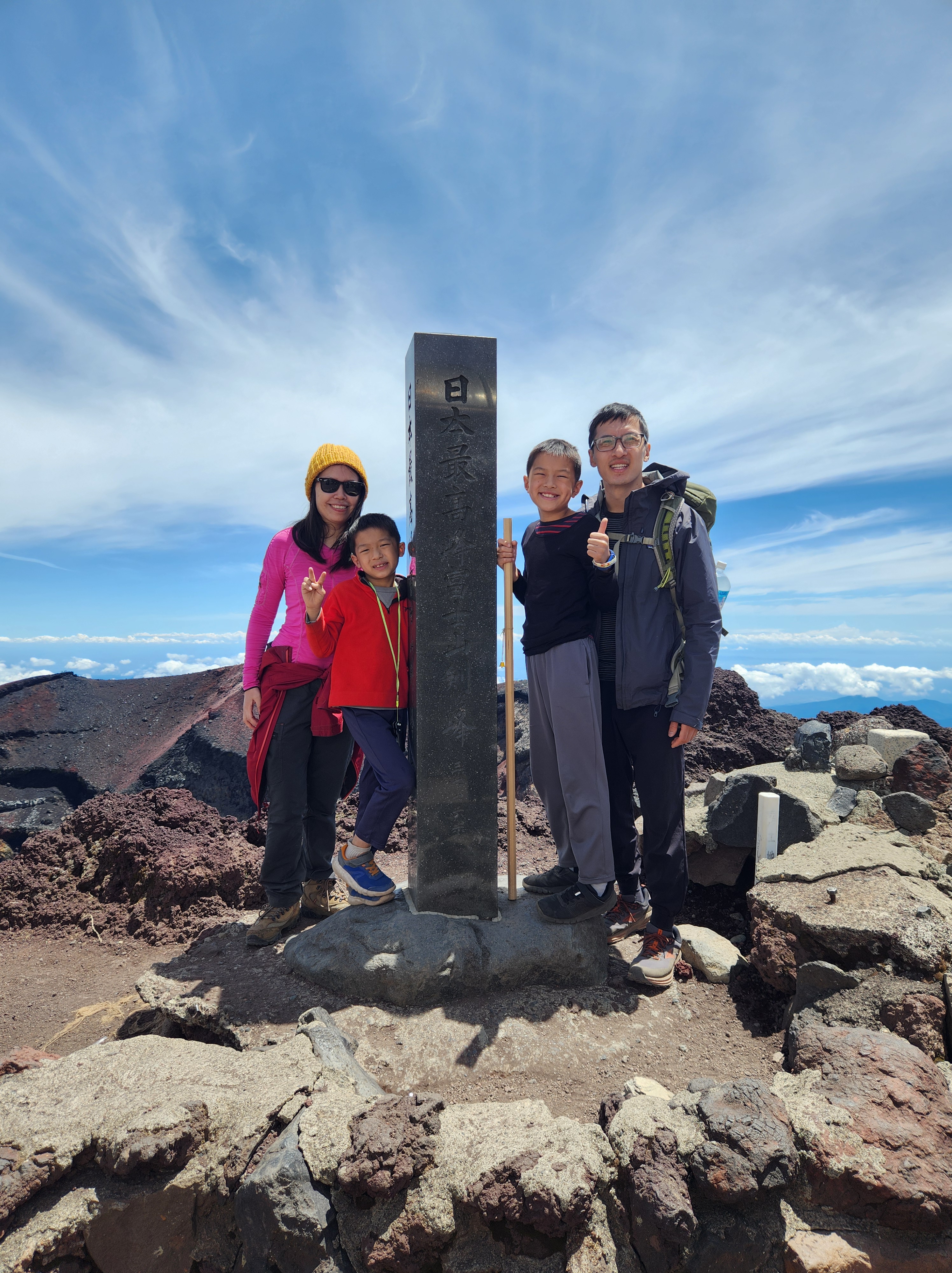
Around noon, we began our descent, which took much longer than expected. The trail down was super steep and covered in loose gravel, offering little grip and made me extremely nervous. The Subashiri Trail also has a “sand run” section, where people literally run or slide down. My boys found it fun, but I thought otherwise. It felt like skiing on volcanic sand!
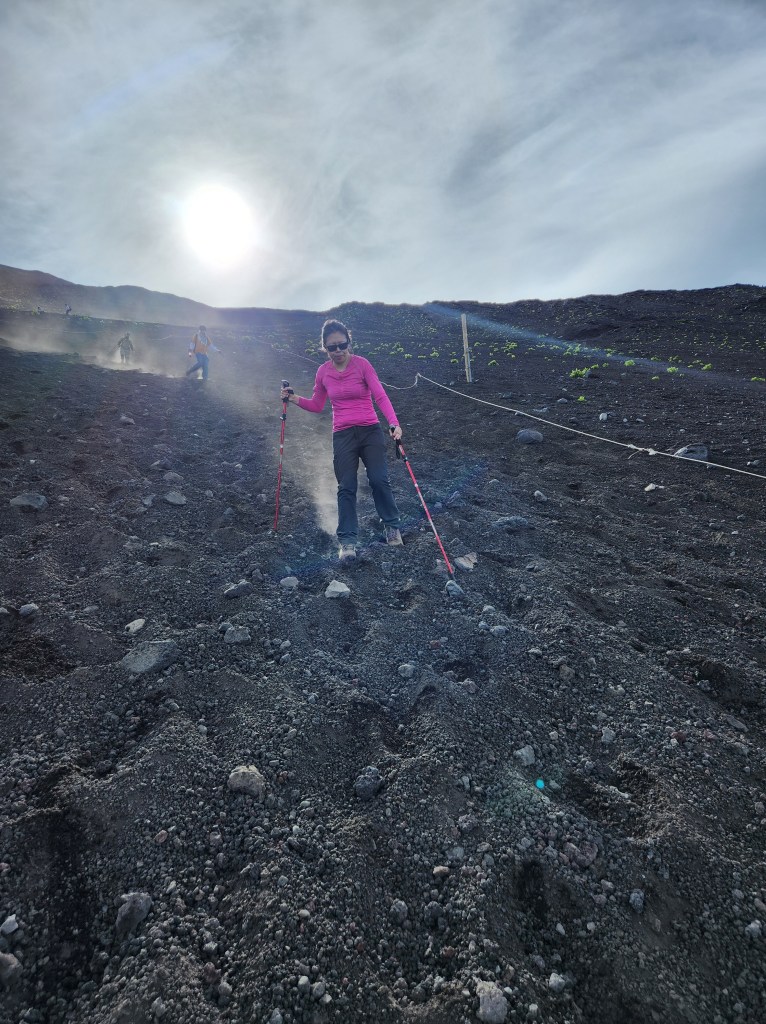
Frankly, I found the descent even harder than the ascent. I was exhausted, drenched in sweat, and my ankles were painfully digging into my boots. I moved at a snail’s pace, my nerves only fueling my frustration. But we had to hurry back to the 5th station to catch the last shuttle and, luckily, we made it just in time!
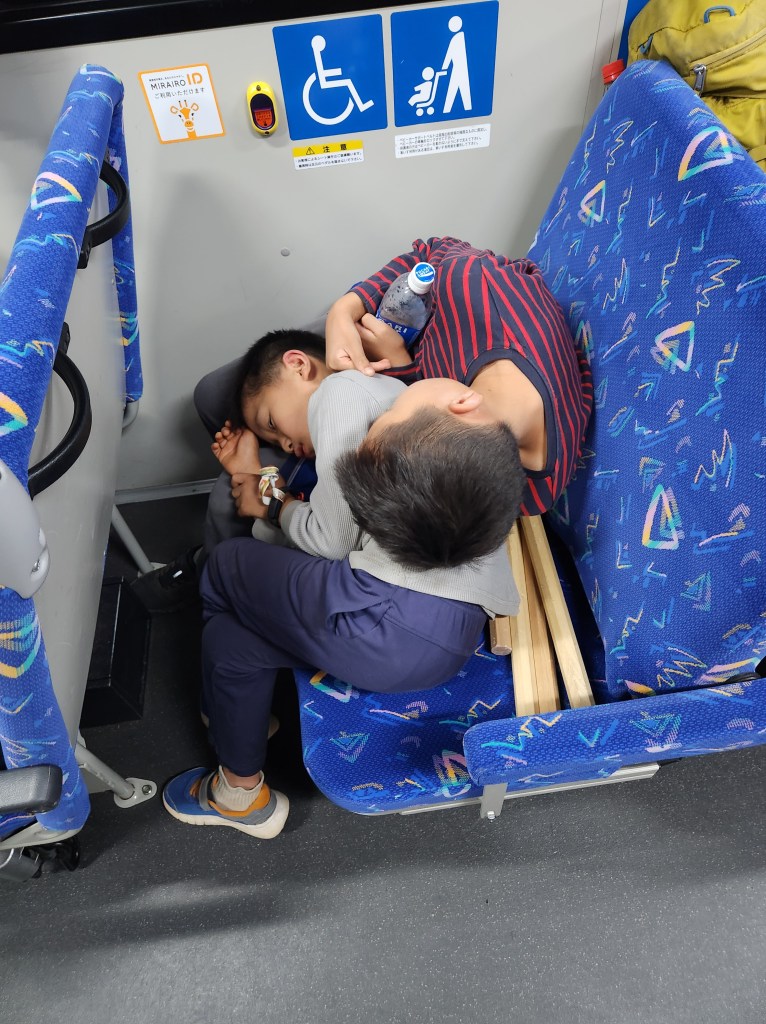
Passed out on the shuttle.

Unfortunately, we still had to endure the 3-hour trek back to Tokyo. 😅 Once at our Airbnb, we quickly ate instant ramen (because most restaurants were closed at that point), took a much-needed shower, and finally, FINALLY, collapsed into a deep, well-deserved sleep.

We didn’t wake up until almost 10am the next day. We were all a bit sore and tired, but ecstatic we’d made it. A strange side effect of the hike though? C and I both ended up with huge swollen, sunburned lips! We hadn’t thought to put on lip balm, and the sun at that high elevation was merciless. Lesson learned: never forget your lip balm!

Someone once said, “A wise man climbs Mt. Fuji once; only a fool climbs it twice.” I couldn’t agree more. I’m so glad we did it, and it will always be a core memory, but once was definitely enough. 😆 Thanks for an unforgettable time, Fuji-san!

Ramblings

A Weekend in Yilan 宜蘭

Since moving to Taiwan, we’ve heard a lot about Yilan, a county in the northeast part of the country. Apparently it’s a very popular weekend getaway for families.

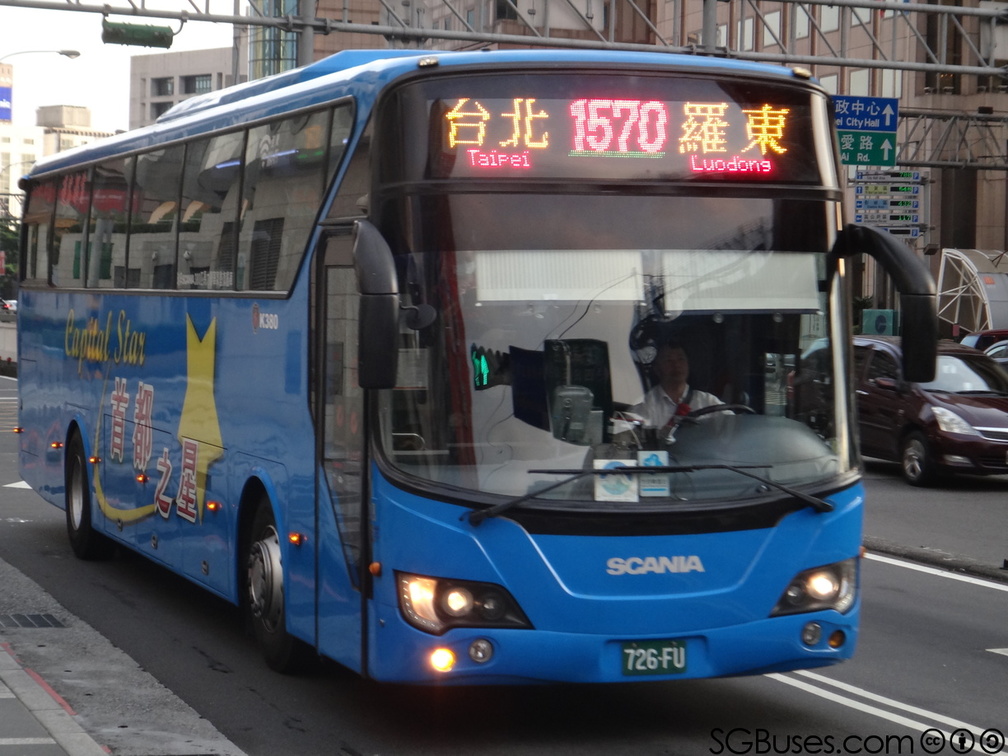
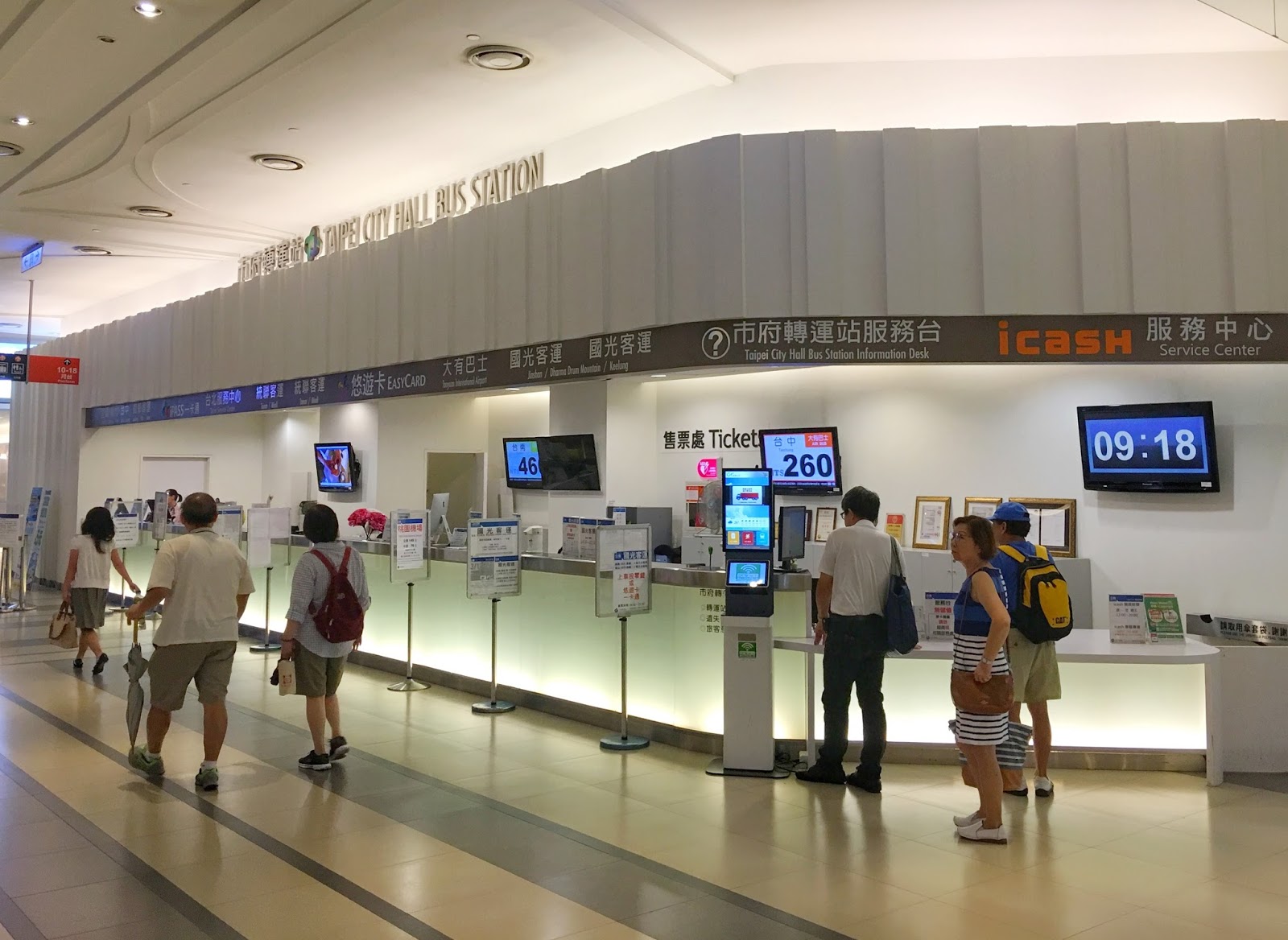
Earlier this month, we finally took a trip to Yilan for a weekend. It was so easy to get there! Friday after school, we walked 15 minutes from our place to the Taipei City Hall bus station, then boarded a bus to Luodong 羅東. The buses depart every 10-15 minutes and we simply paid the fare on board with our Easy Card. Within an hour, we arrived at Luodong – easy peasy!

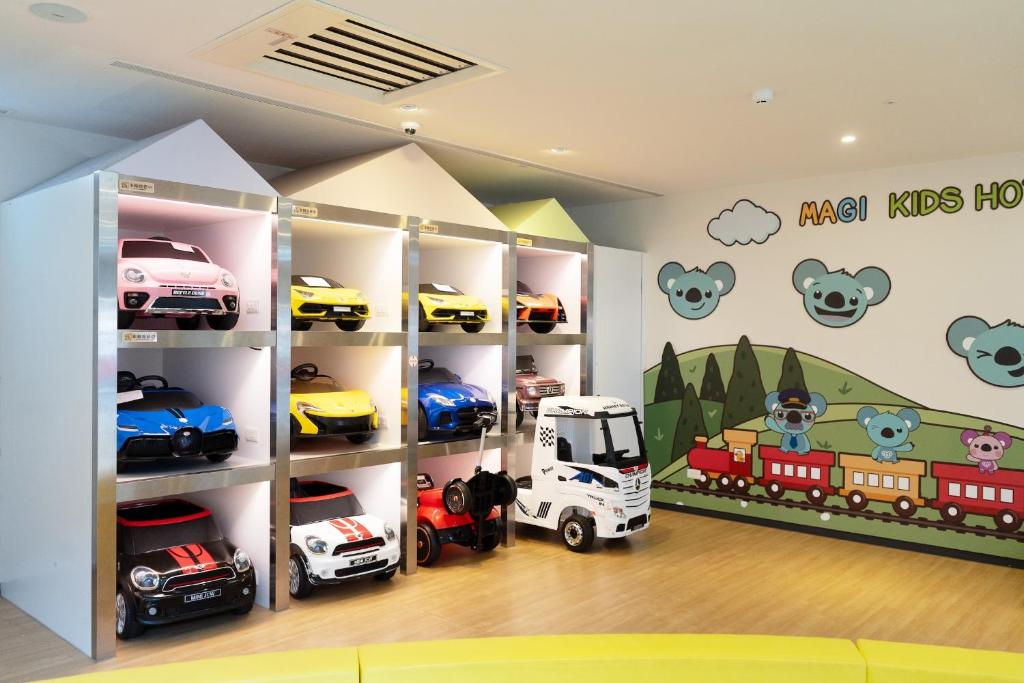
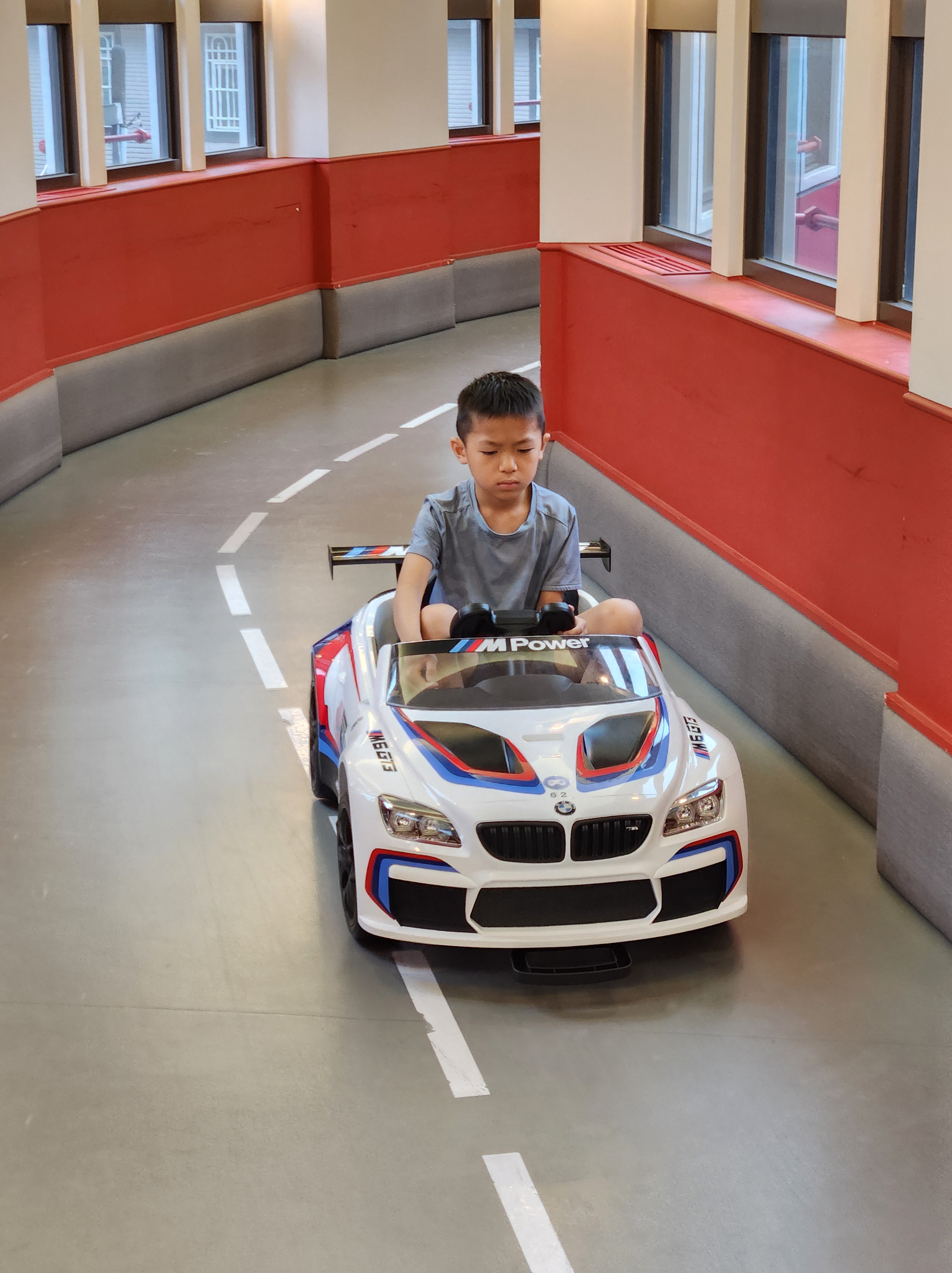
I decided to stay in the city of Luodong because it’s close to a few of the family farms Yilan is famous for. I booked a room at Check Inn Magi and it was a HUGE hit with the boys. It has video games, ball pit room, a large indoor slide and motorized toy cars. The boys seriously wanted to live there. 😂 The best part was that Baba and I could rest in our room while they played downstairs.

Our hotel was also close to the Luodong Night Market, which we visited on Friday night. It was a pretty big market but nothing stood out in particular, at least nothing that we tried.

On Saturday morning, we went to Zhang Mei Ama Farm 張美阿嬤農場, about a 20 minute taxi ride from Luodong. Buses don’t run very frequently in Yilan, so most people either drive, hire a driver, or take a taxi.

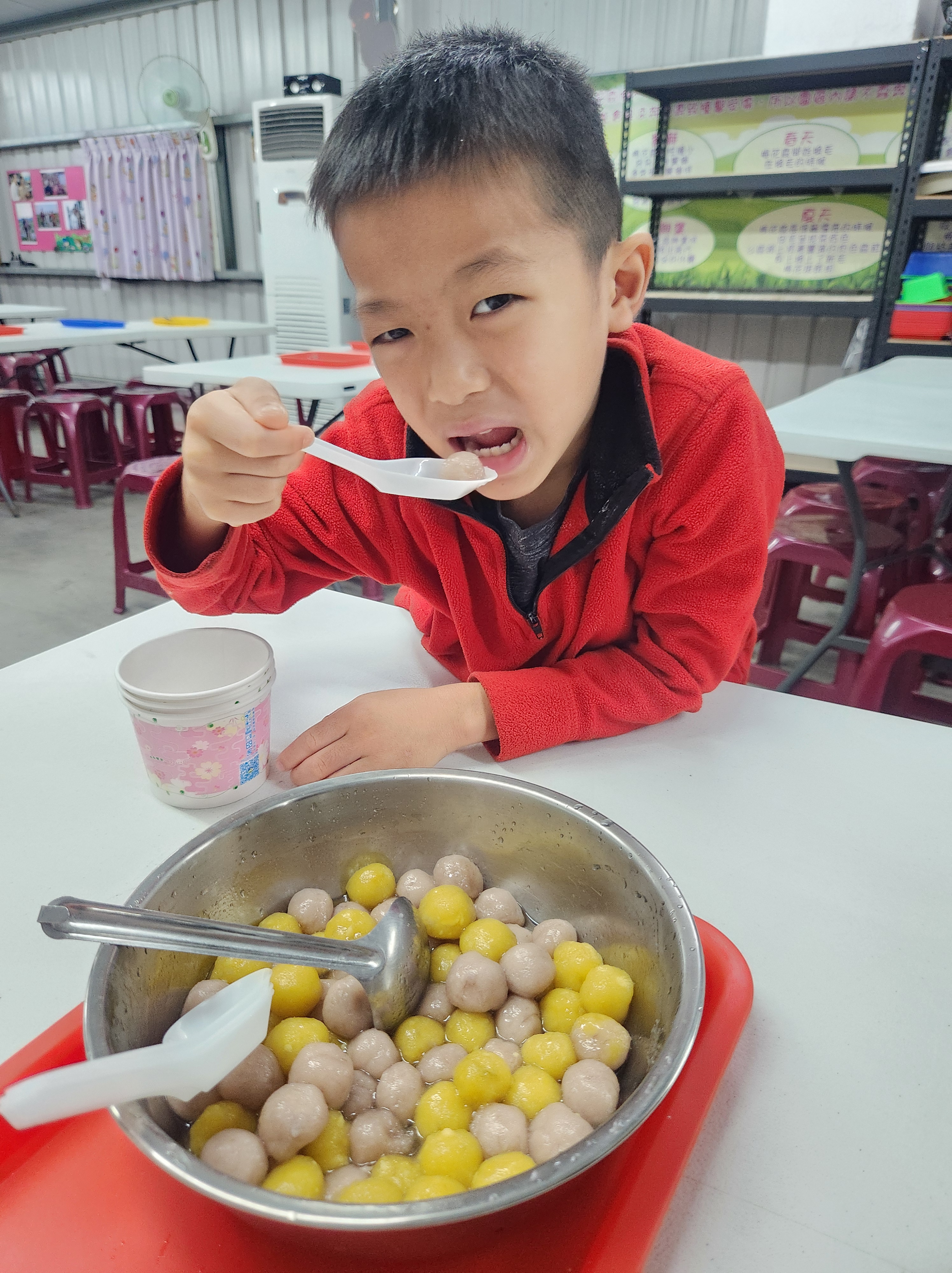
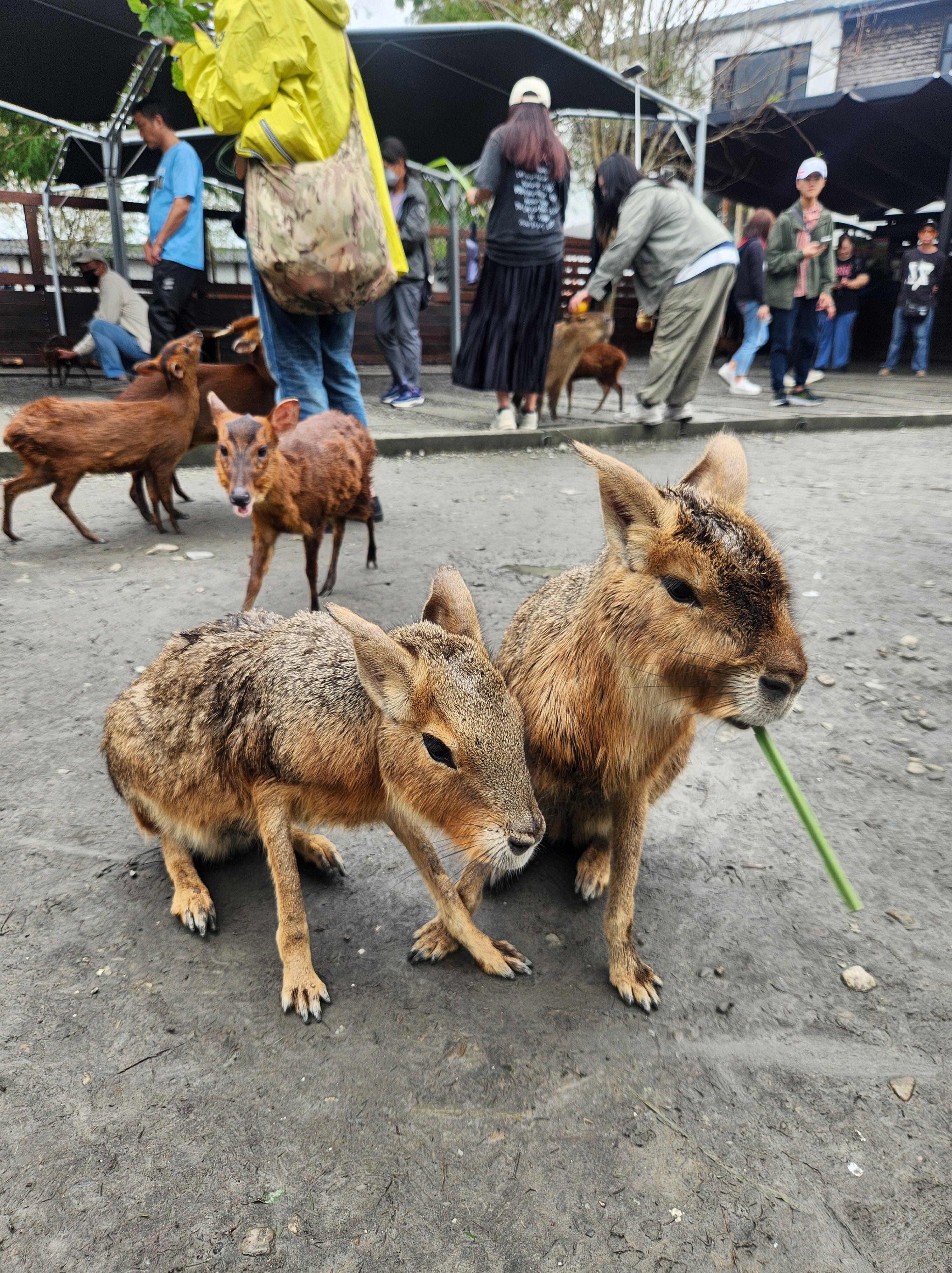
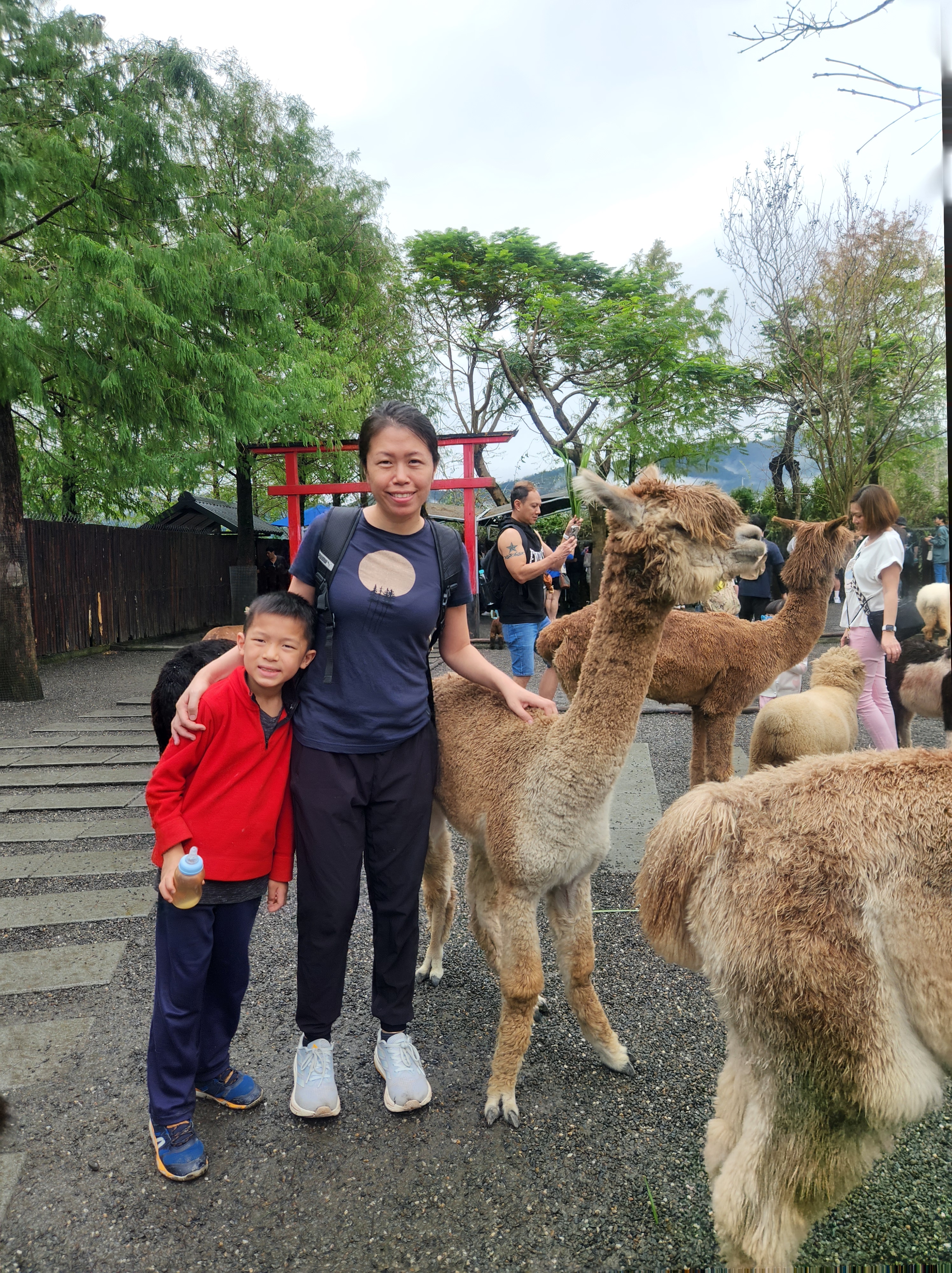
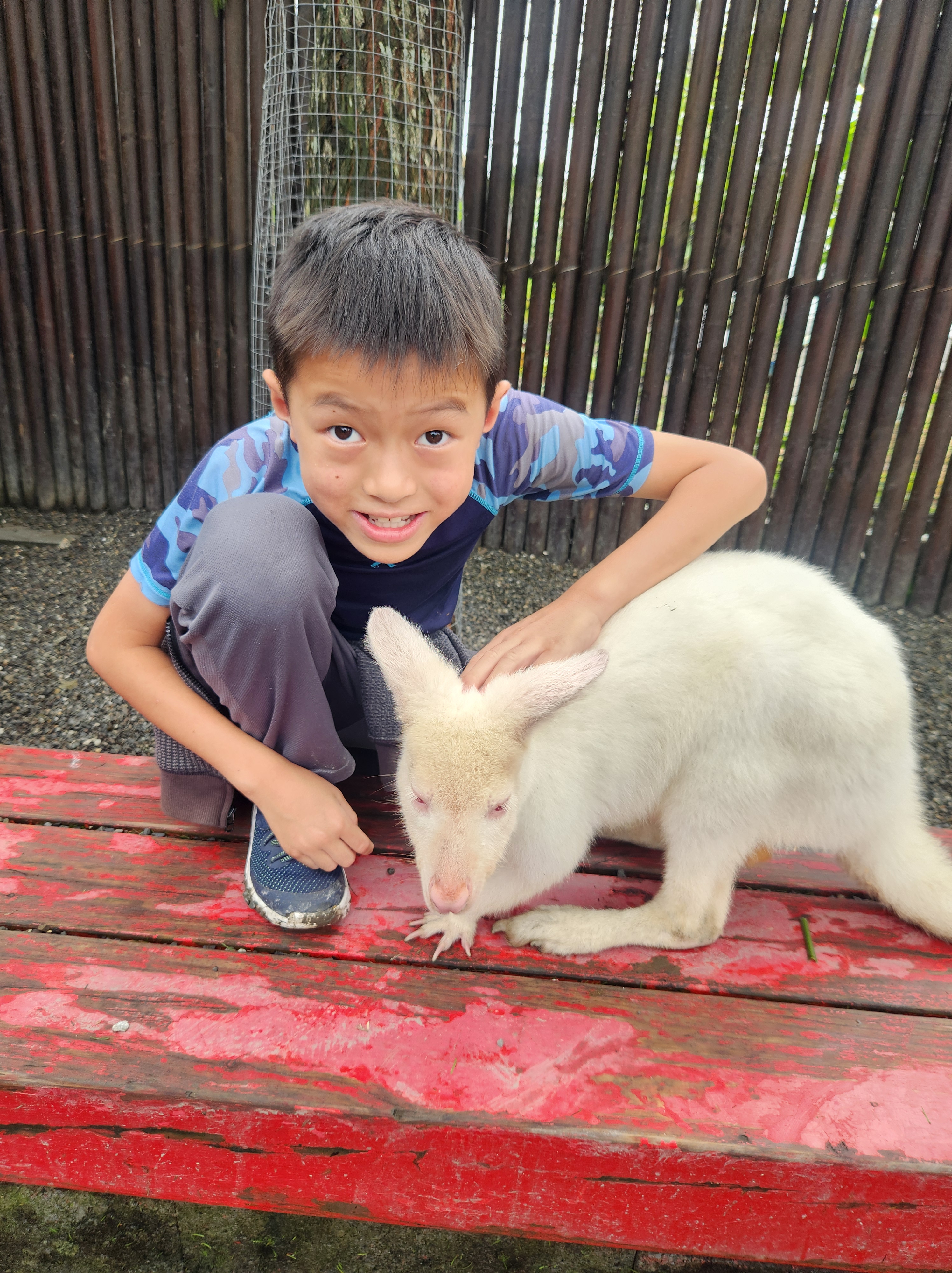
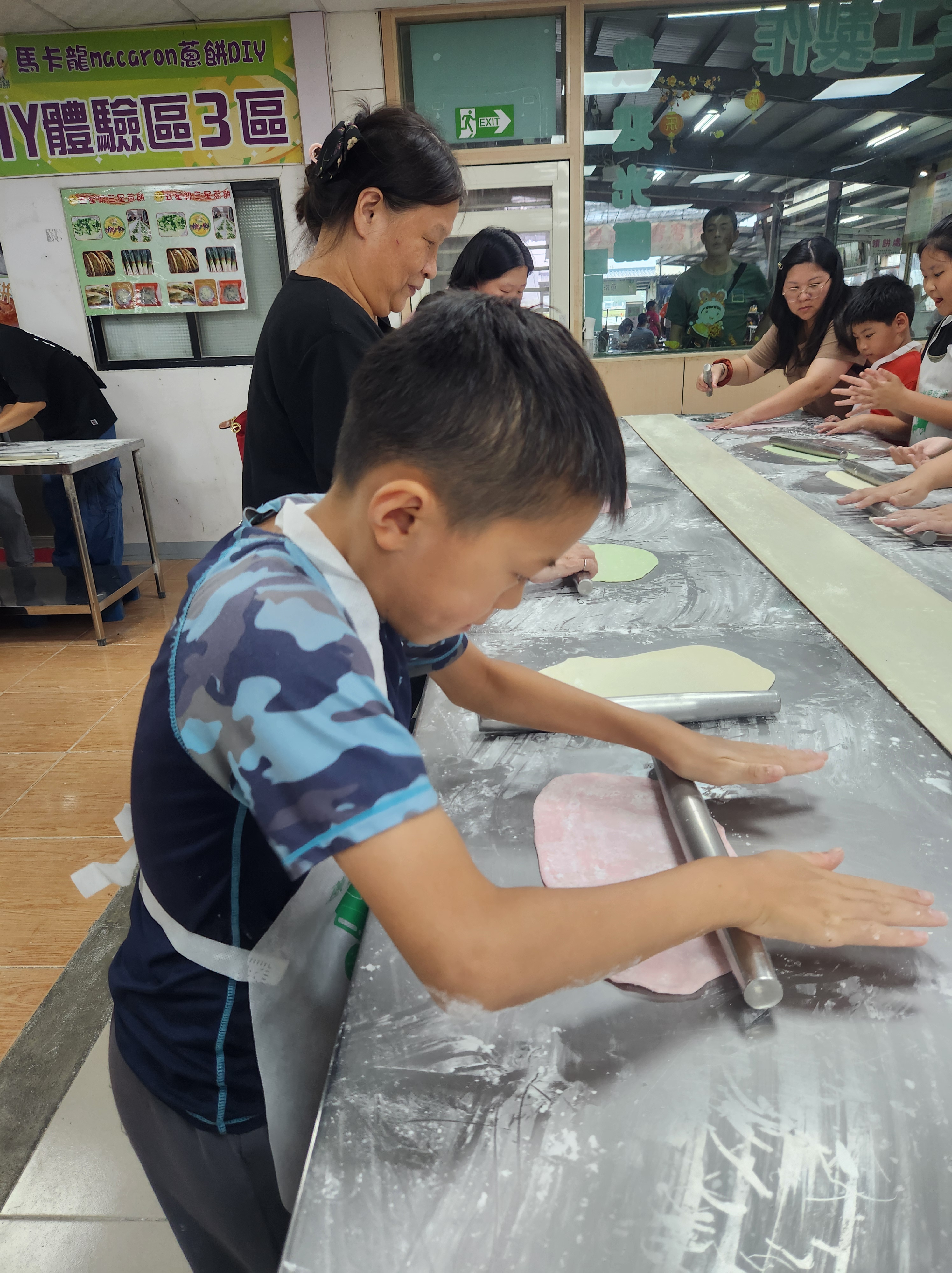
Zhang Mei Ama Farm is a popular petting farm located in Sanxing. Visitors can get up close and personal with animals like alpacas, capybaras, sheep, wallabies, etc. But first, we signed up for a short cooking class at the farm, where we got to make (and later eat) sweet potato and taro balls. The balls are fairly easy to make: just mash up soft taro and sweet potato with rice flour, then boil in water.

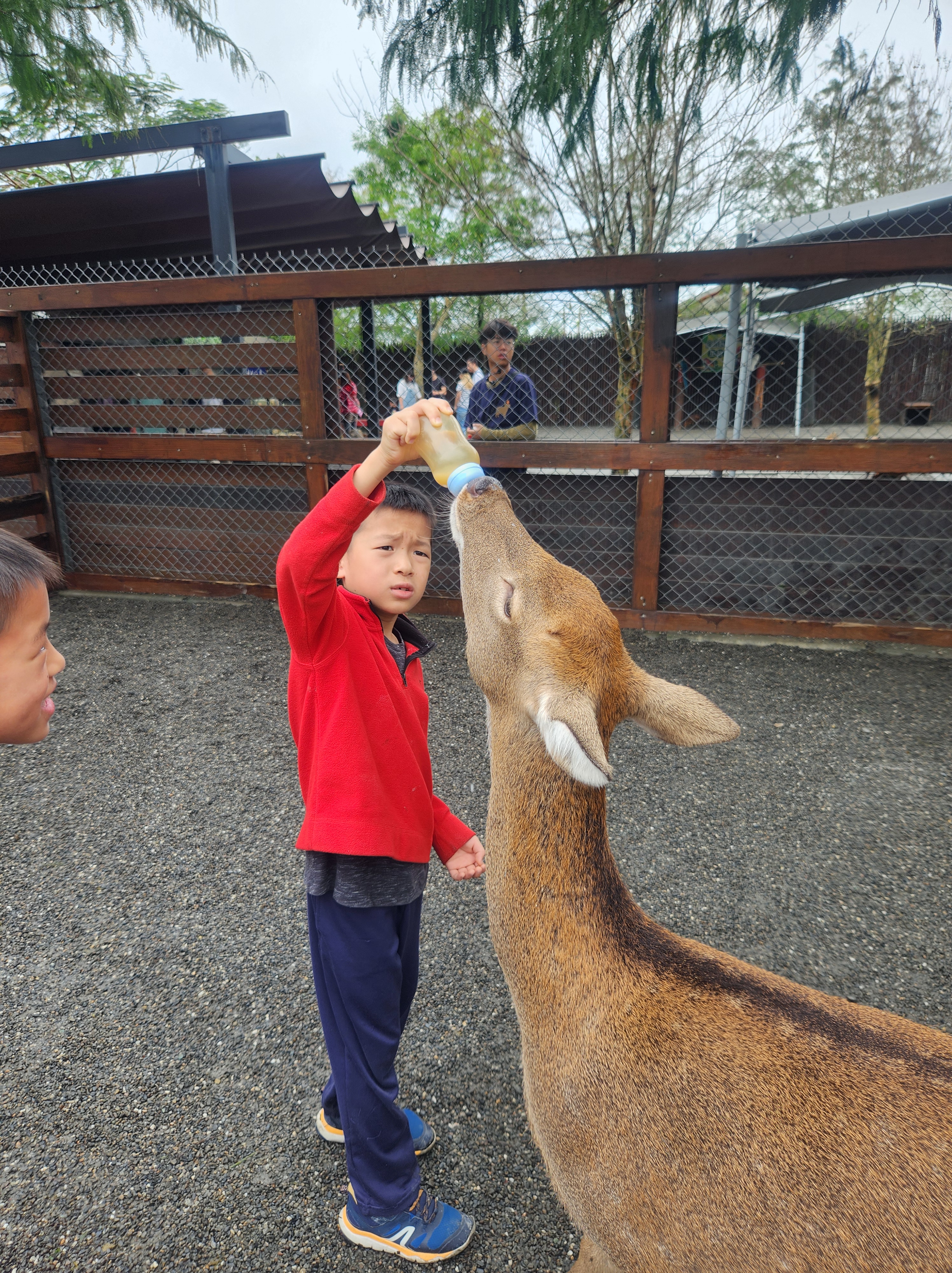
After the cooking class, we headed to the petting farm. The worker gave us a bunch of grass to feed the animals. It can be pretty overwhelming at first because the animals charged at anyone with food. The taller animals like alpacas and deer would grab the food right out of C and O’s hands, so Baba and I had to hold it with our arms held high. 😂 But aside from the animals being ravenous, they were generally very tame and seemed to be well taken care of. We all loved seeing the variety of animals here! We paid $10.75 per person for both the cooking class and farm experience, and booked our tickets here.

Nearby Zhang Mei Ama Farm are a couple of scallion farms. The one we went to is Cong Bao Bao 葱抱抱體驗農場. It was about a 30 minute walk from the farm. You could take a taxi there but since the weather was comfortable, we decided to walk.

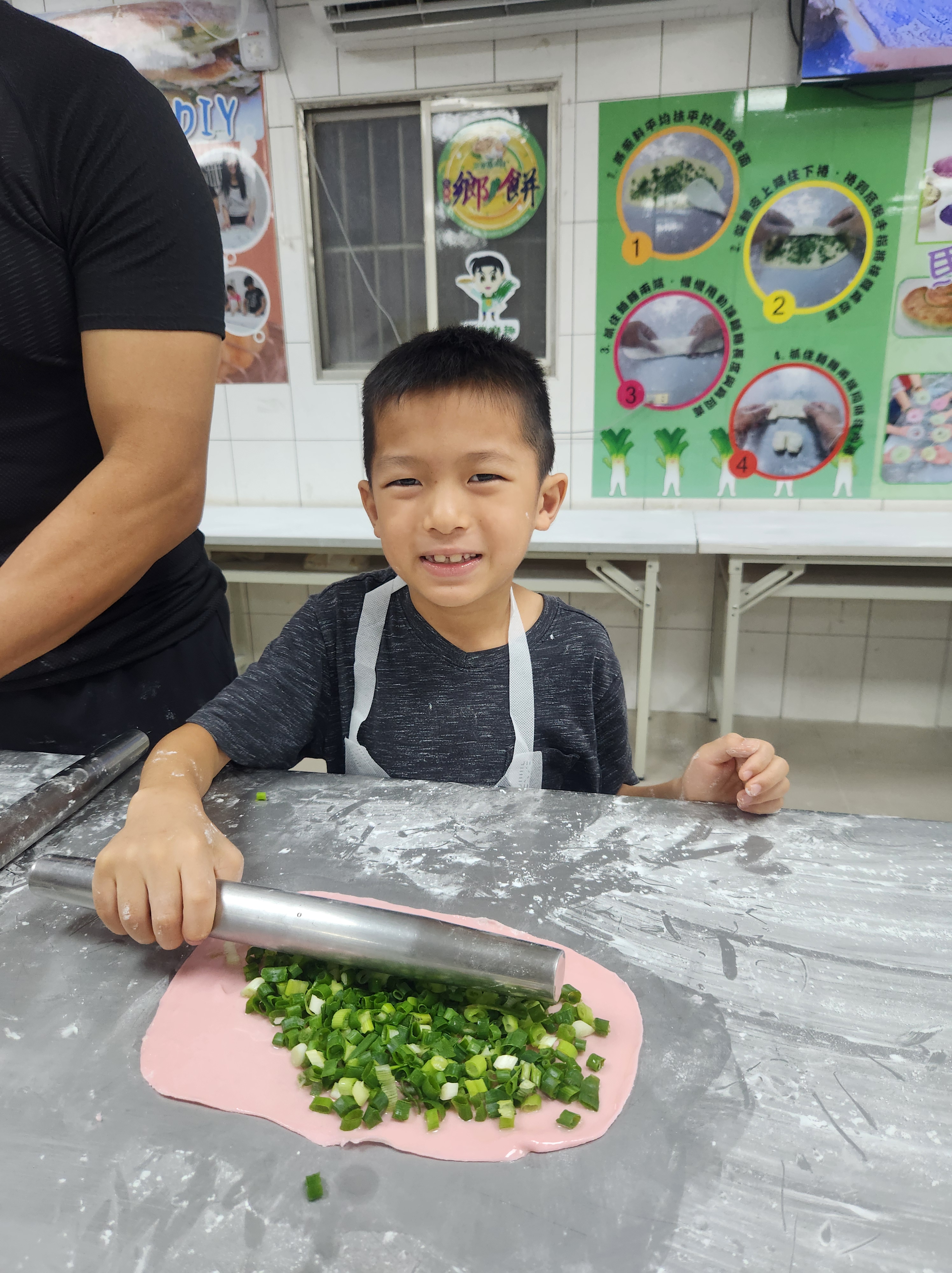
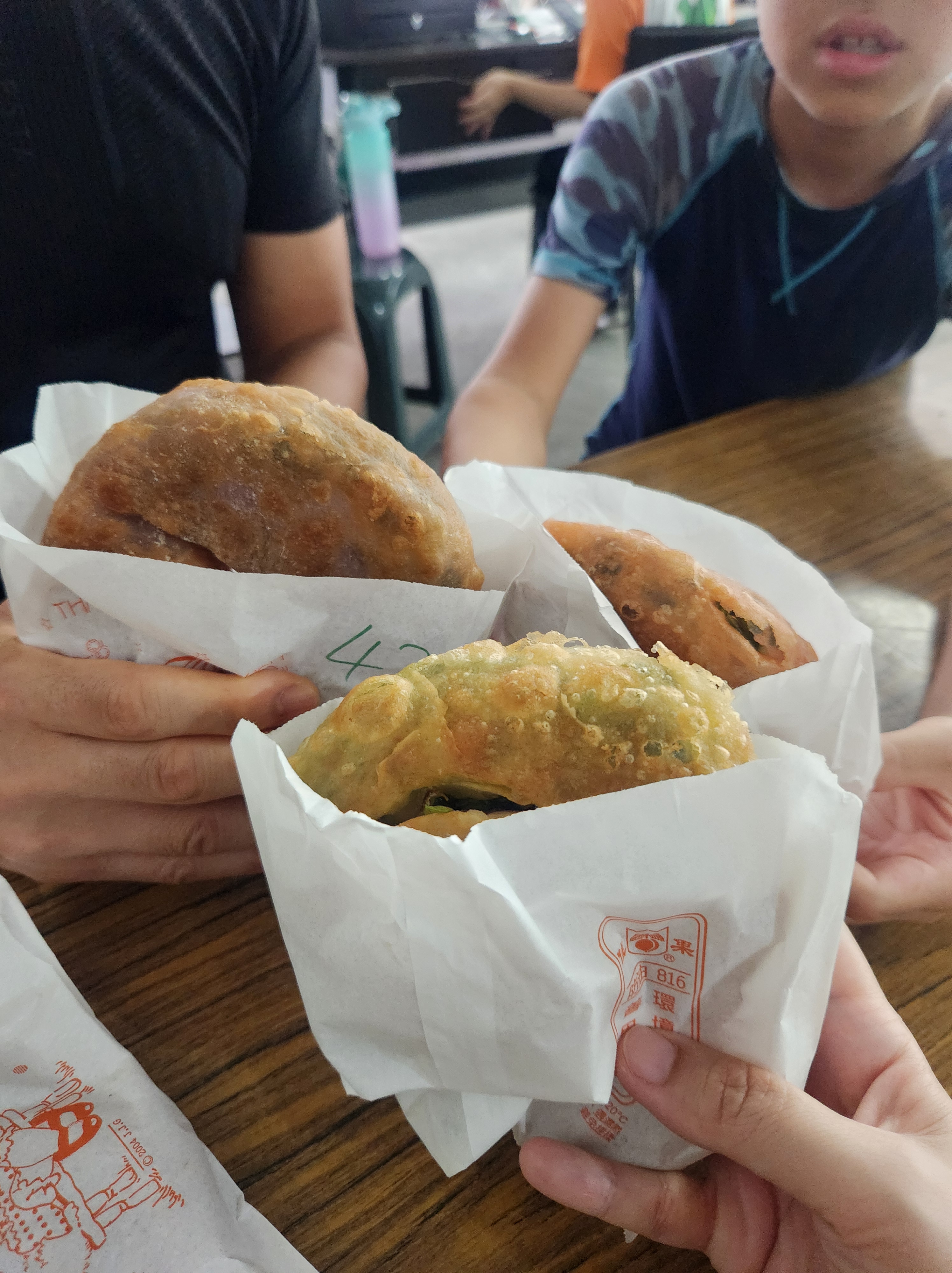
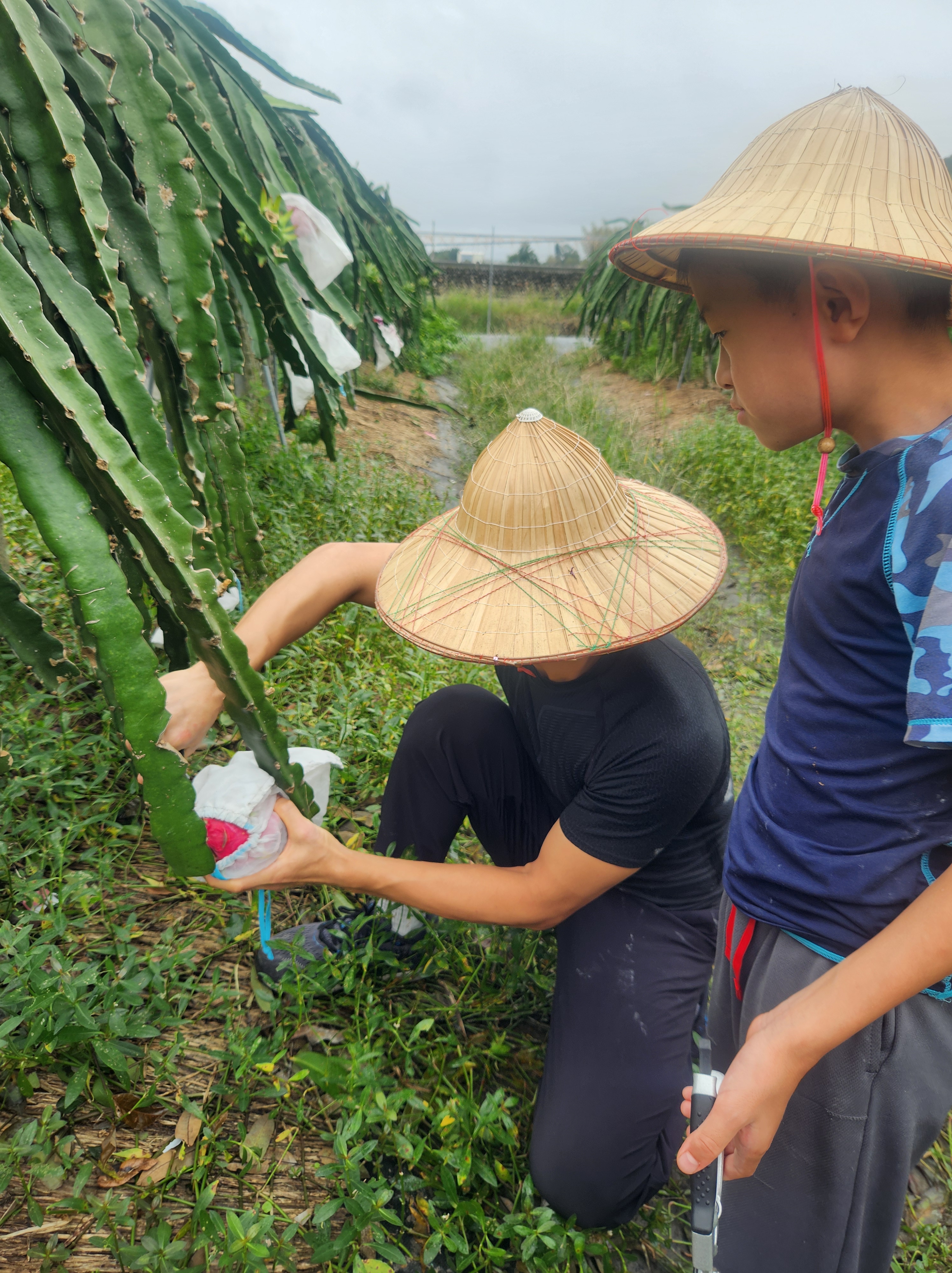
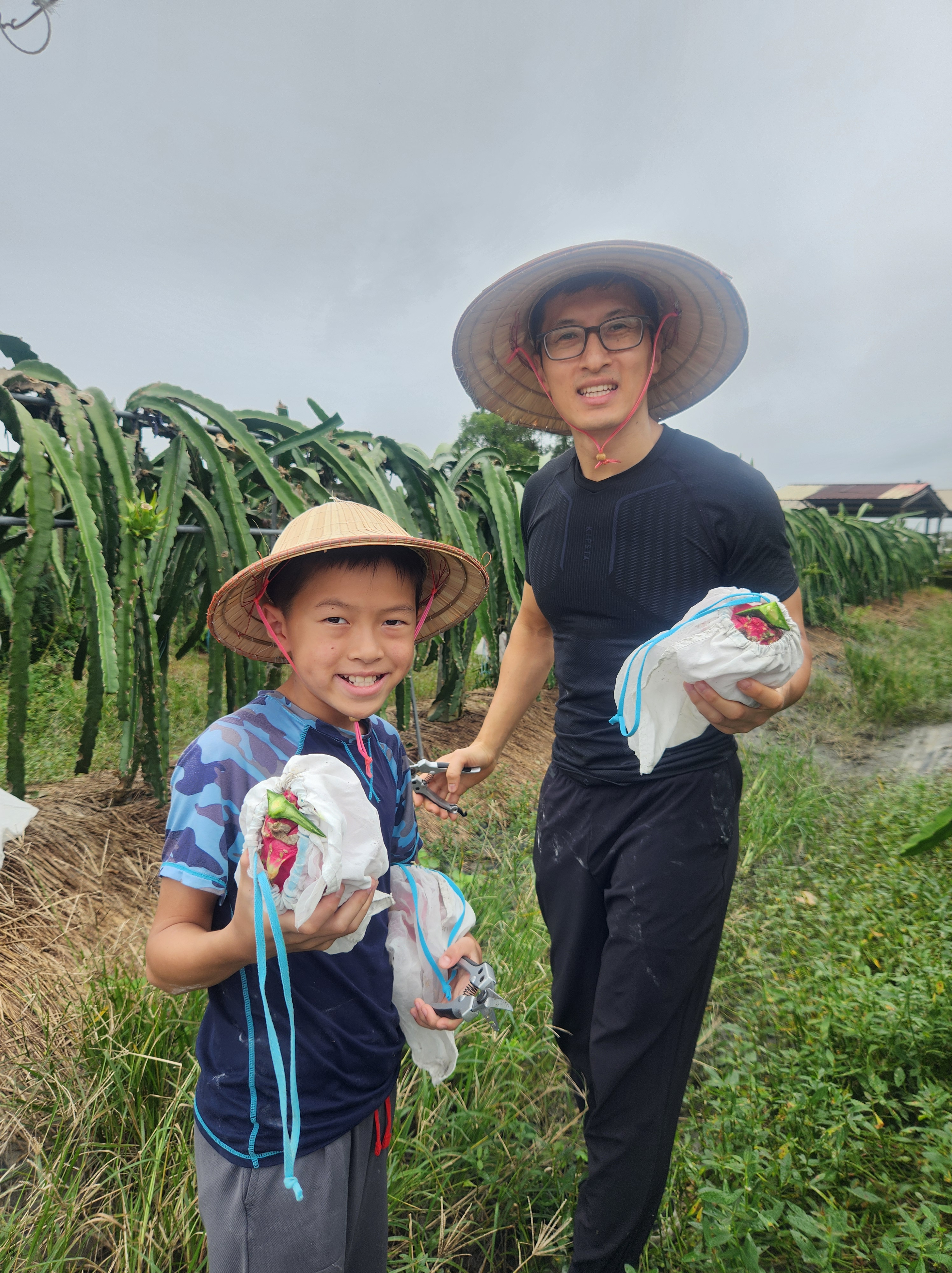
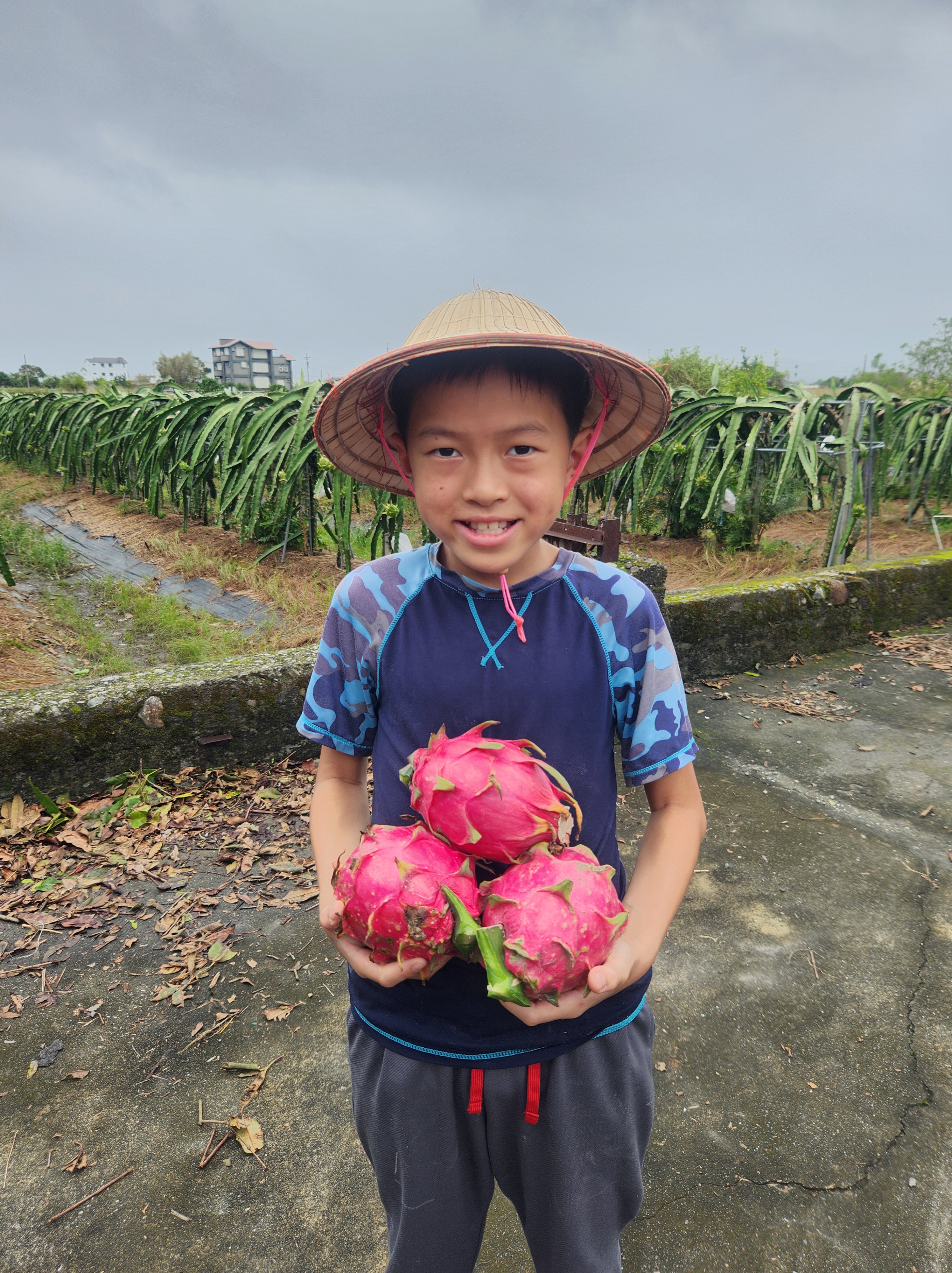
At Cong Bao Bao, you can make scallion pancakes and/or harvest scallions. Unfortunately, the scallion fields were destroyed by Typhoon Kong-rey the weekend prior. But all was not lost! The farm also grew dragon fruit so we were able to pick those.

Interestingly, dragon fruit grows on long prickly vines. The dragon fruits at the farm had pink flesh and were wrapped in bags to prevent bugs and animals from eating them. We each got to take one home.

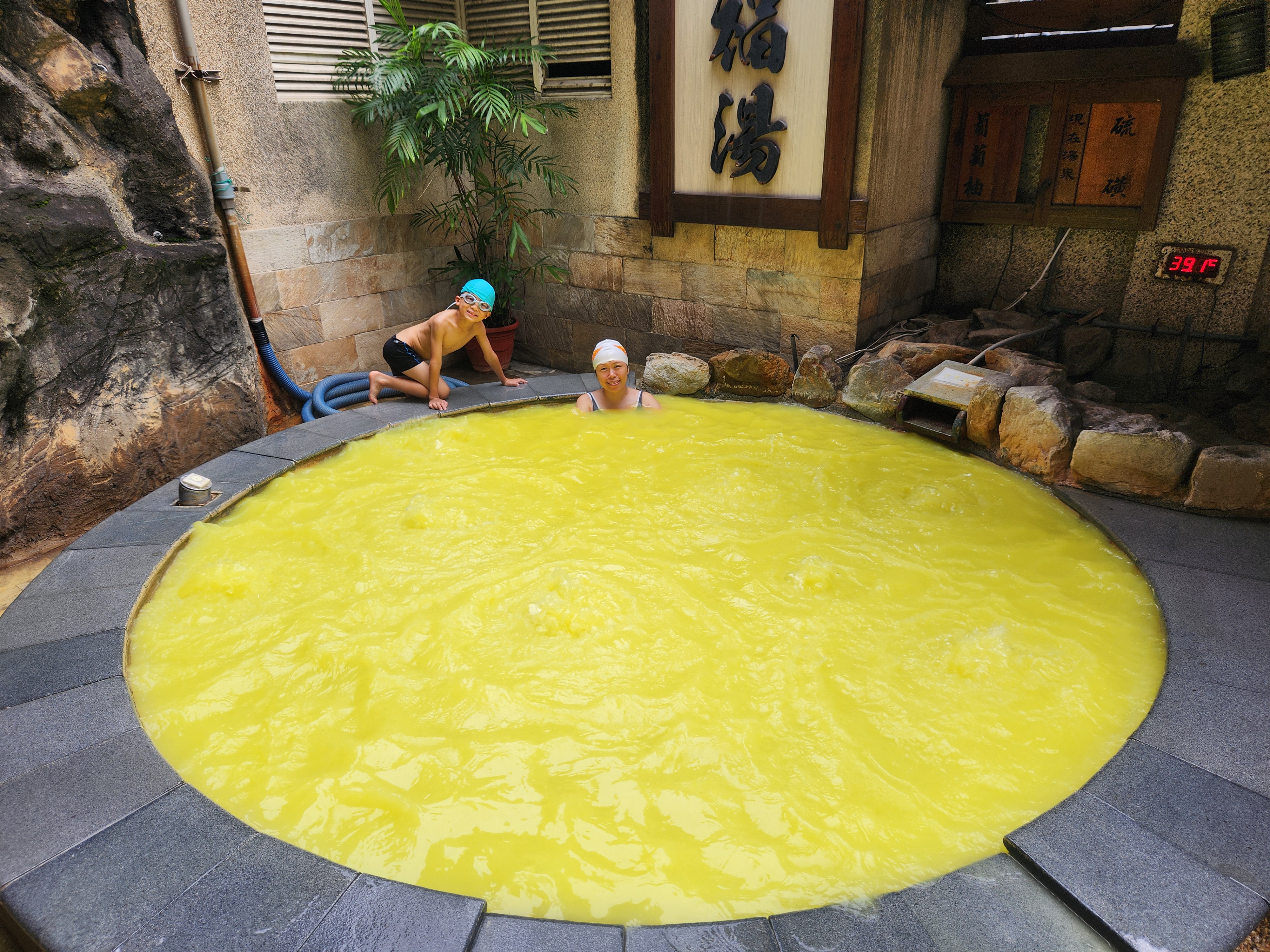
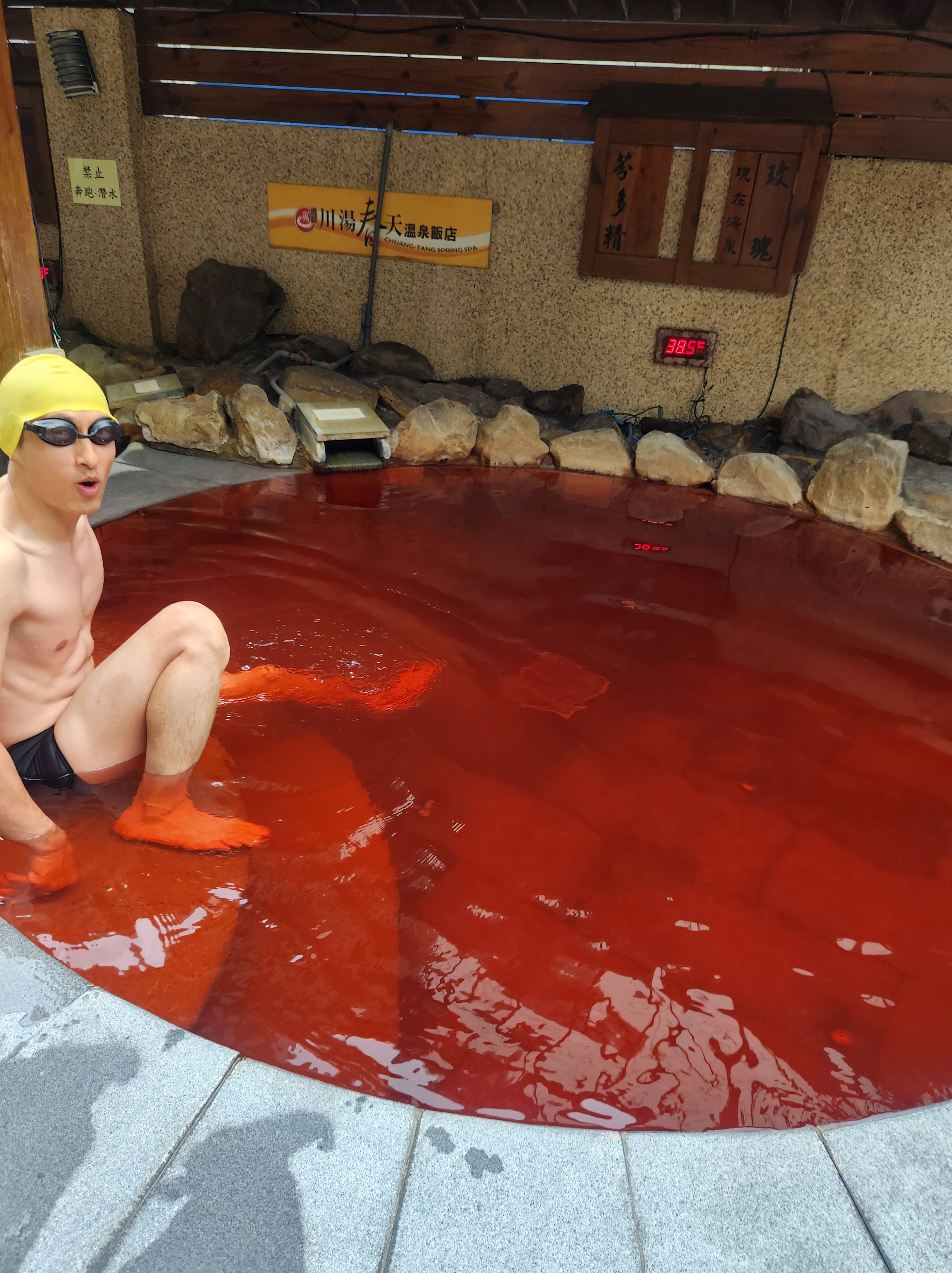
On our last day in Yilan, we took the local train to Jiaoxi 礁溪, another small town in Yilan famous for hot springs. Streets are literally lined with hot springs spas. We bought a day pass at Chuan Tang Spring Spa Hotel 川湯春天溫泉飯店 for about $10 per person. (On weekdays, it’s about $7 per person.)

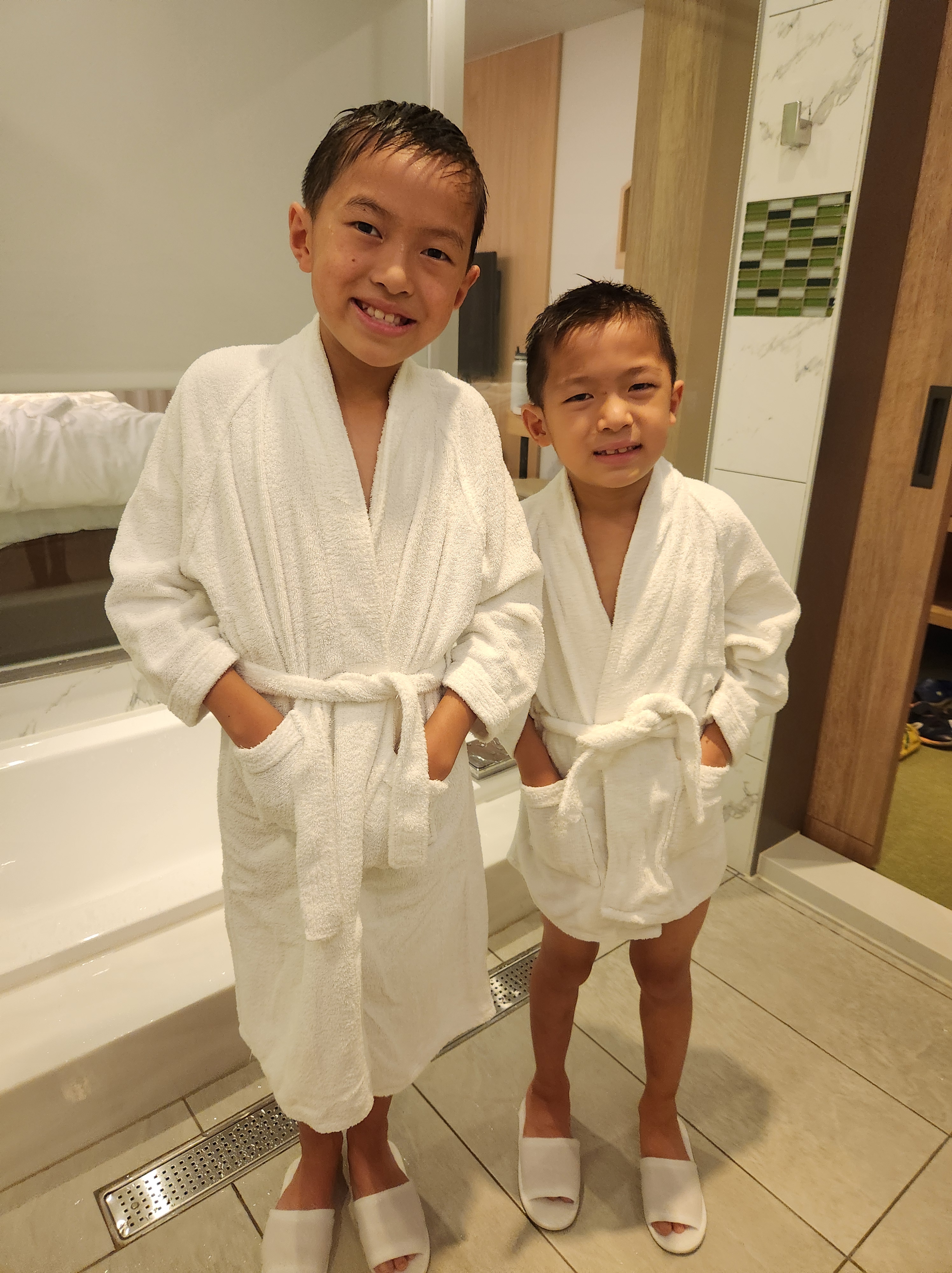
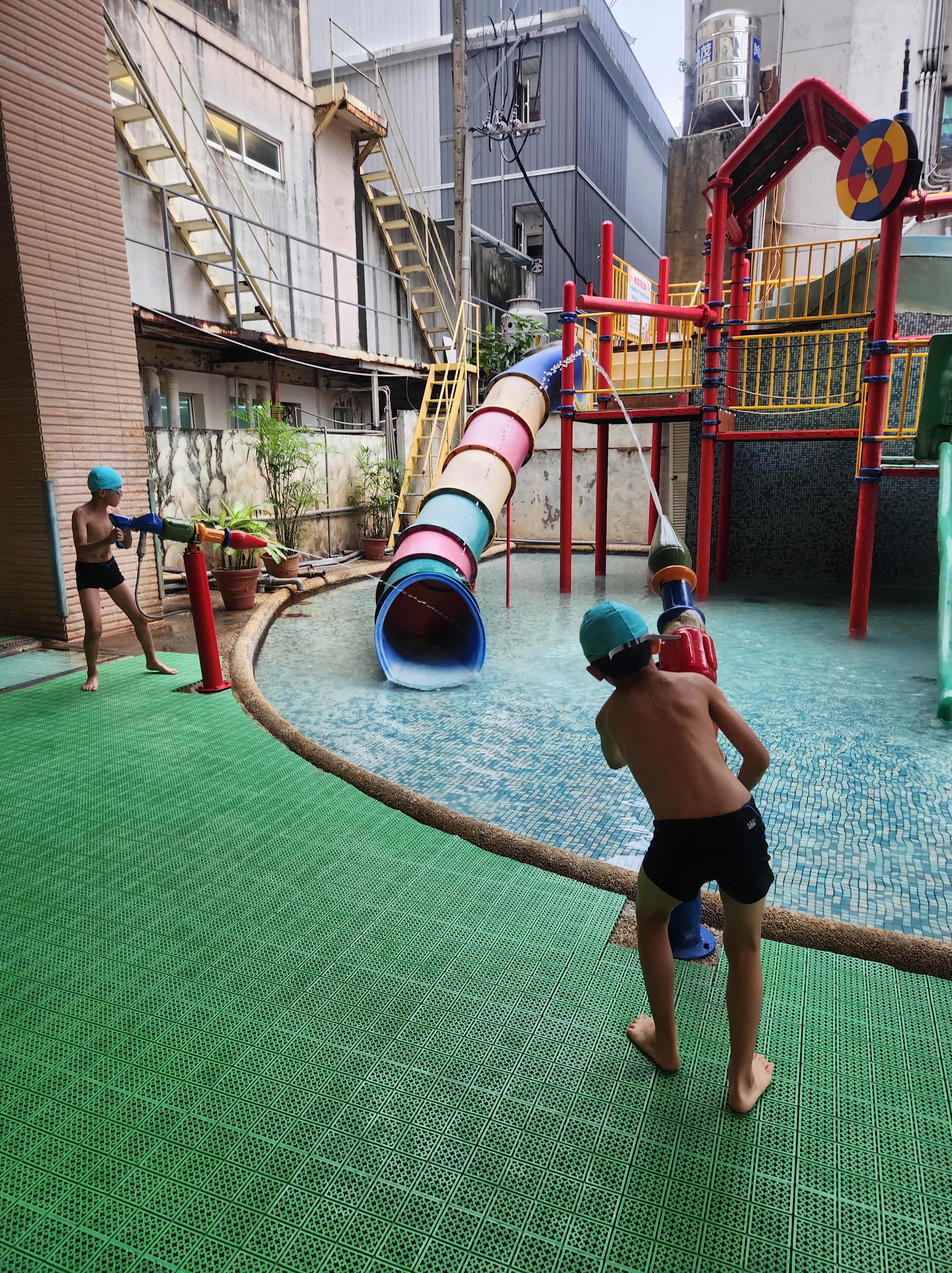
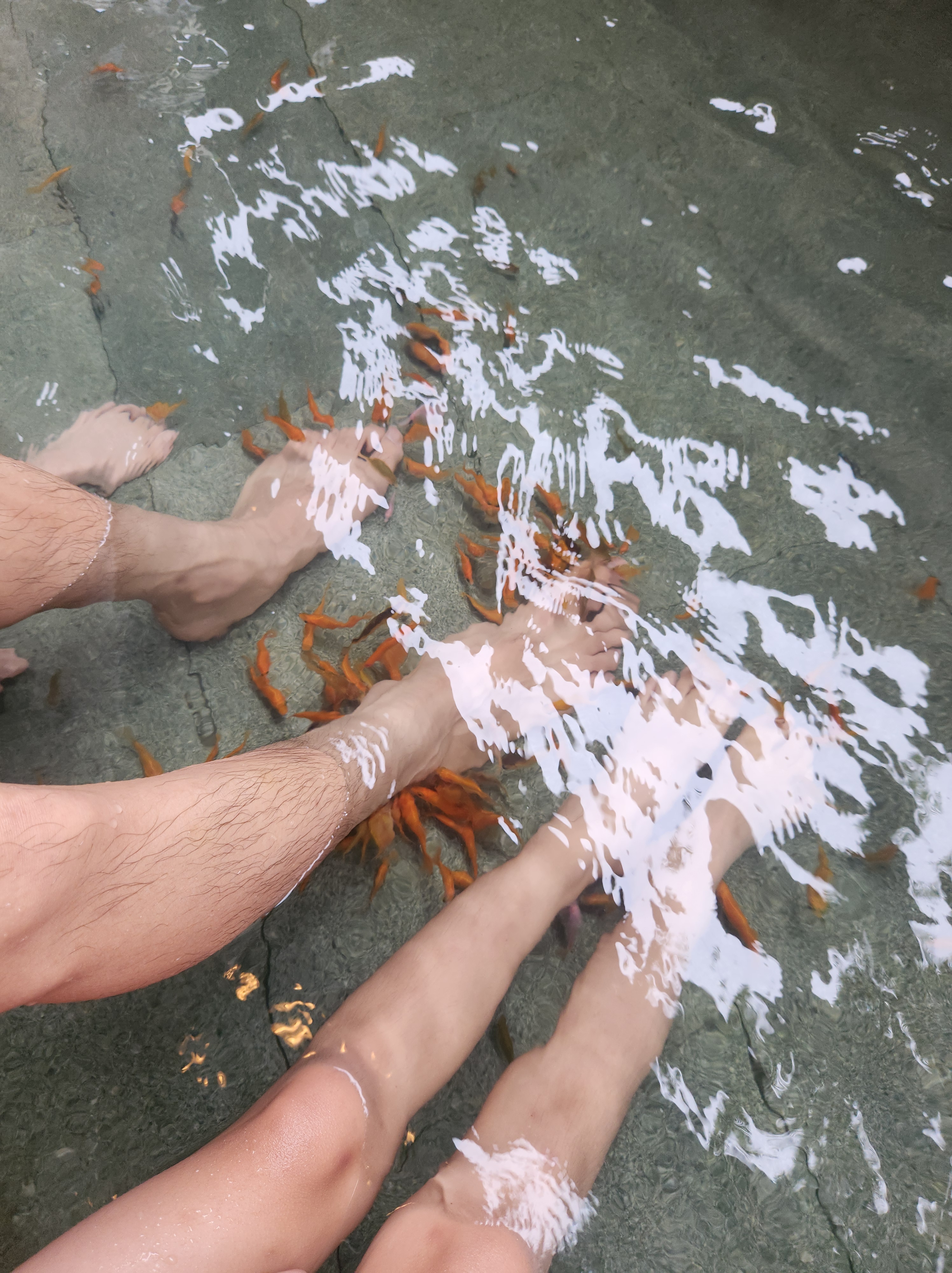
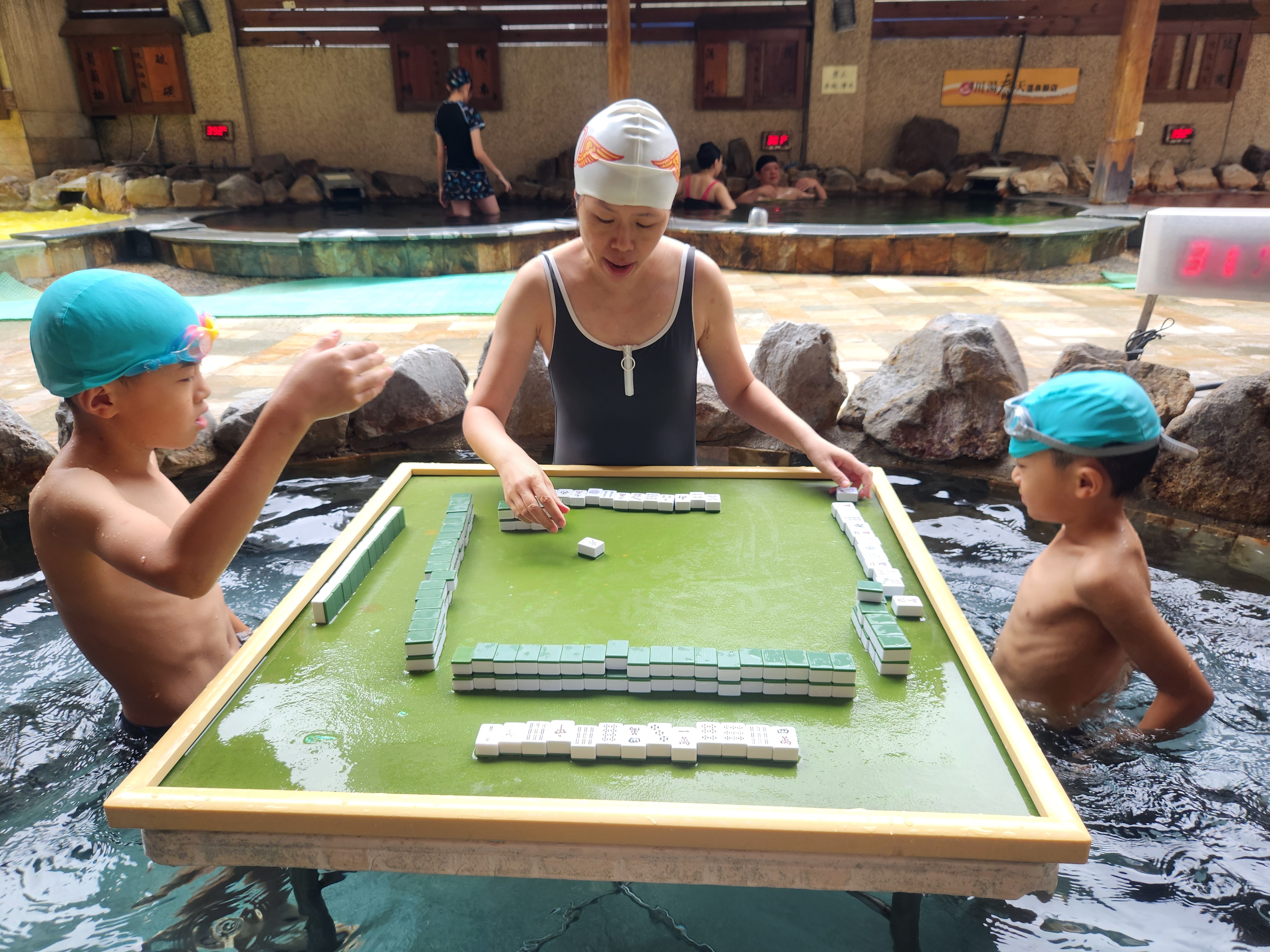
The resort is a little dated but we still had a lot of fun because of the variety of facilities. They had different scented and colored baths; a kids’ section with water slides; scented steam rooms; fish pedicure; and even a bath with a mahjong table! 😂 We stayed here for 4 hours – definitely got our money’s worth!

The trip from Jiaoxi back to Taipei was seamless as well. As with Luodong, there is a direct bus linking Jiaoxi and Taipei. We took the bus for about an hour and the first stop was just a 5 minute walk from our apartment. Can’t get any more convenient than that!

We had a great time in Yilan. It’s family-friendly, easy to get to, and has tons of fun, affordable activities. It really makes a perfect weekend getaway.

Ramblings

Exploring Alishan in Taiwan | A Cool Summer Getaway

Summer is coming to an end, and there is so much to catch up on! I’ll start with our trip to Alishan 阿里山 back in July.

Alishan is one place I had always wanted to visit in Taiwan. Known for its lush greenery, tea trails, and forest railway, Alishan is a wonderful escape from the big city (and heat!) in Taipei. Since my SIL was visiting for the summer, we all took a 3 night/4 day trip to the area.

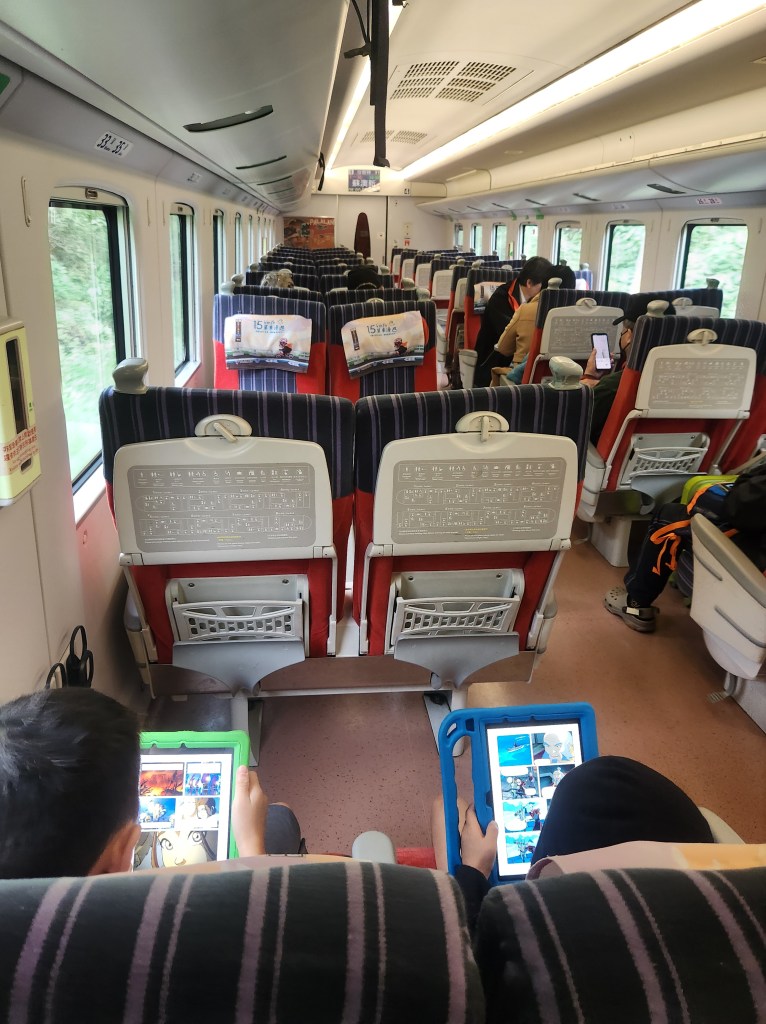
We first took the high-speed rail from Taipei to Chiayi Station. From there, you can take the historic newly-reopened Alishan Forest Railway directly to Alishan, but tickets are hard to come by. So, the alternative is to take one of the many buses to Alishan, which can take about 1 hour and 45 minutes to 2 hours, depending on whether you want to stop at any of the smaller towns near Alishan. We did not have to book bus tickets in advance and simply paid the fare with our Easy Card on the bus.

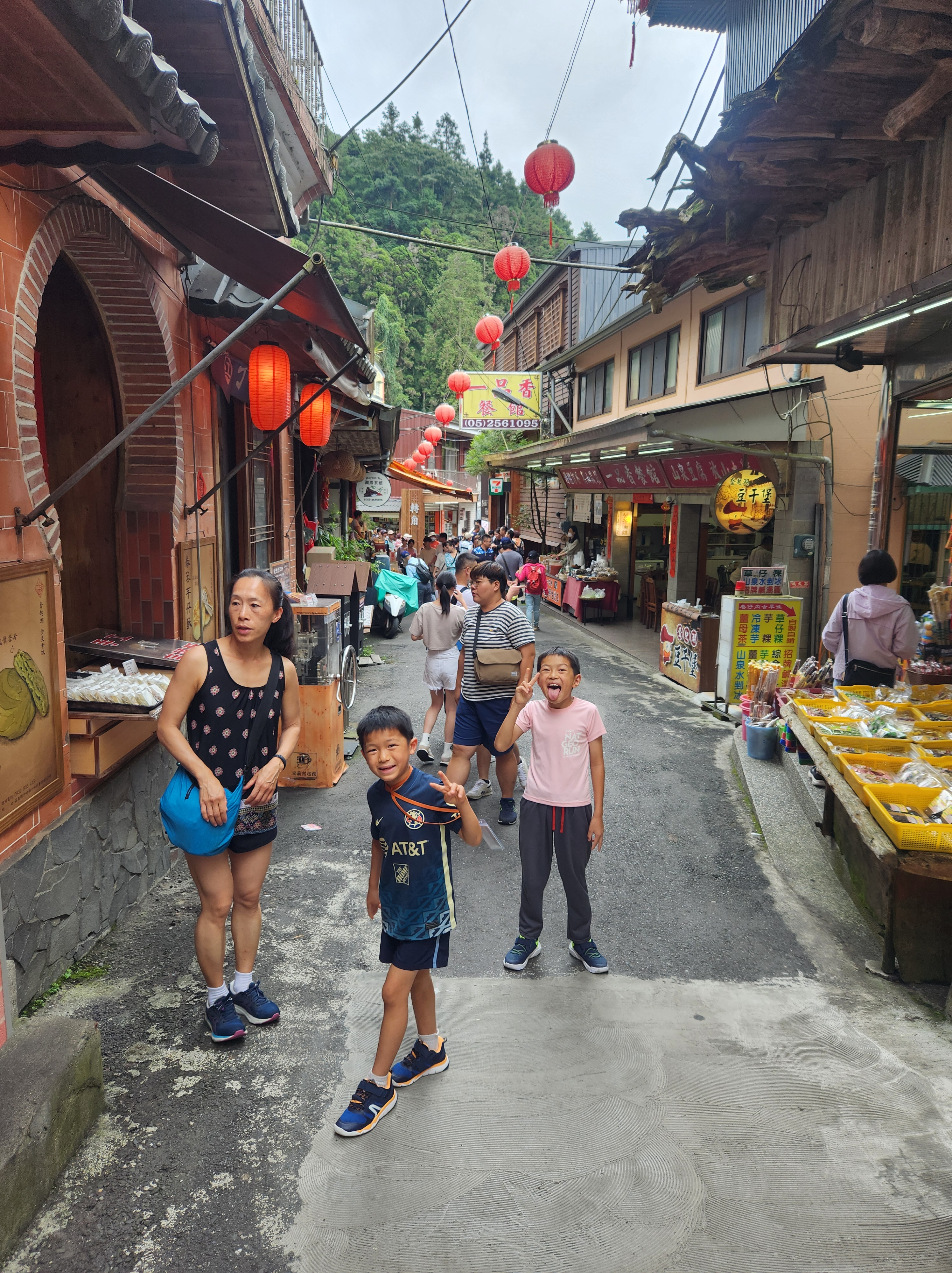
Since we had time, we decided to stop by a small town called Fenqihu 奮起湖 for 1 night before making our way to Alishan. We stayed at the Fenqihu Hotel located in the center of town. We immediately noticed the temperature difference between Taipei and the Alishan area after stepping off the bus. While Taipei has been in the 90s everyday plus humidity, Fenqihu was a cool, breezy 75°F. We were so thankful to be spared from the heat!

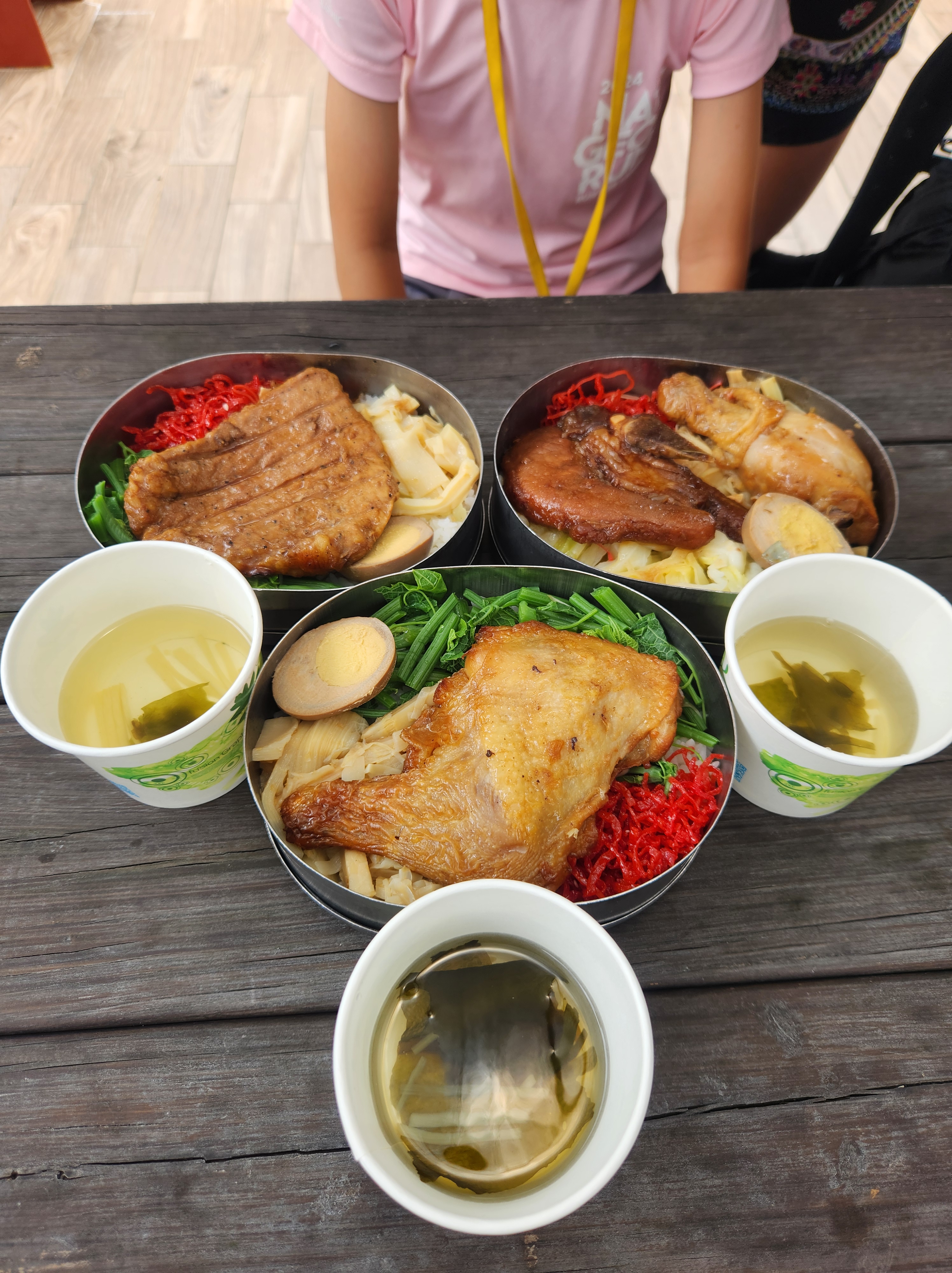
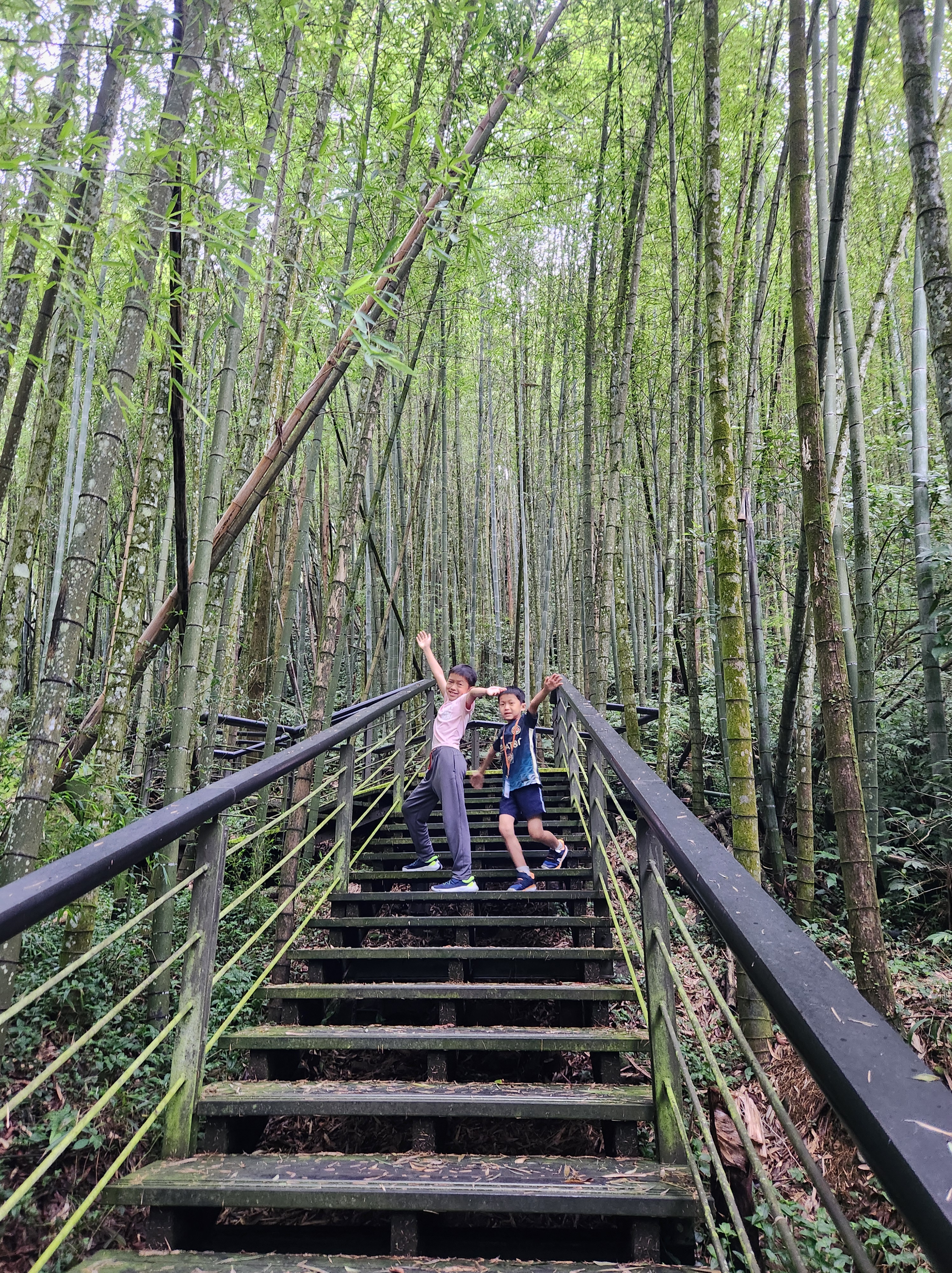
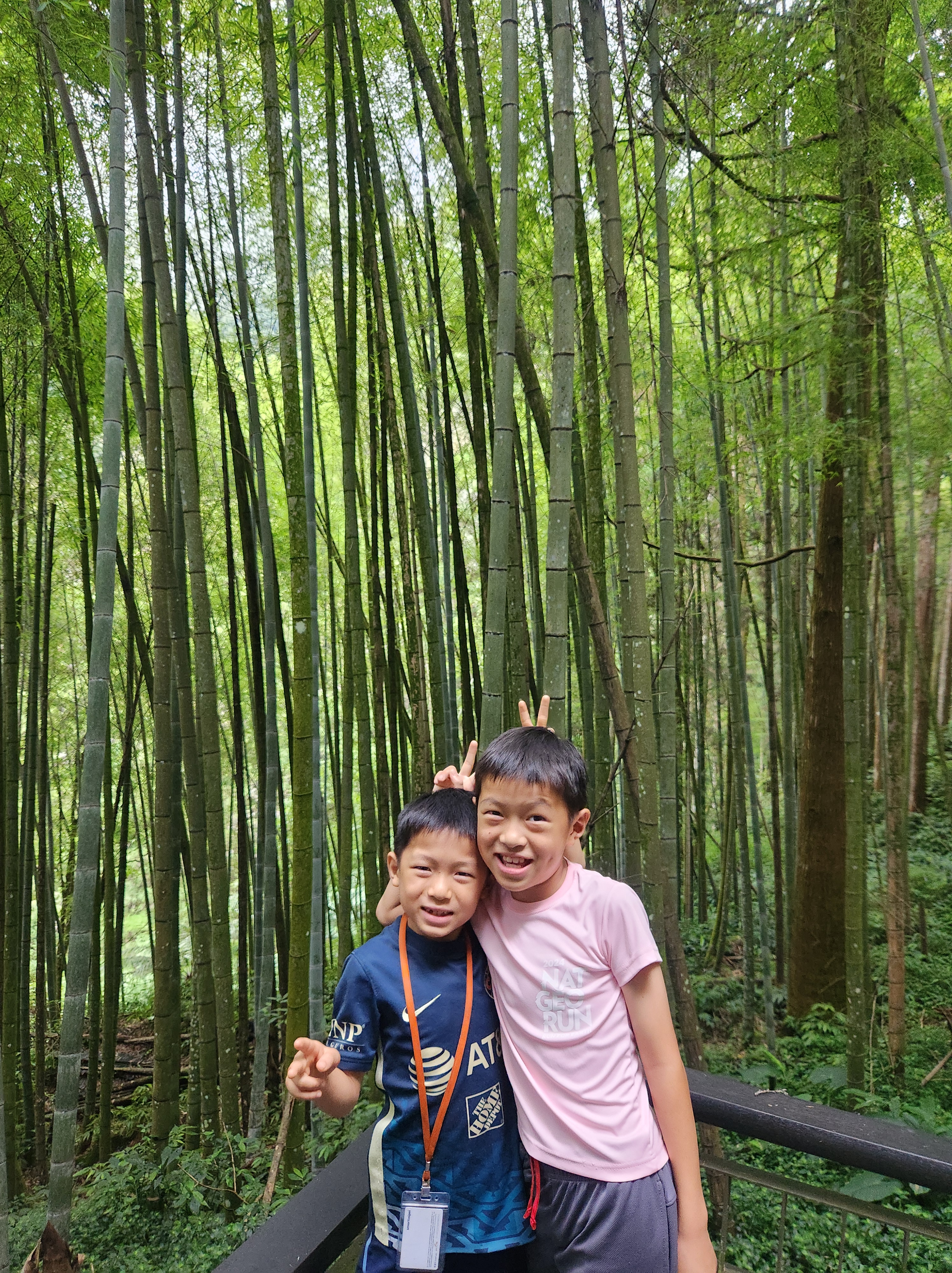
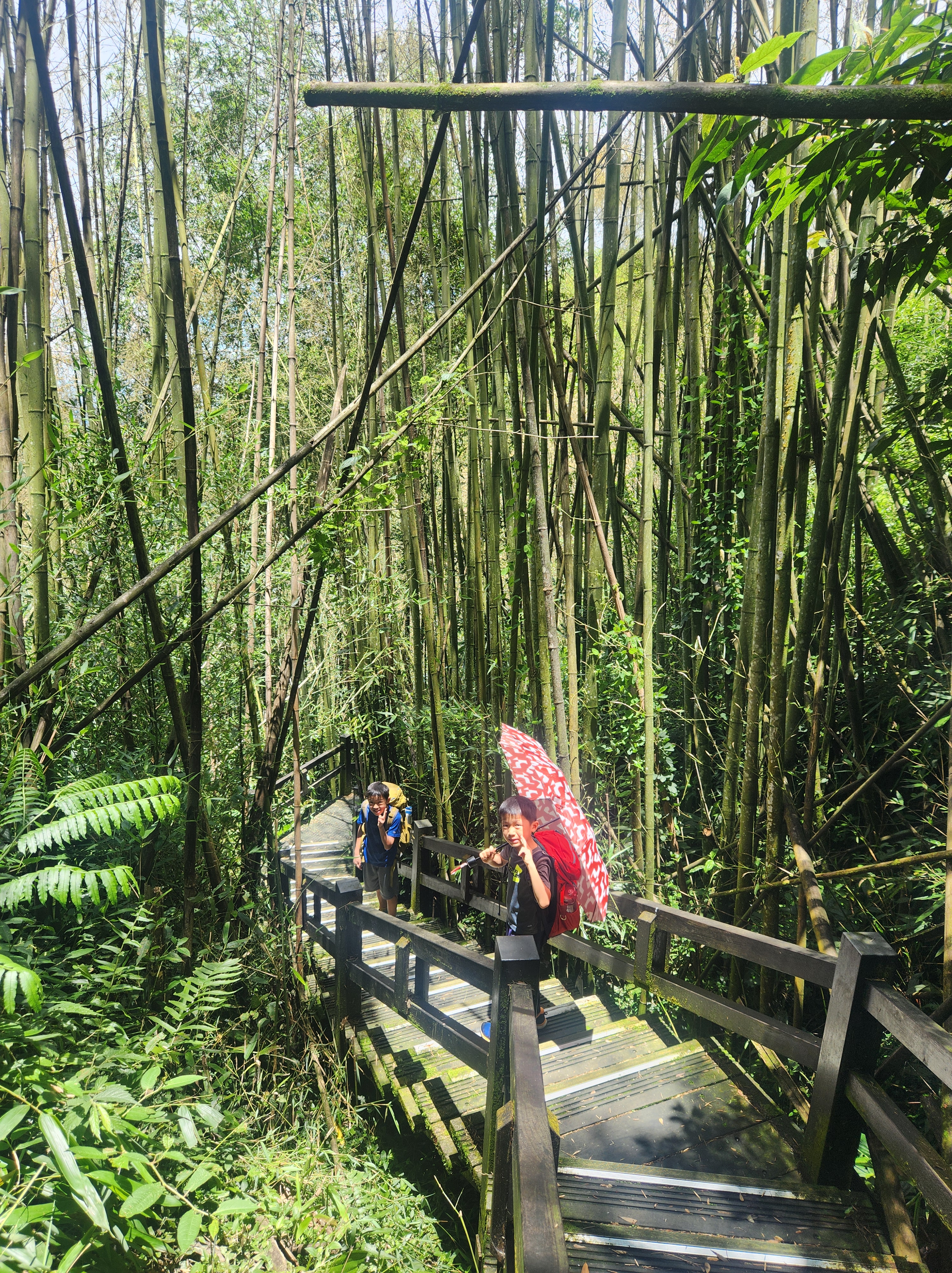
Fenqihu is popular for its bamboo forest and (weirdly) their bento boxes. The bento boxes were quite tasty, generous in size, and cheap! Each bento was about $4 and came with bottomless seaweed soup.

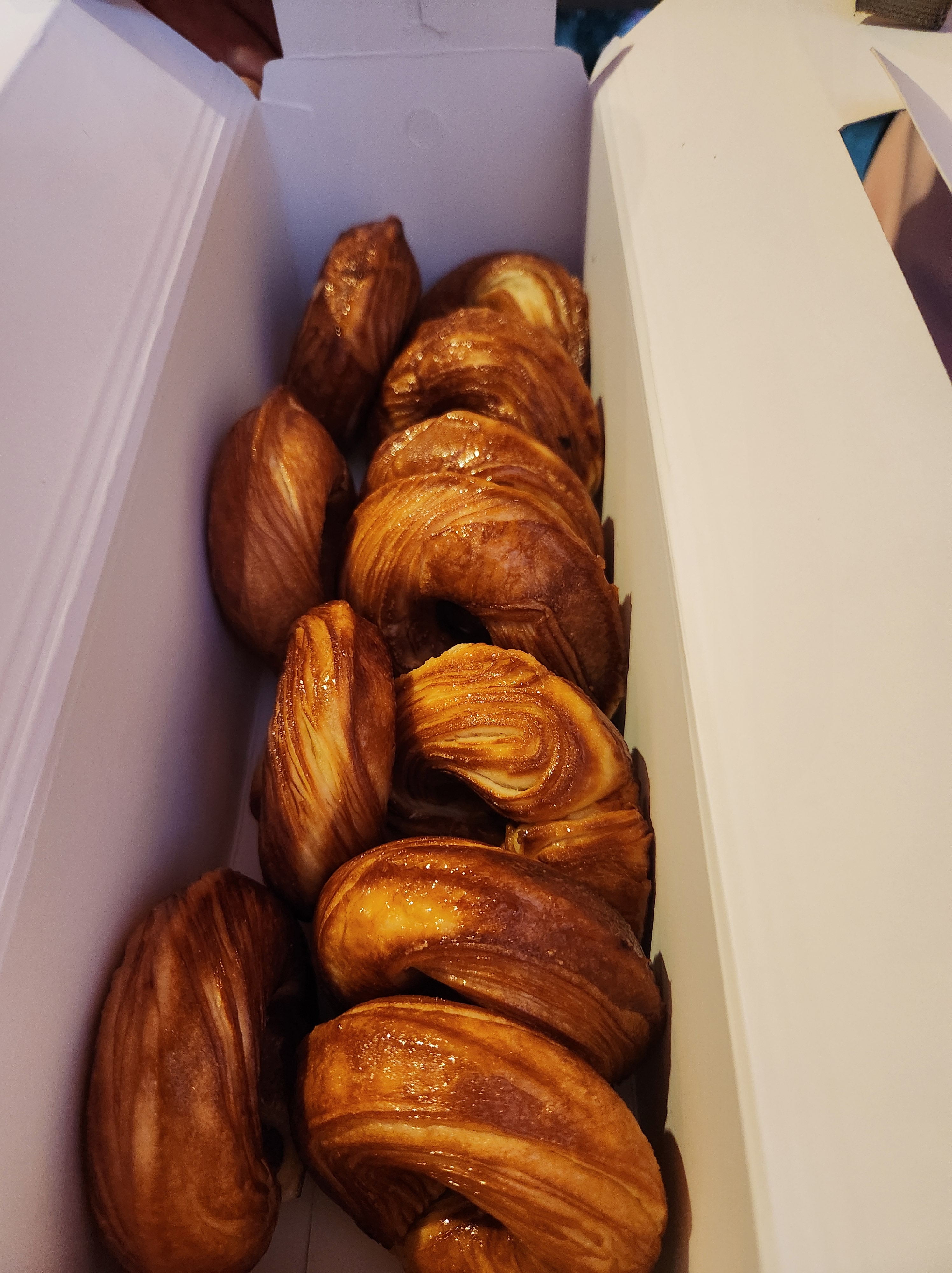
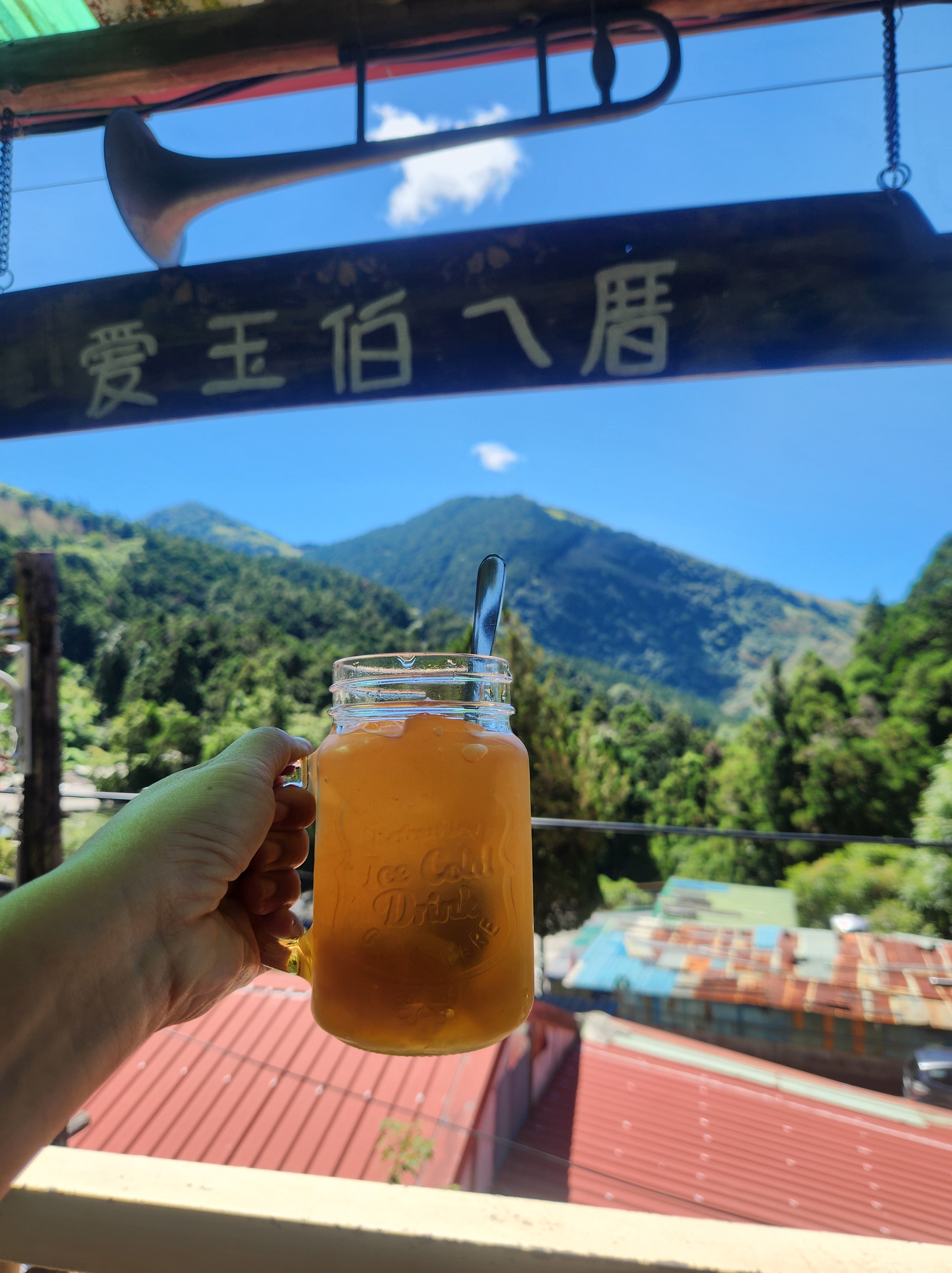
We had low expectations for good food in this little town, but we surprisingly found some incredible cronuts and aiyu jelly 愛玉, which is a refreshing jelly dessert made from fig seeds. The jelly is topped with ice and lime juice, making it a perfect summer treat.

Fenqihu is also popular location to see fireflies at night. Our hotel offers nightly tours to see fireflies but because of the rain, we weren’t able to see too many.

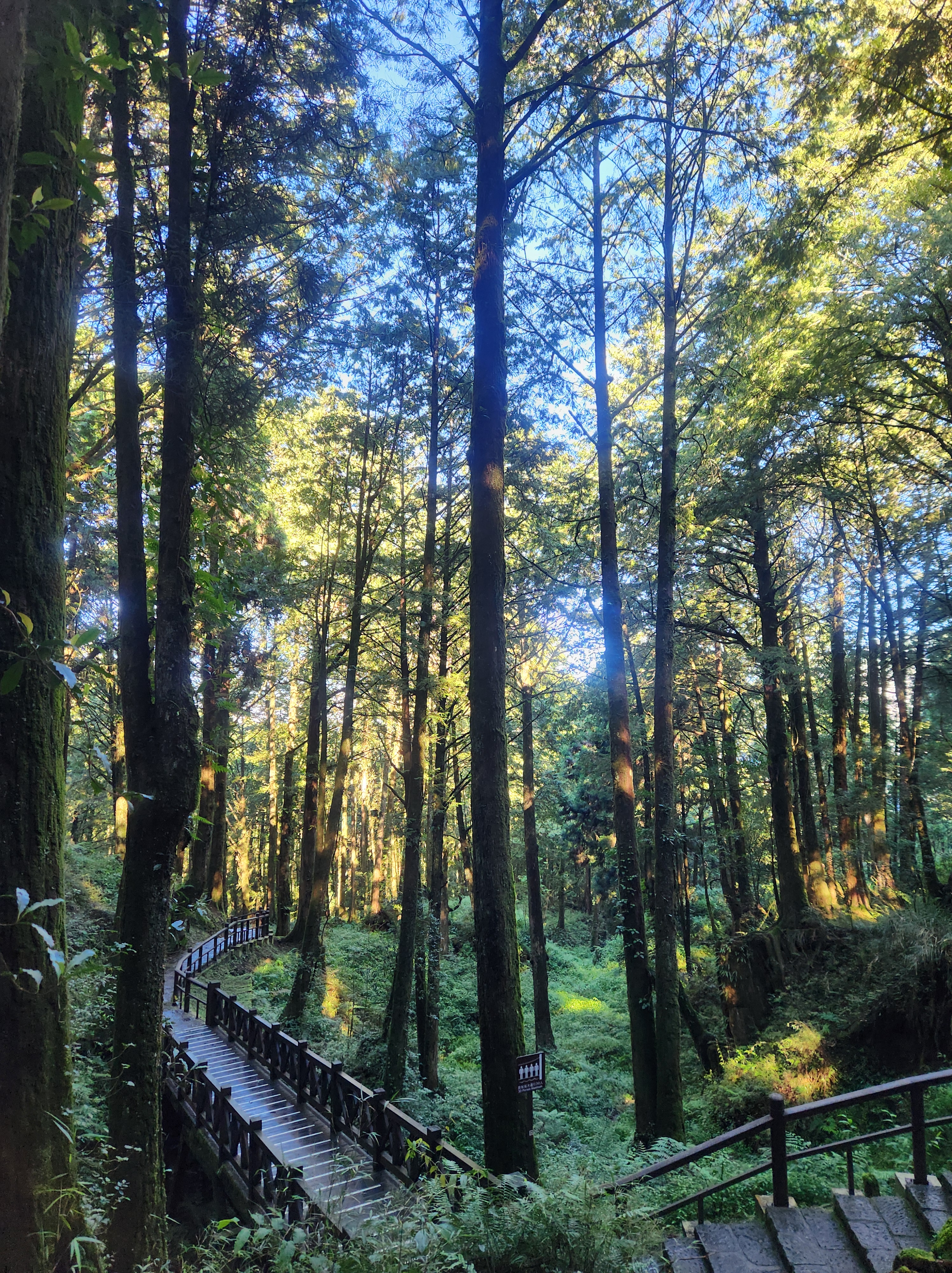
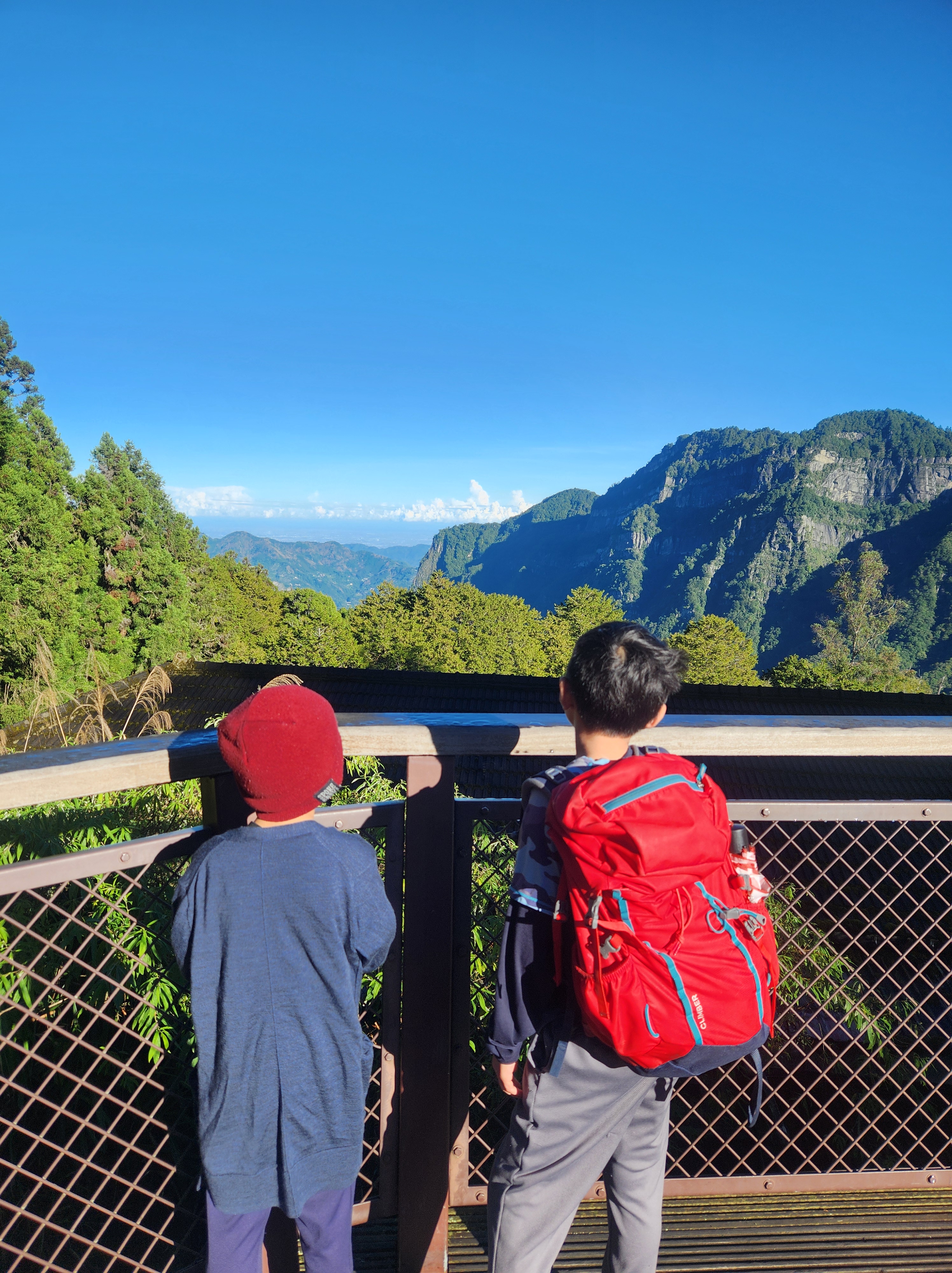
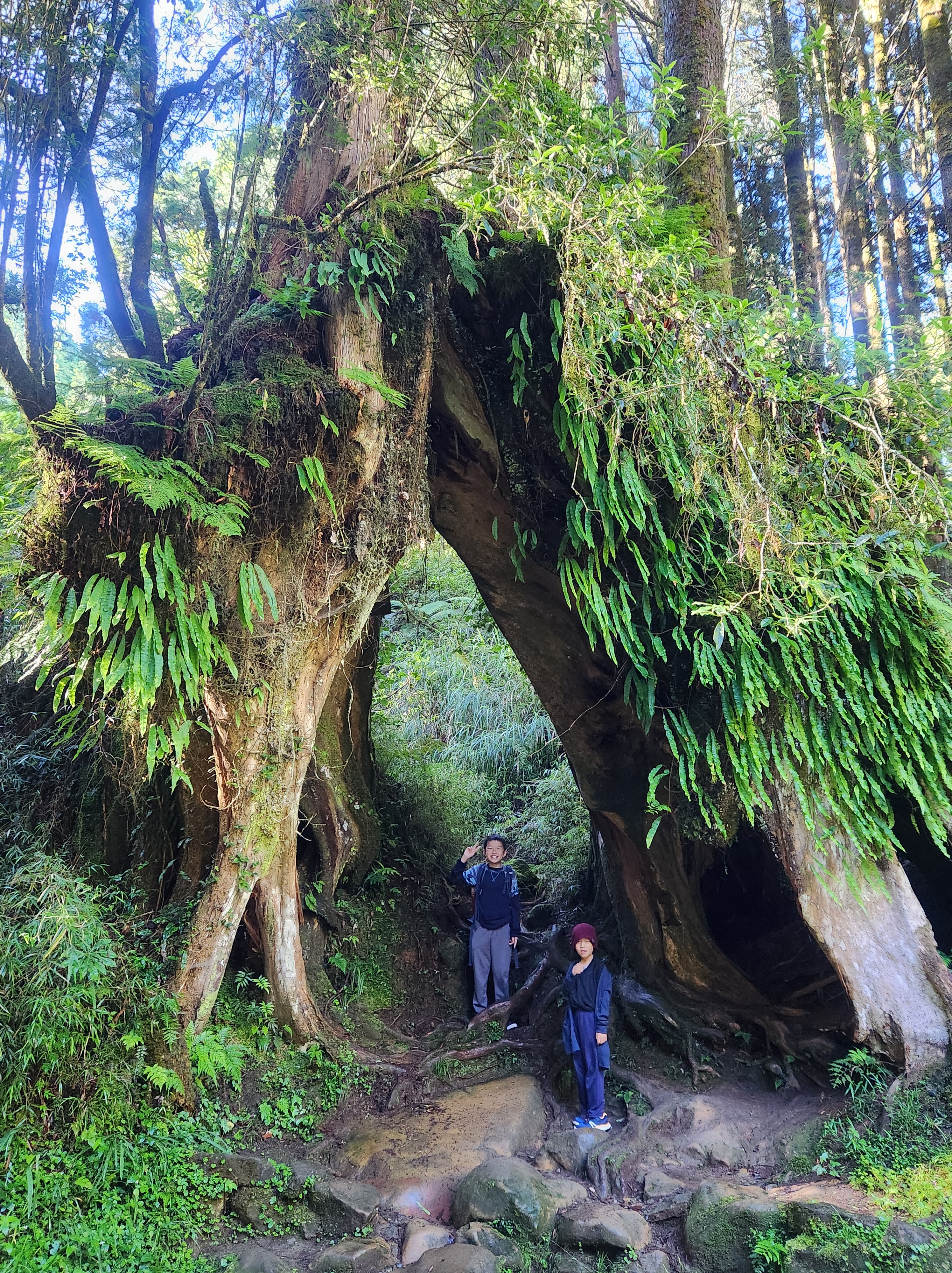
After Fenqihu, we took a 30-minute bus ride to Alishan, where we stayed for 2 nights. Our hotel was Chinshan Villa. I loved Alishan! I’ve always been a city girl, but being surrounded by mountains and lush green forests is just so calming. The air in Alishan is ten times cleaner and fresher than Taipei’s too. The park itself isn’t huge so you can do all the hikes within 2 days with time to spare. None of the hikes were particularly strenuous, so it’s great for all fitness levels.

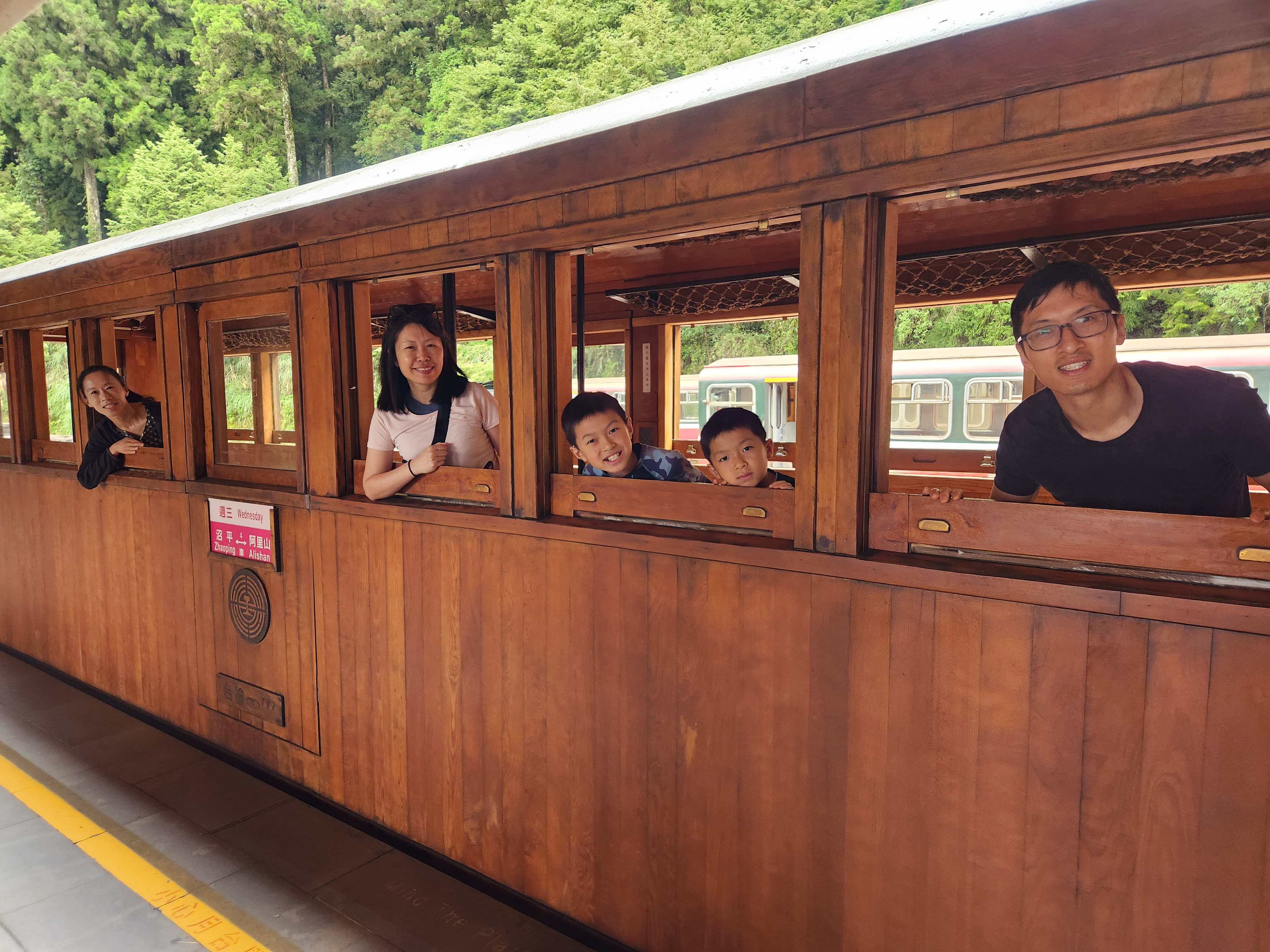
Even though we weren’t able to get tickets for the historic Alishan Forest Railway, you can still ride the train within the park. In fact, I think the trains that run within the park are even better because they use the old wooden carriages (while the trains from Chiayi are more like commuter trains). The trains look gorgeous against the landscape of Alishan!
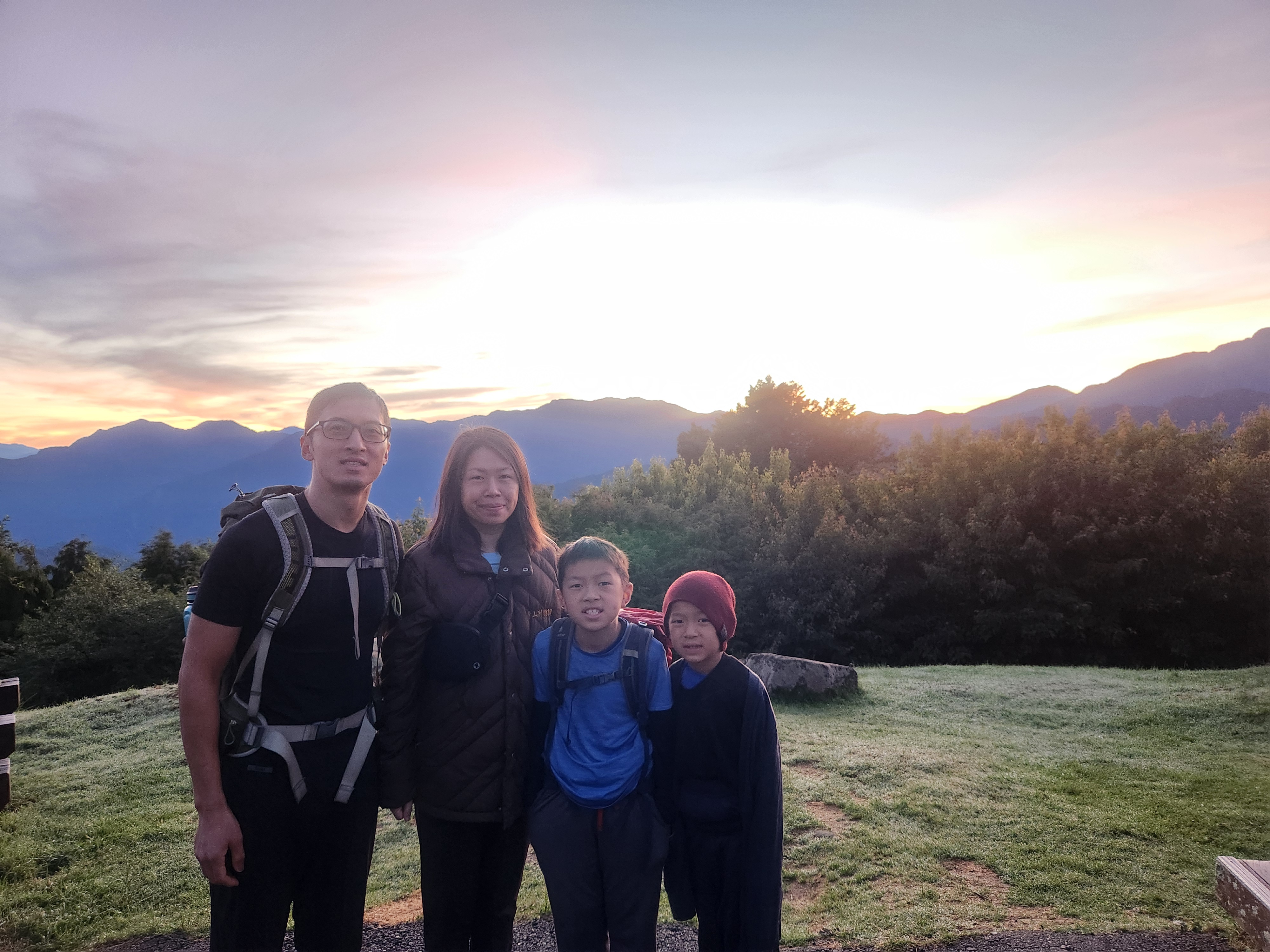
A popular thing to do in Alishan is seeing the sunrise. We woke up at 3am, rode the train up to the mountain peak and waited for the sunrise. It was beautiful, but not sure if it’s worth sacrificing my beauty sleep. 😅 The early morning was also extremely cold, so the boys had to wear Baba’s clothes and I had to rent a jacket from our hotel. Baba just braved the cold. 😂 Apparently tourists often underestimate the temperature drop in Alishan!

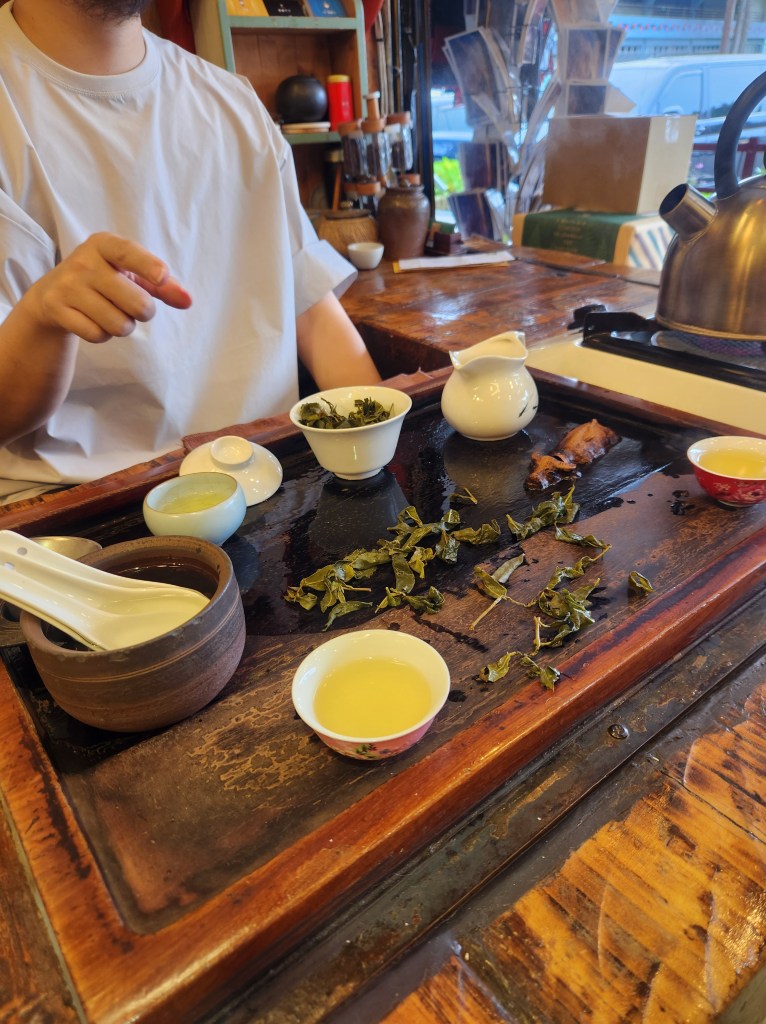
Alishan is probably the most well-respected producer of teas in Taiwan due to its altitude and weather. As a lover of teas – but I’m in no way a connoisseur! – I went with my SIL to do some tea tasting. The most interesting fact (or perhaps belief?) we learned is that tea does not have any long term health benefits! Instead, the tea master we met said it’s merely the lifestyle of tea drinkers that could contribute to longevity, which includes socializing with friends, drinking lots of fluids, etc. Still, my SIL walked away with a few bags of oolong teas. 😊

Before heading back to Taipei, we made a quick stop at another town called Shizhuo 石桌, known for its tea plantations. Shizhuo, along with Fenqihu and Xiding, are the three most common towns to stay at on the way to Alishan. We got to Shizhuo by the bus enroute to Chiayi.

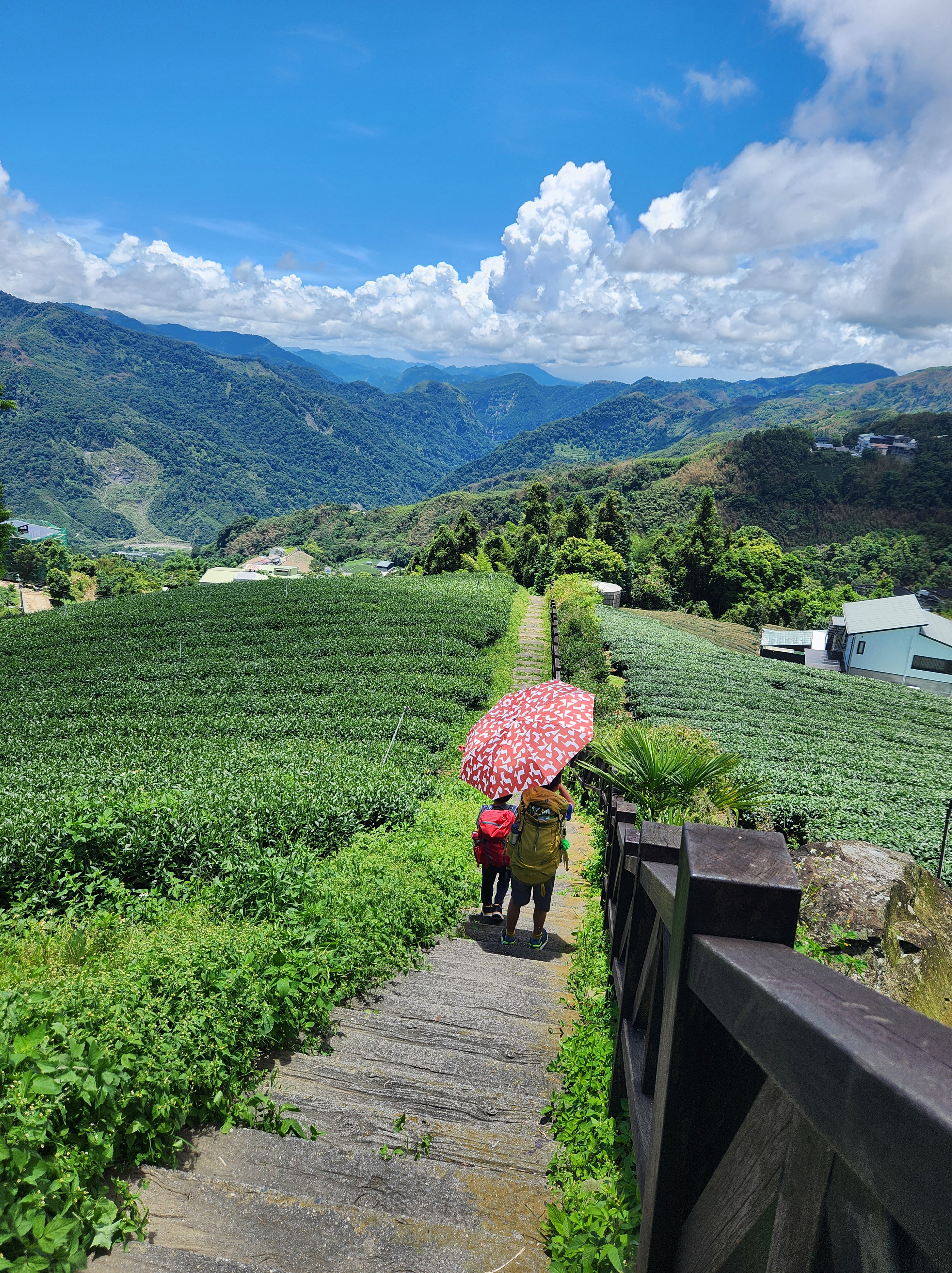
Seeing the neat rows of tea plantations was lovely but we didn’t realize how hot it was in Shizhuo. The hikes were all uphill and after about an hour, we were sweating buckets and ready to go home.

We were prepared to take the bus back to Chiayi Station to catch the high-speed rail, but a taxi driver offered us an unbelievable deal ($16 for a 1 hour drive back!) so our tired bodies eagerly hopped on the cab.

I can see why Alishan is such a popular destination for locals and tourists alike. The scenery is beautiful everywhere you look. Apparently it’s even more beautiful during cherry blossom season, where trails and railways are flanked with blooming pink flowers. I can only dream of seeing that one day!

Ramblings

Taroko Gorge

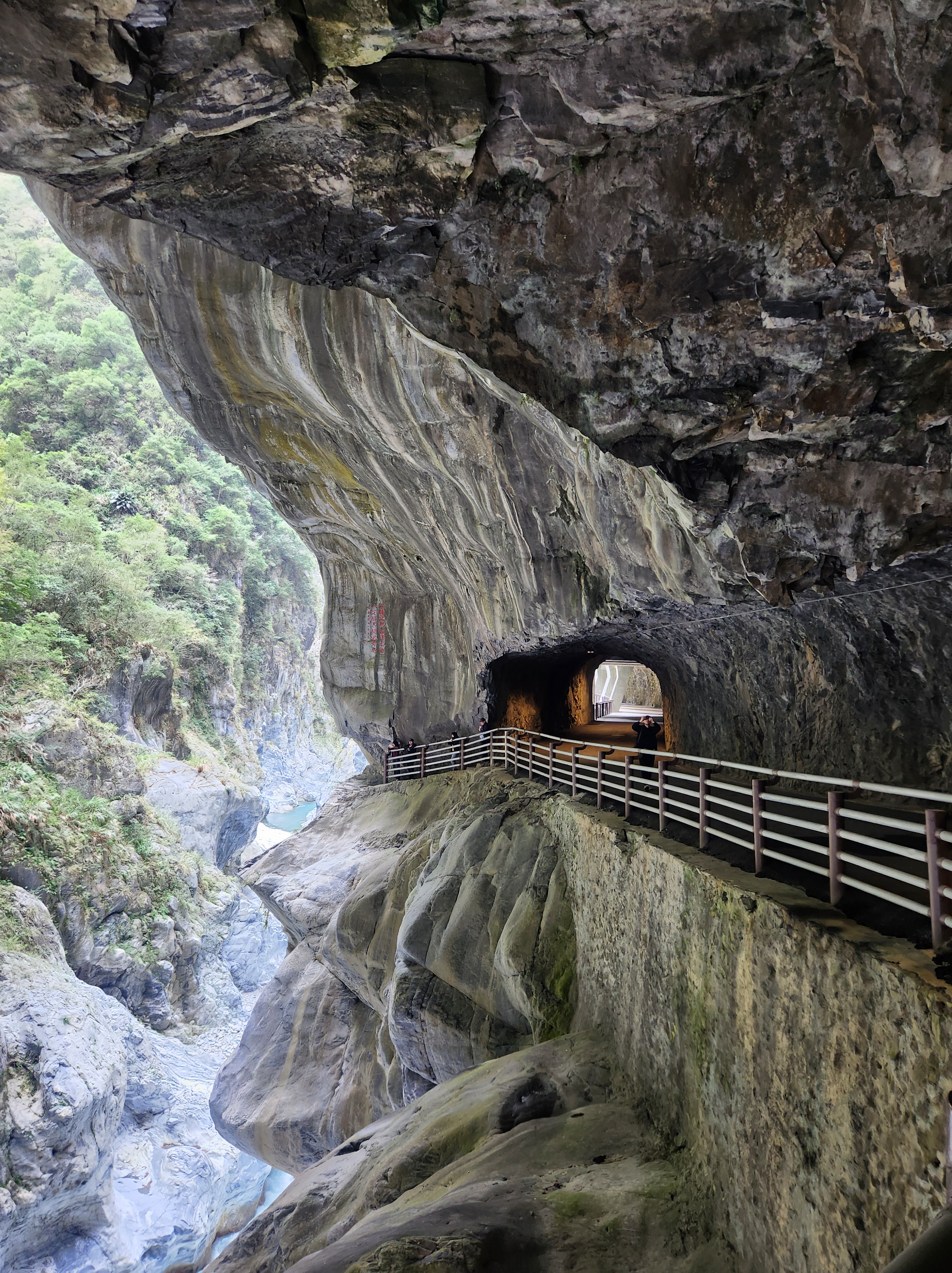
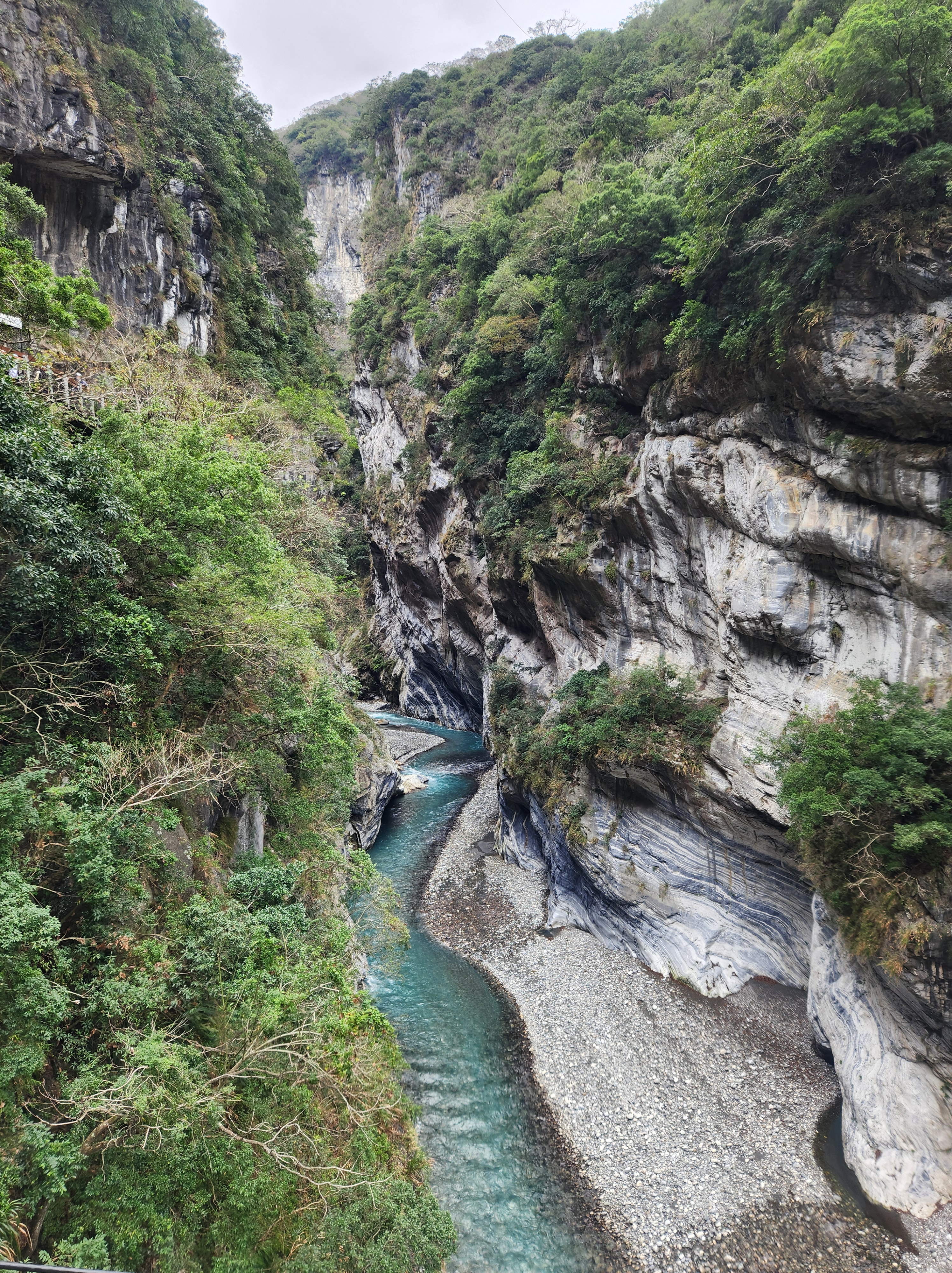
After coming back from Malaysia, we had a few days in Taipei before heading to our next destination: Taroko Gorge! Taroko is one of the nine national parks in Taiwan. The dramatic limestone mountains, clear blue water and scenic hikes make it the most popular national park among locals and tourists.

We took the Taiwan Rail to Taroko, not to be confused with the High-Speed Rail, but just as convenient and efficient. We left from Taipei Main Station and got off at Xincheng, which was closest to our hotel. The ride took approximately 2 hours.

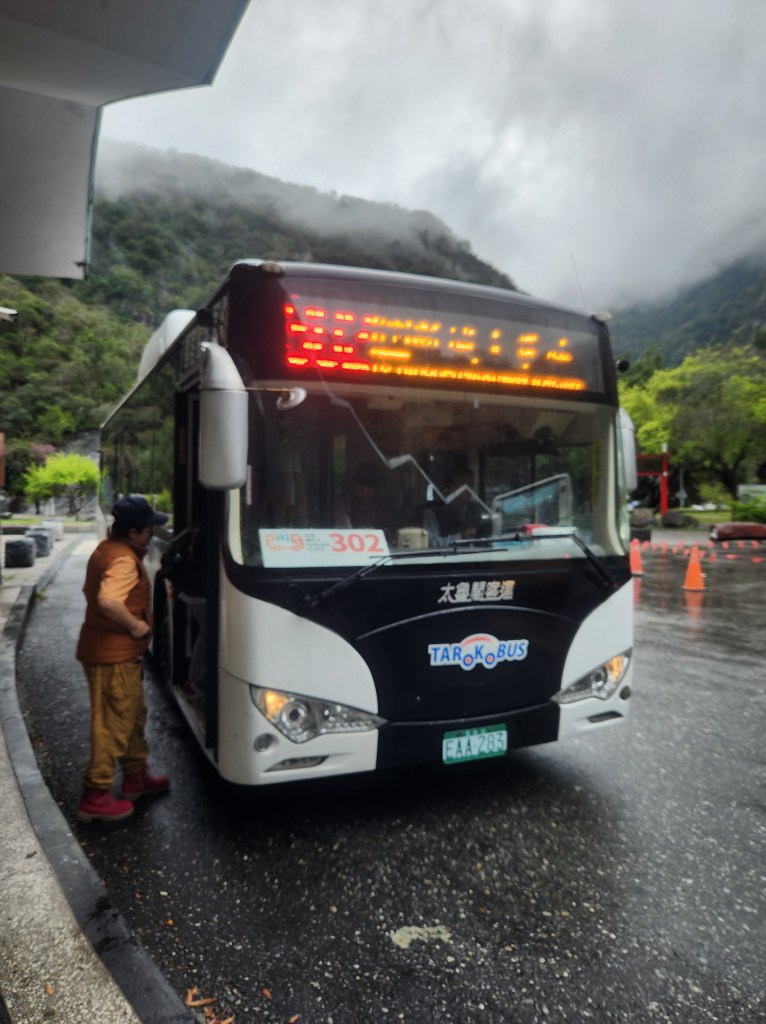
Many people advise renting a car or hiring a driver to visit Taroko Gorge. We ended up just taking the shuttle around the park, but a word of warning: shuttles don’t come frequently and the schedule can be inconsistent due to current roadwork. When we were there, the shuttle came every 30-45 minutes, so you just have to plan your hikes accordingly.

We stayed in Tienhsiang Youth Activity Center which is a basic hotel but fairly priced and located within the park. The room fee includes a breakfast buffet, and dinner costs an additional $8 per person. Don’t expect good food in Taroko! Restaurants are scarce and food is very basic. But people don’t come here for the food.

We stayed in Taroko for 3 nights and 4 days. The park isn’t huge so you could technically do all the hikes in that time if you’re determined enough.

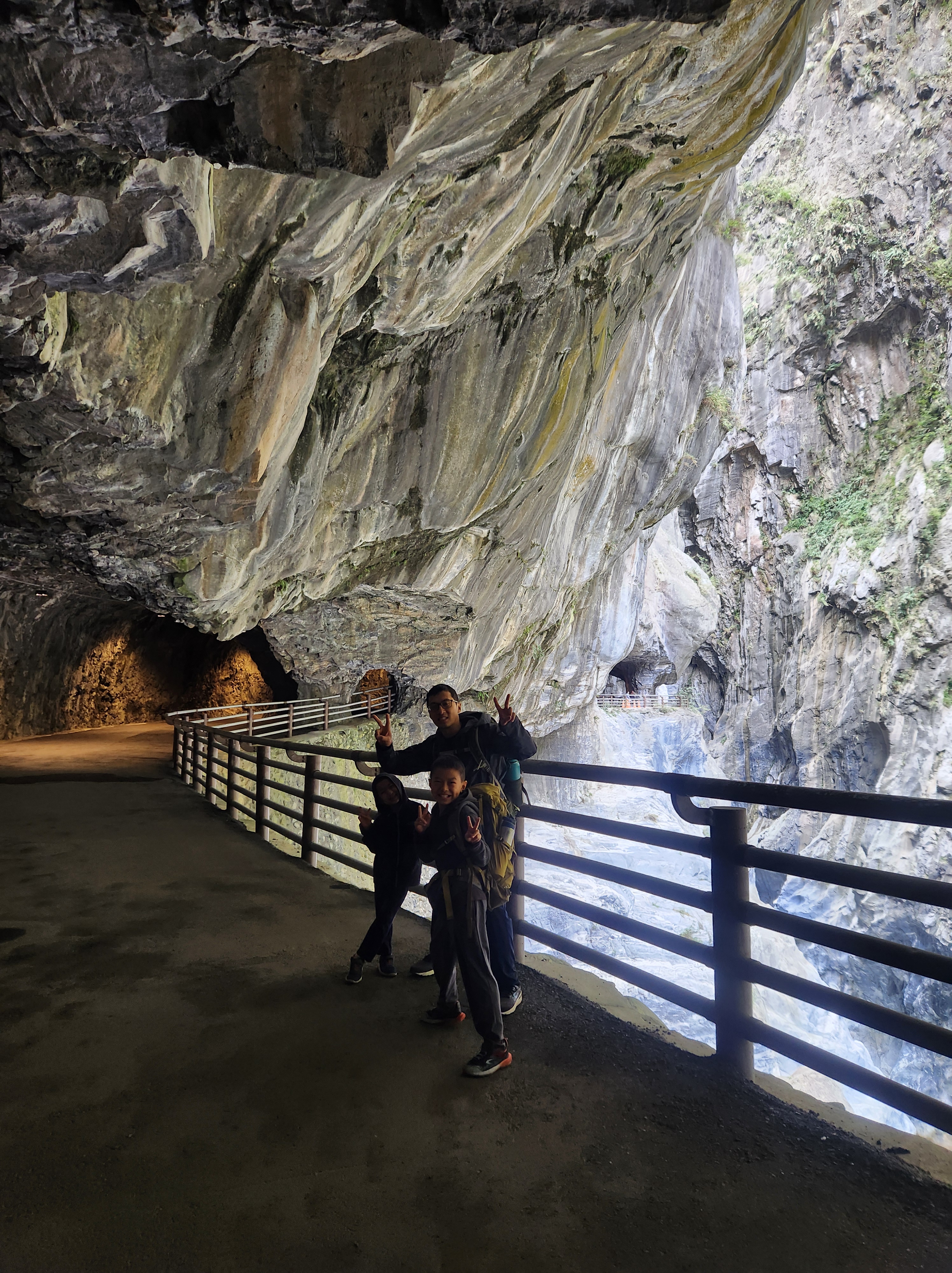
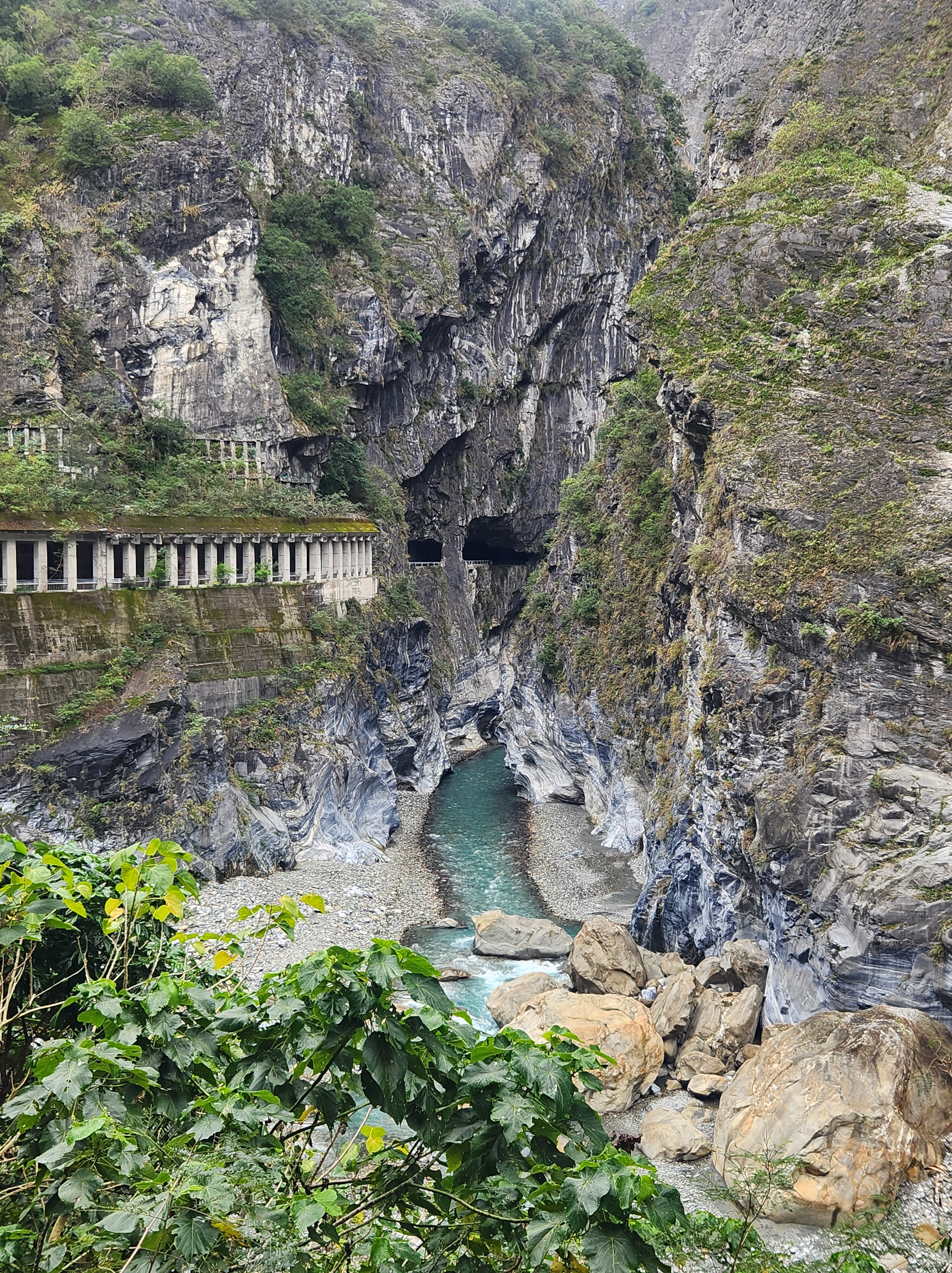
As for the park itself: it’s beautiful! But then again, can you really go wrong with mountains and crystal blue rivers? 😍

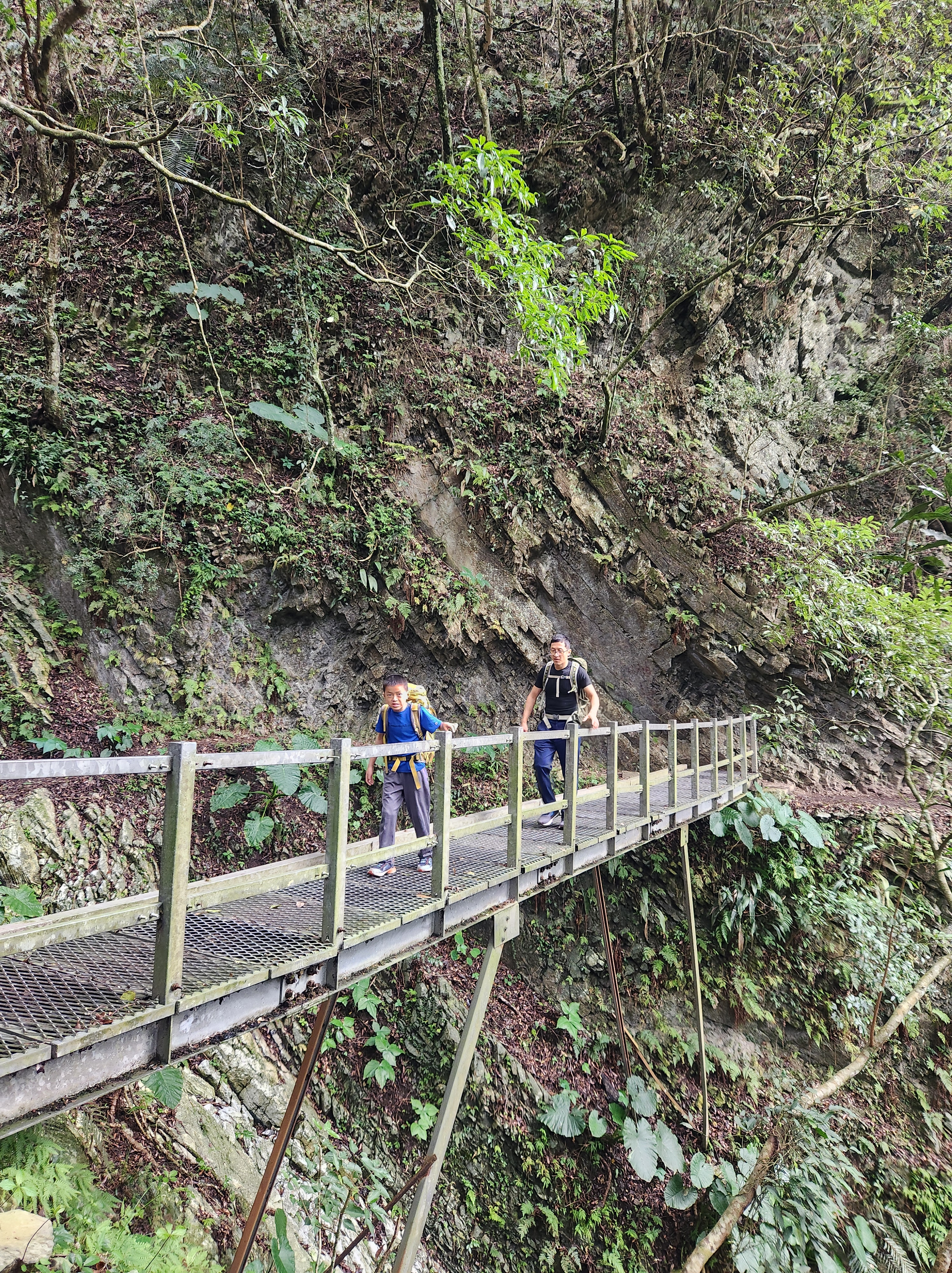
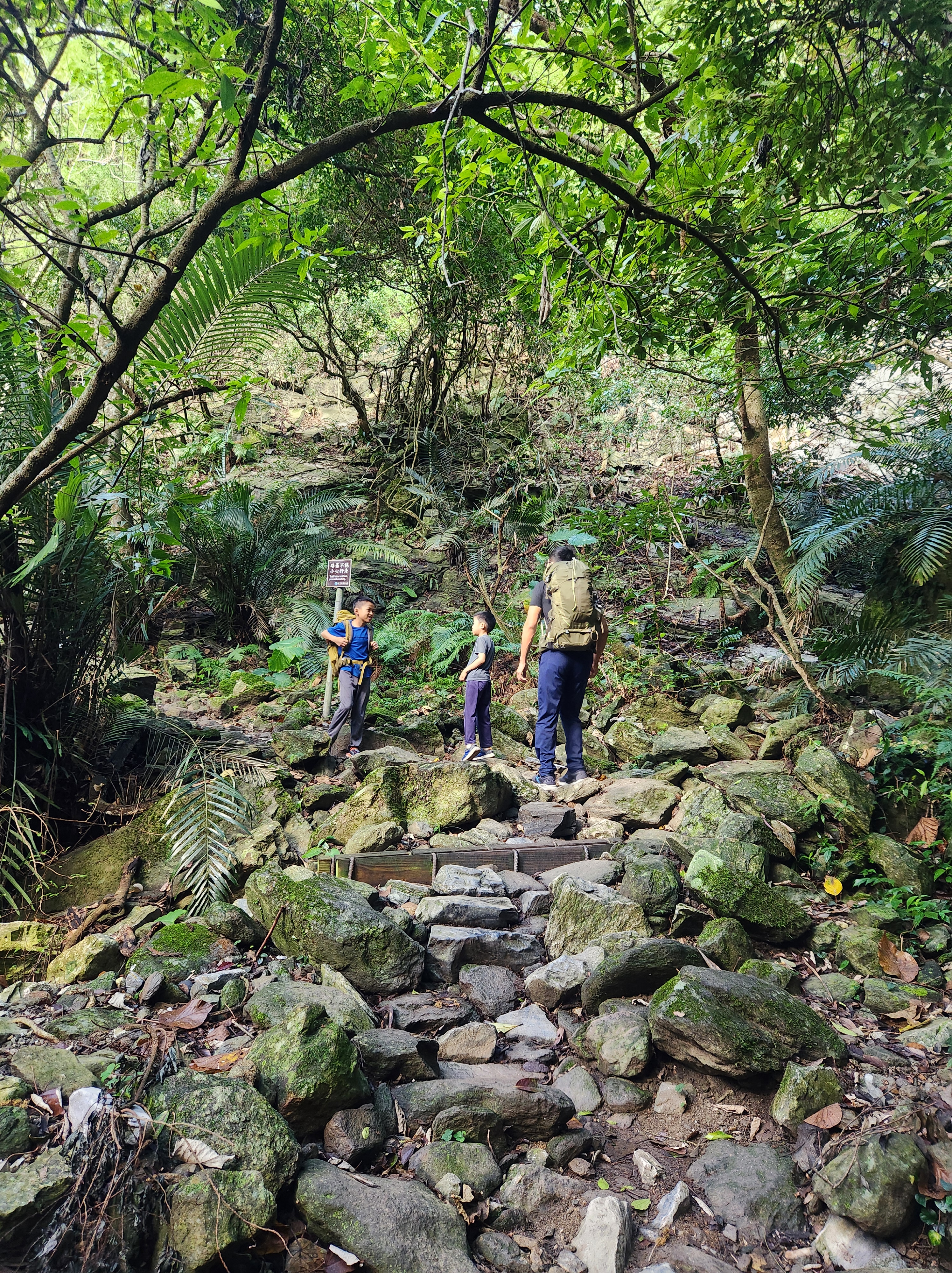
The park is also well maintained. Many of the trails are paved, making it easy for all types of hikers to explore. Everything is well marked, and most signs were in both English and Chinese. Bathrooms, even on the most remote trails, were clean too!

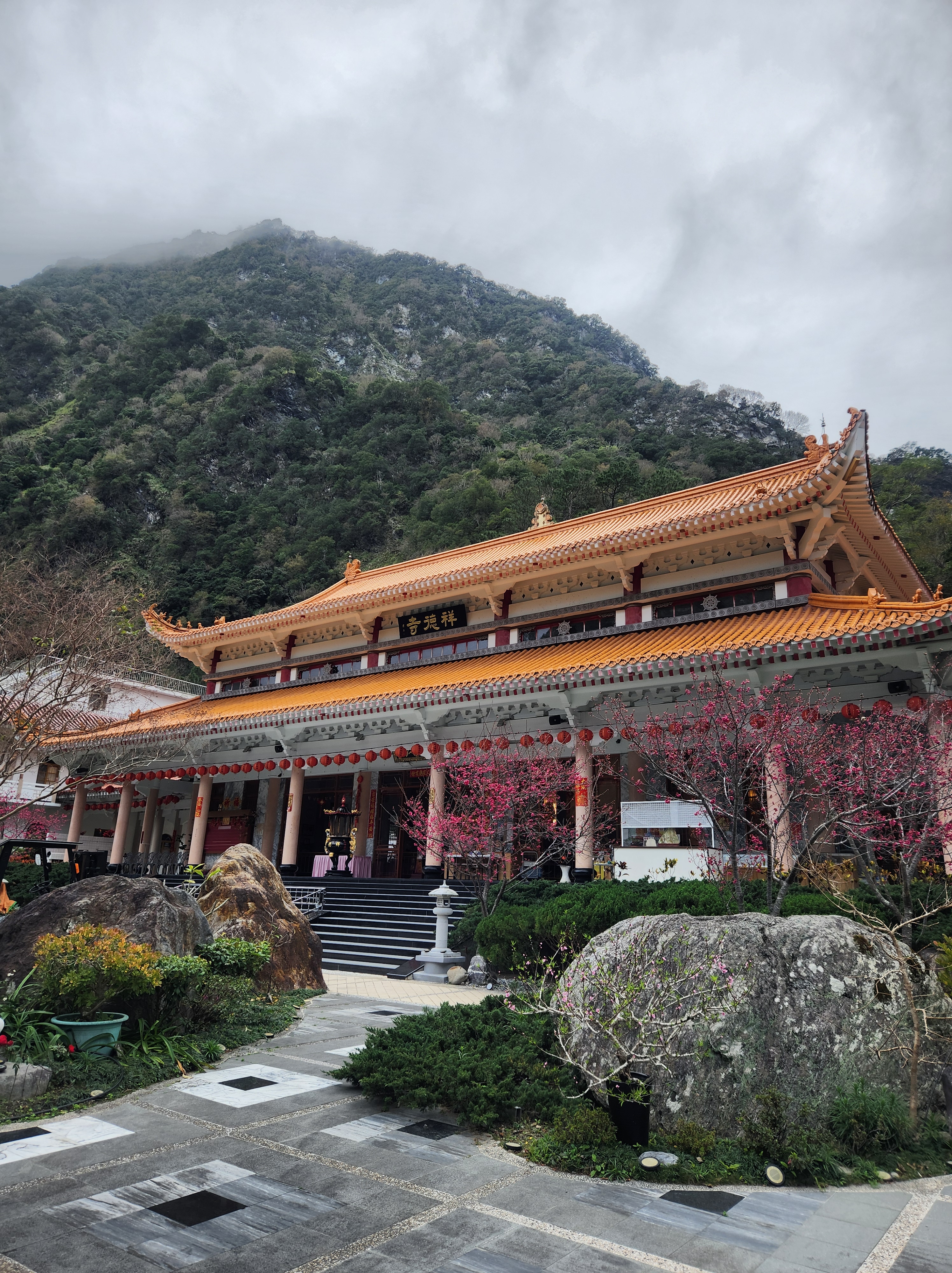
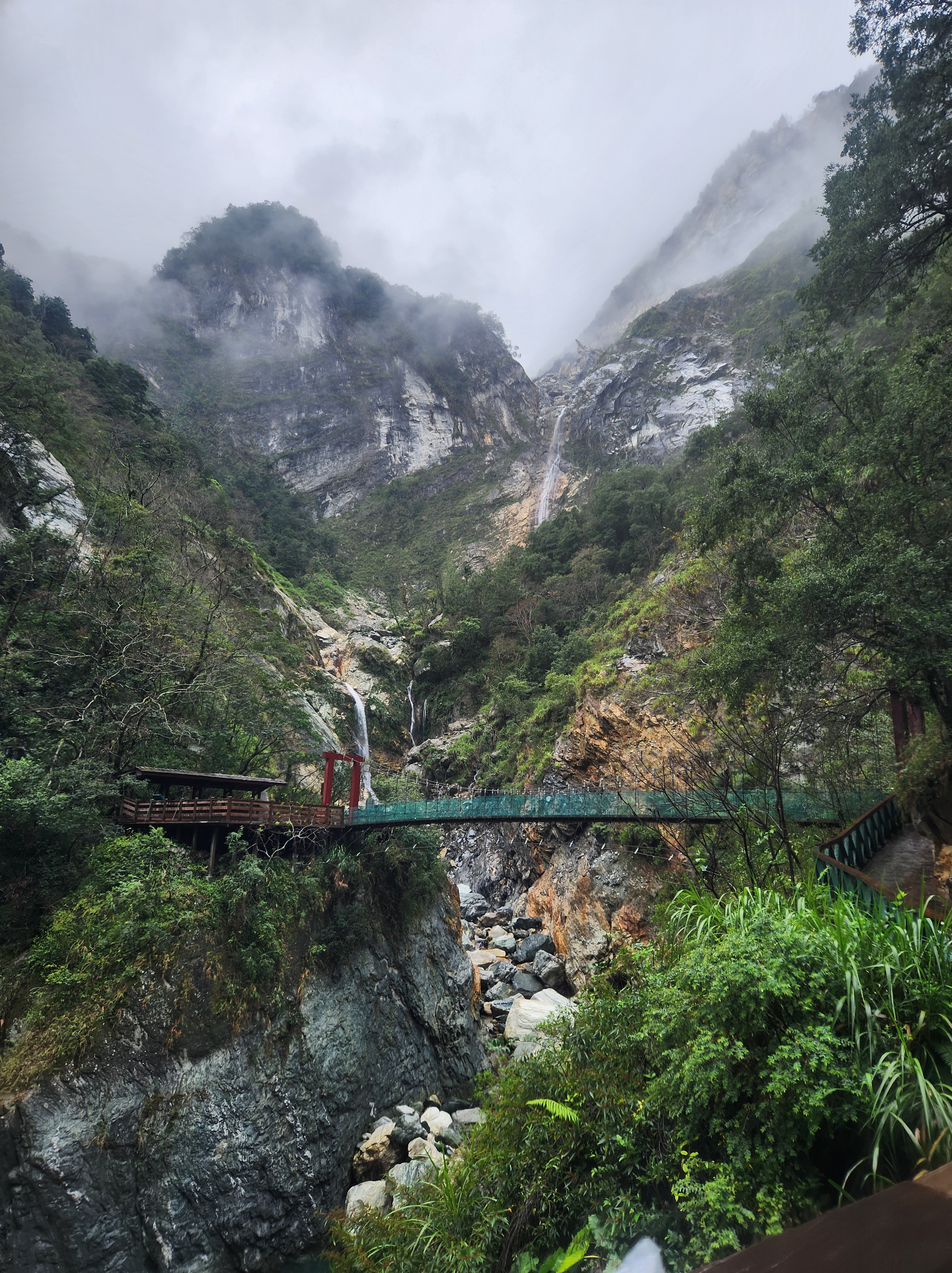
More pictures of Taroko because it’s so damn photogenic. The layers of fog added a level of mystique.

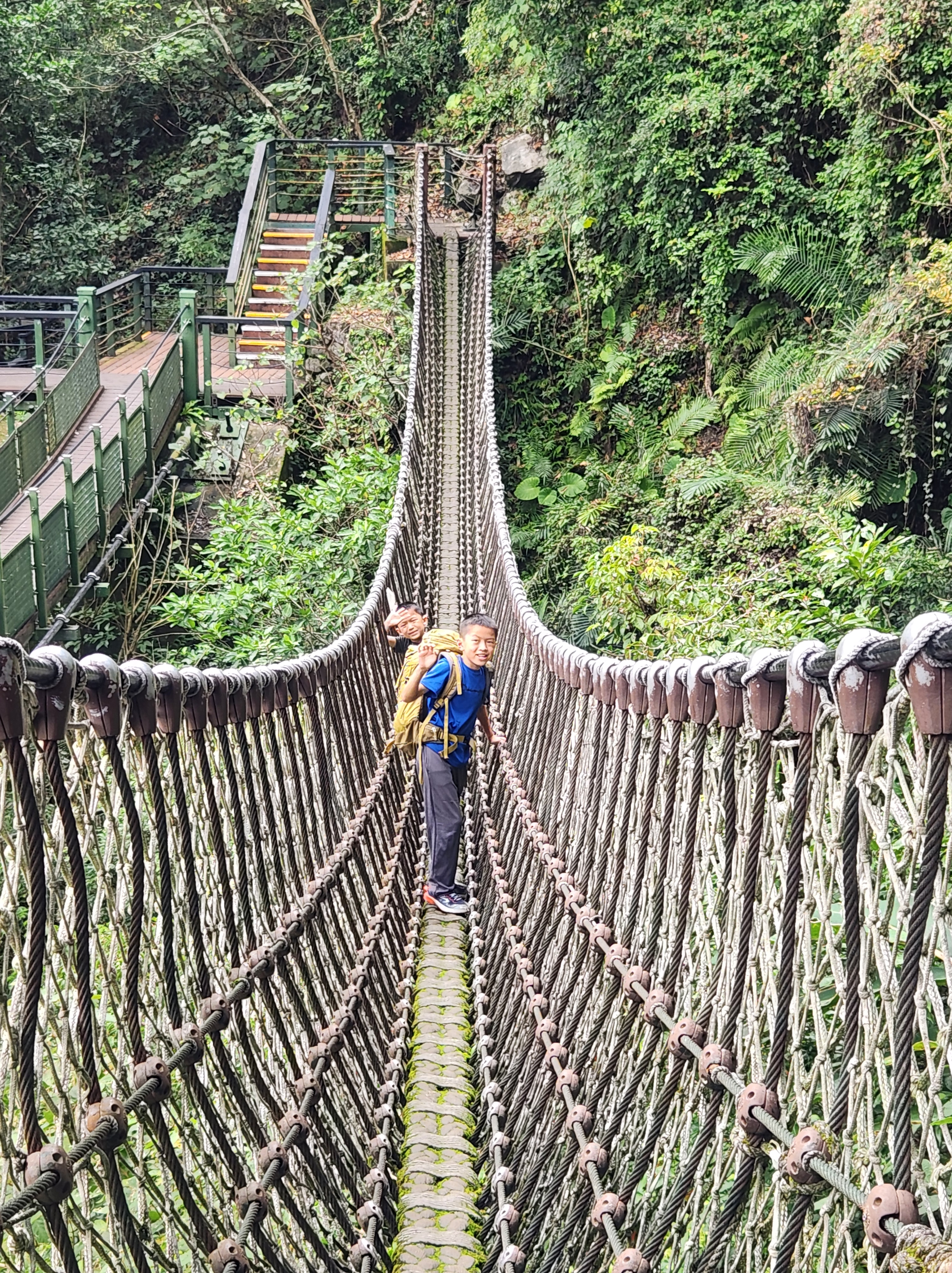
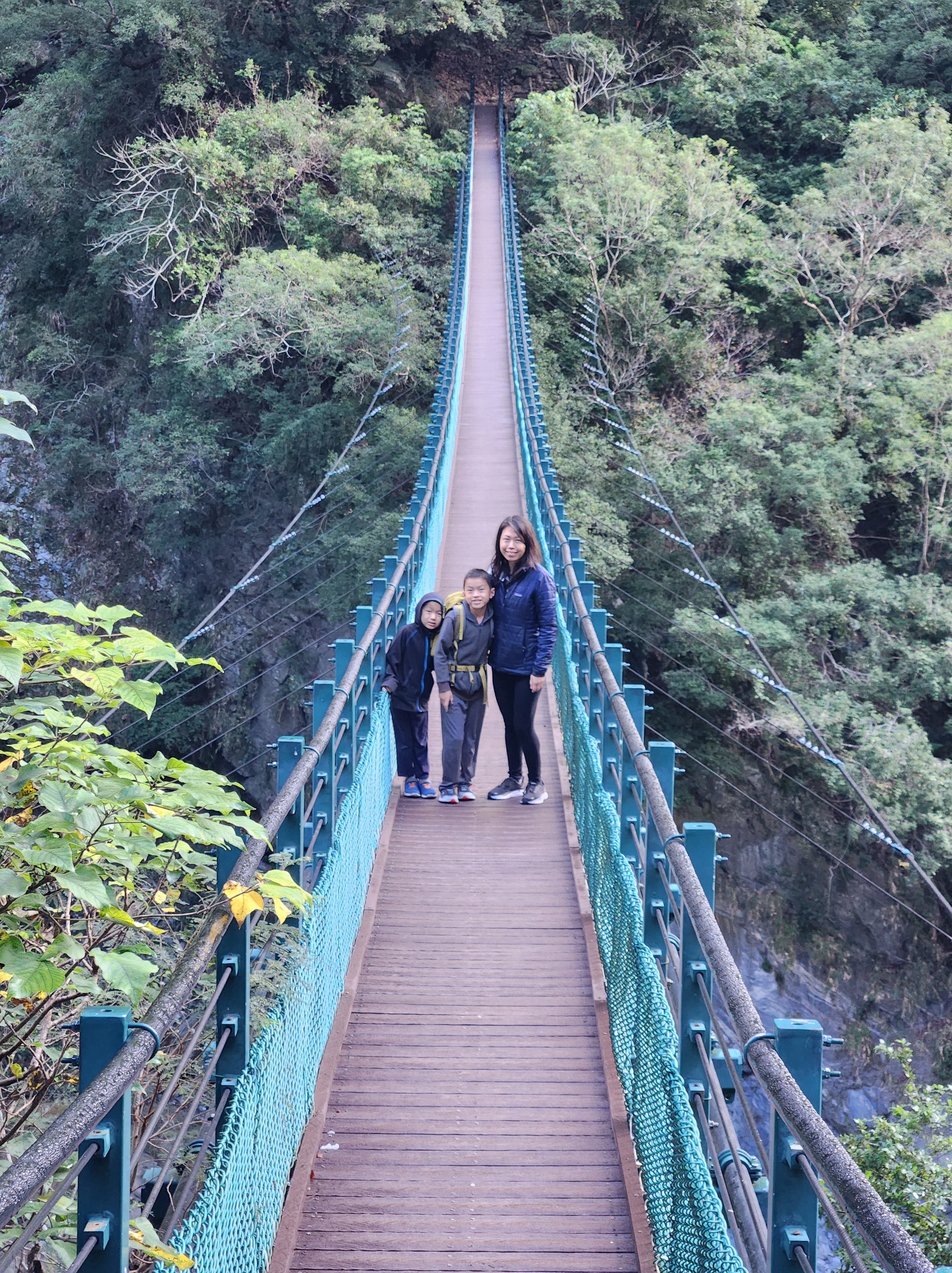
Taroko has many fun suspension bridges. The boys loved the buoyancy of the bridges, but that just made Baba even more nervous. 😅

After planning the Malaysia trip, I didn’t do very much research on Taroko. But the night before we left, Baba started researching Taroko and found that there is a famous hike (Zhuilu Old Road). Unfortunately, the hike requires a permit and there were no more spots left during the days we were there. We put ourselves on the waitlist anyway.

Well, we lucked out because at the last minute, we received a notice that we got the permits! Zhuilu Old Road was voted one of the best hikes in Asia because of its views and historical significance. The trail was once used by aboriginals to commute between villages.

The hike is considered challenging so we wanted to get there as early as possible. However, the park shuttles don’t start running until 11am and the trailhead was far from our hotel. We asked the front desk if they could find a driver, but we were told that taxis are few and far between. For awhile, we weren’t even sure we could do the hike.

Then, a few hours later, the front desk called and said they found a driver! Hurray! A man who works at the hotel simply volunteered to drive us. He didn’t even want any payment (though we still gave him something) – this is another example of how friendly Taiwanese people are!

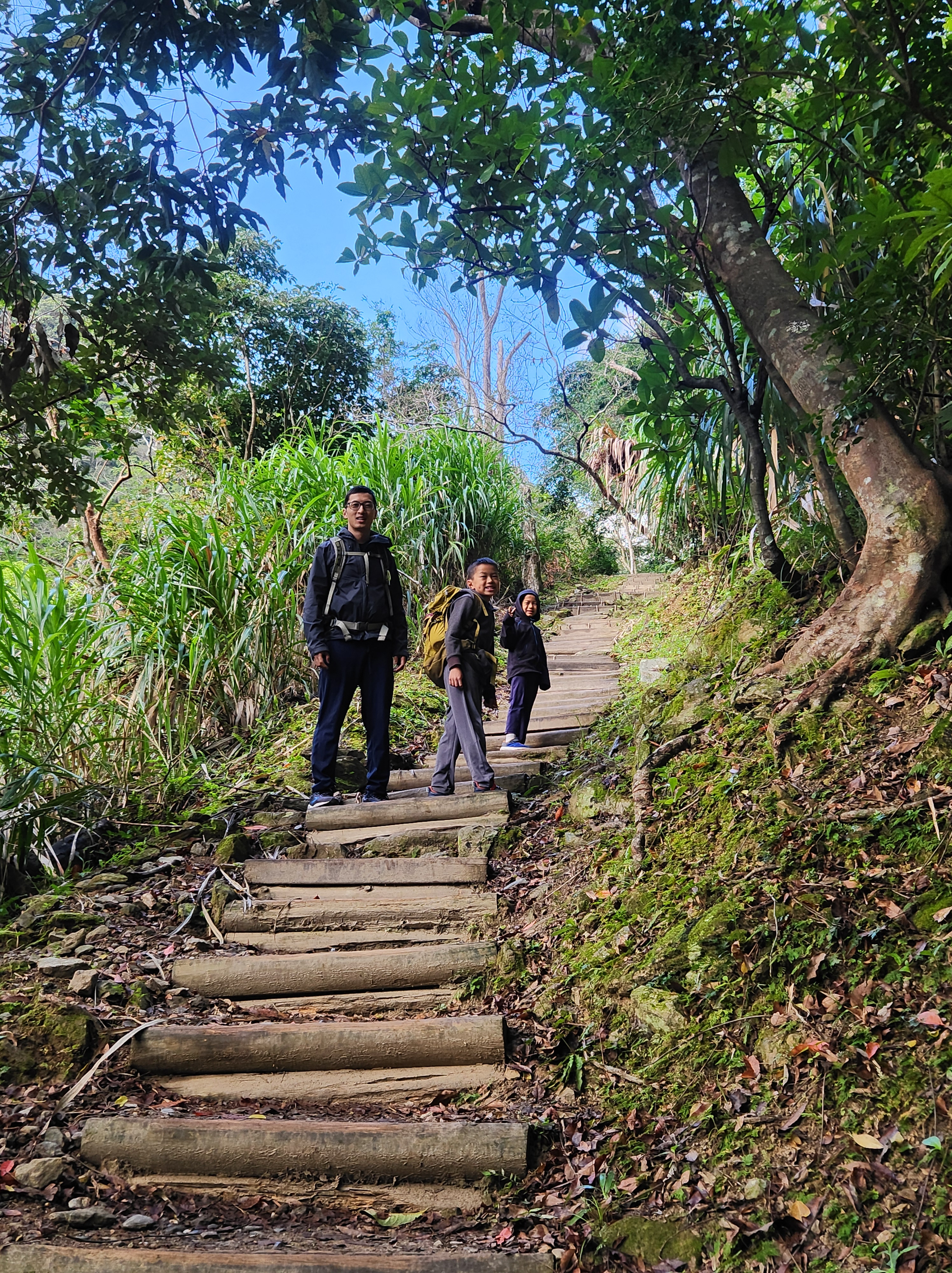
We were the first group to arrive at Zhuilu. Even though it’s a famous hike, we often felt like we had the whole trail to ourselves, which was so nice. The first 1.5 miles of the hike was a steep climb. It will make your legs BURN! We were also lucky that the morning of our hike was a clear day, because if it were wet (like it had been the prior days), it would be a much trickier hike.

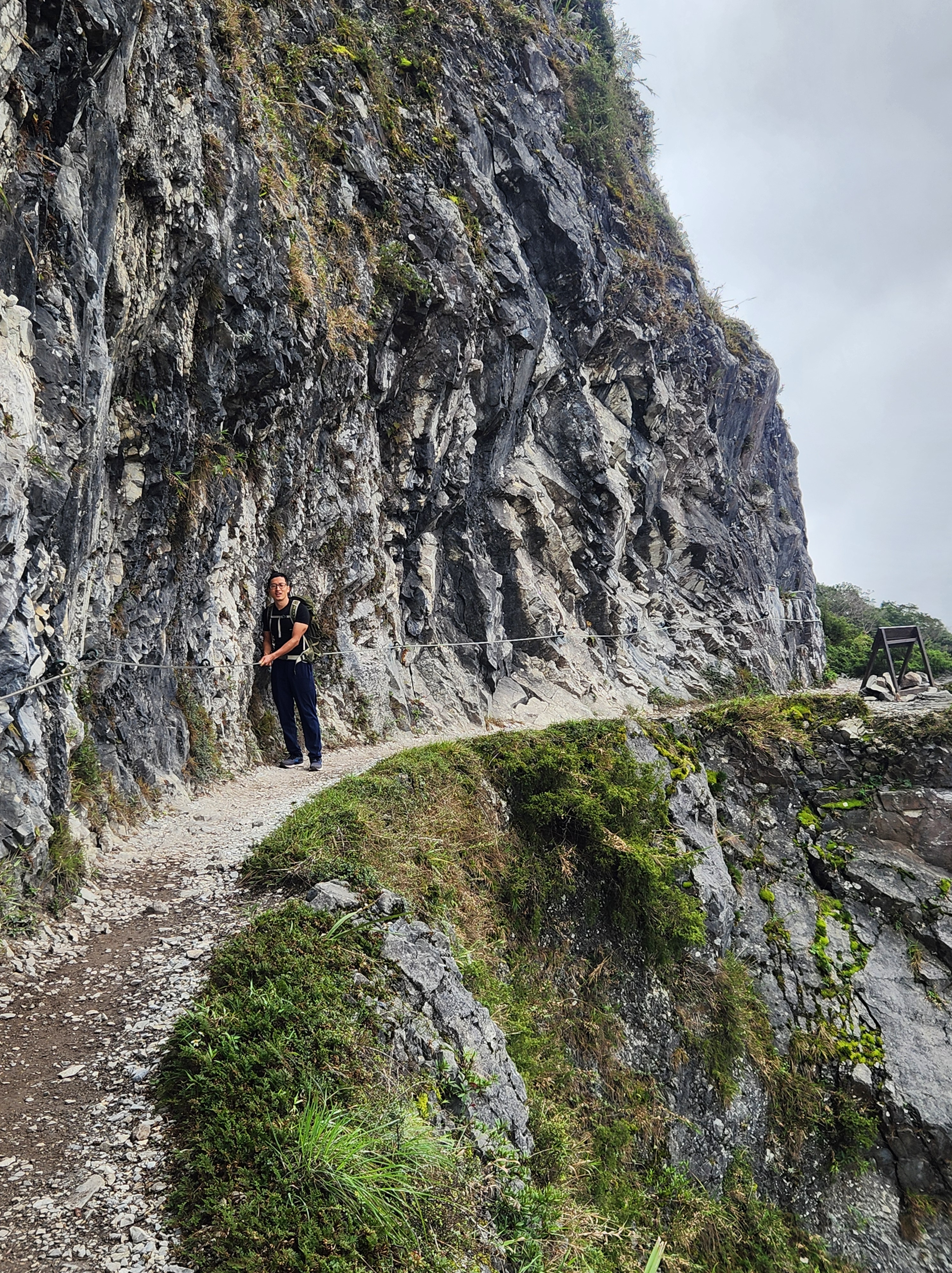
After hiking up the mountain, we arrived at the crescendo: a narrow 3 feet wide trail along a cliff, looking down 2,600 feet into the gorge. There is no guardrail, but there is a cable for you to hold onto. It’s not for those who are afraid of heights, but I think I was more worried about the kids messing around here.

The hike took us 5 hours roundtrip, with many breaks for water and snacks in between. We later went on two other hikes that same day, with one that required climbing a lot of stairs (not sure why I agreed to this). My old lady knees were dying at the end of the day.

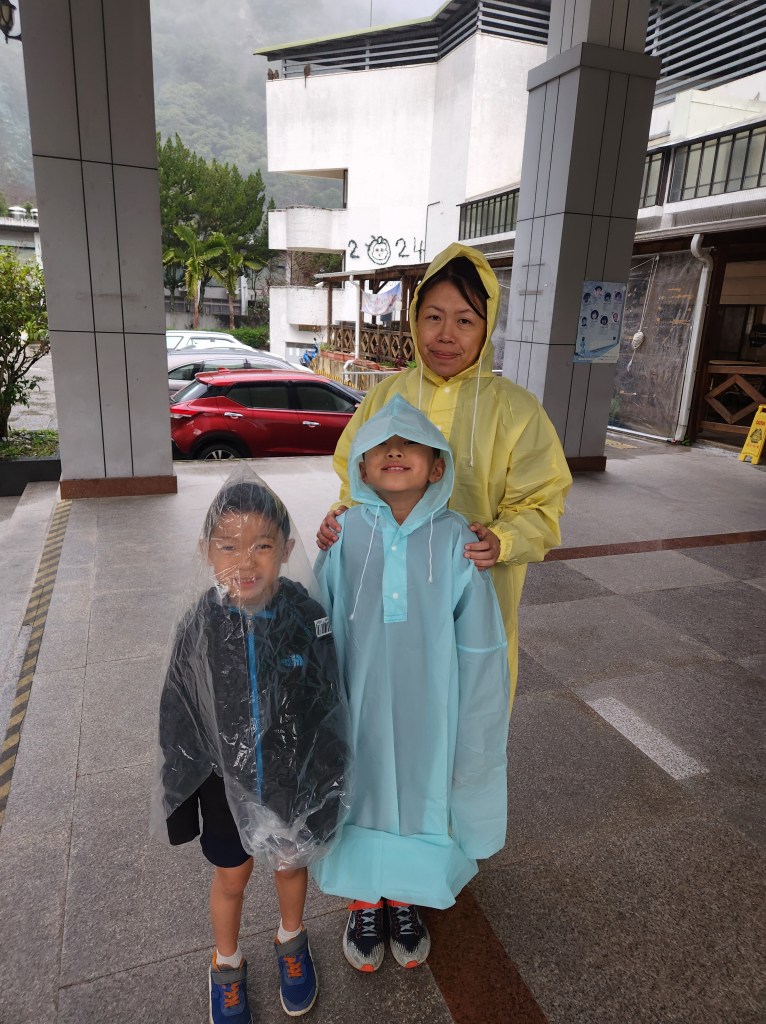
On the day we left, we squeezed in one last hike: the Baiyang Trail. This hike was relatively relaxing as the trail was paved and flat. We were told by another hiker to wear a raincoat because of the waterfall, so we went to 7-11 to get ponchos. None of them were small enough to fit O however, so being the responsible parents that we are, we used a plastic bag instead. 🤣

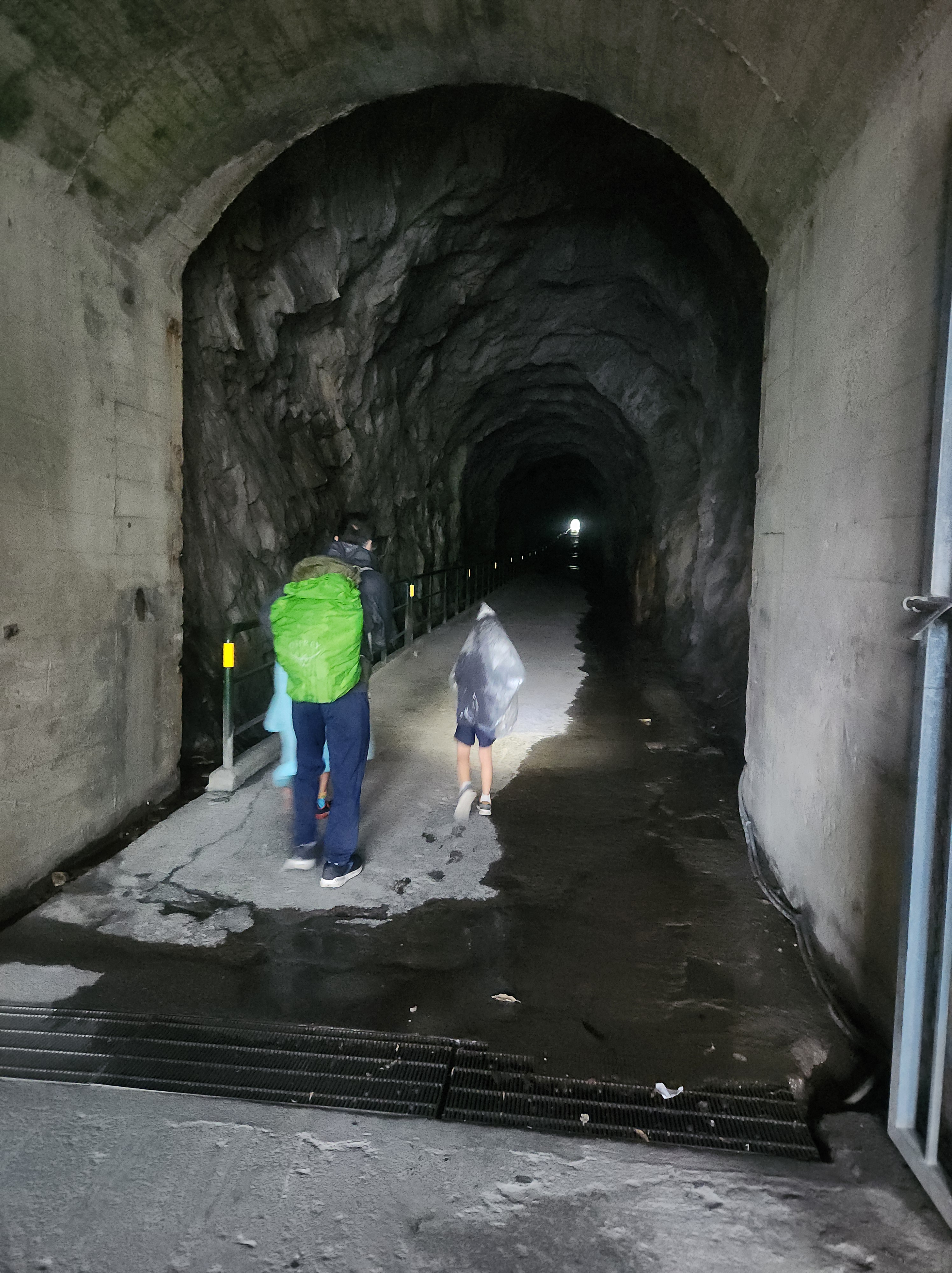
The Baiyang Trail was a lot of fun. It requires walking through a series of dark tunnels (so it’s best to bring flashlights). During the summer and fall, there are bats that live in the tunnels too!

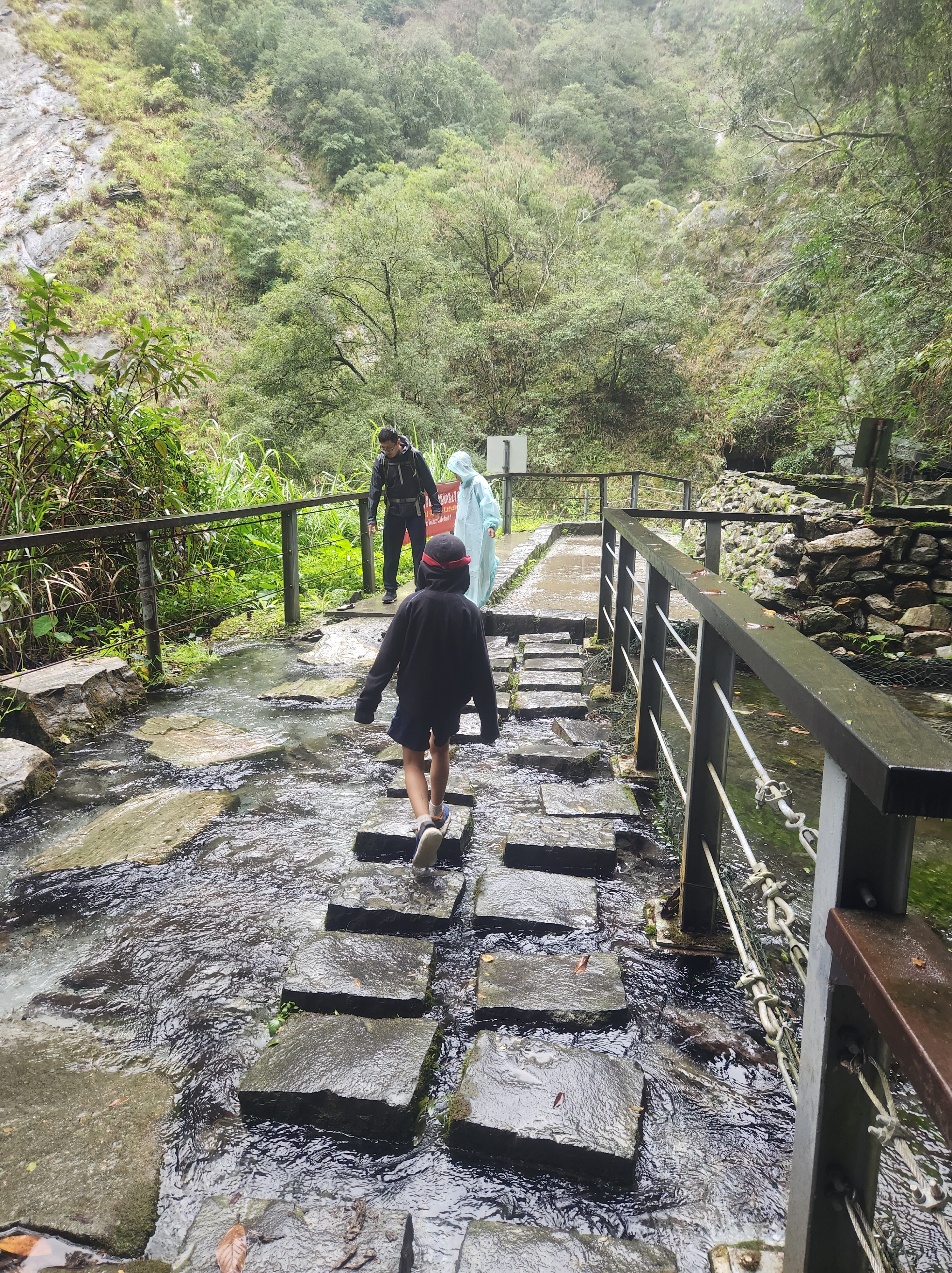
Towards the end of the hike, we were wondering if we needed the raincoats at all. It provided more protection from that day’s rain than any mist or trickling water we found in the tunnels thus far.

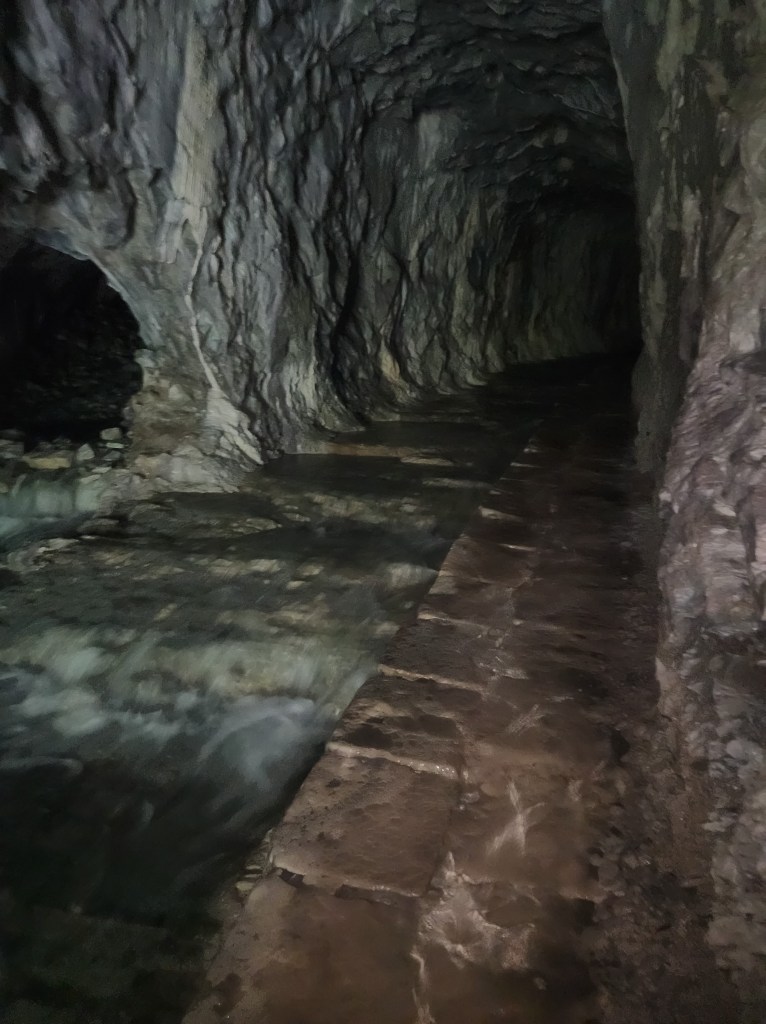
But then, we arrived at the last tunnel. We saw a shallow river flowing through it. There was a narrow path against the tunnel’s wall, which we started to go through. It got wetter and wetter, and at this point, all our shoes were soaked. Suddenly, we heard and saw it: several waterfalls gushing out from the cracks of the tunnel! There is no way around them, so we walked under the waterfalls and got more soaked! 😂 With the darkness of the tunnel, sound of the rushing water echoing against the walls, and water pouring down on us, it was an exhilarating experience to say the least.

I wish I took better pictures of this part, but I was worried about my phone getting too wet (and me trying not to slip! 😅)

A lot of people just go to Taipei when they visit Taiwan, but if you have more time in your schedule, we highly recommend visiting Taroko too! Taiwan is actually known for its nature, and Taroko is a prime example of that.